Lactophrys bicaudalis
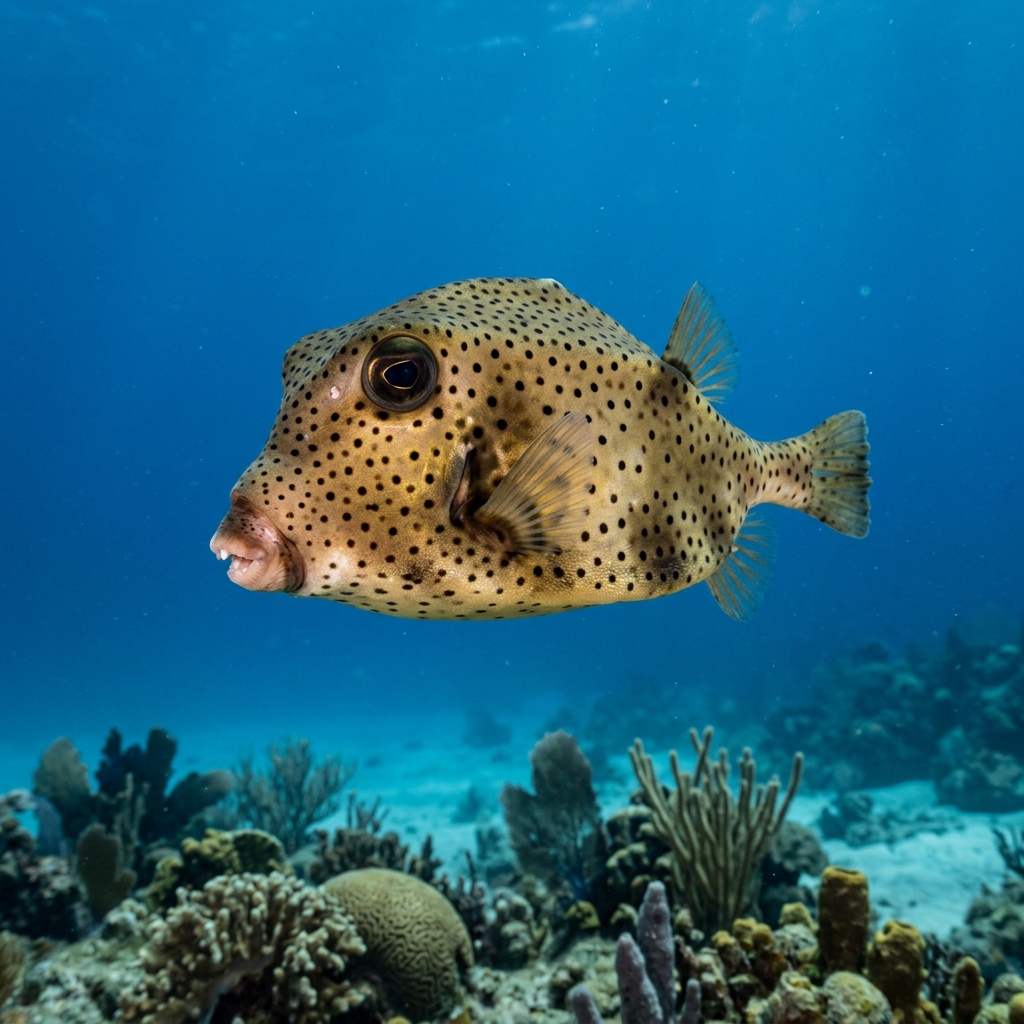
Boxy white body covered in black spots, most reliably spotted in Bonaire, the Yucatán and the Bay Islands of Honduras year-round.
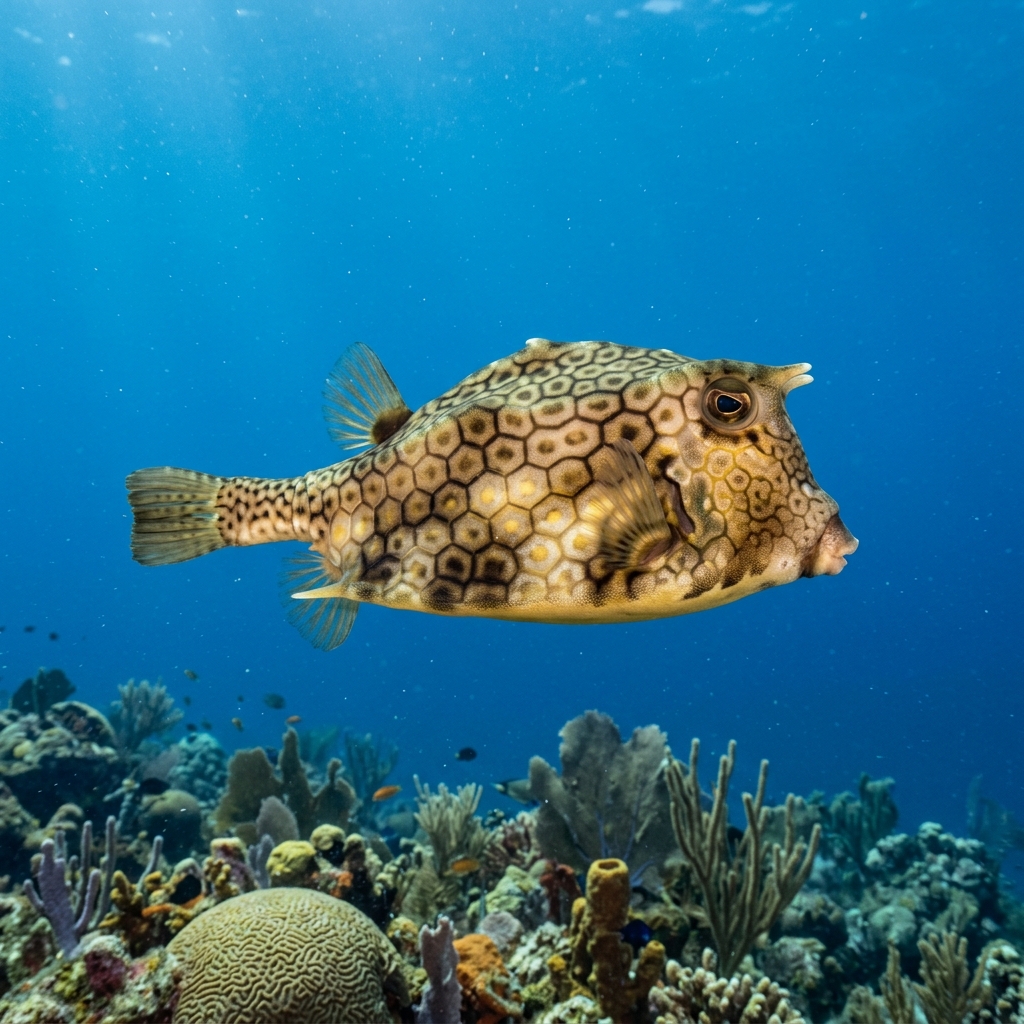
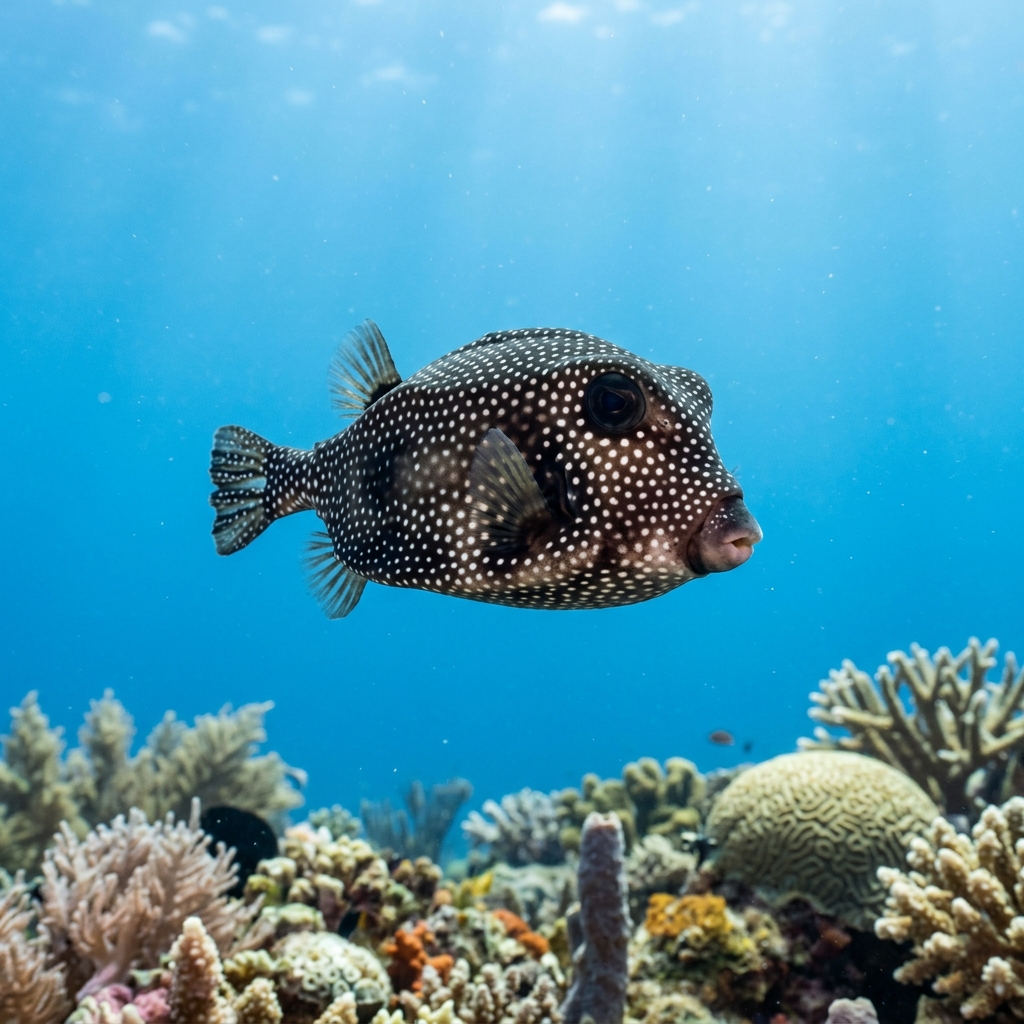
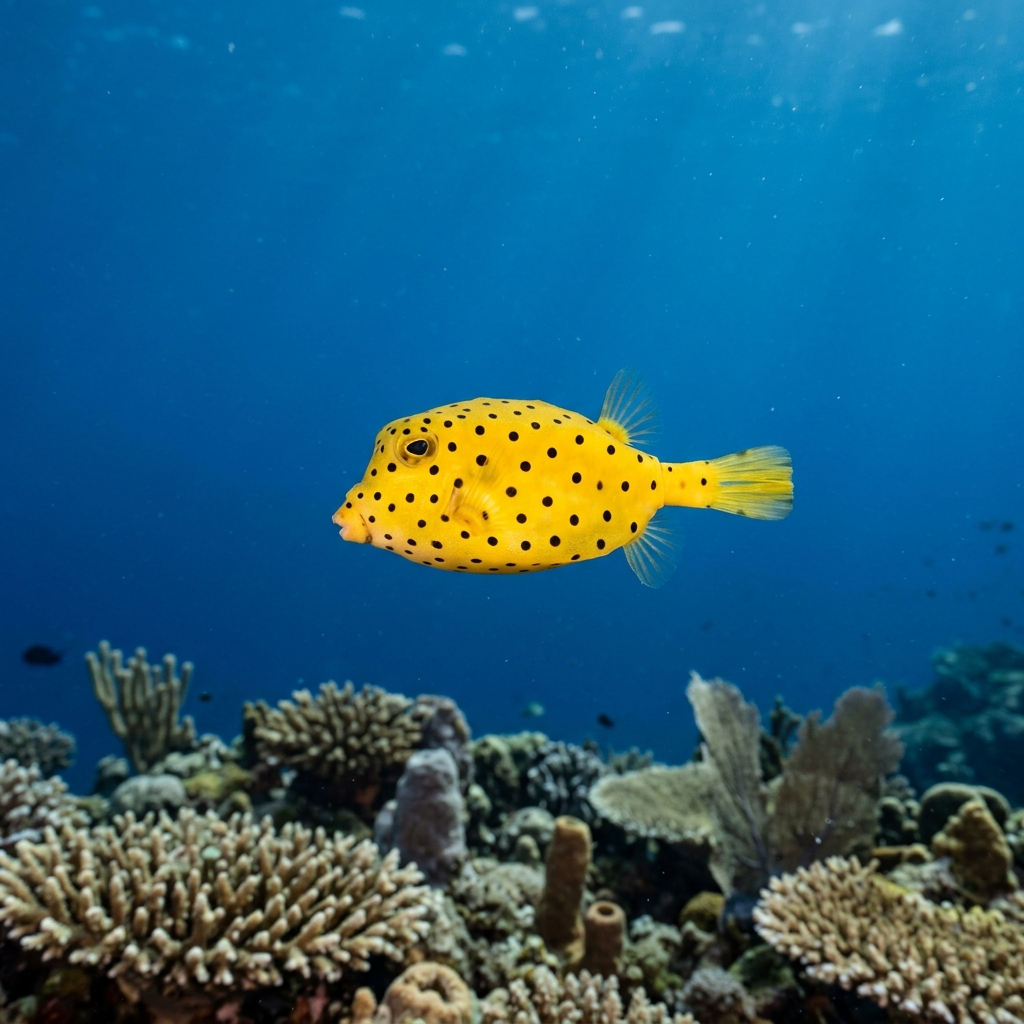
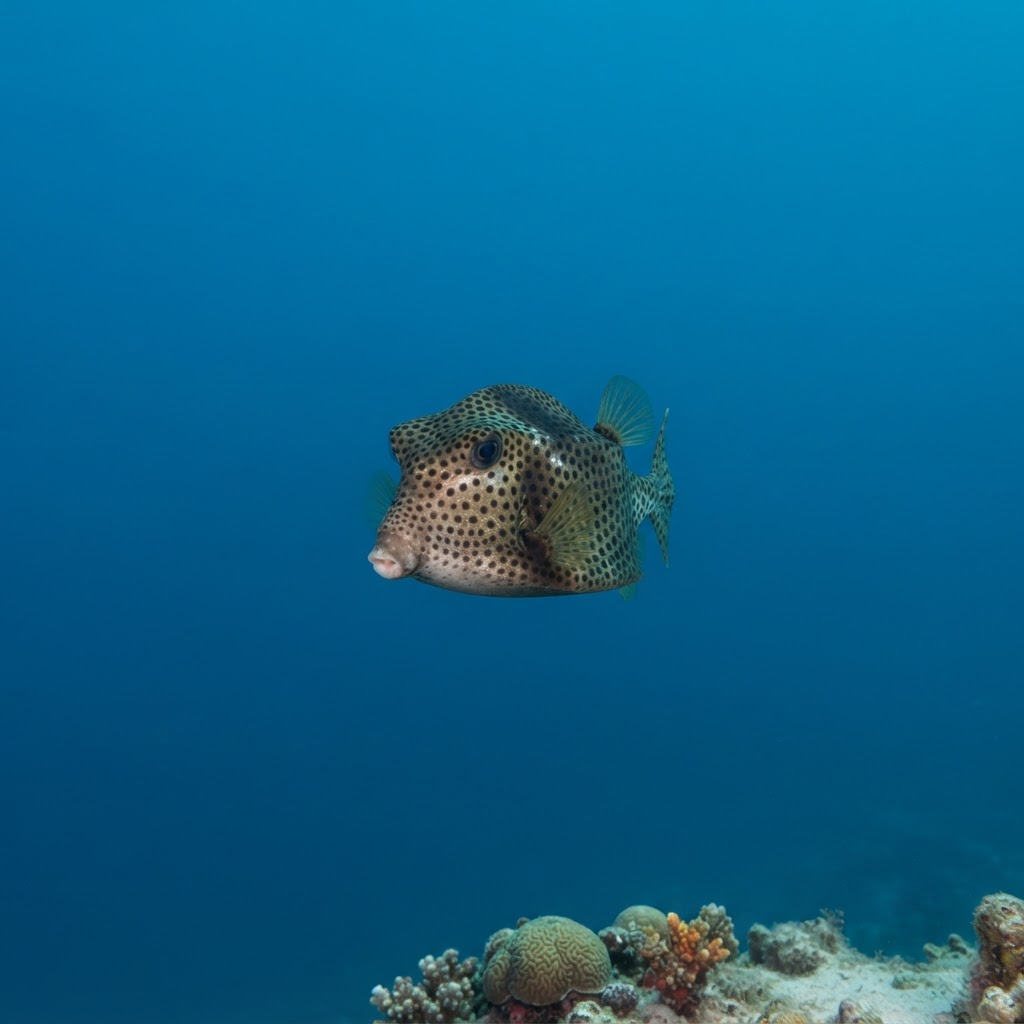
A boxy, rigid body covered edge to edge in small black spots over a pale grey-white background gives this fish away instantly. It grows to around 33 cm and moves with a slow, almost mechanical paddling motion using small fins rather than a flexing body. Look for the flattened underside and angular, armour-plated shape typical of boxfish, plus two faint tail-base ridges that give the species its scientific name.
Divers usually find it hovering or slowly cruising low over reef and rubble, picking at sponges and small invertebrates rather than schooling or chasing anything. It's unhurried around divers, often letting you get a good close look before easing off into a crevice or over the next reef ledge. Most sightings are single fish rather than pairs or groups, and it tends to stay near structure rather than out over open sand.
Like other boxfish, its rigid, fused-plate body armour lets it skip the need for speed or a flexible spine, so what looks like a clumsy paddle is actually a fully armoured fish that's already protected from most reef predators.
No clear seasonal pattern shows up in the data, and with a comfortable range of 25.4 to 28 C on Caribbean reefs, it's a year-round sighting wherever it's found.
Reef neighbours a diver could mistake it for. Use the identification notes above to tell them apart.
Strong populations turn up across the Caribbean, with the Yucatán Peninsula in Mexico and the Bay Islands of Honduras standing out as the most reliable regions. Bonaire's Leeward Coast, Grand Cayman, Grenada Island and Carriacou, and Curacao all produce steady sightings too, along with Colombia's Caribbean Coast and Saint Croix in the US Virgin Islands.
Mapping where Spotted Trunkfish is logged…
Mexico's Yucatán Peninsula and Honduras's Bay Islands are the strongest regions, with reliable sightings also logged in Bonaire, Grand Cayman, Grenada, Curacao, Colombia's Caribbean Coast and the US Virgin Islands.
There's no strong seasonal pattern in sightings. It's a year-round find on Caribbean reefs, comfortable in water between roughly 25 and 28 C.
Look for a boxy, rigid-bodied fish, pale grey-white and covered evenly in small black spots, growing to about 33 cm and paddling slowly over the reef with small fins.
They typically reach around 33 cm, a solid, boxy size that's easy to spot against reef structure once you know the spotted pattern.
No, they pose no threat to divers. They're slow-moving, unbothered by divers at close range, and rely on their armoured body plates for defence rather than any aggressive behaviour.
Site and sighting data is aggregated from diver logs, iNaturalist and GBIF. For taxonomy and conservation status:
Honeycomb Cowfish
1,691 sites