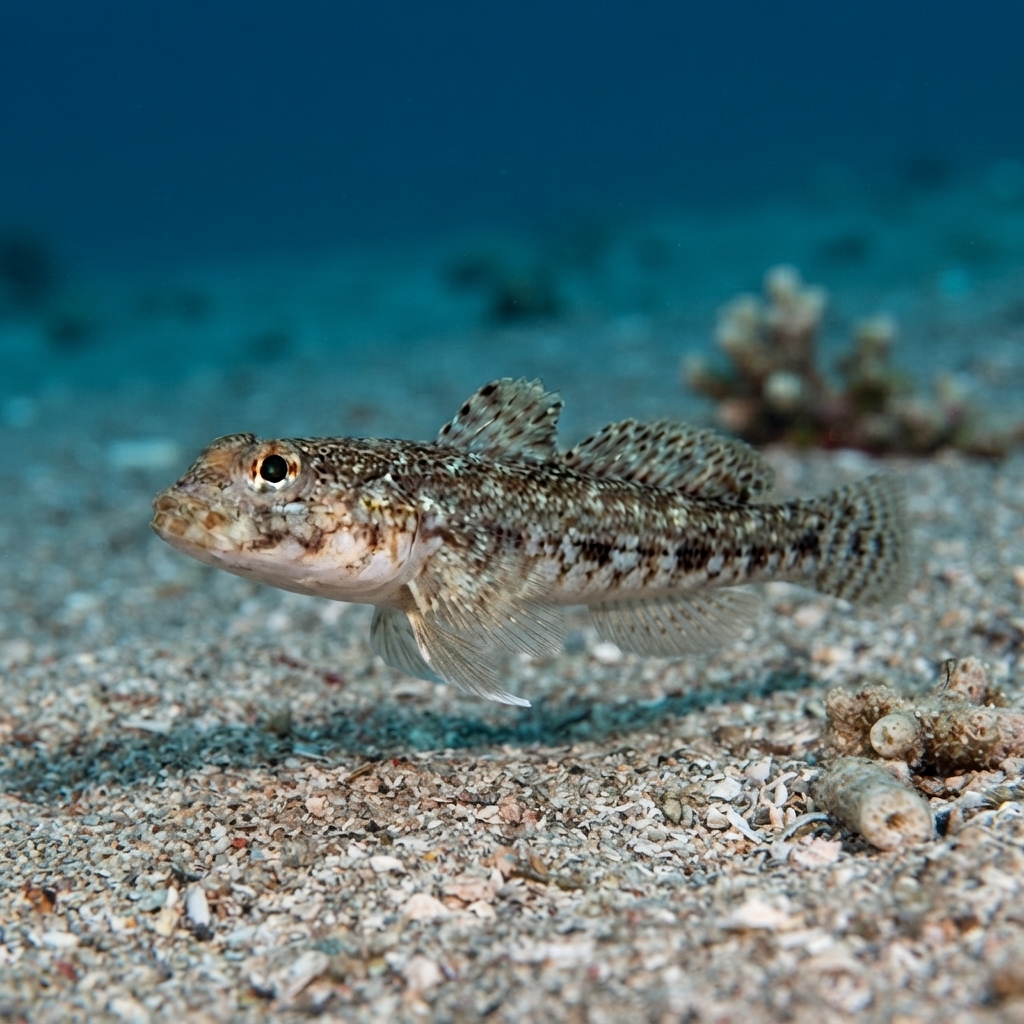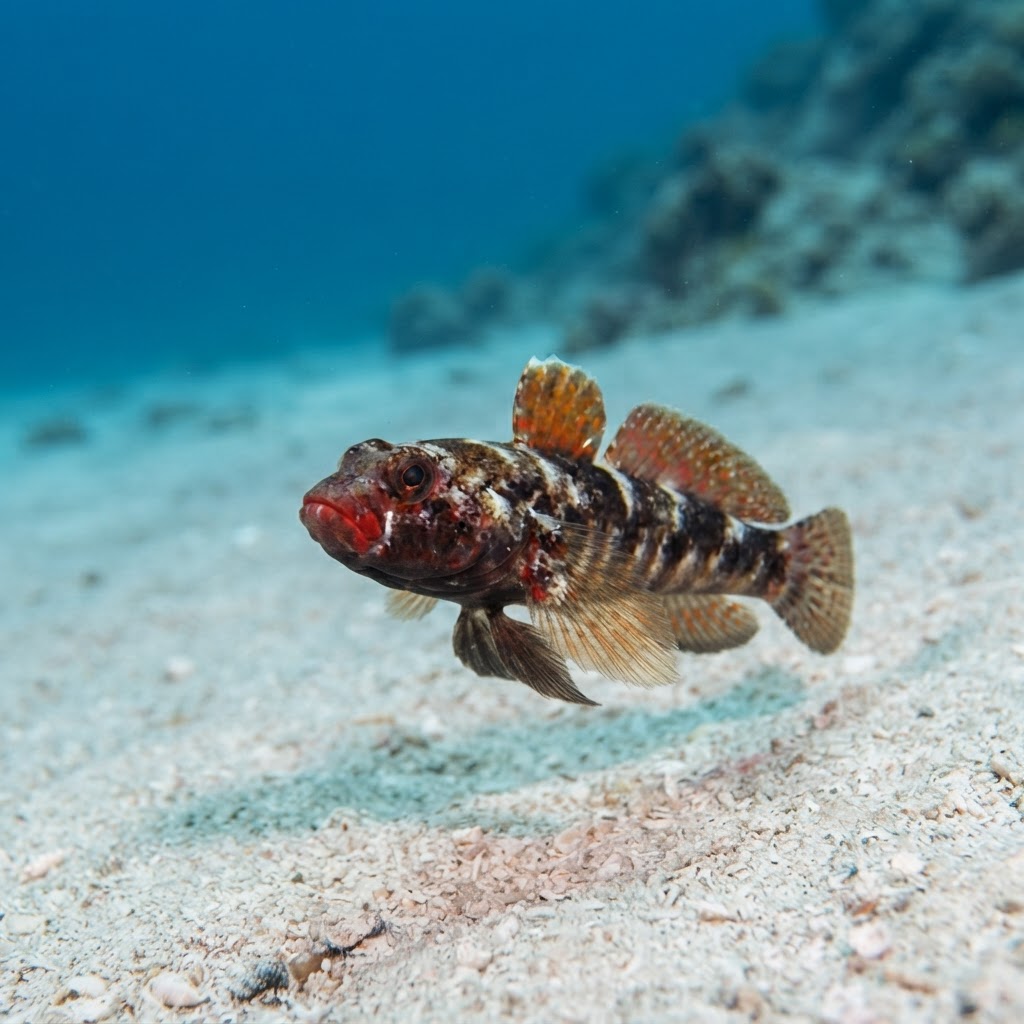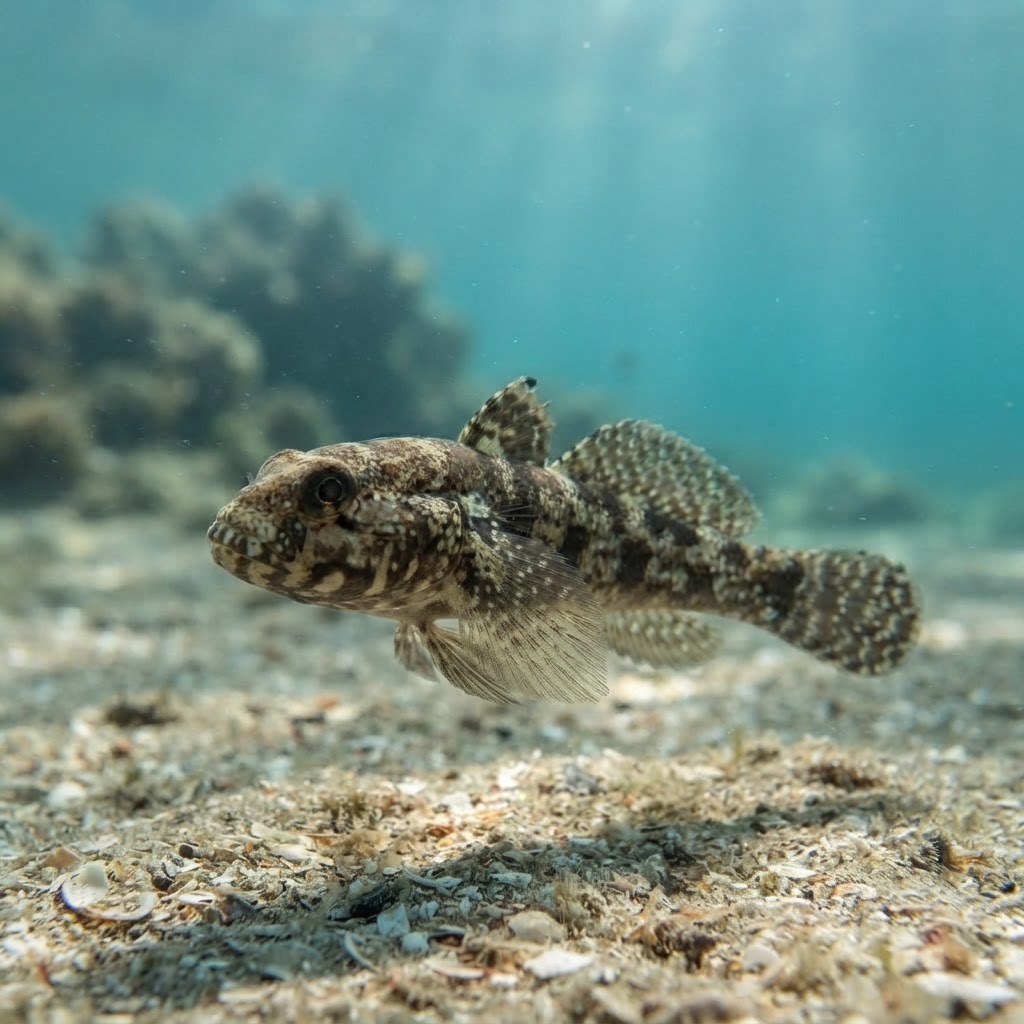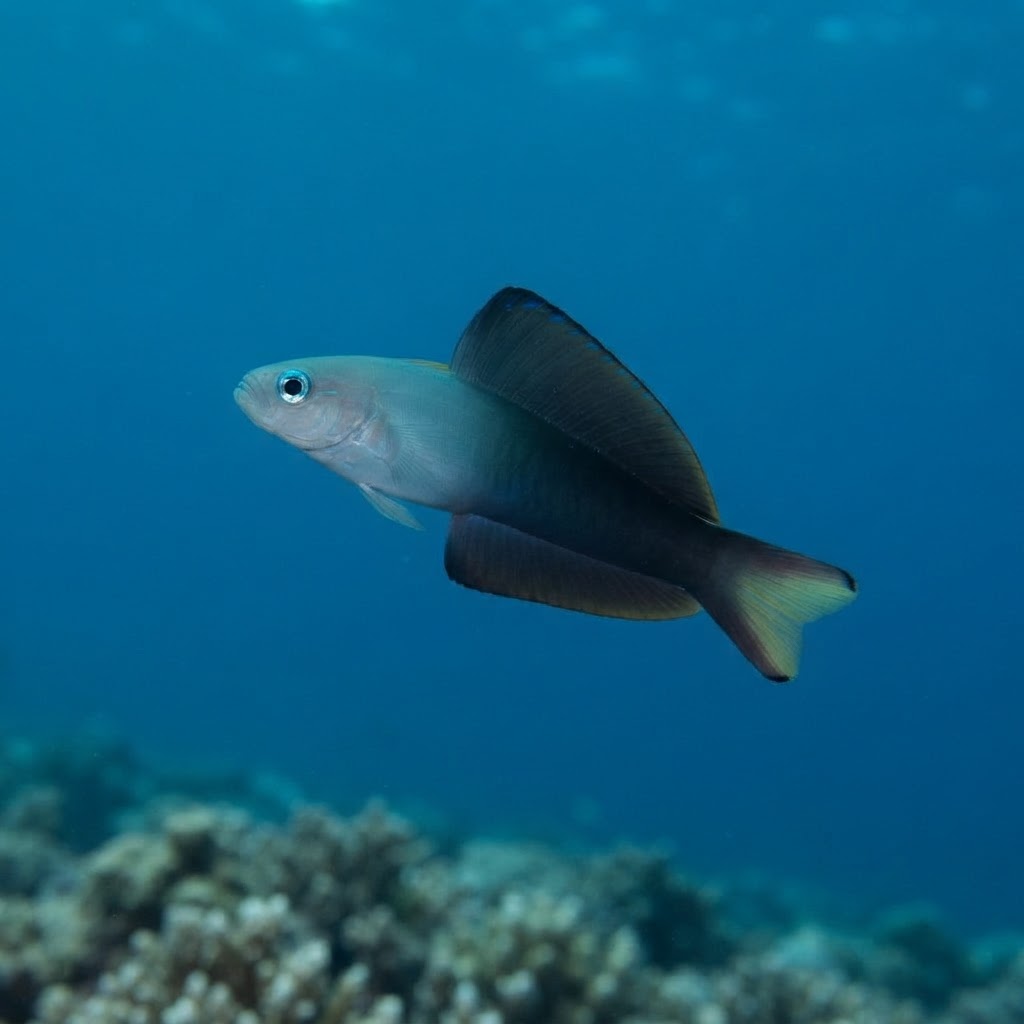
Ptereleotris evides
Elongated blue-grey gobies hovering over Maldives reef flats and Egyptian Red Sea drop-offs, year-round in warm water from 26 to 29 C.
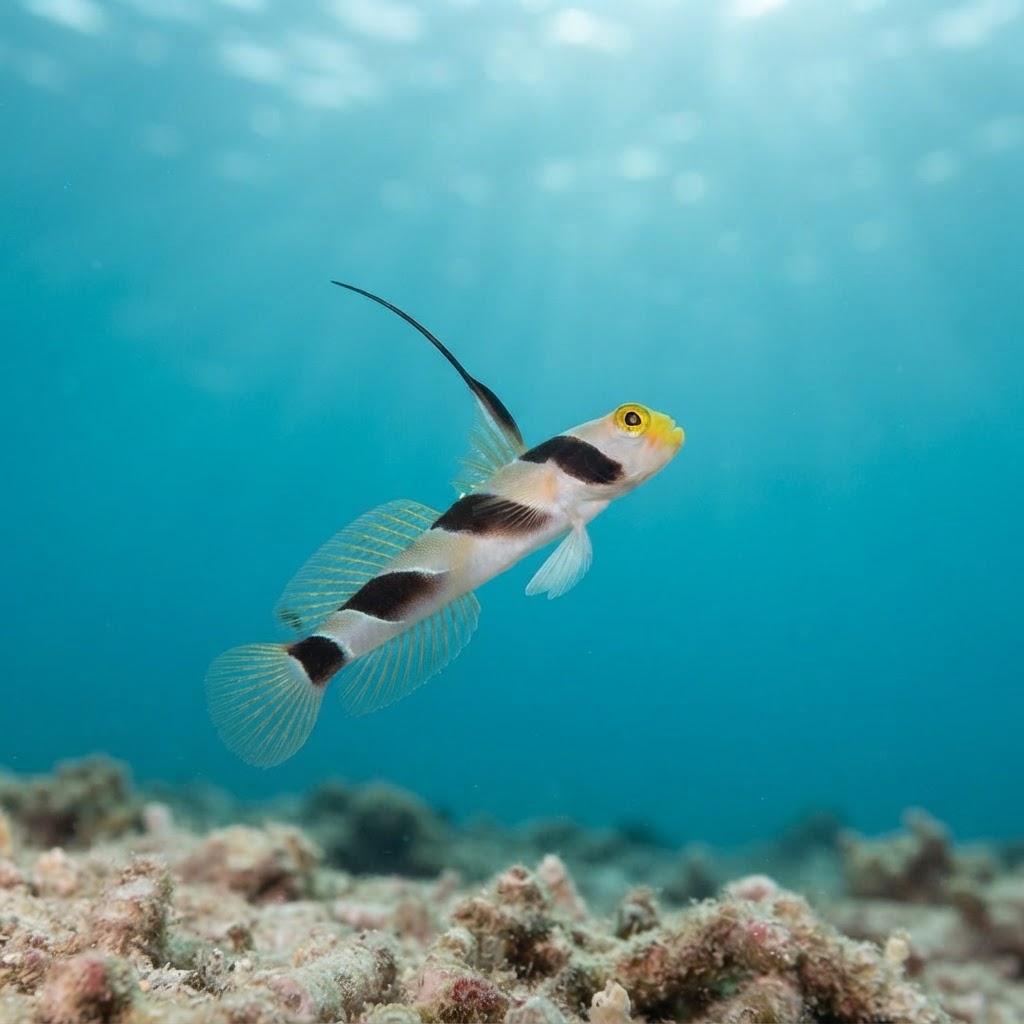
Slender, torpedo-shaped body around 9 cm long, pale blue-grey to pearly white with a darker rear half that fades toward the tail. The forked, dark-edged tail fin gives it its name and flicks open like scissors when it darts for cover. Usually seen hovering in pairs just above a burrow, nose angled into the current.
Hovers in loose pairs or small groups a body-length or two above the sand or rubble near its burrow, feeding on drifting plankton with quick darting bites. Skittish by nature, it retreats tail-first into its hole the moment a diver gets too close or moves too fast, then re-emerges once things settle. Most often spotted on open sand patches and rubble slopes rather than dense coral, usually in daylight hours.
It shares its burrow with a partner and rarely strays far from it, using the hole as an instant escape route rather than defending territory aggressively.
No clear seasonal pattern shows in the data, and its comfort range of roughly 26 to 29 C matches tropical reefs all year, so it is a fair year-round sighting wherever it occurs.
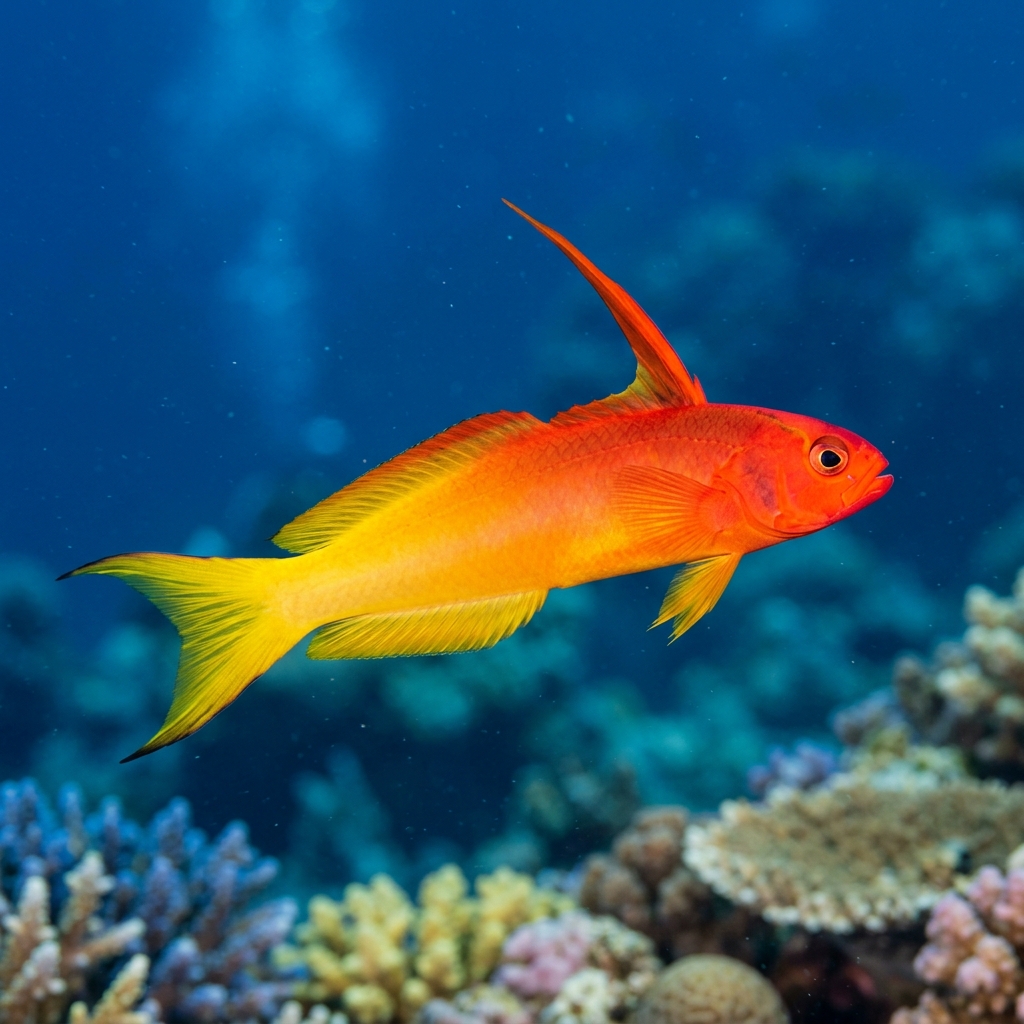
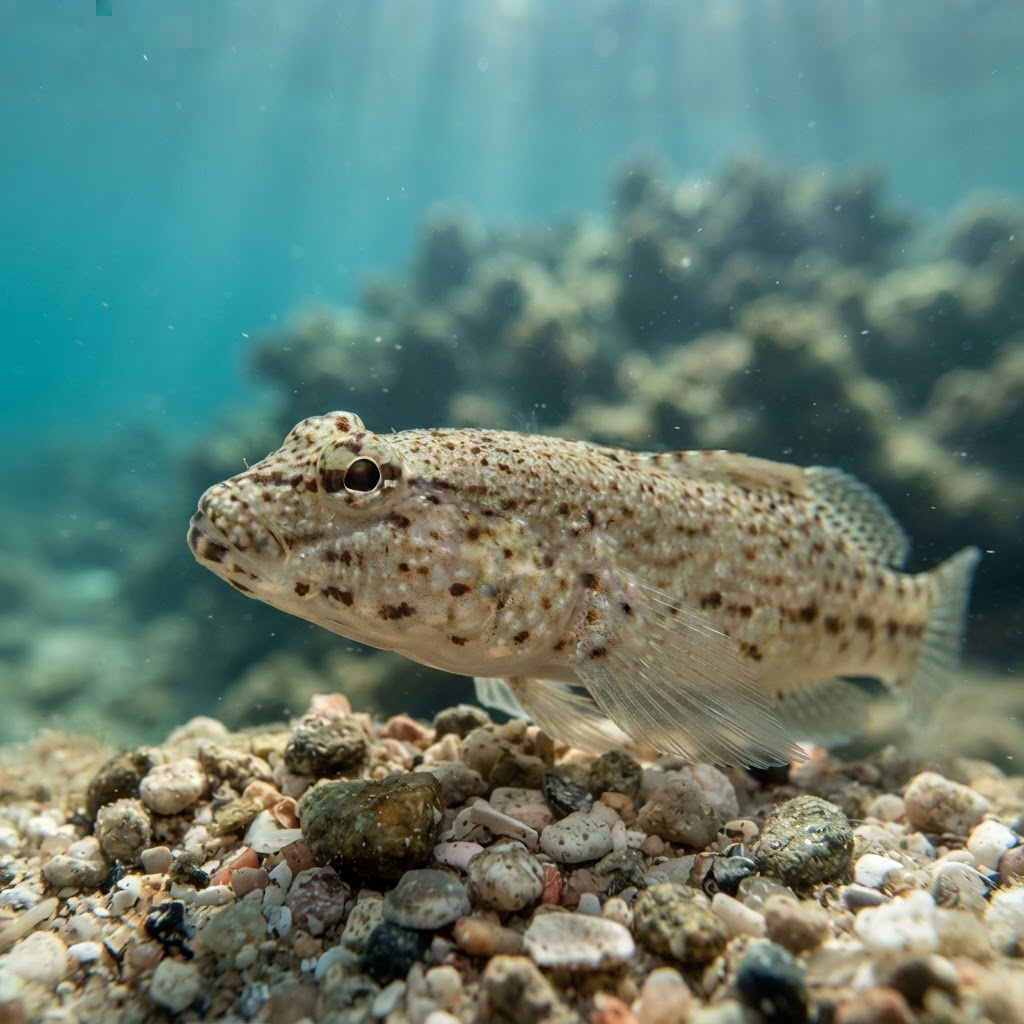
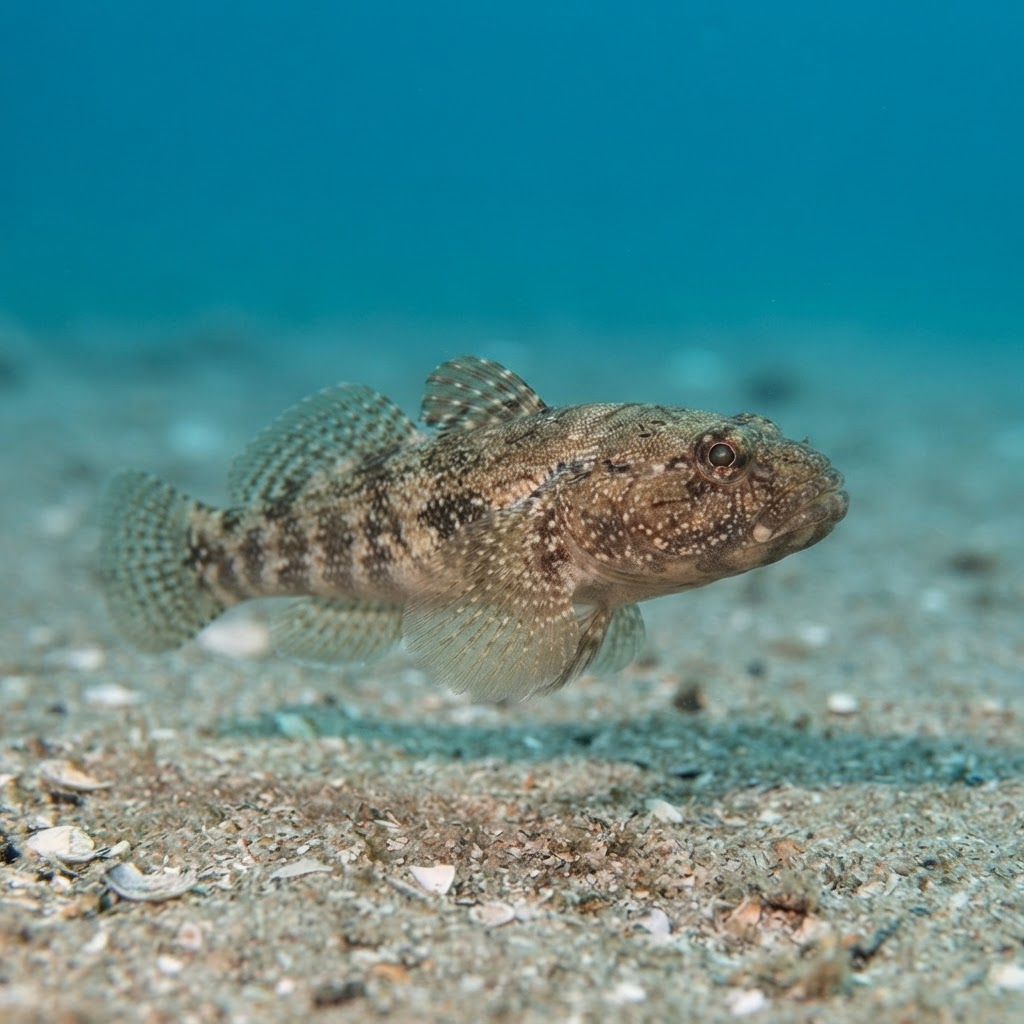
Reef neighbours a diver could mistake it for. Use the identification notes above to tell them apart.
Most reliably logged in the Maldives, especially the Central and Northern Atolls, and a strong presence across Egypt's Marsa Alam and the Deep South. Also a regular find in Indonesia's Raja Ampat, the Philippines' Visayas, Taiwan's Green Island and Kenting, and Palau's Rock Islands.
Mapping where Scissortail is logged…
The Maldives is the strongest region, particularly the Central and Northern Atolls, followed by Egypt's Marsa Alam area. It also turns up reliably in Raja Ampat, the Philippine Visayas, Taiwan, and Palau's Rock Islands.
There is no strong seasonal signal in the sighting data, and its warm-water niche of about 26 to 29 C is present on tropical reefs year-round, so any month is workable.
Look for a slender pale grey-blue fish about 9 cm long with a darker rear body and a forked, dark-edged tail. It hovers just above sand or rubble near a burrow, usually in a pair, and darts into the hole if you approach too fast.
They typically reach about 9 cm in length, a small, slim reef fish easy to overlook against open sand.
No. They pose no threat to divers and simply retreat into their burrow if approached too closely.
It hovers over sand and rubble near its shared burrow, feeding on plankton drifting past, and shoots down the hole tail-first at any sign of disturbance before reappearing minutes later.
Site and sighting data is aggregated from diver logs, iNaturalist and GBIF. For taxonomy and conservation status:
Slender Goby
806 sites