Ecsenius schroederi
A pocket-sized reef blenny best known from Raja Ampat, Indonesia, in warm 26.5 to 29.3 C water year-round.
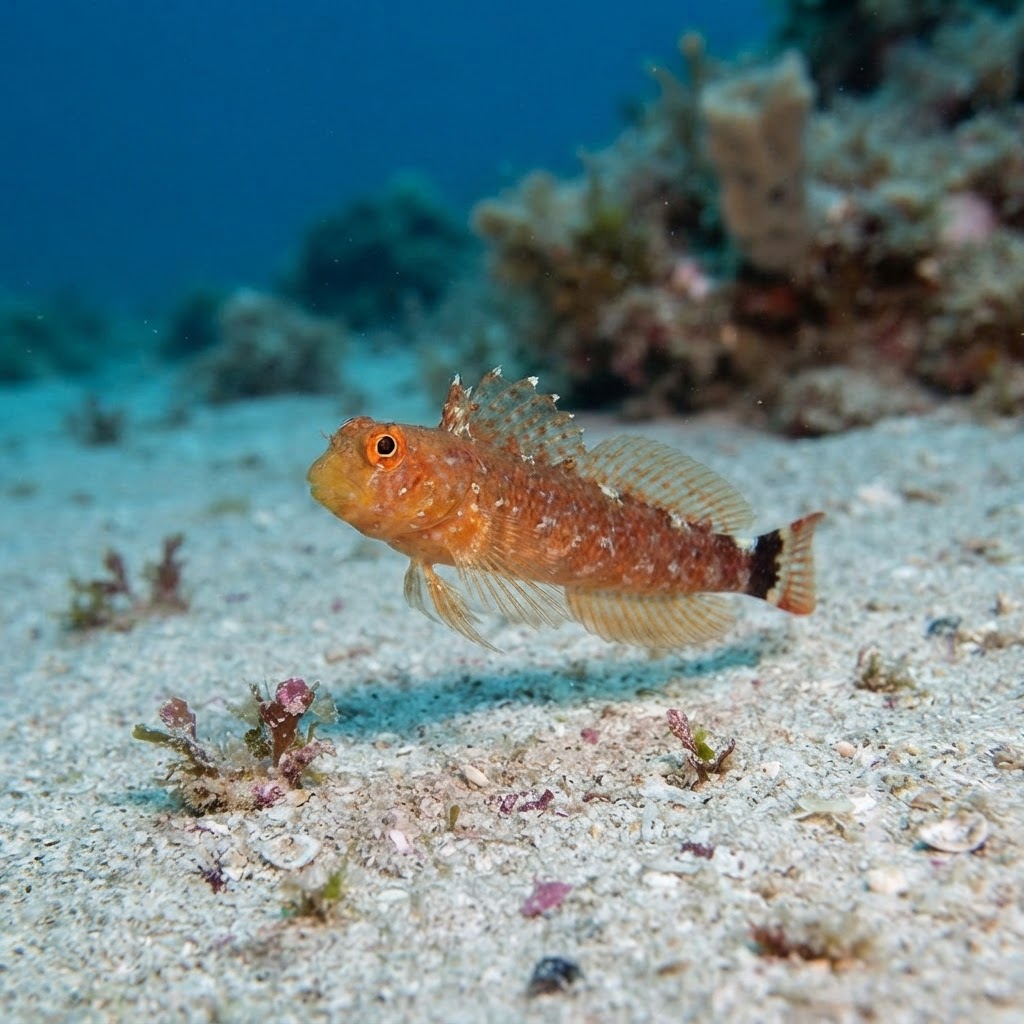
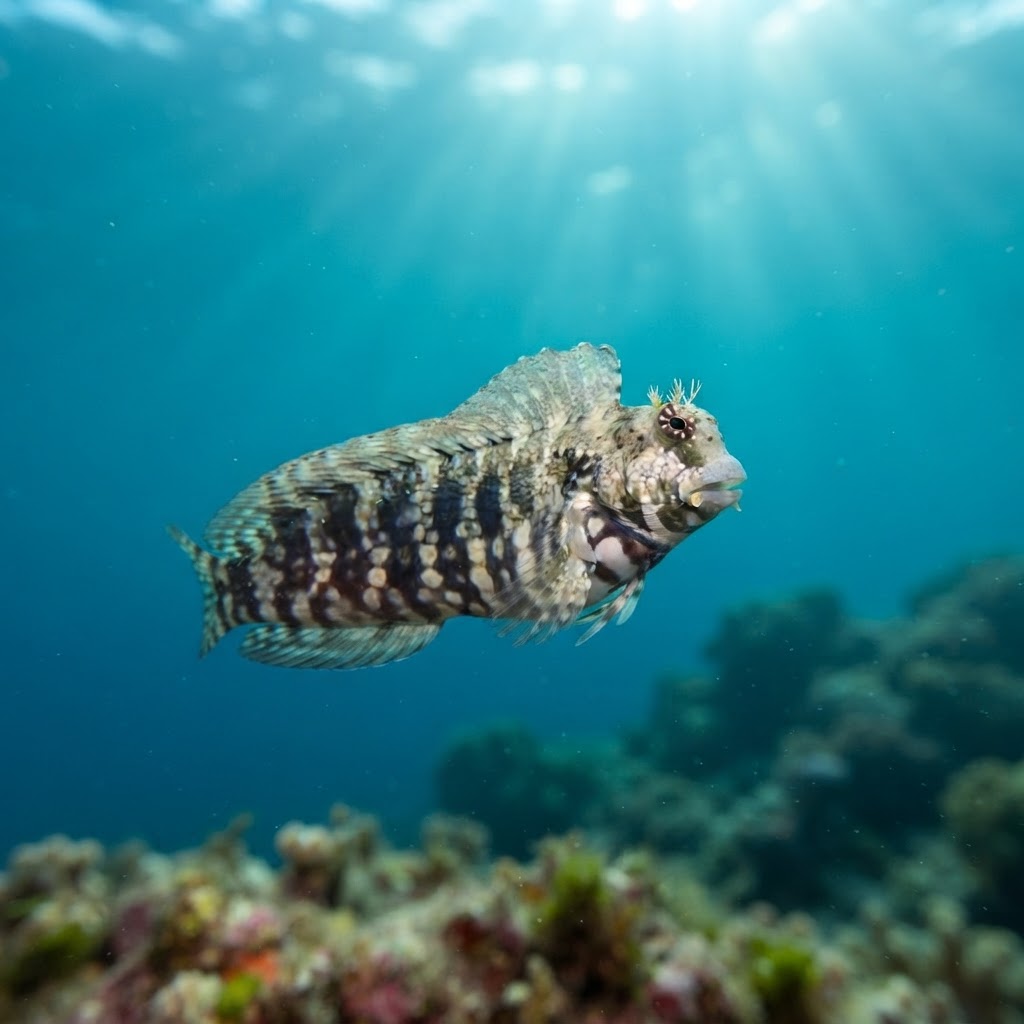
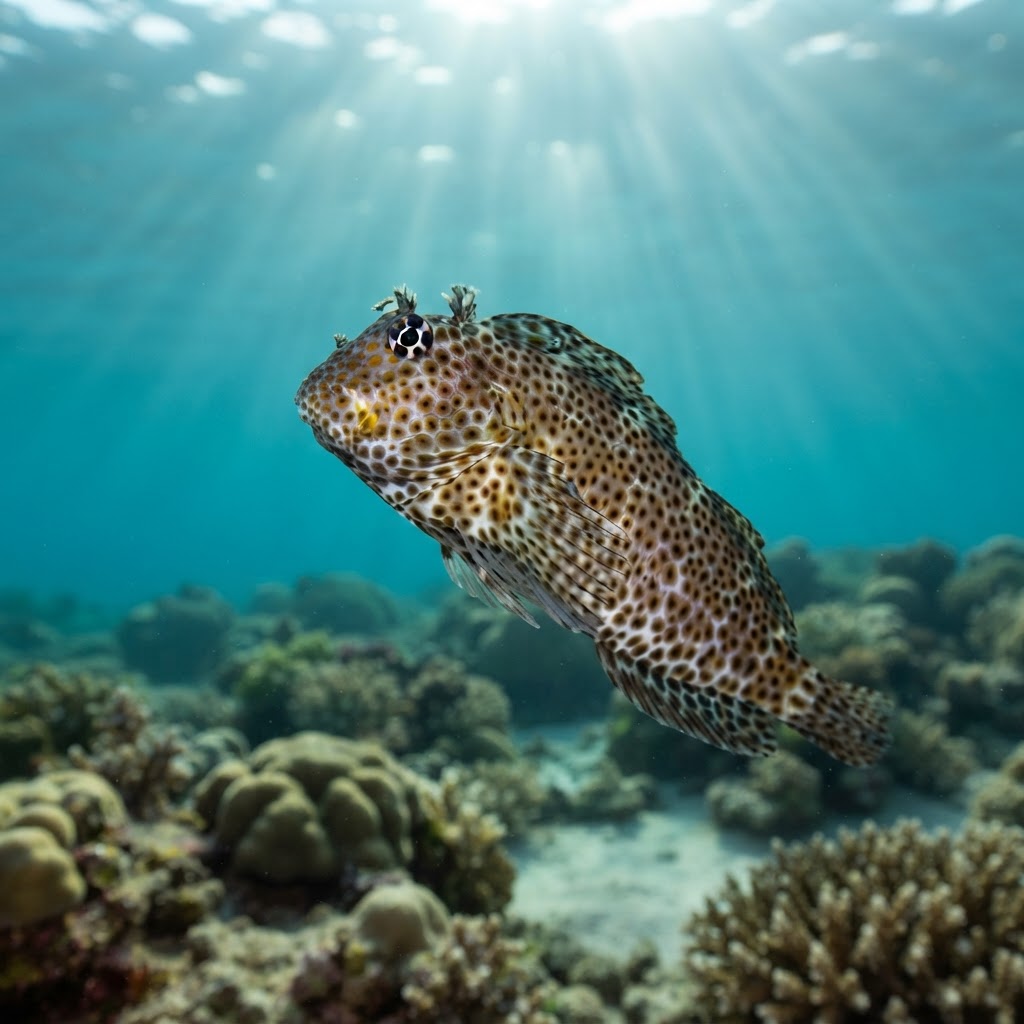
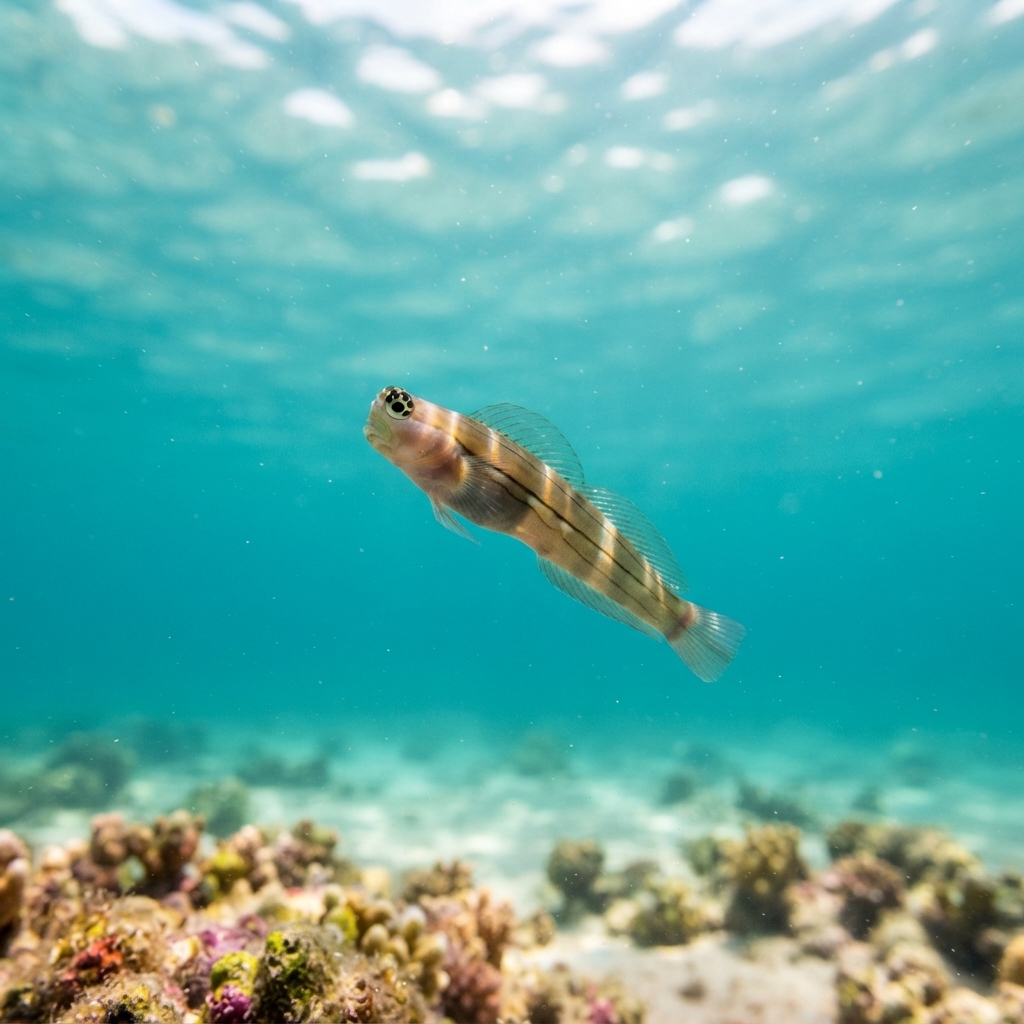
A tiny fish, just 5 cm at most, with an elongated blenny body that tapers to a slim tail and sits propped on its pectoral fins rather than swimming freely. Look for mottled brown to olive patterning broken by paler blotches along the flanks, and a blunt head with close-set eyes typical of combtooth blennies. It perches motionless on rubble, dead coral, or reef rock, which is usually the giveaway before the colour pattern is.
Spends most of its time stationed on a favoured patch of rubble or rock, darting only a short distance if disturbed before resettling nearby. Divers tend to spot it on slower, close-focus dives rather than while cruising a reef wall, since it blends into its background until it moves. It is not shy so much as inconspicuous, so a careful scan of rubble and coral debris is usually what turns one up.
Combtooth blennies like this one use comb-shaped teeth to graze algae and detritus directly off the reef surface, a feeding style that keeps them tied to one small patch of substrate rather than roaming.
Water in its recorded range sits between 26.5 and 29.3 C, comfortably warm year-round, and there is no detected seasonal pattern, so any time you are diving Raja Ampat is fair game.
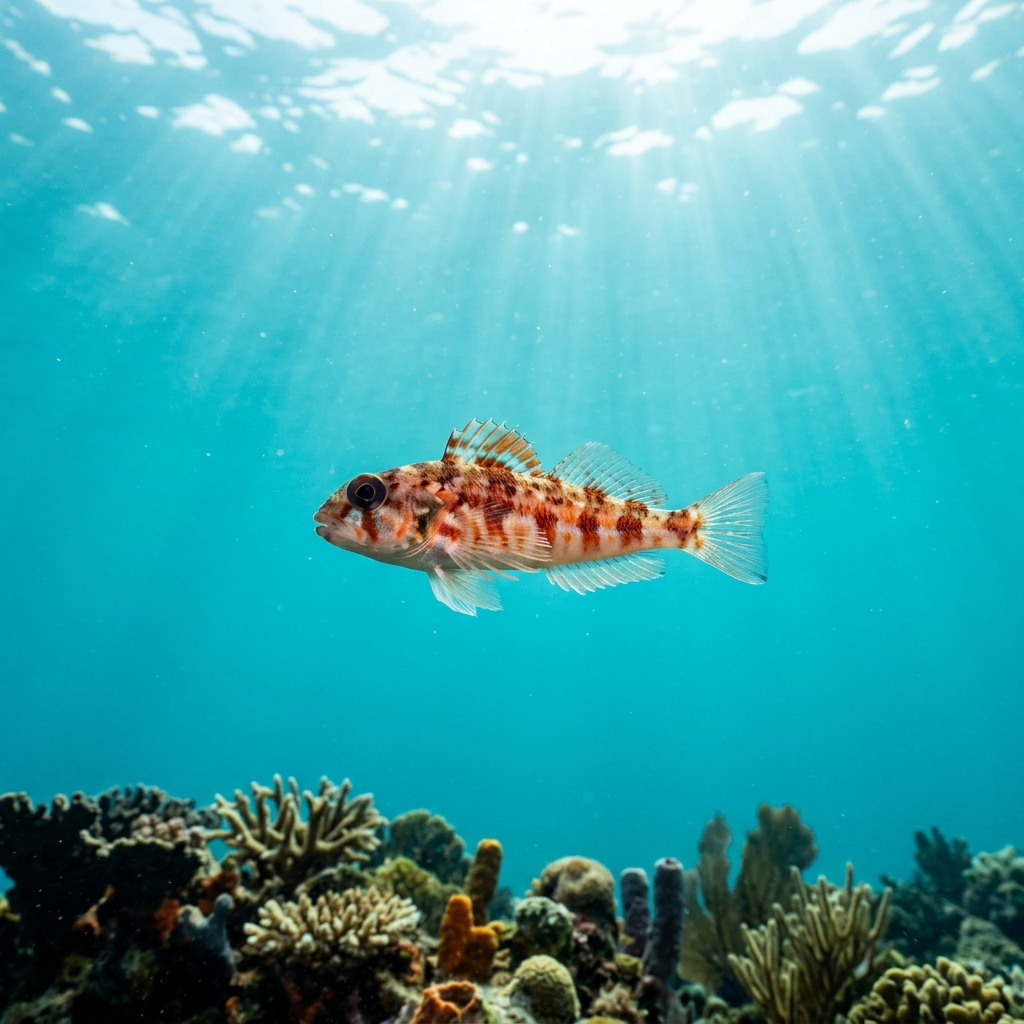
Reef neighbours a diver could mistake it for. Use the identification notes above to tell them apart.
Every logged sighting of this blenny comes from Indonesia, with Raja Ampat standing out as the one confirmed region. If you are diving Raja Ampat's rubble patches and coral slopes, this is one of the small reef fish worth slowing down for.
Mapping where Schroeder's Combtooth Blenny is logged…
All confirmed sightings come from Indonesia, concentrated in Raja Ampat. It is logged as uncommon at most sites there, so patient reef scanning pays off.
There is no clear seasonal pattern in the sighting data, and its water niche of 26.5 to 29.3 C holds steady year-round in Raja Ampat, so it can turn up on any visit.
Look for a 5 cm fish with a mottled brown and pale body perched motionless on rubble or dead coral rather than swimming in open water. Its blunt head and slim tapering body are typical combtooth blenny features.
They max out around 5 cm, making them one of the smaller blennies you will spot on a Raja Ampat reef.
Like other combtooth blennies, it uses comb-like teeth to graze algae and organic film straight off rock and rubble surfaces, which keeps it anchored to a small home patch instead of roaming the reef.
Site and sighting data is aggregated from diver logs, iNaturalist and GBIF. For taxonomy and conservation status:
Rusty Blenny
2,605 sites