Paguristes cadenati
Bright red legs, white-spotted claws: find this hermit crab on Caribbean reefs from Sint Eustatius to Grand Cayman year-round in warm water.
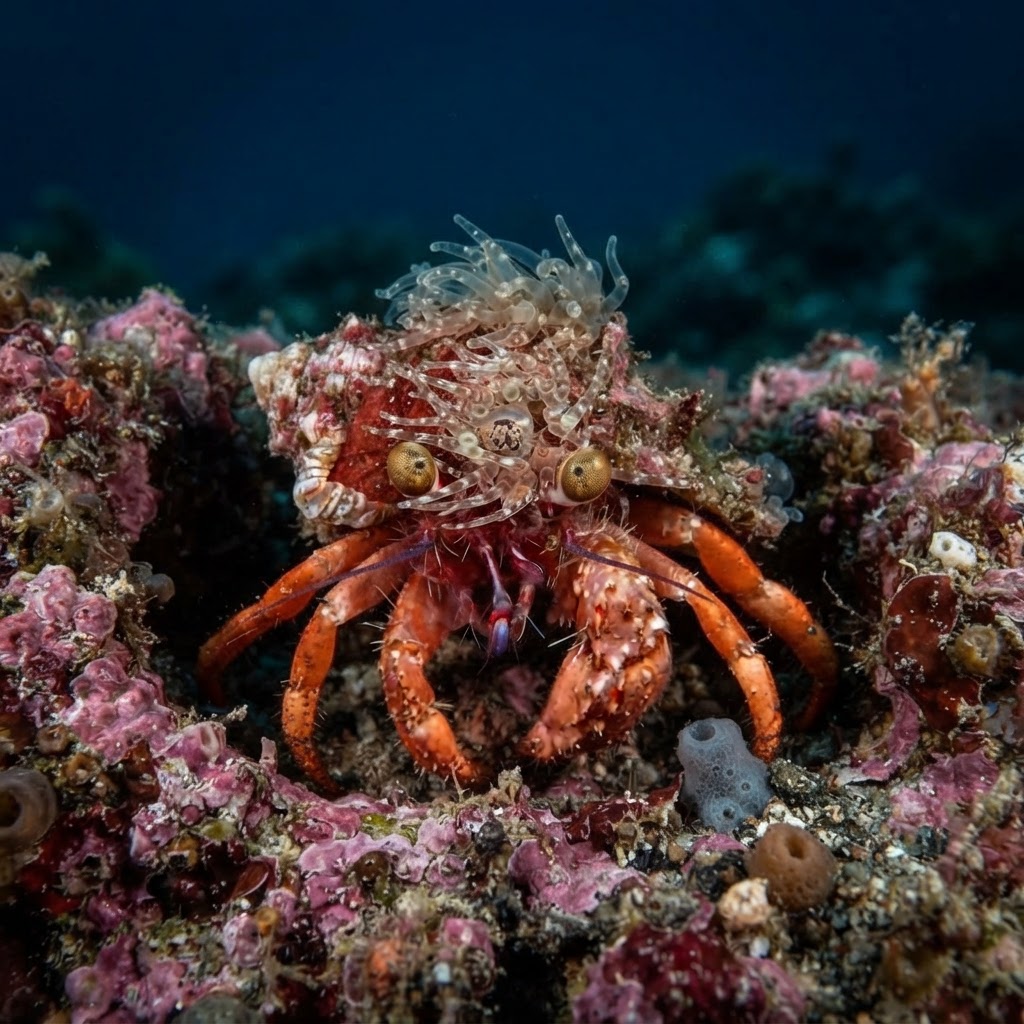
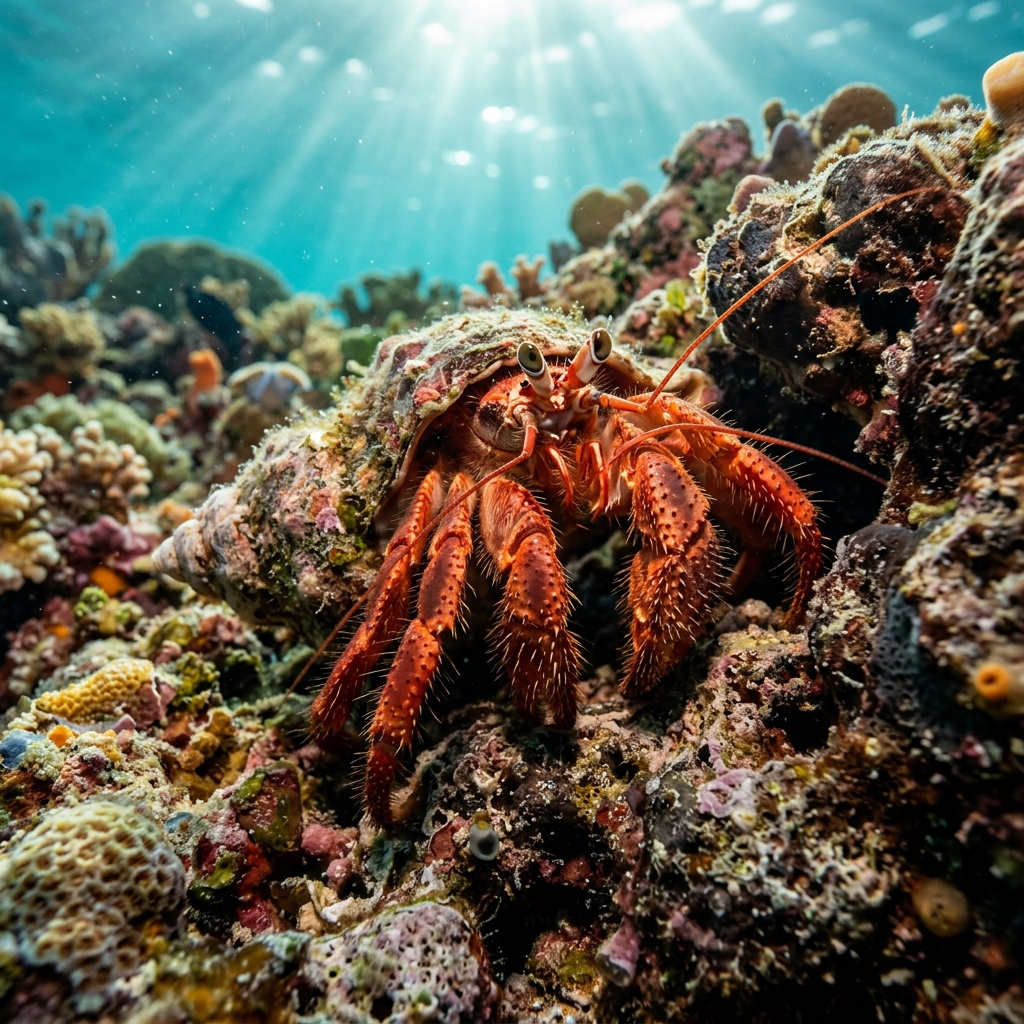
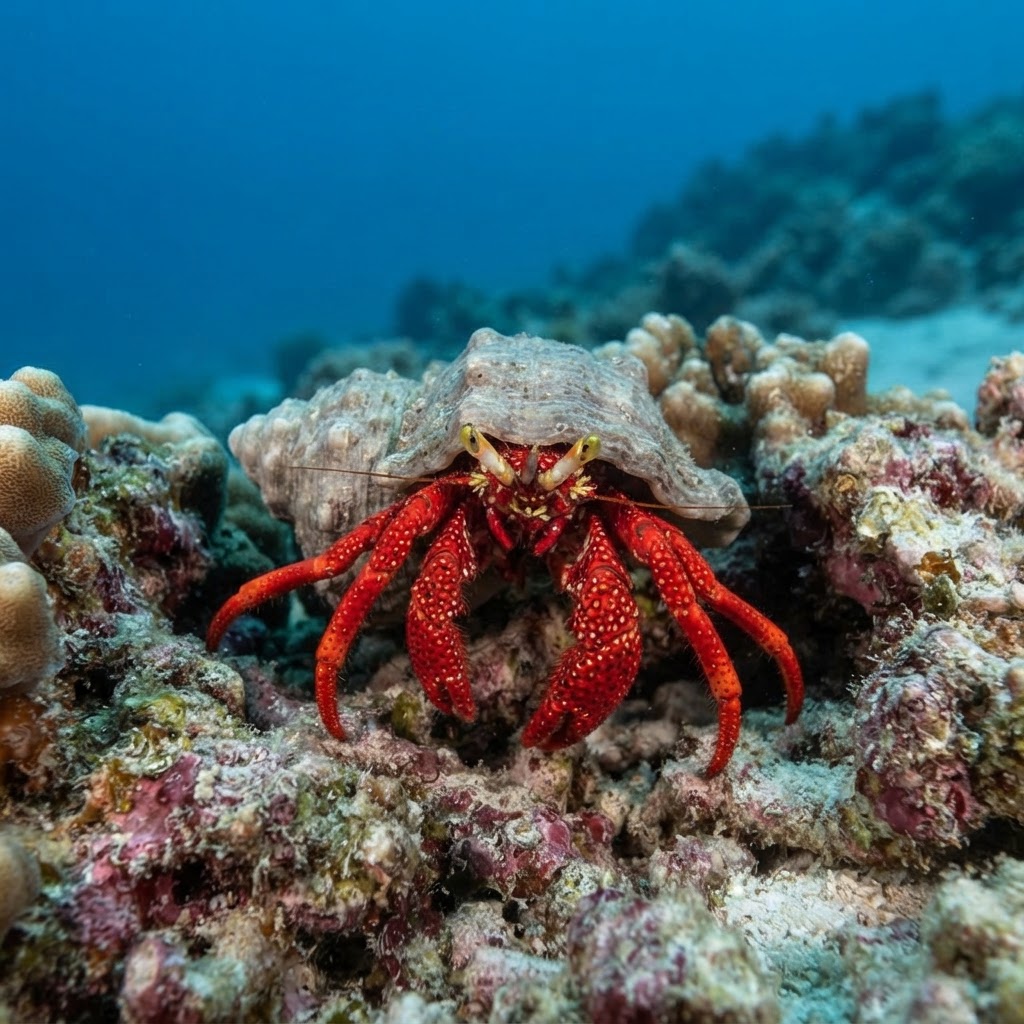
Look for a small hermit crab with vivid scarlet-red legs dotted in white spots, tucked into a borrowed snail shell it drags across the reef. The claws are orange to red with pale tips, and the eyestalks are typically a matching or slightly lighter red. Size in the water is modest, easy to miss unless you are scanning rubble and rock crevices at close range rather than looking at open reef.
Divers usually find this hermit crab picking through algae and detritus on rubble patches, rock ledges, and reef crevices, moving at its own slow pace regardless of who is watching. It rarely reacts much to a diver's presence beyond retreating slightly into its shell if a torch or hand gets too close. Sightings lean toward the lower end of common, so spotting one during a dive counts as a real find rather than a given.
Like other hermit crabs, it grows out of its borrowed shells over time and has to find and move into a larger one, sometimes triggering brief shell-swapping stand-offs with other hermit crabs nearby.
No clear season shows in the sighting data, and the water-temperature range it tolerates (roughly 25 to 31 C) covers Caribbean reef conditions all year, so it is a year-round find rather than a seasonal one.
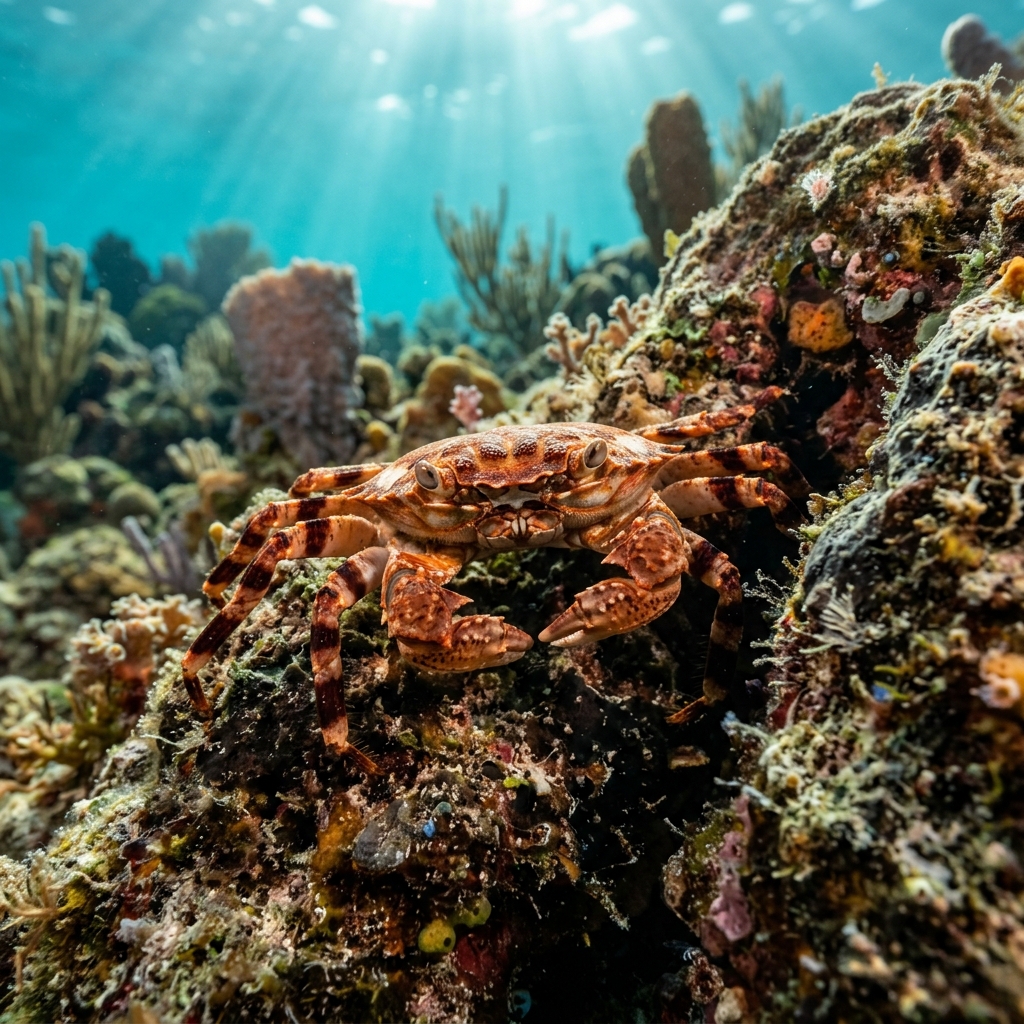
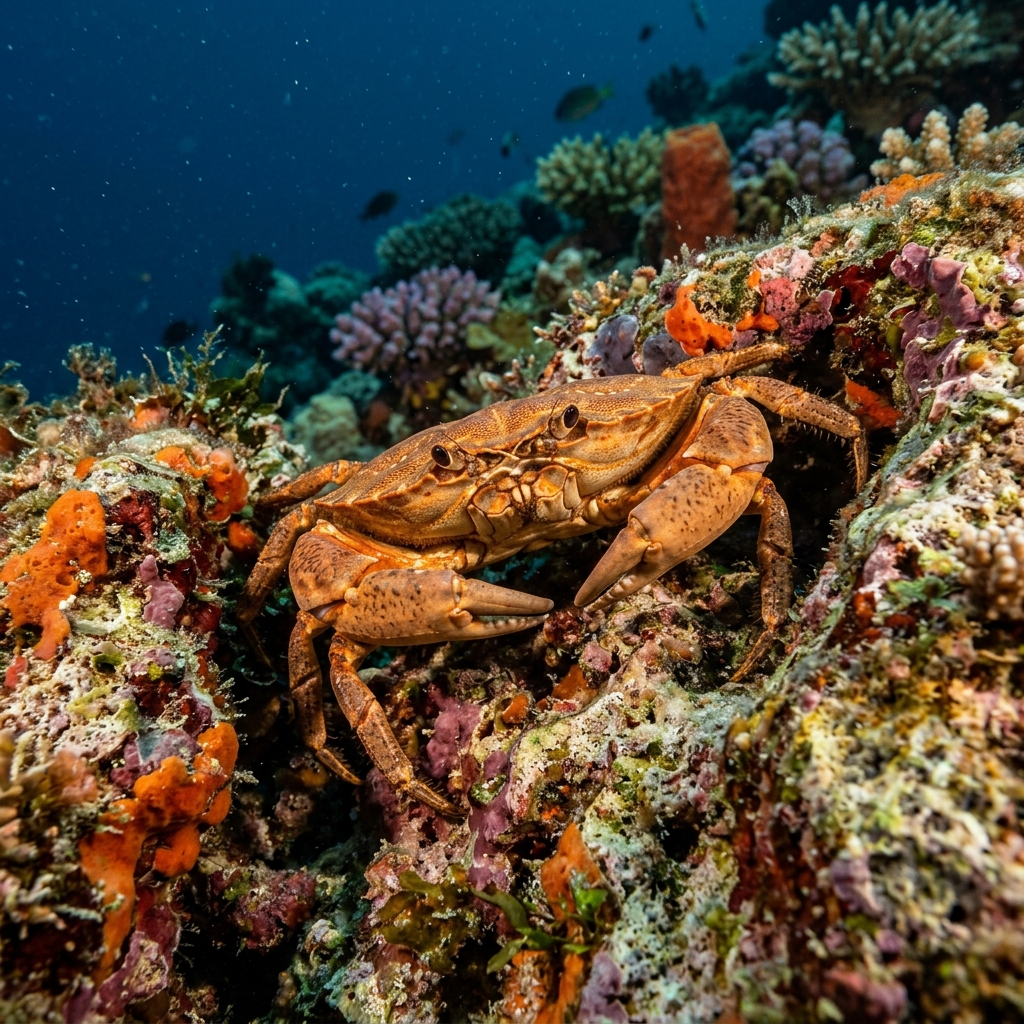
Reef neighbours a diver could mistake it for. Use the identification notes above to tell them apart.
Most reliably logged around Sint Eustatius, with Grand Cayman in the Cayman Islands also a strong spot for it. Smaller but real populations turn up in the Bay Islands of Honduras and on Bonaire's Leeward Coast, with occasional sightings off Curacao.
Mapping where Scarlet Reef Hermit Crab is logged…
Sint Eustatius produces the most sightings, followed by Grand Cayman in the Cayman Islands. The Bay Islands of Honduras and Bonaire's Leeward Coast also have recorded populations.
There is no strong seasonal pattern in the sighting data. It tolerates warm Caribbean reef temperatures year-round, so any time you are diving these regions is fair game.
Check for bright red legs covered in small white spots and a borrowed snail shell it carries as it moves across rubble or crevices. The claws are reddish-orange with pale tips.
They scavenge algae and organic debris off rock and rubble surfaces, using their claws to pick through material rather than actively hunting prey.
Site and sighting data is aggregated from diver logs, iNaturalist and GBIF. For taxonomy and conservation status:
European Green Crab
2,469 sites