Calamus calamus
Look for the blue eye-ring and copper cheek flush on Bay Islands reefs, where this uncommon porgy turns up in warm water year-round.
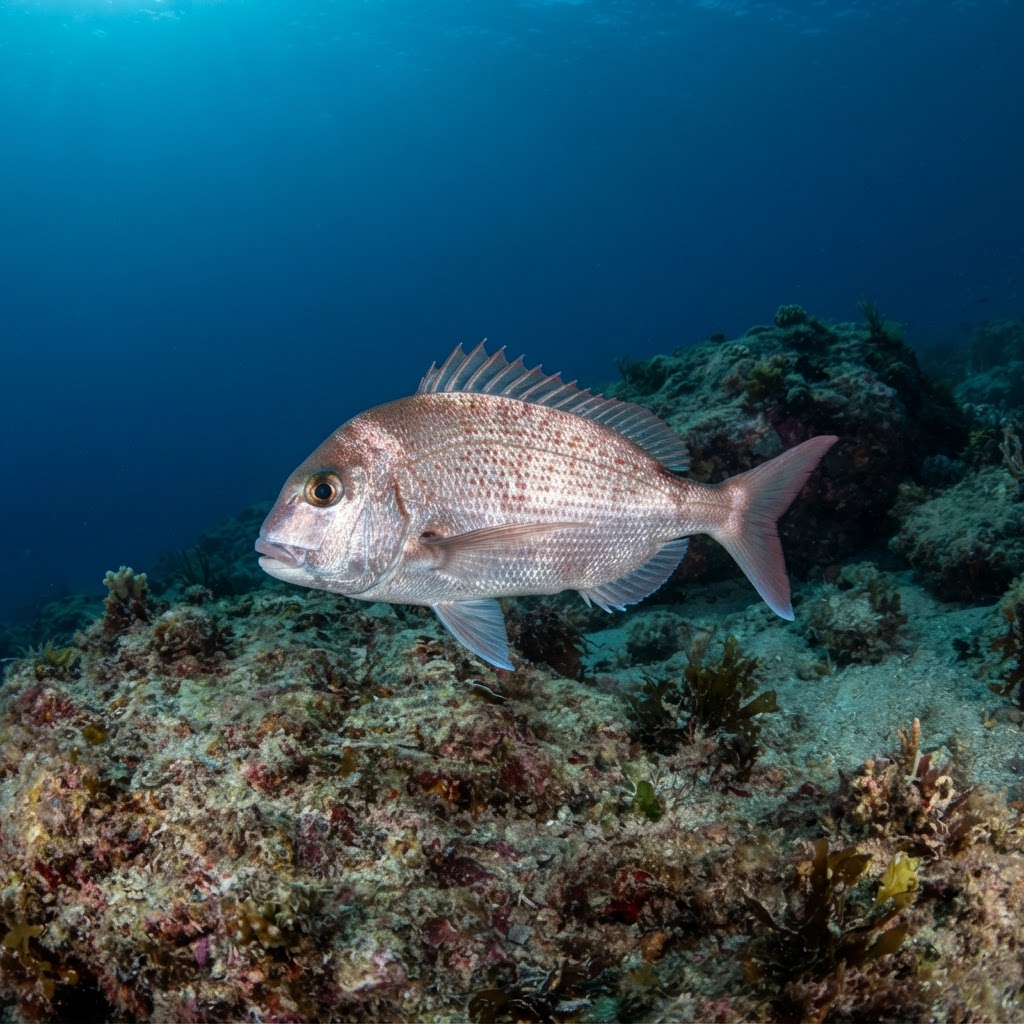
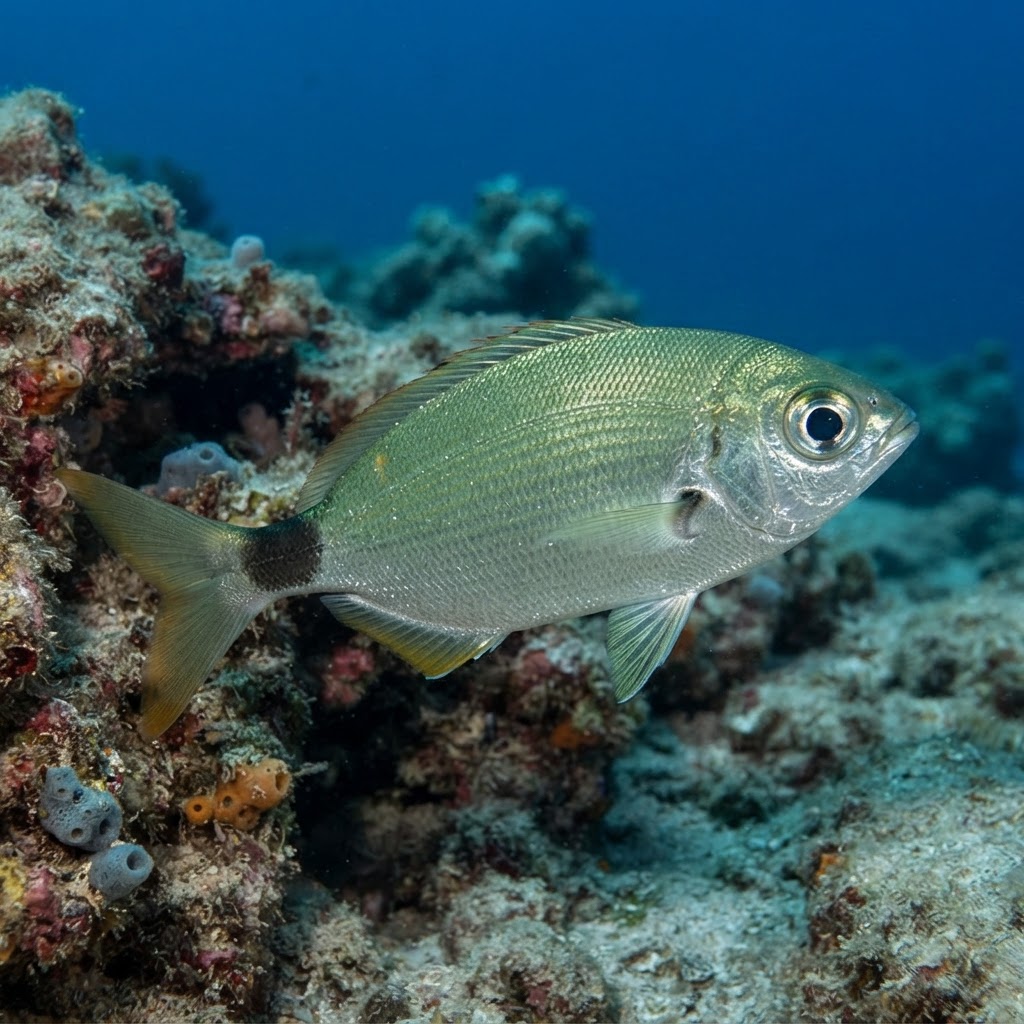
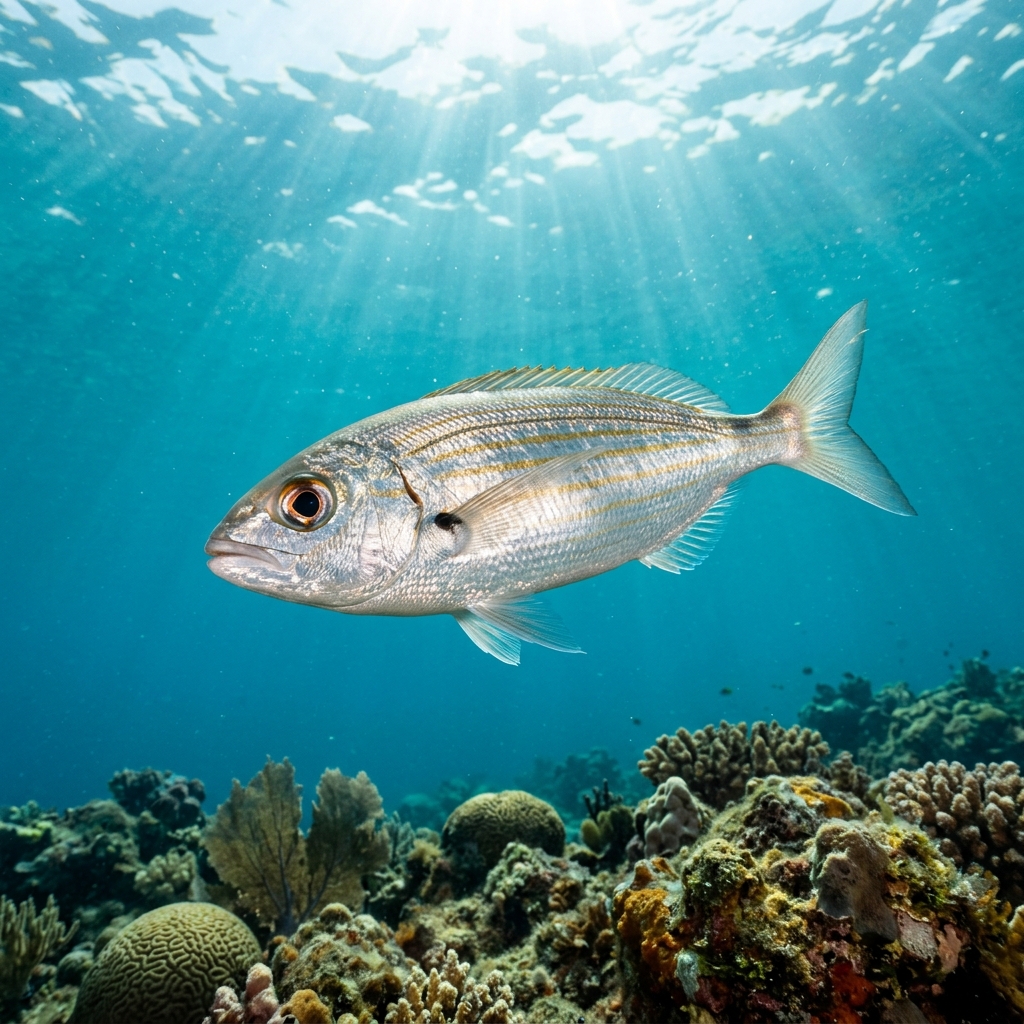
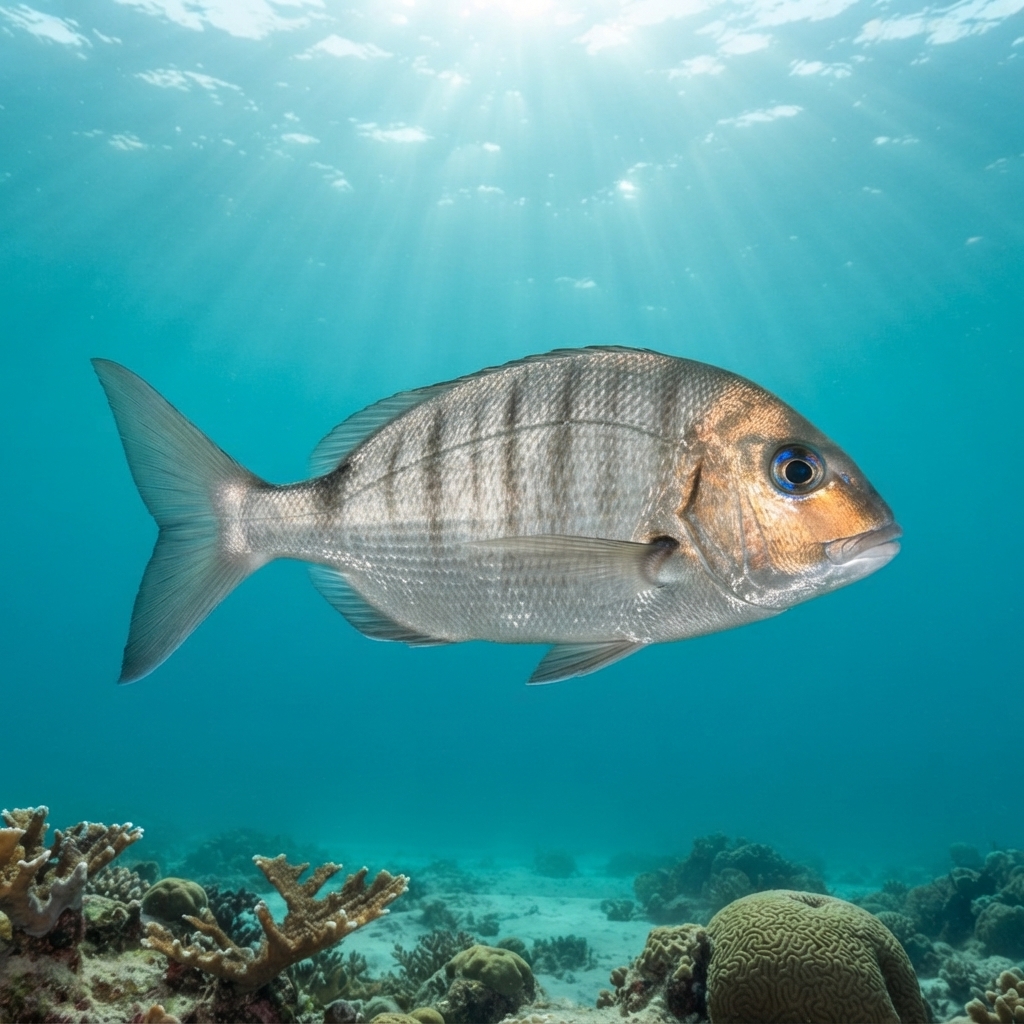
Grows to around 39 cm, with a deep, oval, somewhat flattened body typical of porgies. The giveaway is the blue ring circling the eye set against a coppery or golden flush on the cheek, on an otherwise silvery body with faint dusky bars. It has a blunt head profile and a small mouth built for picking at the reef rather than chasing prey, so it tends to hover close to structure rather than cruise open water.
Divers usually find it hovering near reef structure or over sand patches close to coral, picking at the bottom rather than schooling in open water. It is not flighty but keeps a cautious distance, drifting off if a diver closes in too fast rather than bolting. Sightings are logged as uncommon at most sites, so it is worth a slow look along ledges and rubble edges rather than expecting it in the open.
Like many porgies, it uses strong, blunt teeth to crush hard-shelled invertebrates such as small molluscs and crustaceans picked off the reef bottom, a feeding style that keeps it tied closely to structure rather than the water column.
No clear seasonal pattern shows up in the sightings, and with a comfortable range of roughly 23 to 28°C, Caribbean reefs stay within that window most of the year, so it is best treated as a year-round sighting.
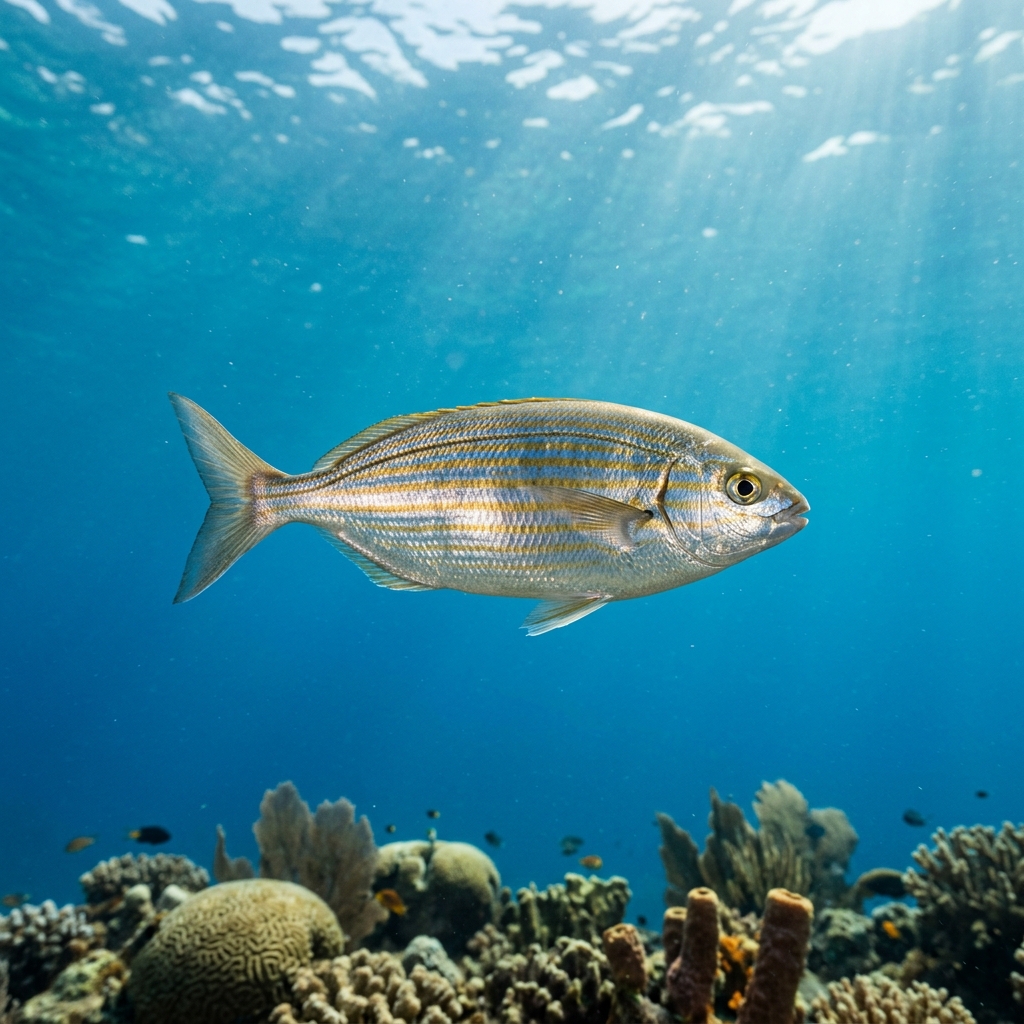
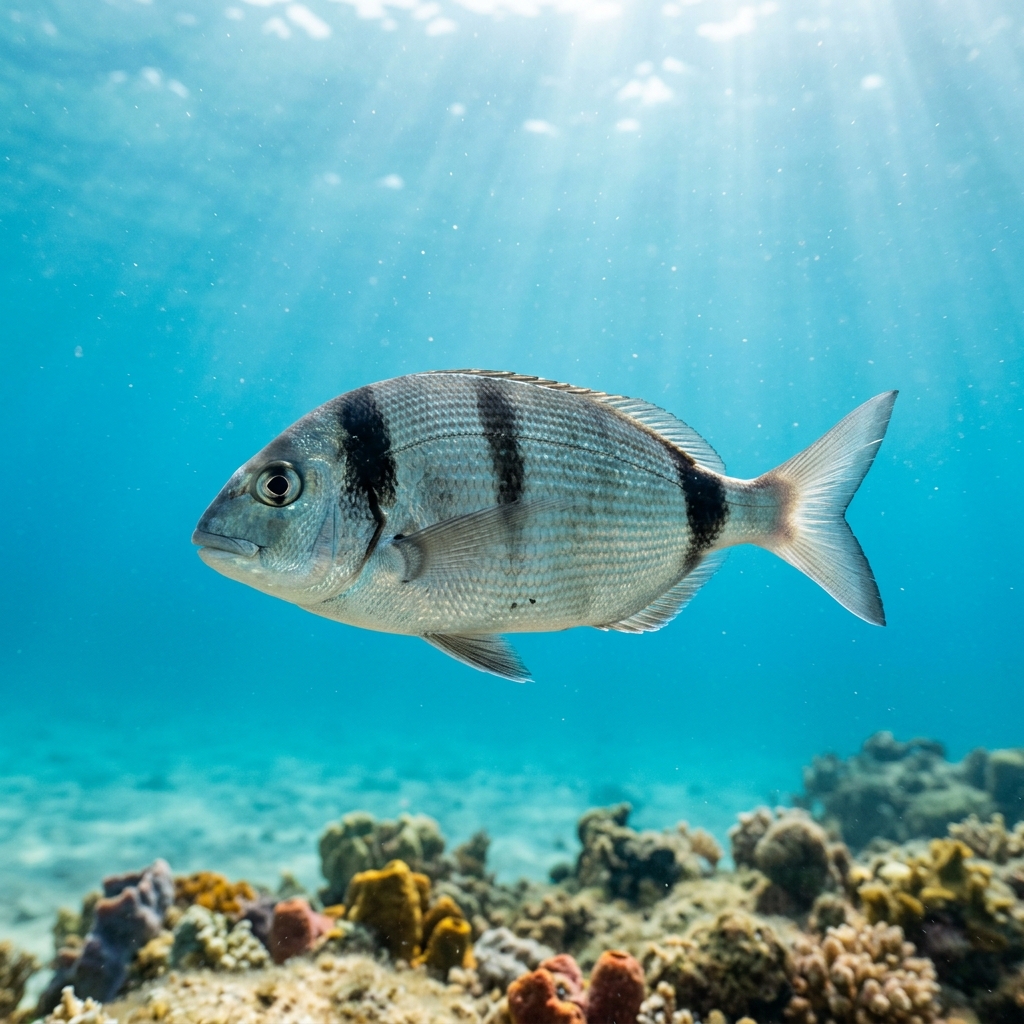
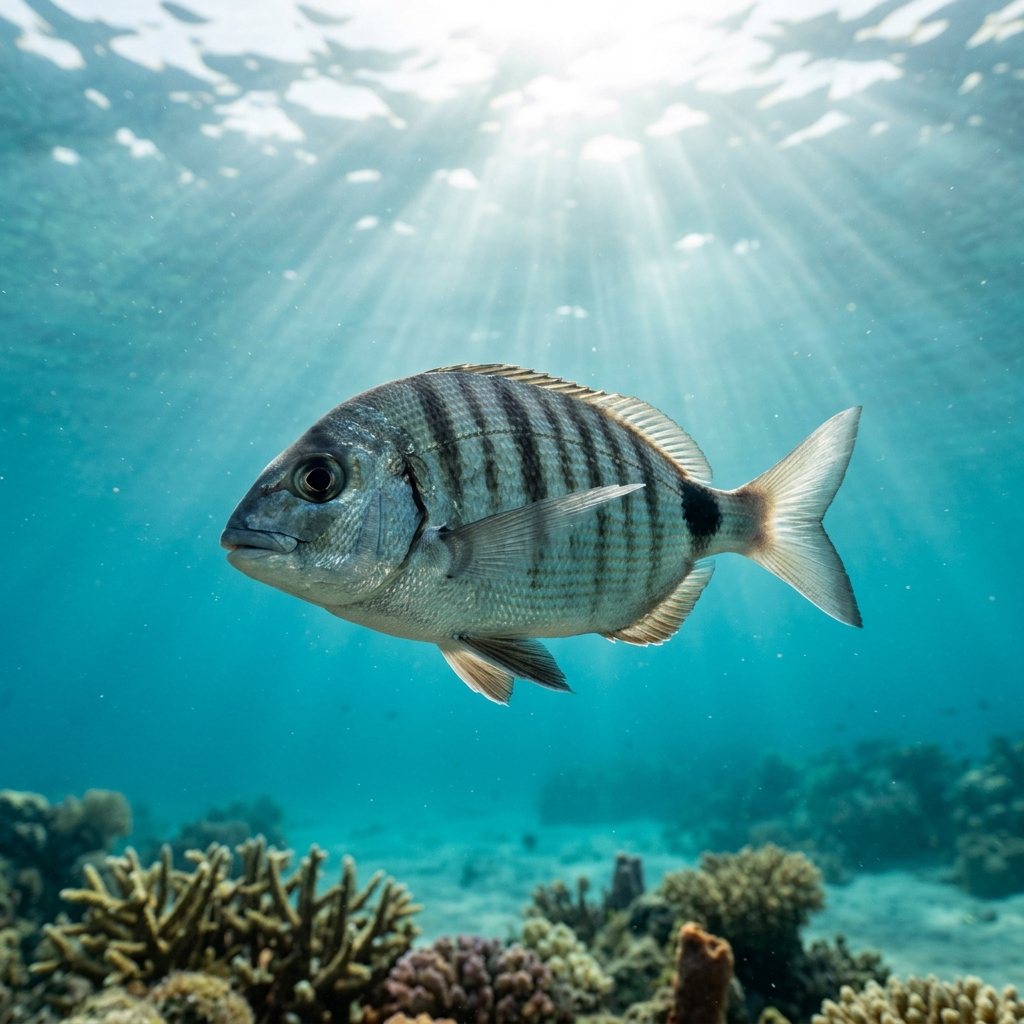
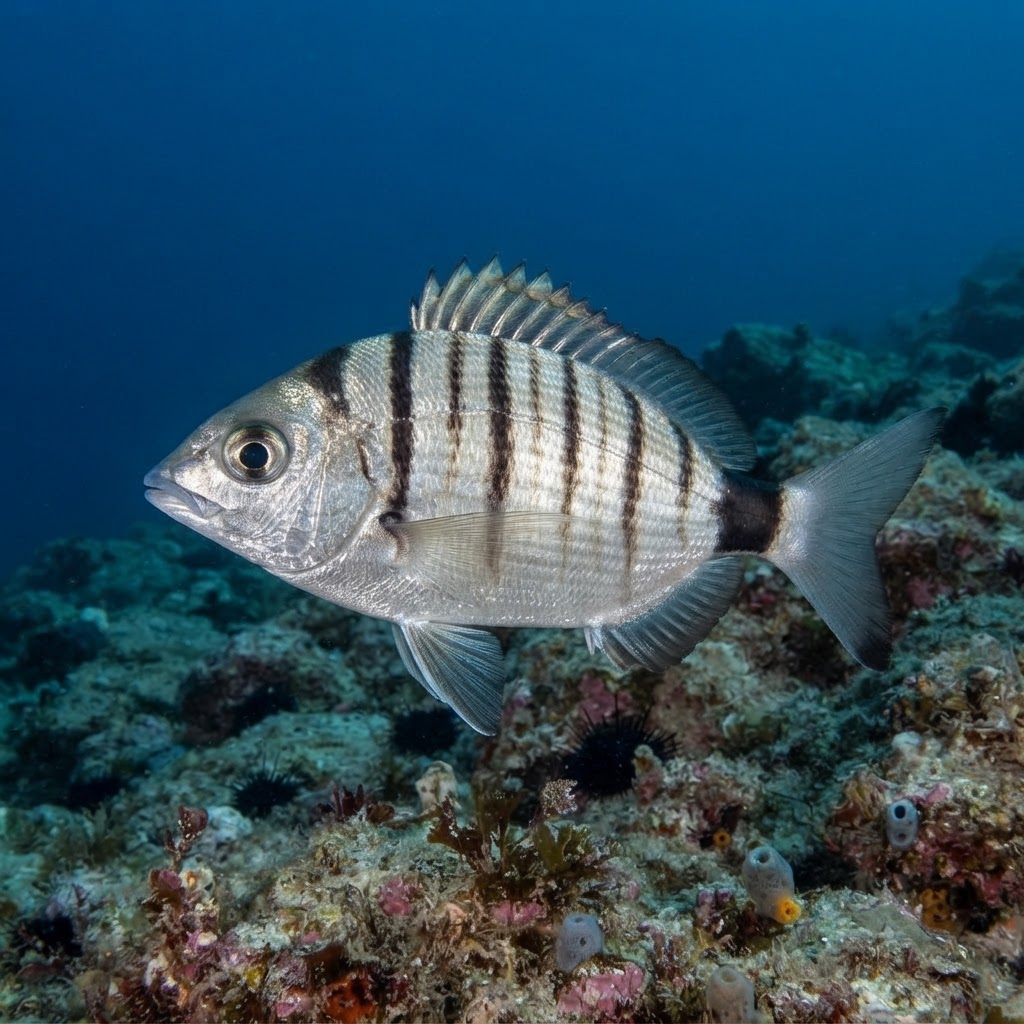
Reef neighbours a diver could mistake it for. Use the identification notes above to tell them apart.
Most reliably logged in Honduras, especially around the Bay Islands, which account for the bulk of recorded sightings. Belize's Lighthouse Reef and Bimini in the Bahamas are the next best bets, with occasional records from Florida and Mexico's Yucatán Peninsula.
Mapping where Saucereye Porgy is logged…
The Bay Islands of Honduras are the strongest area for sightings, with Lighthouse Reef in Belize and Bimini in the Bahamas also reliable. Occasional records come from Florida and Mexico's Yucatán Peninsula.
There is no strong seasonal pattern in the sightings, and warm Caribbean water in its preferred 23 to 28°C range holds year-round, so any month is a reasonable bet.
Look for a silvery, deep-bodied fish with a blue ring around the eye and a coppery flush on the cheek. It hovers close to reef structure or sand patches rather than swimming in open water.
They reach around 39 cm in length, a mid-sized reef fish comparable to other porgies in the sea bream family.
No. They are not considered dangerous to divers and simply drift away if approached too closely.
Site and sighting data is aggregated from diver logs, iNaturalist and GBIF. For taxonomy and conservation status:
Saddled Bream
3,846 sites