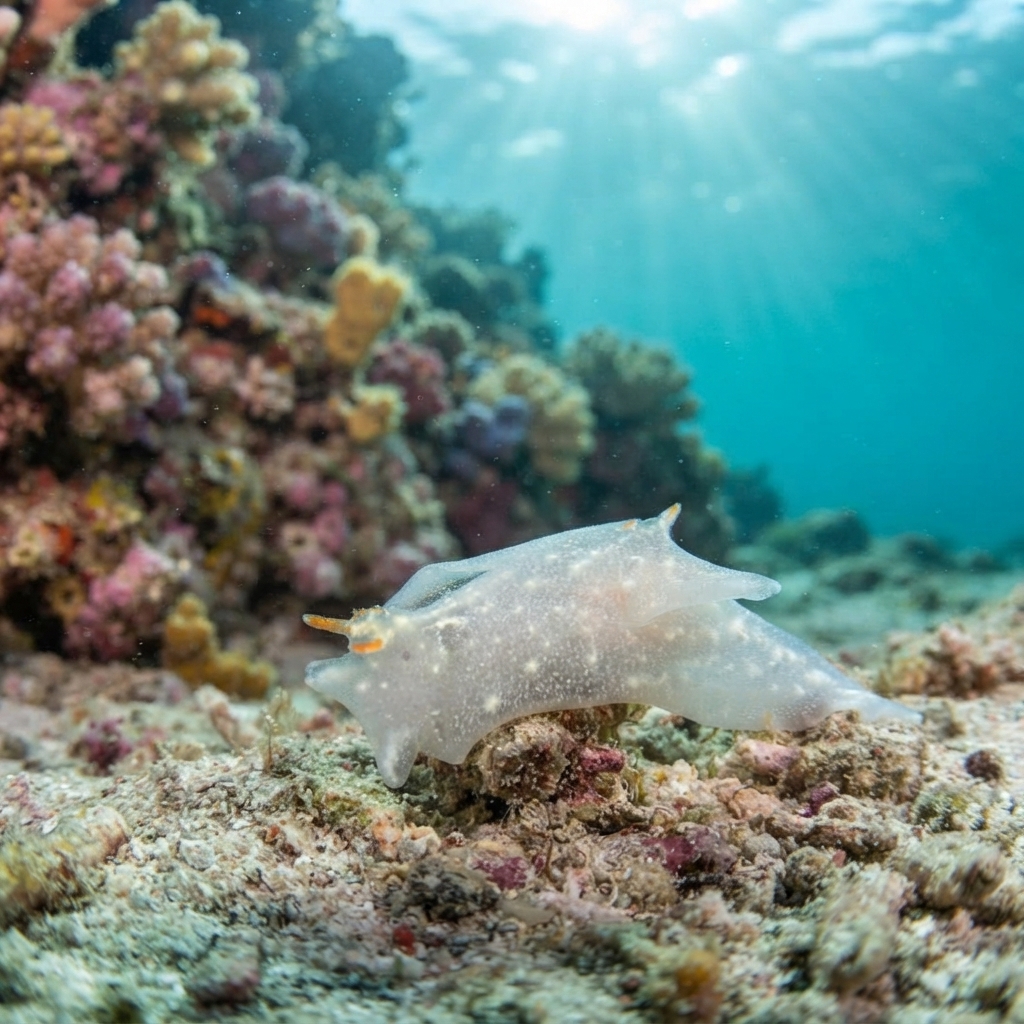
Sagaminopteron nigropunctatum
A small black-spotted headshield slug logged mostly in Luzon, Philippines, in warm 25 to 31 C reef water year-round.
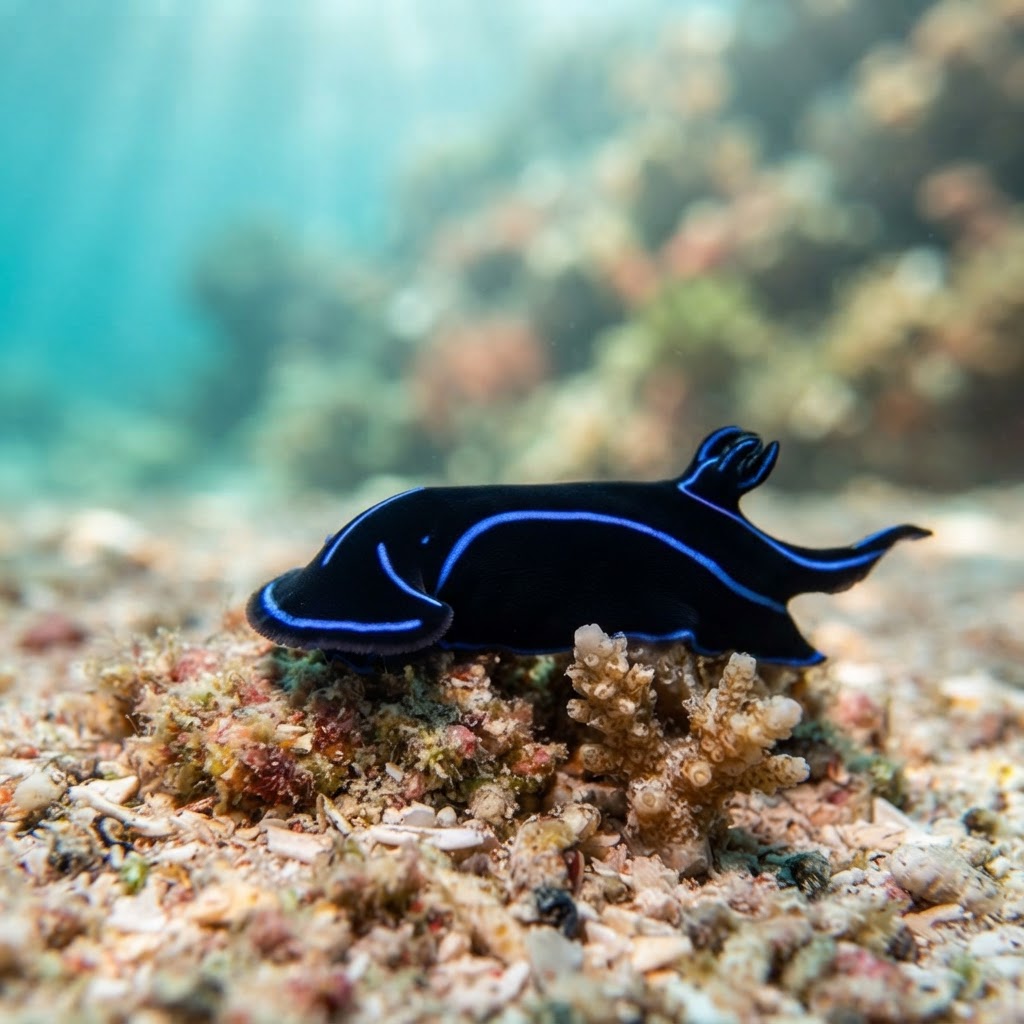
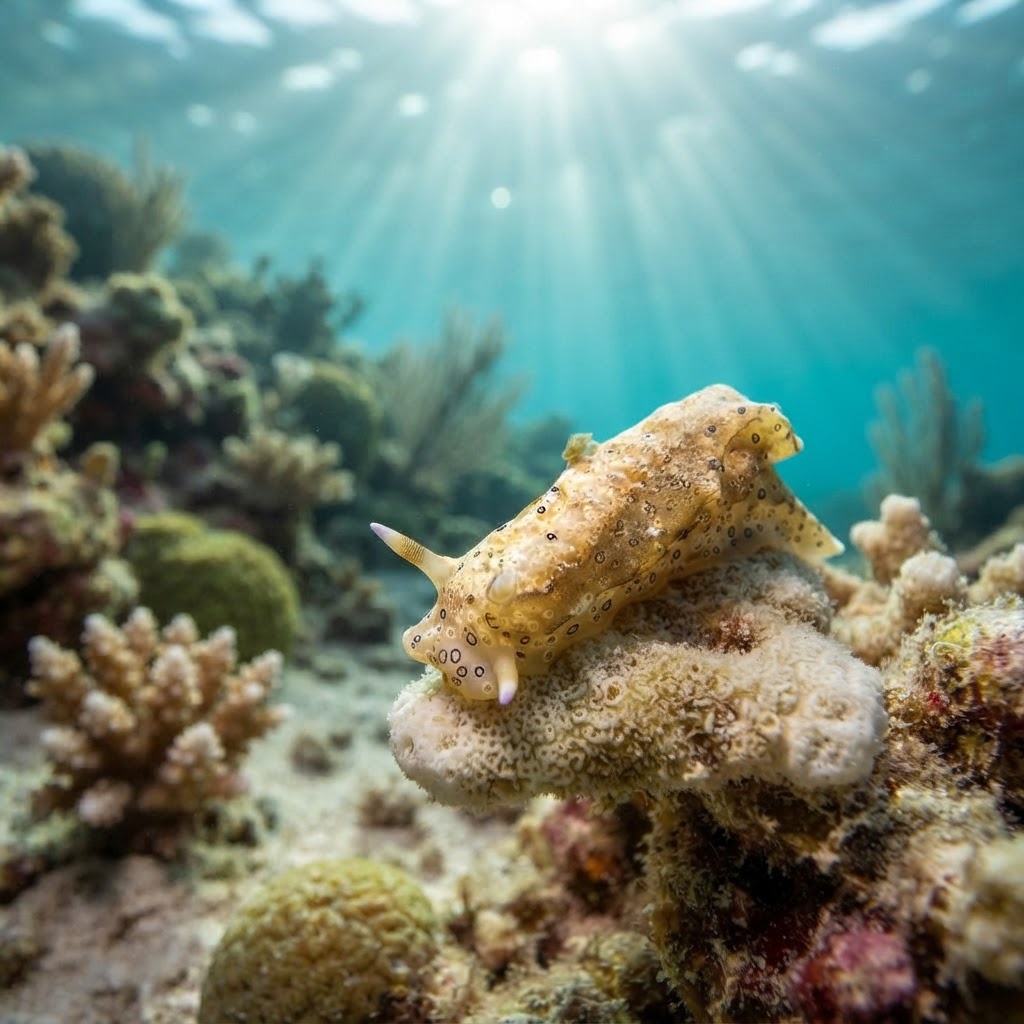
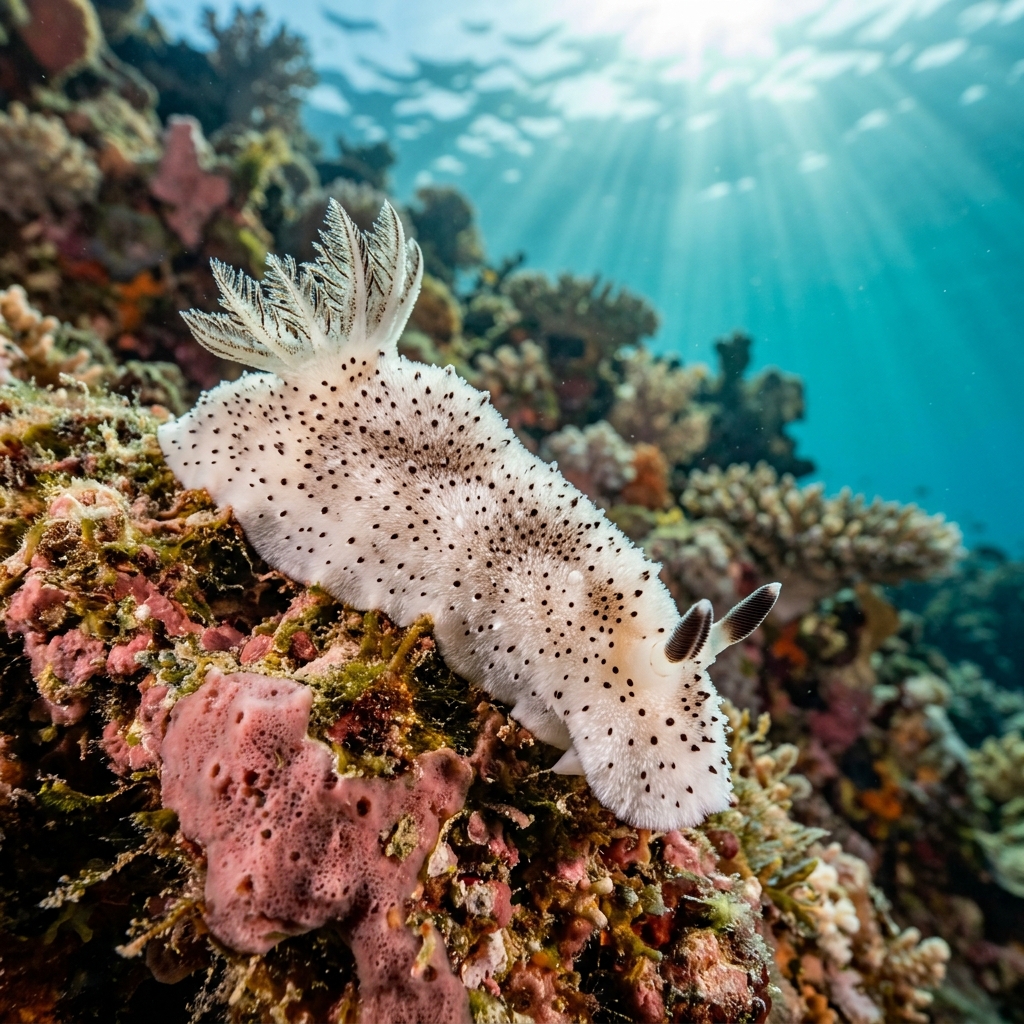
Small, soft-bodied sea slug with a flattened, wing-like mantle that flares out past a compact body, giving it a distinctive headshield shape underwater. Look for a translucent to pale body scattered with fine black spots, which is the feature the species name refers to. It sits low on rubble or algae and moves slowly, so divers usually spot it by scanning close to the substrate rather than mid-water.
Divers find it creeping slowly over rubble, sand patches, and algae-covered substrate, usually during the day rather than at night. It shows no real reaction to divers and will simply keep grazing or moving at its own pace, making it an easy subject for close-up photos once located. Its small size and camouflage mean it is easy to swim past, so slow, careful reef scanning is the key to a sighting.
Like other headshield slugs, it lacks a true external shell as an adult and instead uses its flattened mantle and headshield for protection and movement, a trait shared across the gastropteridae family.
No clear seasonal pattern shows up in the sightings, and its comfortable range of 25.3 to 31.3 C matches tropical reef conditions year-round, so any month is a reasonable bet in its core range.
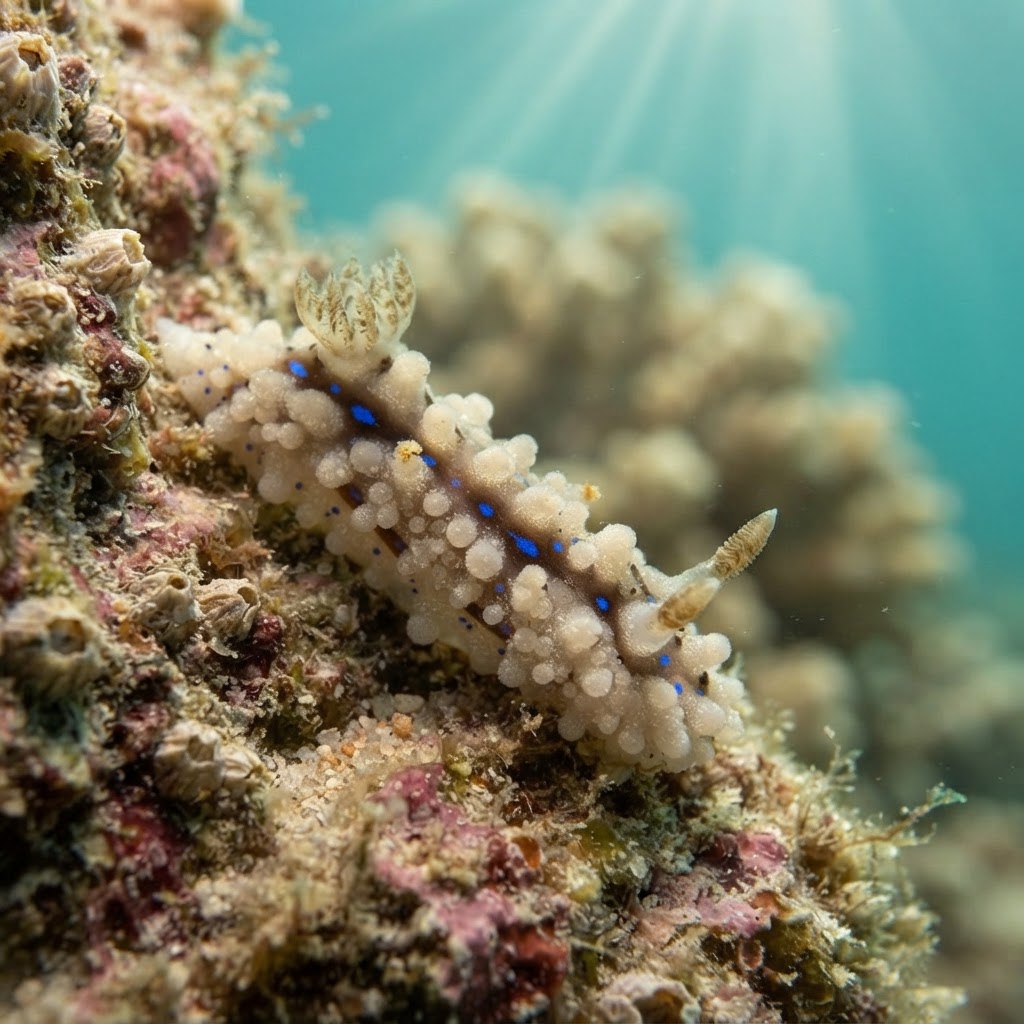
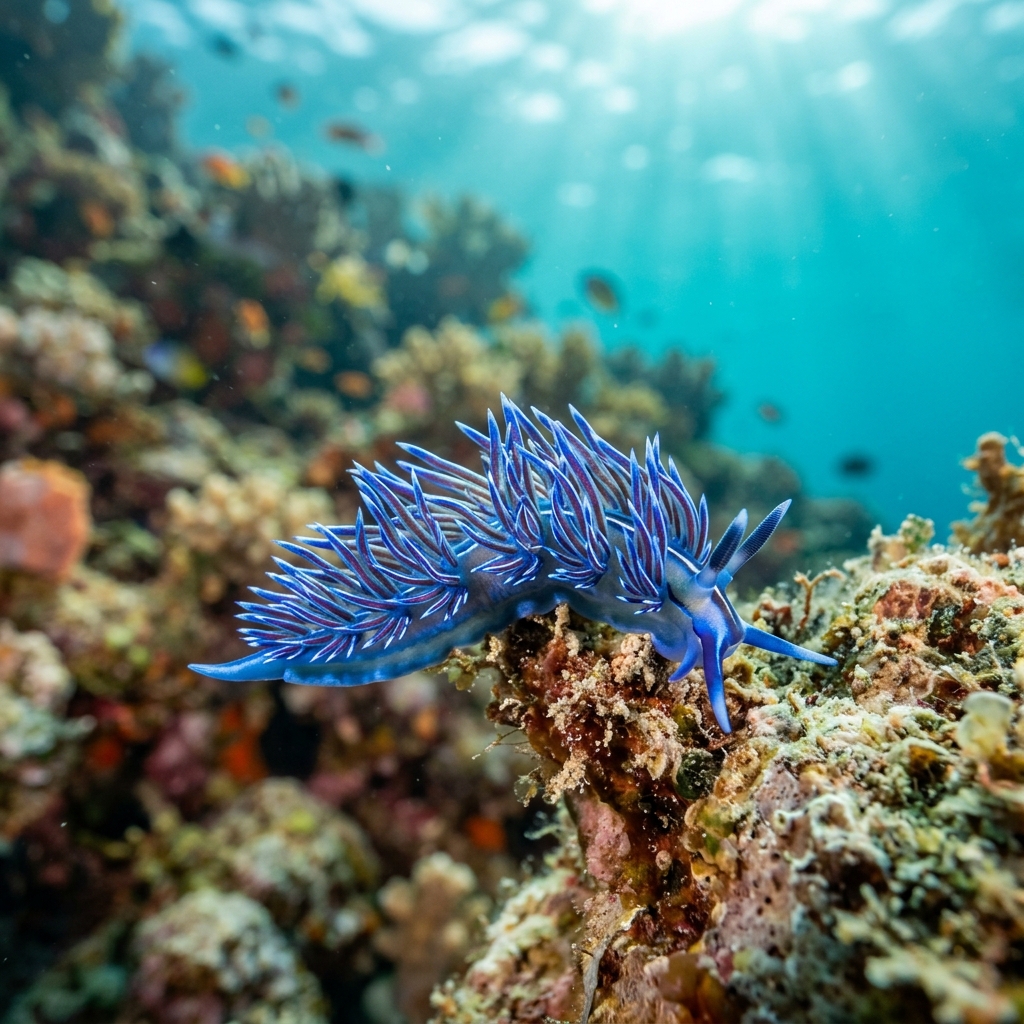
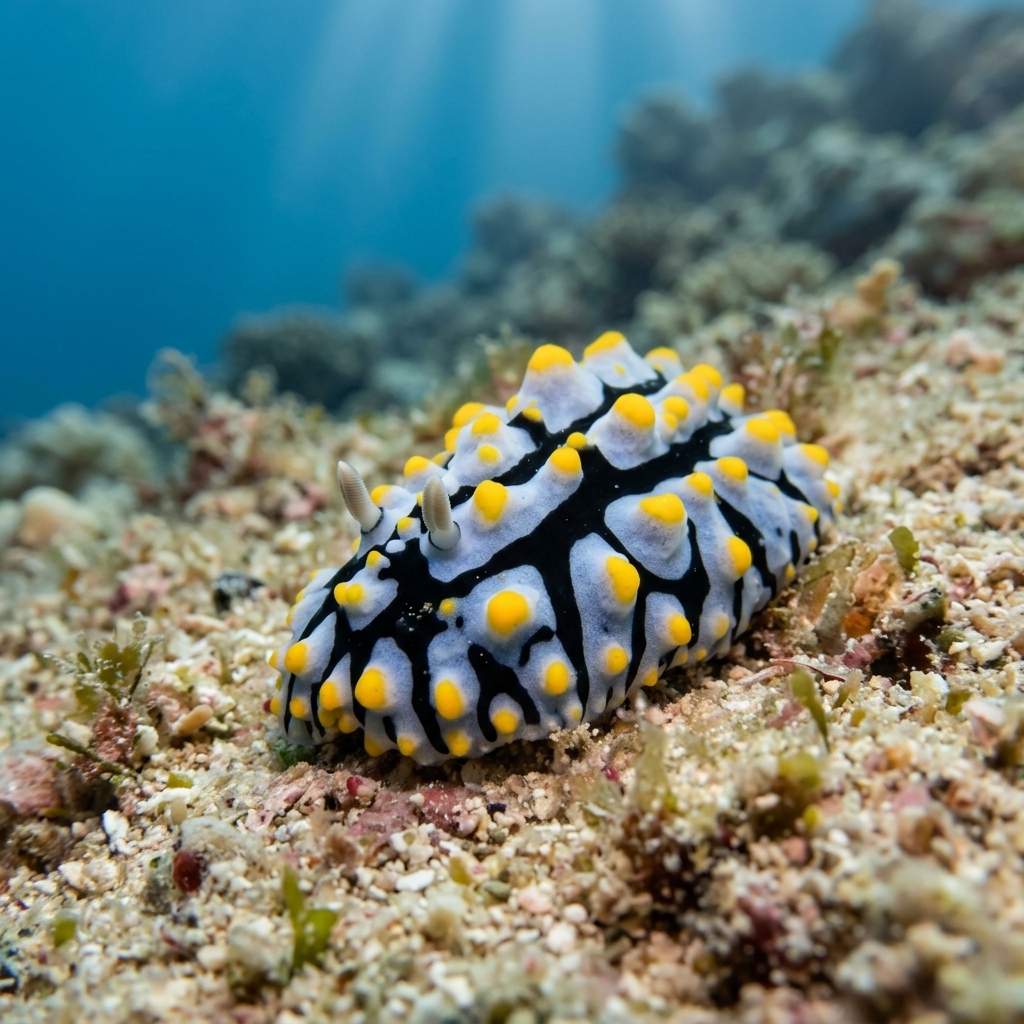
Reef neighbours a diver could mistake it for. Use the identification notes above to tell them apart.
Most reliably logged in the Philippines, with a strong concentration of sightings across Luzon, making it the go-to region for divers hoping to find this species. Smaller but real populations turn up on Malaysia's Peninsular east coast, so it is worth checking muck and rubble patches there too.
Mapping where Black-spotted Sagaminopteron is logged…
It is most consistently found in the Philippines, particularly across Luzon, with additional sightings on Malaysia's Peninsular east coast.
There is no detected seasonal pattern, and its warm-water niche of roughly 25 to 31 C is present year-round on tropical reefs, so any month works.
Look for a small, flattened, wing-like mantle on a slow-moving slug, with a translucent to pale body dotted with fine black spots. It is usually found low on rubble or algae rather than swimming in open water.
Exact size data is not confirmed, but like related headshield slugs in the gastropteridae family, it stays small, generally within a couple of centimetres, and is easy to overlook.
No, it poses no danger to divers and can be observed and photographed safely at close range without any risk of sting or bite.
Site and sighting data is aggregated from diver logs, iNaturalist and GBIF. For taxonomy and conservation status:
Light-spotted Aegires
3,168 sites