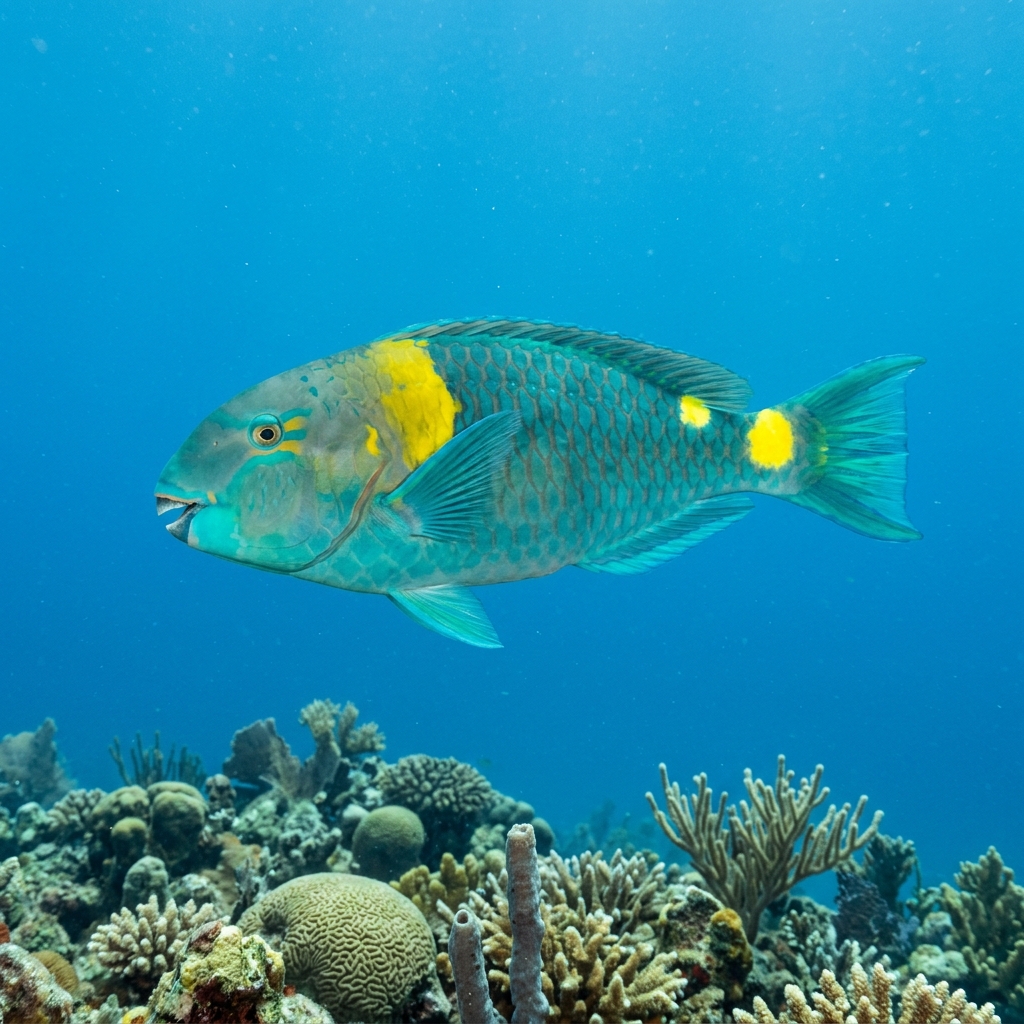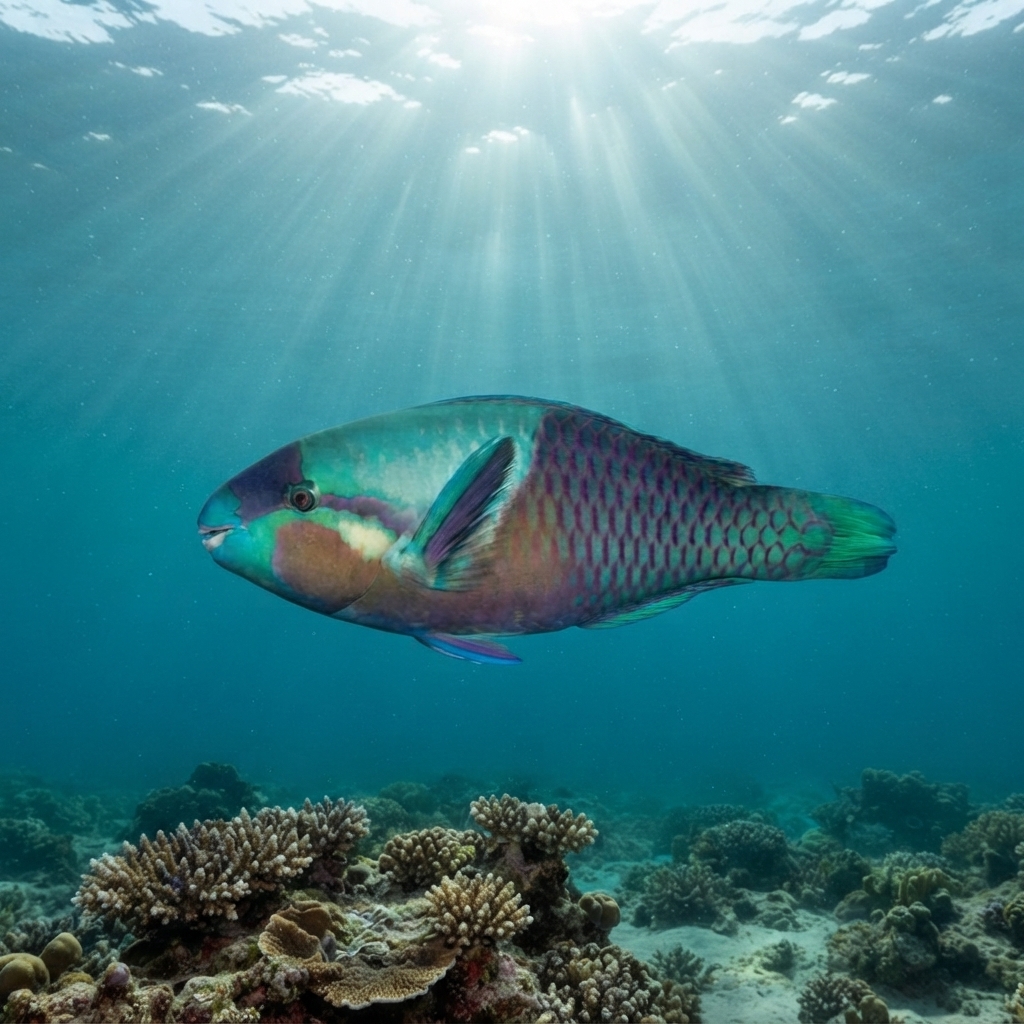
Scarus dimidiatus
Look for the dark saddle mark on this reef parrotfish, logged widely in the Visayas, Raja Ampat and Okinawa year-round.
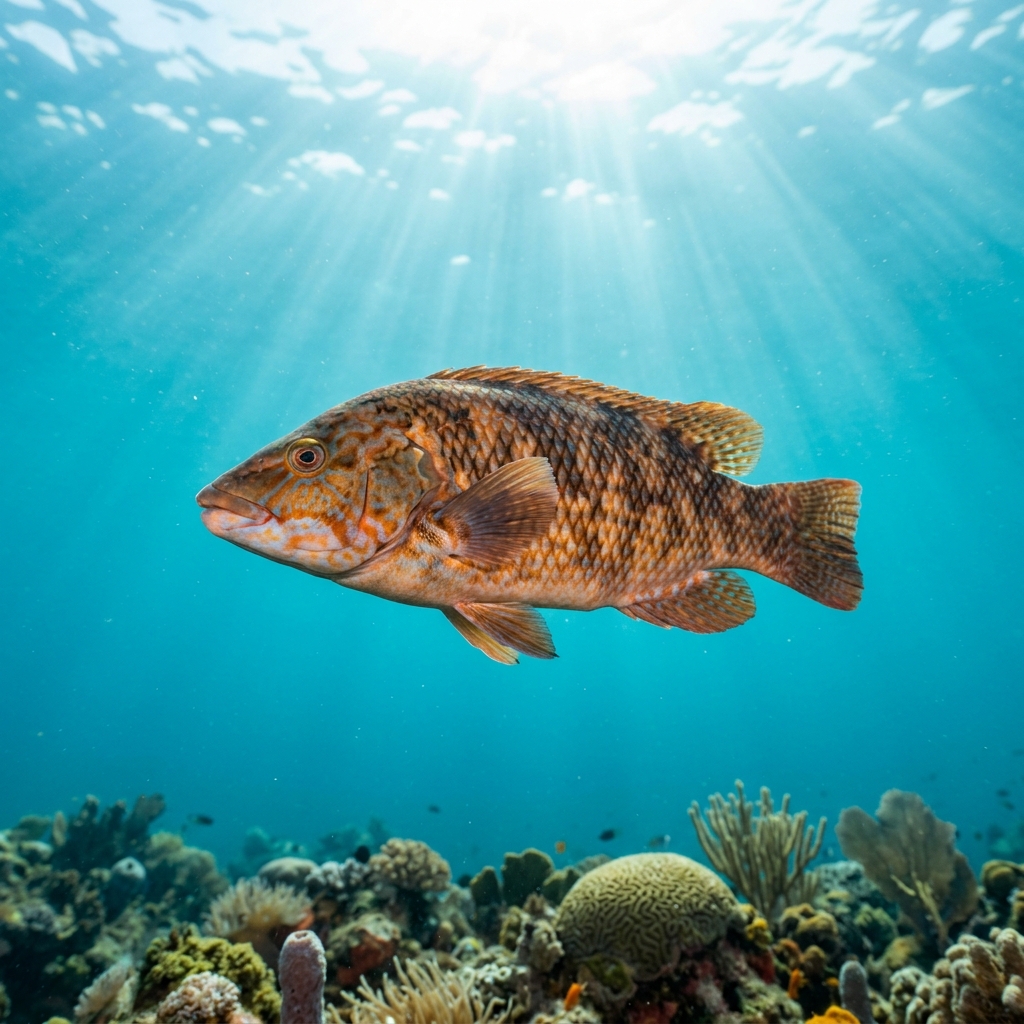
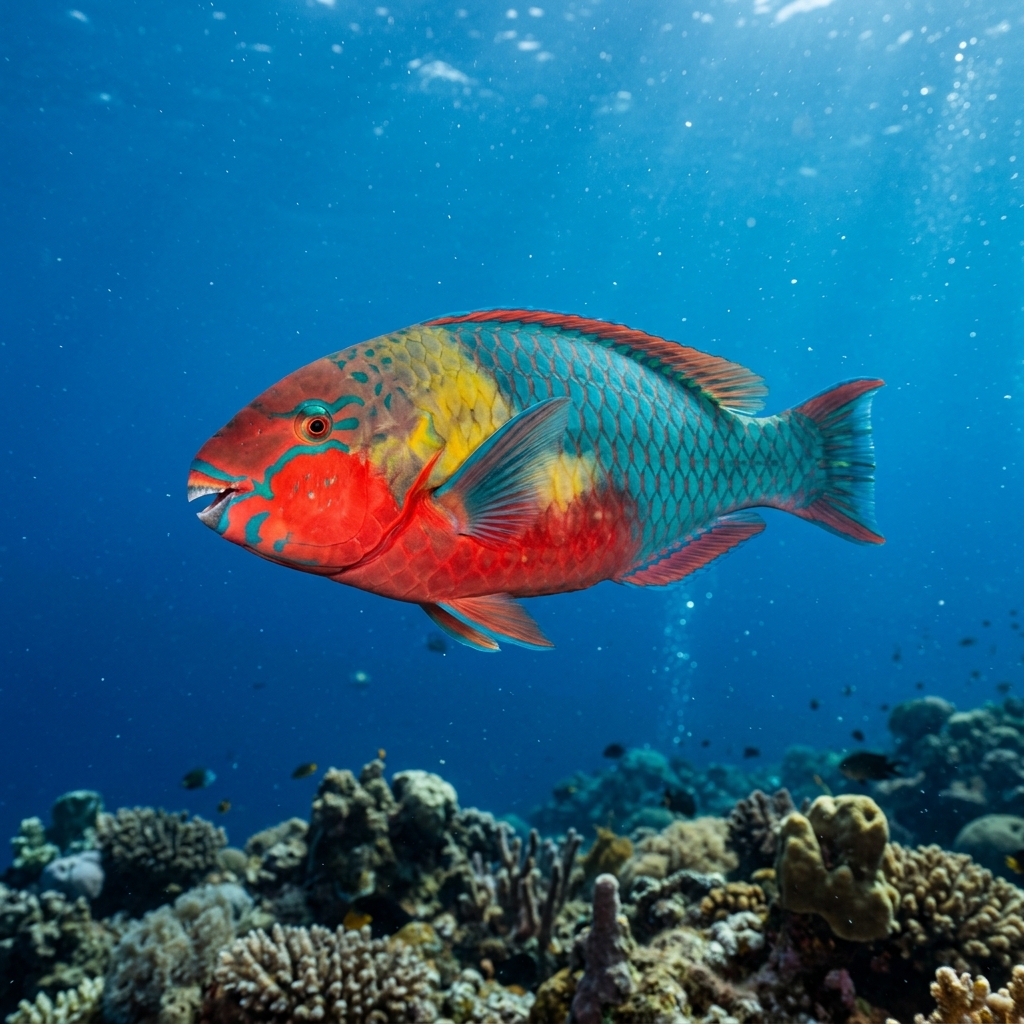
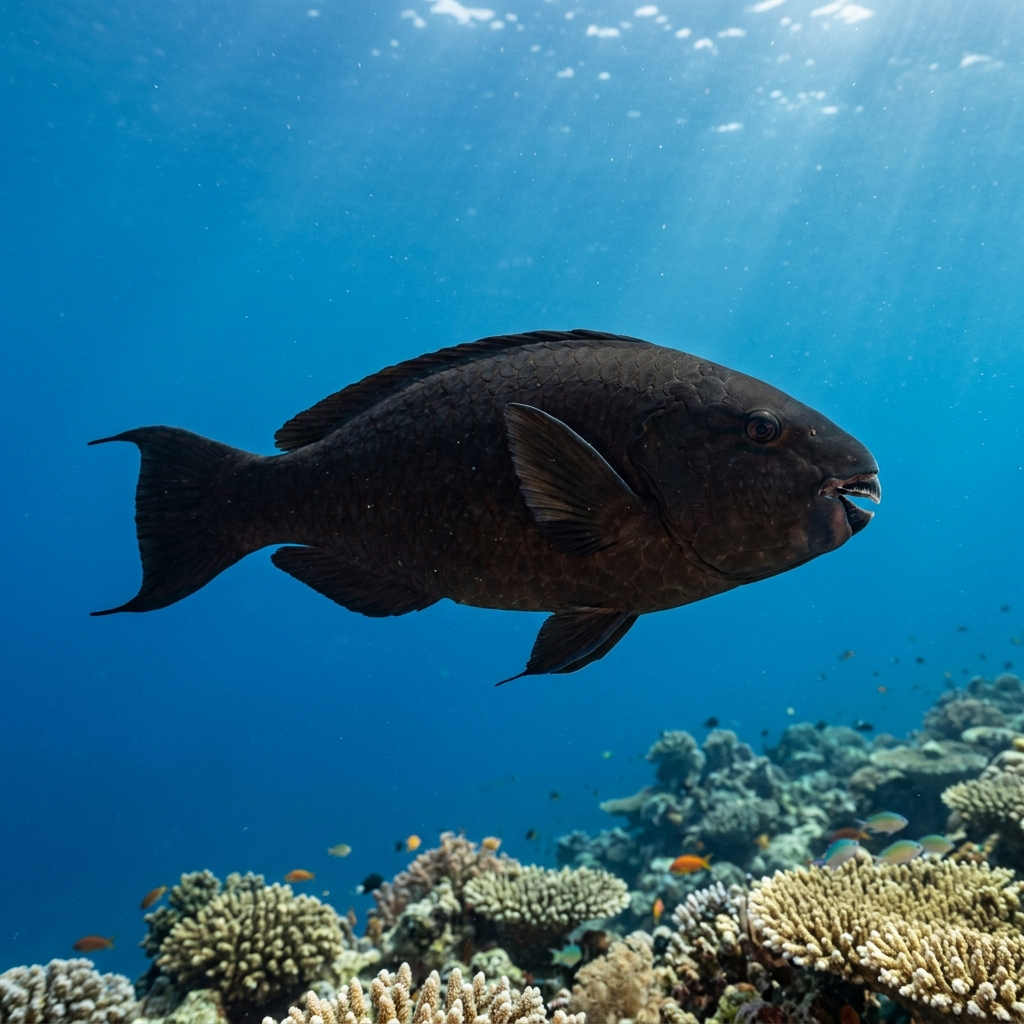
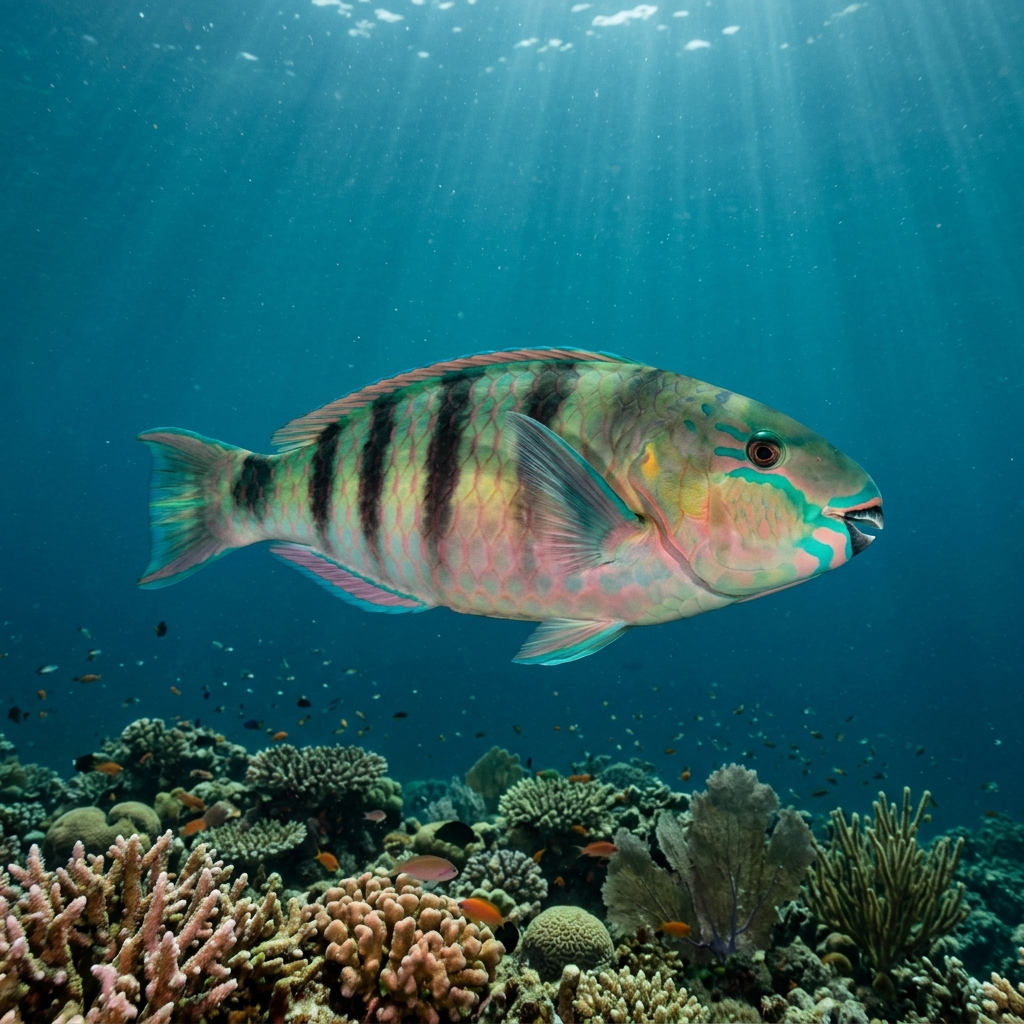
Look for a stocky, medium-sized parrotfish around 28 cm with a grey-green to bluish body, and the giveaway is a dark saddle-shaped blotch across the upper back near the tail. The beak-like fused teeth used for scraping algae off the reef are visible up close. It moves in a steady, unhurried way over the reef, unlike the darting motion of smaller wrasses.
Expect to find it grazing steadily over reef flats and slopes, working algae off dead coral and rock with its beak-like teeth. It is generally unbothered by divers, continuing to feed rather than bolting, though it will keep a bit of distance if approached head-on. Most sightings come from open reef areas in the 1 to 25 m range rather than deep drop-offs.
Like other parrotfish, it grinds up coral rock while feeding on algae, and the fine sand passing through its gut is a real contributor to reef sediment over time.
No clear seasonal pattern shows in the data, and with a comfortable range of roughly 25 to 29 C it stays on tropical reefs year-round, so any month works for a dive trip built around it.
Reef neighbours a diver could mistake it for. Use the identification notes above to tell them apart.
Most reliably logged across the Visayas in the Philippines and Nusa Tenggara and Raja Ampat in Indonesia, with strong populations also in Okinawa and the Ryukyu Islands in Japan and around Koror and Malakal in Palau. Queensland and Bali also produce regular sightings, though it tends to sit at uncommon to common densities rather than showing up in large numbers.
Mapping where Saddled Parrotfish is logged…
The Visayas in the Philippines and Nusa Tenggara and Raja Ampat in Indonesia are the strongest regions, with regular sightings also reported around Okinawa in Japan and Koror and Malakal in Palau.
There is no strong seasonal pattern in the sighting data, and warm reef temperatures year-round mean it can turn up on any dive at any time of year.
Look for a grey-green to bluish parrotfish around 28 cm with a distinctive dark saddle-shaped blotch on its upper back near the tail, grazing slowly over the reef with a beak-like mouth.
They typically reach about 28 cm in length, a medium-sized reef parrotfish rather than one of the giant species.
No, they pose no danger to divers and simply continue grazing on algae as you pass by.
They graze algae off dead coral and rock with fused, beak-like teeth, and the coral material they grind up while feeding gets excreted as fine sand, making them a small but steady source of reef sediment.
Site and sighting data is aggregated from diver logs, iNaturalist and GBIF. For taxonomy and conservation status:
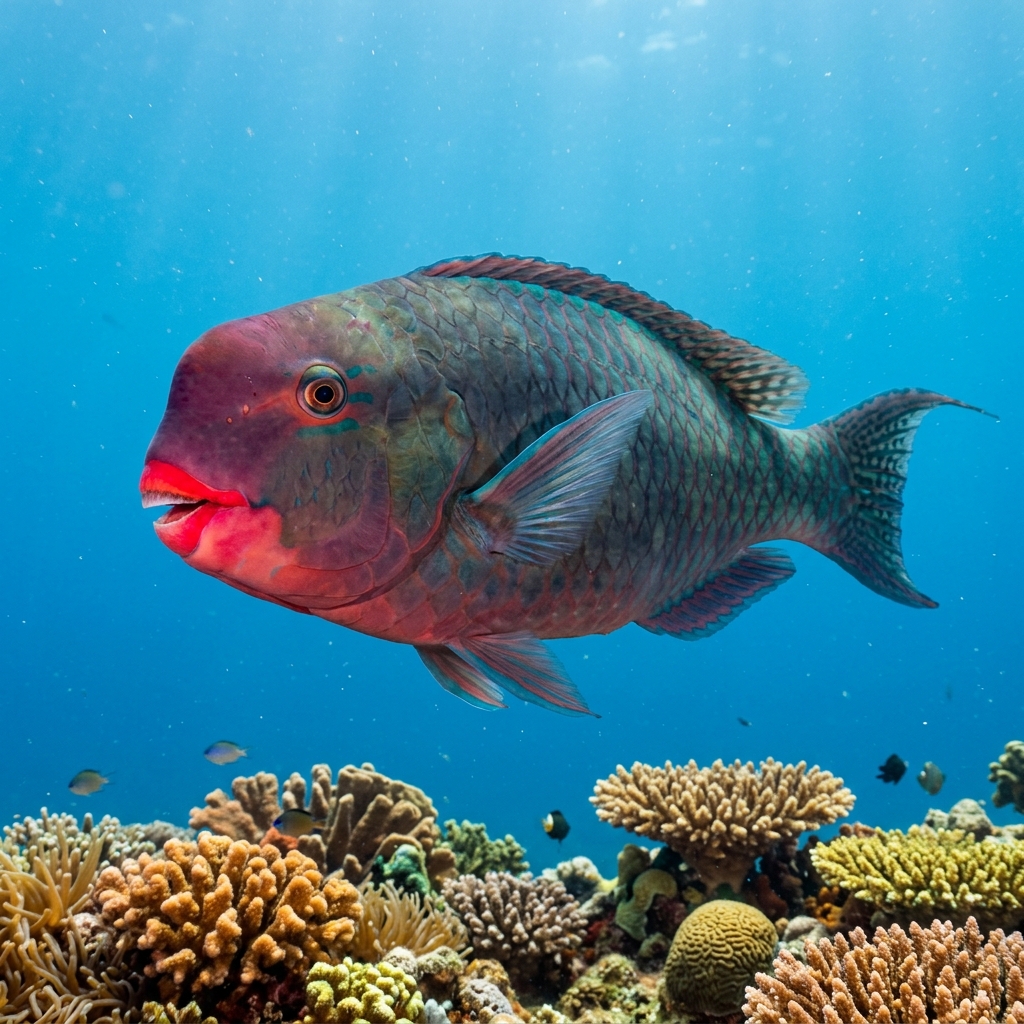
Redlip Parrotfish
2,789 sites