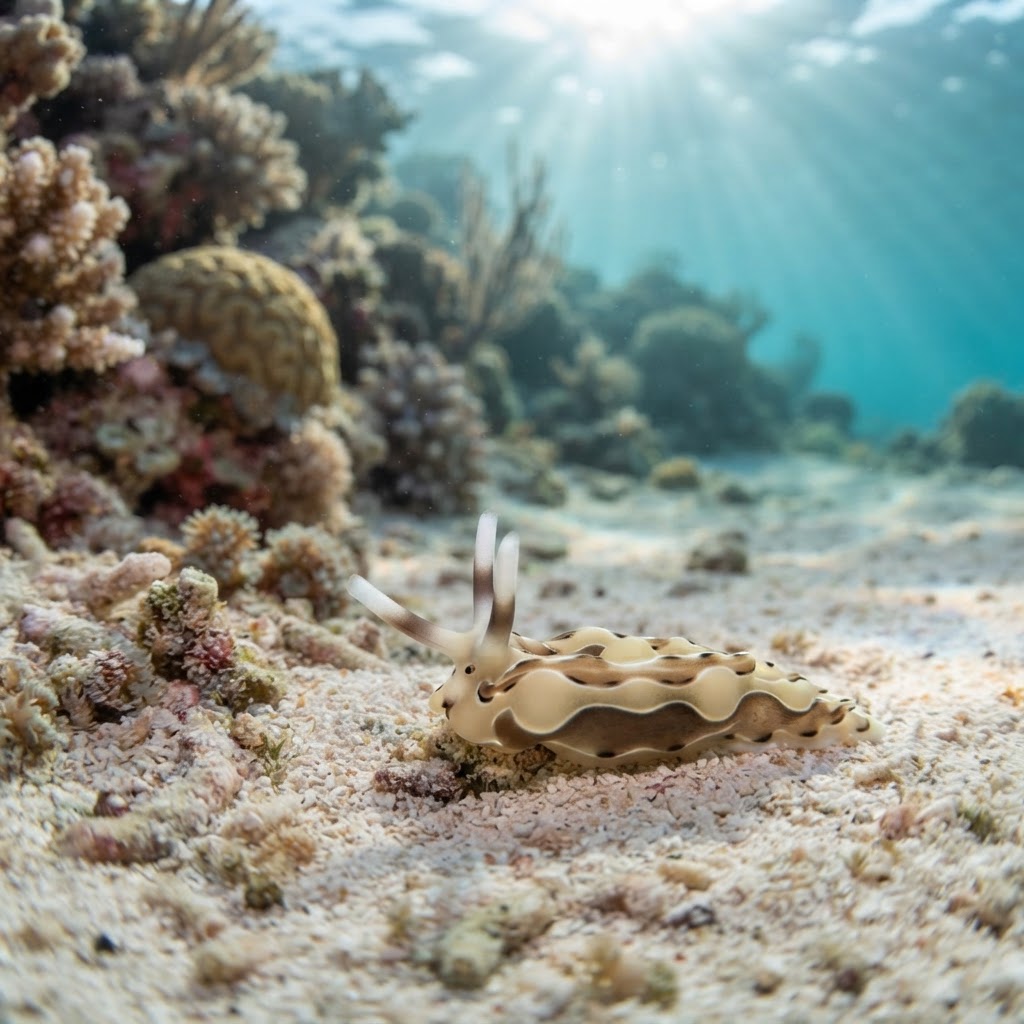
Thuridilla decorata
Look for this iridescent blue-and-orange sea slug on Red Sea reefs, most reliably logged around South Sinai, Egypt in waters near 21-27C.
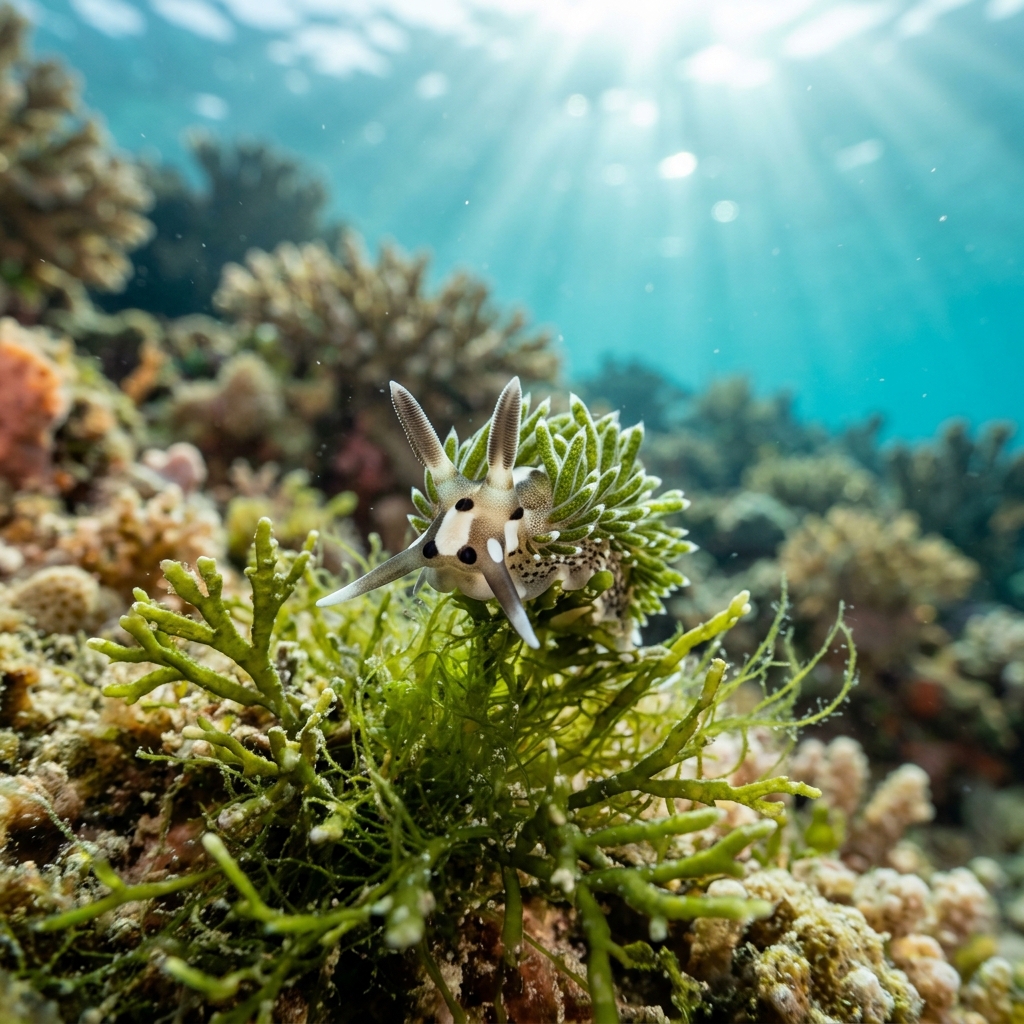
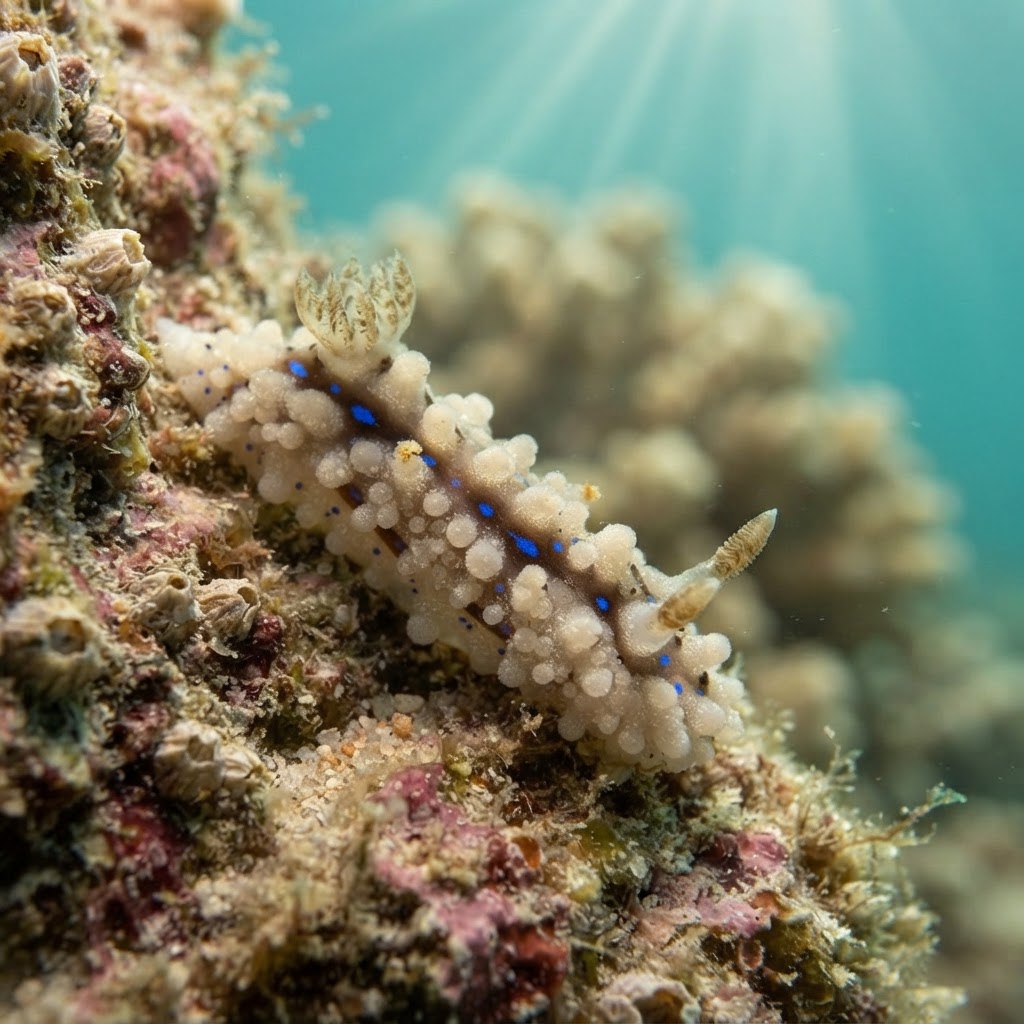
A small, slender sea slug with a translucent to dark body marked by bold electric-blue longitudinal stripes and orange-tipped projections along the back and head. The two rolled tentacles (rhinophores) on its head carry the same orange tips as the parapodial flaps running down its sides. It moves slowly over rubble and algae, and its colour pattern is bright enough to pick out against dark substrate even at small size.
Divers find it grazing slowly over algae-covered rock and rubble, usually solo, tucked into shallow reef sections where light supports its algal food source. It has no means of fast escape and will not react to a diver's presence beyond continuing its unhurried crawl, so a slow approach and a steady hand for macro shots is all it takes to get a good look.
Like other sap-sucking slugs in its family, it feeds on algae and retains the algae's chloroplasts in its own tissue, using them to photosynthesise and top up its energy between meals, a trick called kleptoplasty.
Sightings show no clear seasonal pattern, and with a comfortable range of 21.4 to 27.4C, it turns up on Red Sea reefs year-round rather than during a specific window.
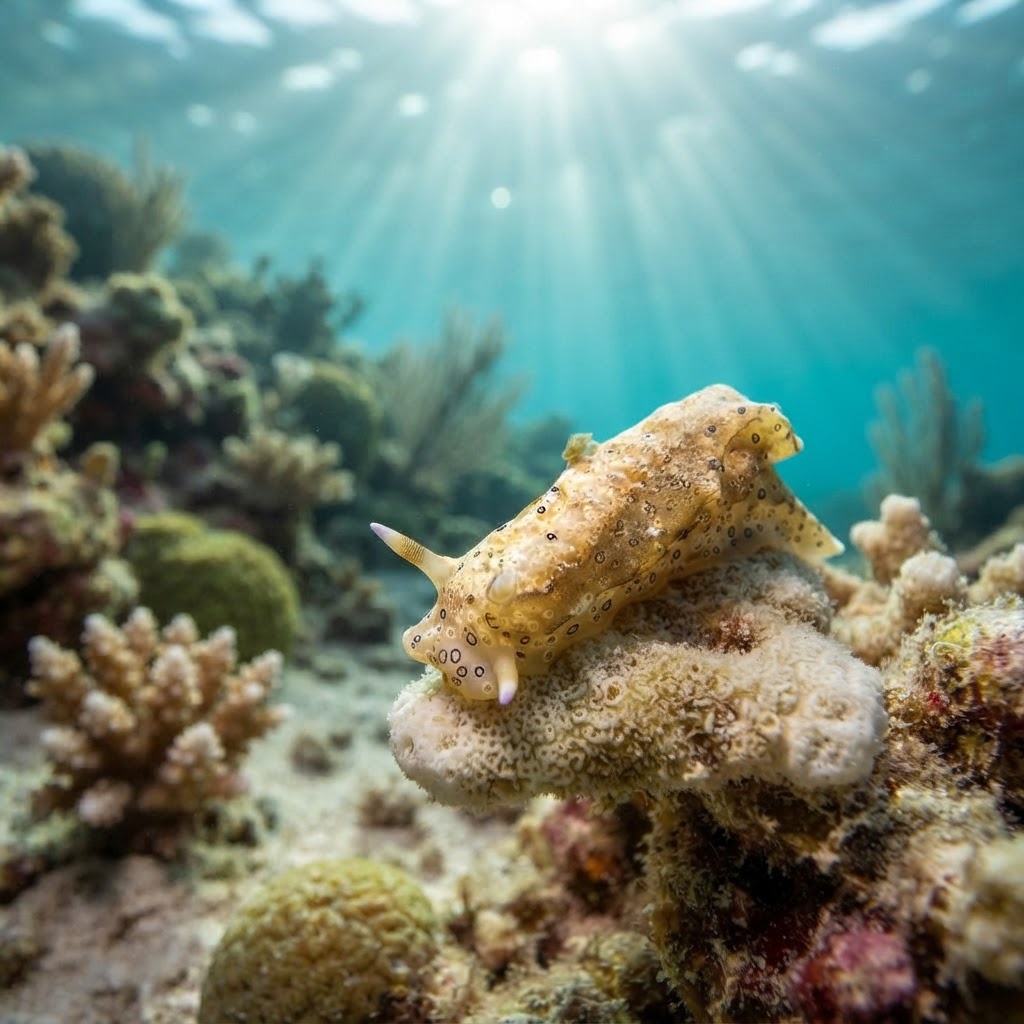
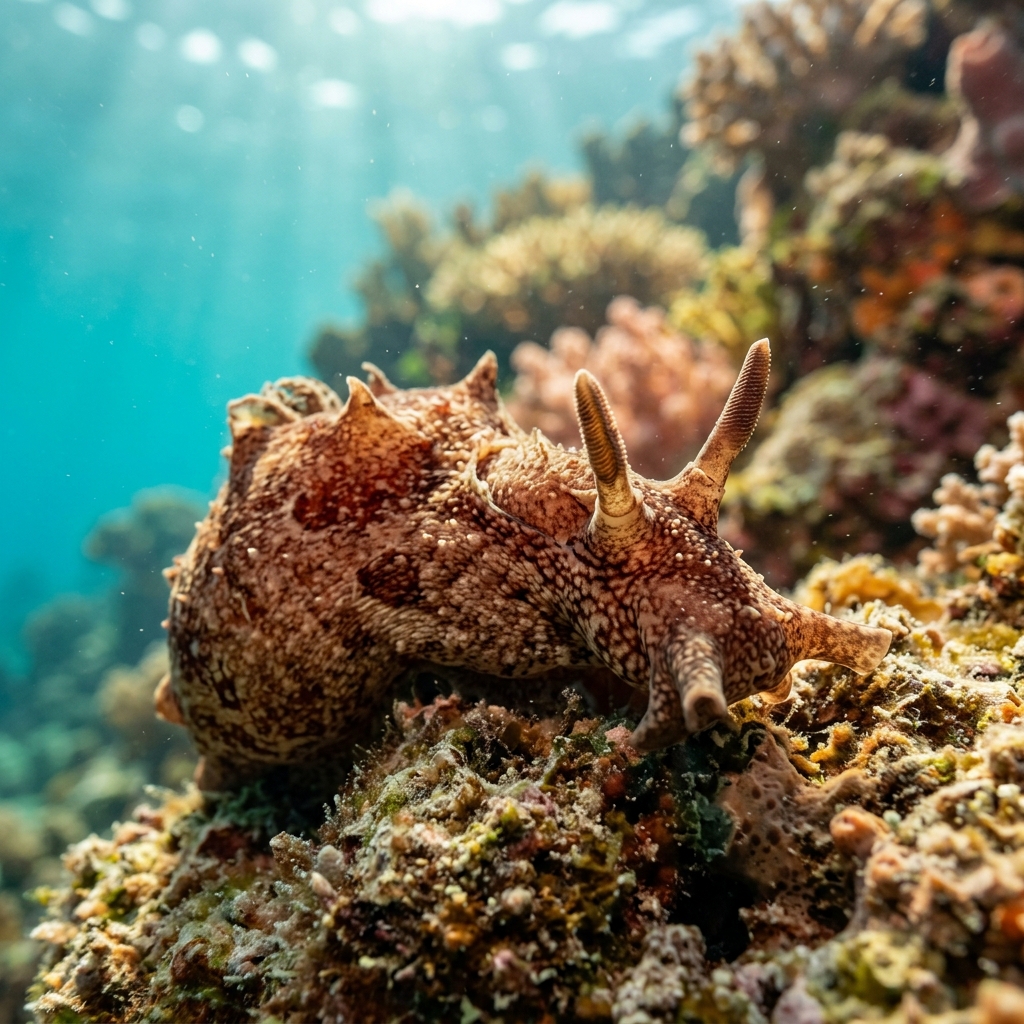
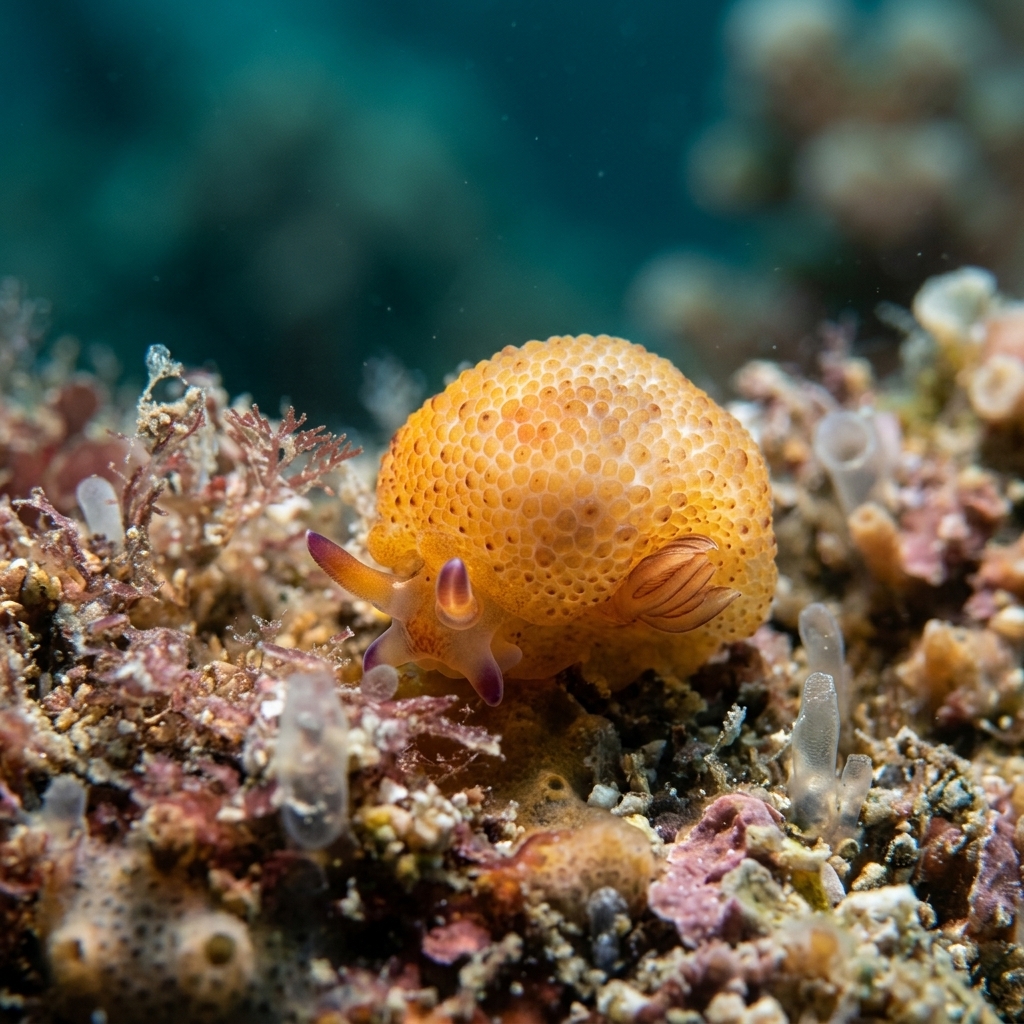
Reef neighbours a diver could mistake it for. Use the identification notes above to tell them apart.
Most reliably logged in Egypt's South Sinai, with Eilat in Israel offering the other consistent record of sightings in the region. Between these two areas, this is a Red Sea species through and through, favouring shallow reef flats and rubble zones over open water.
Mapping where Decorated Thuridilla is logged…
It is most consistently found in the Red Sea, with the strongest record of sightings in South Sinai, Egypt, and a smaller cluster of records around Eilat, Israel.
There is no strong seasonal pattern in the sightings, and it tolerates a wide temperature range of roughly 21 to 27C, so it can be found on Red Sea reefs at any time of year.
Look for a small slender slug with electric-blue stripes running along its body and orange-tipped rhinophores and parapodial flaps. It moves slowly over algae and rubble in shallow reef areas, and the blue-and-orange combo is the giveaway.
Exact size data is not confirmed for this species, but like most Thuridilla sea slugs it stays small, typically only a few centimetres long, so a close macro look is needed to appreciate the colour pattern.
It steals chloroplasts from the algae it eats and keeps them functioning in its own tissue for a while, effectively letting it photosynthesise like a plant between meals, a process called kleptoplasty.
No, it poses no danger to divers. It has no stinging cells or venom and simply grazes slowly across algae-covered surfaces, easy to observe up close without any risk.
Site and sighting data is aggregated from diver logs, iNaturalist and GBIF. For taxonomy and conservation status:
Light-spotted Aegires
3,168 sites