Herbstia condyliata
Spot this spiky, algae-draped crab in Istria, Catalonia and Tuscany year-round in mild Mediterranean waters around 16-22C.
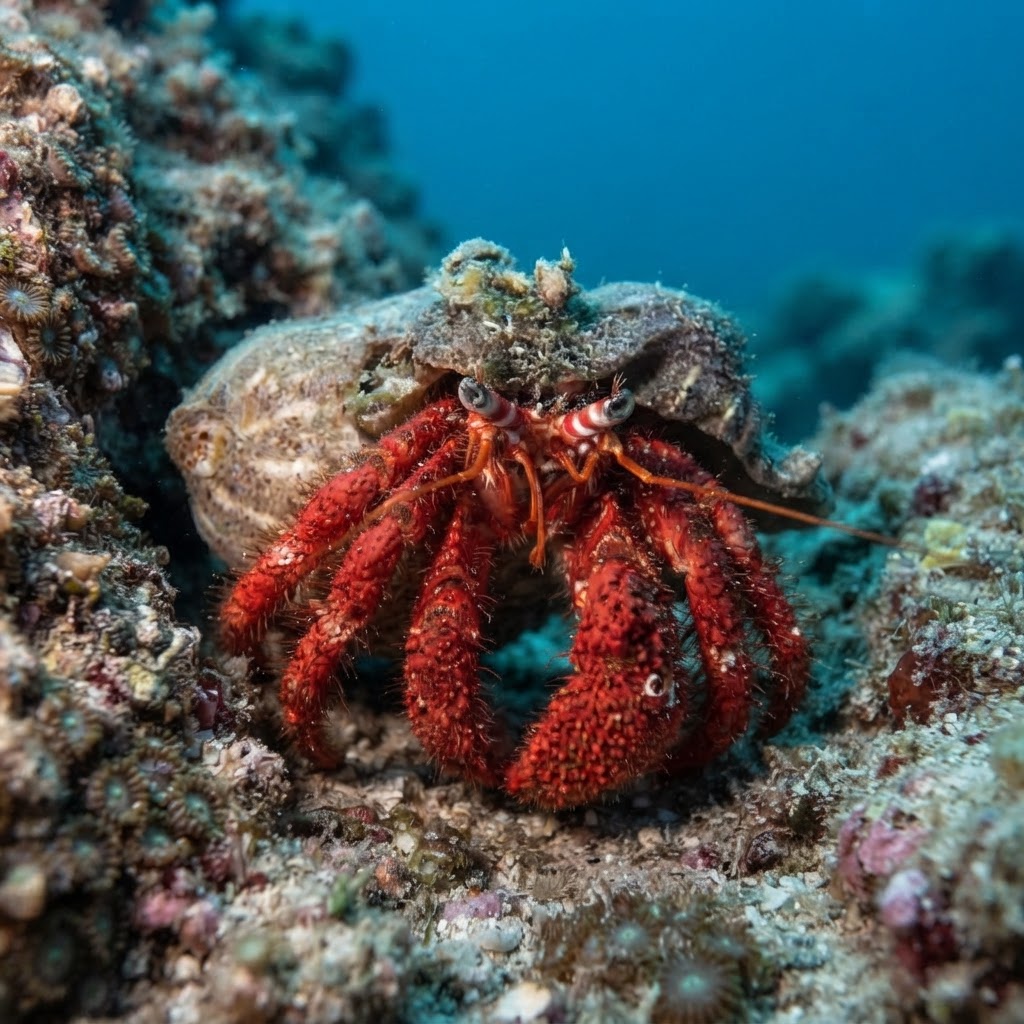
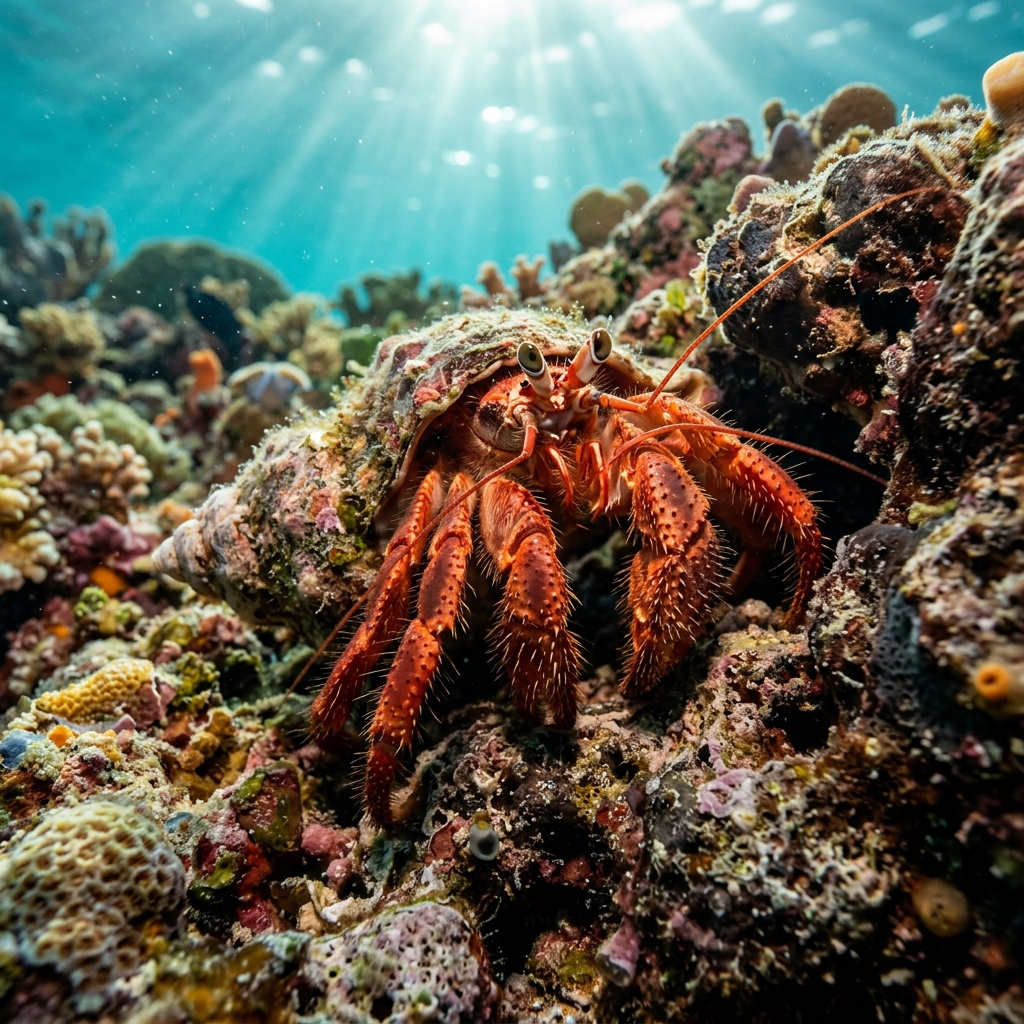
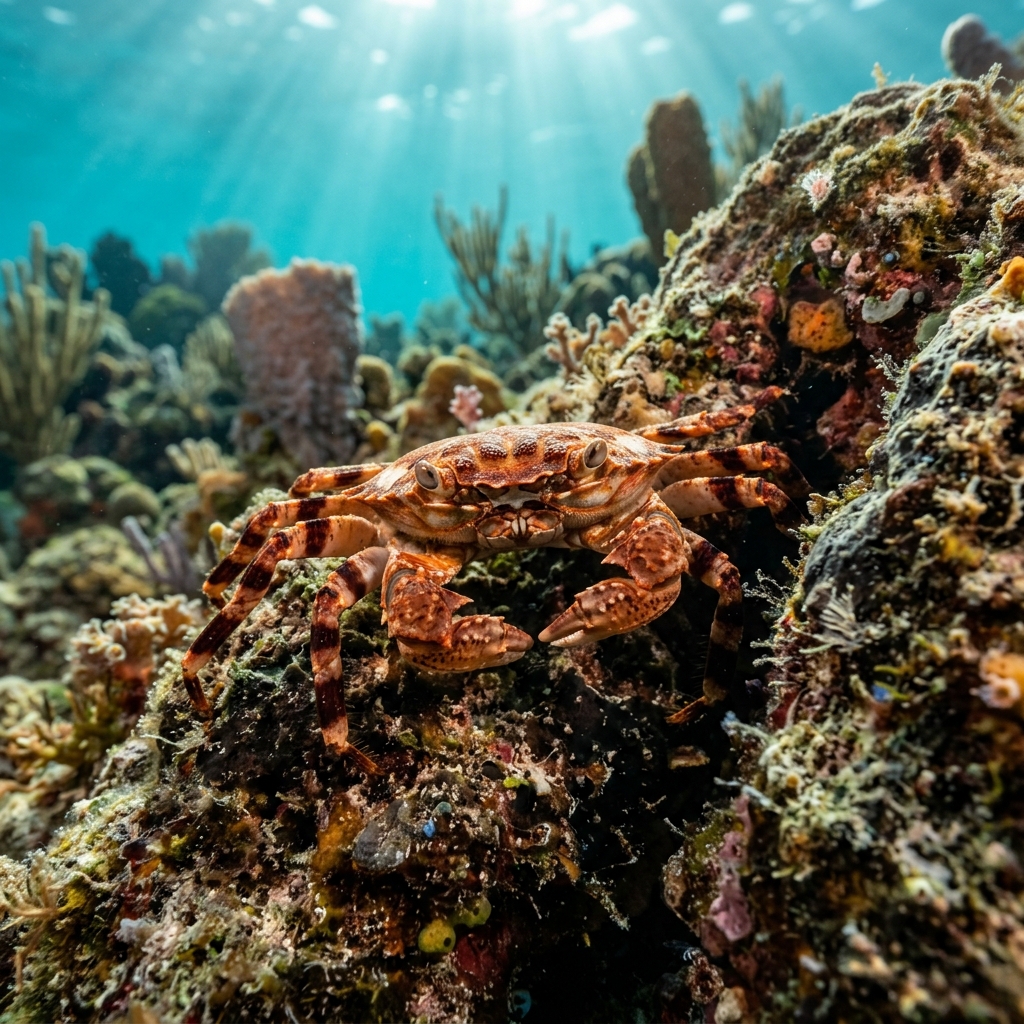
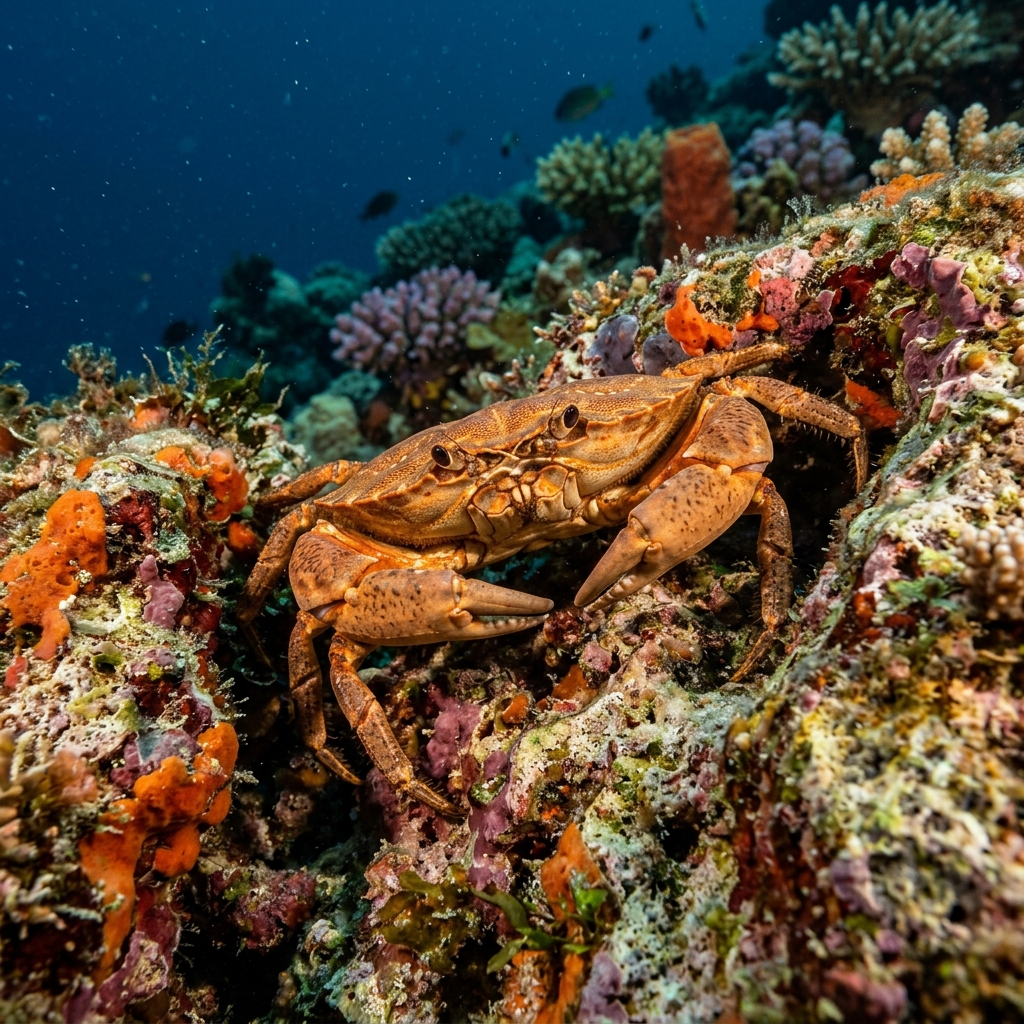
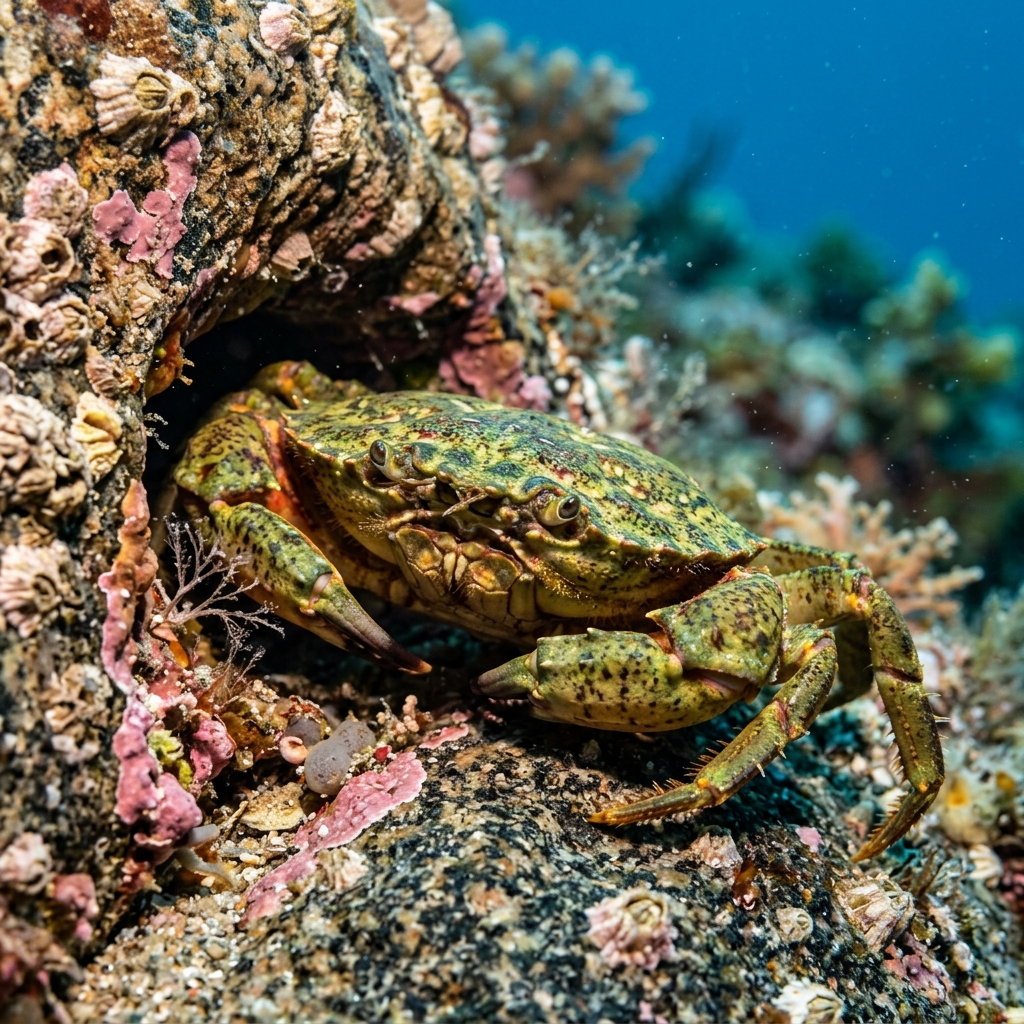
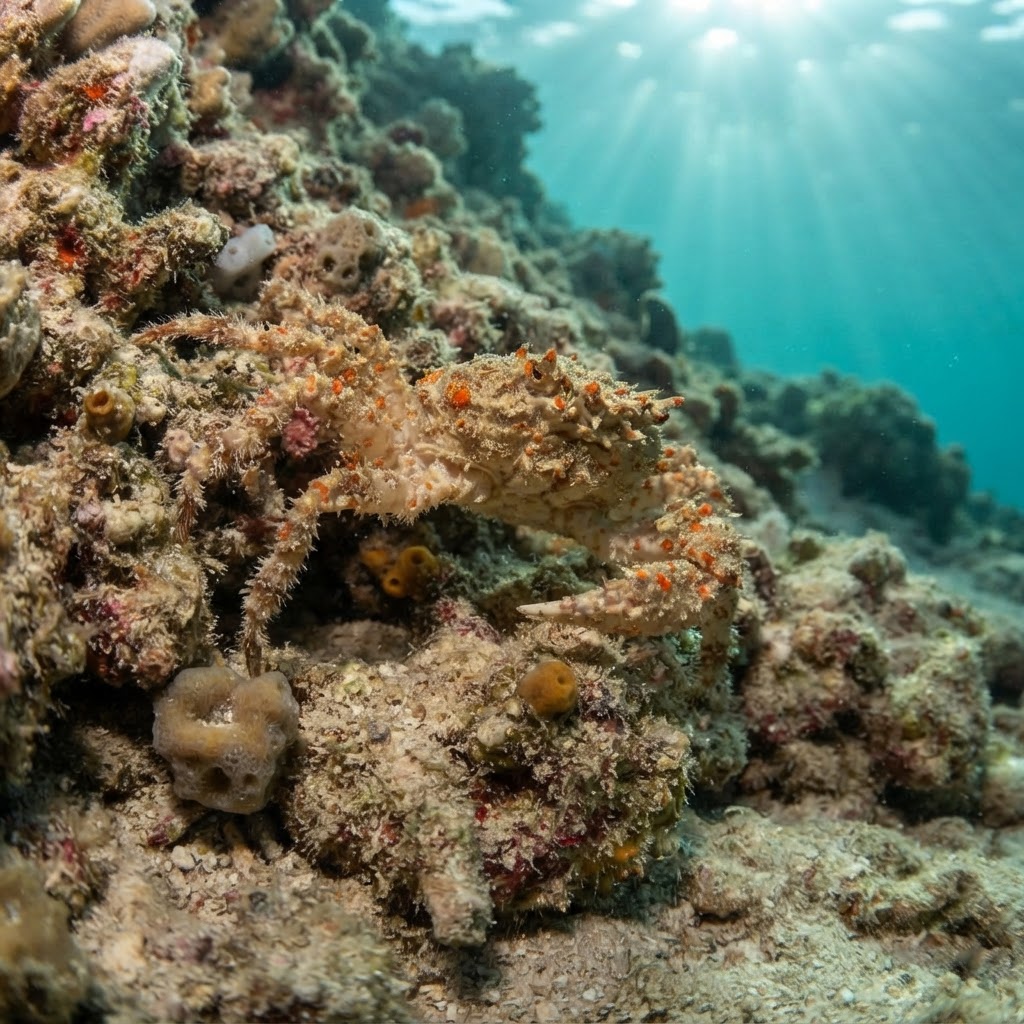
Look for a small, angular crab with a rough, spine-covered shell that often carries a coat of algae or debris, making it blend straight into the rock and weed it sits on. The body is roughly triangular, tapering toward a pointed front, with long, thin walking legs that give it a spidery outline. It moves slowly and stays low against the substrate rather than swimming or darting for cover.
Divers typically find it sitting still on rocky or weedy bottoms, often disguised under a covering of algae and small debris that it seems to gather onto its shell. It relies on this camouflage rather than flight, staying put and largely ignoring passing divers unless disturbed directly. Most logs describe single individuals tucked among rock crevices or low reef structure rather than crabs out in the open.
Like other decorator-style spider crabs, it actively works fragments of algae and debris into the hooked bristles on its shell, building a living camouflage suit that changes as its surroundings do.
Sightings show no clear seasonal pattern, and with a water-temperature niche of roughly 15.6 to 21.6C it is present across the range of conditions divers encounter through the diving season, so it is best treated as a year-round find.
Reef neighbours a diver could mistake it for. Use the identification notes above to tell them apart.
This is a Mediterranean species, most reliably logged in Italy and Croatia, with especially strong numbers around Istria and Kvarner in Croatia and Tuscany, Lazio and Sardinia in Italy. It also turns up regularly in Catalonia, Spain, and in smaller numbers around Herceg Novi in Montenegro and the French Riviera.
Mapping where Rugose Spider Crab is logged…
It is most commonly logged in Croatia and Italy, particularly around Istria and Kvarner, and Tuscany, Lazio and Sardinia. It also appears with some regularity in Catalonia, Spain, around Herceg Novi in Montenegro, and along the French Riviera.
There is no strong seasonal pattern in sightings, so it can be found year-round on Mediterranean dive sites within its usual 15.6 to 21.6C temperature range.
Look for a small, angular, spiny-shelled crab that is often covered in algae or debris, sitting still on rock or weedy bottom rather than swimming. Its long thin legs and triangular body give it a spidery look, and the camouflage covering is a strong giveaway.
Exact size data is not confirmed for this species, but like most Mediterranean spider crabs in the Epialtidae family it stays small, typically a few centimetres across the shell, making it easy to miss unless you are looking closely at rock and weed.
No, it poses no danger to divers. It has no venom or aggressive behaviour and simply relies on camouflage and staying still when approached.
Site and sighting data is aggregated from diver logs, iNaturalist and GBIF. For taxonomy and conservation status:
European Green Crab
2,469 sites