Plectorhinchus mediterraneus
Chunky grey grunts hovering over Algarve and Andalusian reefs in 16-24 C water, most often spotted solo or in small, still groups.
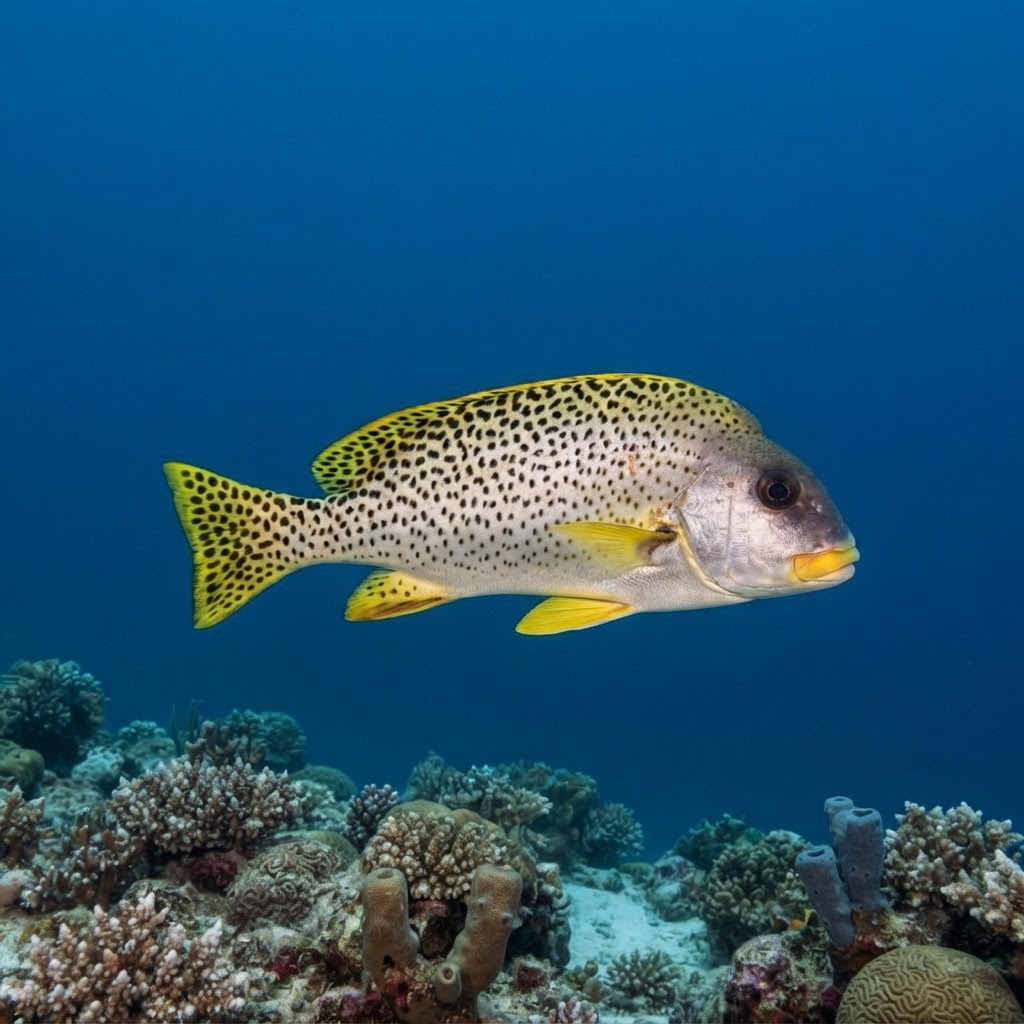
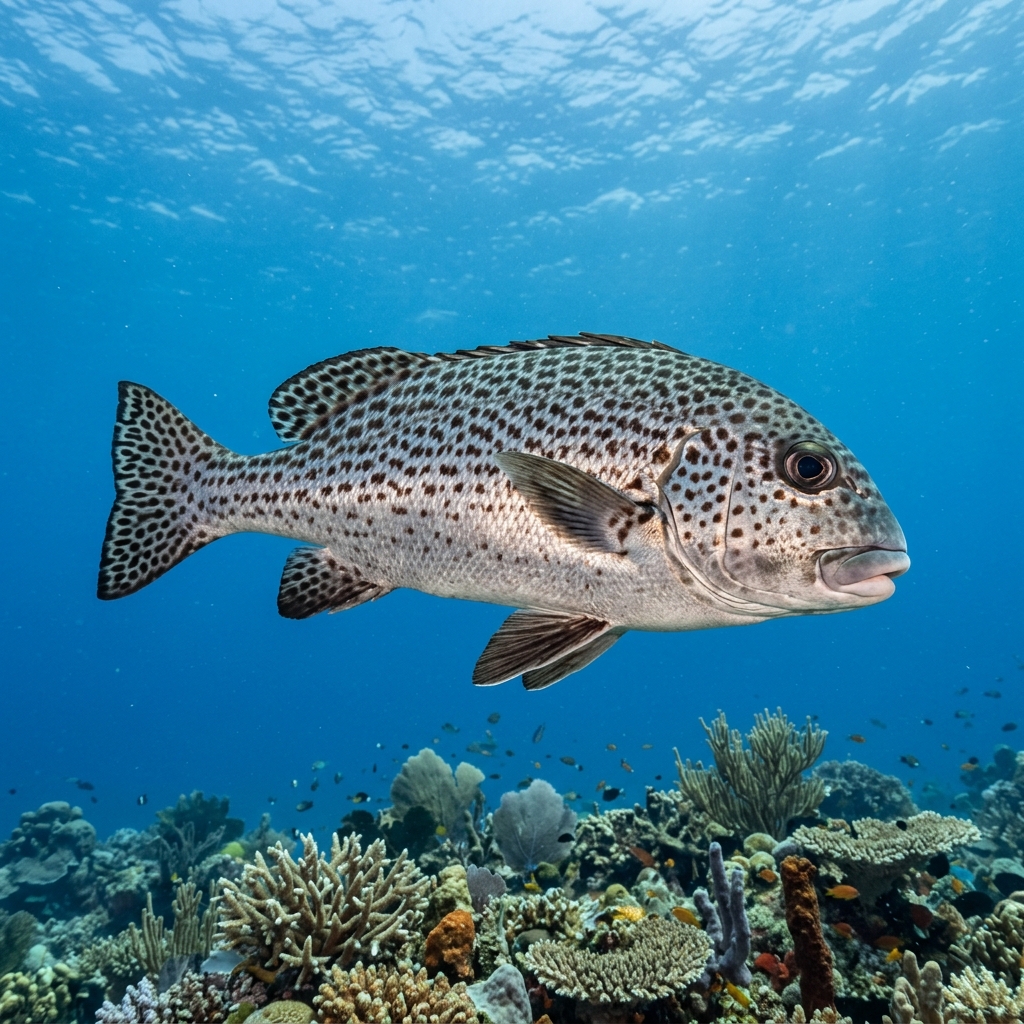
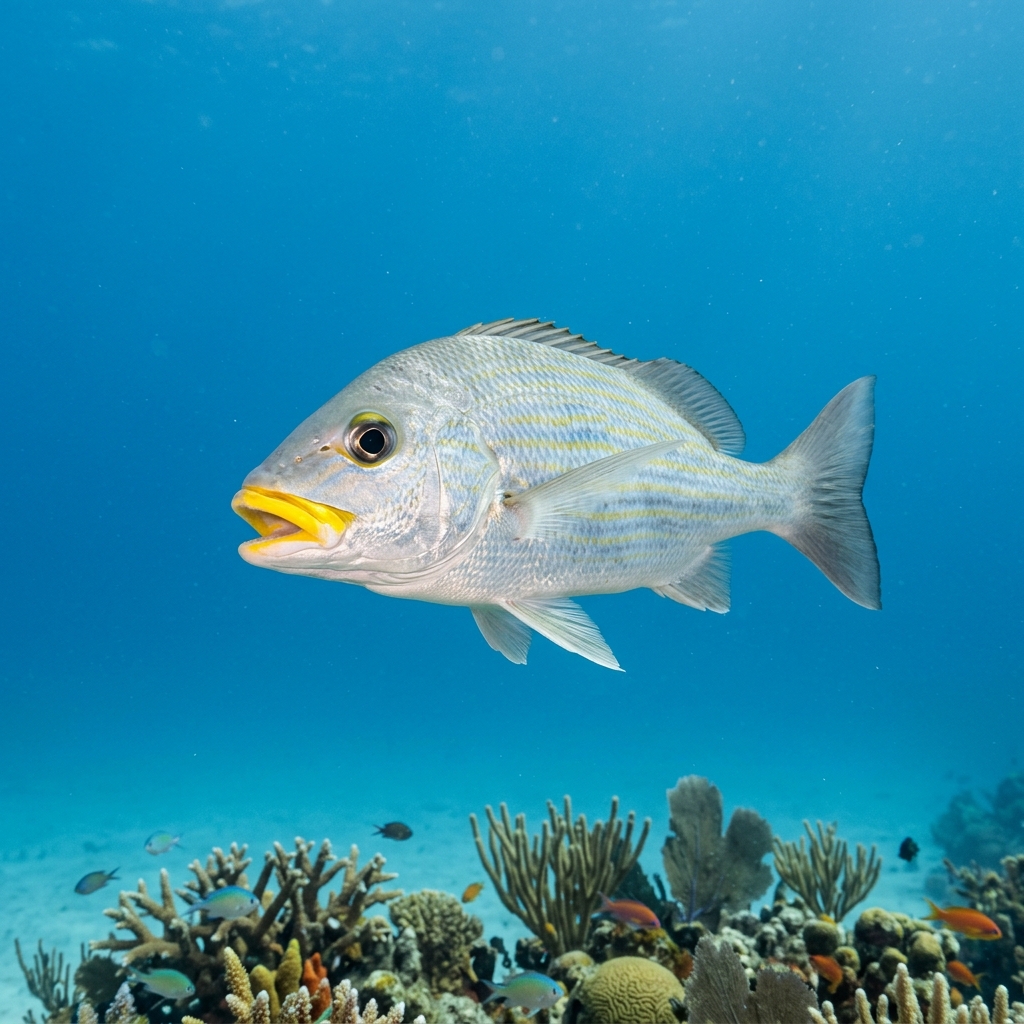
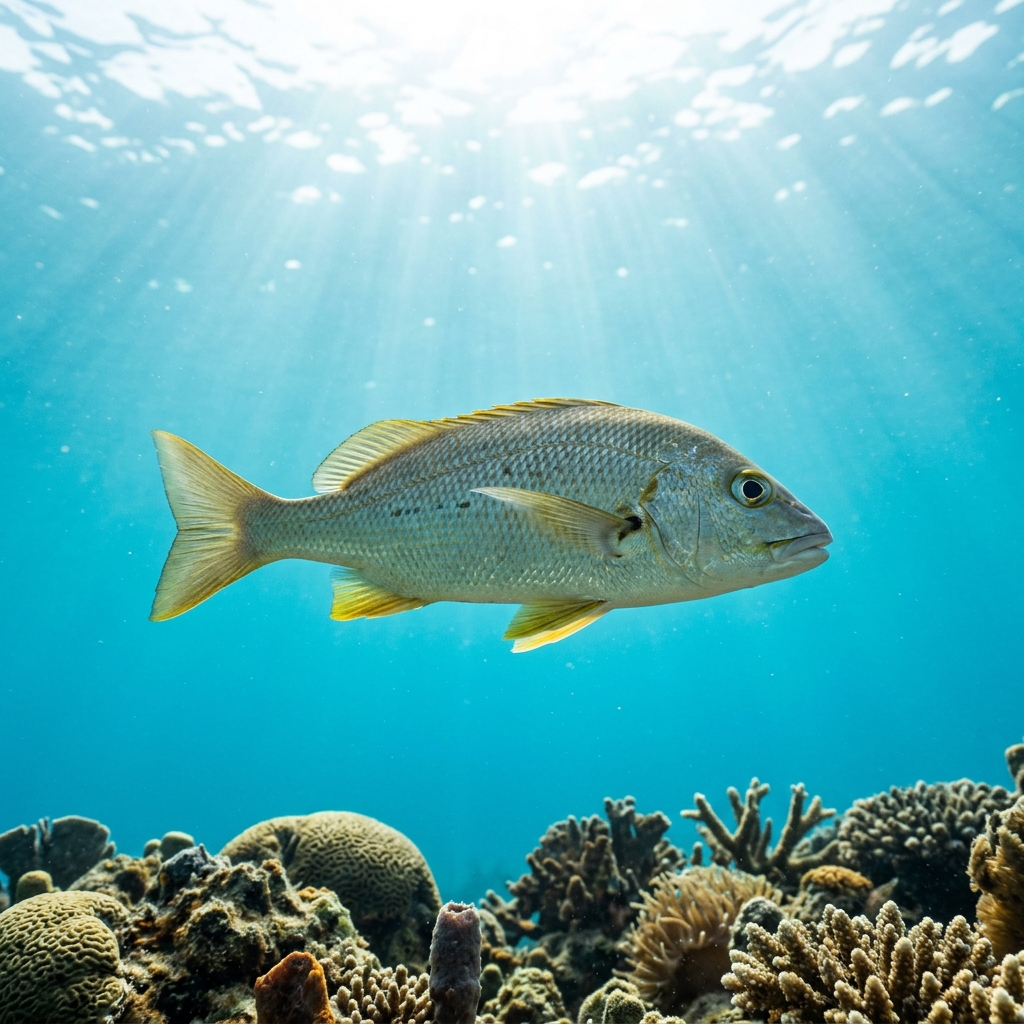
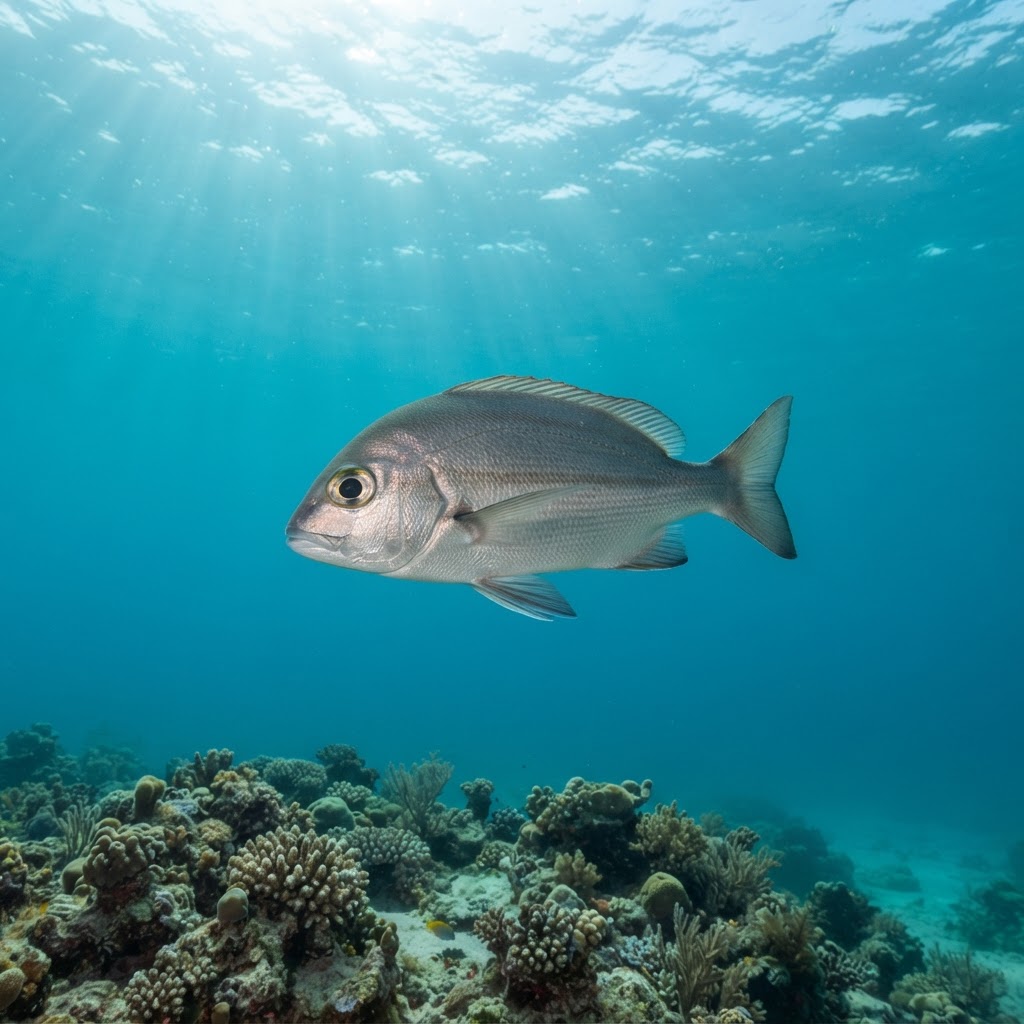
Look for a deep, heavy-bodied fish around half a metre long with a grey to silvery-brown body and no bold stripes or spots to key on. The giveaway is the head: thick, fleshy, pale lips that look almost swollen compared to other grunts. It tends to hang nose-down or motionless near rock, which combined with that lip shape is usually enough to call it from a distance.
Divers typically find it holding station close to rock or a ledge, often alone or loosely paired, doing very little to acknowledge a diver's presence. It's not a fish that patrols open water or schools in numbers here; it reads more like a resident that has staked out a patch of reef and stays put. Most sightings come from calm, structured rocky habitat rather than open sand, which is the terrain worth checking first.
Those thick lips aren't decorative: grunts in this family use them, along with grinding teeth deeper in the throat, to work through hard-shelled invertebrates picked off rock and rubble.
There's no clear seasonal pattern in the sightings data, so treat it as a year-round possibility wherever water sits in its observed 16 to 24 C comfort range. Cooler months on the Iberian coast still fall within that range, so timing your trip around season isn't necessary here.
Reef neighbours a diver could mistake it for. Use the identification notes above to tell them apart.
Most reliably logged along Portugal's Algarve coast and Spain's Andalusia region, with a smaller but steady presence around Fuerteventura in the Canary Islands. Across all three areas it tends to turn up as a rare to uncommon sighting on rocky reef and ledge terrain rather than sand or open water.
Mapping where Rubberlip Grunt is logged…
The strongest sightings come from Portugal's Algarve and Spain's Andalusia coast, with additional records from Fuerteventura in the Canary Islands. Look for rocky reef and ledge habitat rather than open sand or seagrass.
There's no strong seasonal signal in the data, so it's considered a year-round sighting. It's recorded across a 16.1 to 24.4 C temperature range, which covers most of the diving season on the Iberian coast.
Check for a deep-bodied, greyish fish around half a metre long with noticeably thick, pale lips and no strong stripe pattern. It's usually seen holding still near rock rather than swimming in open water.
They typically reach around 56 cm, making them one of the larger grunts a diver is likely to run into on Iberian and Canary Island reefs.
No, they're not considered a risk to divers. They tend to hold near rock and show little reaction to a diver's presence.
Site and sighting data is aggregated from diver logs, iNaturalist and GBIF. For taxonomy and conservation status:
Bluestriped Grunt
1,907 sites