Phyllidiella rosans
A pink-nodule nudibranch found on reefs in the Maldives and Reunion, most often logged as an uncommon macro find in 22.8-28.8C water.
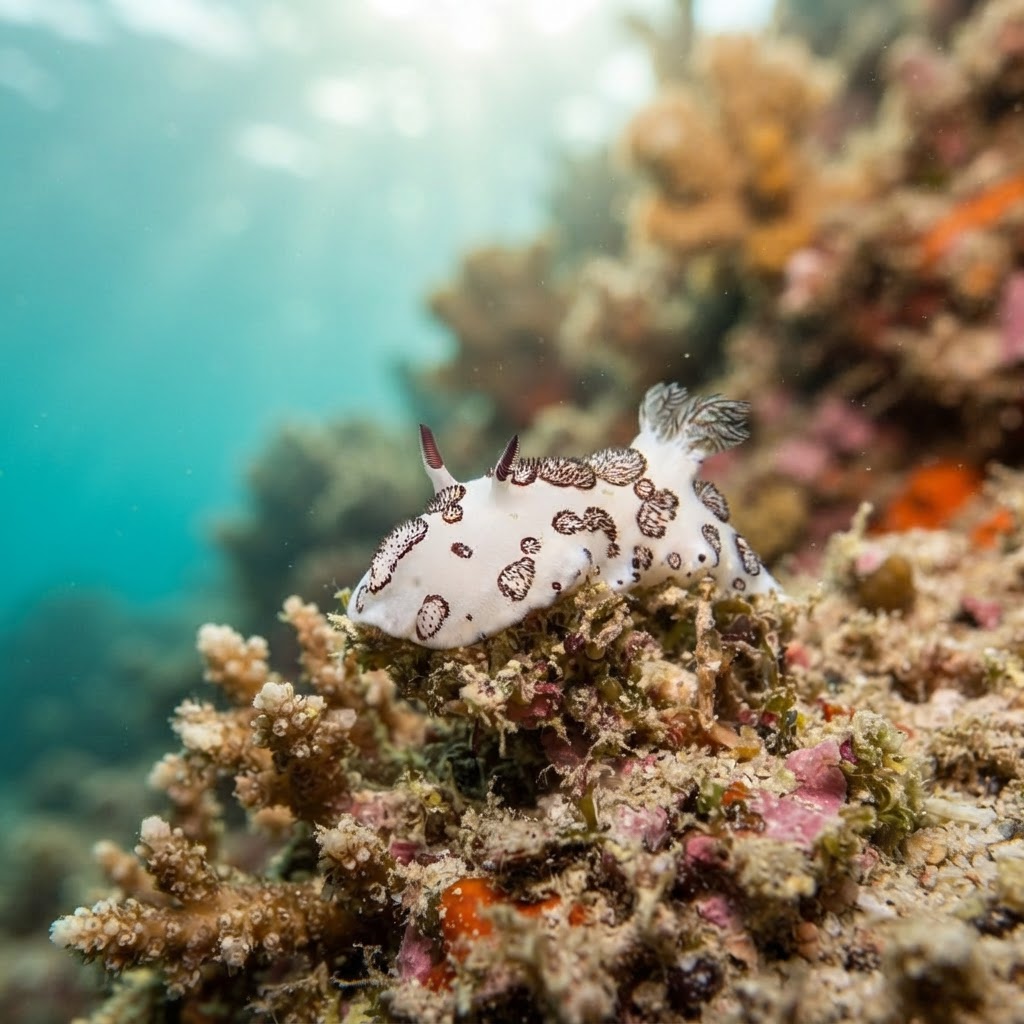
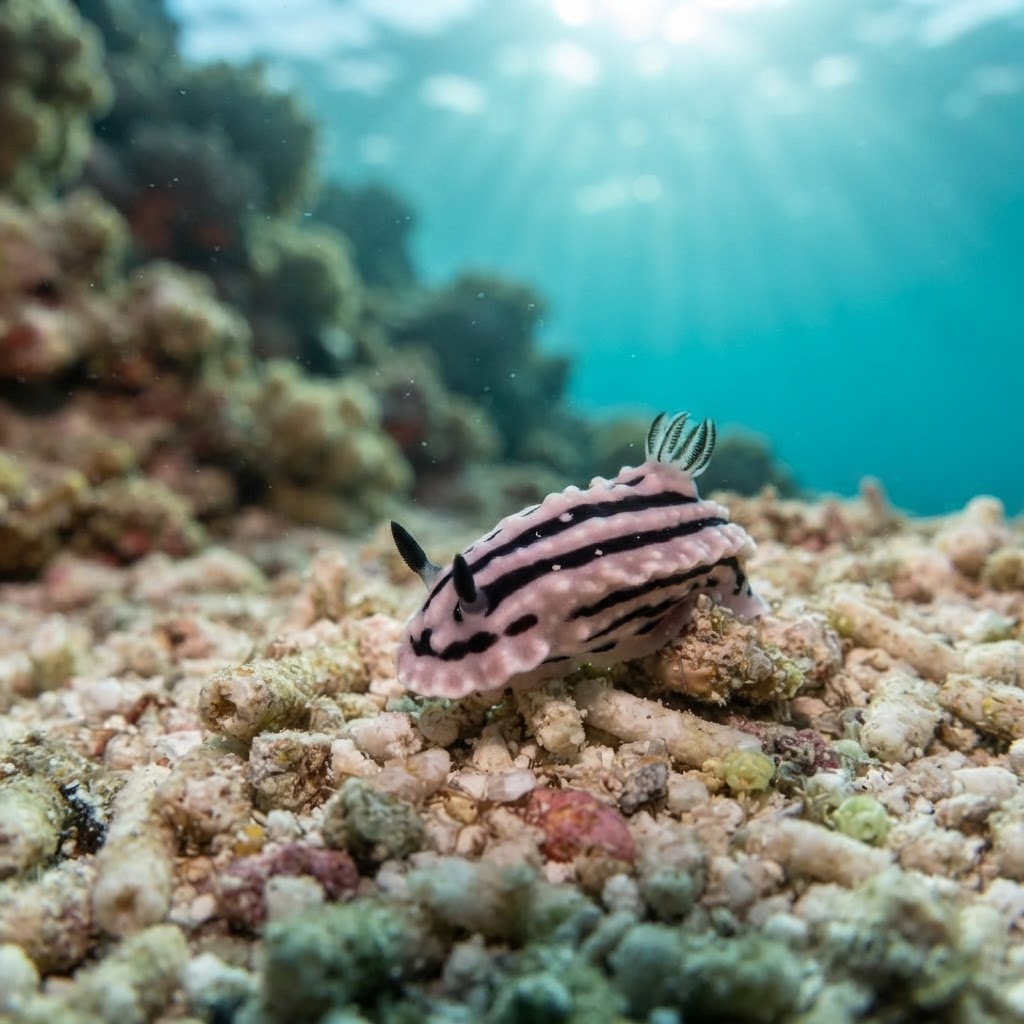
A small, oval nudibranch around 3cm long, its back covered in raised bumps (tubercles) tipped in dusky pink or rose against a grey to black background. The body is stiff and firm-looking rather than soft, with a distinct ridged texture that separates it from smoother sea slugs. Look for it low on the reef, moving slowly across rubble or dead coral rather than swimming.
Divers typically find it parked on rubble, dead coral or sponge-encrusted surfaces, moving at a nudibranch's usual unhurried pace as it grazes. It shows no reaction to divers beyond continuing on its way, making it an easy macro subject once spotted. Most logs describe it as an uncommon find, so a slow look over the substrate rather than the open reef is what turns it up.
Like other Phyllidiella species, it likely draws chemical defences from the sponges it feeds on, which is why its firm, tubercled skin goes largely unbothered by reef predators.
No clear seasonal pattern shows up in the data, and its comfortable range of 22.8 to 28.8C matches tropical reef conditions year-round, so it turns up on dives in any month.
Reef neighbours a diver could mistake it for. Use the identification notes above to tell them apart.
Most reliably logged in the Maldives, especially the Central and Southern Atolls, and in Reunion around Saint-Paul and Saint-Leu. These two countries account for the bulk of confirmed sightings, making them the strongest bets for a targeted search.
Mapping where Rose Phyllidiella is logged…
The strongest sightings come from the Maldives, particularly the Central and Southern Atolls, and from Reunion around Saint-Paul and Saint-Leu. It has been logged across dozens of sites in these two countries.
There is no strong seasonal pattern in the sighting data, and its temperature niche of 22.8 to 28.8C is typical of tropical reefs all year, so it can be found in any month.
Look for a small, firm-bodied nudibranch about 3cm long with raised bumps tipped in rose or pink against a dark grey to black body. It moves slowly over rubble and dead coral rather than in open water.
It stays small, typically reaching around 3cm in length, making it a macro subject rather than something spotted from a distance.
No. It poses no threat to divers and can be observed and photographed up close without any risk.
Most logs describe it as uncommon at the sites where it turns up, with only a handful of locations reporting it as common and very few as rare. It rewards a careful look over rubble and dead coral rather than a chance sighting in open water.
Site and sighting data is aggregated from diver logs, iNaturalist and GBIF. For taxonomy and conservation status:
Light-spotted Aegires
3,168 sites