Chrysiptera rollandi
A tiny reef damselfish most often logged around Koh Lipe and Koh Phi Phi, in warm 26-29C water year-round.
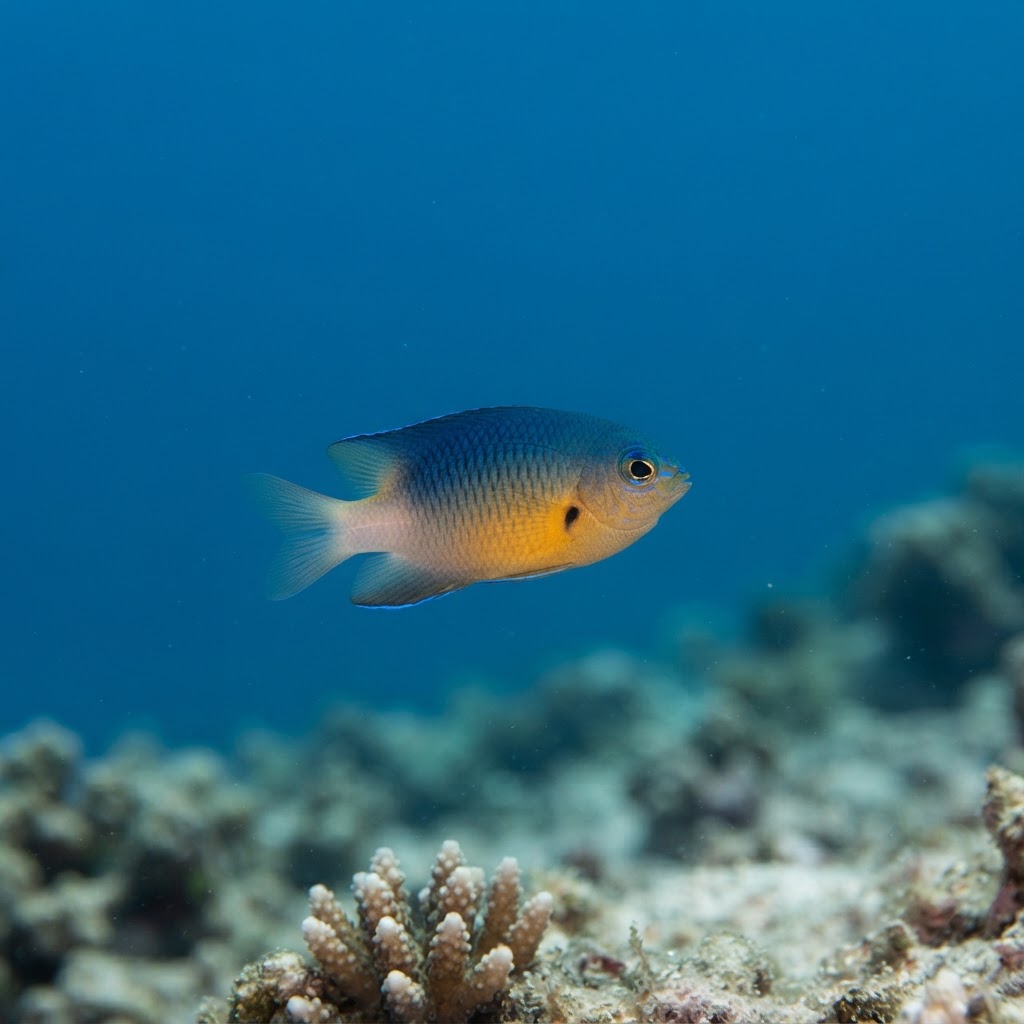
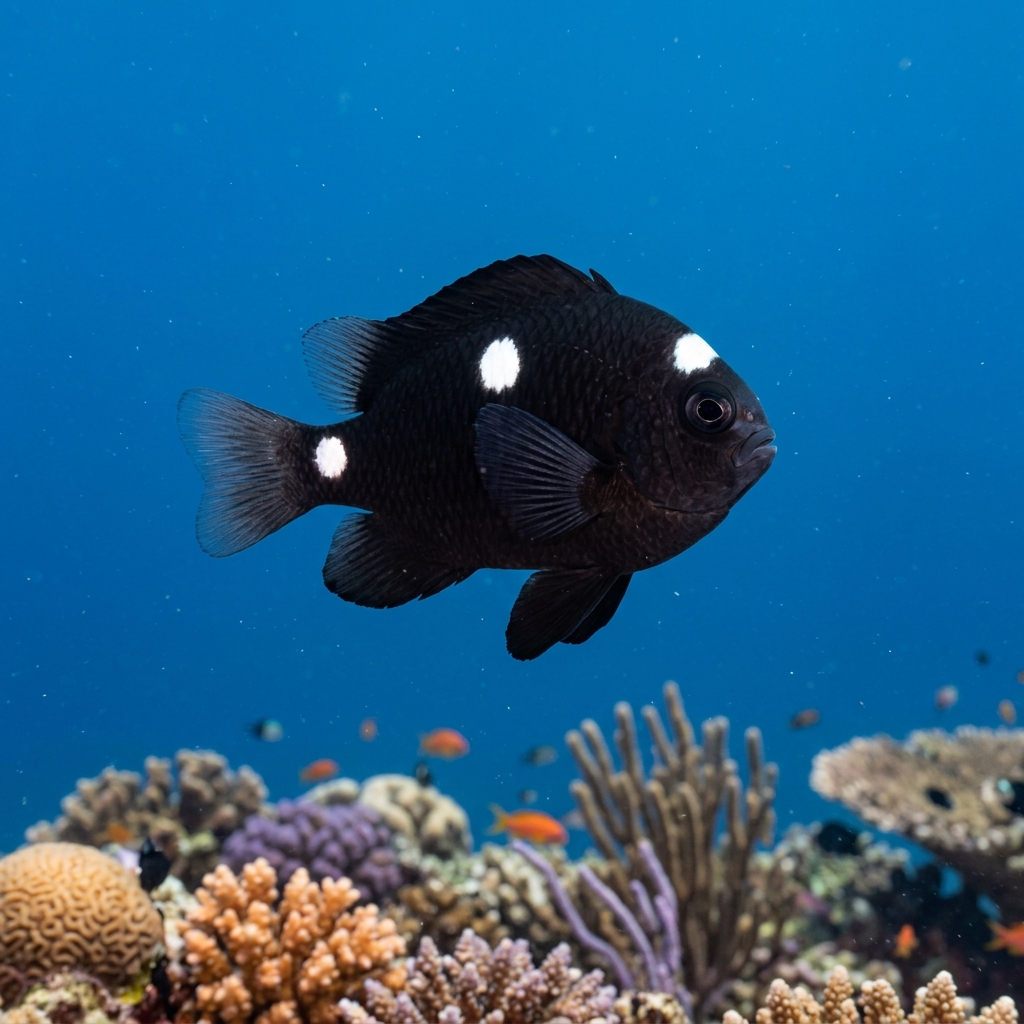
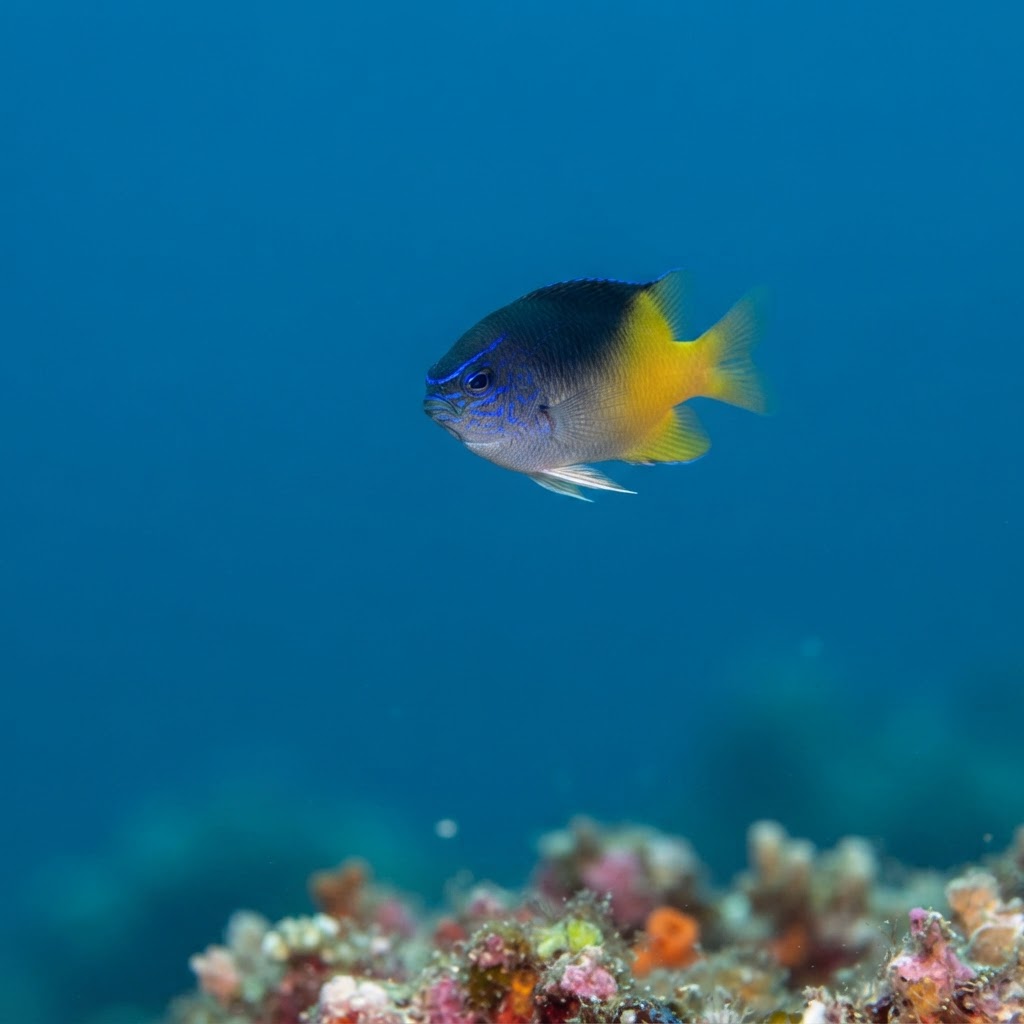
A palm-sized damselfish at just 4 cm, with a compact, deep-bodied shape typical of the genus and a dusky blue-grey to brownish base colour. Look for a pale patch or bar behind the head and the darting, stop-start swimming that damselfish are known for as it holds close to a coral head or rubble patch. At this size and depth range it is easy to miss unless you slow down and scan low relief reef and rubble rather than open water.
Divers typically spot it holding a small patch of reef or rubble, ducking in and out of cover rather than roaming open water. It is not shy exactly, but it keeps its distance and gets on with picking at algae and small invertebrates on the substrate rather than paying attention to passing divers. Most logs describe it as an uncommon find even on sites where it occurs, so it rewards divers who slow down and check low-relief ground rather than the reef top.
Like other small Chrysiptera damselfish, it likely holds a defended patch of reef rather than schooling, which is why divers tend to log single fish rather than groups.
Sightings show no clear seasonal pattern, and it sits comfortably in the 25.7-29.3C range typical of these tropical reefs, so it is a reasonable find on any dive across the year in its range.
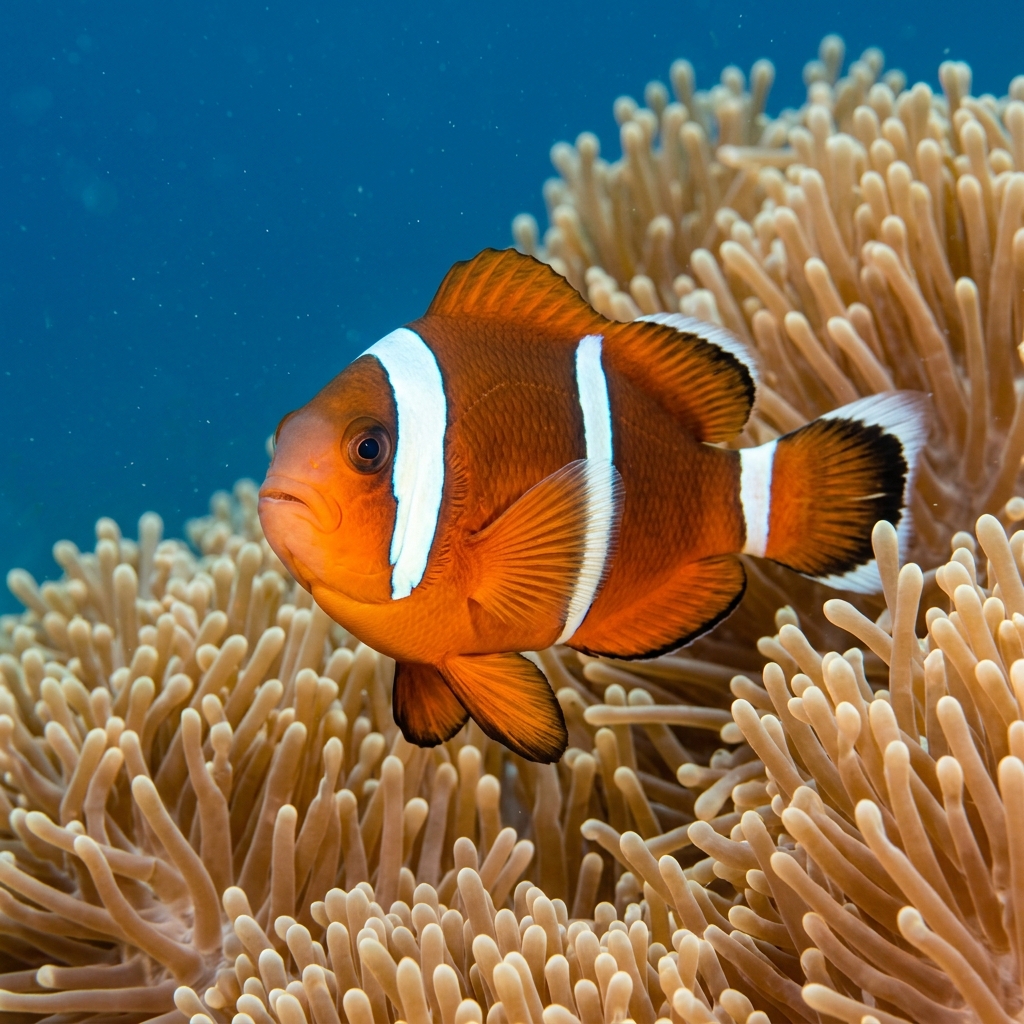
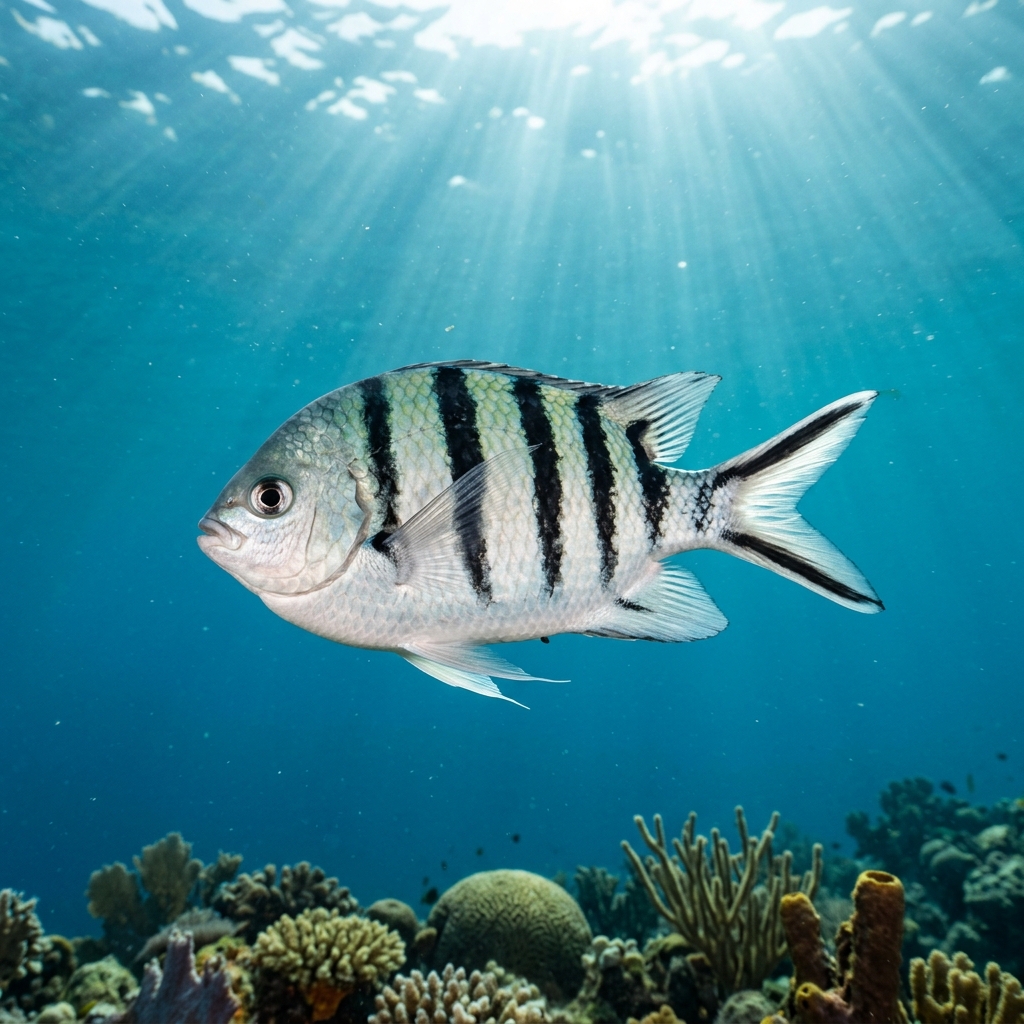
Reef neighbours a diver could mistake it for. Use the identification notes above to tell them apart.
Most reliably logged in Thailand, especially around Koh Lipe and Koh Phi Phi, with strong additional records from Sabah in Malaysia and Luzon in the Philippines. It also turns up around Nouméa in New Caledonia and on reefs in Queensland, Australia, with smaller pockets logged in Milne Bay, Papua New Guinea, and Sulawesi, Indonesia.
Mapping where Rolland's Demoiselle is logged…
Thailand is the strongest area, particularly Koh Lipe and Koh Phi Phi, with good numbers also recorded around Sabah in Malaysia and Luzon in the Philippines. Smaller but real populations are logged near Nouméa in New Caledonia and on Queensland reefs in Australia.
There is no detected seasonal pattern, so it can be seen year-round on reefs within its 25.7 to 29.3C comfort range. Plan around your destination's general dive season rather than around this fish specifically.
Look for a small, deep-bodied damselfish around 4 cm long, blue-grey to brownish, holding close to a coral head or rubble patch rather than swimming in open water. Its short, darting movements and reef-hugging habit are as useful for ID as its colouring.
It stays small, reaching around 4 cm as an adult, which is typical for damselfish in the Chrysiptera genus. That size, plus its habit of sticking close to reef structure, is why it is easy to swim straight past.
No, it poses no danger to divers. It is a small, reef-associated damselfish that keeps its distance and has no venom or aggressive behaviour of concern to people.
It is an omnivore, picking at algae and small invertebrates on the reef and among rubble. This grazing habit is why you will usually find it low on the reef rather than out in open water.
Site and sighting data is aggregated from diver logs, iNaturalist and GBIF. For taxonomy and conservation status:
Dascyllus
3,697 sites