Epinephelus adscensionis
Reddish-brown and heavily spotted, Rock Hind turns up on reef ledges from Dominica to St. Martin in water around 24-28C, year-round.
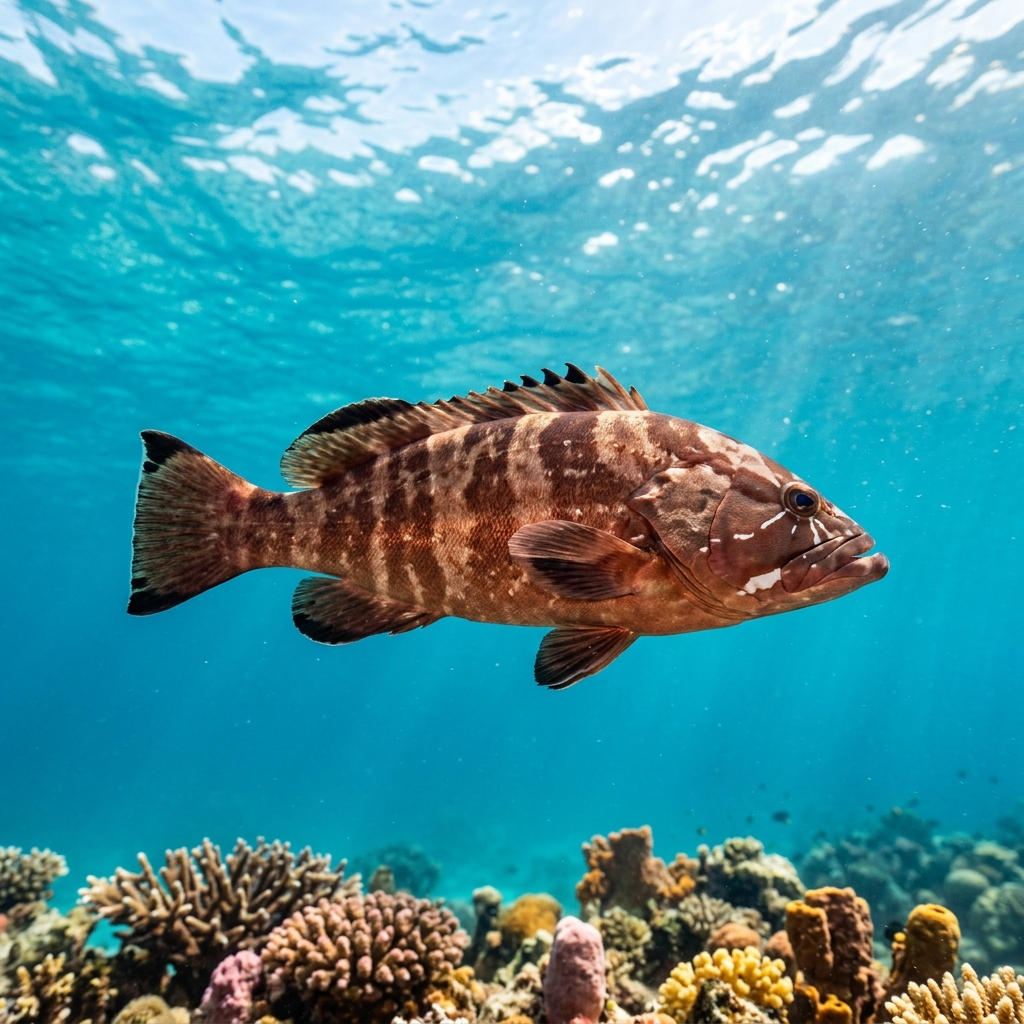
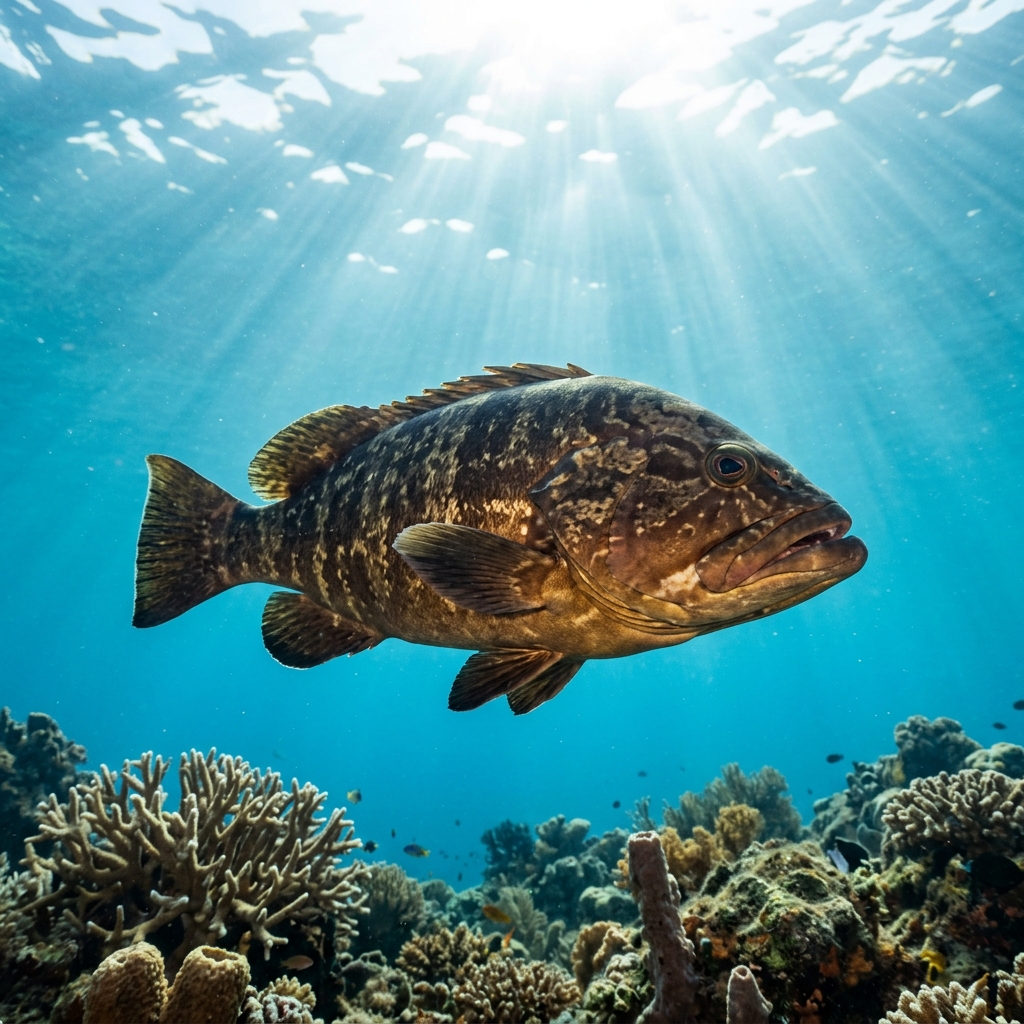
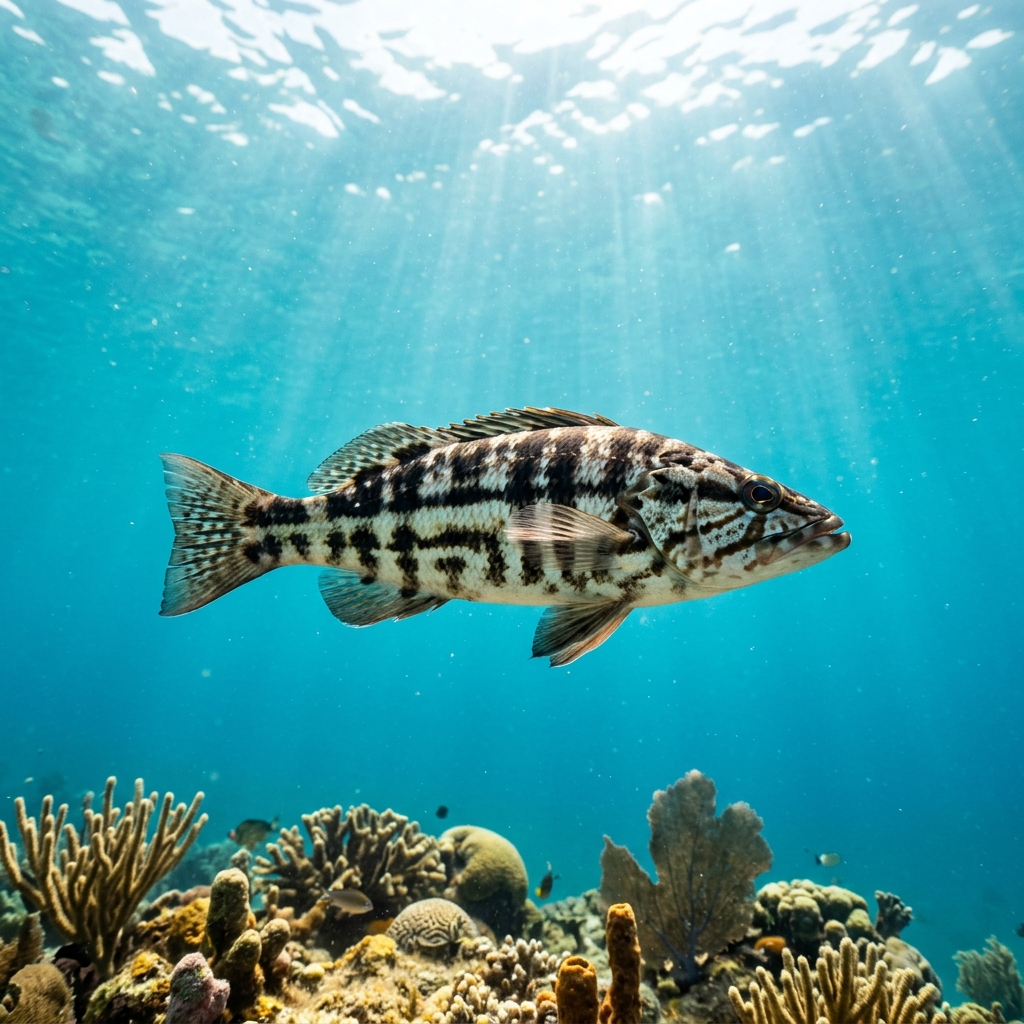
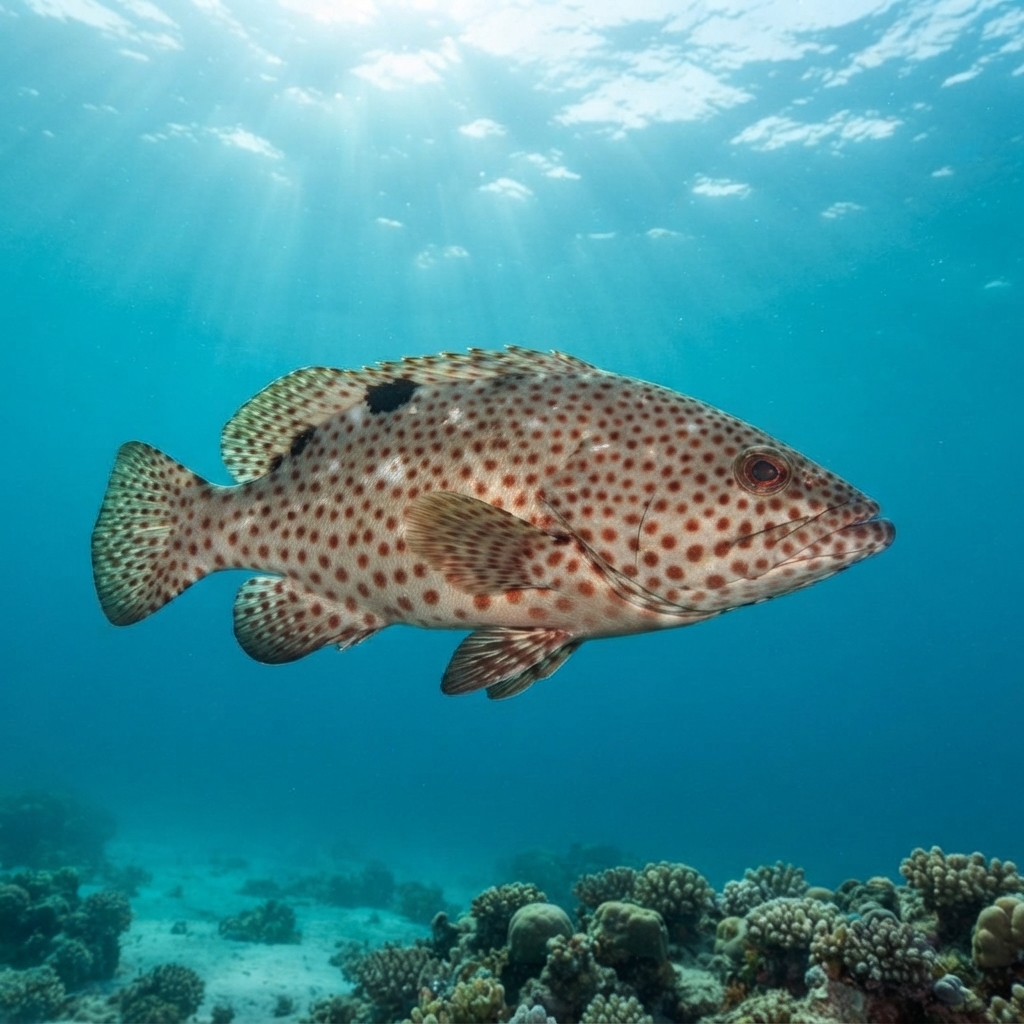
Stocky, reef-hugging grouper to about 46 cm, coloured pale grey to reddish-brown and covered head to tail in small dark reddish-brown spots that give it a speckled, almost polka-dot look. Look for three or four dark saddle-like blotches along the base of the dorsal fin, a helpful field mark when the spotting pattern alone feels too generic. Body is thick-set and grouper-shaped, usually seen parked on or near rock and reef structure rather than out in open water.
Expect to find it sitting still on a rocky ledge or reef crevice, using its mottled colouring to blend into the substrate rather than swimming in the open. It is generally unbothered by divers, holding position and letting you approach rather than bolting, though it will slip back into a crevice if pressed. Most sightings are on structure-rich bottom rather than sand or open water, and it is logged as an uncommon find even at sites where it does occur, so it rewards a slow, ledge-by-ledge look rather than a quick swim-by.
Like other groupers in this family, Rock Hind is a protogynous hermaphrodite, meaning individuals can start life as female and later transition to male as they grow.
No clear seasonal pattern shows up in the sightings, and with a comfortable water-temperature range of about 24 to 28C it holds steady on these reefs all year, so any month works for a dive.
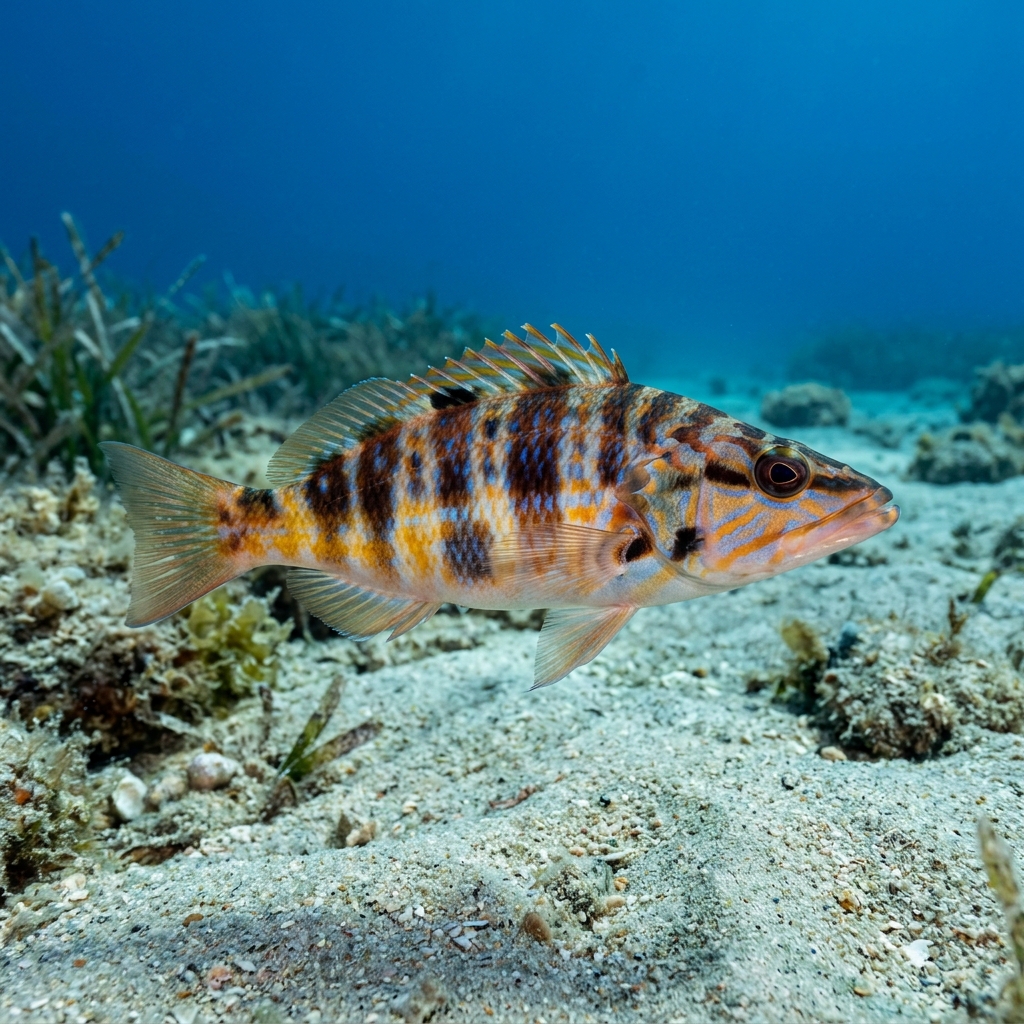
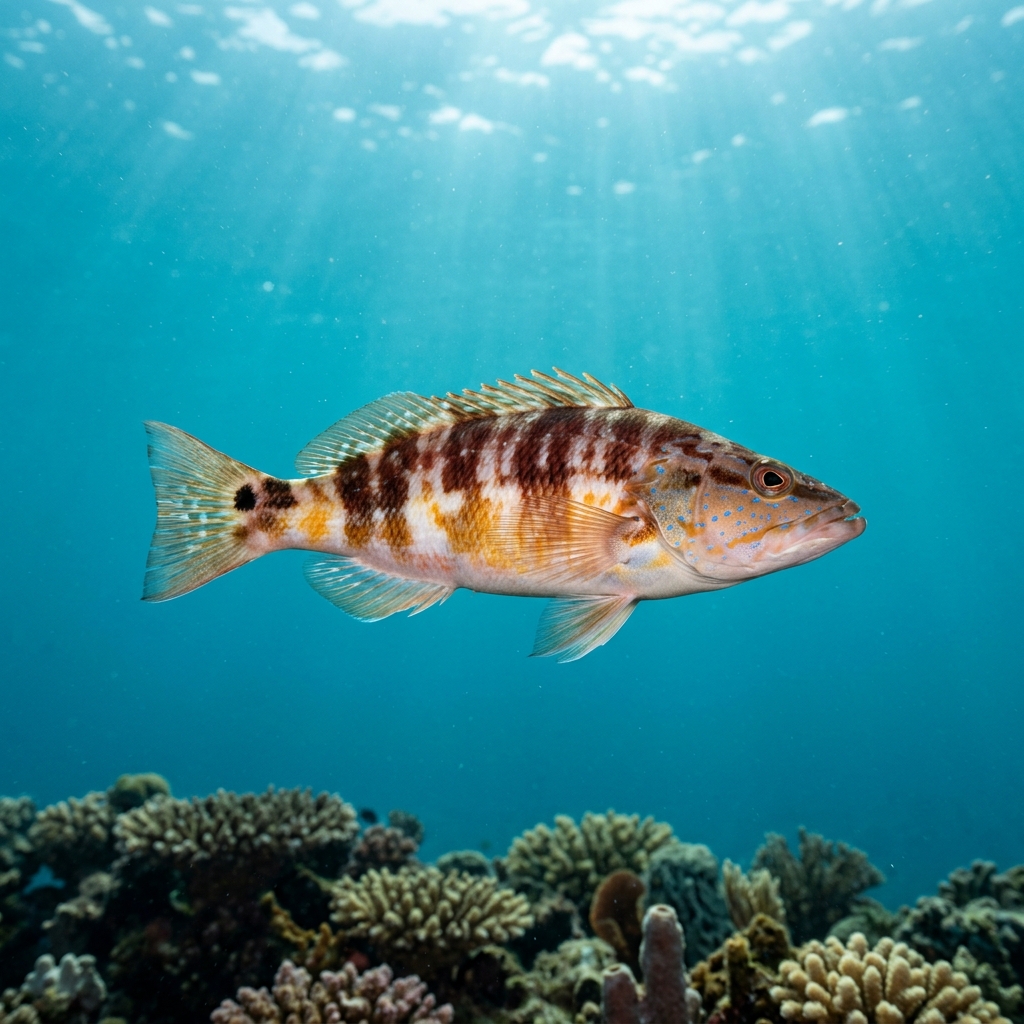
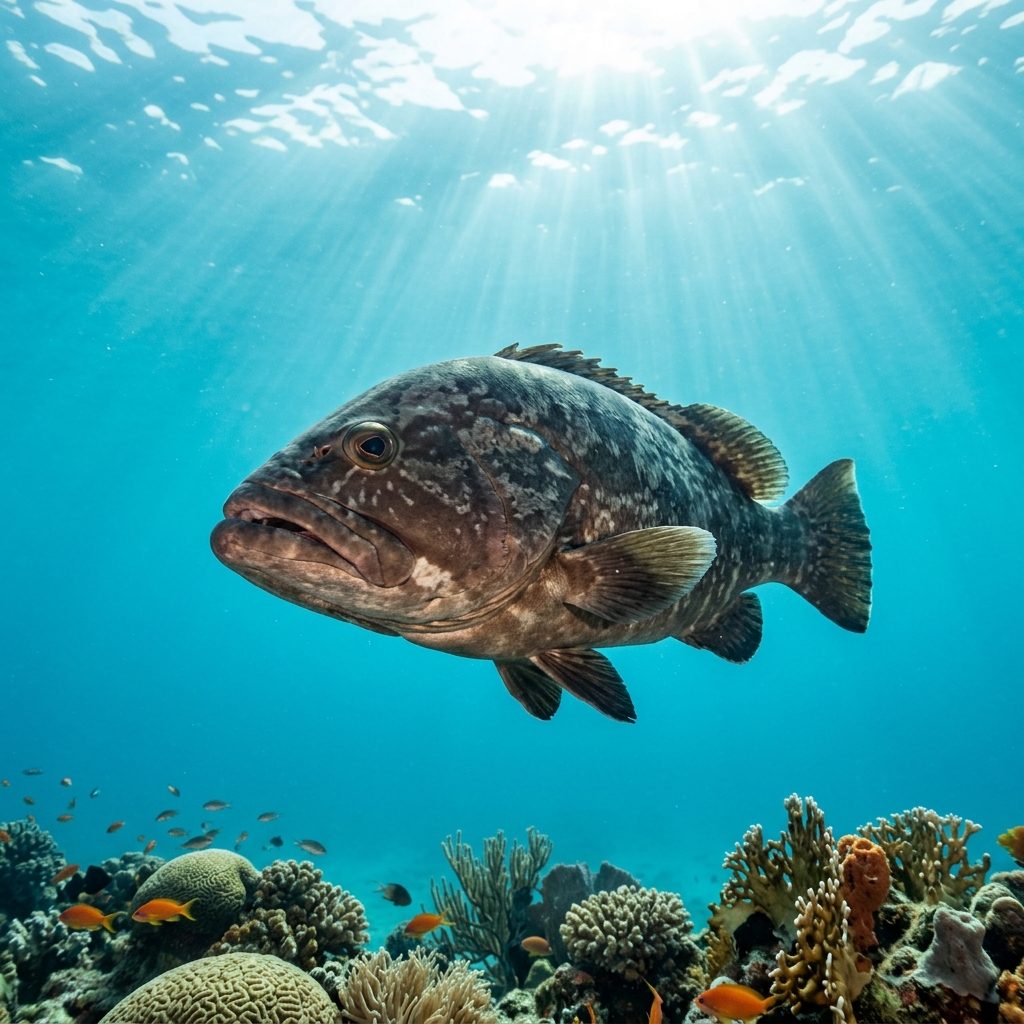
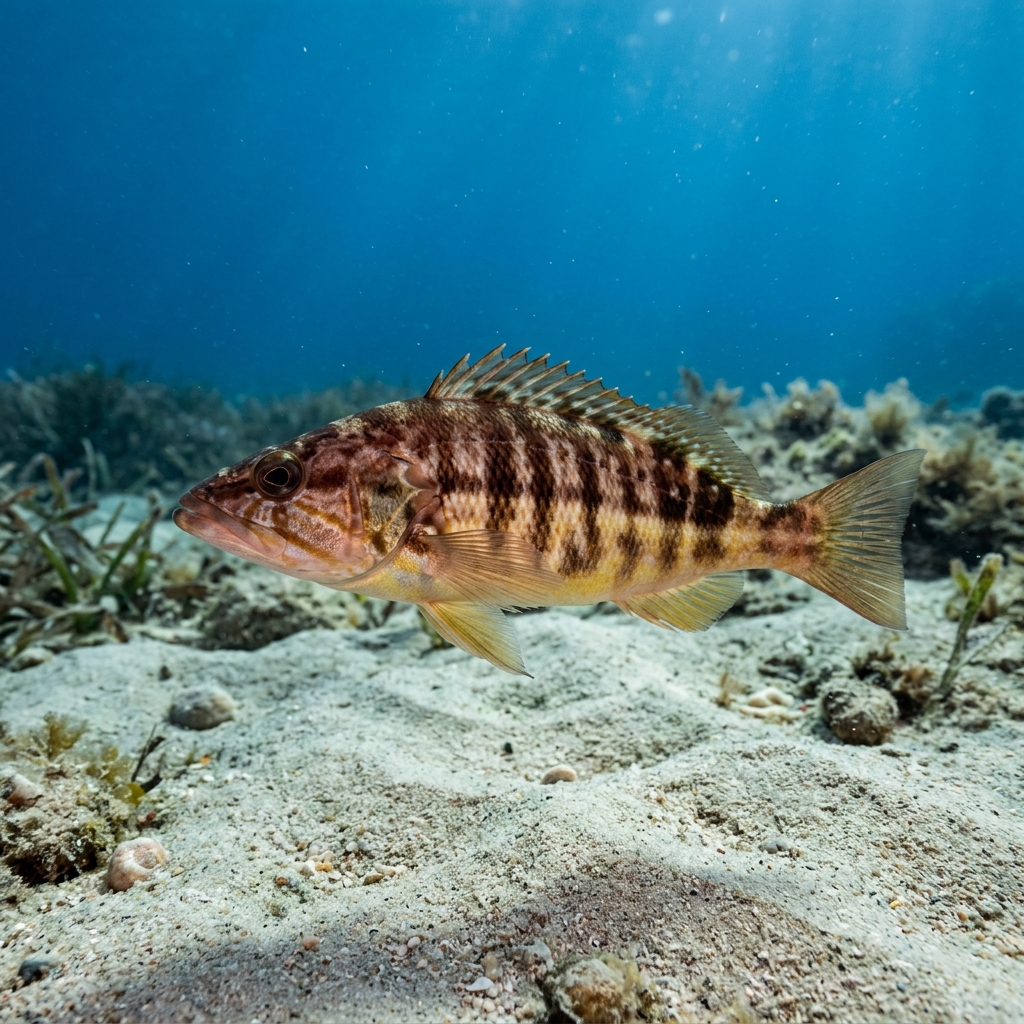
Reef neighbours a diver could mistake it for. Use the identification notes above to tell them apart.
Most reliably logged in St. Martin/Sint Maarten, especially around Sint Maarten itself, with strong numbers also coming out of Martinique (Sainte-Luce & Le Diamant, Les Anses-d'Arlet) and Dominica's Soufriere-Scotts Head Marine Reserve. Brazil's Bahia coast and San Salvador in the Bahamas are also dependable spots, rounding out a range that spans the wider Caribbean and part of the Brazilian coast.
Mapping where Rock Hind is logged…
St. Martin/Sint Maarten is the most consistent spot, along with Martinique's Sainte-Luce, Le Diamant and Les Anses-d'Arlet coasts, Dominica's Soufriere-Scotts Head Marine Reserve, San Salvador in the Bahamas, and Brazil's Bahia coast.
There is no strong season in the sightings data, and it sits comfortably in 24 to 28C water year-round, so it can turn up on any dive month to month.
Look for a stocky grouper around 46 cm covered in small reddish-brown spots on a pale to reddish-brown body, with a few darker saddle blotches along the base of the dorsal fin. It usually sits still on rock or reef rather than swimming in open water.
They typically reach around 46 cm, making them a modest-sized grouper compared to reef giants like goliath or potato groupers.
No, they pose no threat to divers and generally hold still on the reef rather than reacting defensively when approached.
Site and sighting data is aggregated from diver logs, iNaturalist and GBIF. For taxonomy and conservation status:
Blacktip Grouper
2,726 sites