Roboastra spp.
Spot Roboastra nudibranchs in the Philippines, Maldives, and Indonesia. Best sightings Nov, May in warm Indo-Pacific waters. ID tips and top dive regions inside.
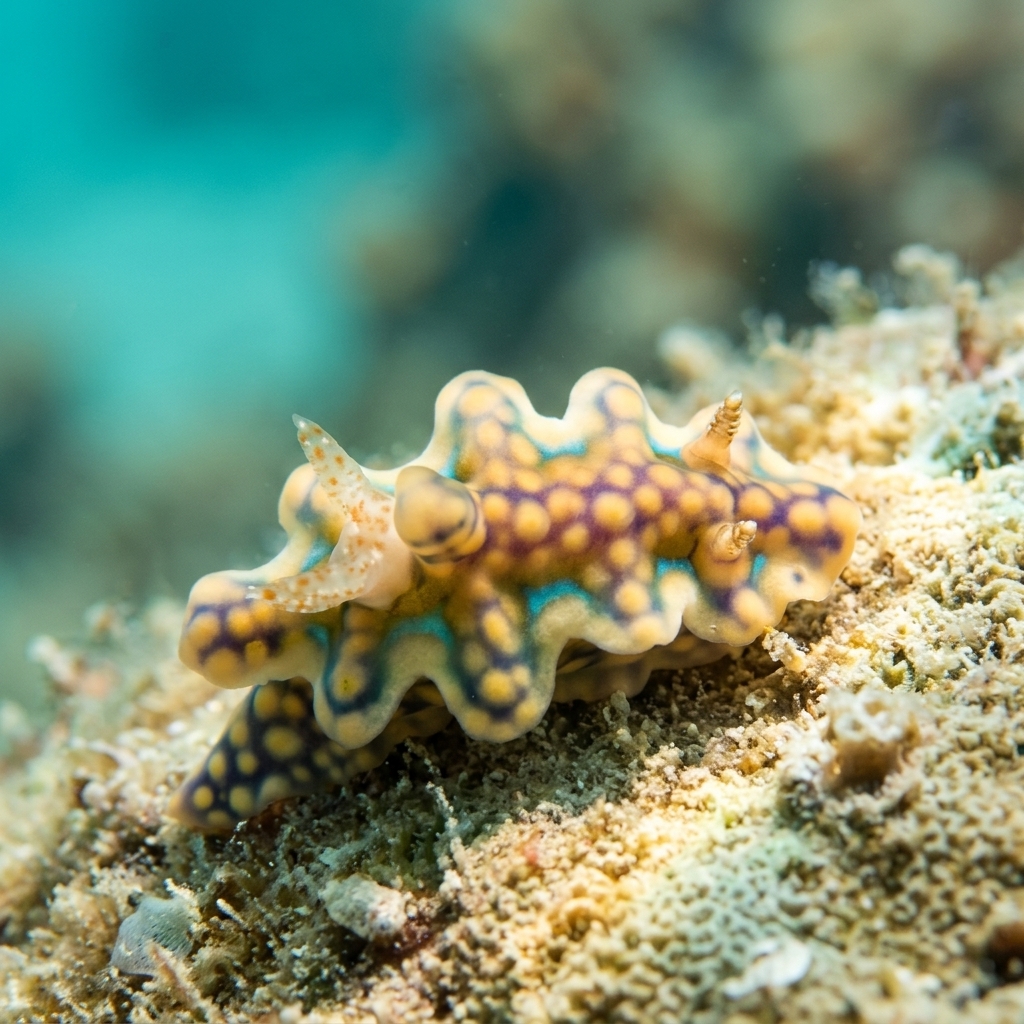
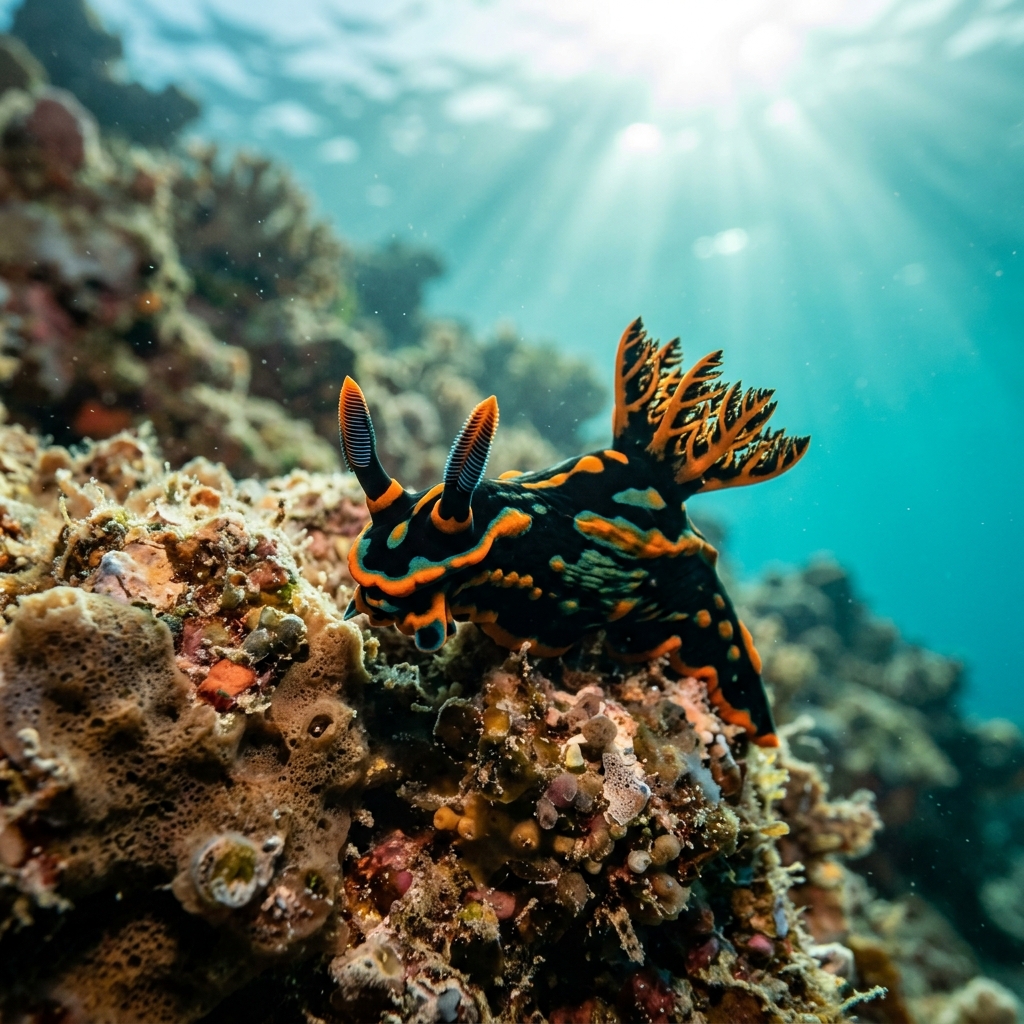
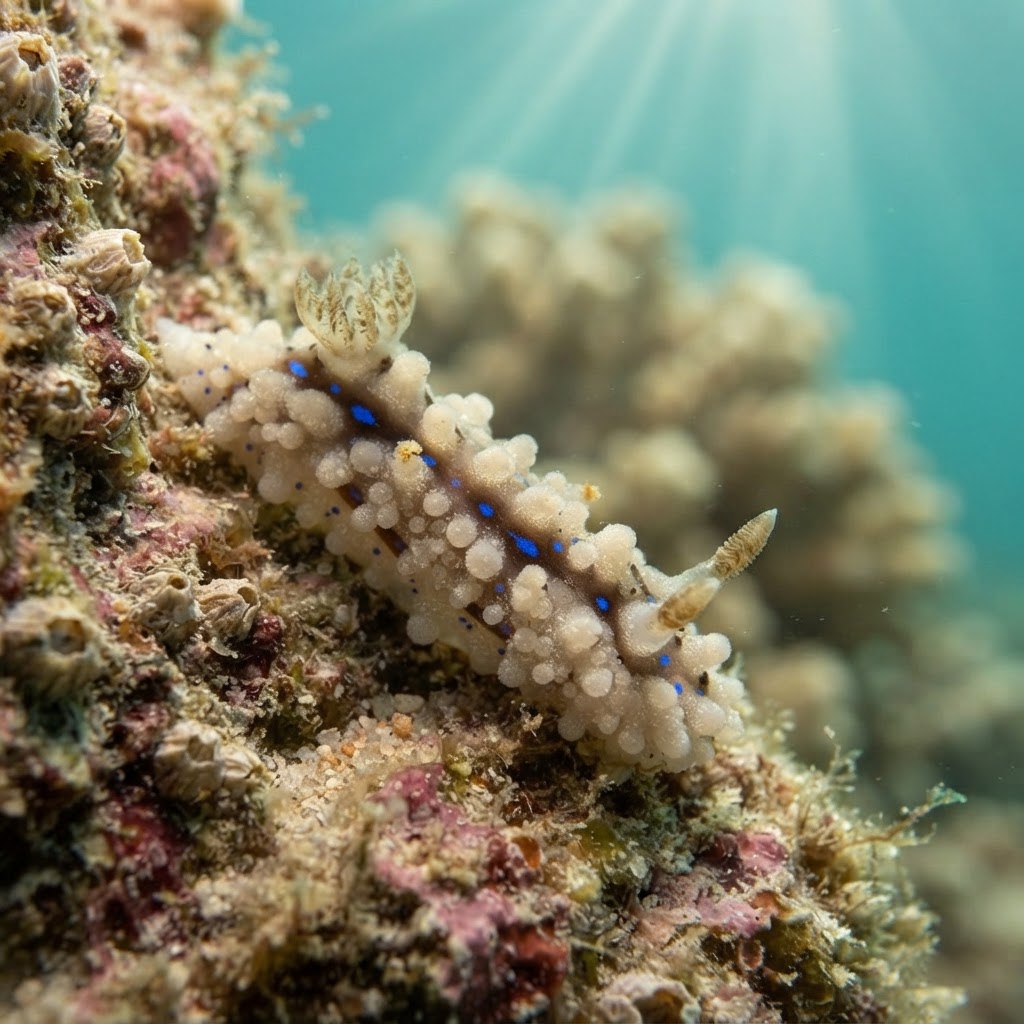
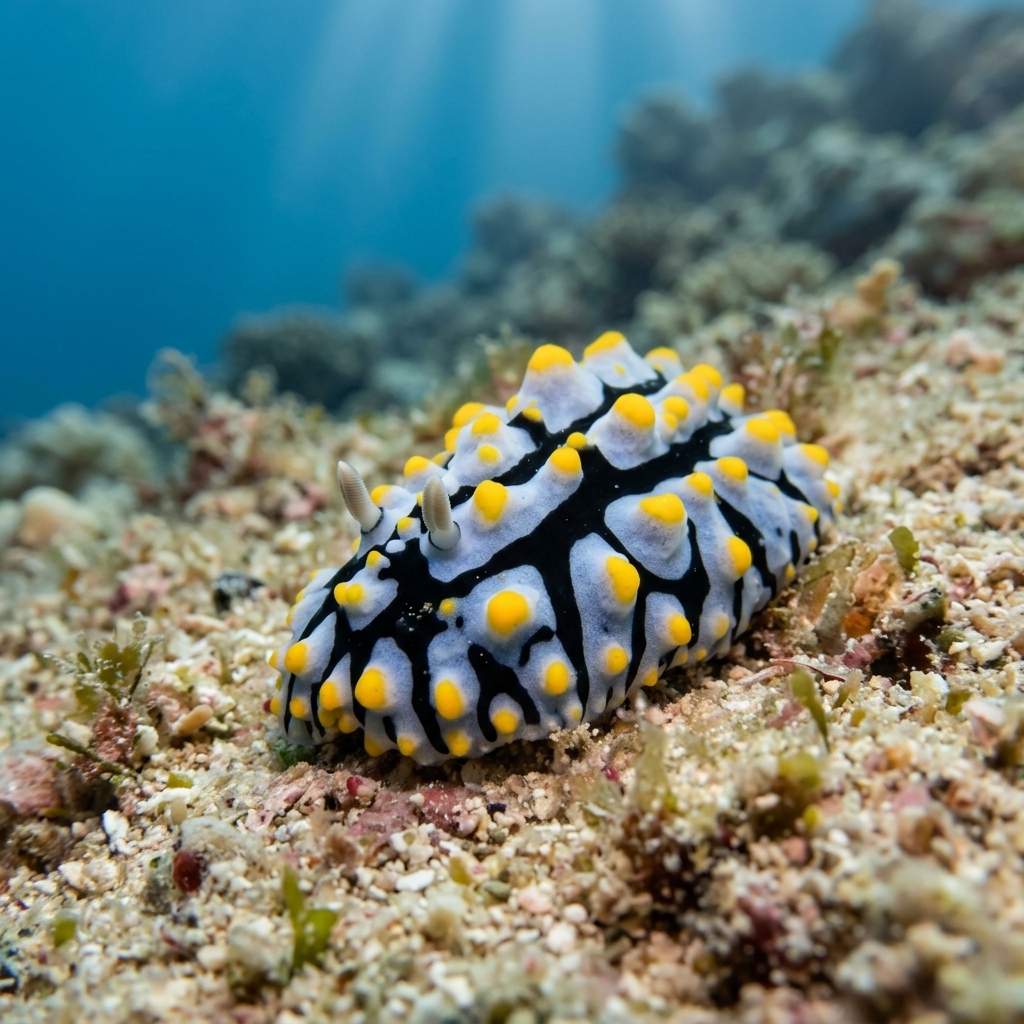
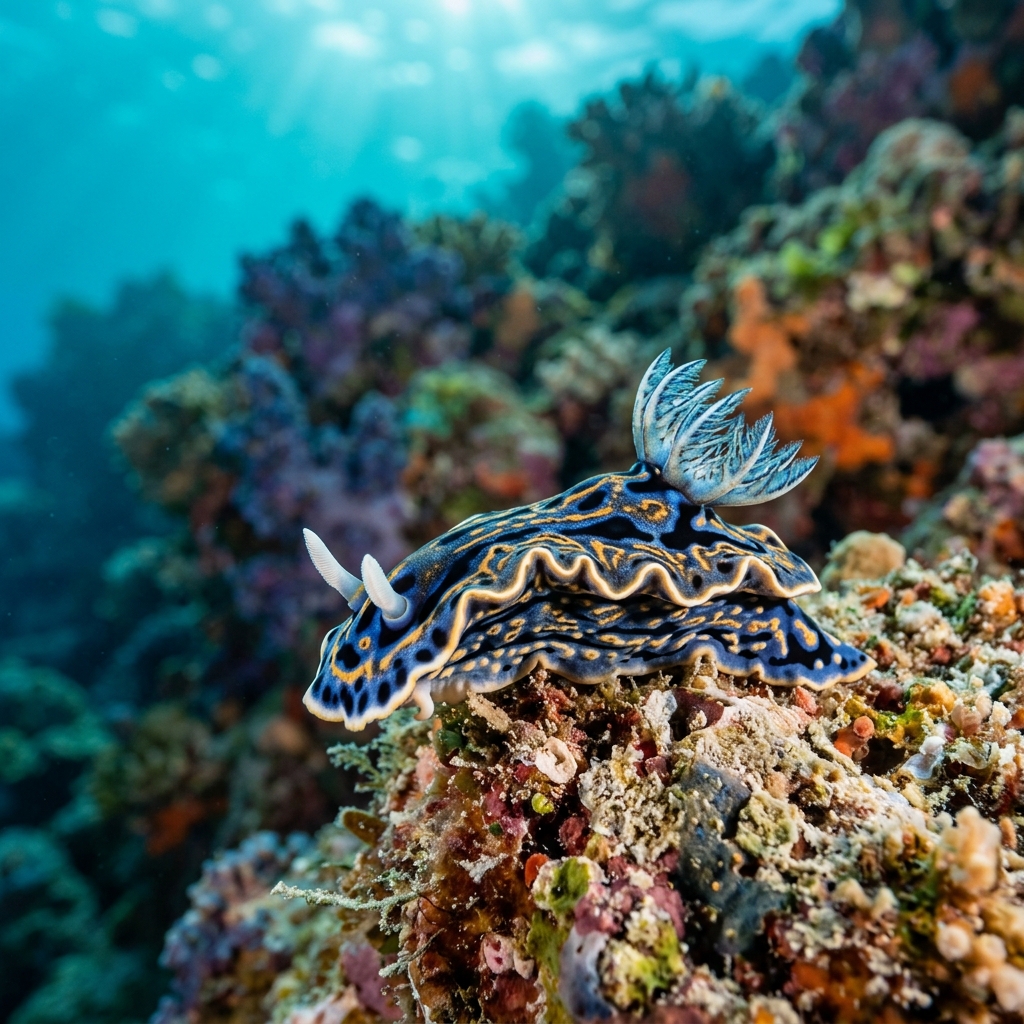
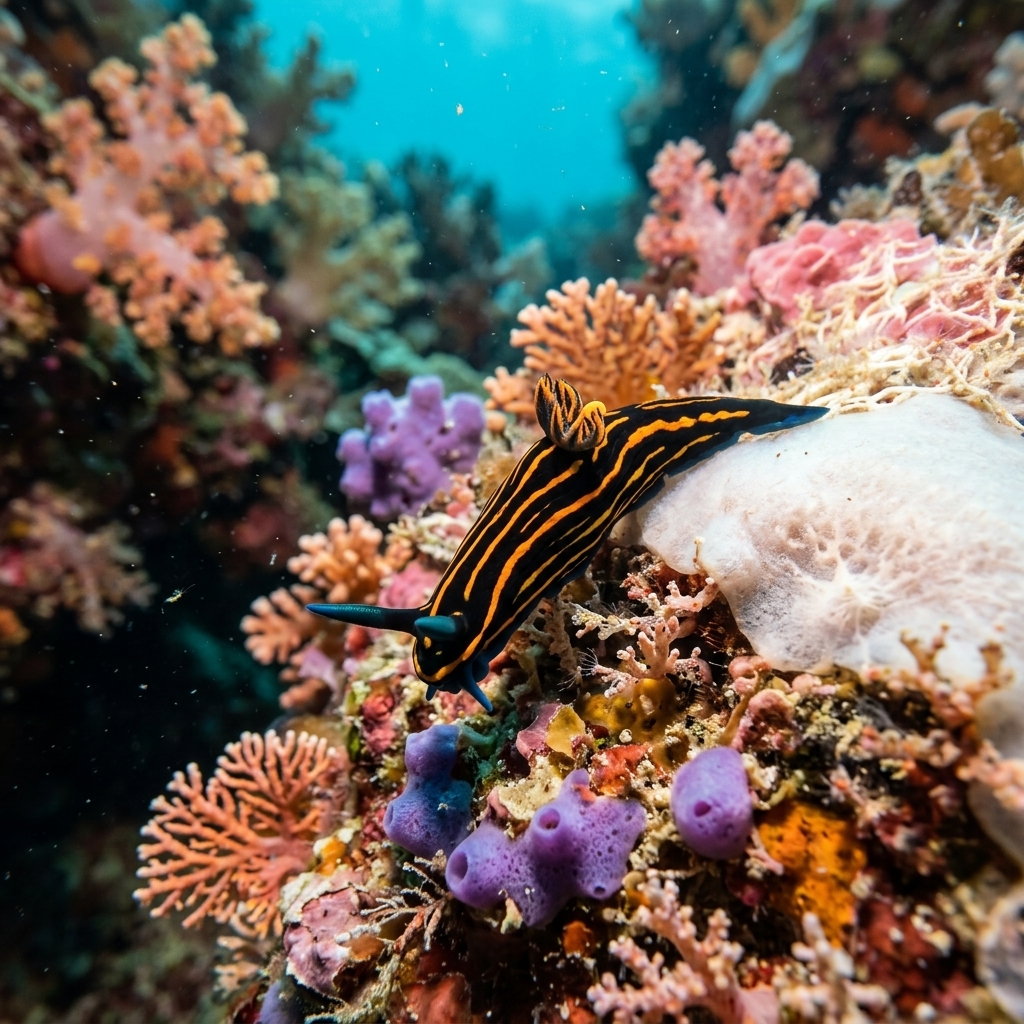
Roboastra species are elongated, relatively robust nudibranchs with a dark base colour, typically deep purple, black, or dark brown, offset by vivid contrasting ridges or lines in orange, yellow, or white running along the body. The cerata (projecting body appendages) are absent in this group; instead, the dorsum is smooth aside from a low raised edge. Most species are small enough to fit on a fingernail, though some push two to three centimetres. That high-contrast colouring against a dark reef surface is the key field mark.
You will most often find a Roboastra nudibranch moving purposefully across reef rubble, coralline algae, or hard coral, hunting other nudibranchs, which form the bulk of its diet. They move faster than many slug-like nudibranchs, and a hunting individual can cover a surprising amount of ground during a single dive. They rarely react to diver presence and will continue foraging if you approach slowly and avoid touching the substrate nearby.
Roboastra are specialist predators that feed almost exclusively on other nudibranchs, often targeting species considerably larger than themselves. Watching one actively pursue and subdue prey is one of the more dramatic small-creature encounters on a reef.
In the Northern Hemisphere, sightings concentrate from November through May, so that window is your best bet for destinations like the Philippines, Japan, and the Maldives. The group's warm-water niche of roughly 21 to 29°C keeps them present on tropical reefs throughout the year at equatorial sites.
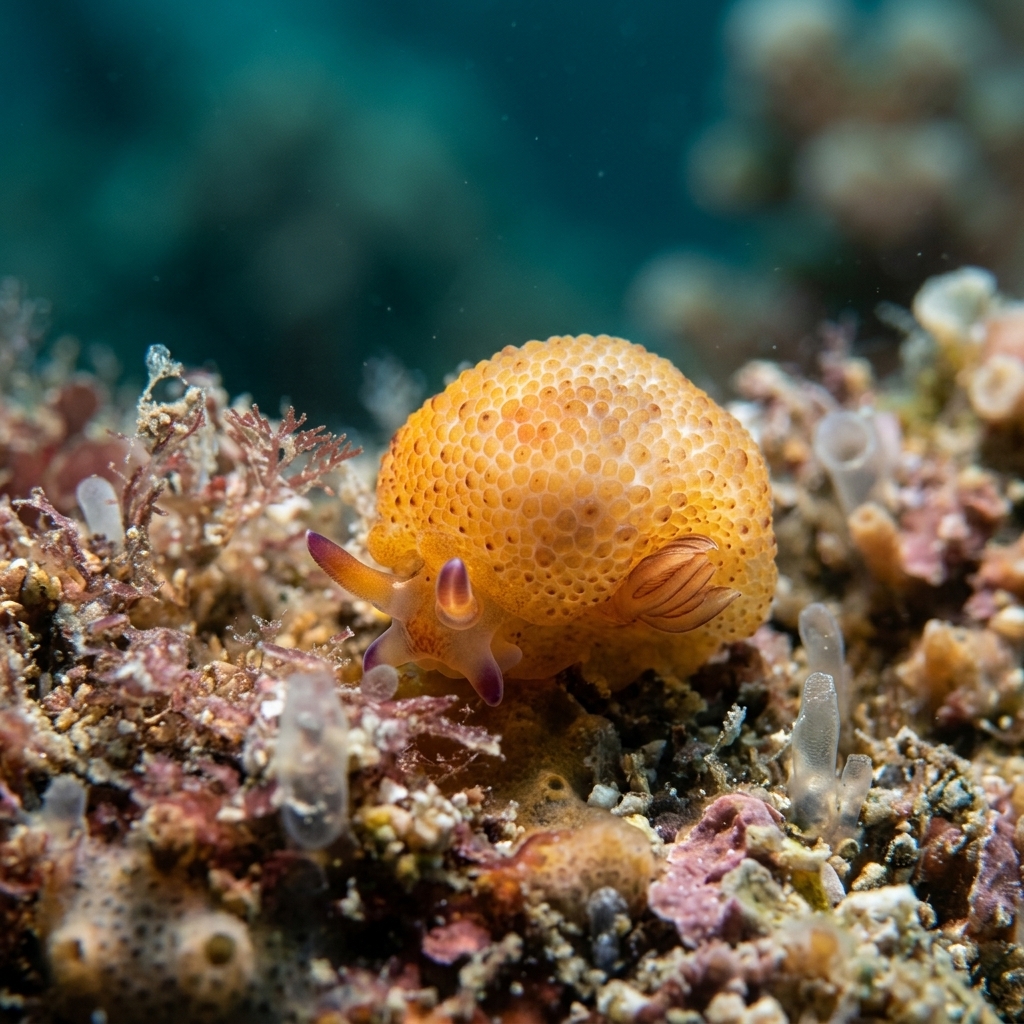
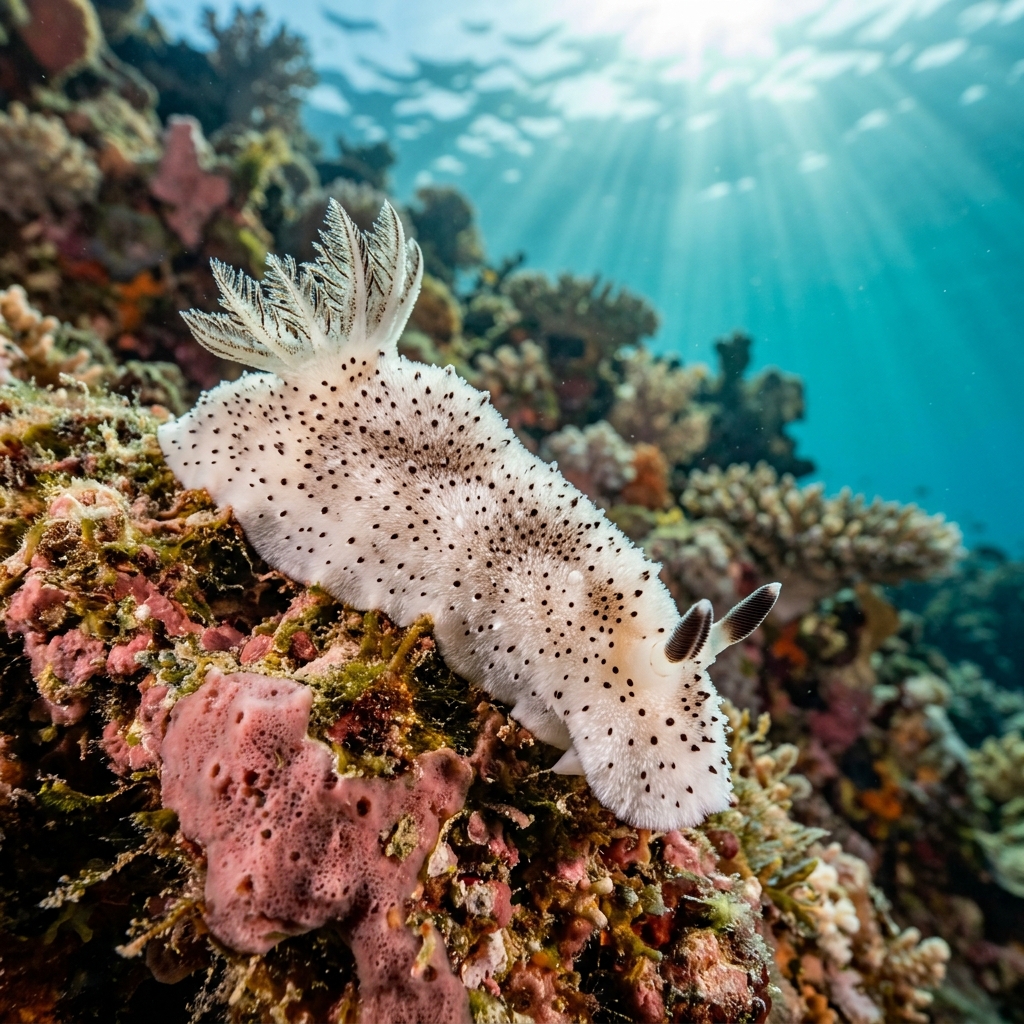
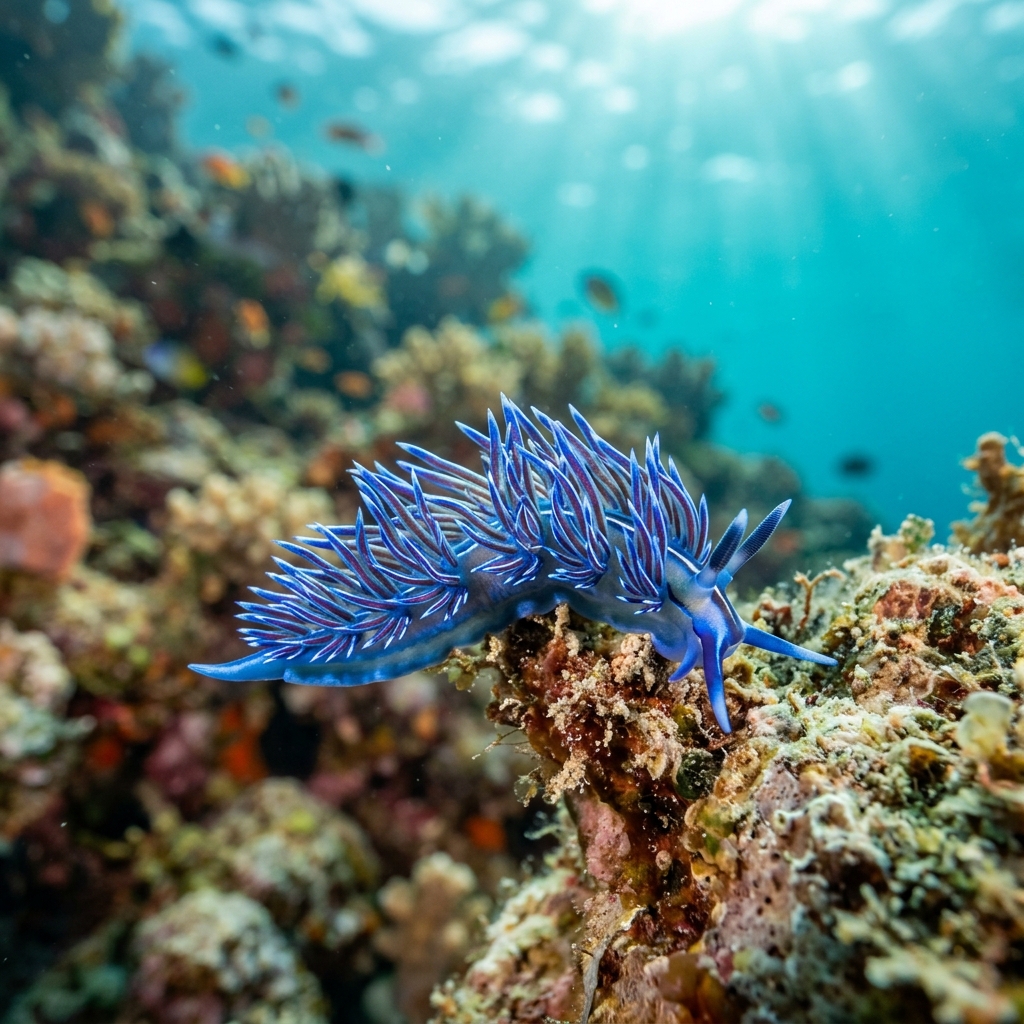
Reef neighbours a diver could mistake it for. Use the identification notes above to tell them apart.
Roboastra nudibranchs are most commonly logged in the Philippines, particularly around the Visayas and Palawan, and across the Maldives atolls from North and Central to Felidhoo and Mulaku. Indonesia, Japan's Izu Peninsula, and the Sipadan area of Malaysian Borneo also hold strong populations, making the broader Indo-Pacific the heart of the group's range.
Mapping where Roboastra Nudibranch is logged…
The Philippines, Maldives, and Indonesia account for the greatest number of logged sightings, with top spots including the Visayas, Palawan, and the North and Central Maldives atolls. Japan's Izu Peninsula and Sipadan in Malaysian Borneo are also reliable sites within the Indo-Pacific range.
Northern Hemisphere sightings cluster between November and May, making that window ideal for Philippines or Japan trips. At equatorial sites like the Maldives and Indonesia, the warm, stable water temperatures mean encounters are possible year-round.
Look for a dark-bodied, smooth-backed nudibranch with bold contrasting lines or ridges in orange, yellow, or white. Unlike many nudibranchs, Roboastra lack prominent cerata and have a low, clean dorsal profile. The high-contrast patterning on dark substrate is the easiest field mark.
Most individuals encountered on a dive are small, roughly one to three centimetres long, though size varies across the species within the group. Their compact, elongated body shape can make them easy to miss against dark reef rubble.
Roboastra are predatory nudibranchs that hunt and eat other nudibranchs. They are notably active hunters compared to many sea slugs, and watching one pursue prey is one of the more engaging small-creature behaviours a diver can observe on a tropical reef.
Site and sighting data is aggregated from diver logs, iNaturalist and GBIF. For taxonomy and conservation status:
Blue Dragon
3,163 sites