Oxycheilinus unifasciatus
Uncommon reef wrasse logged from Hawaii to Palau's Peleliu, at ease in 24 to 29 C water year-round on Indo-Pacific reefs.
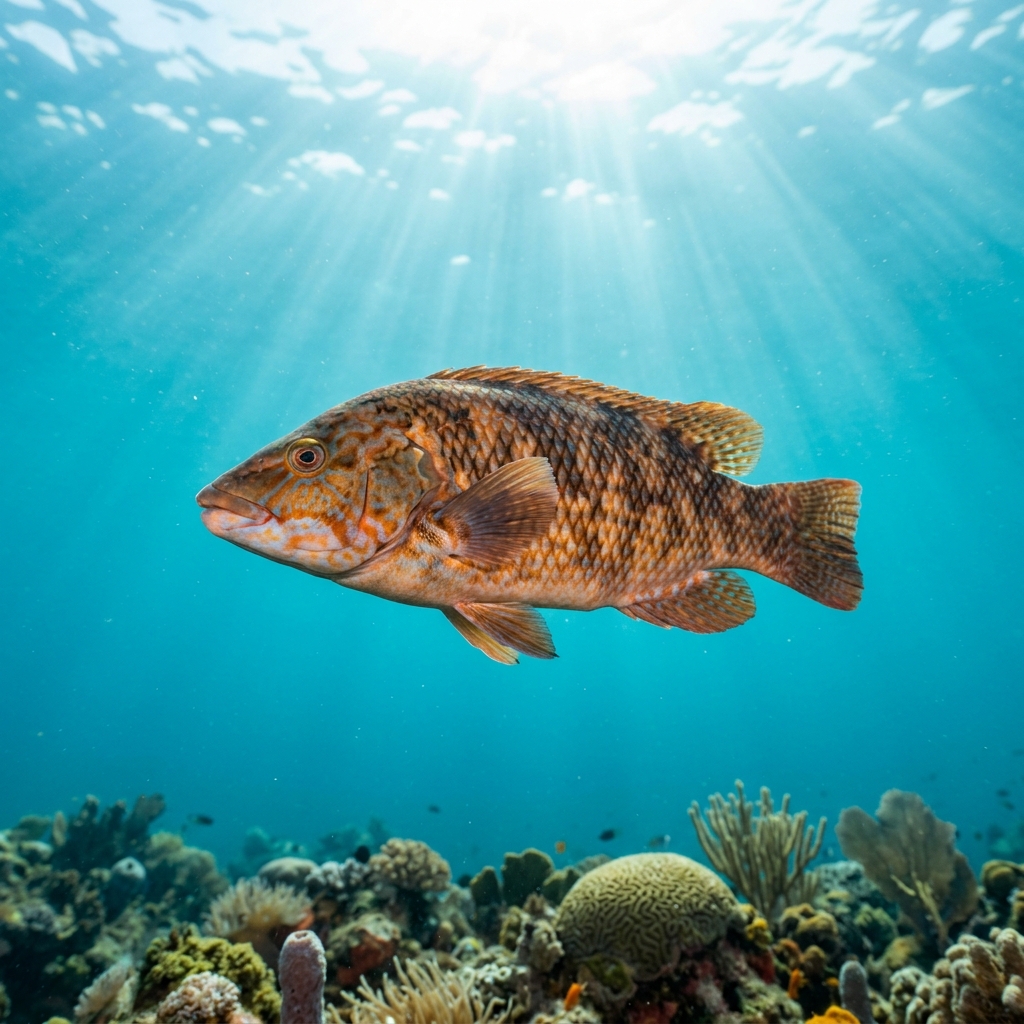
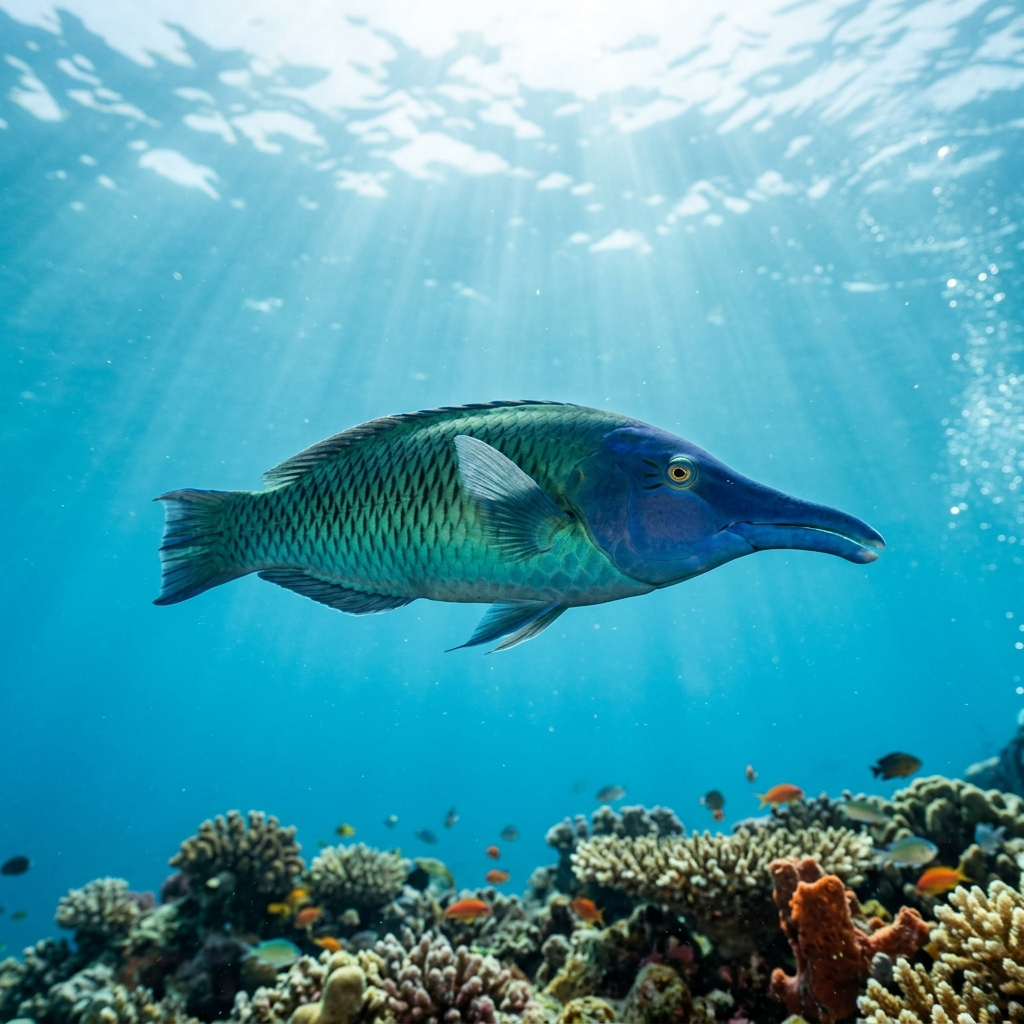
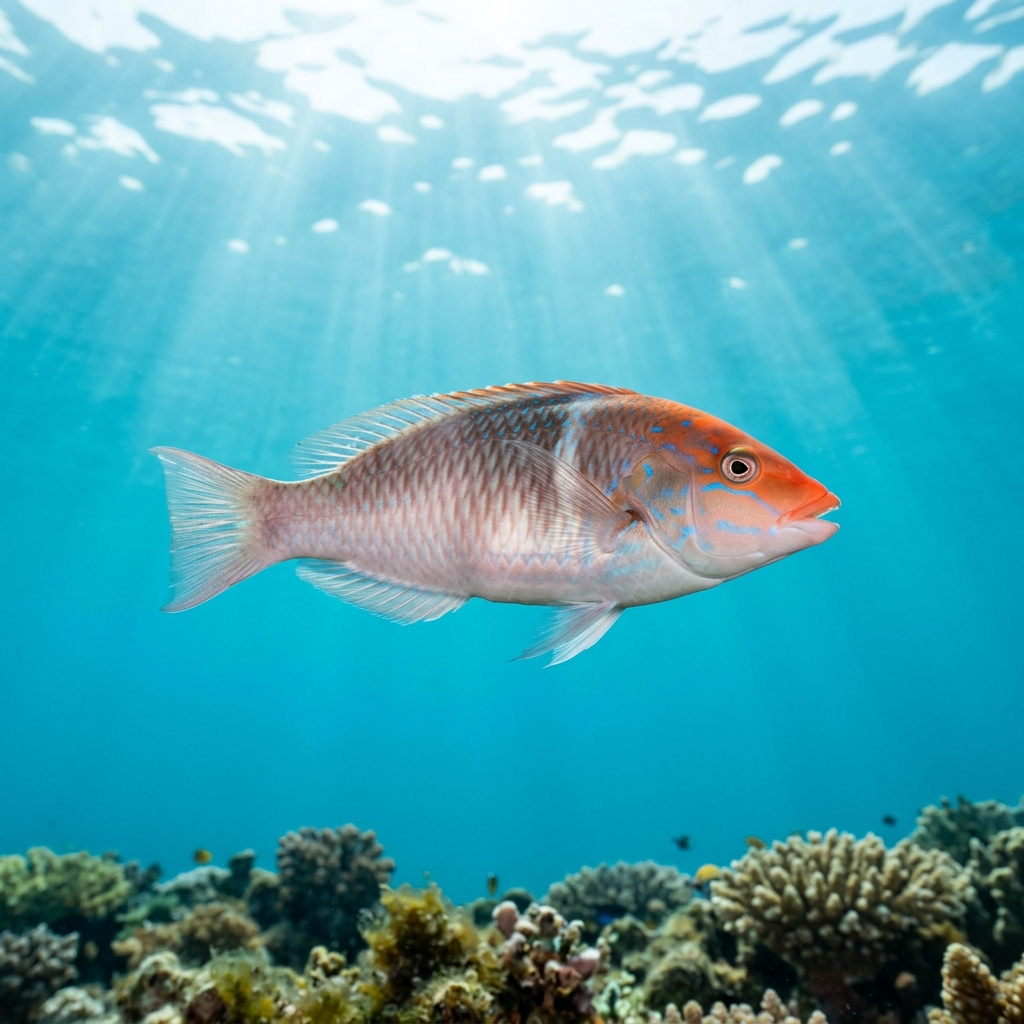
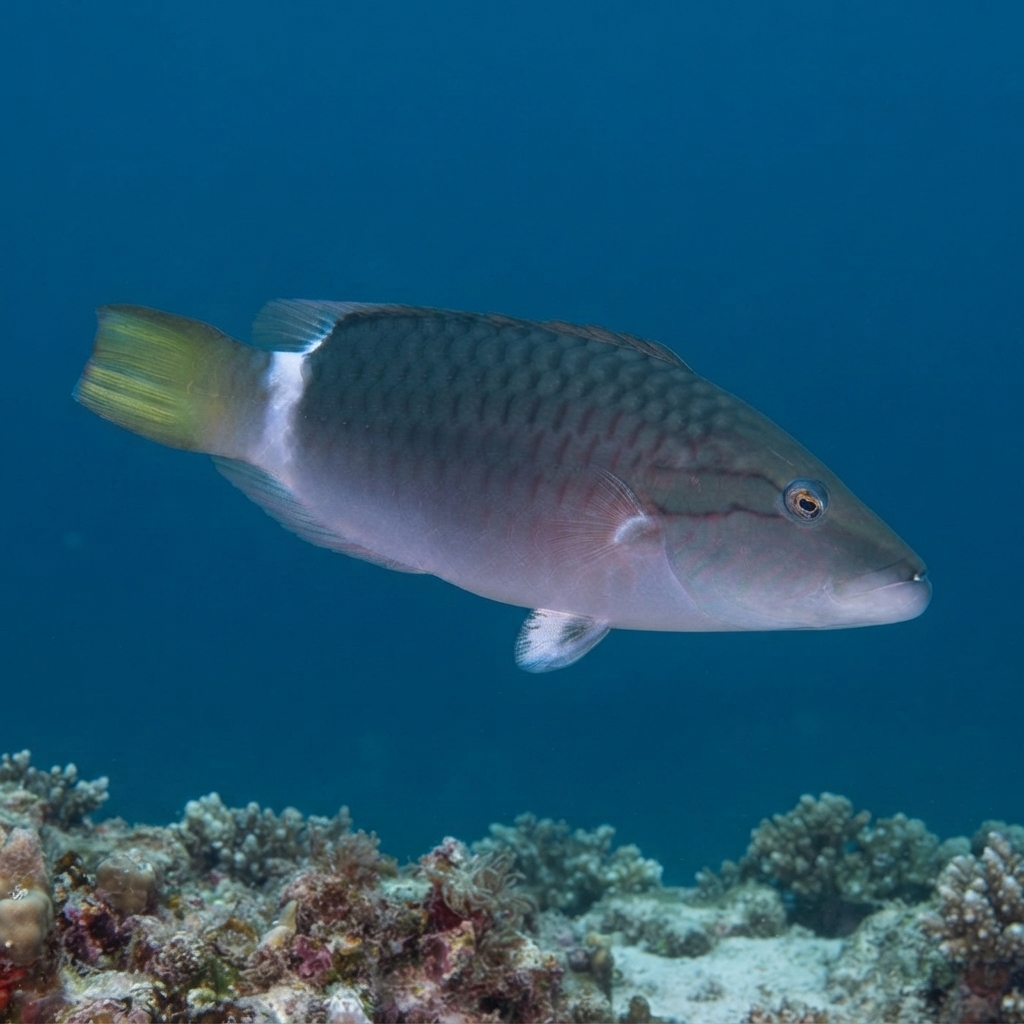
A slender, torpedo-shaped wrasse growing to around 32 cm, usually seen cruising just above the reef rather than tucked into it. Look for a pale body with a dark vertical band near the tail base and streaks of blue-green patterning across the cheek, which is where the ringtail name comes from. Its long snout and single-minded, mid-water swimming style set it apart from bulkier reef wrasses.
Divers typically spot it patrolling open sections of reef alone or in loose pairs, hunting small fish and invertebrates rather than grazing. It tends to keep some distance and moves off steadily rather than bolting, so a slow approach along the reef edge gives the best look. Most logs describe single, unhurried passes rather than repeat encounters at a fixed spot.
Like many wrasses in its family, it is a daytime hunter that ambushes small fish and crustaceans in open water over the reef rather than picking at coral itself.
Sightings show no clear seasonal pattern, and with a comfort range of roughly 23.6 to 28.9 C it stays active on tropical reefs across Hawaii, Guam, Palau, and French Polynesia all year.
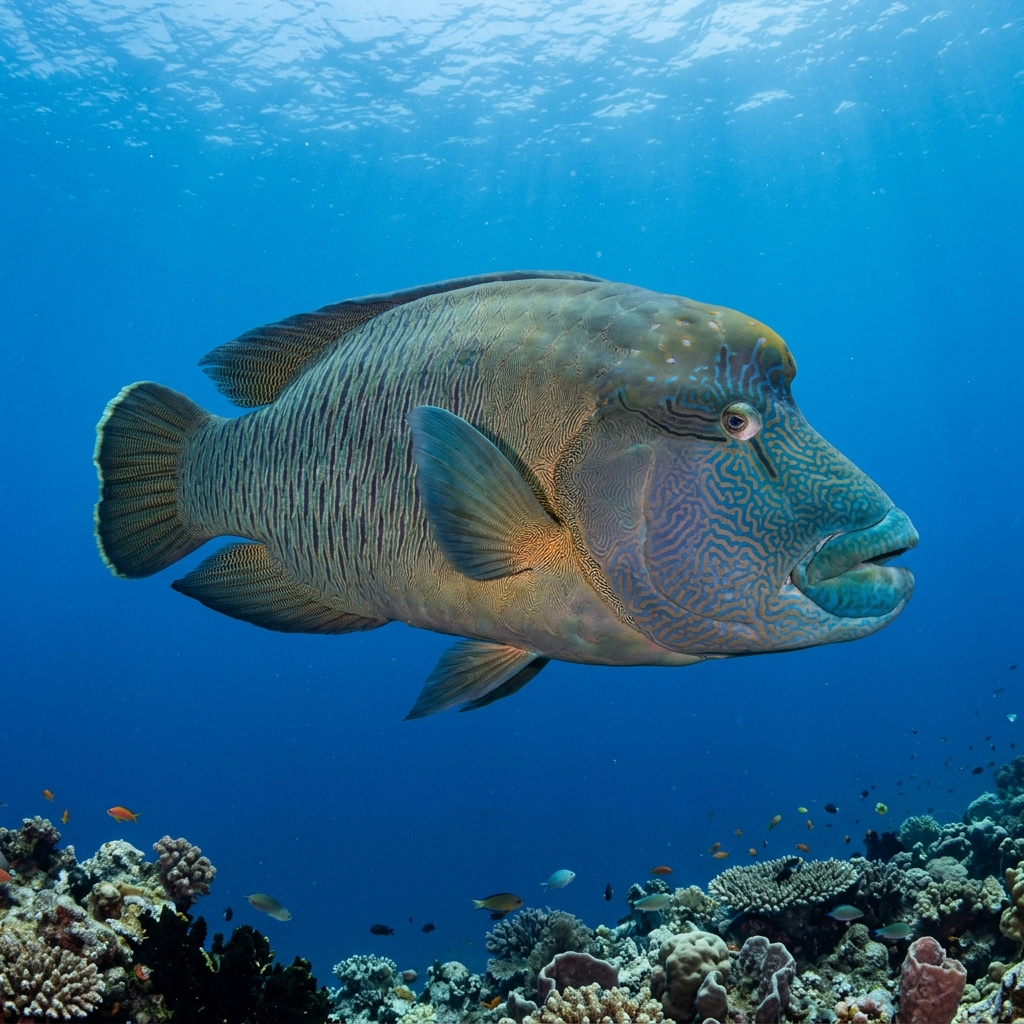
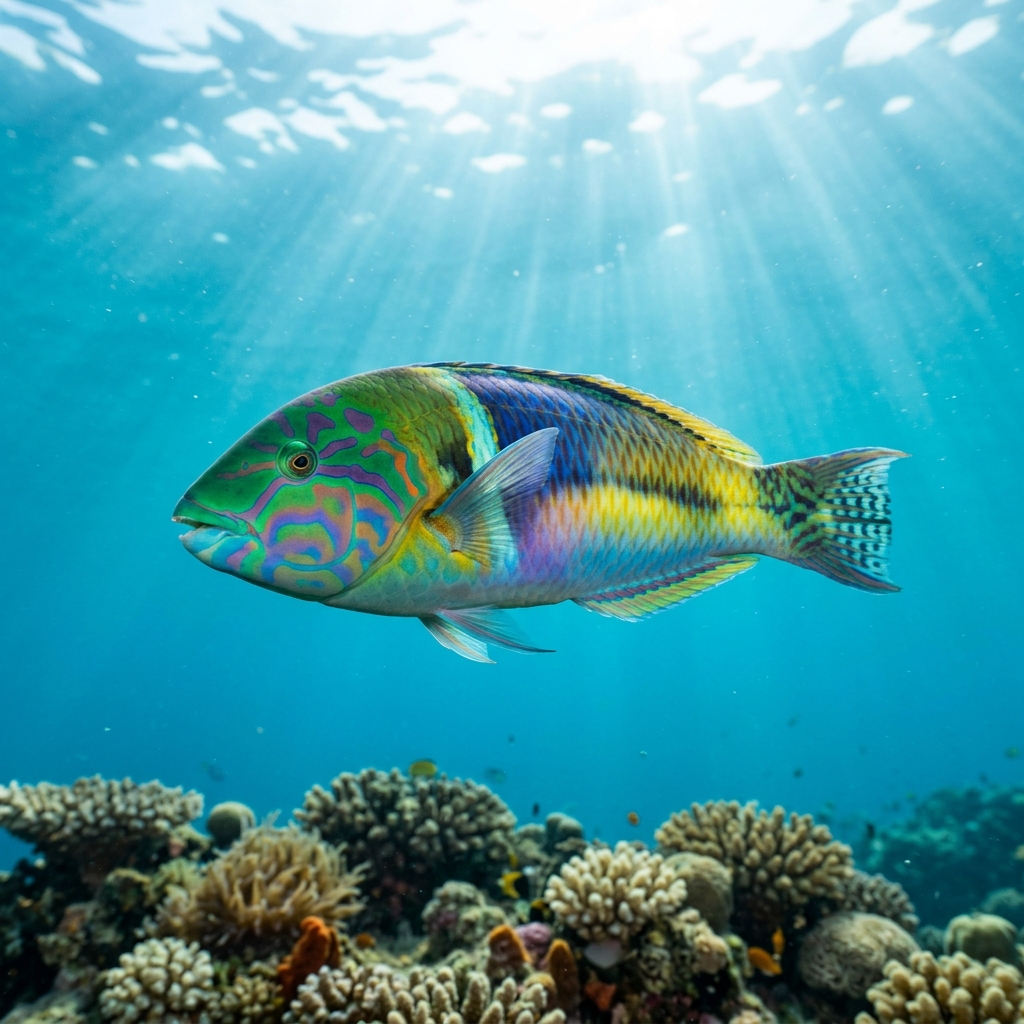
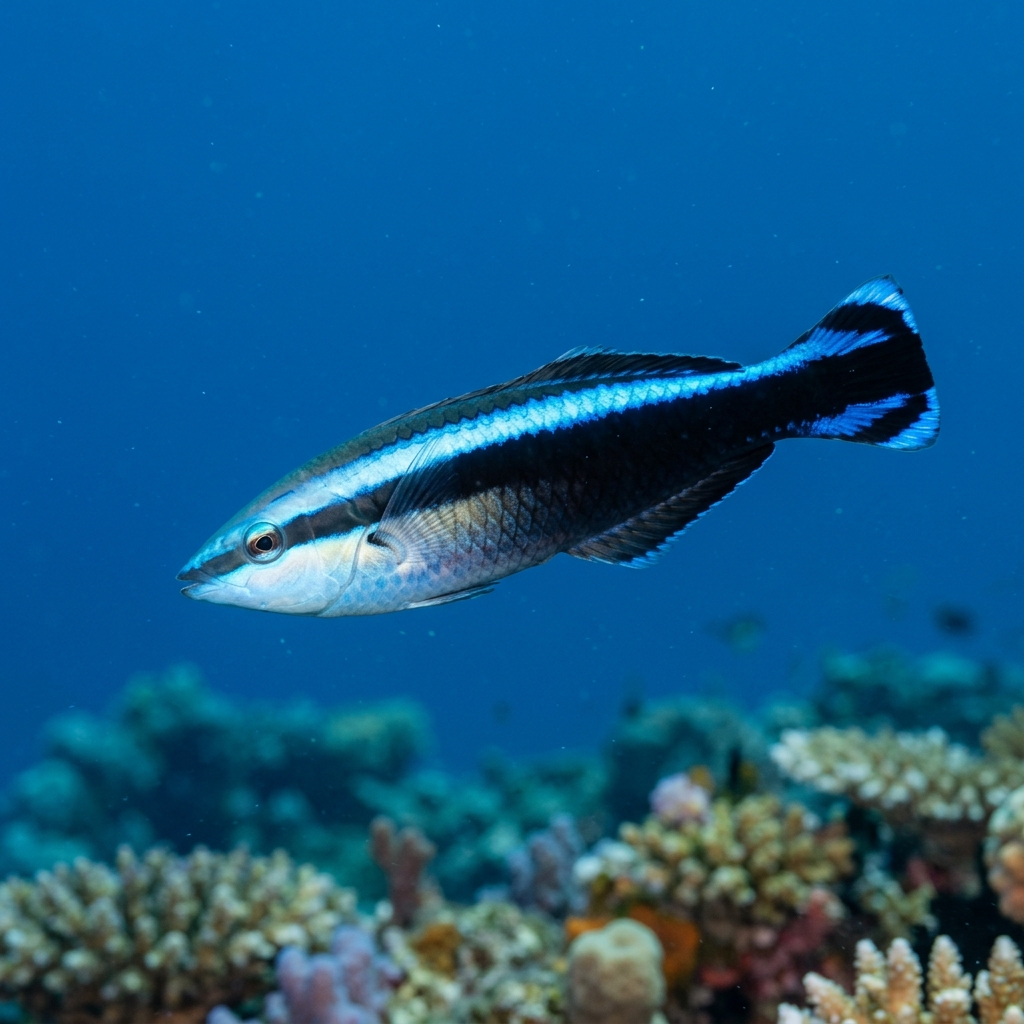
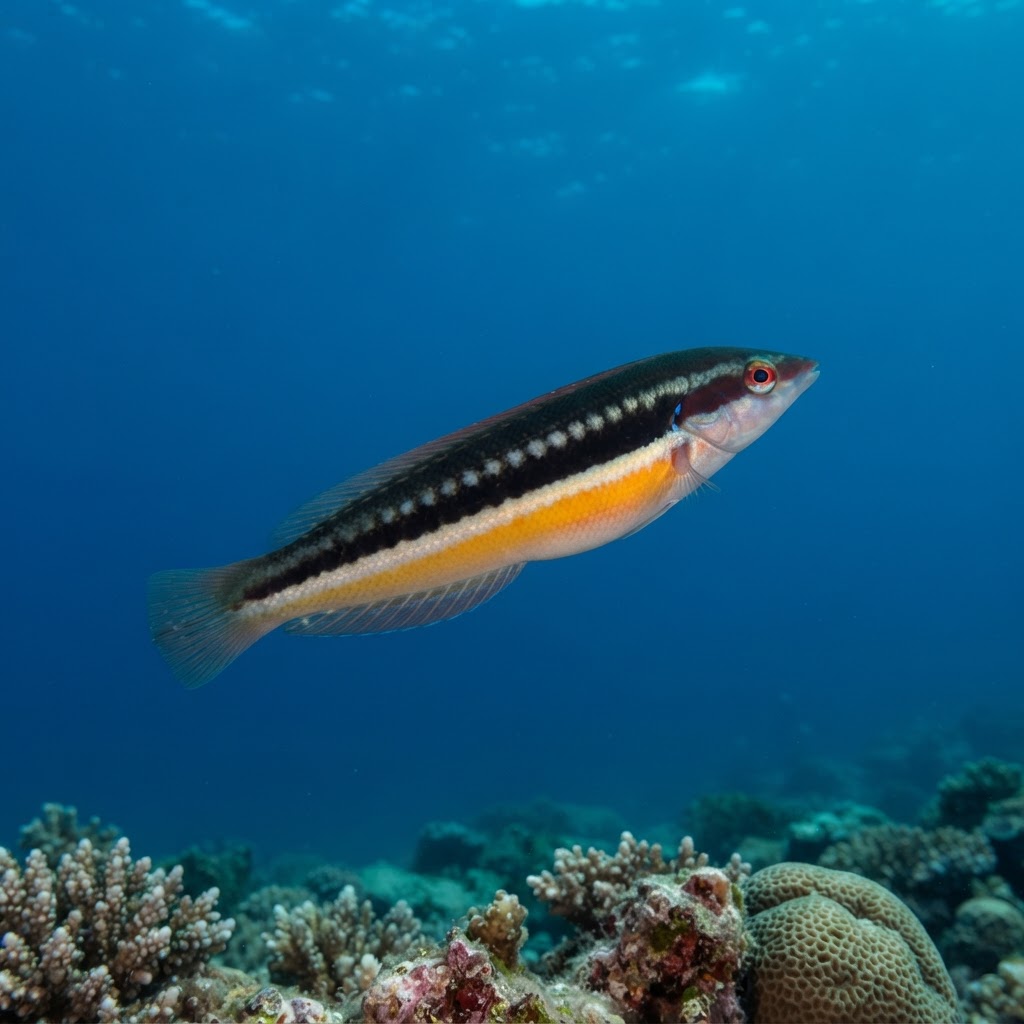
Reef neighbours a diver could mistake it for. Use the identification notes above to tell them apart.
Most consistently logged across Hawaii, with additional sightings around Peleliu in Palau, the Society Islands in French Polynesia, and Guam sites including Apra Harbor, Tumon Bay, and the Southern and North Coasts. It turns up reef-associated across all these regions, generally as a scattered, uncommon find rather than a guaranteed one.
Mapping where Ringtail Maori Wrasse is logged…
Hawaii has the strongest run of sightings, with further records from Peleliu in Palau, the Society Islands in French Polynesia, and several sites around Guam including Apra Harbor and Tumon Bay.
There is no strong seasonal pattern in the sighting data. It stays within a warm 23.6 to 28.9 C band year-round, so any month on a tropical Indo-Pacific reef is fair game.
Watch for a slim, elongated wrasse around 32 cm cruising over open reef, with a dark band near the tail and blue-green streaks across the face. It swims with purpose rather than darting between coral heads.
They typically reach about 32 cm in length, making them a mid-sized reef wrasse, noticeably smaller and more slender than a Napoleon Wrasse.
No. They are not considered dangerous to divers and simply swim off if approached too closely.
Most dive logs describe it as an uncommon sighting even at sites where it is known to occur, so seeing one is a nice bonus rather than something to expect on every dive.
Site and sighting data is aggregated from diver logs, iNaturalist and GBIF. For taxonomy and conservation status:
Bird Wrasse
3,632 sites