Plectorhinchus vittatus
Spot the bold black-and-white stripes of Oriental Sweetlips on reefs from the Maldives' Central Atolls to Bali, in water around 26-29 C.
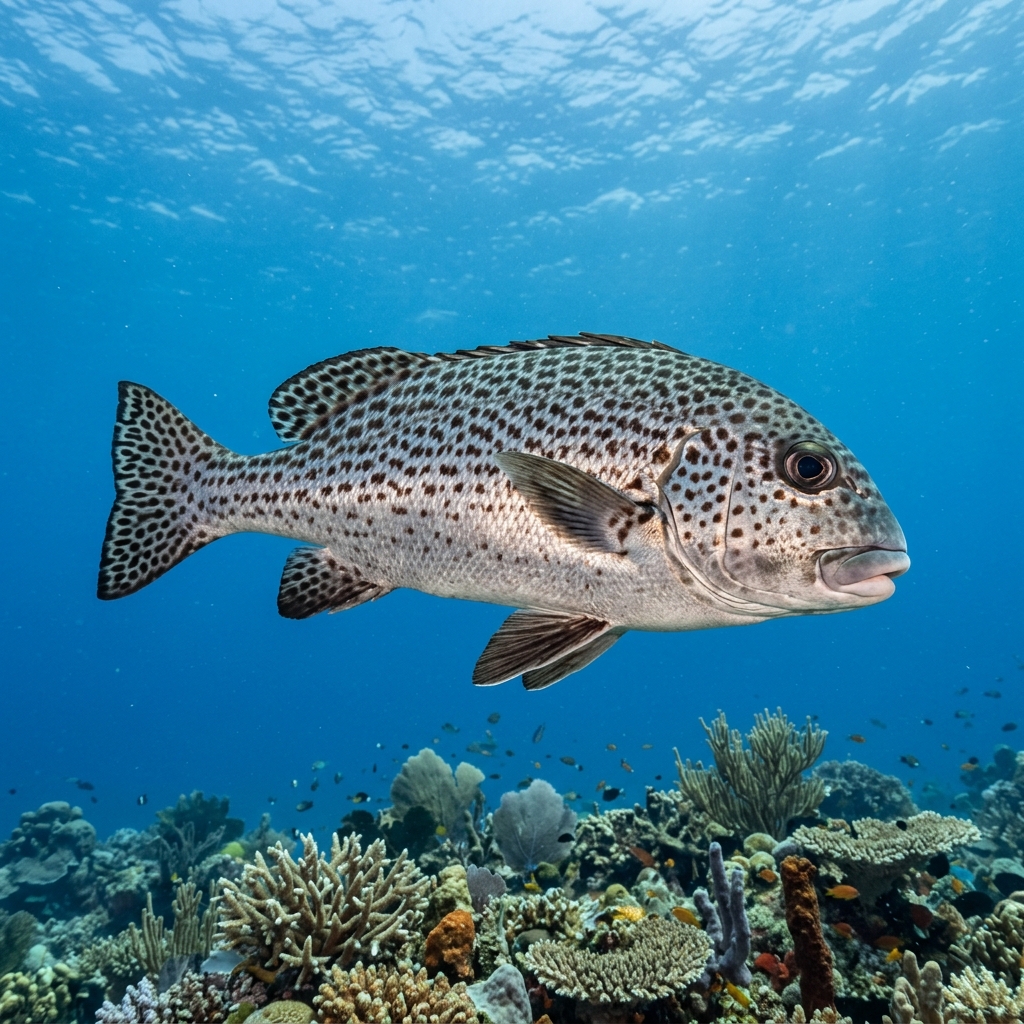
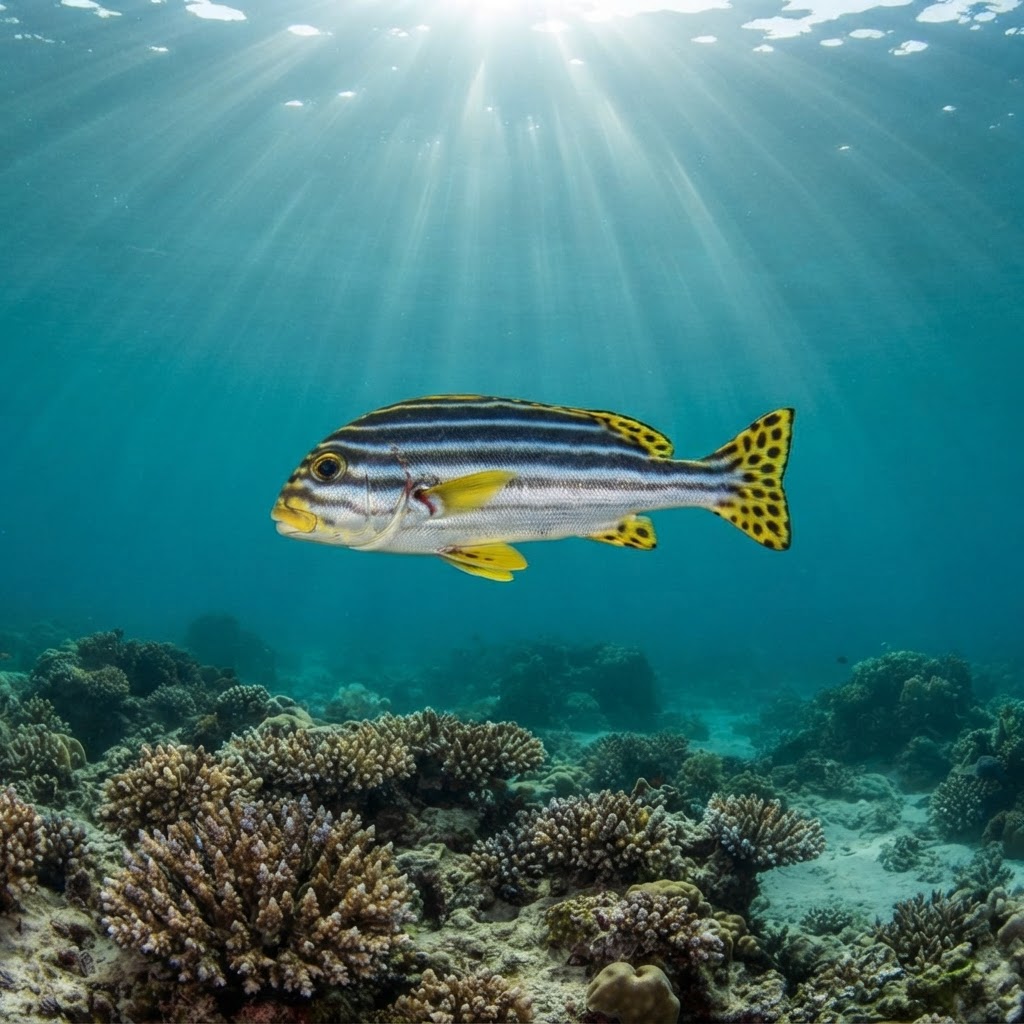
Grows to around 50 cm, with a deep, laterally flattened body carrying bold black horizontal stripes over a white background. The tail and fins are covered in small black spots on a yellow or cream base, which is the quickest tell at a distance. Look for the thick lips and the way it hangs almost motionless under ledges or coral heads rather than swimming in the open.
Usually seen parked under a ledge or coral overhang, often solo or in a loose pair, doing very little while divers pass by. It is not shy so much as unbothered, holding position rather than bolting, which makes it an easy, reliable photo subject once you find one. Most sightings are logged as uncommon to common rather than schooling, so expect one or two individuals per dive site rather than a crowd.
Juveniles look almost nothing like the adults, swimming with an exaggerated, wobbling motion and a completely different pattern, a disguise thought to mimic a toxic flatworm and discourage predators.
No clear seasonal pattern shows up in the sighting data, and with a comfortable range of 26.1 to 29.3 C it is a year-round resident on the reefs where it occurs. Plan around good general reef conditions at your chosen destination rather than a specific month.
Reef neighbours a diver could mistake it for. Use the identification notes above to tell them apart.
Most reliably logged in the Maldives, especially the Central and Northern Atolls, where it turns up on reef flats and under overhangs. Strong secondary populations show up in Bali and Sulawesi in Indonesia, the Inner Islands of Seychelles, Khao Lak in Thailand, and reefs across the Philippines' Visayas, Sri Lanka, Palau and Fiji.
Mapping where Oriental Sweetlips is logged…
The Maldives is the strongest bet, particularly the Central and Northern Atolls, followed by Bali and Sulawesi in Indonesia, the Inner Islands of Seychelles, Khao Lak in Thailand, and sites in the Philippines' Visayas and in Palau and Fiji.
Sightings are logged year-round with no strong seasonal spike, and the species sits comfortably in 26.1 to 29.3 C water, so you can plan around your destination's usual dive season rather than a specific month.
Look for a deep-bodied fish around 50 cm with bold black stripes on a white body and small black spots scattered over yellow fins and tail. It typically sits still under a ledge or coral head rather than swimming in open water.
They reach around 50 cm in length, making them a solidly sized reef fish that stands out even when parked motionless under an overhang.
Juveniles look completely different from adults, dark with white blotches and swimming with an odd wobbling motion that is thought to mimic a toxic flatworm, a disguise that fades as they mature into the striped adult pattern.
Site and sighting data is aggregated from diver logs, iNaturalist and GBIF. For taxonomy and conservation status:
Bluestriped Grunt
1,907 sites