Pomacentrus reidi
Small blue-grey damselfish logged around Dili, Timor-Leste and Peleliu, Palau in warm 26-29C reef water year-round.
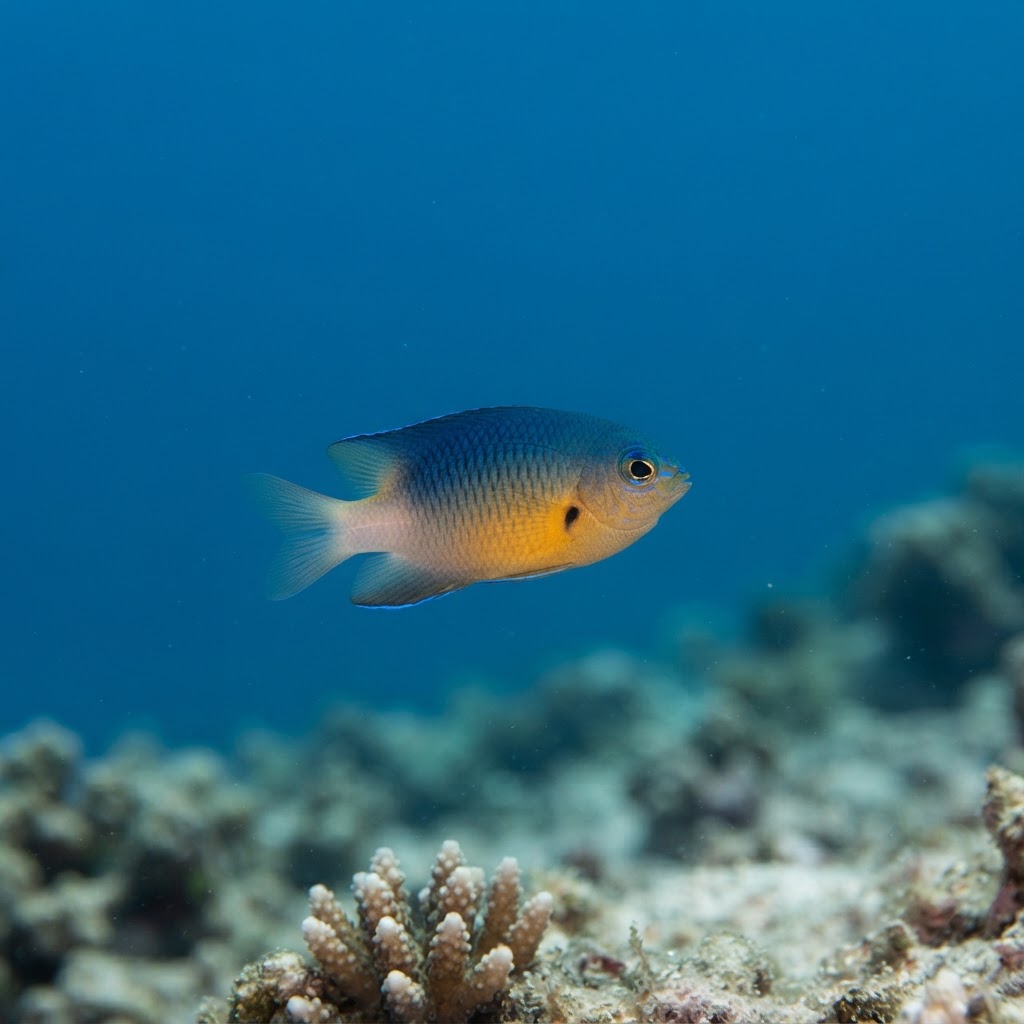
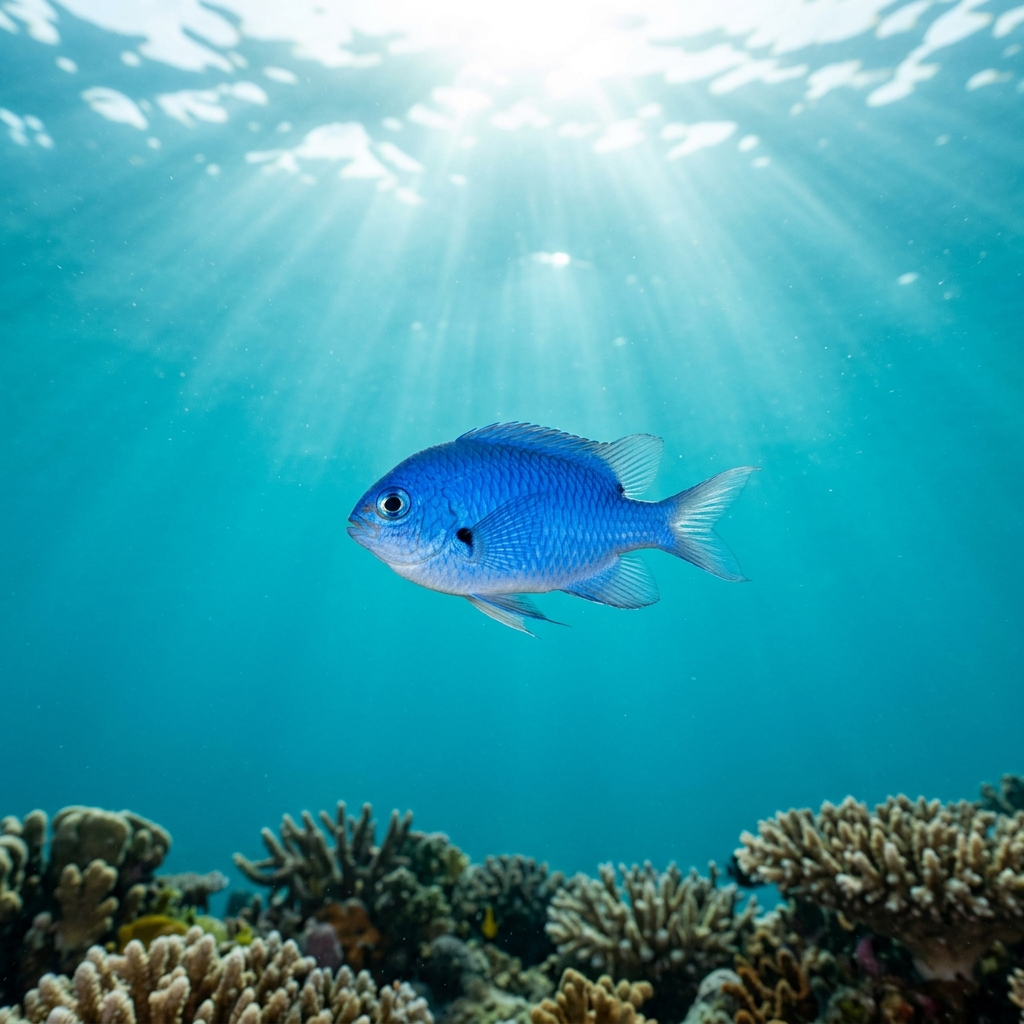
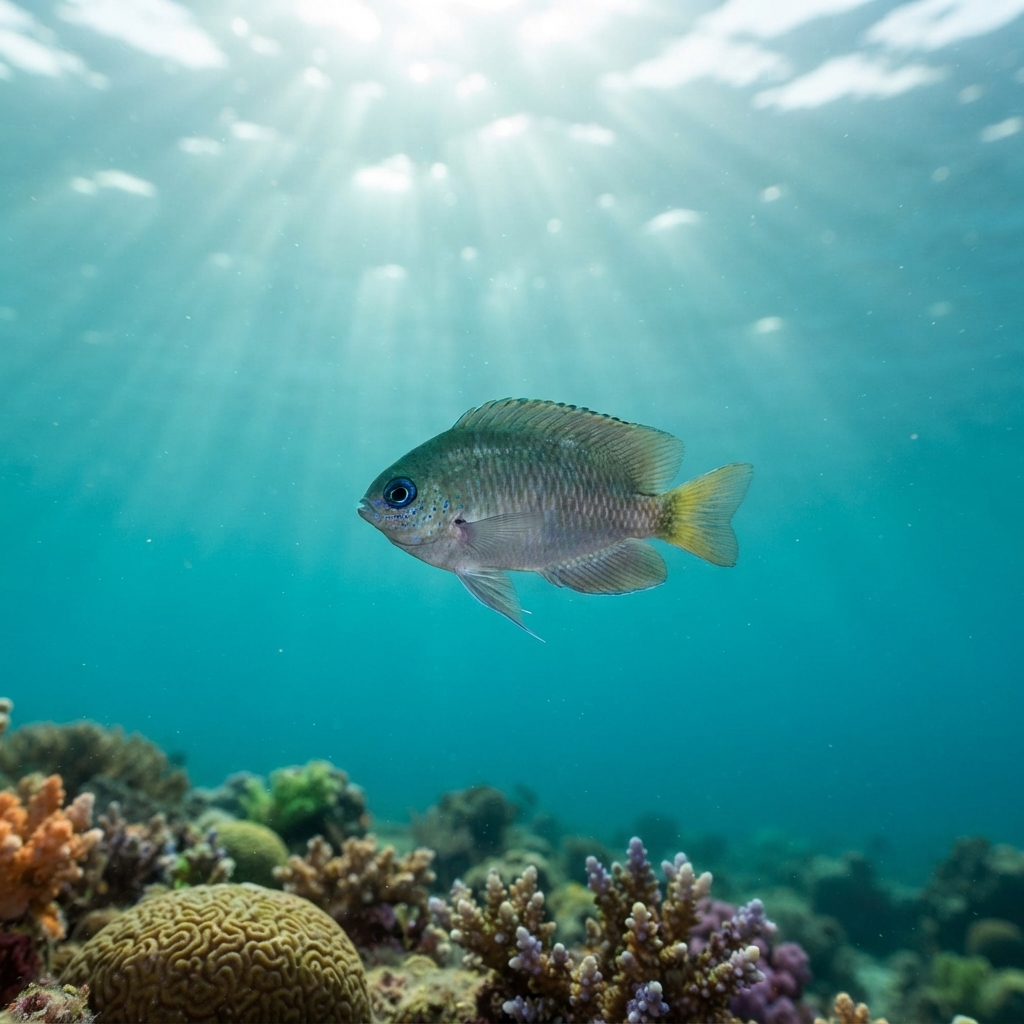
A small, deep-bodied damselfish reaching around 6 cm, generally pale blue-grey with a faint darker shading along the upper body. Look for a small dark spot near the base of the tail or upper rear body, the main mark divers use to separate it from similar plain-coloured damsels. It swims with the quick, hovering flicks typical of the group, rarely straying far from a chosen patch of reef.
Expect to find it hovering low over coral rubble or reef structure, holding a small territory rather than roaming. It's logged as uncommon at most sites where divers see it, with a handful of spots around Dili and Peleliu where it turns up more reliably, so a slow look along the reef base pays off more than scanning open water.
Like other Pomacentrus damselfish, it likely guards a patch of reef and will dart at intruders many times its own size, a disproportionate display of nerve for a 6 cm fish.
No clear seasonal pattern shows up in the sightings, and with a comfortable range of 26.2 to 28.9C it's present on these reefs year-round, so any month works for a dive trip built around it.
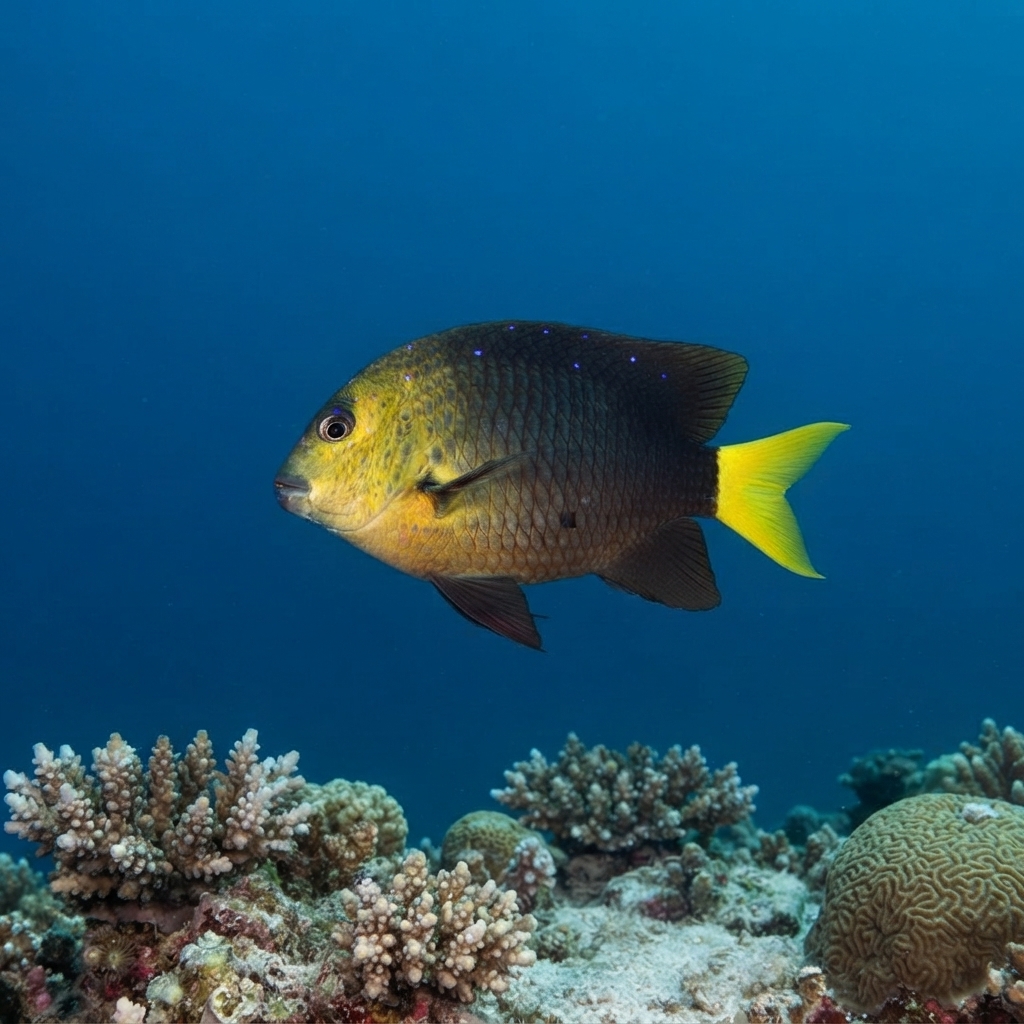
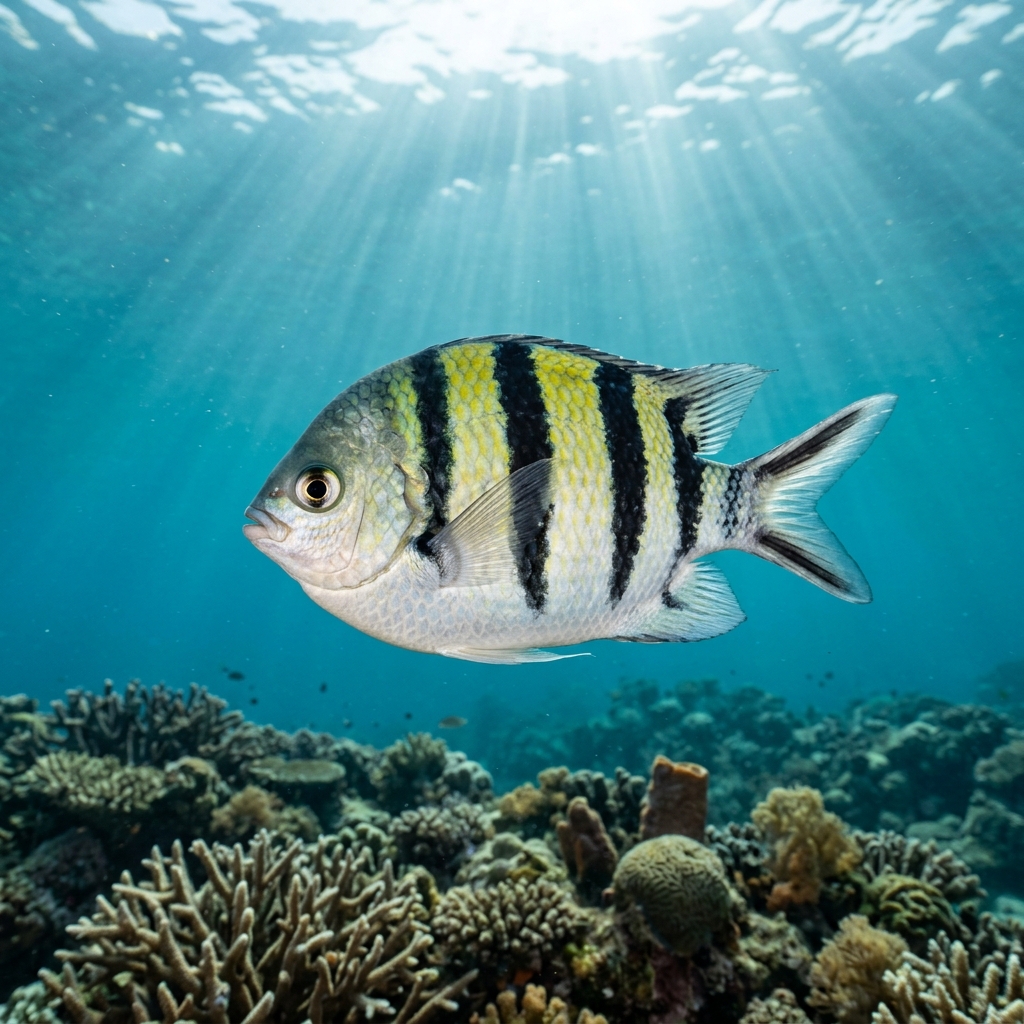
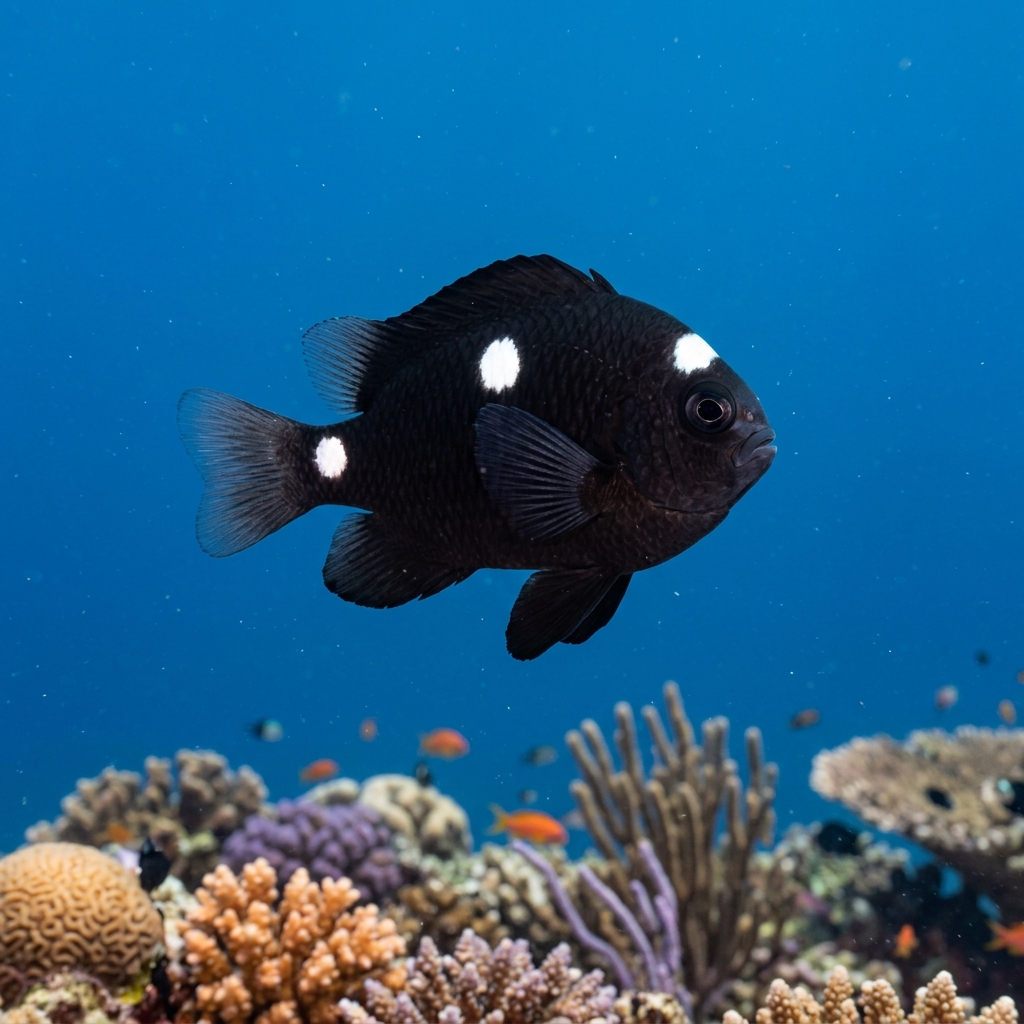
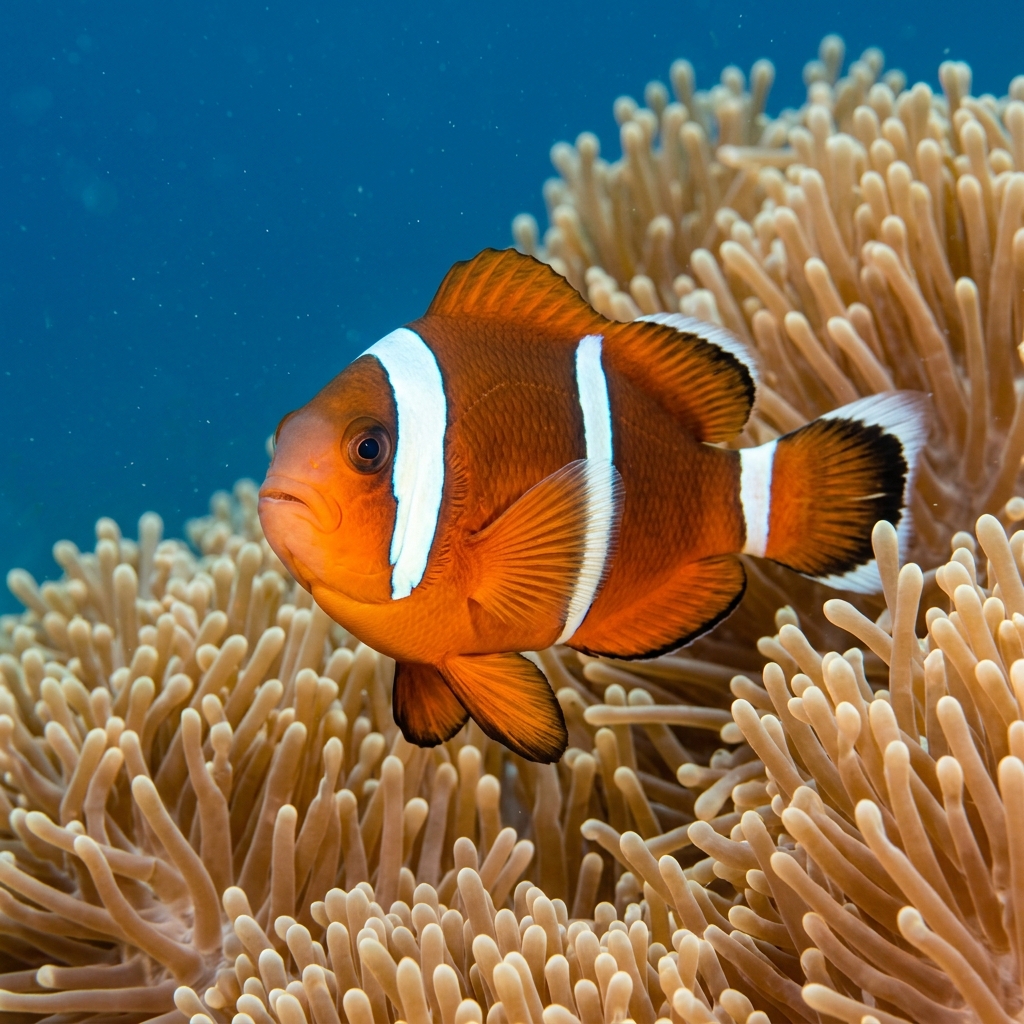
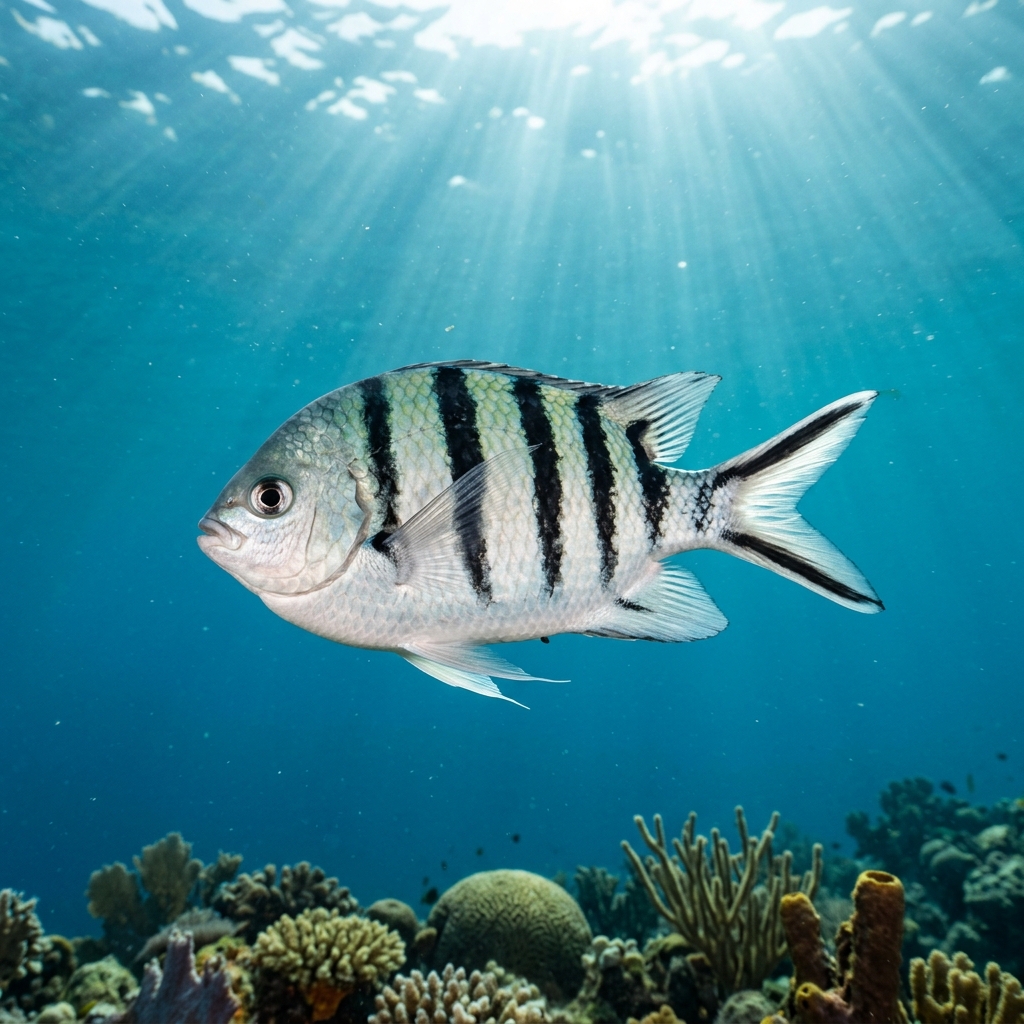
Reef neighbours a diver could mistake it for. Use the identification notes above to tell them apart.
Most reliably logged around Dili in Timor-Leste, which accounts for the bulk of recorded sightings, and a solid second population around Peleliu in Palau. Smaller numbers turn up in Sulawesi, Indonesia and around Efate in Vanuatu, so it's worth checking reef flats and coral rubble areas at any of these spots.
Mapping where Reid's Damselfish is logged…
The strongest sightings come from around Dili in Timor-Leste and Peleliu in Palau, with smaller numbers recorded in Sulawesi, Indonesia and off Efate in Vanuatu.
There's no detected season in the sighting data, and it tolerates a warm 26.2 to 28.9C range, so it's a year-round find on the reefs where it occurs.
Look for a small, blue-grey damselfish around 6 cm with a subtle dark spot near the tail base. It holds close to reef structure or rubble rather than swimming in open water.
They stay small, typically reaching around 6 cm, in line with most reef damselfish in the Pomacentrus genus.
No. They're harmless to divers, though like many damselfish they may dart aggressively at anything that gets too close to their patch of reef.
Site and sighting data is aggregated from diver logs, iNaturalist and GBIF. For taxonomy and conservation status:
Dascyllus
3,697 sites