Xanthichthys mento
Blue-grey body, a flash of red tail: find this uncommon triggerfish around Galápagos, Cocos Island, and Easter Island year-round.
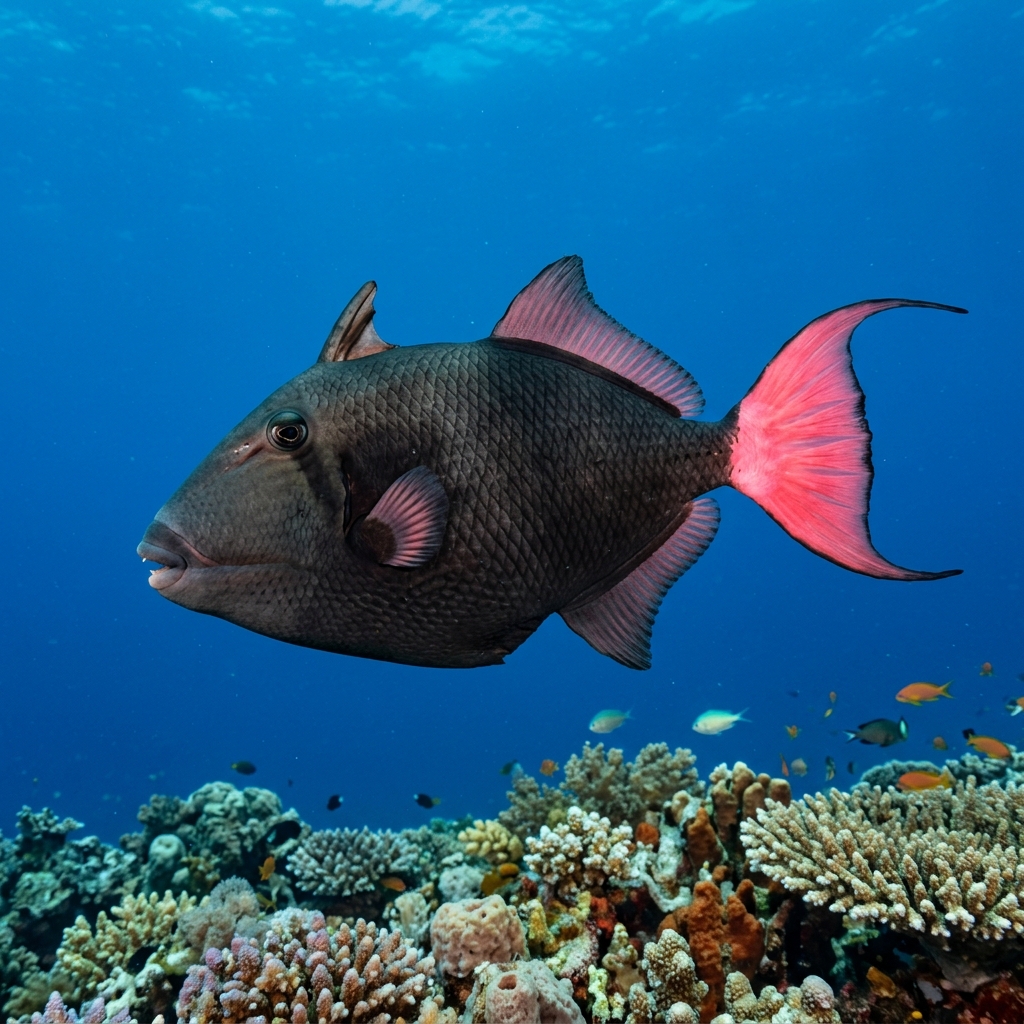
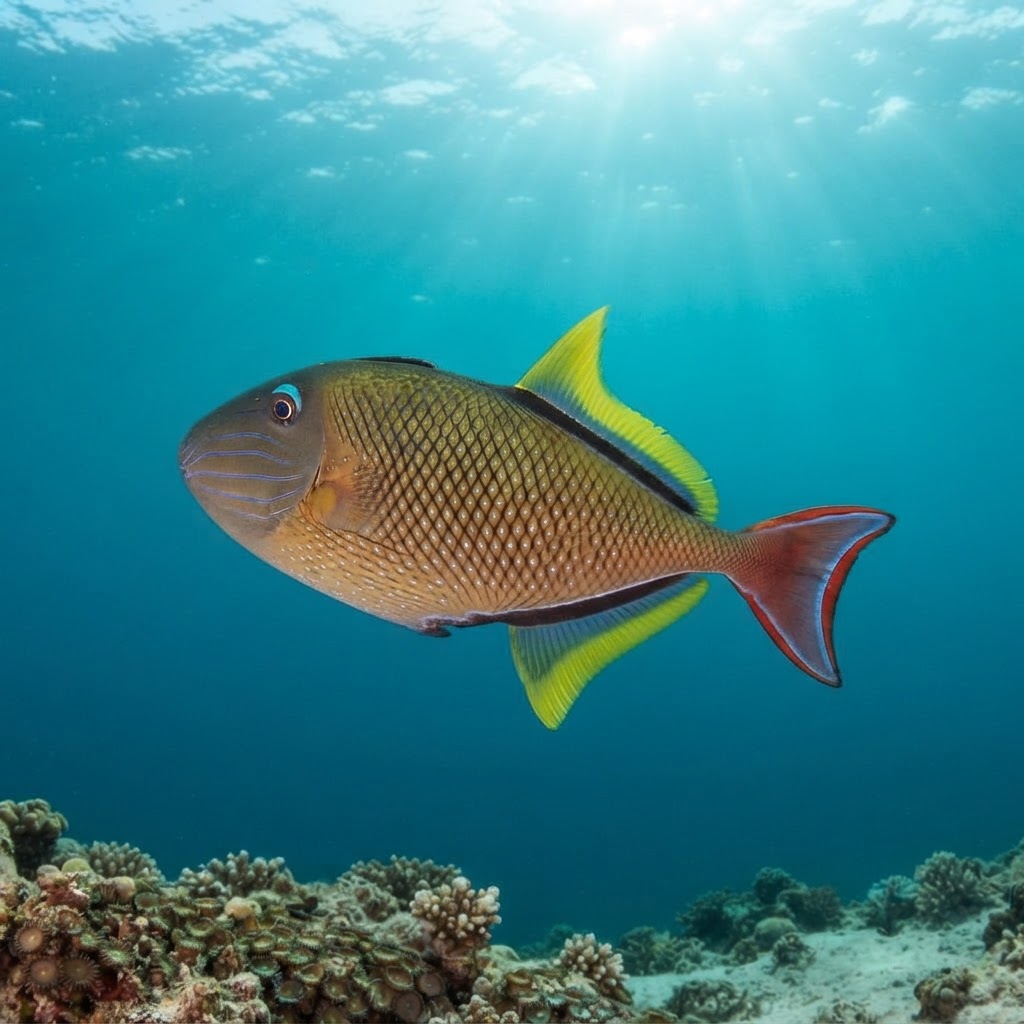
A compact, oval-bodied triggerfish around 21 cm, with a slate-blue to grey body and fine pale striping across the face and gill area. The tail fin is the giveaway: a wash of orange-red to deep red, often looking almost lit up against the darker body when it catches the light. It swims with the slow, deliberate wing-beat of the dorsal and anal fins typical of triggerfish, rather than a fast tail-driven cruise.
Divers typically find it hovering over rocky reef and volcanic slopes rather than tight to the bottom, often in small loose groups picking at plankton or small invertebrates in midwater. It tends to keep some distance from divers and will drift off rather than confront, a more retiring habit than some of its reef-dwelling triggerfish relatives. Look for it around current-swept pinnacles and walls, the kind of structure that also draws the schooling fish it seems to associate near.
Its diet leans heavily on zooplankton picked from open water, which is part of why it's often seen hovering off the reef rather than grazing directly on it like many other triggerfish.
There's no clear seasonal spike in the sightings data, and its temperature range of roughly 21 to 29 C covers the water conditions at these islands most of the year, so treat it as a year-round possibility rather than a seasonal target. Even in season it's logged as uncommon, so don't expect guaranteed encounters on any single dive.
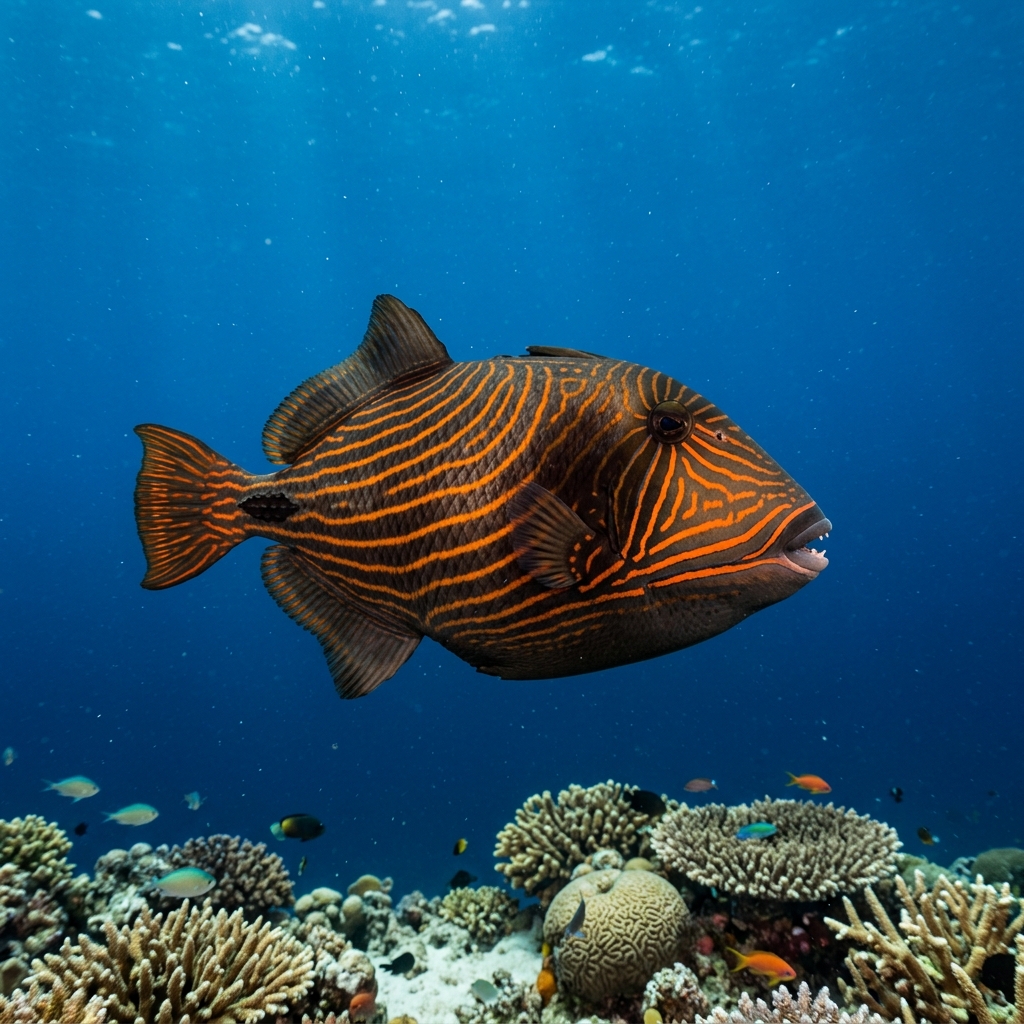
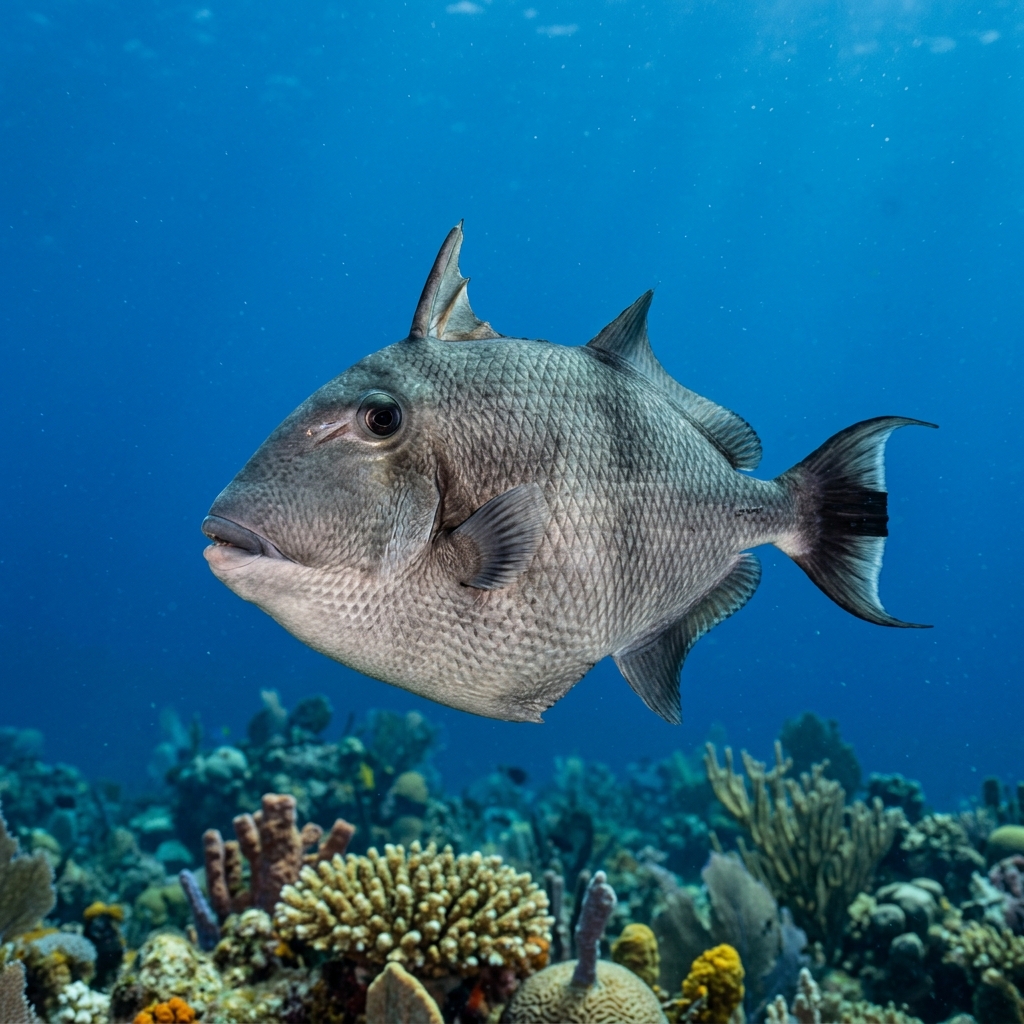
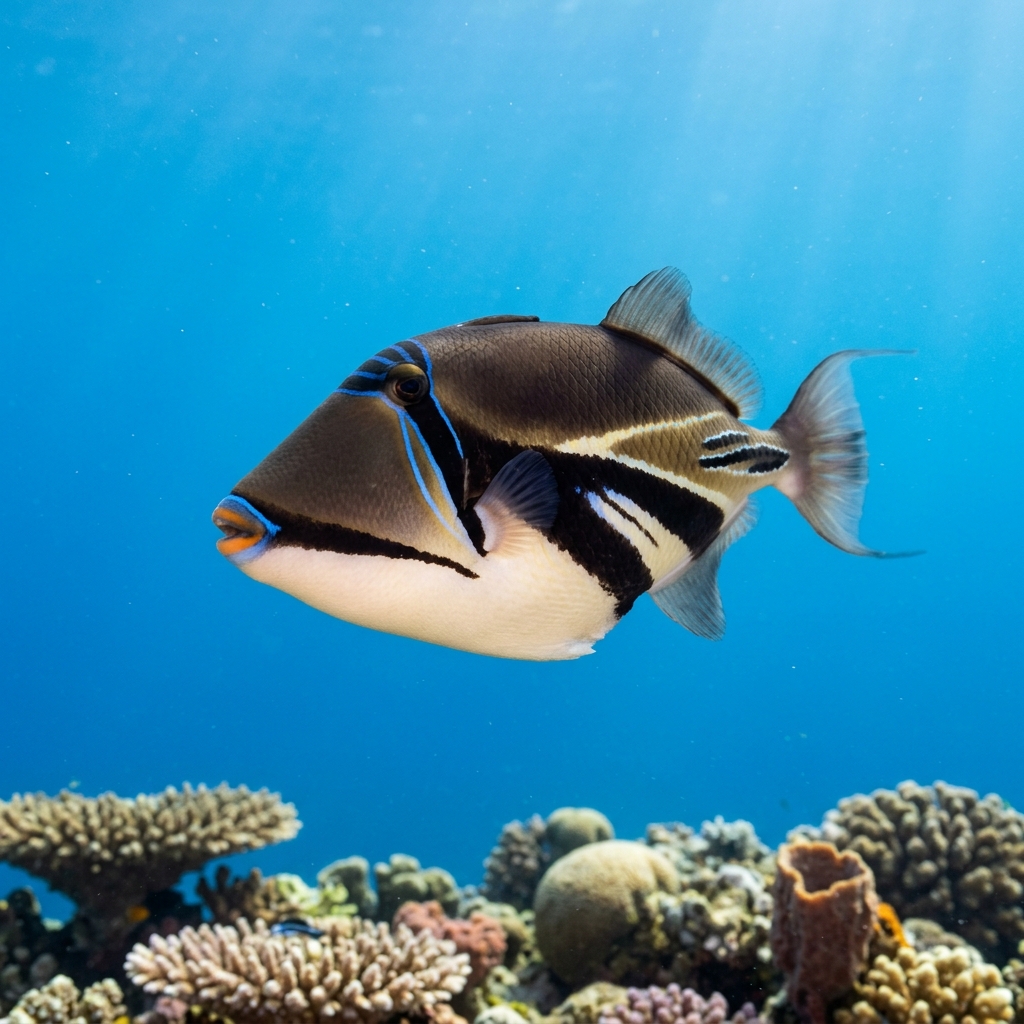
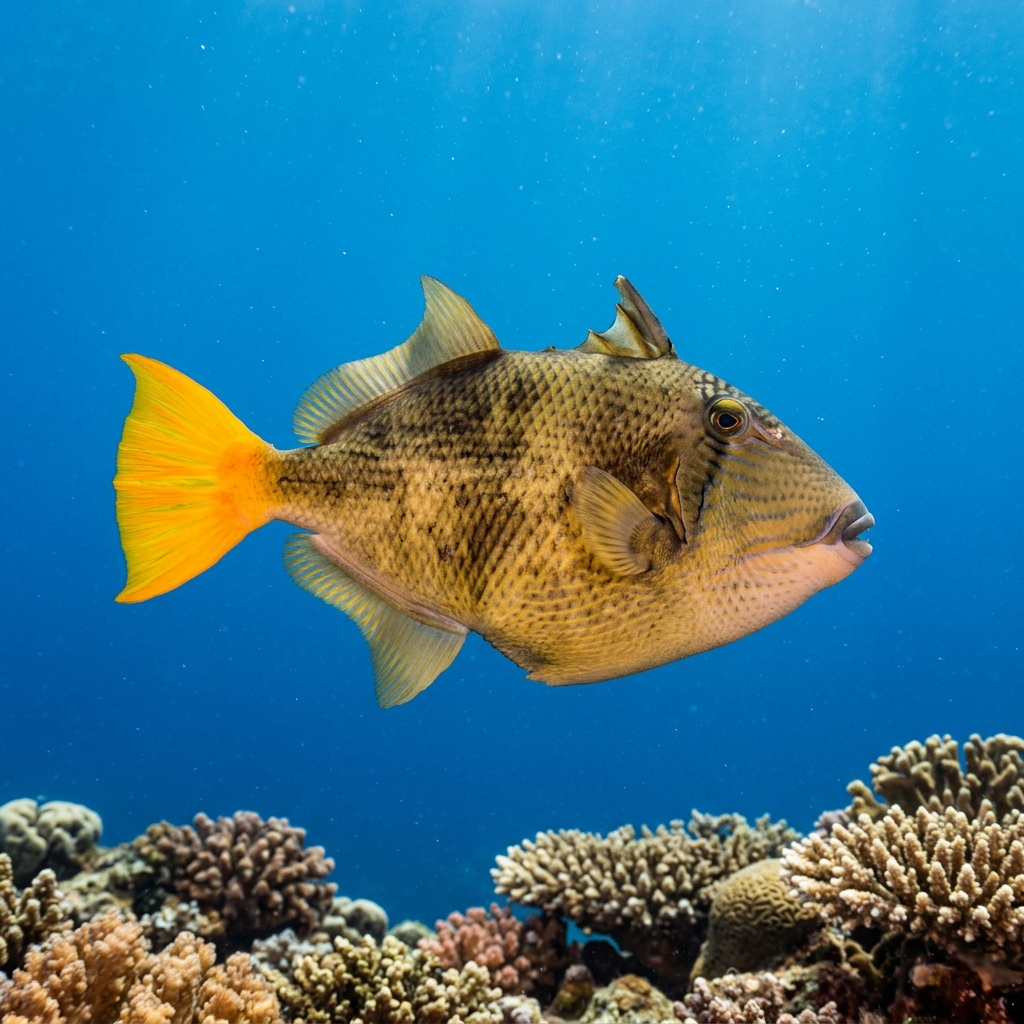
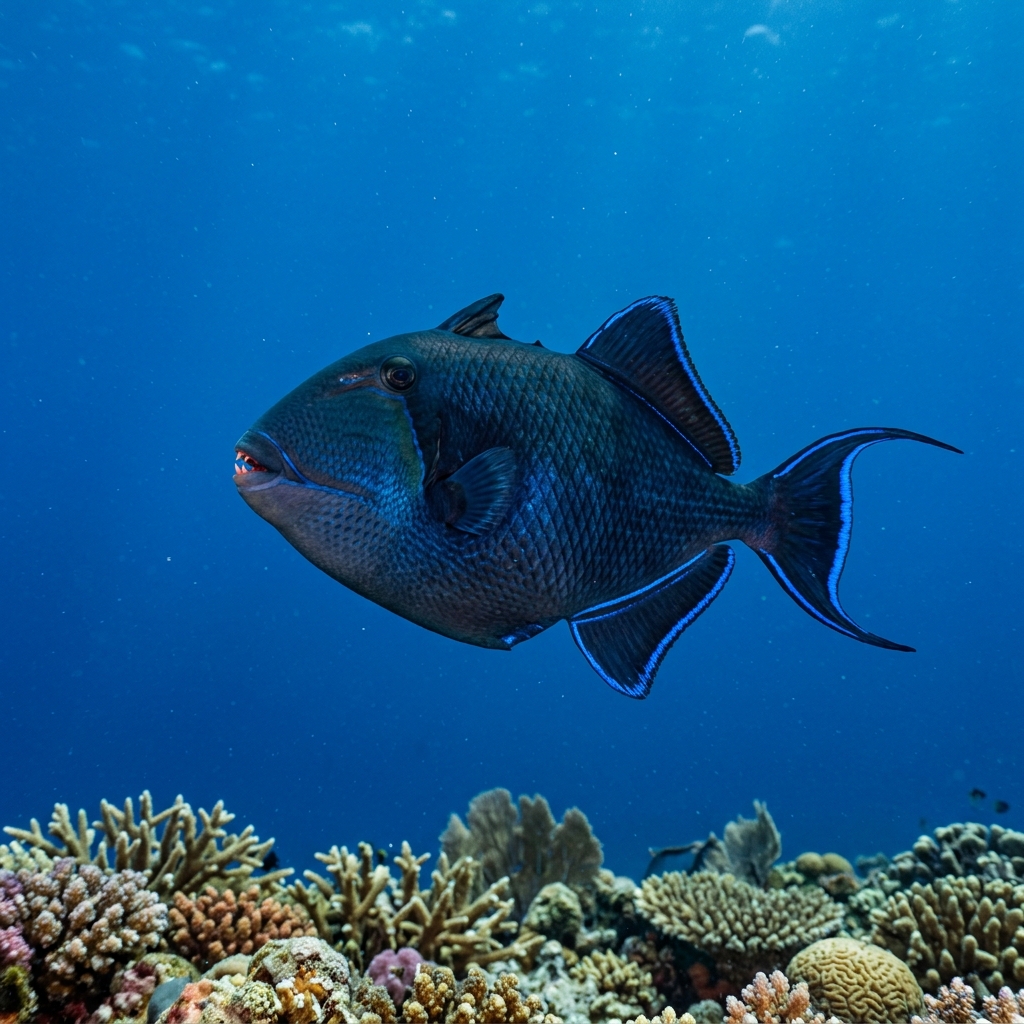
Reef neighbours a diver could mistake it for. Use the identification notes above to tell them apart.
This one belongs to the eastern Pacific's offshore islands: it's most reliably logged around the Galápagos Islands in Ecuador, at Cocos Island in Costa Rica, and around Easter Island in Chile. Outside these three island groups it's rarely reported, so plan a trip specifically to one of these regions if you want a real shot at it.
Mapping where Redtail Triggerfish is logged…
The strongest sightings come from three offshore island groups: the Galápagos Islands in Ecuador, Cocos Island in Costa Rica, and Easter Island in Chile. These remote, current-washed sites are where divers most reliably report this species.
There's no strong seasonal pattern in the sighting data, and its comfortable temperature range of about 21 to 29 C spans most of the year at its known sites, so it's considered a year-round sighting rather than a seasonal one.
Look for a small, oval-bodied triggerfish with a blue-grey body, fine pale facial striping, and a distinctive red to orange tail fin. The red tail against the muted body colour is the quickest way to tell it apart from other triggerfish on the same reef.
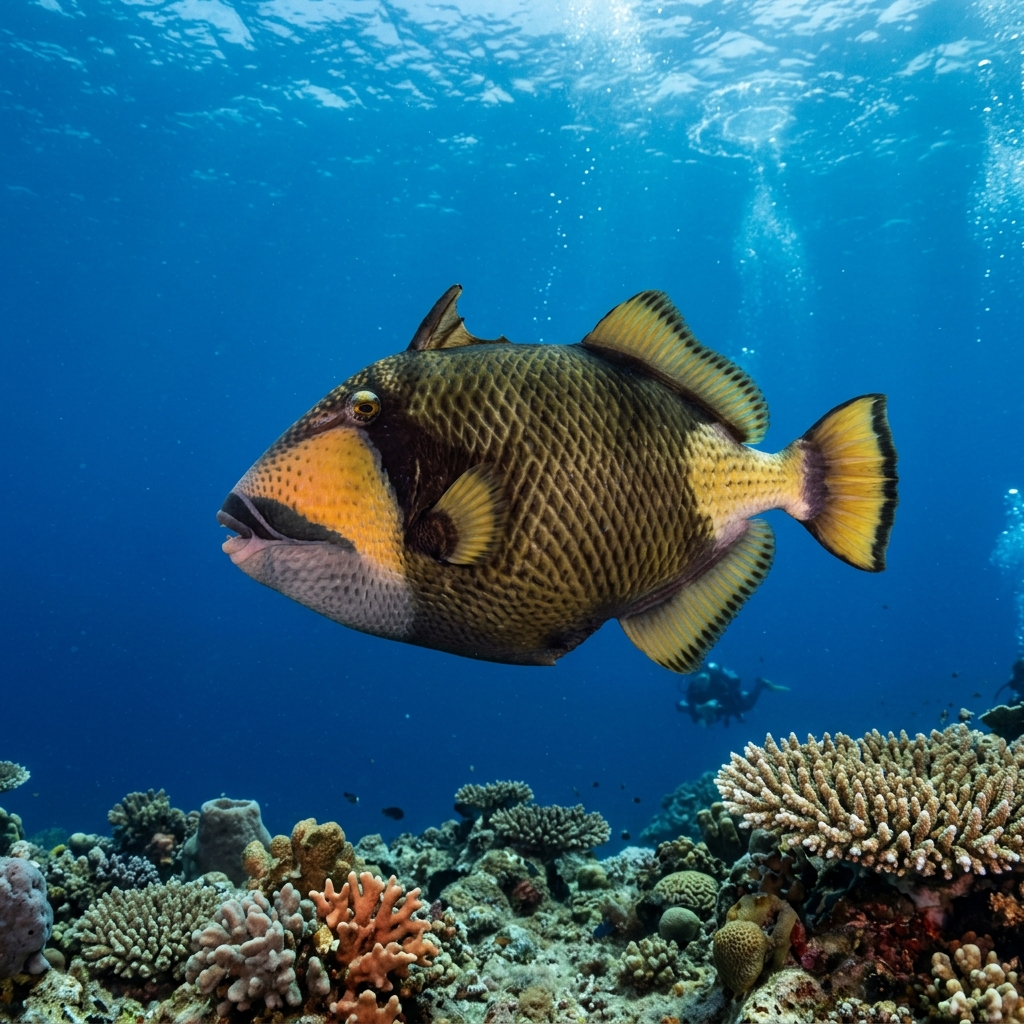
They typically reach around 21 cm in length, making them a mid-sized triggerfish, noticeably smaller than the titan triggerfish often found on the same Indo-Pacific and eastern Pacific reefs.
No, they're not considered dangerous to divers and tend to keep their distance rather than approach or defend territory aggressively, unlike some other triggerfish species known for guarding nests.
They feed mainly on zooplankton drifting in open water, which explains why divers often see them hovering just off the reef rather than picking directly at the substrate.
Site and sighting data is aggregated from diver logs, iNaturalist and GBIF. For taxonomy and conservation status:
Lagoon Triggerfish
2,435 sites