Trimma benjamini
A 2cm reef goby most reliably spotted across the Visayas, Philippines, on tropical reefs holding steady at 25 to 29C year-round.
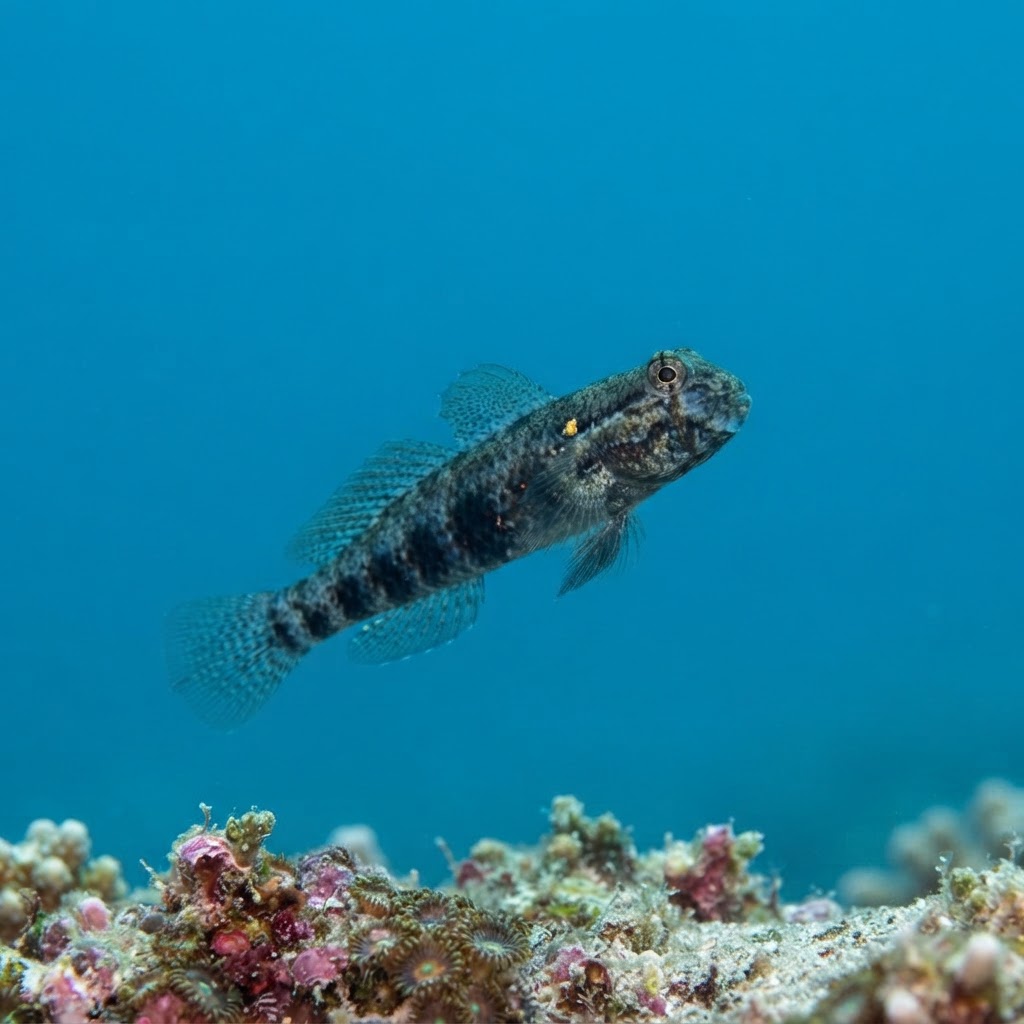
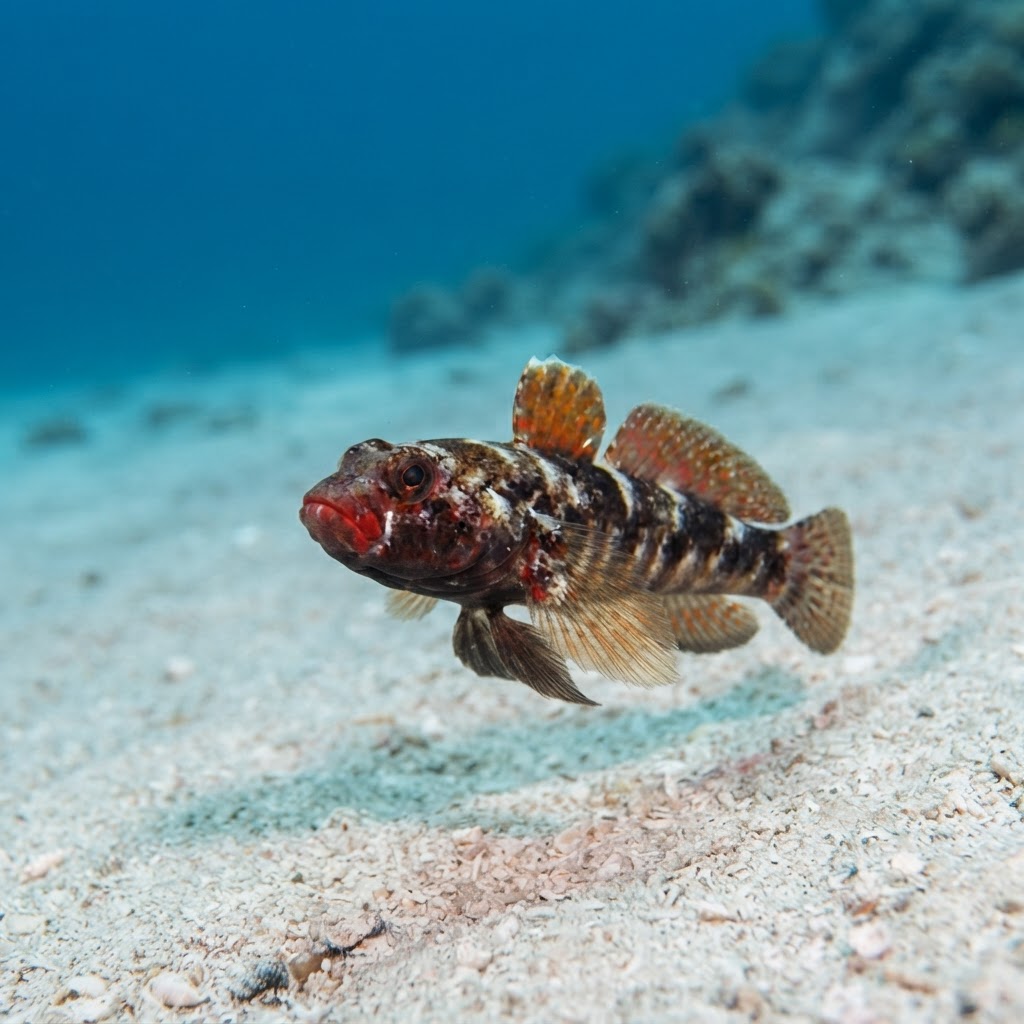
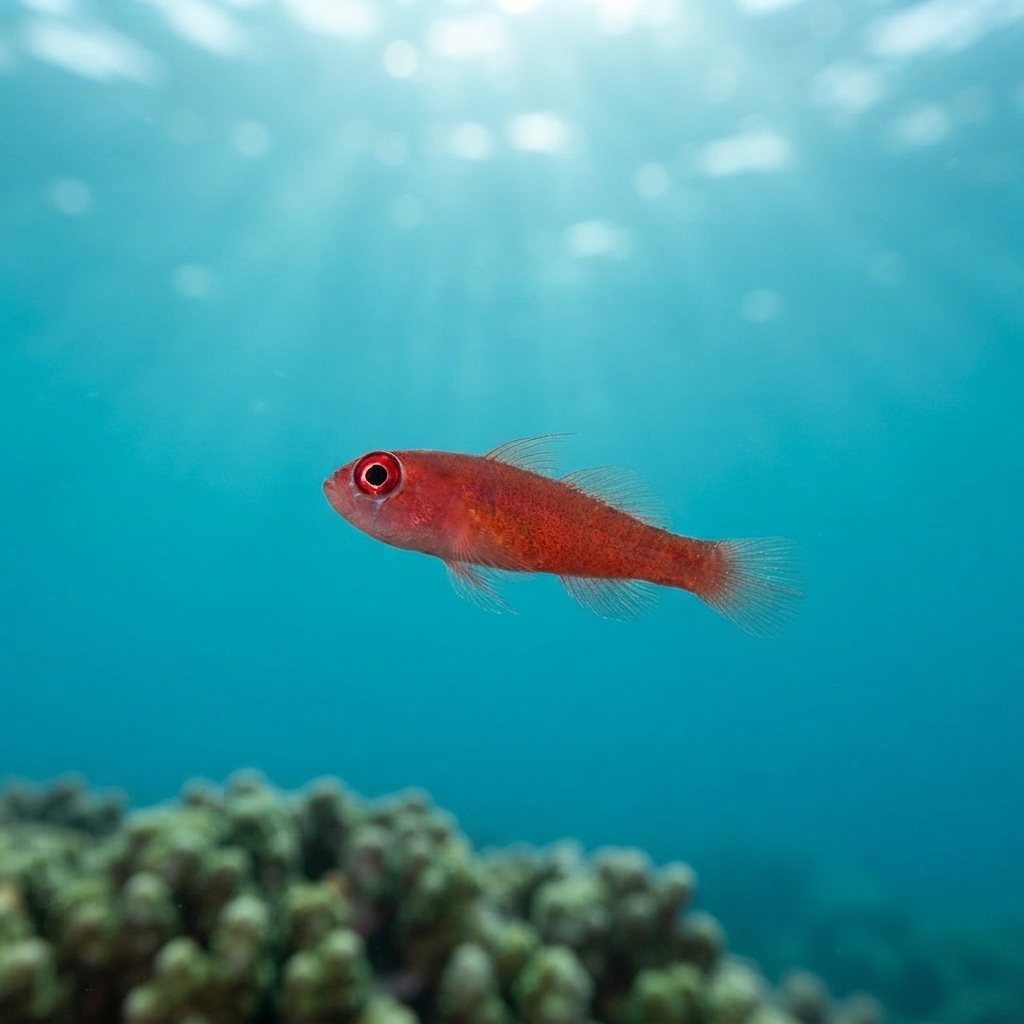
A tiny goby, barely 2cm long, so you're looking for a translucent, almost see-through body with a reddish-orange wash concentrated around the head and face, which is where the common name comes from. It perches on coral or rubble rather than swimming in open water, propped up on its pelvic fins in typical goby fashion. Look closely at the eyes too, dwarf gobies in this genus often show fine markings around them that help separate species, though at this size a macro lens or a very patient look is your best friend.
Expect to find it sitting still on coral heads or rubble patches rather than cruising the reef, doing the classic small-goby thing of perching and watching rather than actively foraging in the open. It tends to hold its ground when a diver approaches slowly, which is good news given how easy it is to lose against a busy reef background. Most divers log it as an incidental find while working a reef slope on the hunt for other small stuff.
Like other Trimma gobies, this species is a simultaneous hermaphrodite, meaning individuals can function as both sexes, an adaptation that helps tiny, patchily distributed reef fish find a mate when partners are scarce.
No clear seasonal pattern shows up in the sightings data, and with a comfortable water-temperature range of roughly 25 to 29C, it's present on these reefs year-round rather than tied to a particular month.
Reef neighbours a diver could mistake it for. Use the identification notes above to tell them apart.
Most consistently logged across the Visayas region of the Philippines, which accounts for the bulk of recorded sightings, making it the strongest bet for a dedicated look. Smaller but reliable populations turn up in Queensland, Australia, and across Indonesia including Raja Ampat and Sulawesi, with further records from Nouméa in New Caledonia, Milne Bay in Papua New Guinea, and the Rock Islands of Palau.
Mapping where Redface Dwarf Goby is logged…
The Visayas region of the Philippines is the most reliable area, with further sightings across Queensland in Australia, Raja Ampat and Sulawesi in Indonesia, Nouméa in New Caledonia, Milne Bay in Papua New Guinea, and Palau's Rock Islands.
There's no strong seasonal signal in the sightings, and it sits comfortably in 25 to 29C water, so it's a year-round find on the reefs where it occurs.
Look for a translucent body only around 2cm long with a reddish-orange tint concentrated on the head, perched motionless on coral or rubble rather than swimming freely.
They max out around 2cm, making them one of the smaller reef gobies you'll try to spot, and a macro lens helps with confirming the ID.
Like other Trimma gobies, it's a simultaneous hermaphrodite, able to function as both male and female, which helps small, sparsely distributed reef fish find mates.
Site and sighting data is aggregated from diver logs, iNaturalist and GBIF. For taxonomy and conservation status:
Slender Goby
806 sites