Platydoris argo
A leathery, mottled brown nudibranch found on rocky reefs from Sicily to the Lisbon Coast, usually one uncommon find per dive.
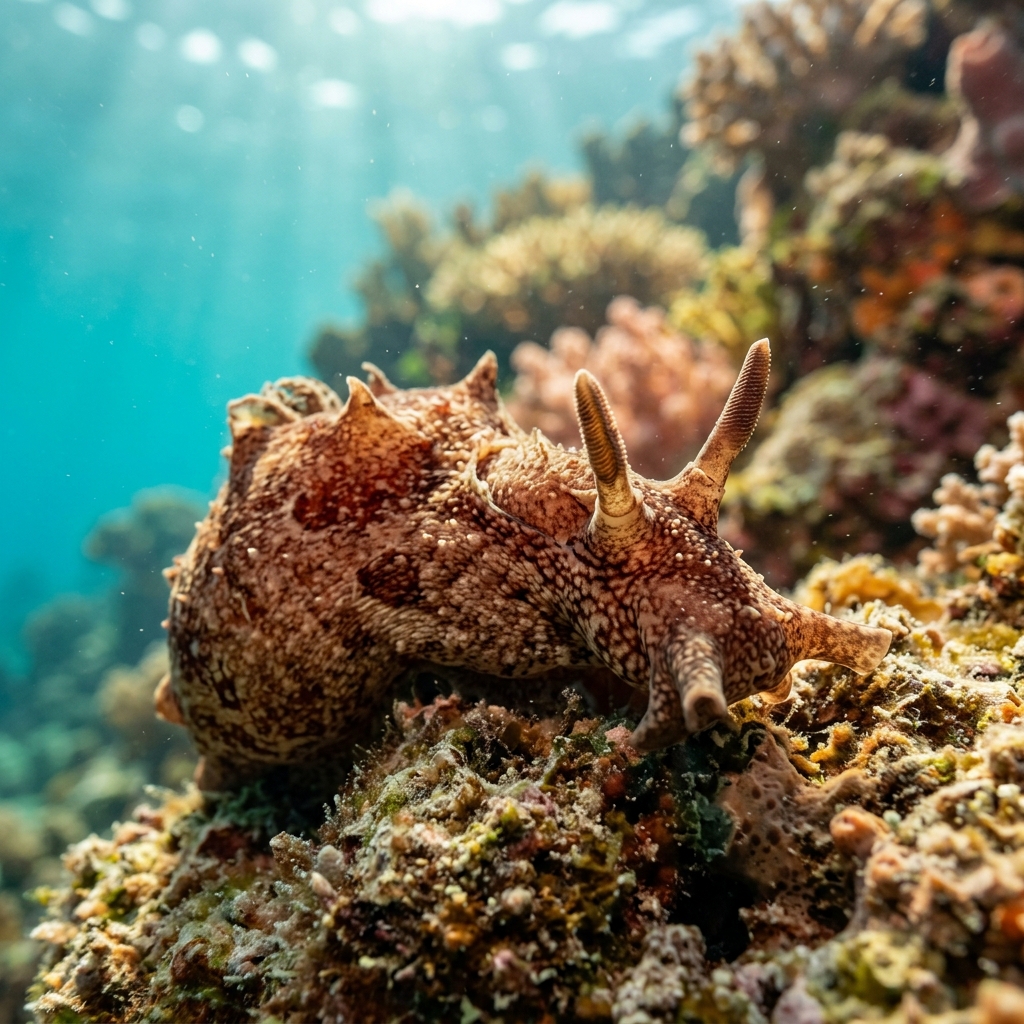
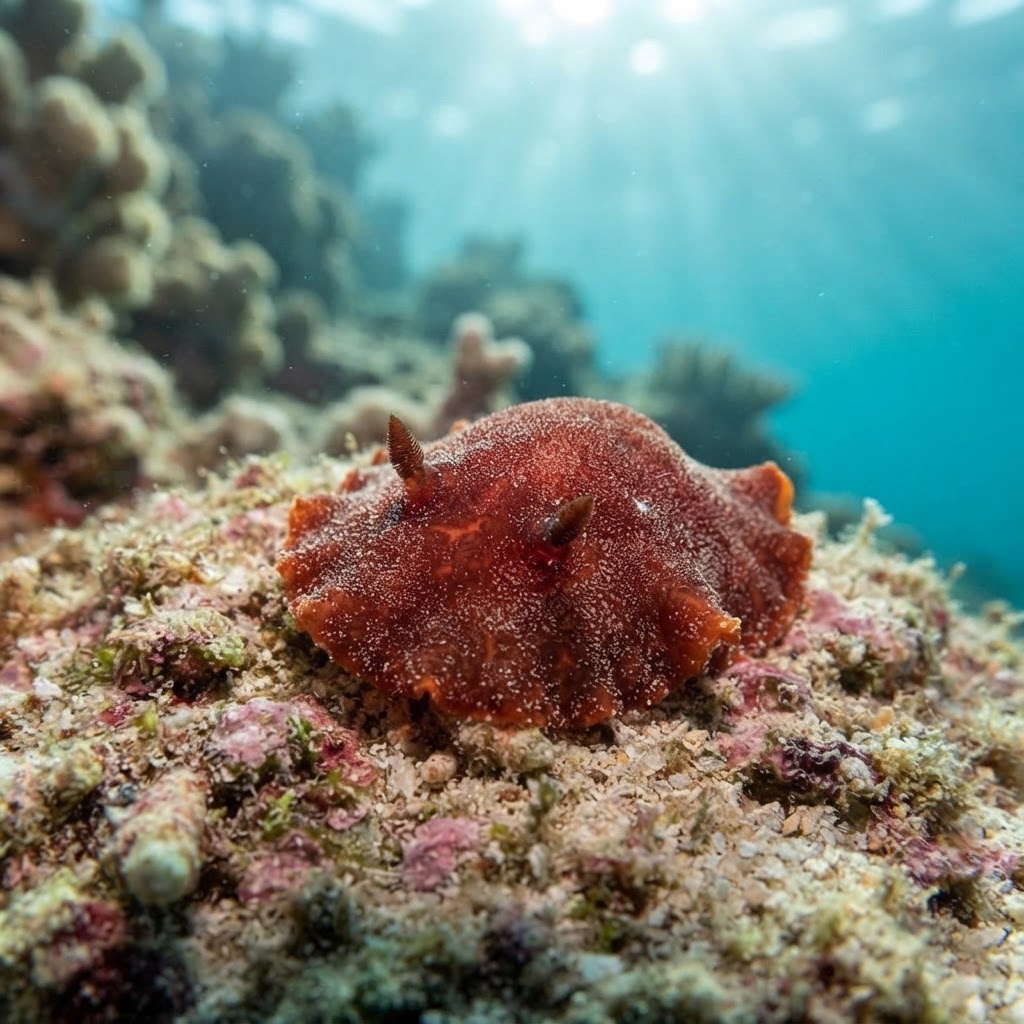
Broad, flattened oval body with a thick, leathery-looking back covered in low warty bumps, coloured in mottled shades of reddish brown to tan. Underwater it reads as a slow, low-slung slug hugging rock rather than swimming, with no bright contrast markings to catch a torch beam. The underside, visible if it is crossing a ledge, is pale and smooth compared to the rough dorsal surface.
Divers find it parked on or beside rock and rubble, moving slowly across the substrate rather than out in the open water. It shows no reaction to divers beyond its normal crawl, so a close, patient look with a torch is the best way to pick out its texture against the rock. Most logs describe it as an uncommon single find on a dive rather than something seen in numbers.
Like other discodorid nudibranchs, its tough, warty back is thought to make it unpalatable to predators, which is likely why it can sit exposed on open rock in daylight rather than hiding.
Sightings are logged across the year with no clear seasonal spike, consistent with the 15.7 to 21.7 C range it is found in across Mediterranean and Iberian Atlantic sites, so it is worth searching for on any dive in that temperature band.
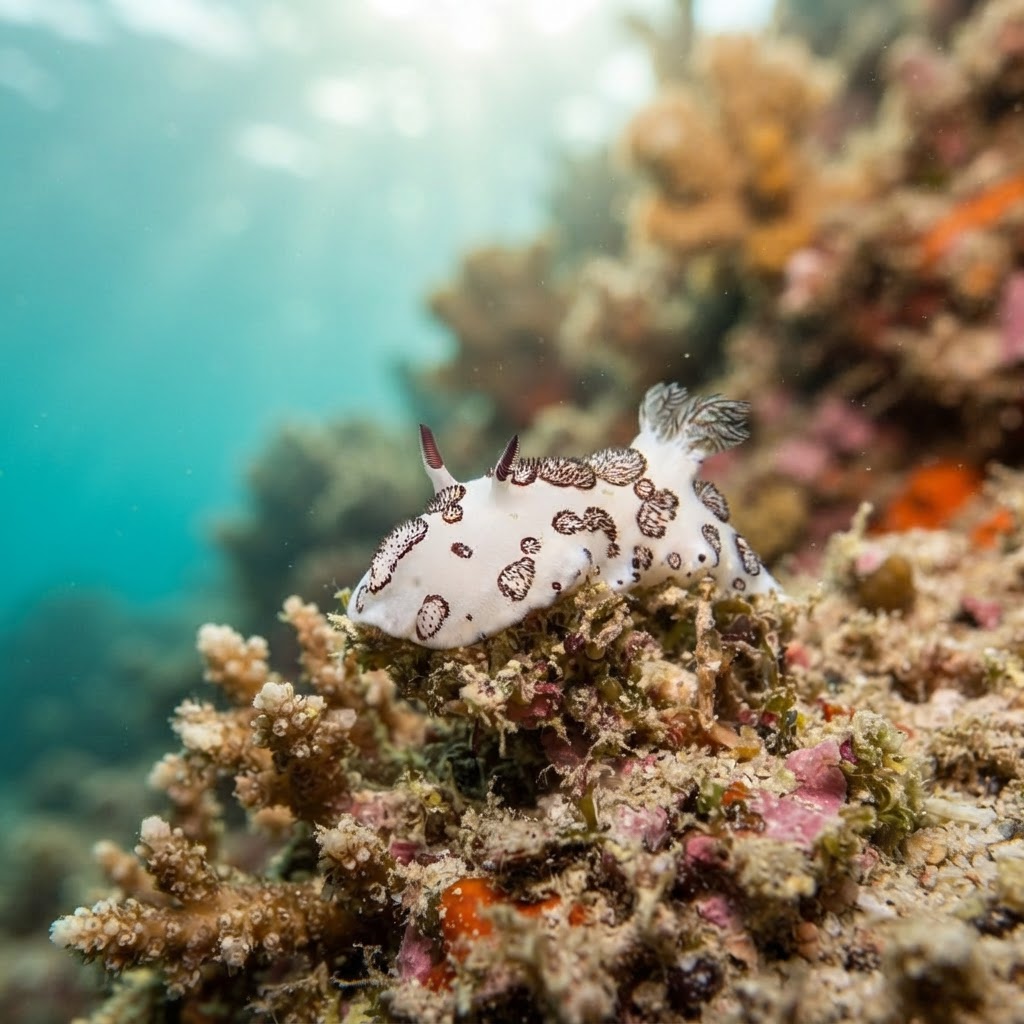
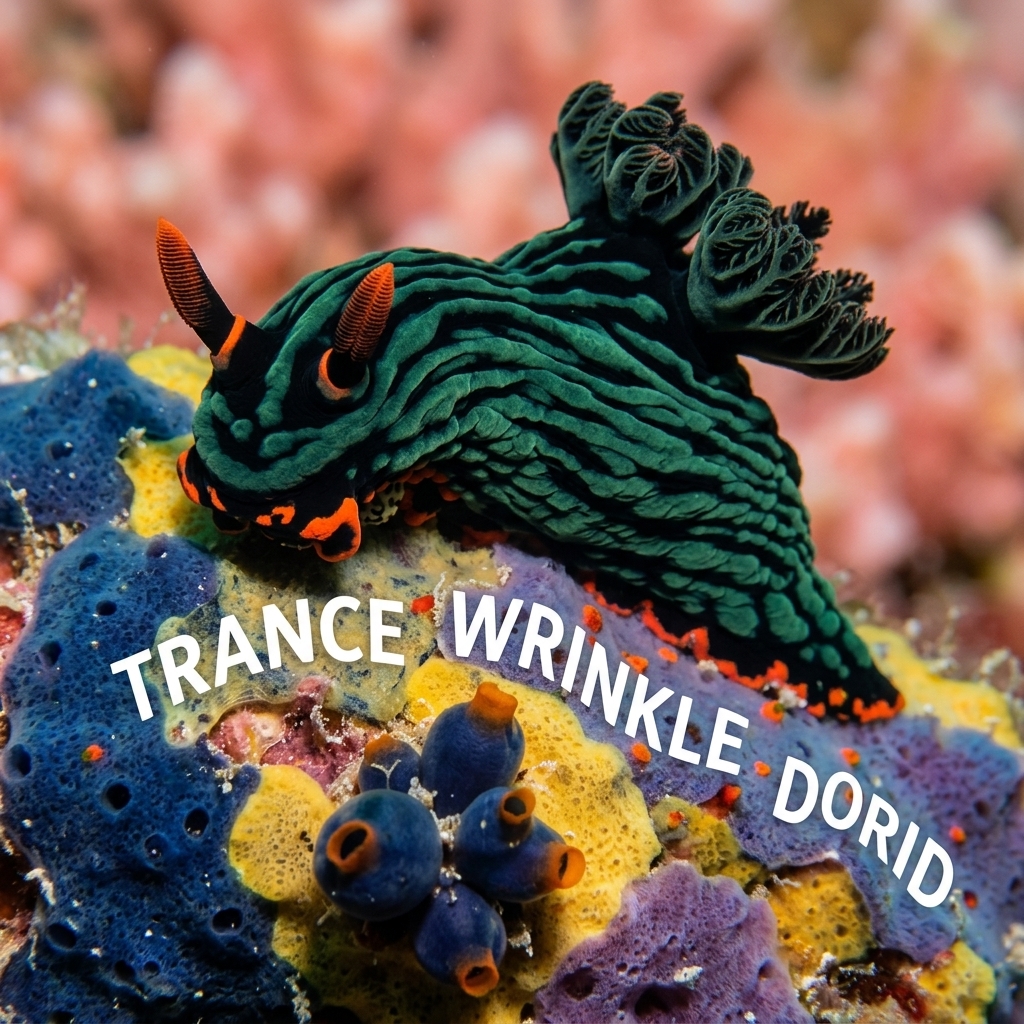
Reef neighbours a diver could mistake it for. Use the identification notes above to tell them apart.
Most reliably logged on rocky reef dives in Italy, especially Sicily, Lazio and Campania, with strong numbers also out of Portugal's Lisbon Coast and Algarve, and Spain's Andalusia and Catalonia coasts. It turns up as a scattered, site-by-site find rather than being concentrated at one famous location, so any rubble or rocky-reef dive across these regions is worth a slow look.
Mapping where Redbrown Leathery Doris is logged…
It is most often logged on rocky reef dives in Italy, particularly Sicily, Lazio and Campania, and along Portugal's Lisbon Coast and Algarve, plus Spain's Andalusia and Catalonia coasts.
There is no strong seasonal pattern in sightings, so it is logged year-round on dives within its 15.7 to 21.7 C temperature range.
Look for a flattened, oval-bodied nudibranch with a leathery, warty back in mottled reddish-brown to tan tones, moving slowly over rock rather than swimming. It lacks the bright contrast patterns of many reef nudibranchs, so its rough texture is the main giveaway.
Exact size data is not confirmed for this species, but like most discodorid nudibranchs it stays within the typical few-centimetre range of the family, appearing as a low, flattened slug on the reef.
No, it poses no danger to divers. It is a slow-moving, benthic nudibranch that can be observed closely without any risk.
Site and sighting data is aggregated from diver logs, iNaturalist and GBIF. For taxonomy and conservation status:
Light-spotted Aegires
3,168 sites