Pagrus auriga
Coppery bream with dark saddle bars, most reliably logged around Andalusia and Gran Canaria in waters from 14 to 27.5 C.
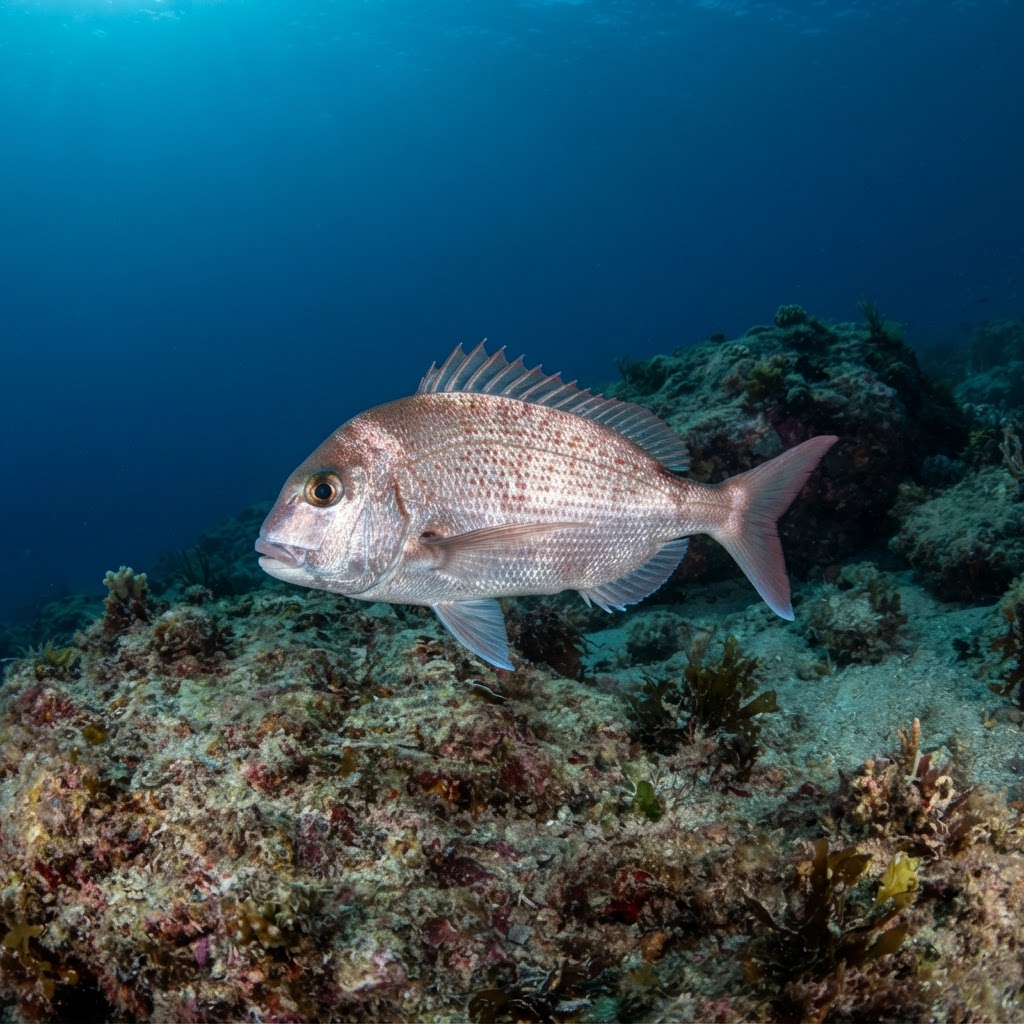
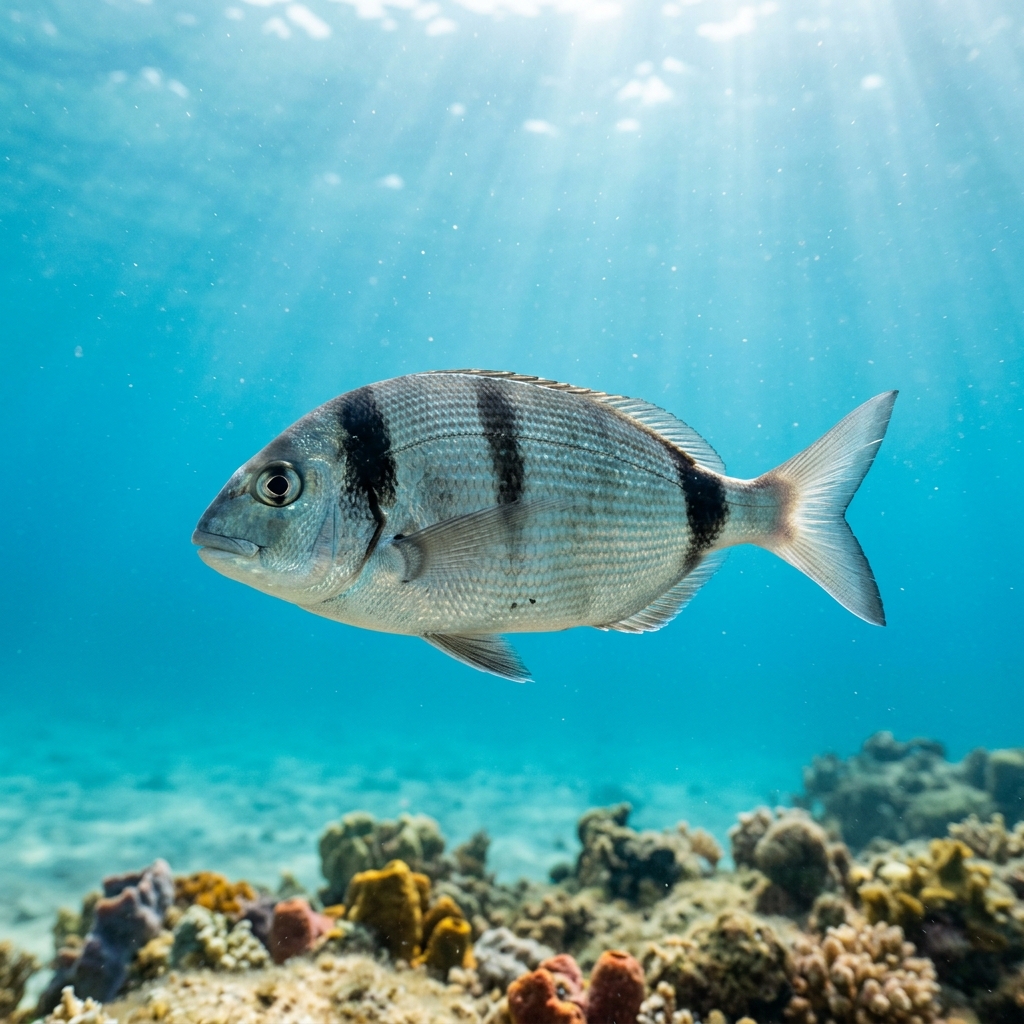
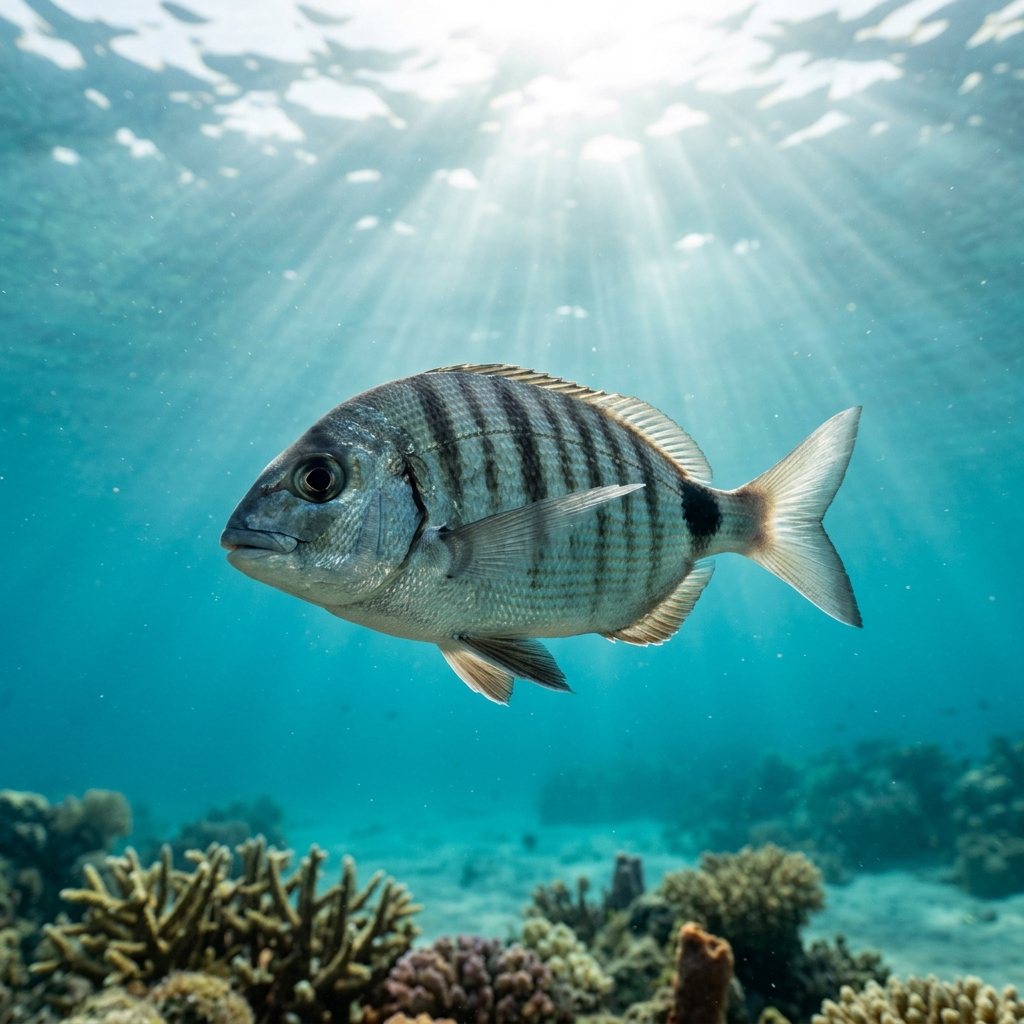
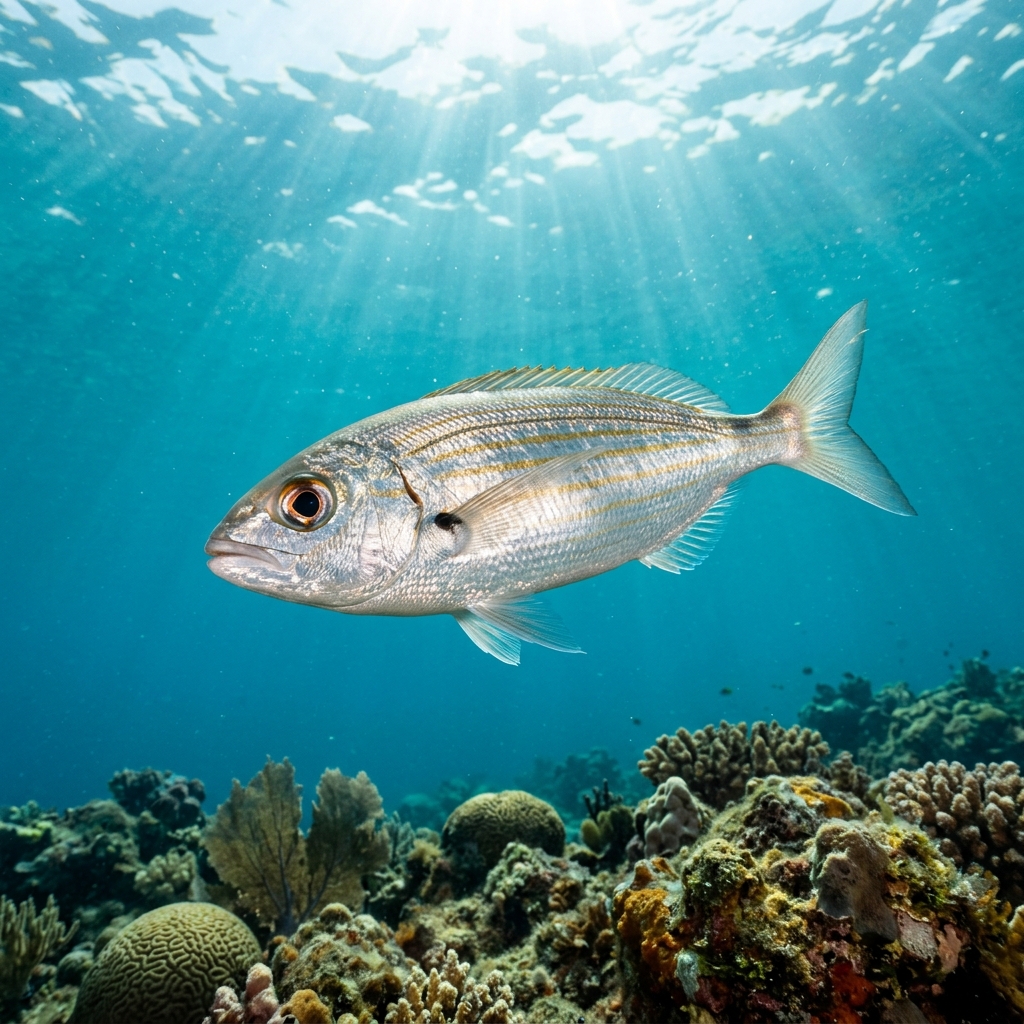
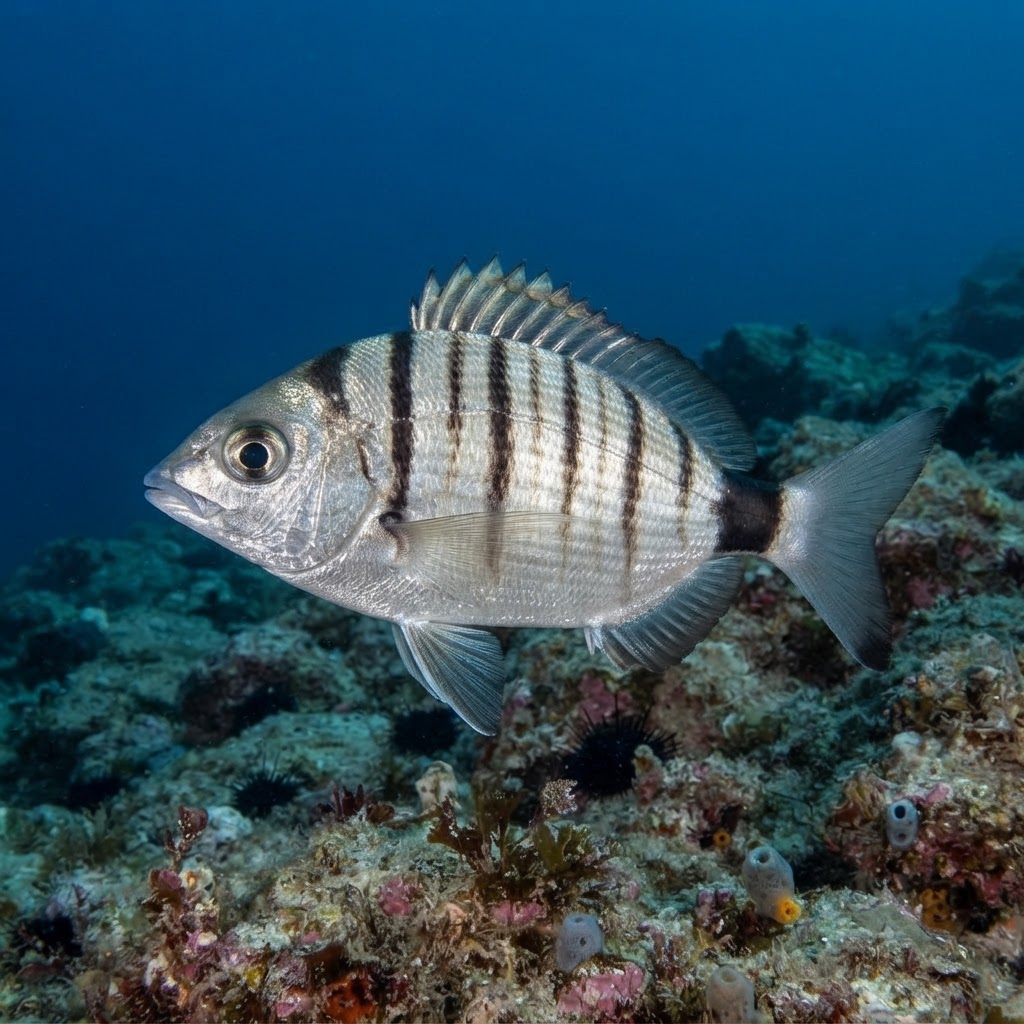
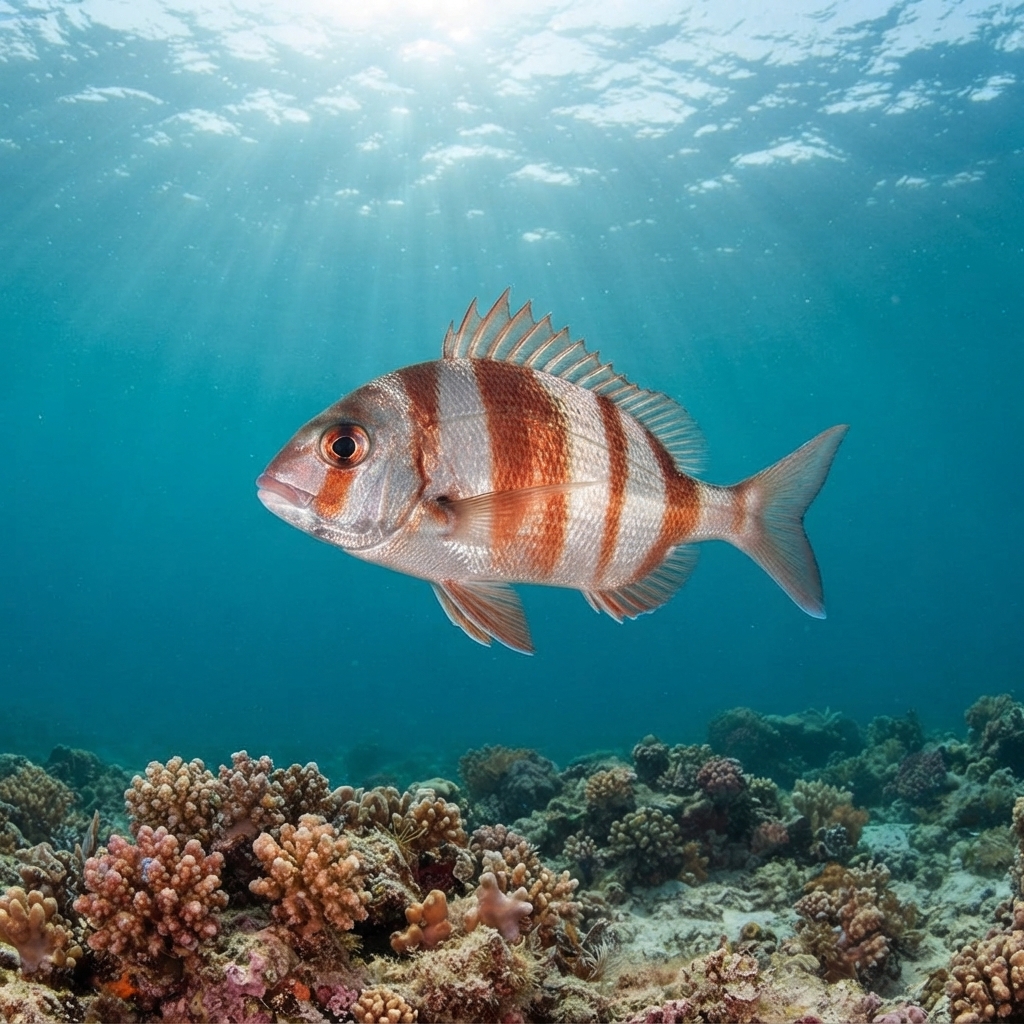
Grows to around 56 cm, with a deep, silvery-pink body that flushes coppery-orange along the flanks. The standout marks are four or five dark, saddle-like bars crossing the back and upper sides, fading toward the belly, plus a reddish tinge around the head and dorsal fin. Its blunt head and steep forehead profile give it a heavier, more angular look than most reef bream.
Usually spotted cruising alone or in loose company over rocky and mixed sand-rock bottoms, working the terrain for small invertebrates and crustaceans. Divers typically log it as uncommon rather than a guaranteed sighting, meaning it tends to hold its distance rather than crowd in for a look. Most encounters happen along the reef base or near rocky outcrops rather than in open water.
Like several sparids, redbanded seabream can change sex as they mature, a trait that helps explain why individuals of very different sizes turn up on the same patch of reef.
Sighting data doesn't point to a clear seasonal peak, and its comfortable range of 14.3 to 27.5 C spans the full year in these waters, so it's logged as a year-round species rather than a seasonal visitor.
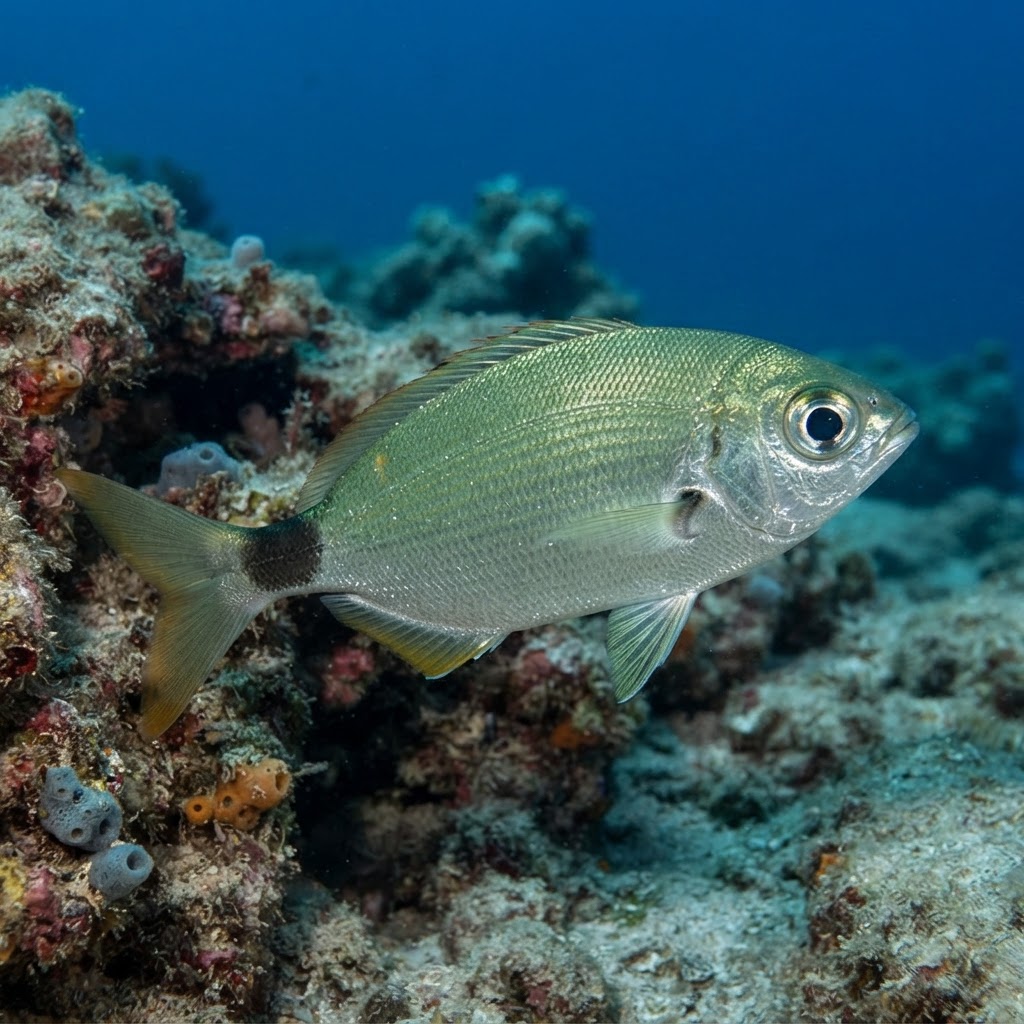
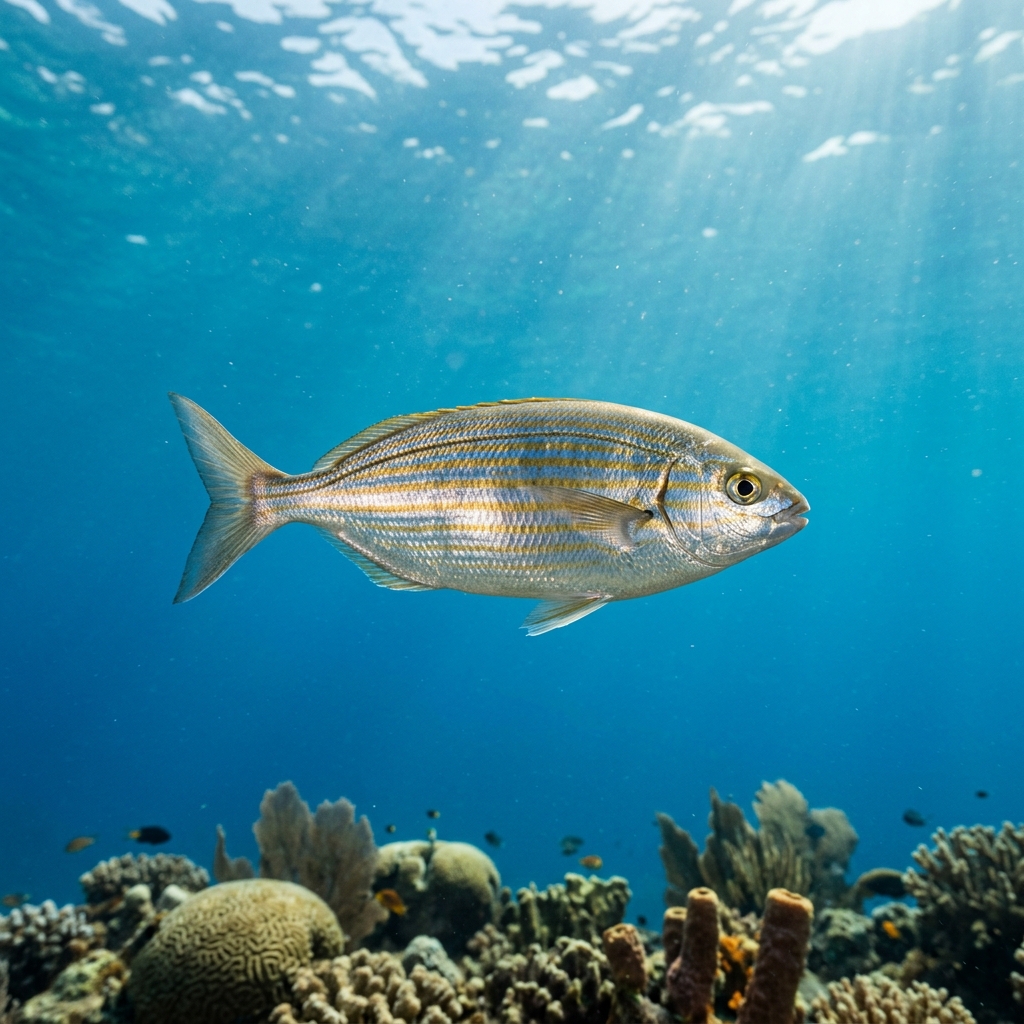
Reef neighbours a diver could mistake it for. Use the identification notes above to tell them apart.
Spain carries the bulk of logged sightings, especially around Andalusia, with the Canary Islands a strong secondary region, particularly Gran Canaria and Tenerife. Gibraltar also produces a reliable trickle of sightings, and it turns up occasionally along Portugal's Lisbon coast.
Mapping where Redbanded Seabream is logged…
Andalusia in Spain is the strongest area for sightings, with Gran Canaria and Tenerife in the Canary Islands close behind. Gibraltar and Portugal's Lisbon coast also produce regular sightings.
There's no strong seasonal pattern in the data, and its temperature tolerance of roughly 14 to 27.5 C covers conditions year-round in these regions, so it's worth looking for on any dive.
Look for a deep-bodied, silvery-pink fish with coppery flanks and several dark saddle bars crossing its back, plus a steep, blunt-headed profile. It's usually seen alone over rocky or mixed bottoms rather than in schools.
They reach around 56 cm, making them one of the larger sparids you'll come across on rocky reefs in Spanish and Canary Islands waters.
No, they're not considered dangerous to divers and generally keep their distance rather than approach.
Site and sighting data is aggregated from diver logs, iNaturalist and GBIF. For taxonomy and conservation status:
Saddled Bream
3,846 sites