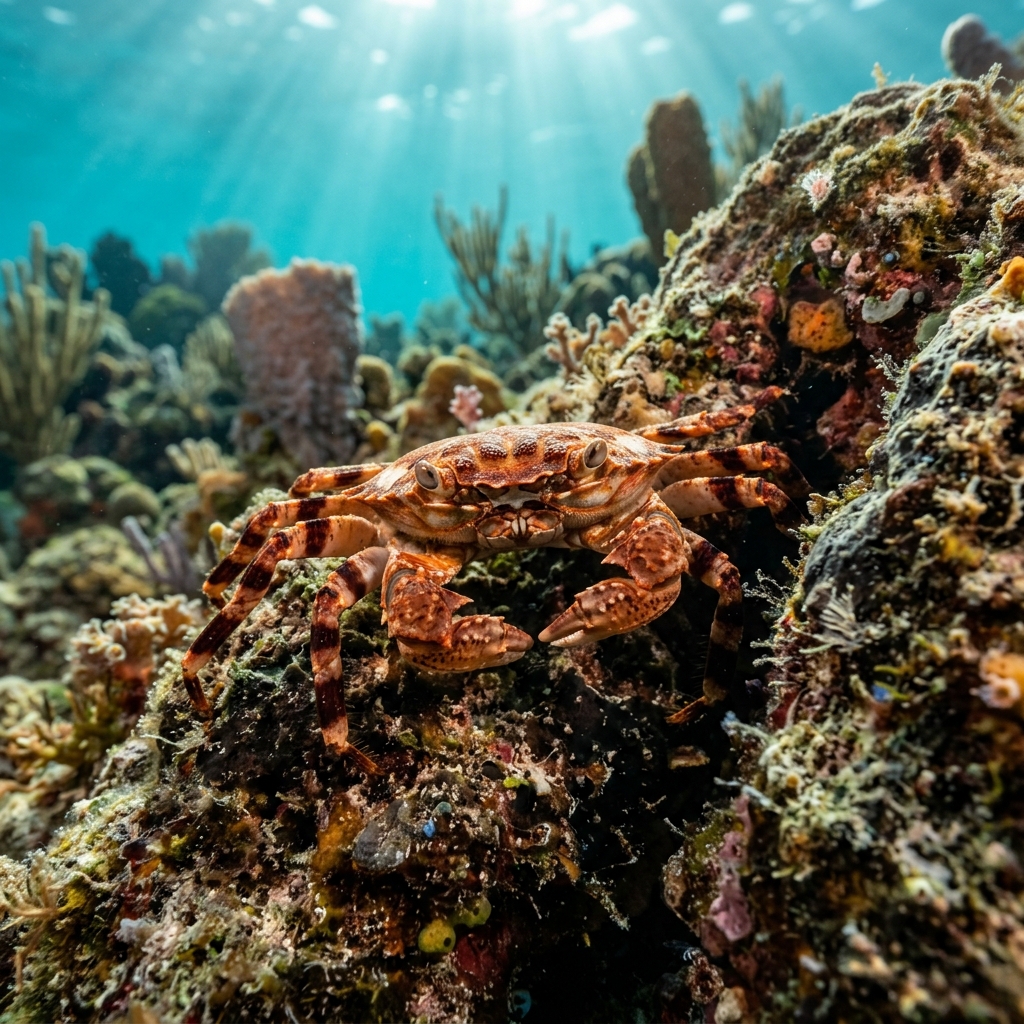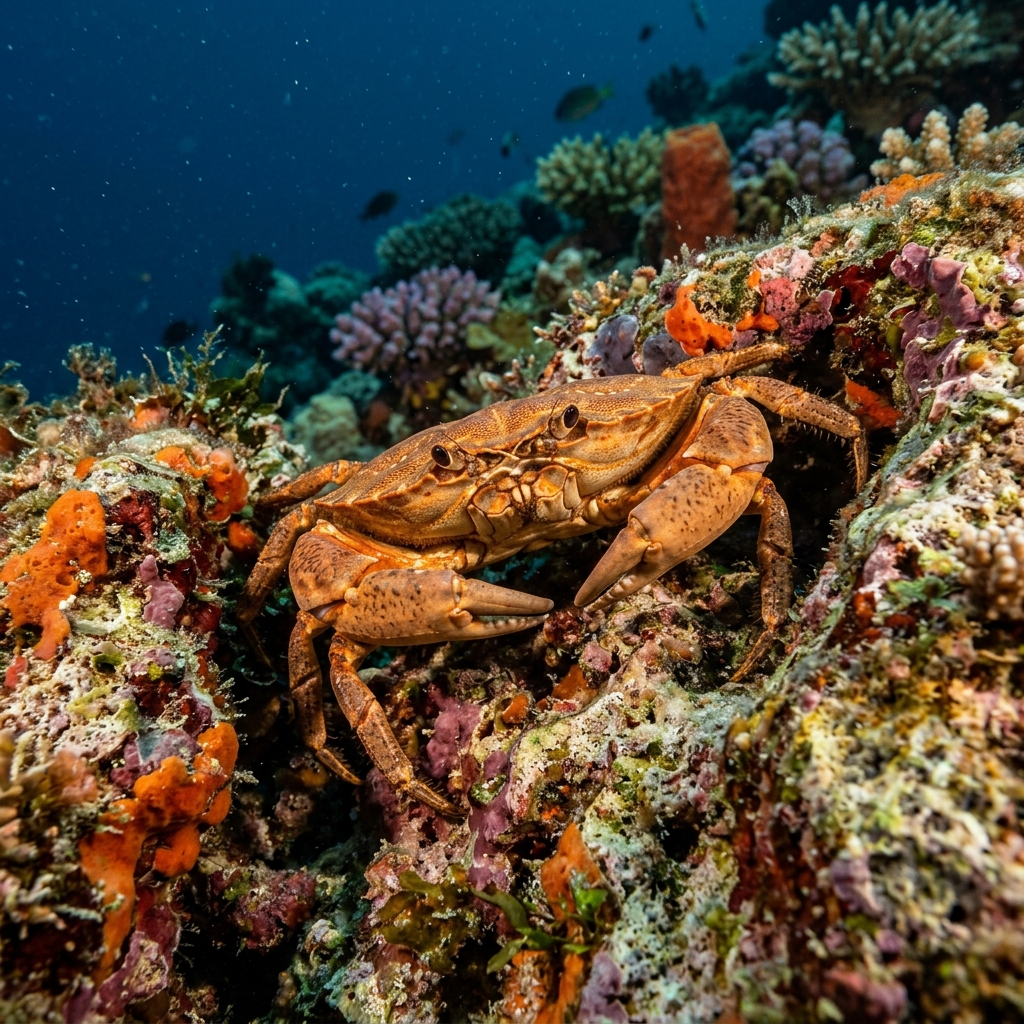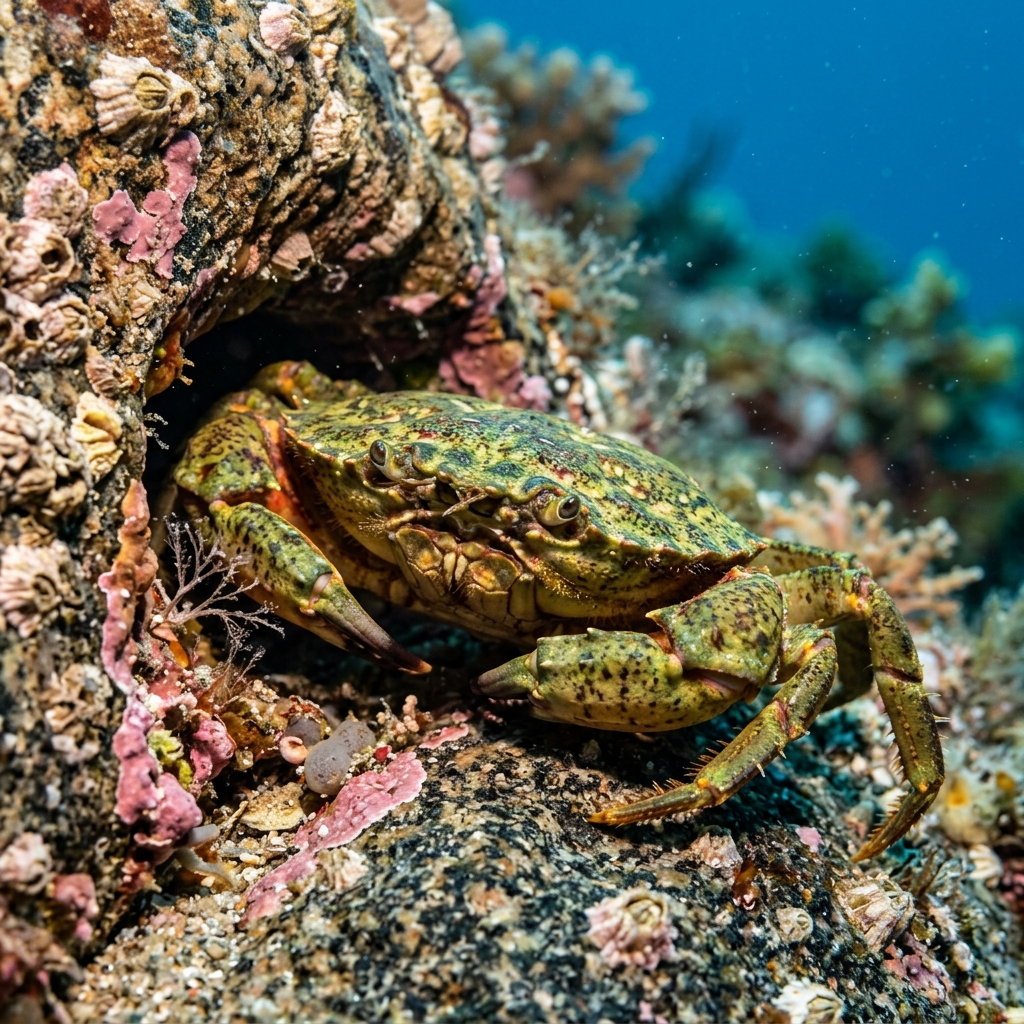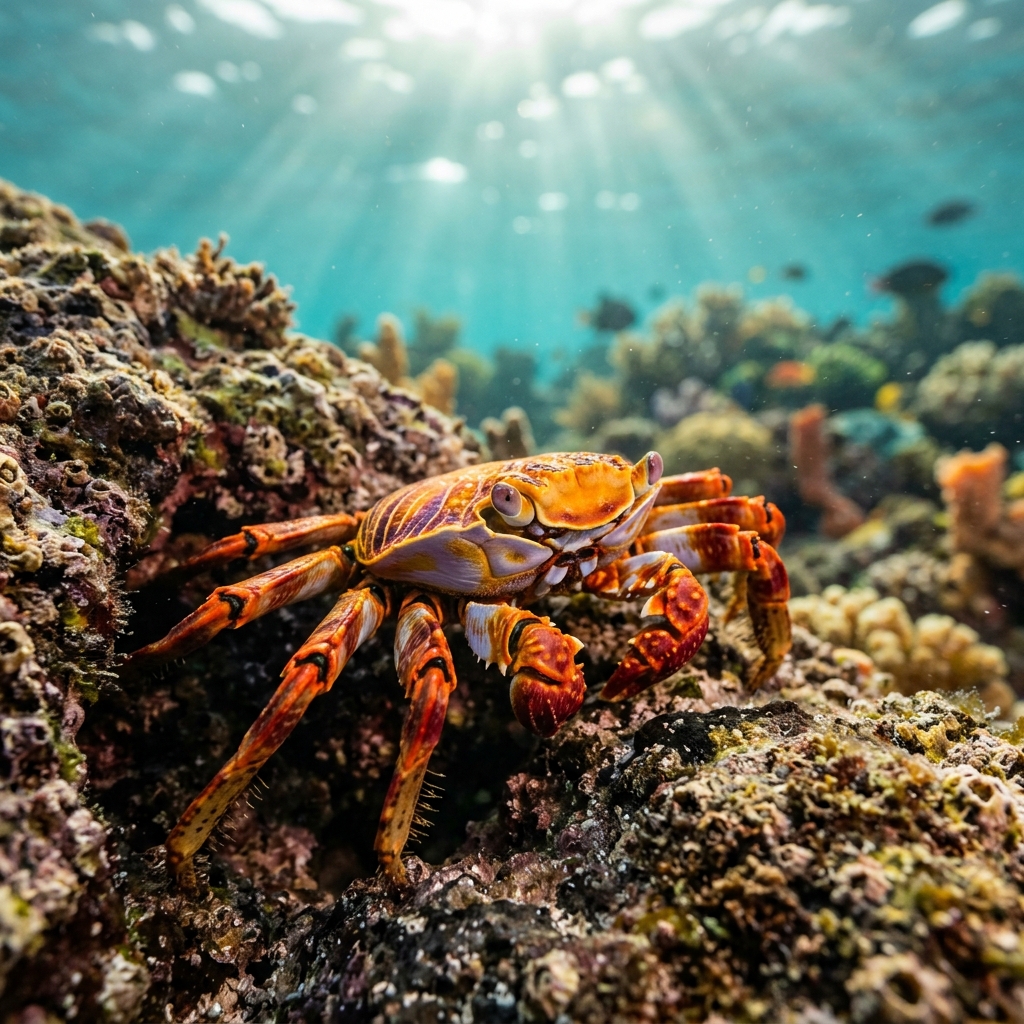
Trapezia tigrina
A small pink-spotted crab hiding deep in Acropora coral, most reliably logged in South Sinai, Egypt in water around 25 to 31C.
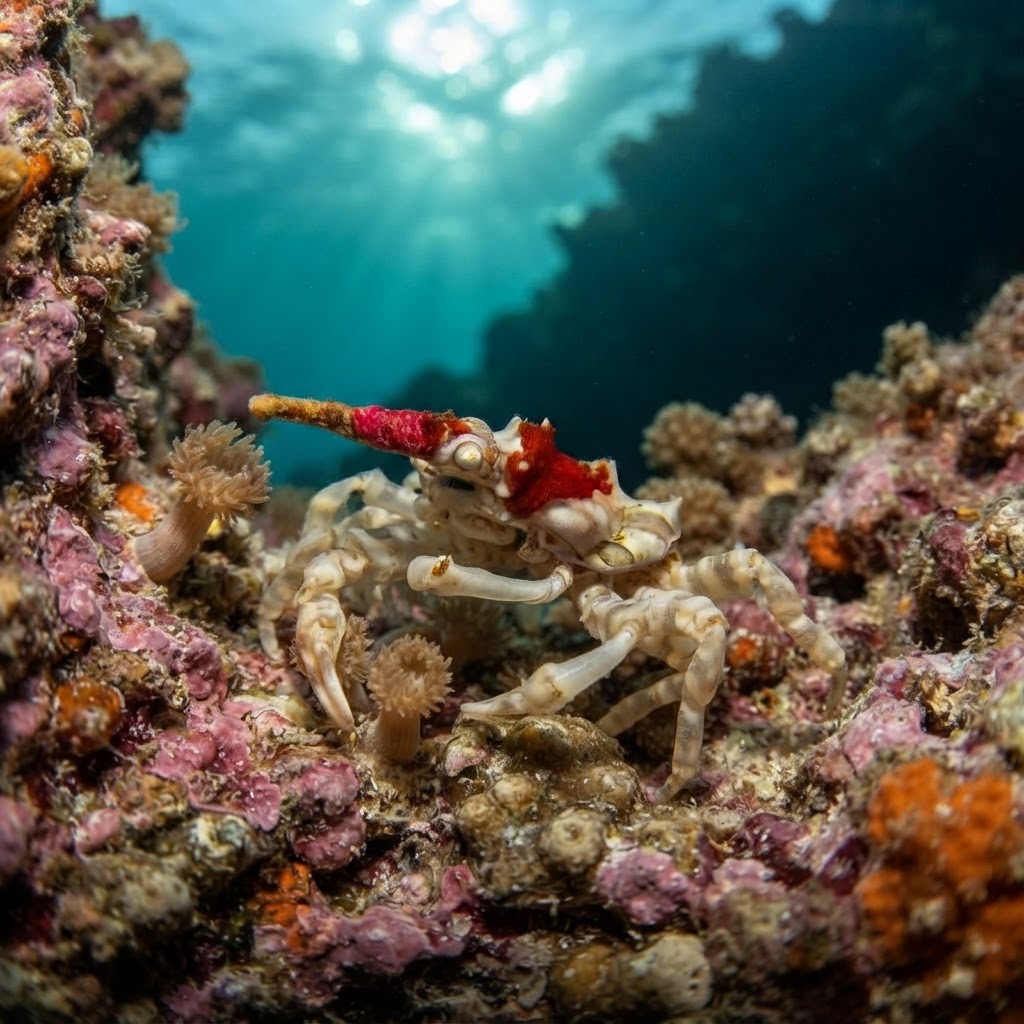
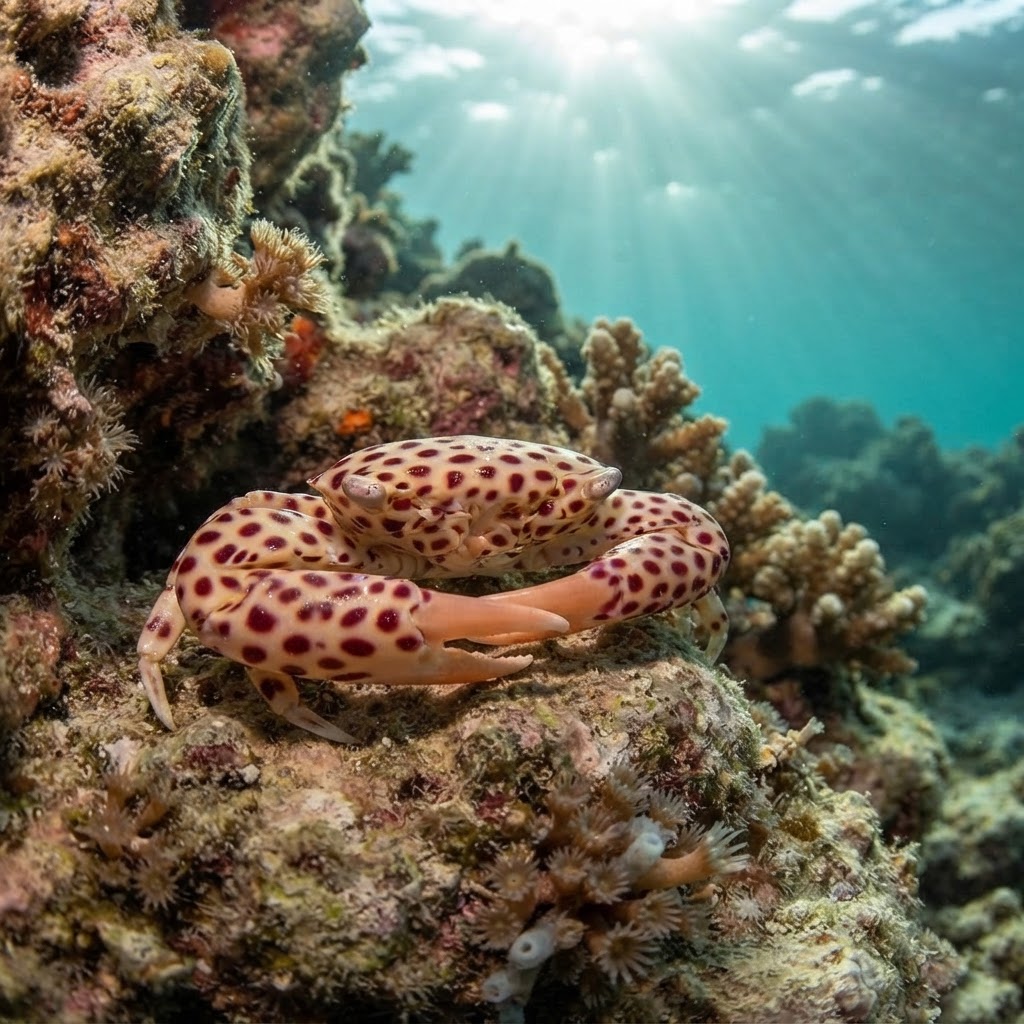
A small crab, only a couple of centimetres across, with a pale to whitish carapace covered in distinct red-pink spots that give it its name. It has flattened, compact pincers built for gripping coral branches rather than fighting, and it sits low and tight against the coral skeleton rather than out in the open. Look for it deep inside the branches of Acropora coral heads, where the spotted pattern stands out against the white or tan coral base.
Spends its time wedged inside the branches of its host coral, rarely straying onto open reef, which is exactly why divers log it as uncommon to rare even where it is present. It reacts to a torch or a close look by shuffling deeper into the coral rather than fleeing across open reef, so slow, patient looking pays off more than swimming past quickly. Most sightings come from divers deliberately peering into Acropora heads rather than spotting it in open water.
Guard crabs of this genus actively defend their host coral from predators like crown-of-thorns starfish, nipping at tube feet to drive them off, which makes them one of the reef's more useful small residents rather than just a curiosity.
No clear seasonal pattern shows up in the data, and its comfort range of roughly 25 to 31C spans typical tropical reef conditions year-round, so any month is fair game where it occurs.
Reef neighbours a diver could mistake it for. Use the identification notes above to tell them apart.
Most consistently logged in South Sinai, Egypt, where it turns up across multiple sites in branching coral, with further confirmed sightings in Saint-Paul, Reunion, the Visayas in the Philippines, and the Society Islands in French Polynesia. It is a real reef-wide species but never a headline sighting, so treat any of these regions as a reasonable place to go looking rather than a guaranteed encounter.
Mapping where Red-spotted Guard Crab is logged…
South Sinai in Egypt has the strongest run of logged sightings, with additional confirmed records from Saint-Paul in Reunion, the Visayas in the Philippines, and the Society Islands in French Polynesia. It favours reefs with healthy branching coral rather than any particular country.
There is no detected seasonal pattern, and its water temperature range of roughly 25 to 31C covers typical tropical reef conditions all year, so it can be looked for in any month.
Look for a small crab, a couple of centimetres across, with a pale carapace marked with distinct red-pink spots, tucked deep inside the branches of Acropora coral rather than out on open reef.
They are small, staying only a few centimetres across, which combined with their habit of hiding inside coral branches makes them easy to miss without a close look.
It actively guards its host coral, nipping at the tube feet of predators such as crown-of-thorns starfish to drive them away, making it a real defender of the coral it lives on rather than just a passenger.
No, they pose no threat to divers. They are tiny, defensive only towards coral predators, and will simply retreat deeper into the coral branches if approached.
Site and sighting data is aggregated from diver logs, iNaturalist and GBIF. For taxonomy and conservation status:
European Green Crab
2,469 sites