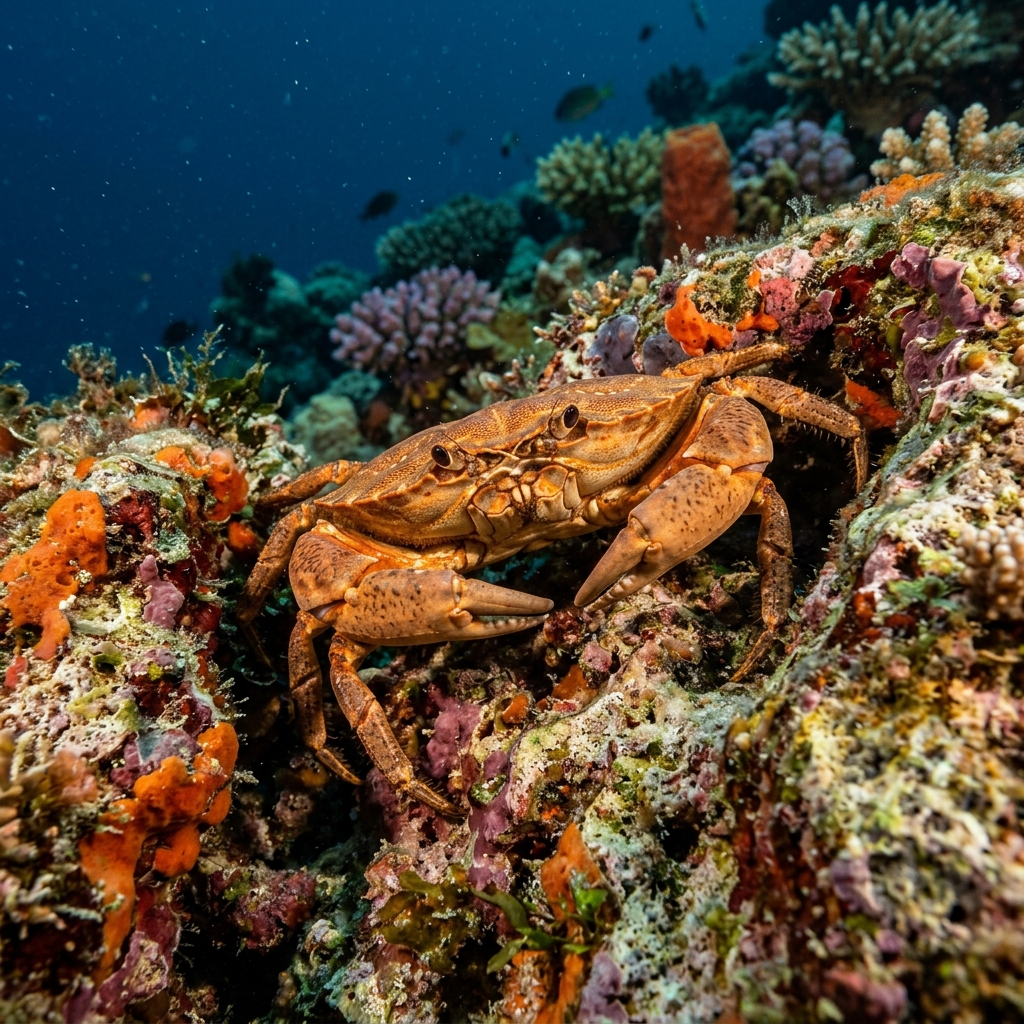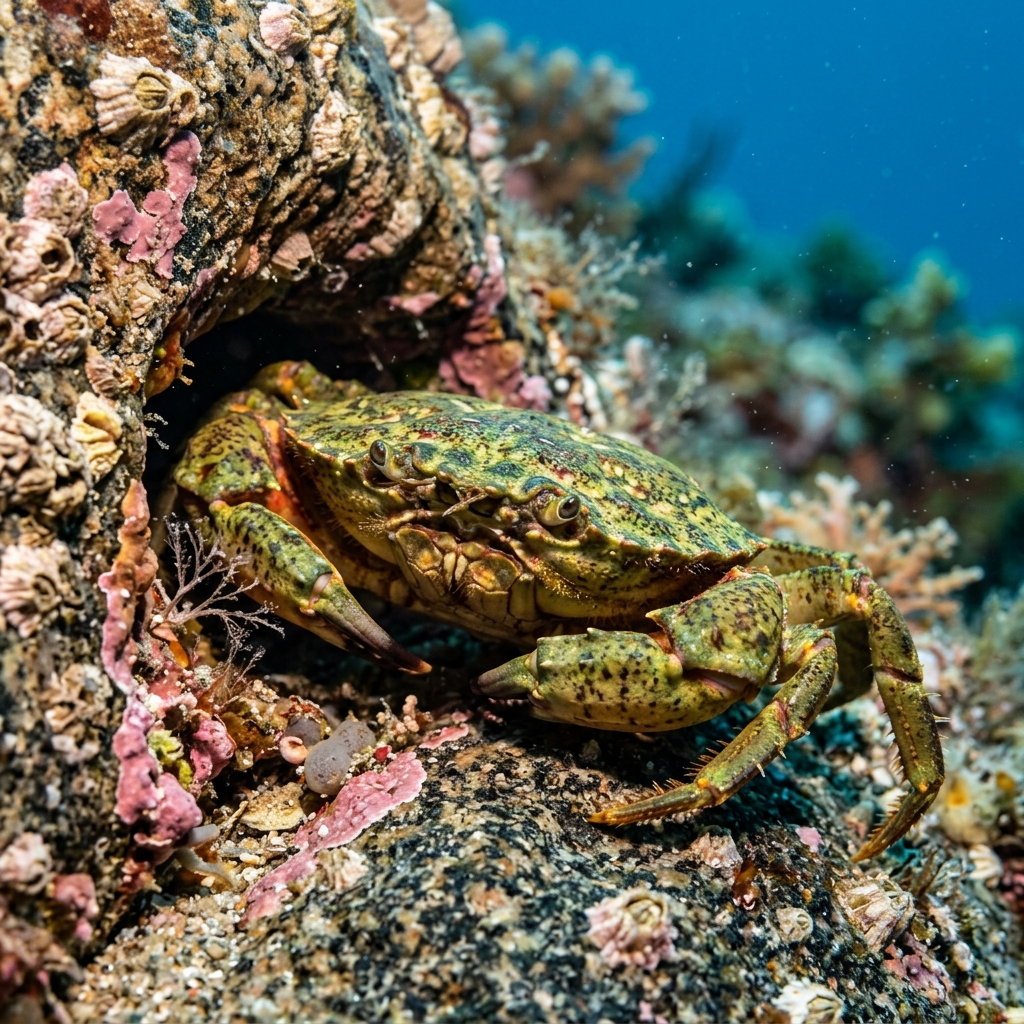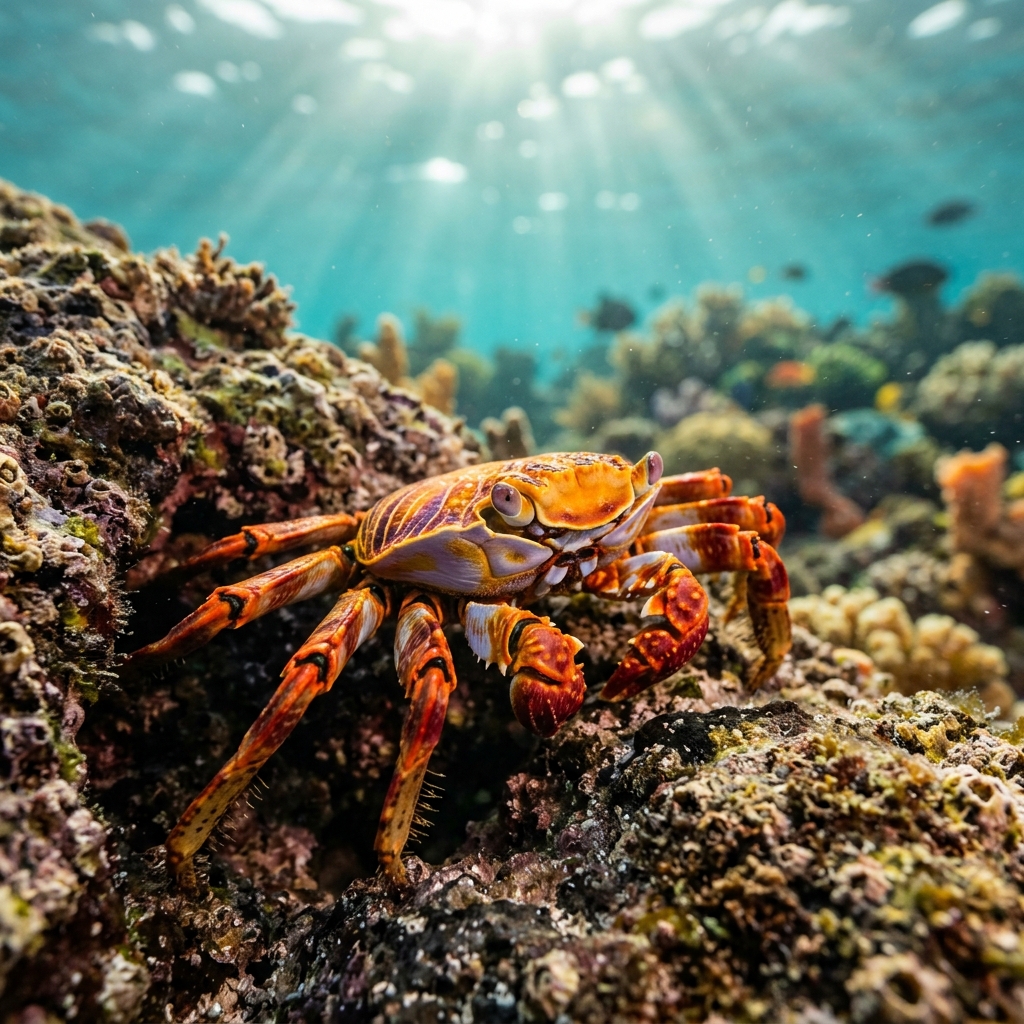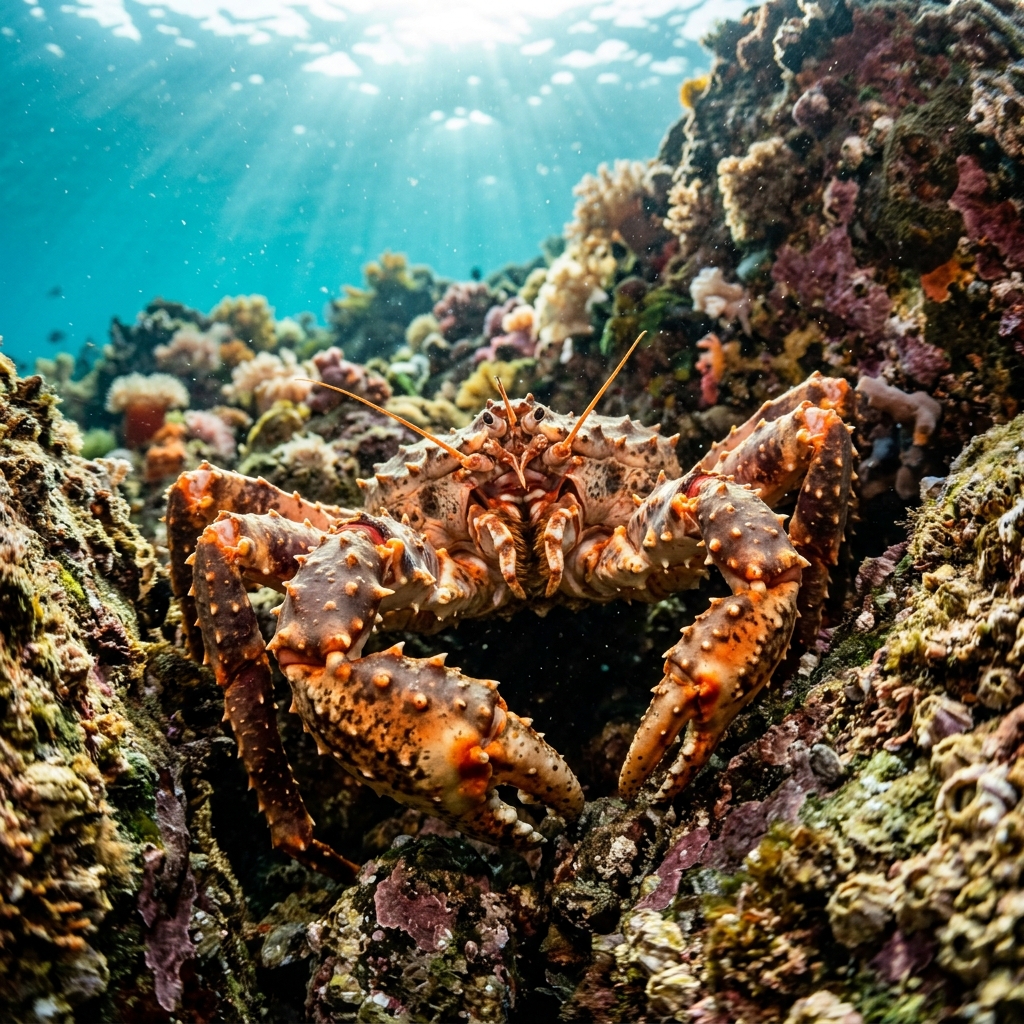
Trapezia rufopunctata
Look for this red-blotched crab tucked in Acropora coral in the Maldives' Central Atolls, where it's logged year-round in warm 25-31C water.
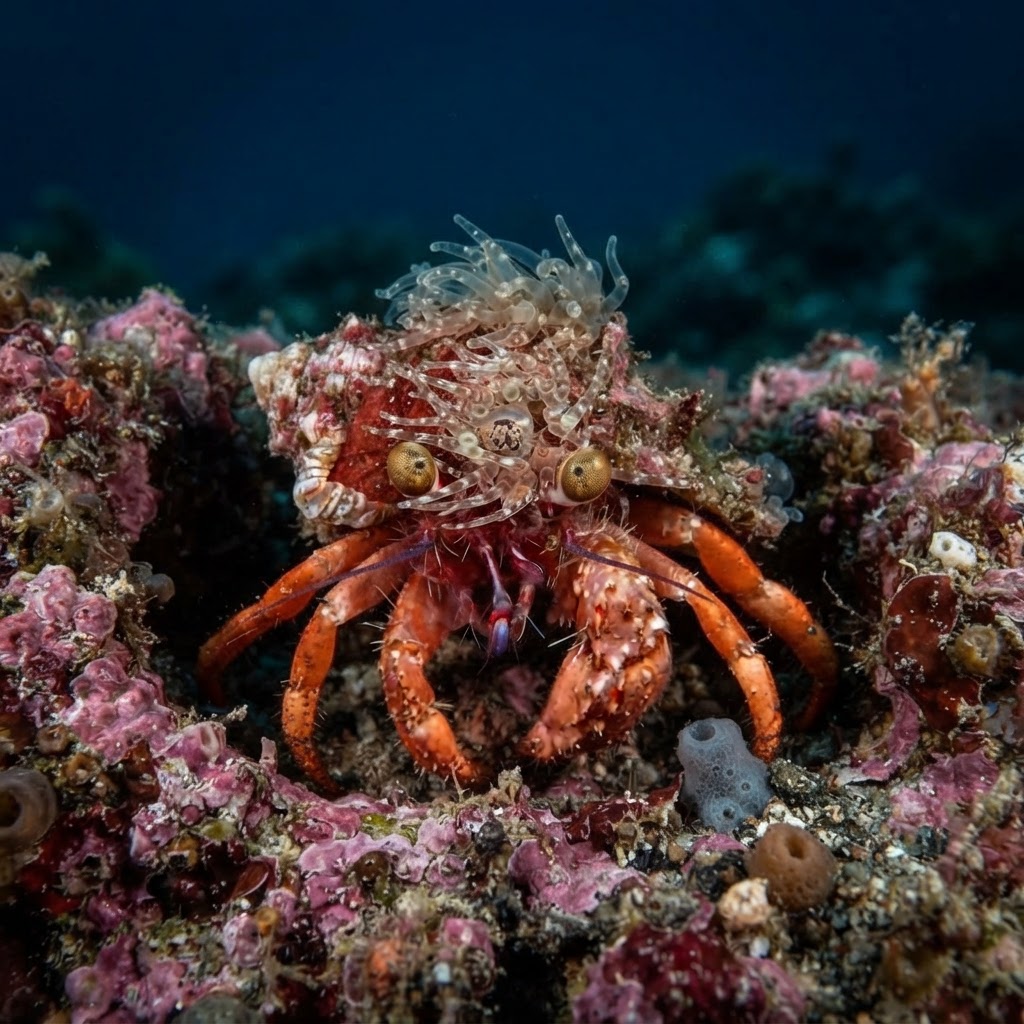
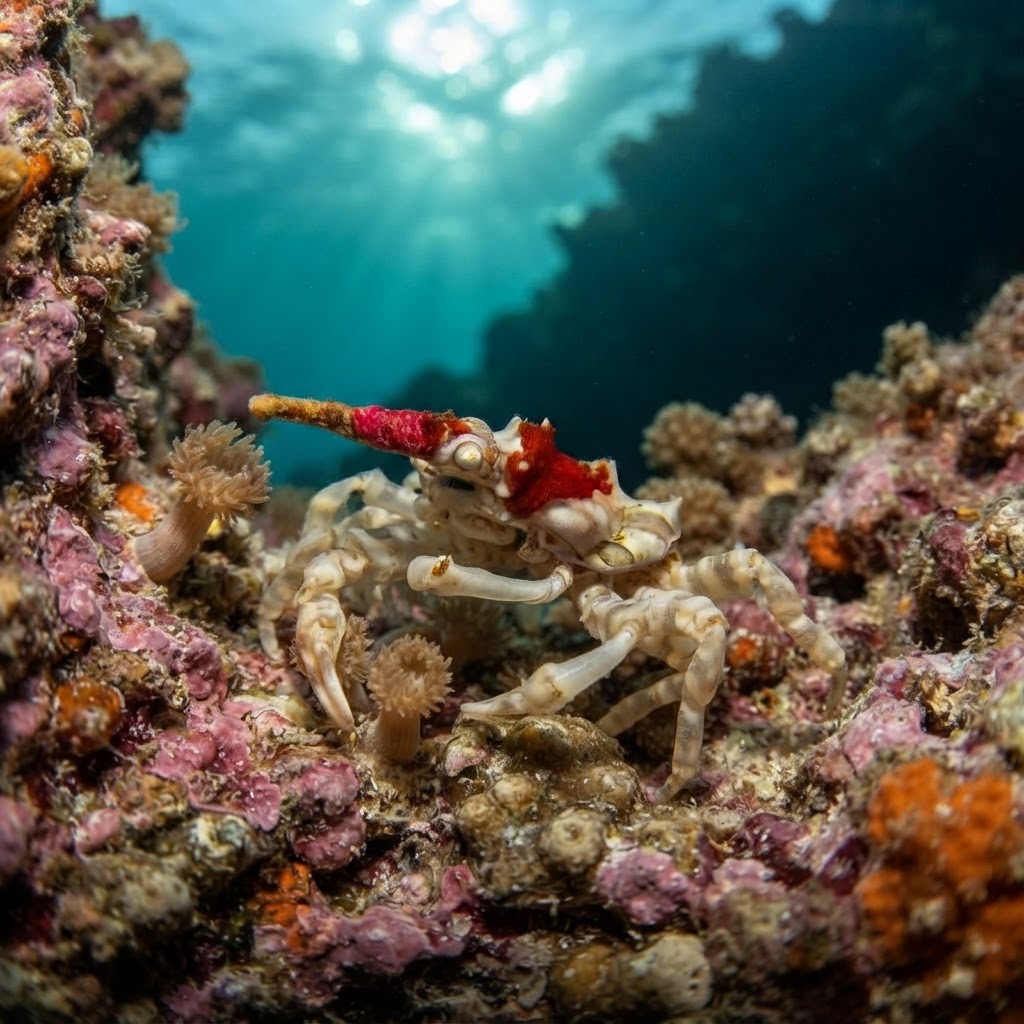
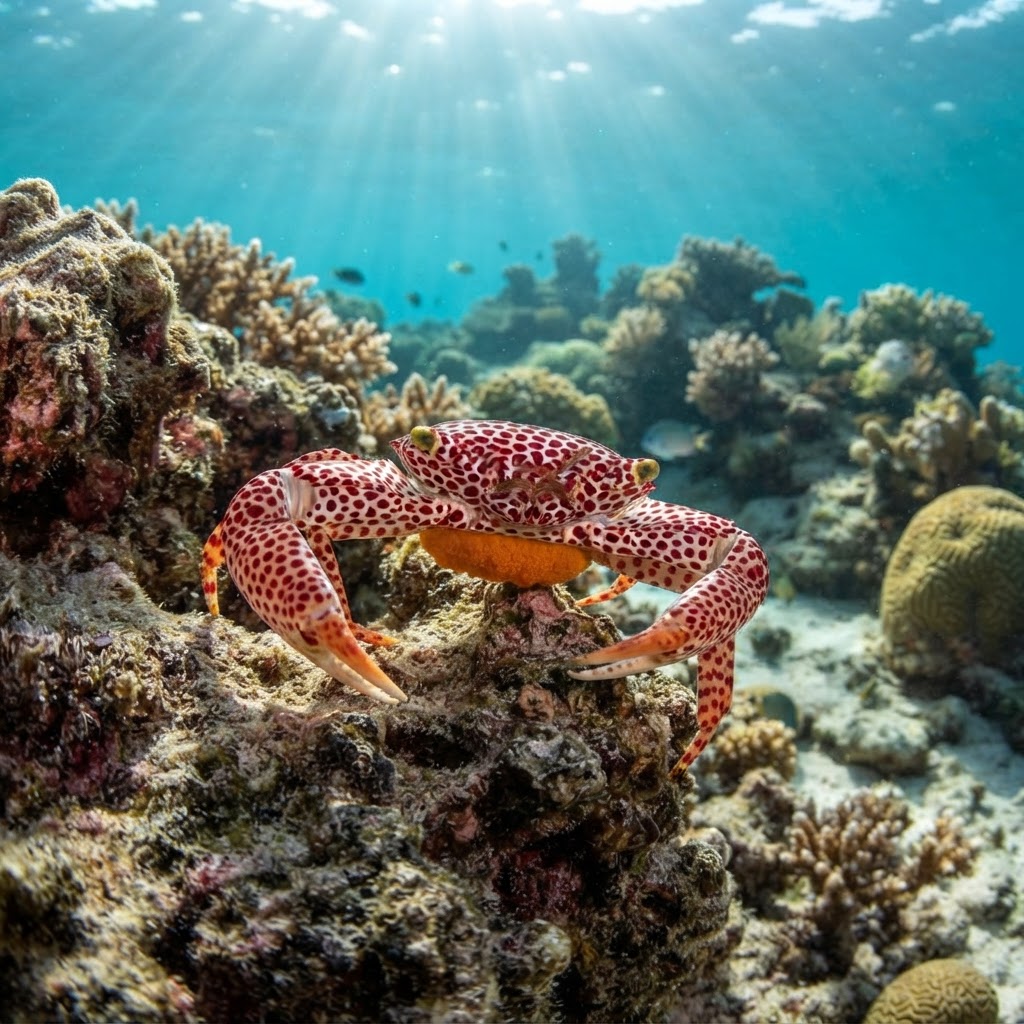
Small crab, body typically only a few centimetres across, hiding deep within the branches of hard coral rather than out in the open. Pale cream to white shell scattered with irregular reddish-brown blotches, which is the main giveaway against other coral-dwelling crabs. Compact, rounded carapace and stout claws held close to the body, often only the eyes and claw tips visible from outside the coral head.
Spends most of its time wedged inside the branches of its host coral, rarely straying onto open reef where divers would spot it easily. Divers usually need to look closely into coral heads, often with a torch, rather than expect it to swim into view. It reacts to disturbance by retreating deeper into the coral rather than fleeing across the reef, so patience and a slow approach pay off more than a chase.
Lives in a tight partnership with its host coral, feeding on the coral's mucus and defending the colony from predators like crown-of-thorns starfish in exchange for shelter, a trade-off that makes it one of the reef's quieter bodyguards.
No clear seasonal pattern shows up in the sighting data, and with a comfortable water-temperature range of 25.4 to 31.4C it stays put on tropical reefs all year, so any month works for a dive built around finding one.
Reef neighbours a diver could mistake it for. Use the identification notes above to tell them apart.
Most reliably logged in the Maldives, especially the Central and Southern Atolls, which together account for the bulk of recorded sightings. Also turns up with decent regularity in French Polynesia's Society Islands, on Fiji's Taveuni reefs, and around Niue's Alofi coastline, with smaller numbers reported from Mozambique's Ponta do Ouro, Japan's Ryukyu Islands, South Africa's KwaZulu-Natal, and Australia.
Mapping where Red-spotted Coral Crab is logged…
The Maldives is by far the strongest spot, particularly the Central and Southern Atolls. French Polynesia's Society Islands, Fiji's Taveuni, and Niue's Alofi coast also produce regular sightings.
There's no detected season for this crab, and it tolerates a wide warm-water range of roughly 25 to 31C, so it's found on tropical reefs year-round.
Look inside coral branches for a small, pale crab with irregular red-brown blotches across its shell. It stays tucked into the coral rather than sitting exposed, so a slow scan with a torch works better than a quick pass.
Exact size data isn't confirmed, but like other Trapezia crabs it's small, generally only a few centimetres across, and built to fit snugly inside coral branch gaps rather than roam the open reef.
It lives permanently inside one coral colony, feeding on coral mucus while actively defending the coral from predators such as crown-of-thorns starfish. It's a real two-way partnership rather than the crab just squatting for shelter.
No, it poses no threat to divers. It's a small, shy crab that retreats into coral when approached rather than reacting defensively towards people.
Site and sighting data is aggregated from diver logs, iNaturalist and GBIF. For taxonomy and conservation status:
Sally Lightfoot Crab
2,422 sites