Amphiprion ephippium
Orange-red clownfish with a pale saddle patch, most reliably logged in Myanmar's Mergui Archipelago and the Andaman Islands at 28-30C.
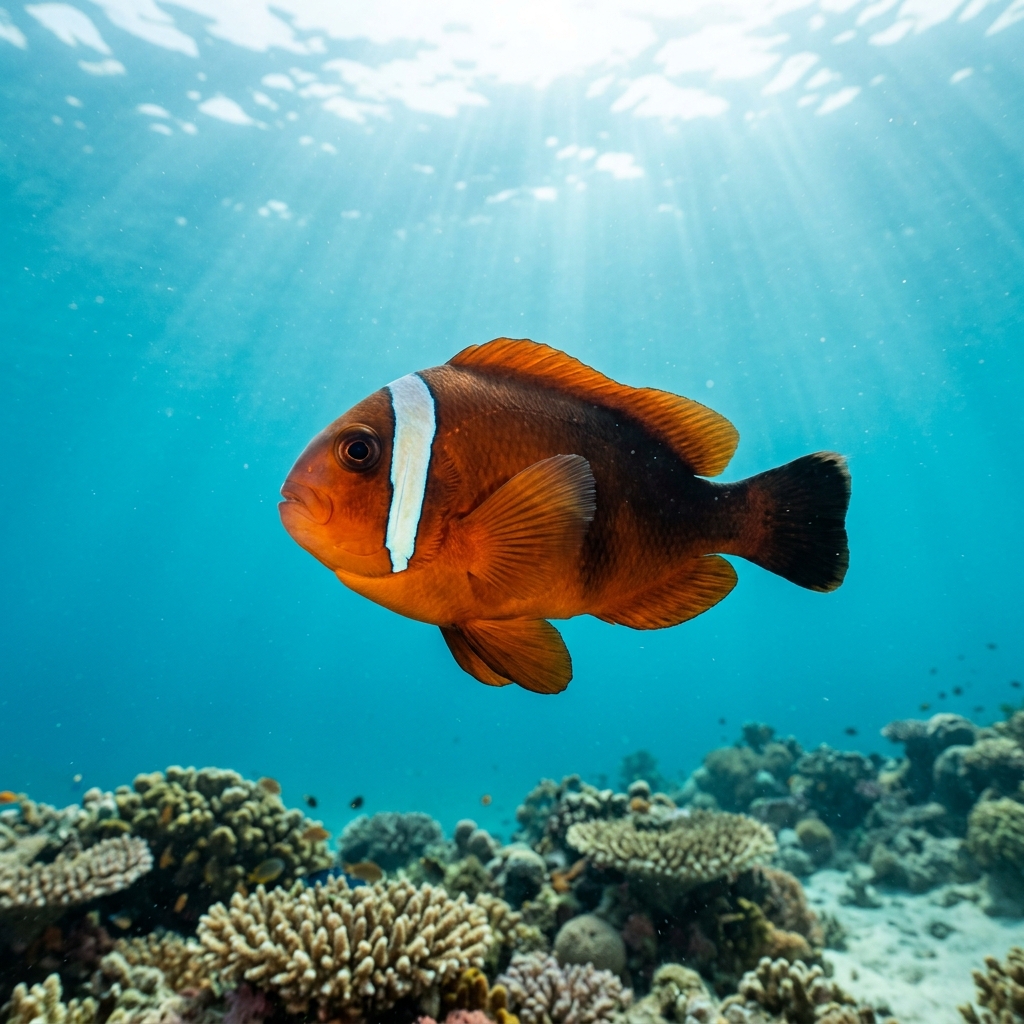
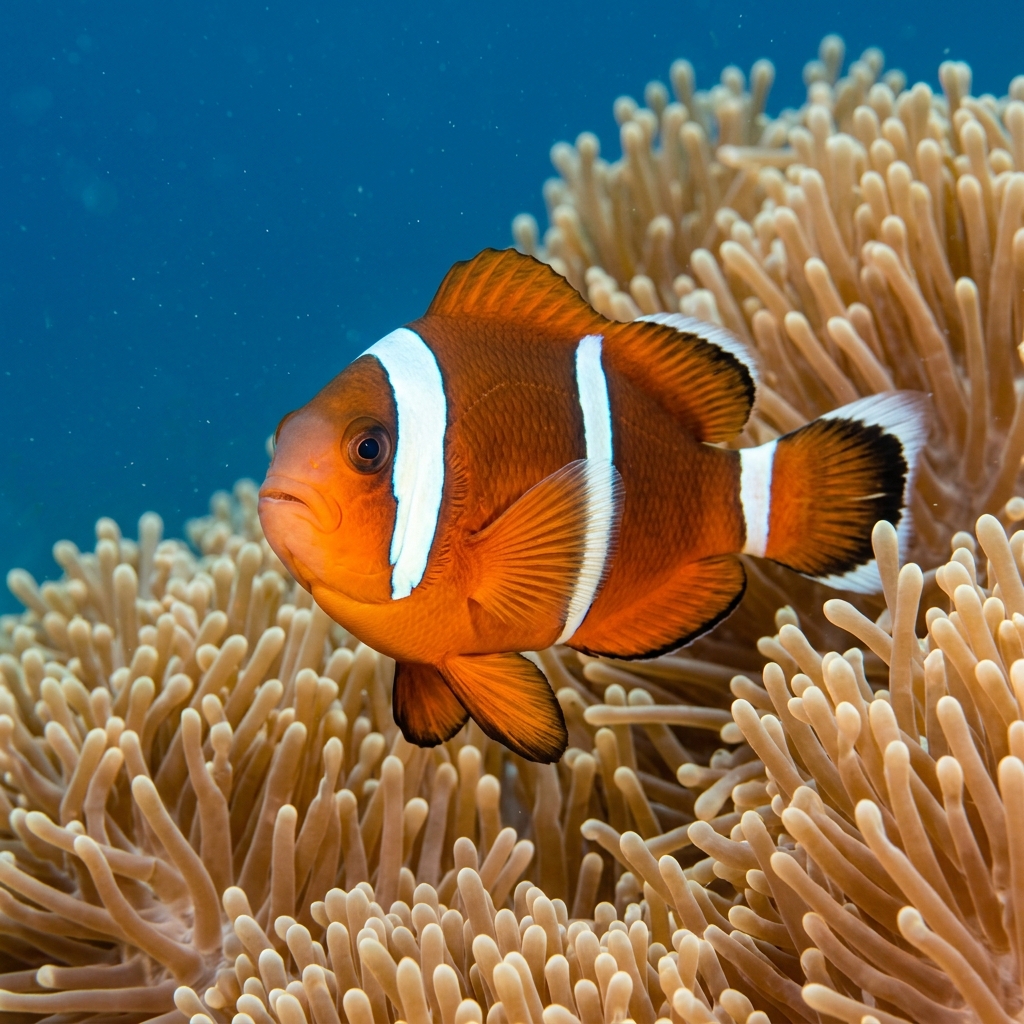
A stocky, deep orange-red body about 9 cm long with a single pale white-yellow patch saddled across the back, just behind the head, is the giveaway. Unlike many of its relatives it has no vertical white bars on the flanks, so it looks noticeably plainer and more uniformly rust-coloured up close. Fins are rounded and the same deep orange-red as the body, with no dark edging to speak of.
Found hovering close to its host anemone on shallow to mid-depth reef, usually within a body length or two of the tentacles it darts back into when startled. It is territorial around its anemone but not aggressive towards divers, more likely to posture and dip in and out than approach. Logged as uncommon at the sites it is seen, so a slow look over anemone patches on the reef flat is worth the effort.
Anemonefish like this one are protected from their host's sting by a mucus coating on their skin, letting them live inside stinging tentacles that would deter most other reef fish.
No clear seasonal pattern shows up in the data, and with a narrow warm-water niche of 28.2 to 30.0C on tropical reefs, it is a year-round sighting rather than a seasonal one.
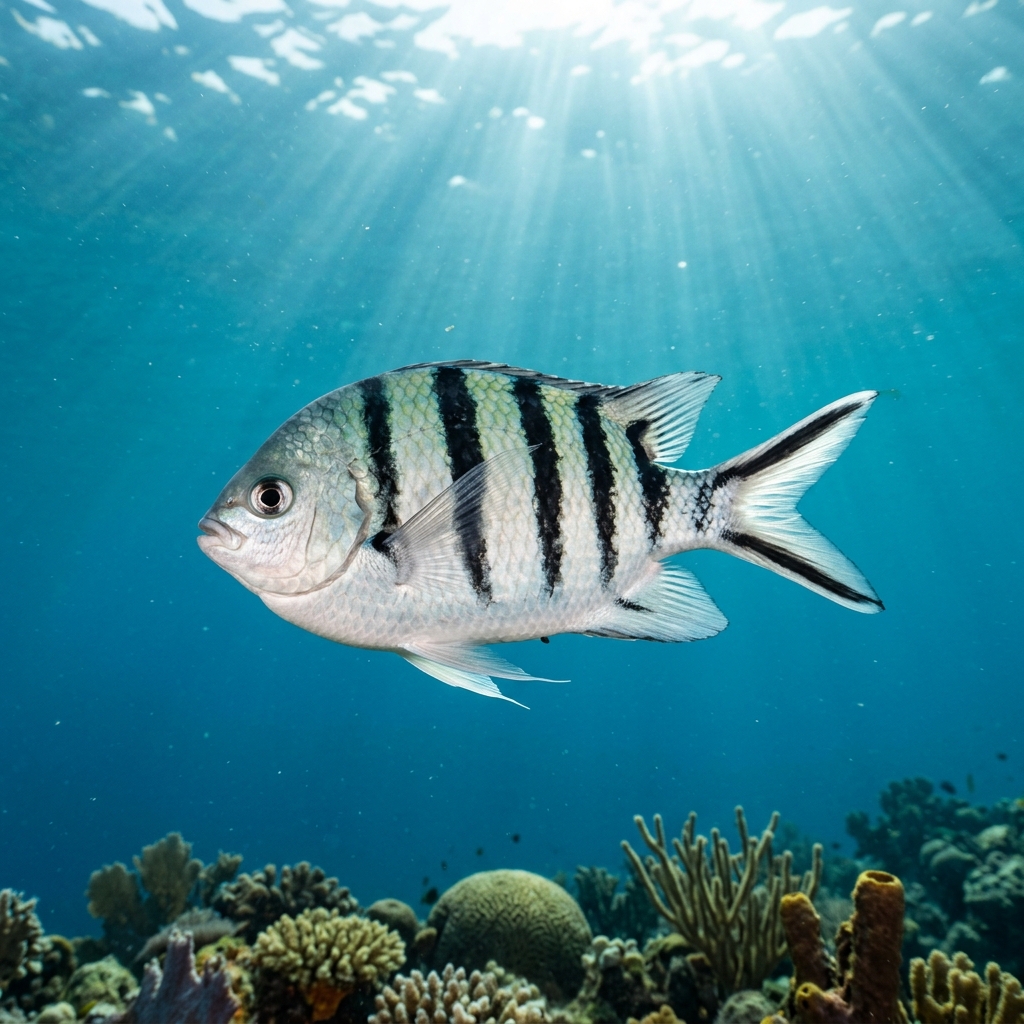
Reef neighbours a diver could mistake it for. Use the identification notes above to tell them apart.
Most consistently logged in the Mergui Archipelago of Myanmar and the Andaman Islands of India, with strong numbers also across Sumatra in Indonesia and the west coast of Peninsular Malaysia. Thailand's Khao Lak and Koh Lanta add further reliable sightings, and it turns up further west too, around Nosy Be in Madagascar and the Outer Islands of Seychelles.
Mapping where Red Saddleback Clownfish is logged…
Best chances are in the Mergui Archipelago of Myanmar and the Andaman Islands of India, with good numbers also off Sumatra in Indonesia and Peninsular Malaysia's west coast. It also shows up around Khao Lak and Koh Lanta in Thailand, and further out at Nosy Be, Madagascar and the Seychelles' Outer Islands.
There is no strong seasonal pattern in the sightings, and it lives on reefs holding a steady 28 to 30C, so it is realistically a year-round find rather than tied to one season.
Look for a deep orange-red body around 9 cm long with a single pale saddle-shaped patch behind the head and no vertical white bars on the sides. That plain, unbarred body is what separates it from many other anemonefish.
They reach around 9 cm, a typical size for a clownfish, so in the water they read as a small, compact reef fish hovering close to its anemone.
No. They are not dangerous, though they will dart towards a diver's mask or hand if you get too close to their anemone, more bluff than any real threat.
Site and sighting data is aggregated from diver logs, iNaturalist and GBIF. For taxonomy and conservation status:
Dascyllus
3,697 sites