Epinephelus guttatus
Spot Red Hind on reefs from Saint John to Sint Maarten, comfortable in 25-31C water and logged year-round on Caribbean dives.
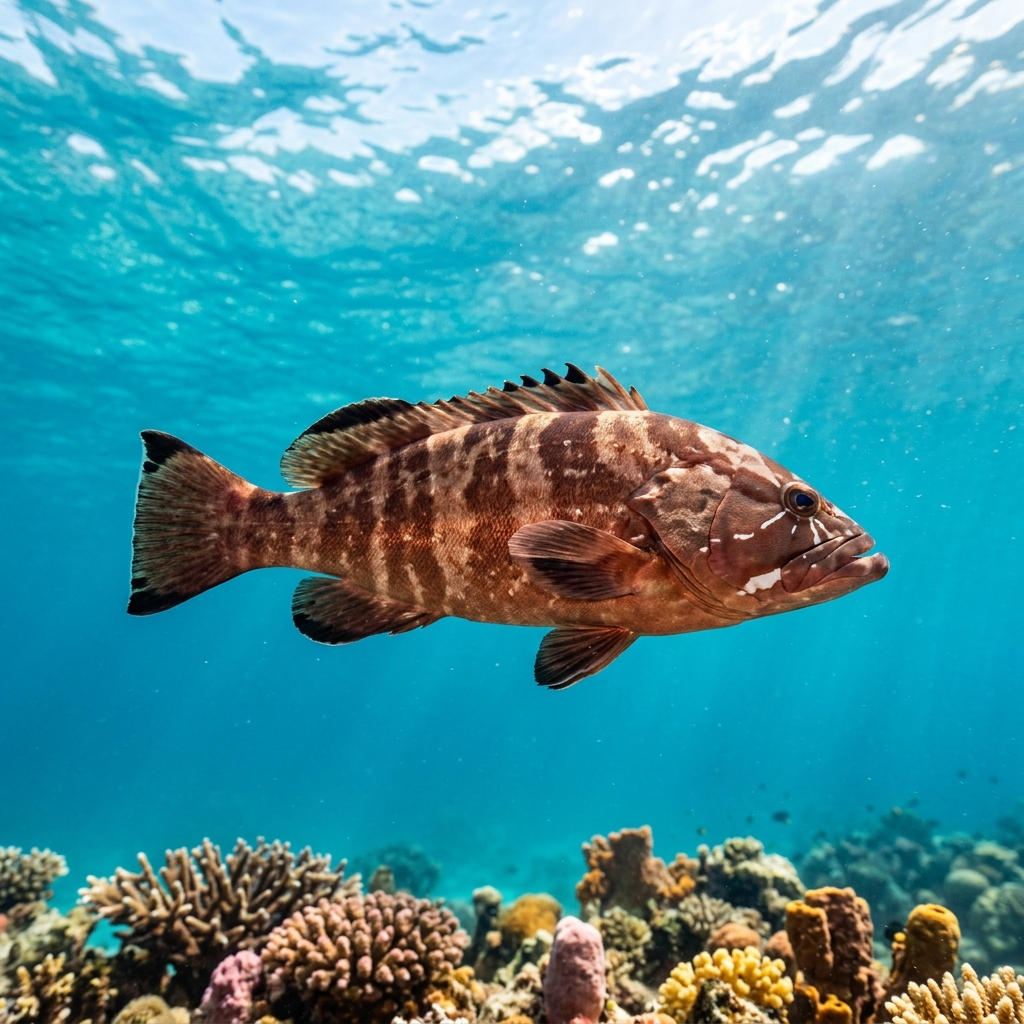
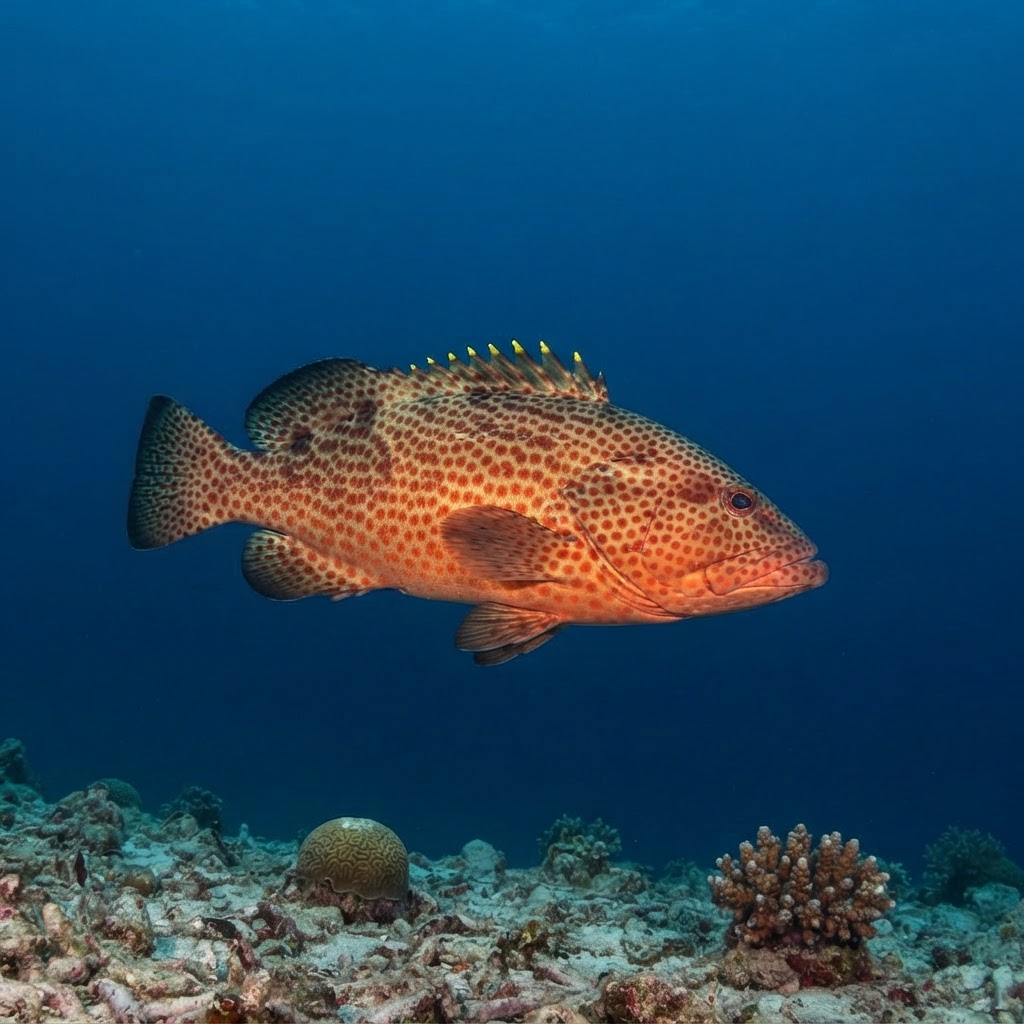
Look for a stocky, pale to reddish-brown grouper roughly 50 cm long, covered head to tail in dense reddish-brown spots that give it a dappled, almost polka-dot look. It sits low over the reef rather than swimming in open water, with a thick body and a slightly humped back typical of groupers. The spotting pattern is denser and more uniform than on most similarly shaped reef groupers, which is the main thing to key on.
Divers most often find it parked motionless near a ledge, crevice, or coral head, using the reef structure as cover while it watches for passing prey rather than actively hunting in the open. It is generally unbothered by divers and will hold its position or make a slow retreat into a hole rather than bolt, which makes for easy, close observation if you approach slowly. Most sightings are on daytime reef dives at typical recreational depths rather than deep drop-offs.
Red hind gather in large spawning aggregations at predictable sites and times tied to the lunar cycle, a behaviour that made them historically easy to overfish and is now the focus of seasonal closures in several Caribbean territories.
There is no strong seasonal pattern in the sighting data, and with water in its range sitting between roughly 25 and 31C year-round, it stays on the reef in all seasons rather than migrating in and out.
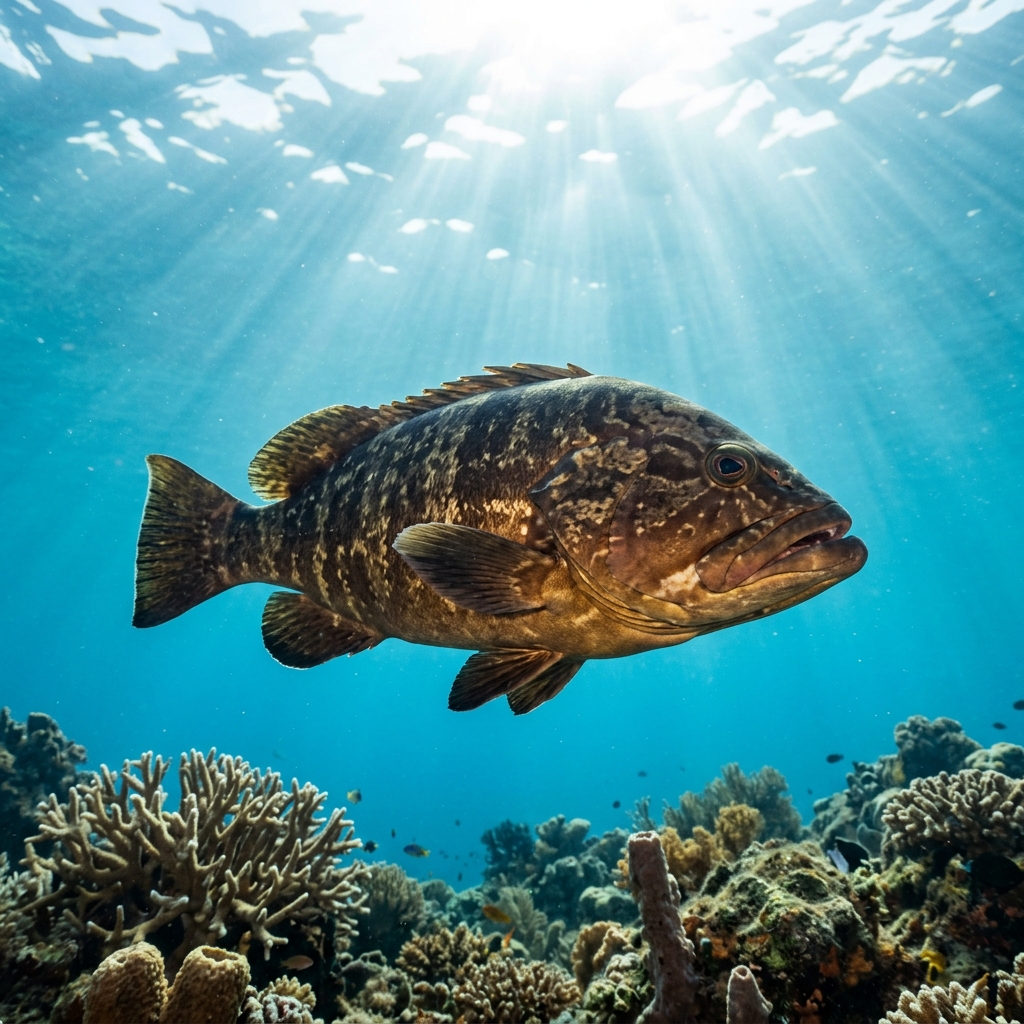
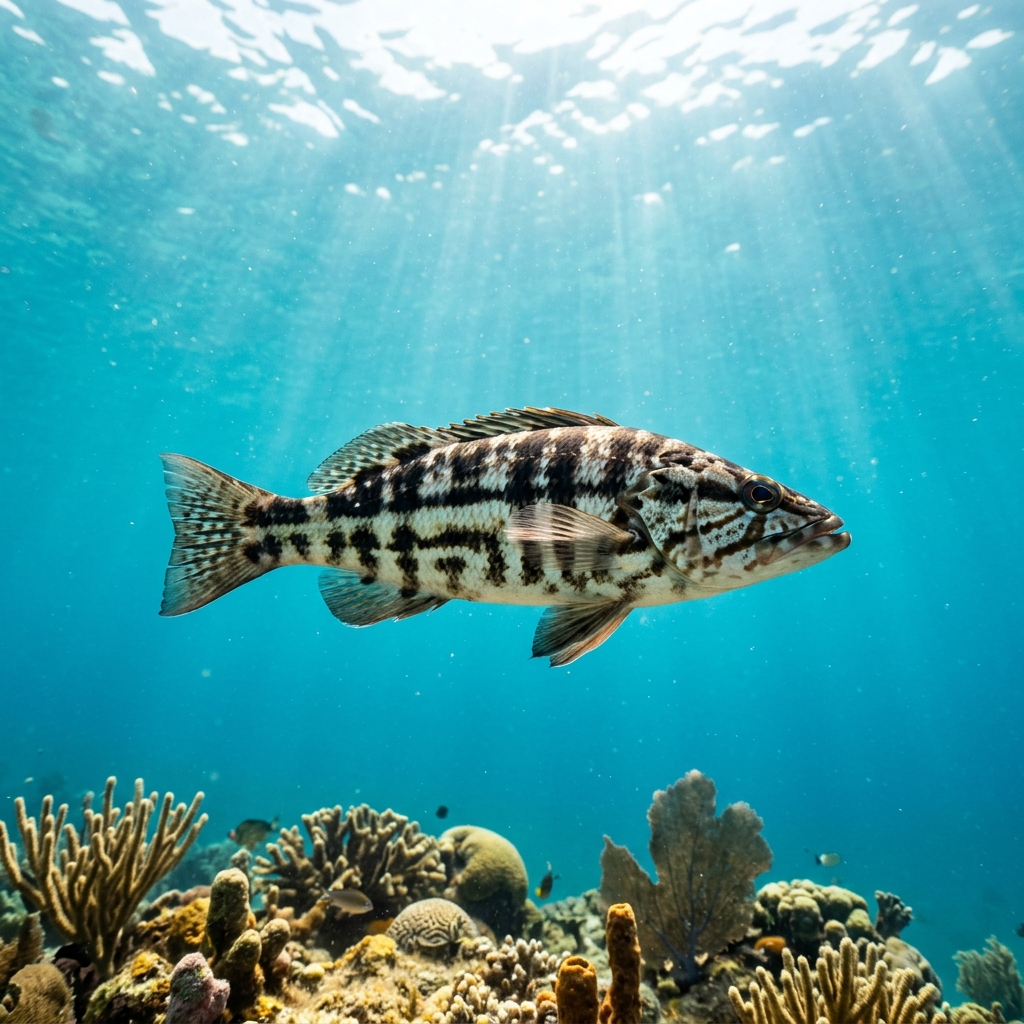
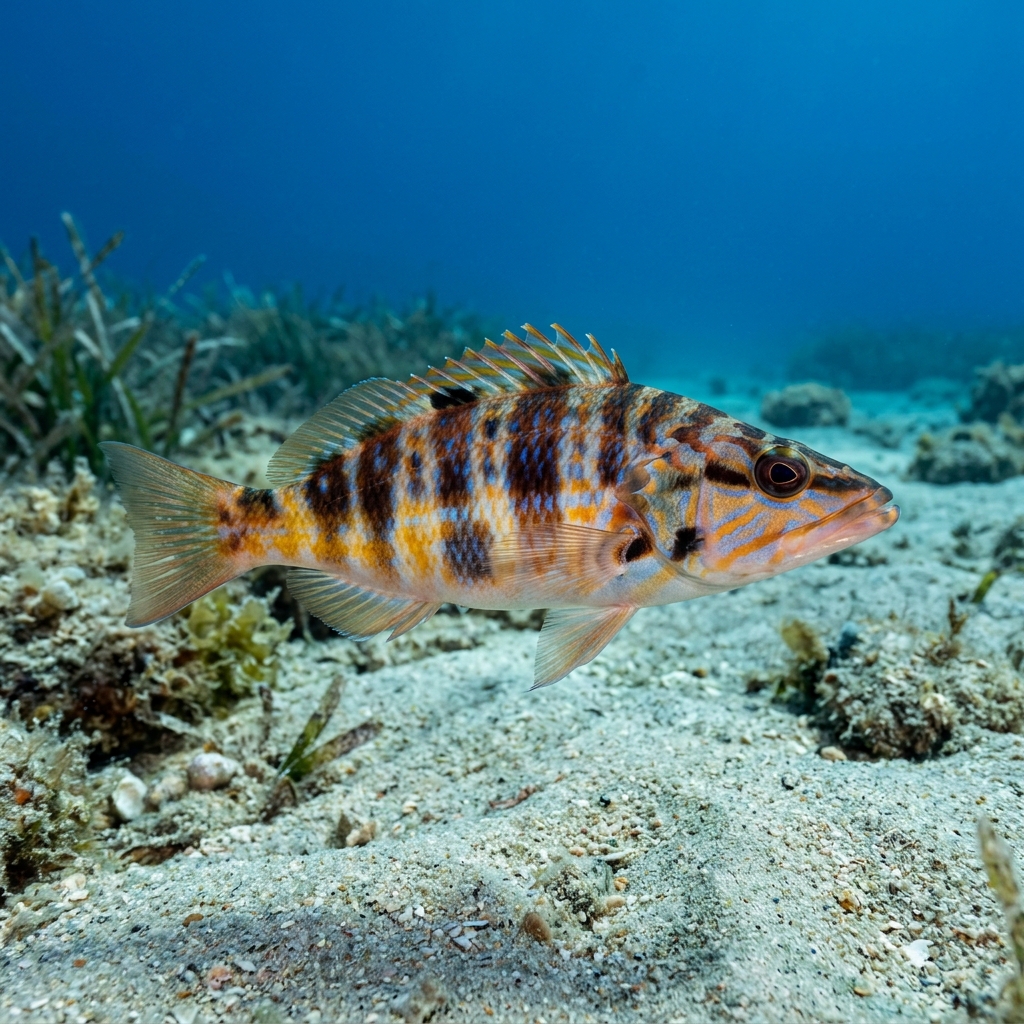
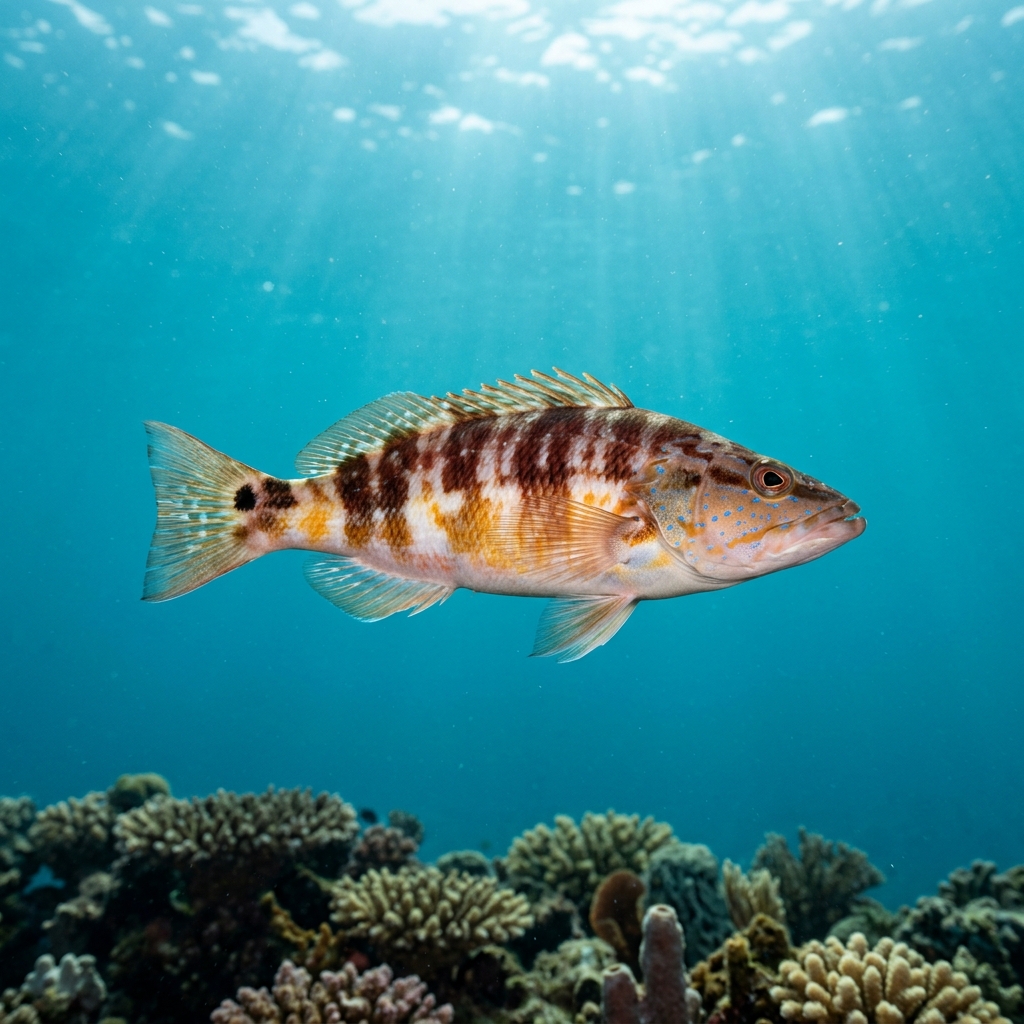
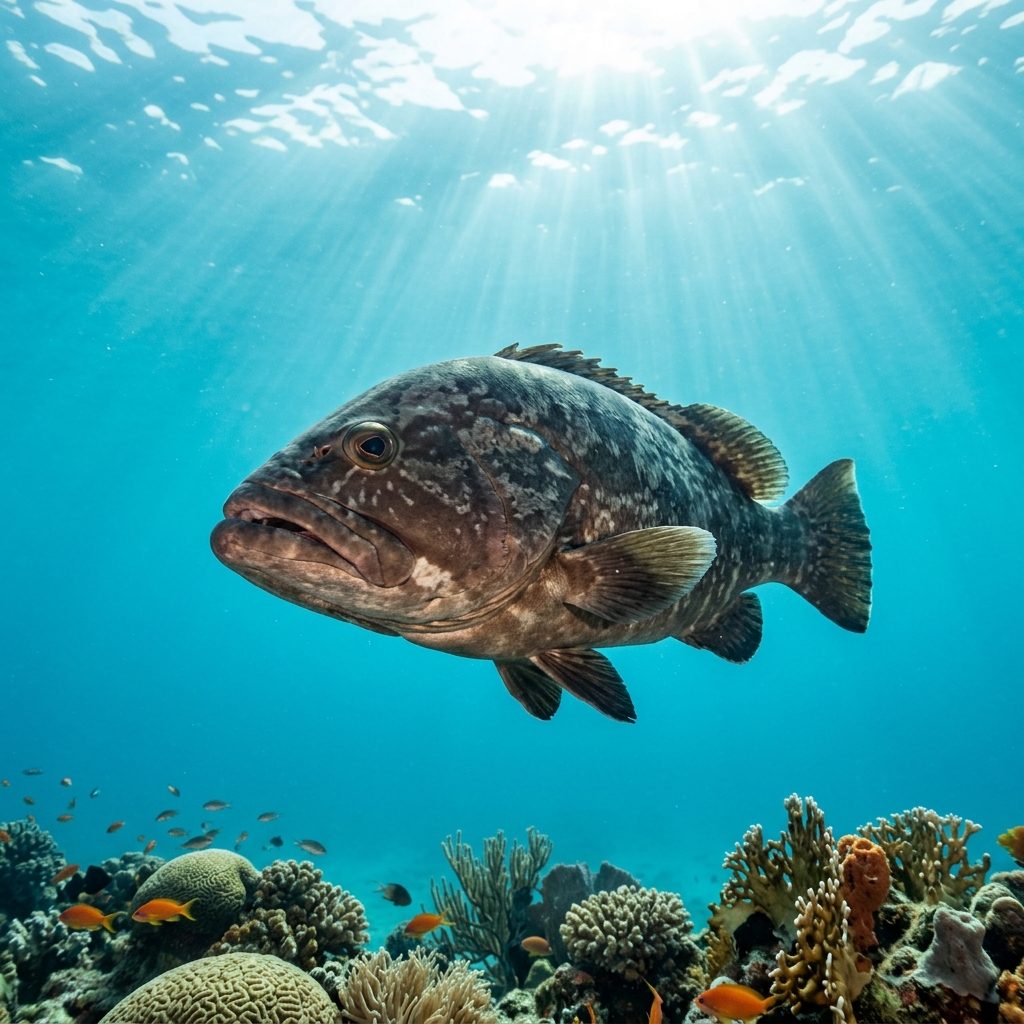
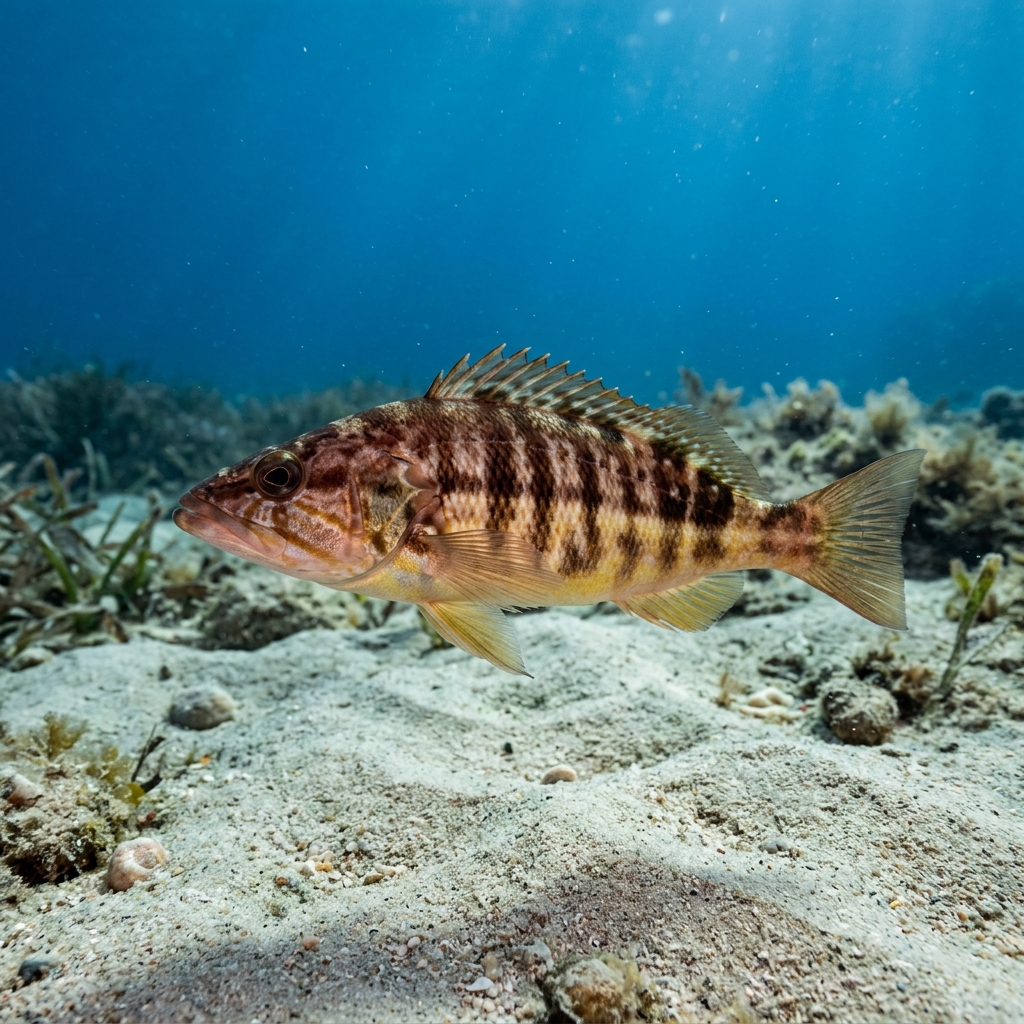
Reef neighbours a diver could mistake it for. Use the identification notes above to tell them apart.
This is a reliable reef sighting across the Eastern Caribbean, with the strongest logs coming from Saint John and Saint Thomas in the US Virgin Islands, Sint Maarten, and Tortola and the Southern Islands in the British Virgin Islands. It also turns up consistently in Martinique, Guadeloupe, Saba, and Sint Eustatius, making almost any healthy reef dive in the Lesser Antilles a decent chance for a sighting.
Mapping where Red Hind is logged…
The best odds are in the US Virgin Islands, particularly around Saint John and Saint Thomas, plus Sint Maarten, the British Virgin Islands, Martinique, Guadeloupe, Saba, and Sint Eustatius. It is an uncommon but reliable find on healthy reef dives across the Eastern Caribbean.
There is no strong seasonal pattern, so it can be seen year-round on Caribbean reefs. It favours warm water between about 25 and 31C, which holds steady across the region for most of the year.
Look for a stocky reef grouper around 50 cm long with a reddish-brown body covered densely in small dark spots. It typically sits still near reef structure rather than swimming in open water.
They typically reach around 53 cm in length, making them a mid-sized member of the grouper family compared to giants like the Atlantic Goliath Grouper.
No, they are not considered dangerous to divers. They tend to hold still or retreat into reef cover rather than react aggressively when approached.
They form large spawning aggregations at specific reef sites tied to the lunar cycle, gathering in predictable numbers and locations that fisheries managers now track closely with seasonal protections.
Site and sighting data is aggregated from diver logs, iNaturalist and GBIF. For taxonomy and conservation status:
Blacktip Grouper
2,726 sites