Caesio cuning
Streamlined blue-and-gold fusiliers streaming over reefs in Queensland and Sabah, comfortable in warm water year-round.
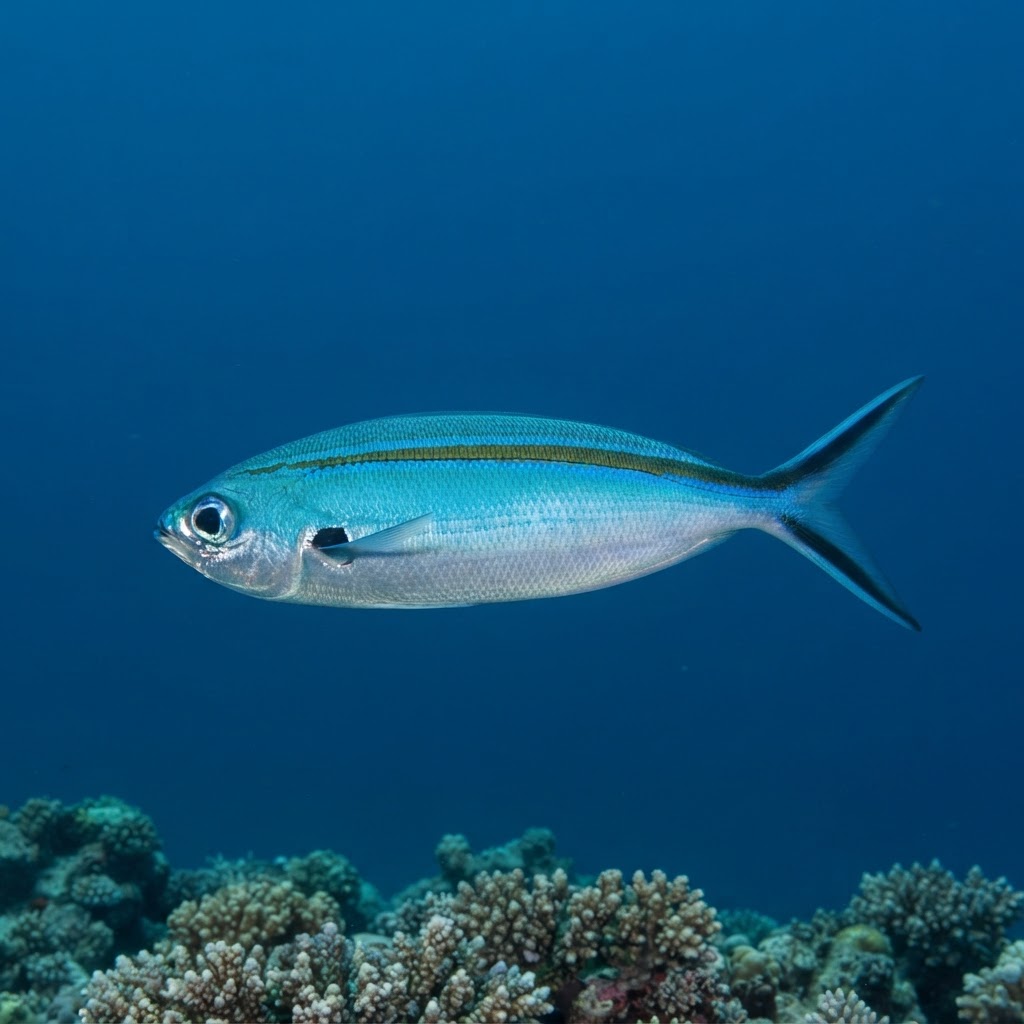
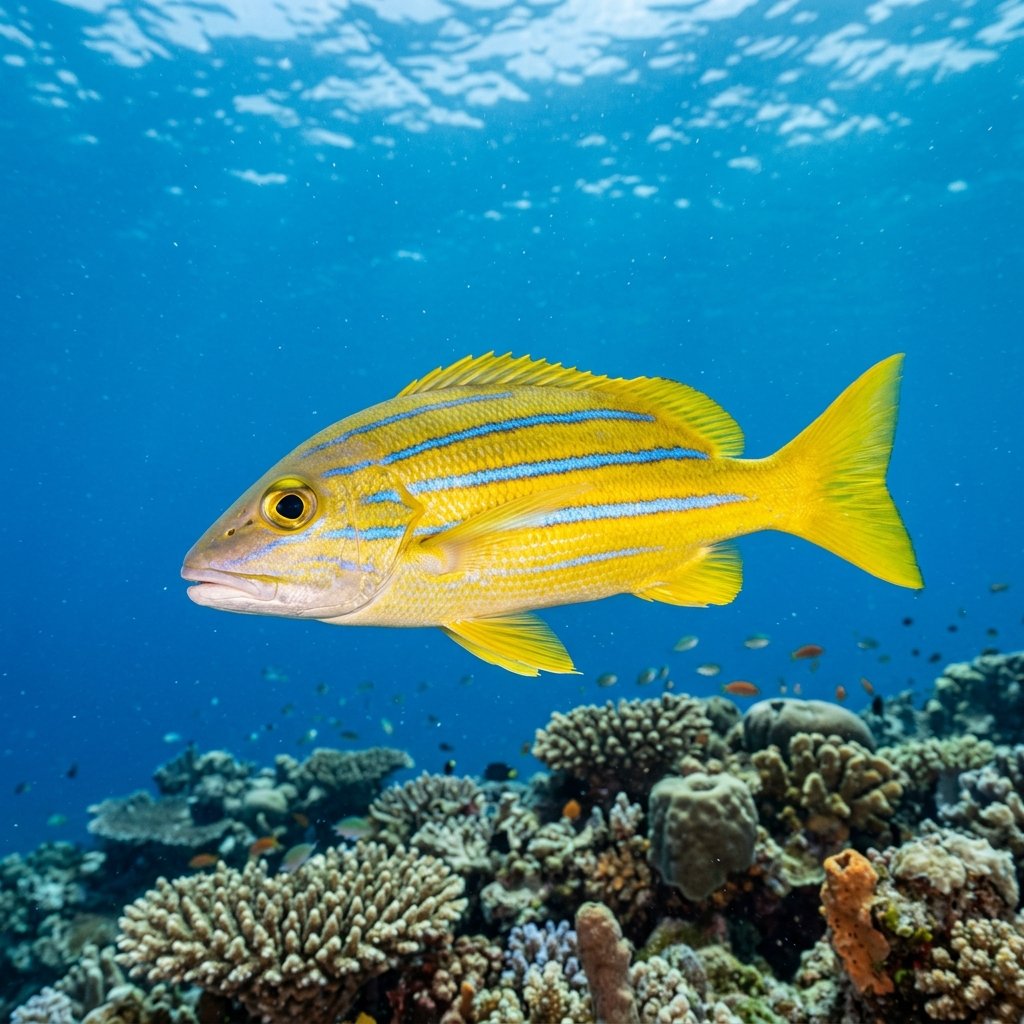
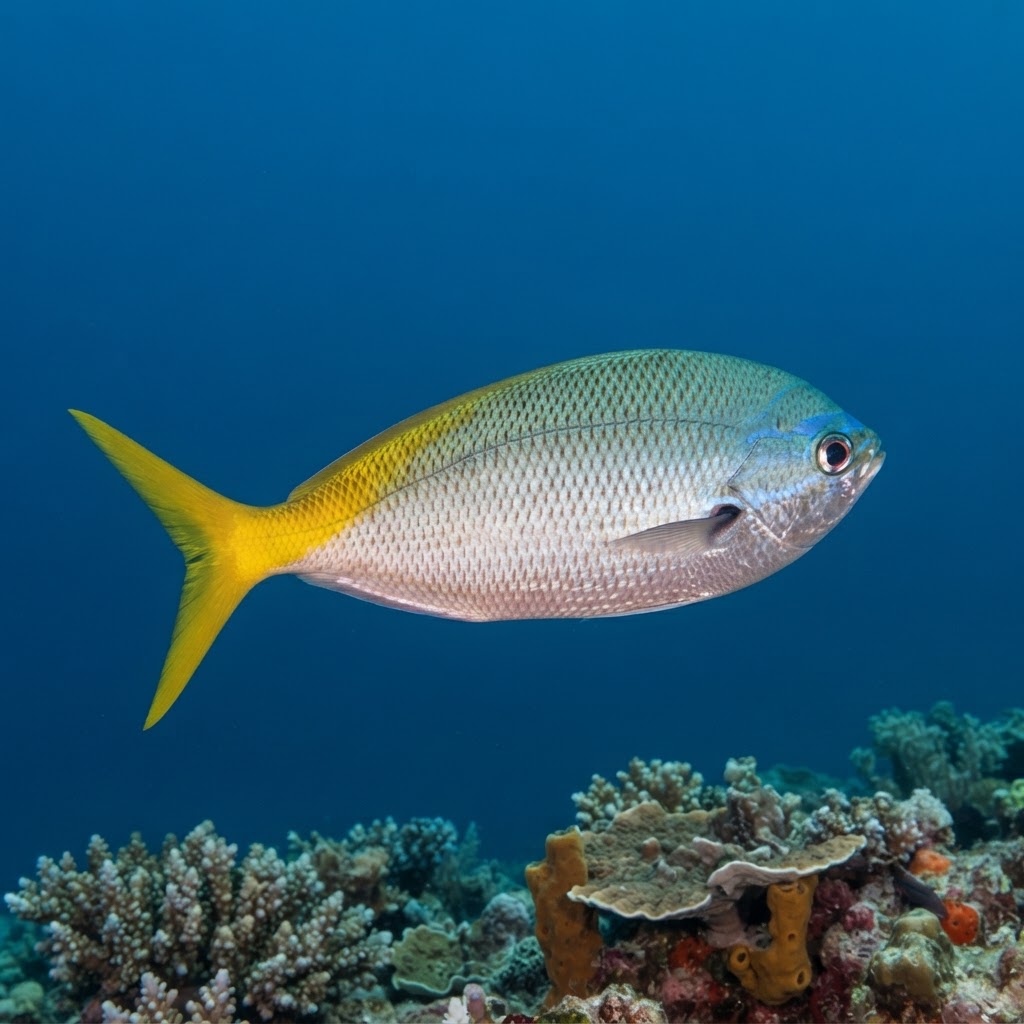
Torpedo-shaped and built for open water, this fusilier shows a blue-grey back that fades into a pale to reddish belly, with a size in the water usually around 30 to 42 cm. Look for the yellowish tail and the way the whole school moves as one shimmering blue-and-silver mass over the reef edge. There is no strong colour split between males and females that divers can use for ID.
Expect to find it in loose to dense schools hanging over reef slopes and drop-offs, often mid-water where they pick plankton out of the current. They pay divers little attention and will let a slow approach get fairly close before peeling off as a group. Mixed schooling with other fusiliers is common, so a wall of blue over the reef may include more than one species.
Fusiliers school partly as a defence against the open-water predators that hunt them, so the tighter and more nervous the school looks, the more likely a jack or tuna is working the edges nearby.
No clear seasonal pattern shows up in sighting data, and with a comfortable range of 26.1 to 29.1 C this is a year-round reef fish on tropical dive sites. Plan around good visibility and calm currents at your chosen site rather than a particular month.
Reef neighbours a diver could mistake it for. Use the identification notes above to tell them apart.
Most reliably logged in Queensland, Australia, and across Sabah and Peninsular Malaysia's east coast, with strong numbers also coming out of Raja Ampat in Indonesia and around Koror and Malakal in Palau. Smaller but consistent sightings turn up in Sulawesi, Palawan in the Philippines, and India, so it is a widespread reef fish across the Indo-Pacific rather than a one-country specialty.
Mapping where Red-bellied Fusilier is logged…
Queensland in Australia and Sabah and the east coast of Peninsular Malaysia are the most consistent places to find them, with good numbers also in Raja Ampat and around Palau's Koror and Malakal region.
There is no strong season in the sighting data, and the species sits comfortably in 26 to 29 C water, so it is seen on tropical reefs throughout the year.
Look for a slim, fast-moving fish with a blue-grey back, a pale to reddish belly, and a yellowish tail, usually seen in schools drifting over reef edges rather than alone.
They typically reach around 42 cm, making them a mid-sized reef fish that is easiest to size up when swimming past in a school for comparison.
No, they are harmless plankton feeders that school in open water and show no aggressive or defensive behaviour towards divers.
Site and sighting data is aggregated from diver logs, iNaturalist and GBIF. For taxonomy and conservation status:
Bluestriped Snapper
2,054 sites