Radianthus magnifica
Spot the Magnificent Giant Anemone across the Maldives, Malaysia and Thailand in warm 27-29 °C waters. Best chances Jun, Jan in the northern tropics.
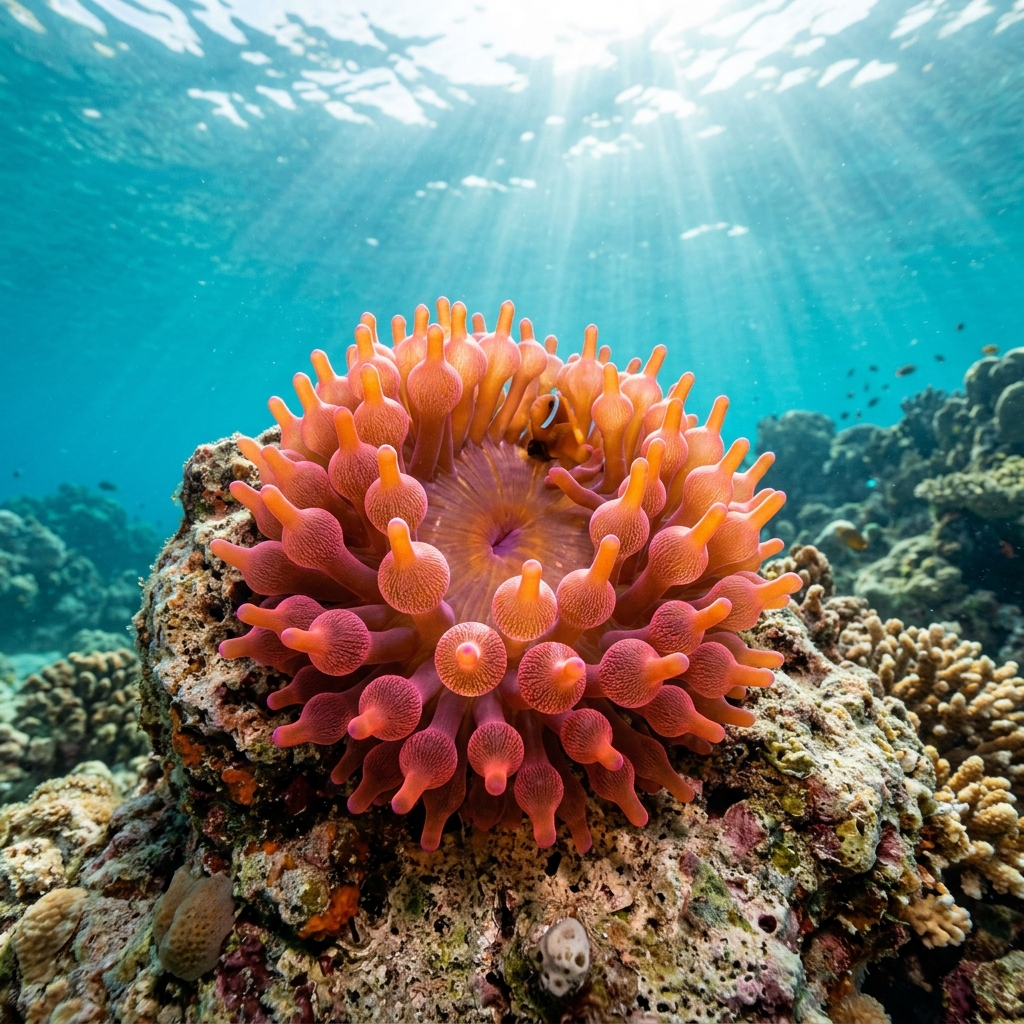
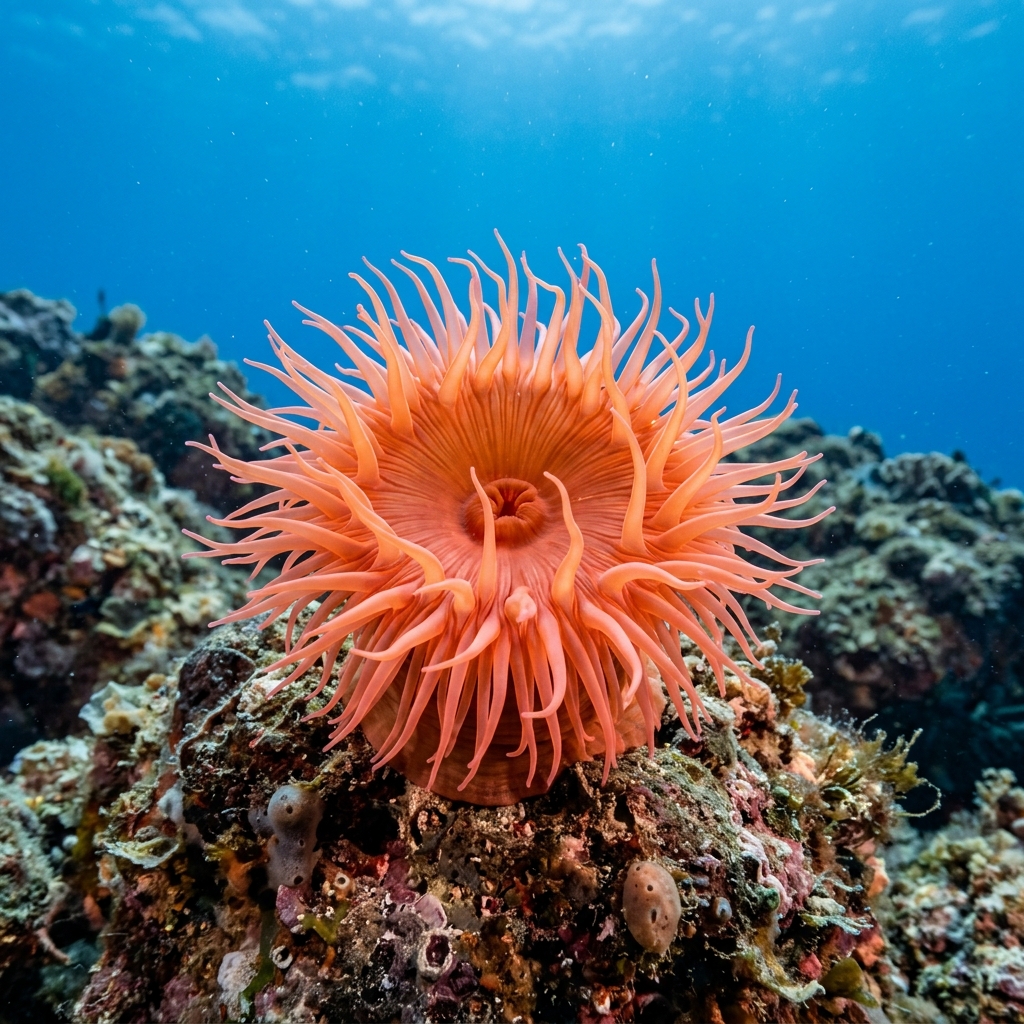
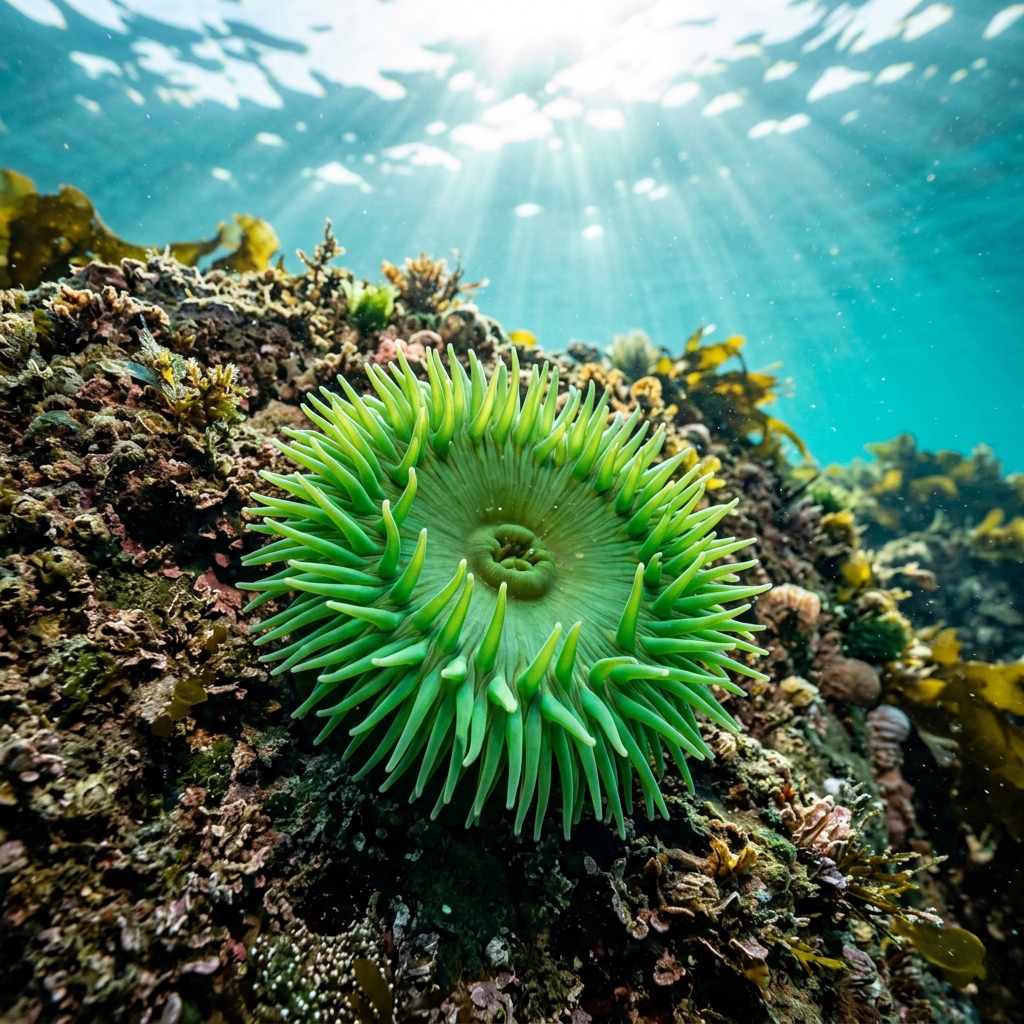
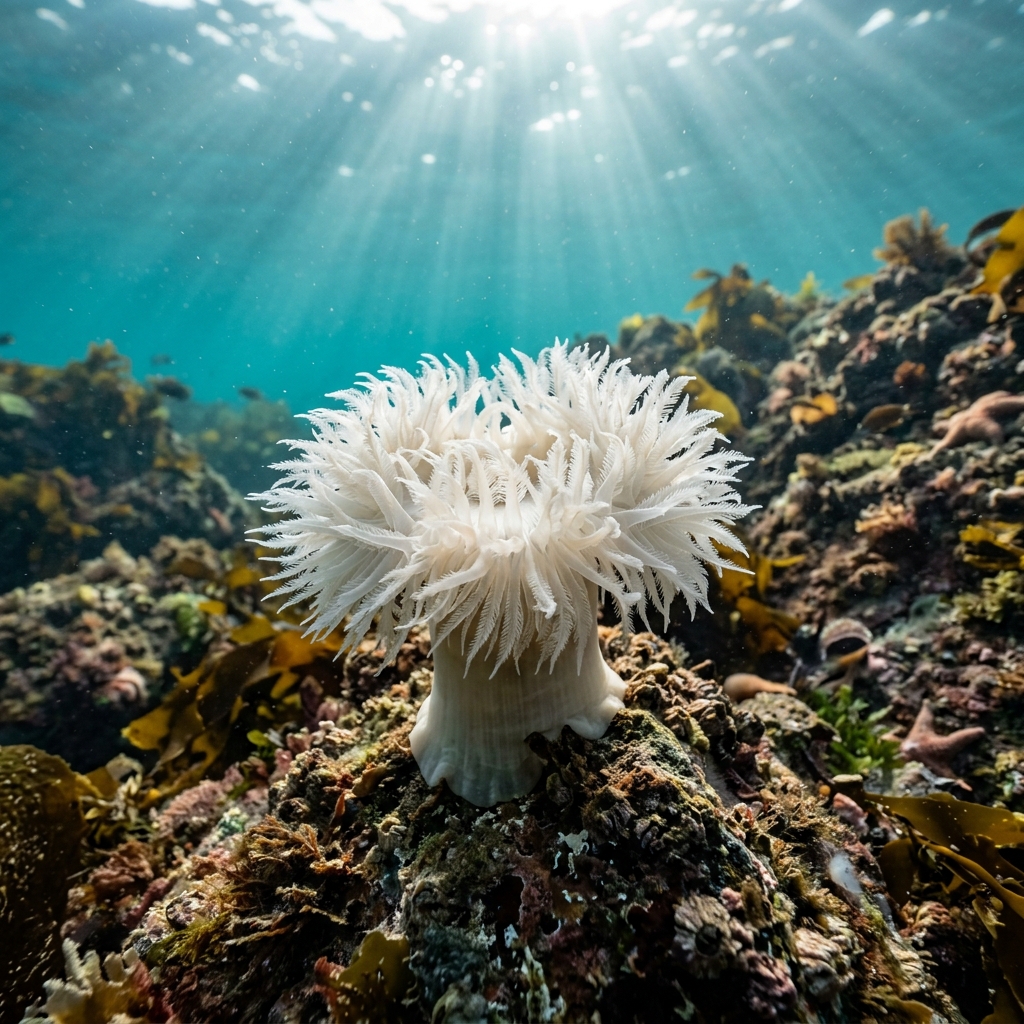
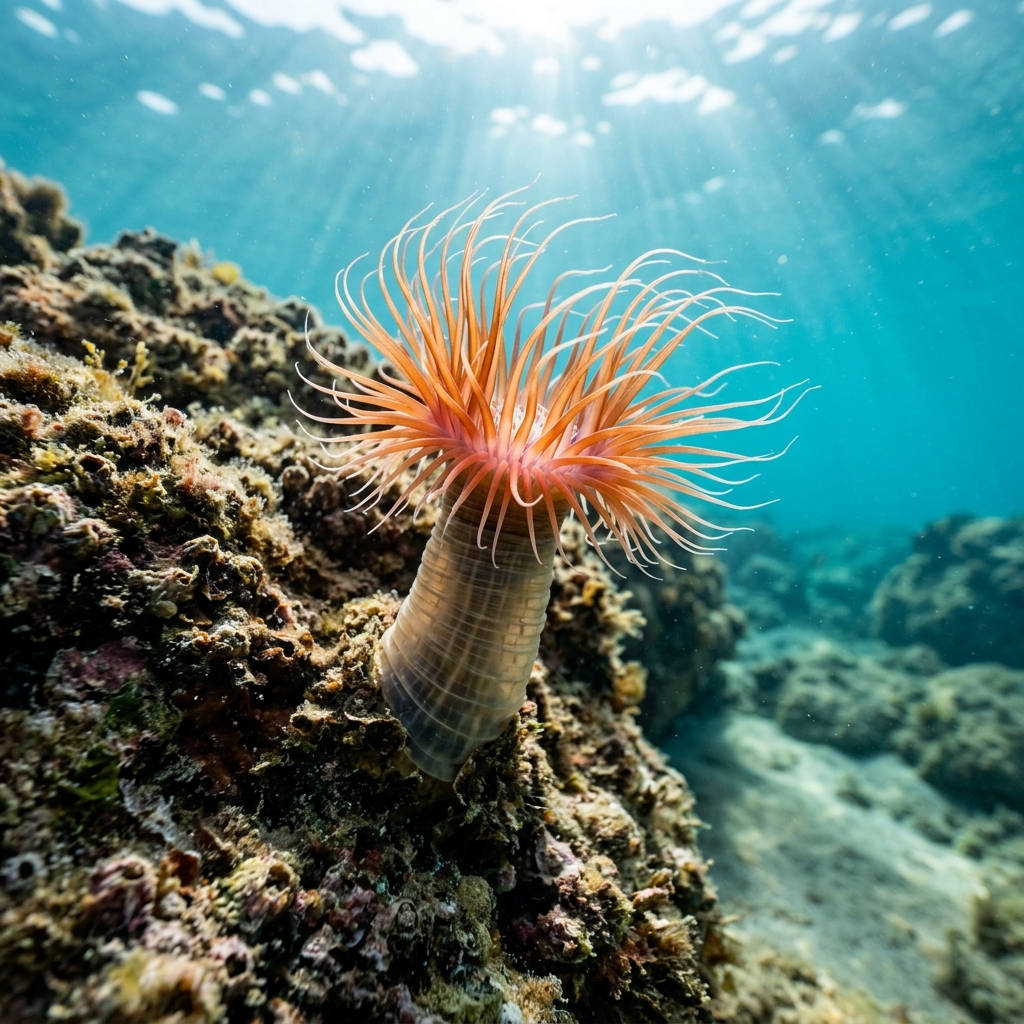
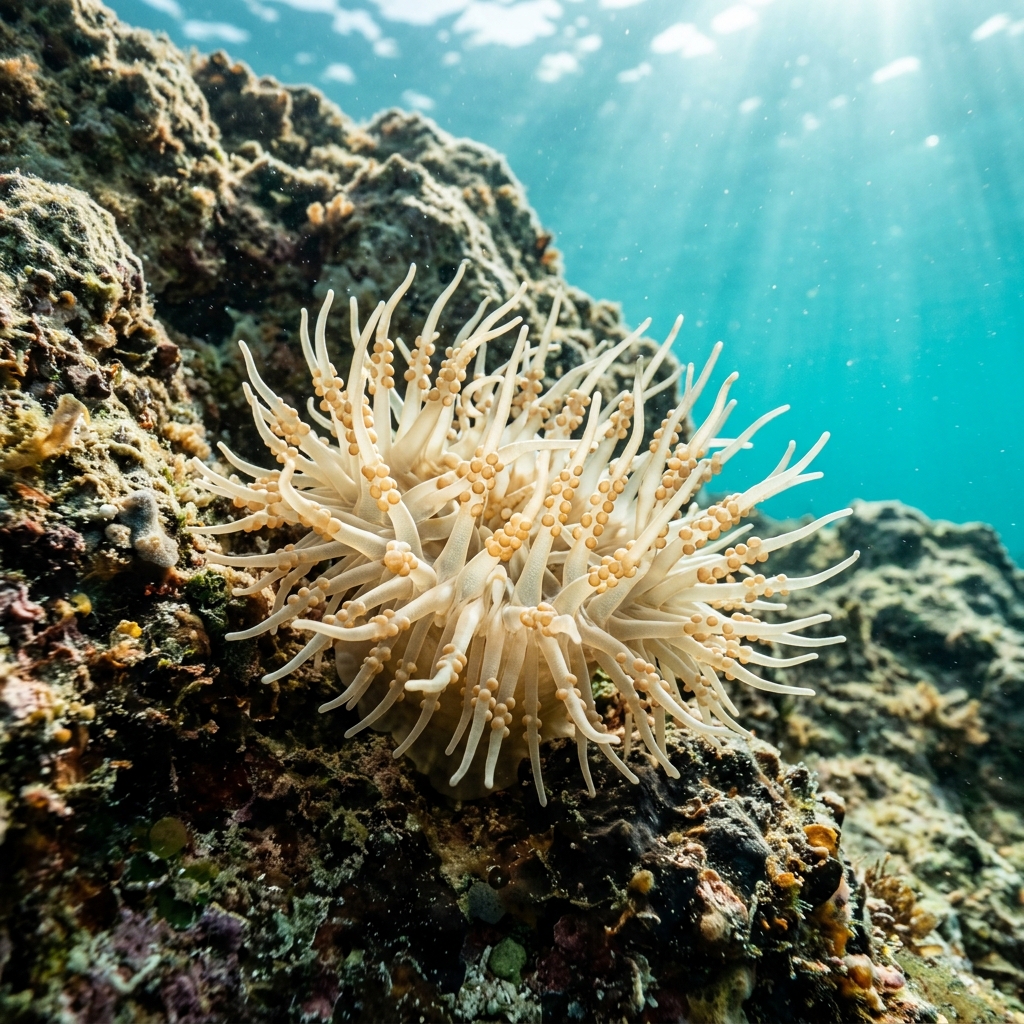
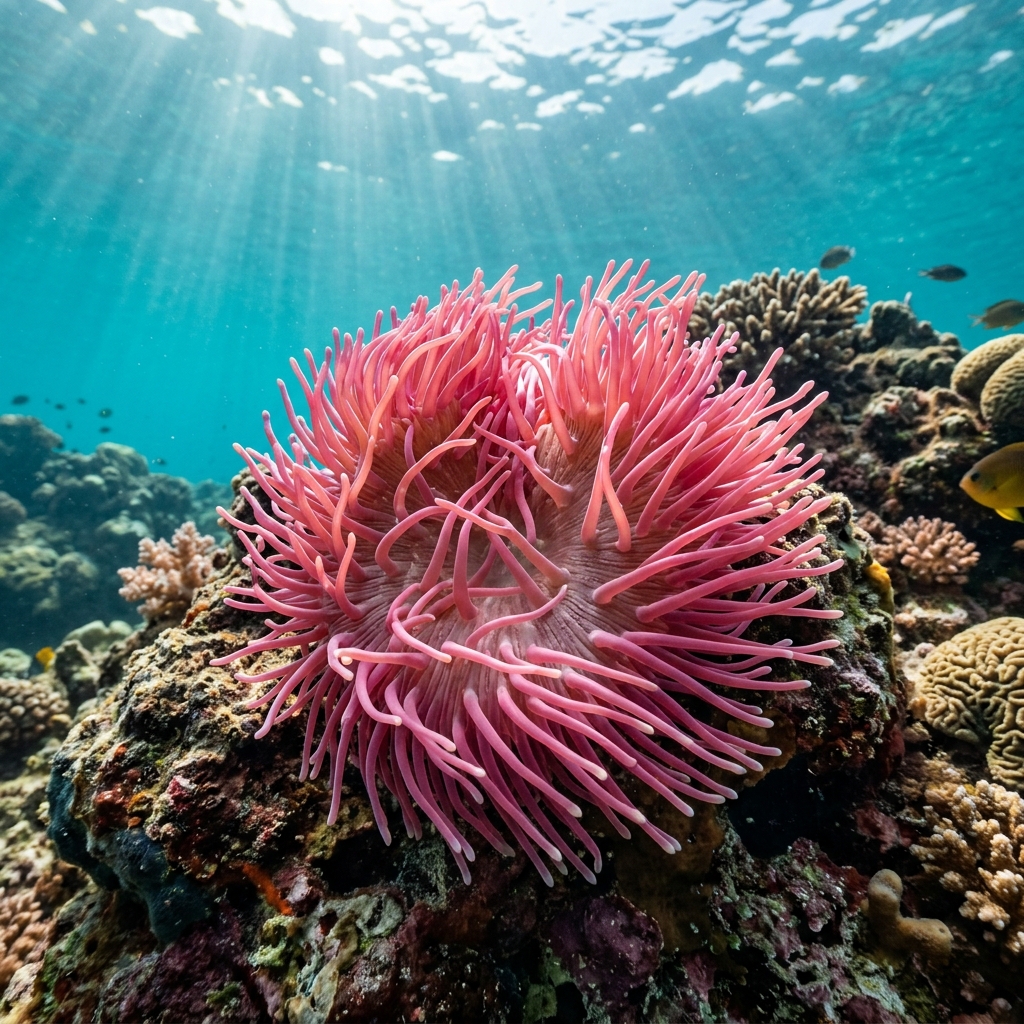
Look for a large column-bodied anemone with densely packed, elongated tentacles that can stretch across half a metre or more of reef. Tentacle colour varies from pale beige and brown to rich purple or greenish hues, often with contrasting tips that help it stand out from smaller anemone species. Its sheer scale is the most useful underwater cue: the disc and tentacle spread together make it the largest anemone most divers will encounter on an Indo-Pacific reef. Clownfish sheltering among the tentacles are a reliable pointer.
Magnificent giant anemones are sedentary animals, so when you spot one it is anchored to the reef in shallow to mid-water, tentacles fully extended and sweeping the current for planktonic food. They contract rapidly when disturbed, so a slow, non-intrusive approach is rewarded with a fully open display. The resident clownfish are almost always in motion around them, darting in and out of the tentacles, which makes the anemone easier to locate from a distance.
Clownfish (anemonefishes) have a mucus coating that prevents the anemone's stinging cells from firing, creating one of the reef's most studied symbiotic relationships: the fish gain shelter and the anemone may benefit from the fish chasing away butterflyfish that would otherwise nip its tentacles.
In the Northern Hemisphere, sightings concentrate from June through January, so the second half of the year is the most productive window across the Maldives, Malaysia, Thailand, and the Philippines. Southern Hemisphere records are limited but point to July through September for regions such as Mauritius and Tanzania.
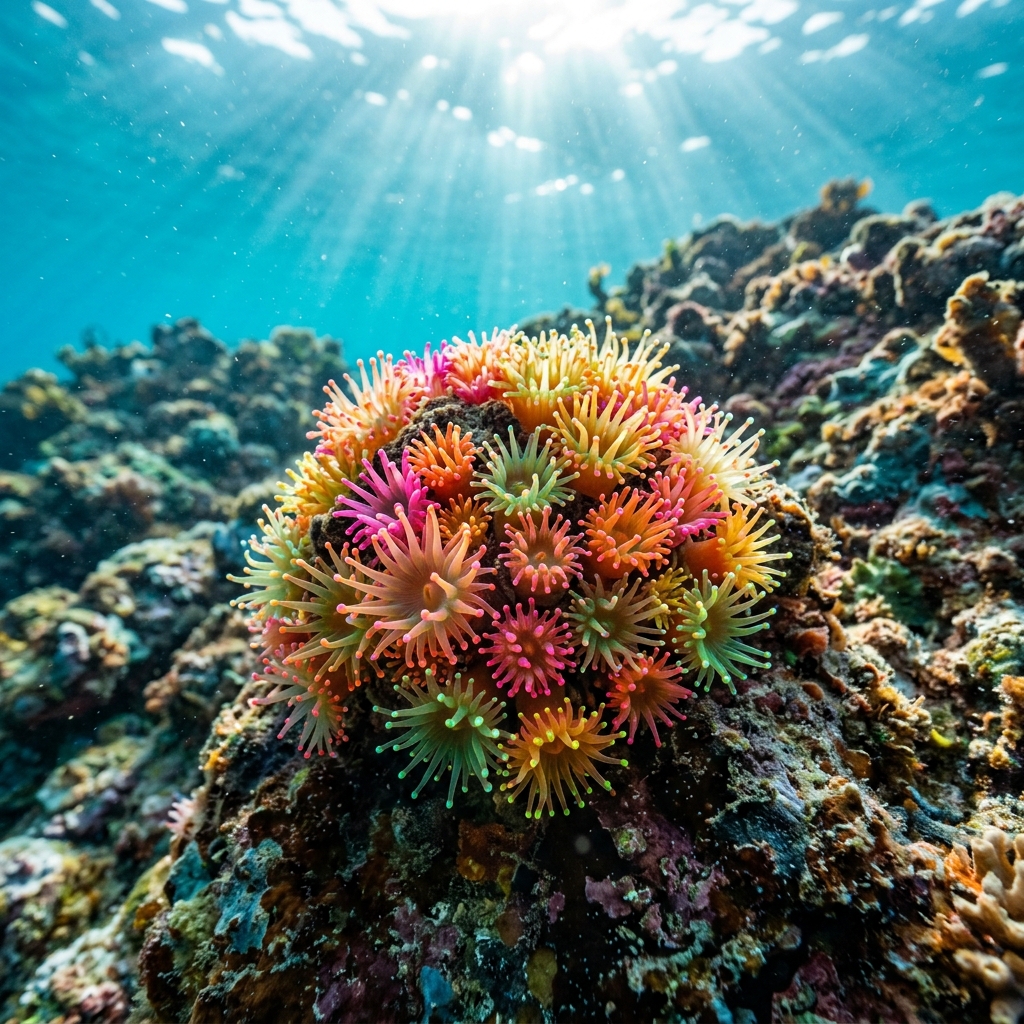
Reef neighbours a diver could mistake it for. Use the identification notes above to tell them apart.
Most commonly logged in the Maldives, particularly around the Male and Ari Atolls, making it by far the strongest single stronghold in the data. Malaysia's Perhentian and Redang islands and Pulau Tioman are close behind, followed by strong populations in Thailand's Phuket, Phi Phi, and Gulf of Thailand sites, and the Visayas in the Philippines. French Polynesia, Tanzania's Zanzibar coast, and Indonesia round out the range for divers heading further afield.
Mapping where Magnificent Giant Anemone is logged…
The Maldives' Male and Ari Atolls lead the global sighting record by a wide margin, followed closely by Malaysia's Perhentian and Redang islands and Pulau Tioman. Thailand, the Philippines' Visayas, French Polynesia, Zanzibar, and Indonesia all have well-documented populations too.
For the Maldives, Malaysia, Thailand, and the Philippines, June through January is when sightings peak most reliably. If you are diving in Tanzania or Mauritius, the Southern Hemisphere data points to July through September as the stronger window.
Size is the key: it is noticeably larger than almost any other anemone on an Indo-Pacific reef, with long tentacles that can cover a wide area. Tentacle colour ranges from pale tan to purple-brown with contrasting tips. A group of clownfish living among the tentacles is a near-certain giveaway.
As the name suggests, this is one of the largest anemone species on Indo-Pacific reefs. Fully expanded individuals can spread their tentacle disc to well over half a metre in diameter, and the column base is broad enough to anchor firmly into reef crevices. Exact maximum size varies with conditions, but nothing about it looks small in the water.
Clownfish are immune to the anemone's stinging cells thanks to a protective mucus layer on their skin. They gain a safe refuge from predators, while the anemone may benefit from the fish's waste as nutrients and from the fish defending it against species that graze on its tentacles. It is one of the reef's best-known examples of mutualistic symbiosis.
Site and sighting data is aggregated from diver logs, iNaturalist and GBIF. For taxonomy and conservation status:
Plumose Anemone
2,032 sites