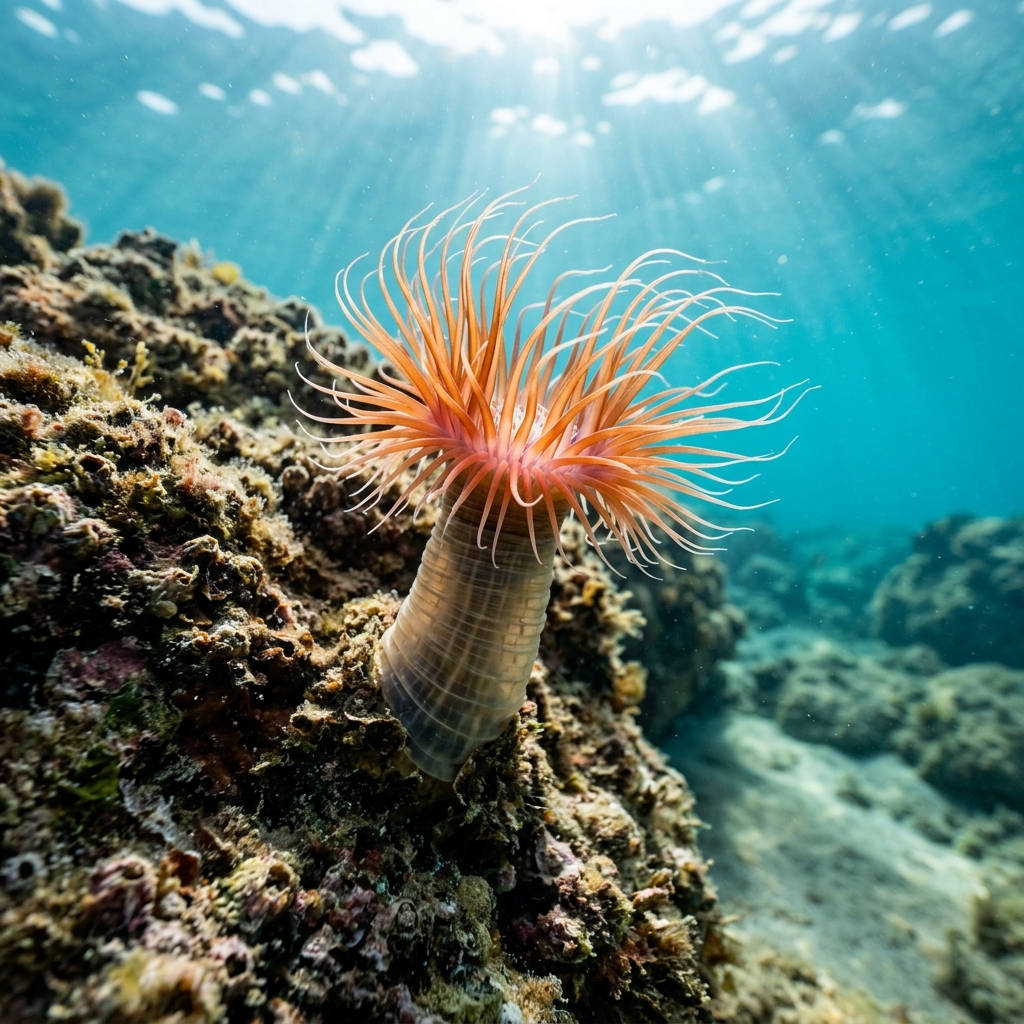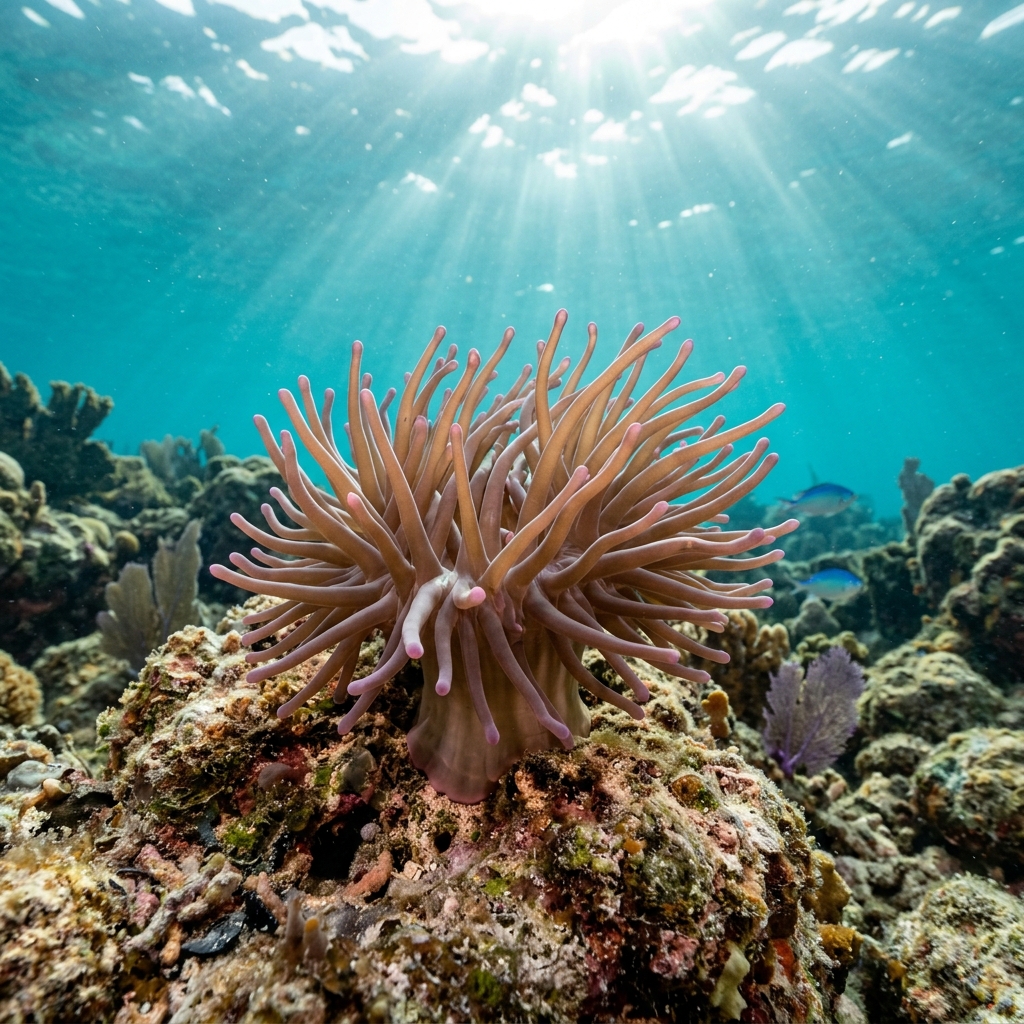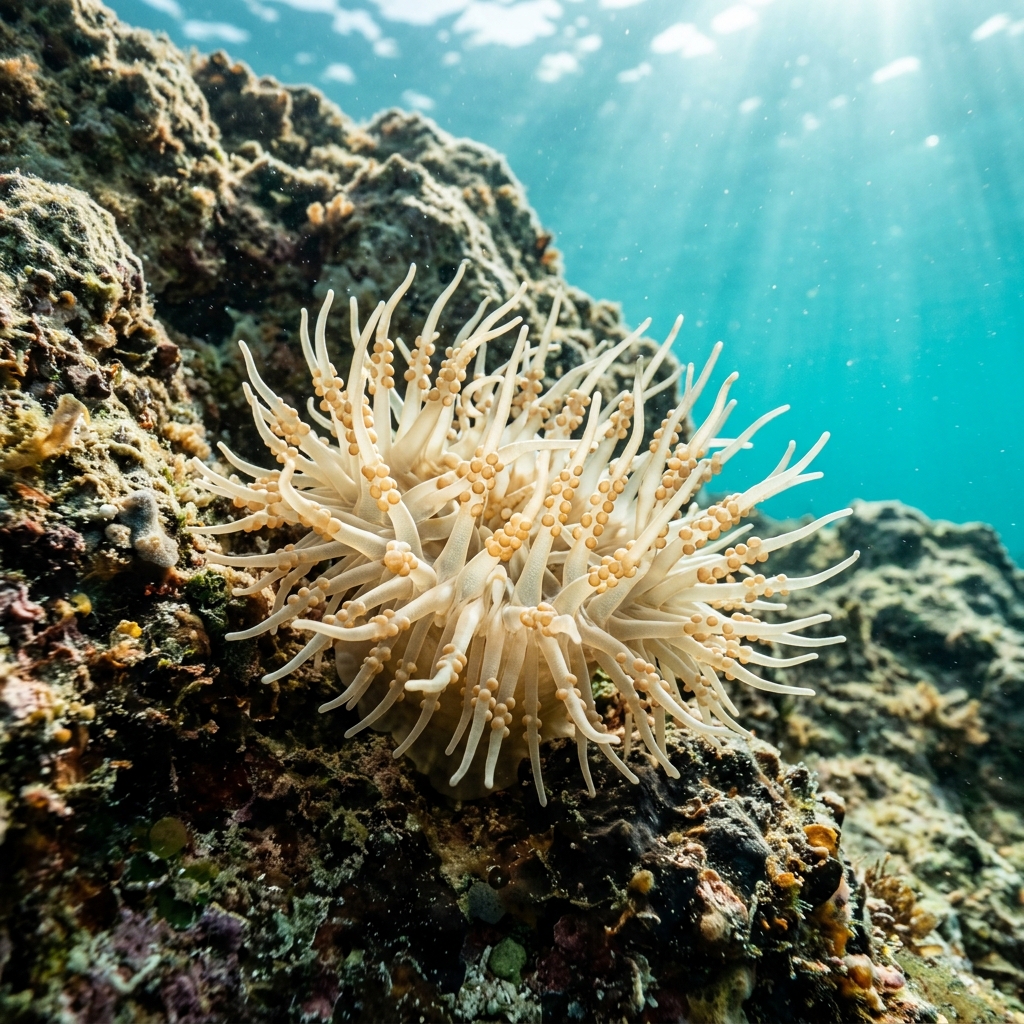
Alicia spp.
Uncommon but rewarding: Mediterranean night divers spot Berried Anemone tucked into crevices from Sicily to the Saronic Gulf.
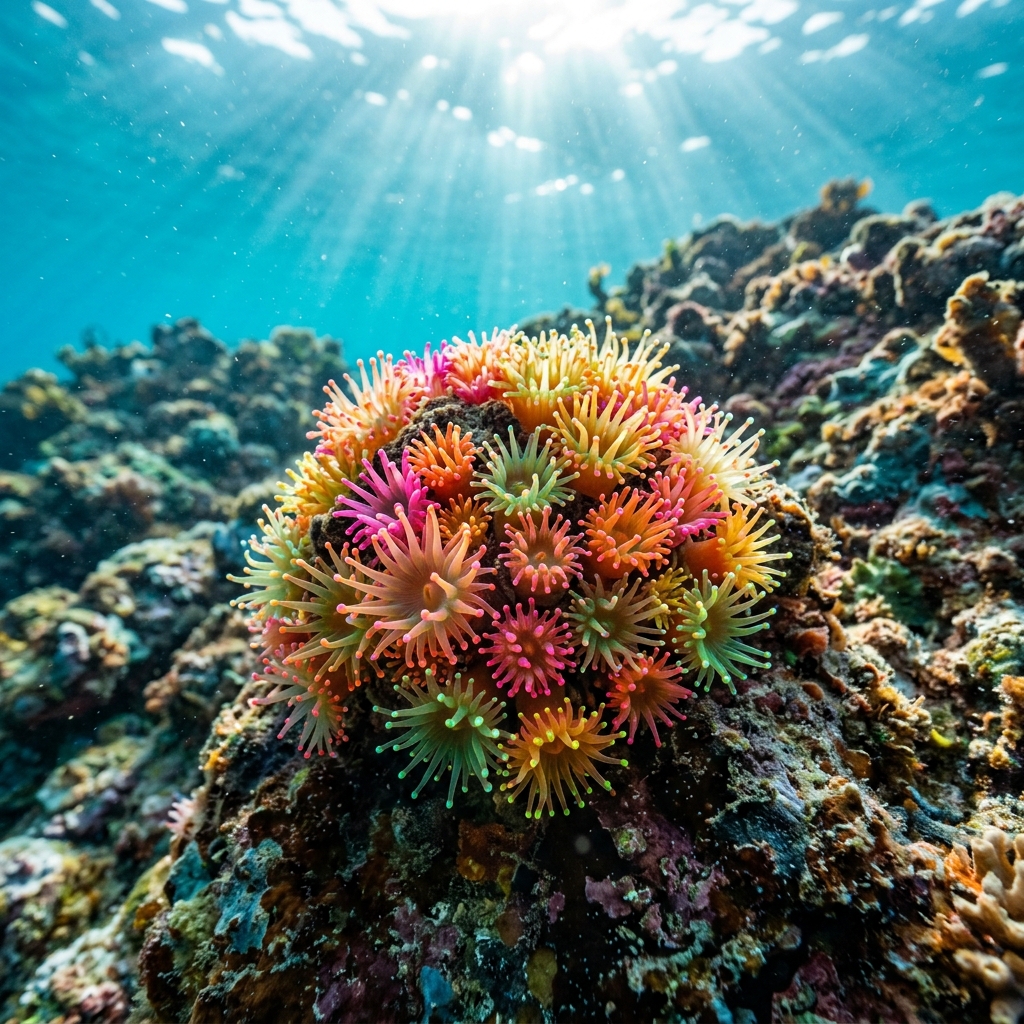
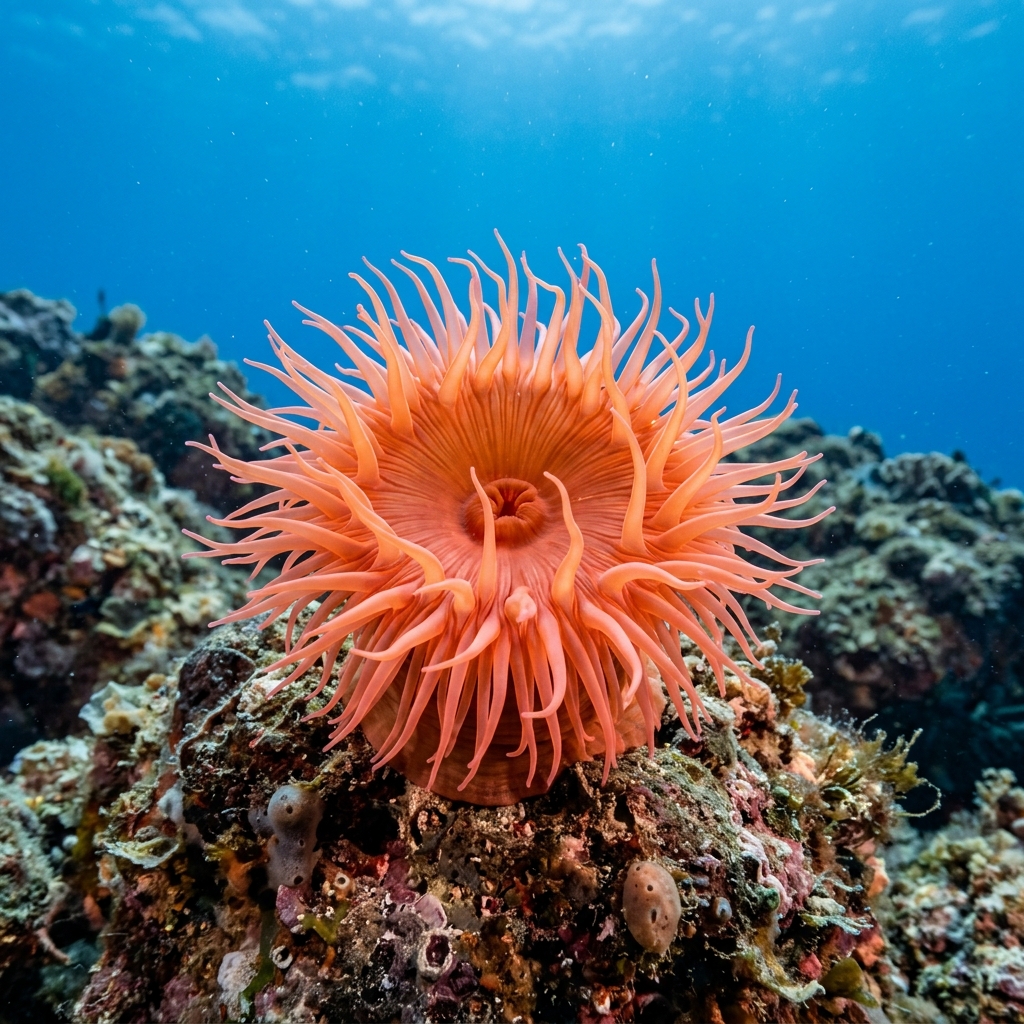
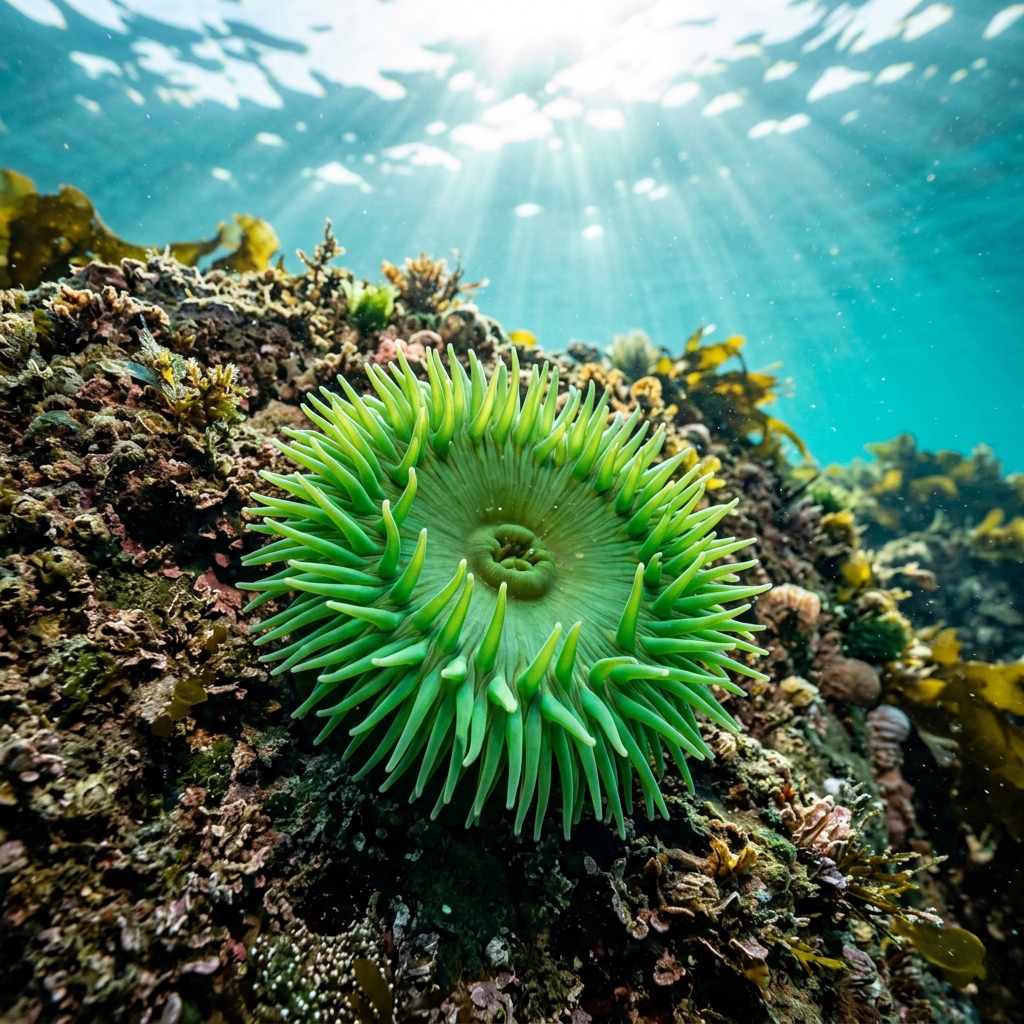
Look for a cluster of thick, warty tentacles covered in small round vesicles, giving the animal its 'berried' look rather than the smooth or feathery tentacles of most anemones. Body colour ranges from dull brown to olive or purplish-grey, tucked low against rock rather than standing tall in open water. Members of this genus stay retracted or partly closed by day and only fully extend their tentacle crown after dark, so a daytime look often shows little more than a lumpy mass in a crevice.
Settles into sheltered crevices and vertical rock faces where a bit of current sweeps food particles past its tentacles, and tends to stay put rather than roam. By day it's often shrunk back and easy to miss, but on a night dive it opens up fully and looks far more impressive. It doesn't react quickly to a diver's presence the way smaller anemones do, so a slow approach with a torch usually won't spook it into closing up.
The bumpy, vesicle-covered tentacles that give this genus its 'berried' name are also loaded with stinging cells strong enough to deter most fish, which is part of why it can sit exposed on a rock face without much cover.
No clear seasonal pattern shows up in the data, and its comfortable range of 14 to 27.8C spans winter and summer conditions across its Mediterranean and Atlantic range, so it's a fair year-round target. Since it's most active after dark regardless of season, timing your dive for night rather than a particular month matters more.
Reef neighbours a diver could mistake it for. Use the identification notes above to tell them apart.
Most reliably logged across the Mediterranean, with strong numbers of sites in Italy (particularly Sicily and Sardinia), Greece (the Saronic Gulf and the Cyclades), Spain and the Balearic Islands, Turkey and Croatia. Outside the Mediterranean it also turns up in Portugal's Lisbon Coast, the Bay of Biscay in France, and around Marsa Alam in Egypt's Red Sea.
Mapping where Berried Anemone is logged…
It's most commonly logged in the Mediterranean, especially around Sicily and Sardinia in Italy, the Saronic Gulf and Cyclades in Greece, and the Balearic Islands in Spain. It also shows up along Portugal's Lisbon Coast and near Marsa Alam in Egypt's Red Sea.
There's no strong seasonal signal in the sightings, so it can be found year-round given its wide temperature tolerance of 14 to 27.8C. Diving at night rather than in a specific month is the bigger factor for a good look.
Look for a cluster of thick, warty tentacles studded with small round vesicles, in dull brown, olive or purplish tones, tucked into a rocky crevice or vertical face. By day it's often partly closed and easy to overlook; at night it opens fully.
No, it isn't considered dangerous to divers. It shows little reaction to a careful, slow approach and won't chase or sting through a wetsuit in any harmful way.
The name comes from the small round, bumpy vesicles covering its tentacles, which give them a grape- or berry-like texture rather than the smooth tentacles seen on many other anemones.
Site and sighting data is aggregated from diver logs, iNaturalist and GBIF. For taxonomy and conservation status:
Plumose Anemone
2,032 sites