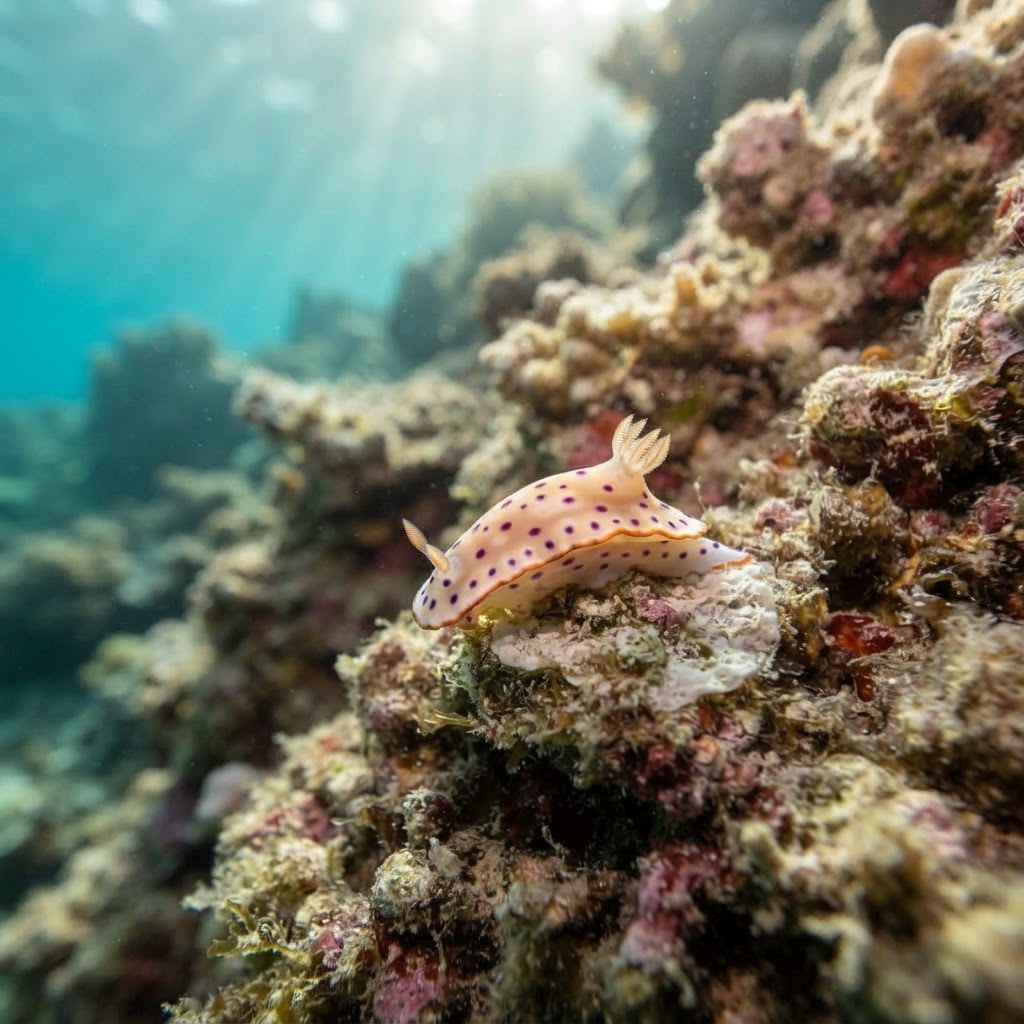
Chromodoris aspersa
A rare 3cm find logged from Apra Harbor to Kwajalein Atoll, spotted year-round in warm 22.5-28.5C reef water.
Tops out around 3 cm, so this is a slow crawl-and-search find rather than something that catches your eye from a distance. Look for a pale to cream mantle scattered with distinct purple spots, edged with a thin contrasting rim, and a soft-bodied slug shape with small tentacle-like structures (rhinophores) up front. Its size and pattern combination is the main giveaway once you're close enough to check the spotting.
Divers find it moving slowly over rubble and reef substrate, grazing rather than reacting to a torch or a diver hovering close by. It shows no escape response worth noting and will simply keep crawling at its own pace, which makes it easy to photograph once spotted but easy to miss if you're moving fast.
Like other chromodorid nudibranchs, it draws its bright pigments and any chemical defences from the sponges it feeds on, meaning its exact colour intensity can vary with diet and location rather than being fixed by genetics alone.
No clear seasonal pattern shows up in the sighting data, and its comfort range of 22.5 to 28.5C matches warm reef water that holds steady across the year at these sites. Treat it as a year-round possibility rather than a seasonal target.
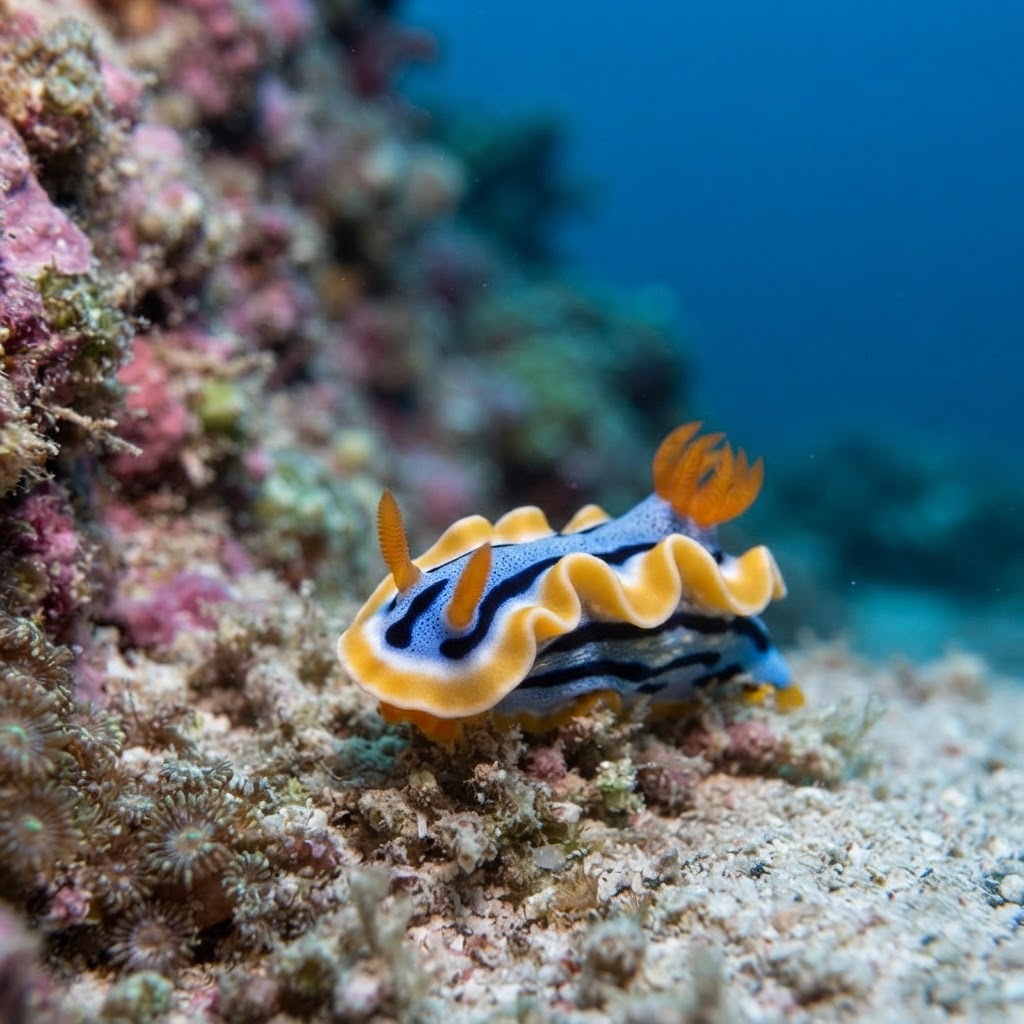
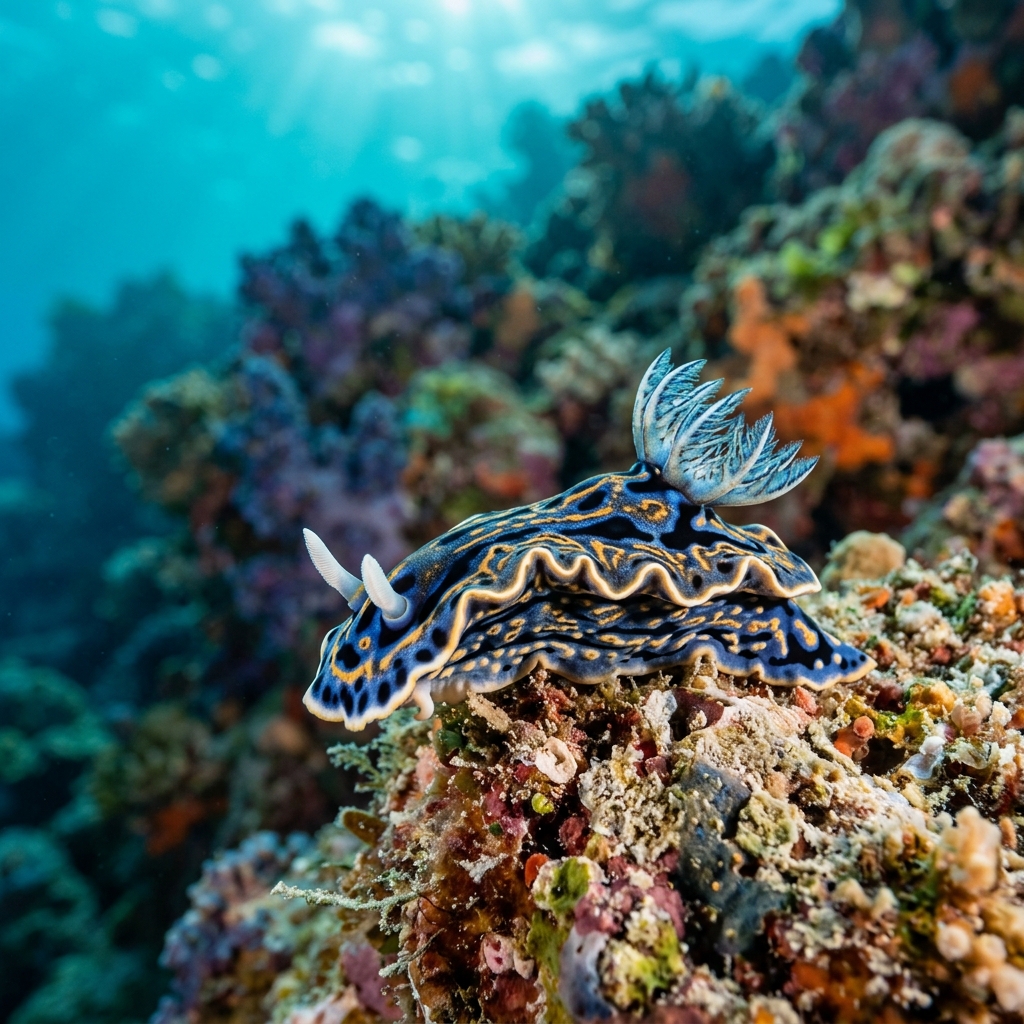
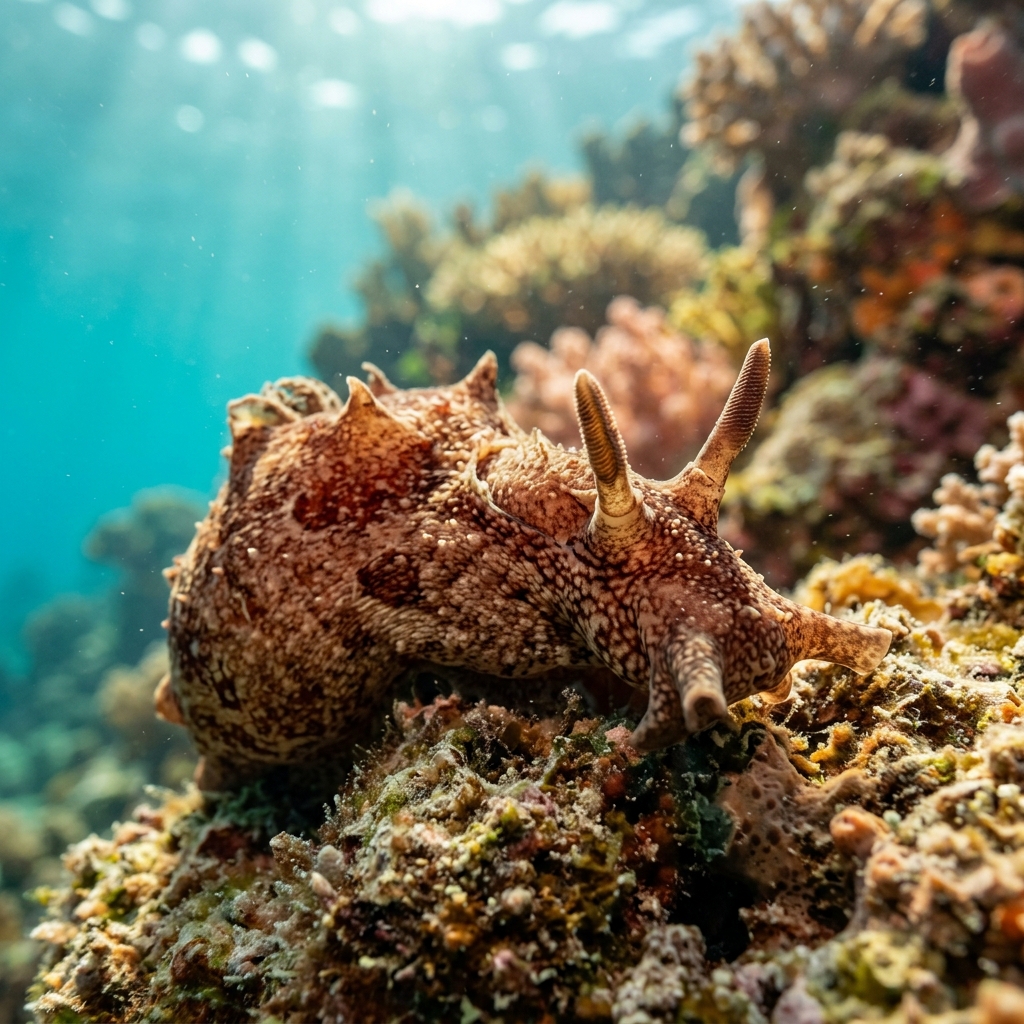
Reef neighbours a diver could mistake it for. Use the identification notes above to tell them apart.
Logged from a scattered set of sites rather than one hotspot: Apra Harbor in Guam, reefs in Hawaii, New South Wales in Australia, and Kwajalein Atoll in the Marshall Islands. Each of these has produced confirmed sightings, but at low frequency, so this is a species you find while working a muck or rubble patch carefully rather than one you plan a whole dive around.
Mapping where Purple Spotted Nudibranch is logged…
Confirmed sightings come from Apra Harbor in Guam, reef sites in Hawaii, New South Wales in Australia, and Kwajalein Atoll in the Marshall Islands. It turns up at low frequency at each, so pair the dive with a broader macro-hunting site rather than expecting a guaranteed encounter.
There's no detected season in the sighting data, and its warm-water niche of roughly 22.5 to 28.5C is stable year-round at the sites where it's found, so any month is fair game.
Check for a small, 3 cm slug with a cream to pale mantle covered in distinct purple spots and a thin rimmed edge. Slow, deliberate crawling over rubble or reef substrate is typical of how divers spot it.
They stay small, typically around 3 cm long, so you're looking for a compact, easy-to-overlook slug rather than anything conspicuous on the reef.
Its purple pigmentation likely comes from the sponges it feeds on, a trait shared across chromodorid nudibranchs, meaning colour intensity can shift with diet and location.
Site and sighting data is aggregated from diver logs, iNaturalist and GBIF. For taxonomy and conservation status:
Light-spotted Aegires
3,168 sites