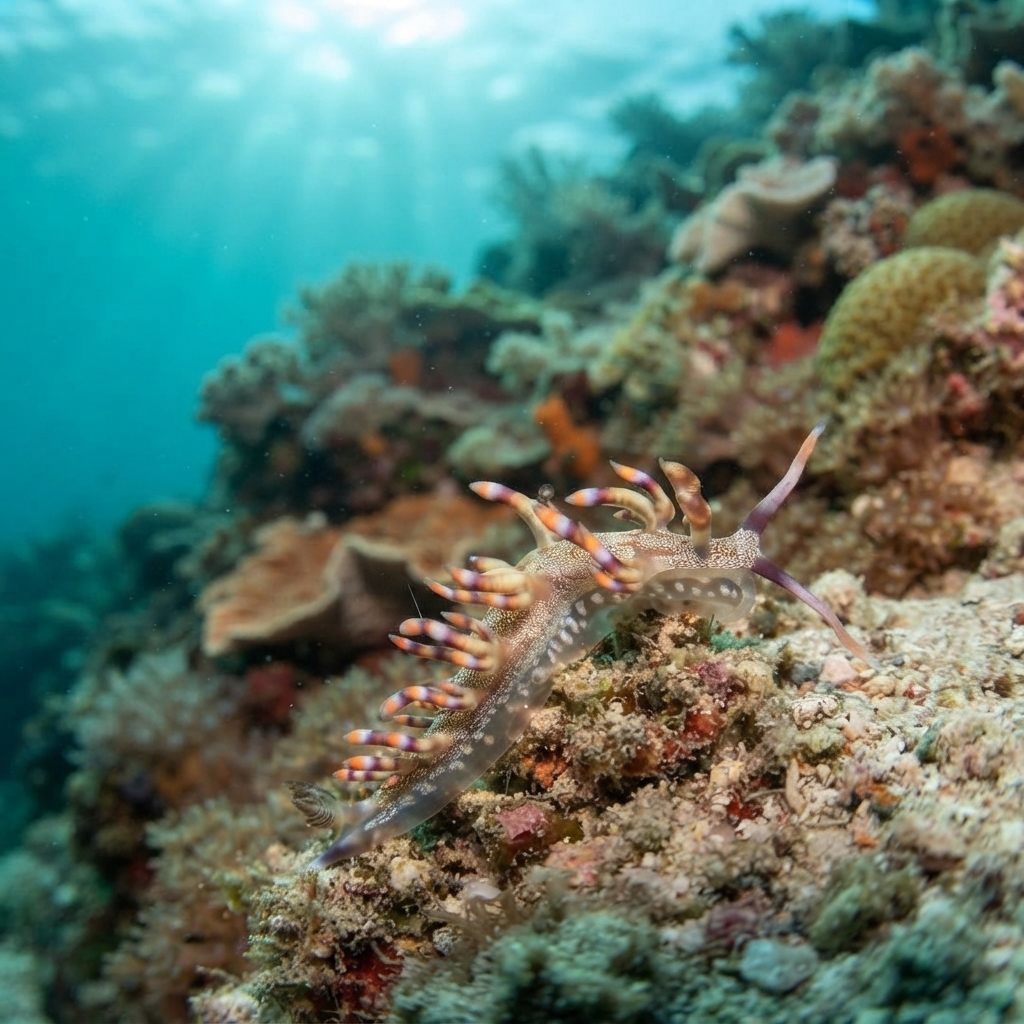
Samla riwo
A rare nudibranch find logged in Luzon, Philippines and Bali on warm 25.5-31.5C reefs, year-round but always uncommon.
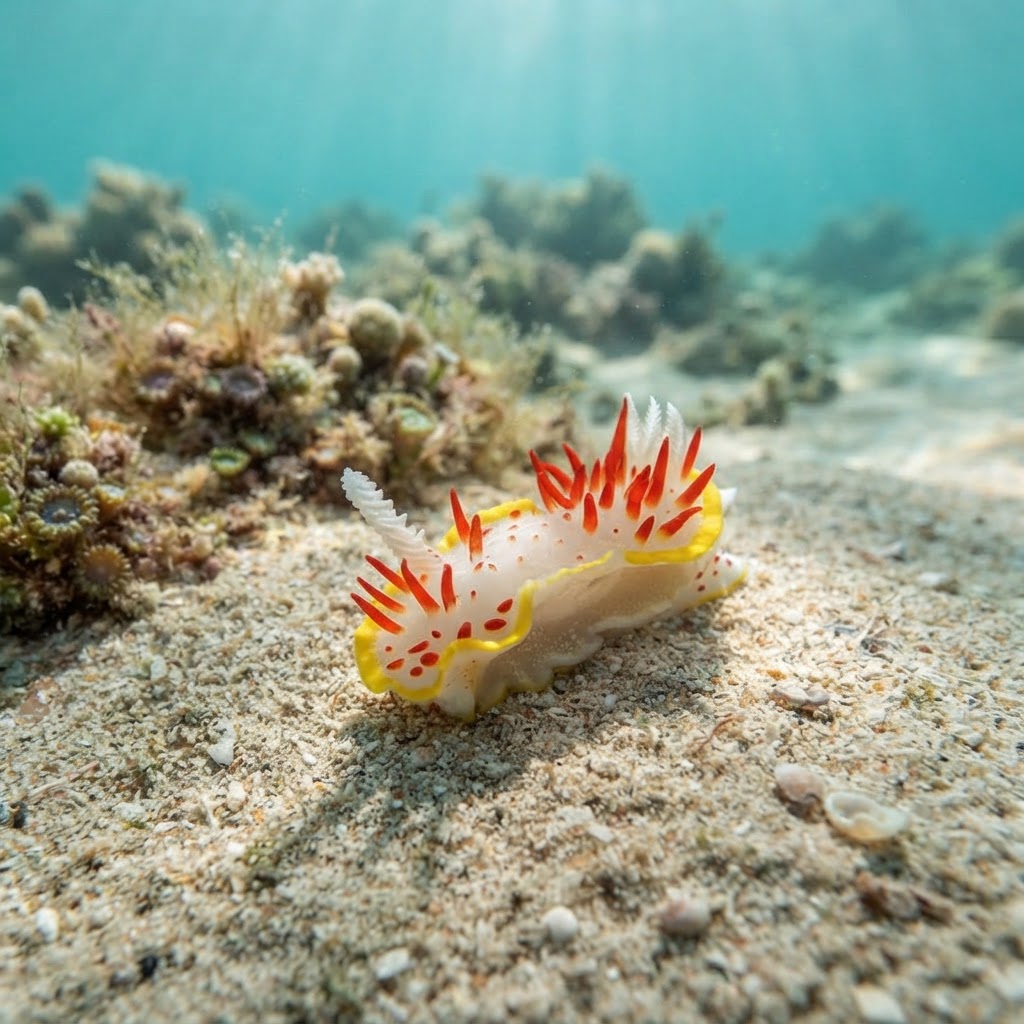
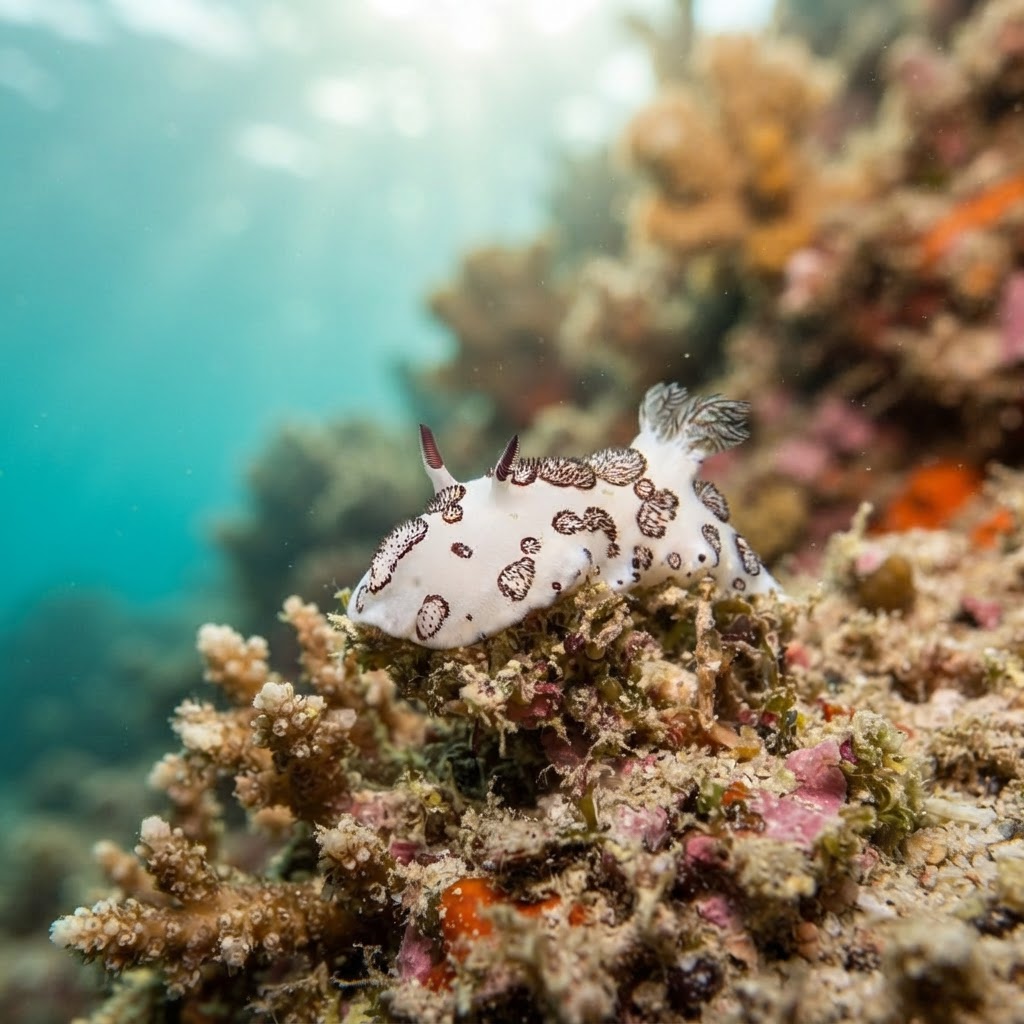
A small bluntnose nudibranch with a soft, rounded body and a distinct purple ring bordering the mantle edge, which is the main feature divers use to pick it out from other dorids on the reef. Body colour beneath the ring tends toward pale or muted tones, so the purple outline reads as the single standout mark against coral rubble or sand. Size in the water is small enough that most sightings come from divers doing slow, close-focus scans rather than spotting it from a distance.
Divers find it moving slowly over reef rubble and sand patches, doing what most bluntnose nudibranchs do: grazing quietly with no reaction to a diver's presence beyond continuing on its way. It shows no flight response and can be watched and photographed at close range without disturbing it, though its small size and low numbers mean most divers only encounter it by chance during a careful macro-focused dive.
Like other dorid nudibranchs, it likely gets its colour and any chemical defences from its diet, though the specific diet for this species has not been documented in diver or scientific records to date.
Sightings show no detectable seasonal pattern, and with a water-temperature niche of 25.5 to 31.5 C this species has access to comfortable conditions on Luzon and Bali reefs throughout the year. Plan your trip around good visibility and site access rather than a particular month.
Reef neighbours a diver could mistake it for. Use the identification notes above to tell them apart.
Most records come from Luzon in the Philippines, which is currently the strongest area for this species, with a smaller number of sightings from Bali, Indonesia. Both countries offer warm-water reef and rubble habitat in the range this nudibranch is found, but at every known site it is logged as uncommon, so treat any sighting as a bonus rather than a target.
Mapping where Purple-ringed Bluntnose is logged…
The most reliable region is Luzon in the Philippines, with additional sightings from Bali, Indonesia. It is logged as uncommon at every known site, so sightings are a matter of luck and careful looking rather than a guaranteed find.
There is no detected seasonal pattern, and it is found in water from 25.5 to 31.5 C, which is available on Luzon and Bali reefs year-round. Any time you can dive these regions is a reasonable time to look for it.
Look for a small, soft-bodied nudibranch with a purple ring outlining the edge of its mantle, set against a paler body. It moves slowly over rubble and sand, so a close, patient look is usually needed to confirm the ring pattern.
No, it poses no danger to divers. It can be observed and photographed up close without any risk.
Site and sighting data is aggregated from diver logs, iNaturalist and GBIF. For taxonomy and conservation status:
Blue Dragon
3,163 sites