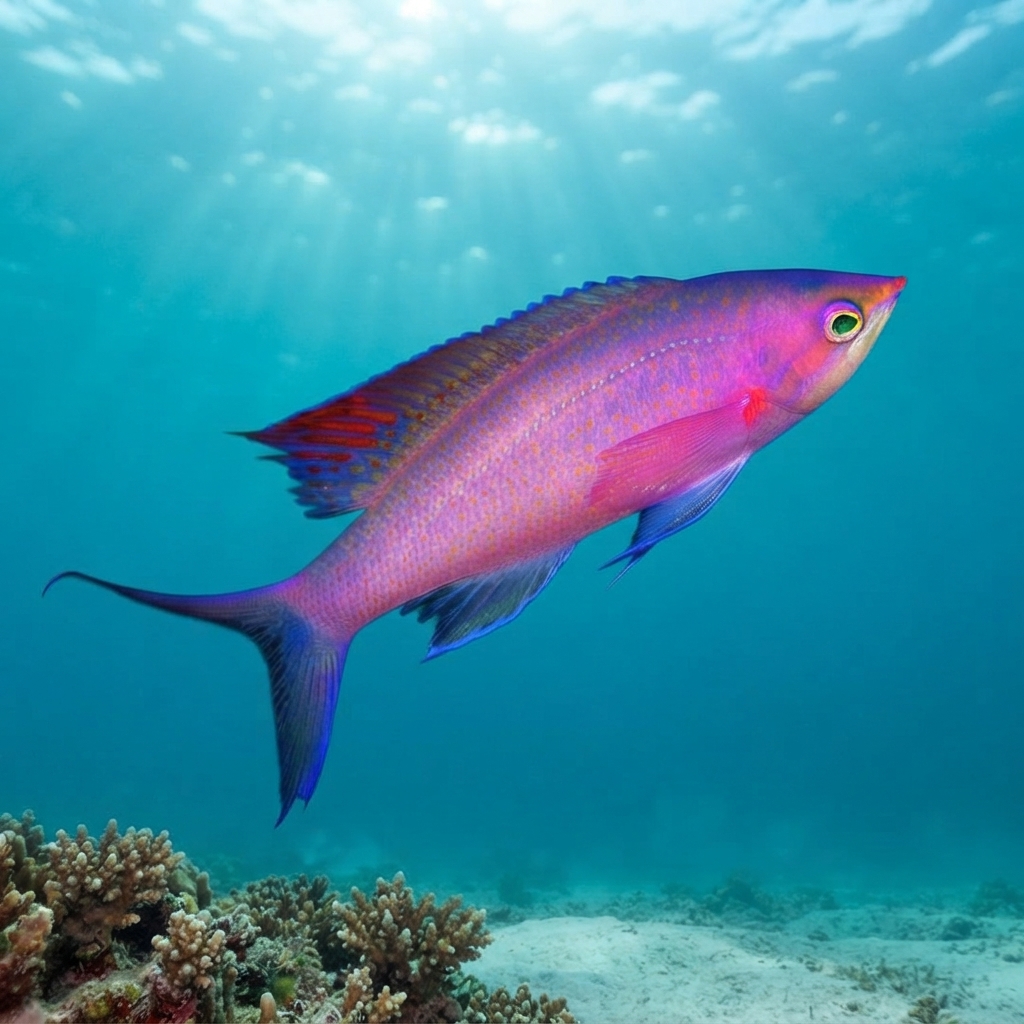
Mirolabrichthys pascalus
Purple Queen Anthias anthias haunt reef drop-offs from the Tuamotus to Okinawa, glowing violet in water around 26-28C year-round.
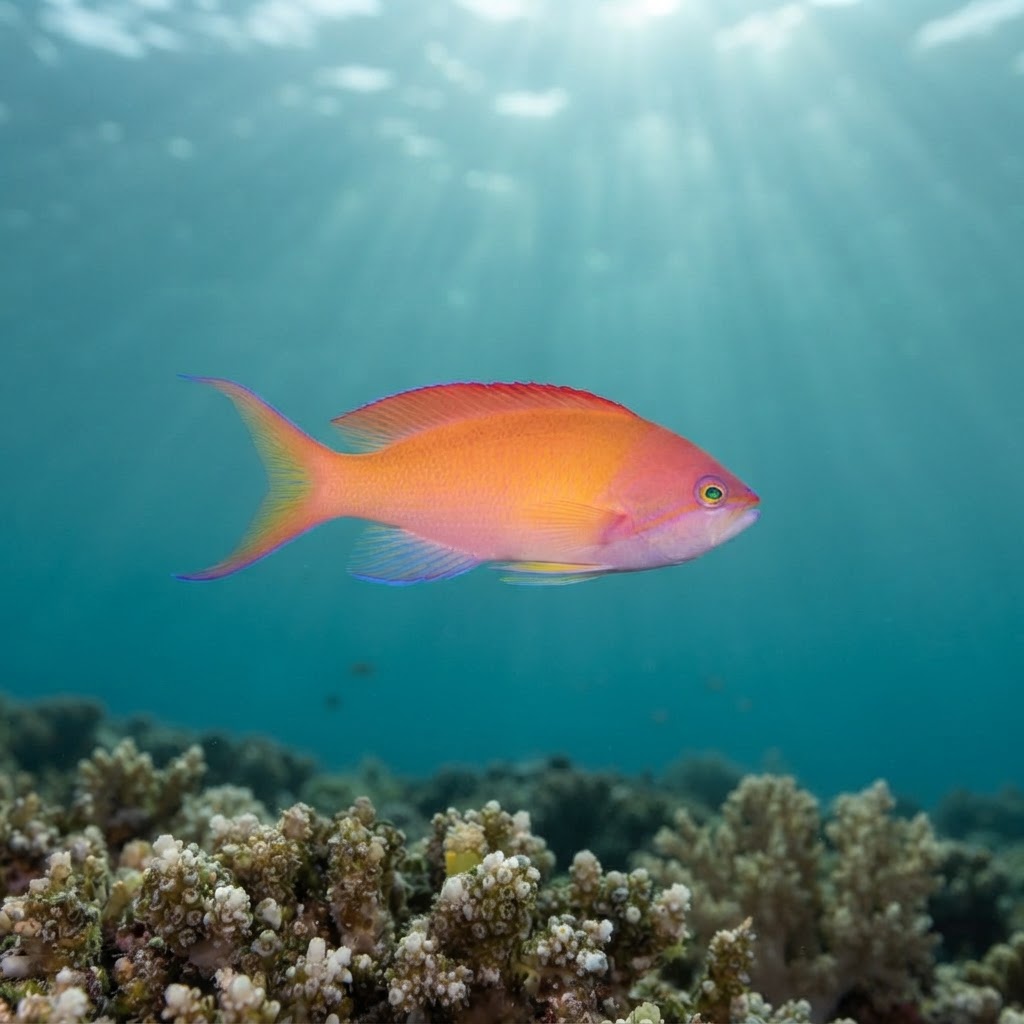
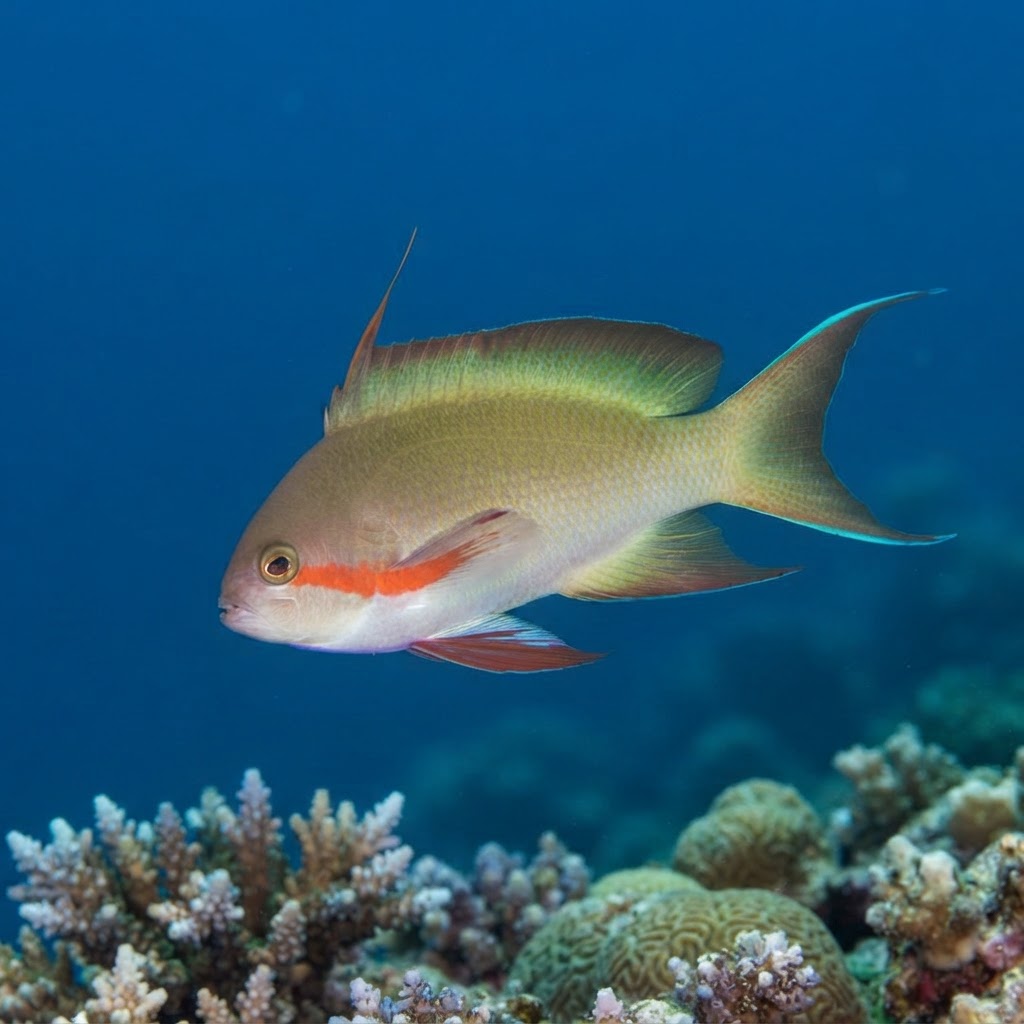
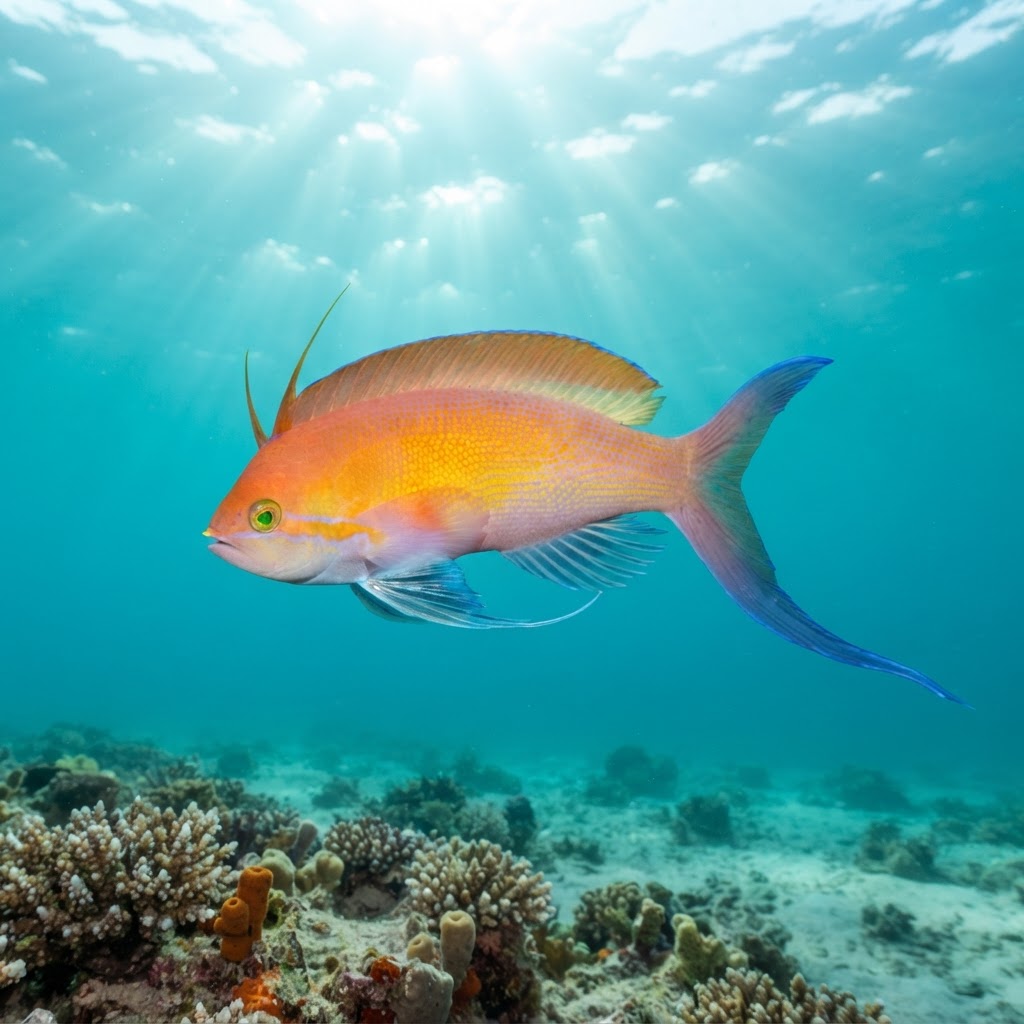
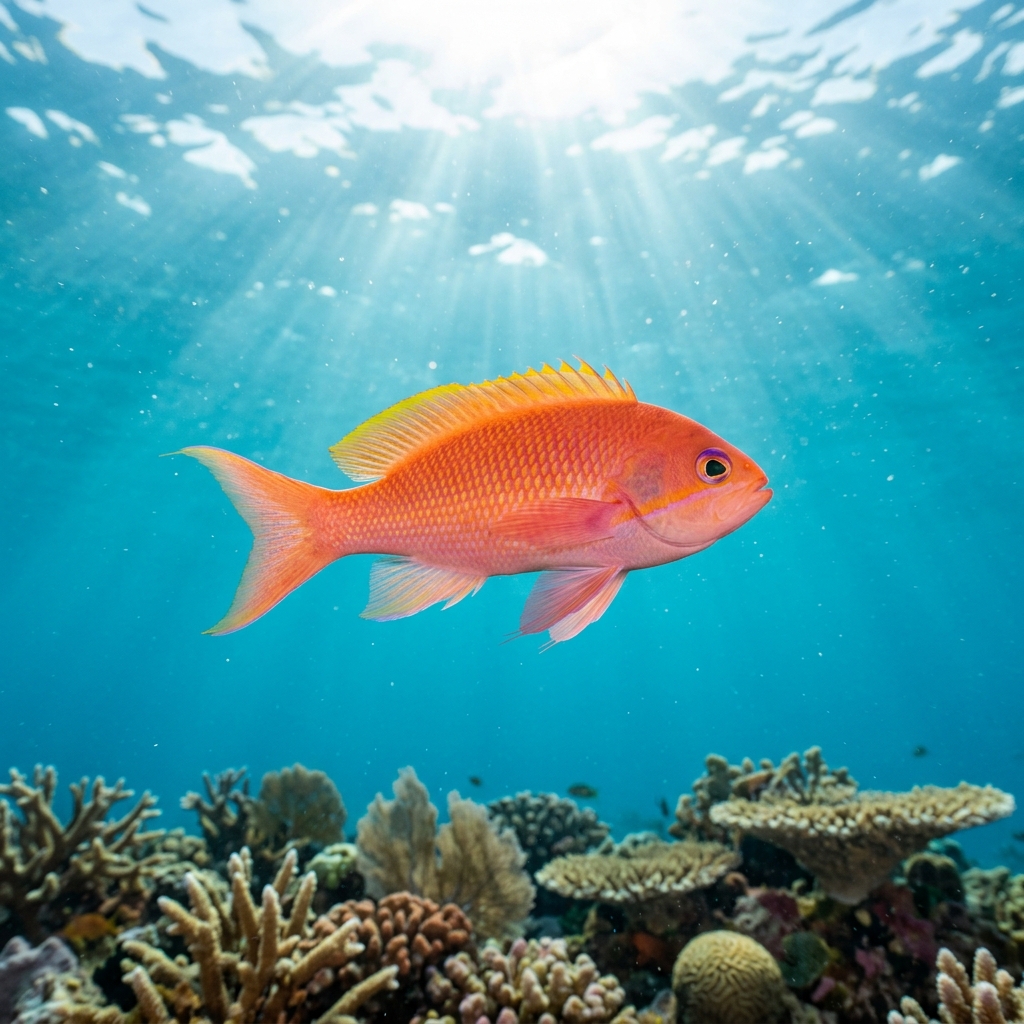
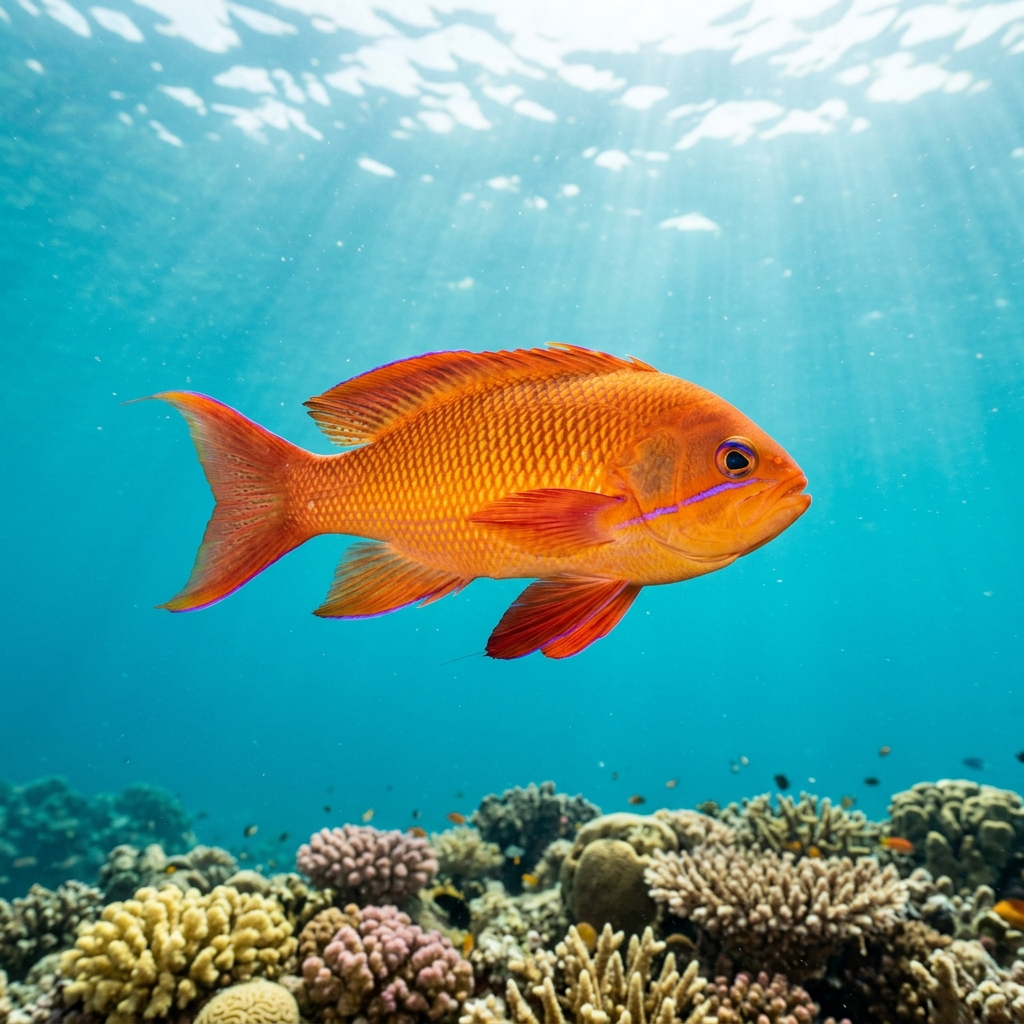
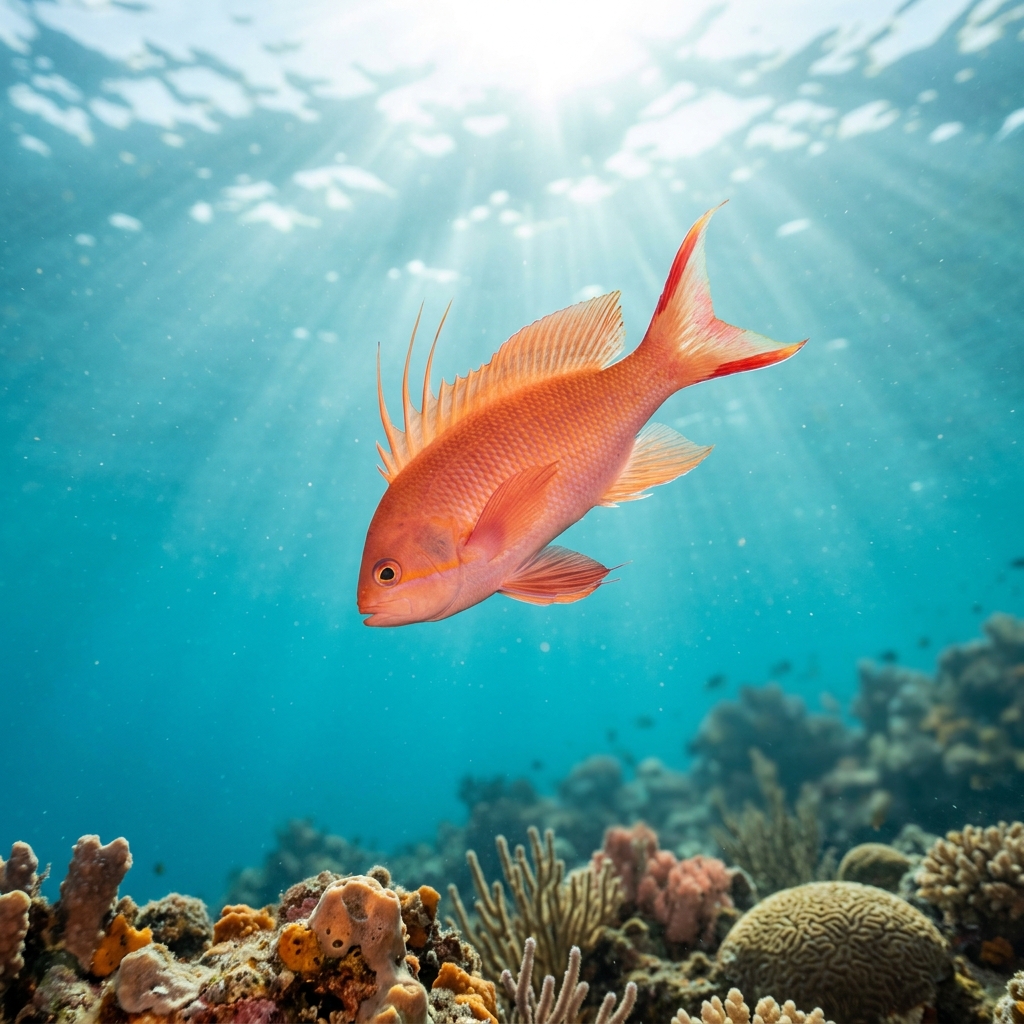
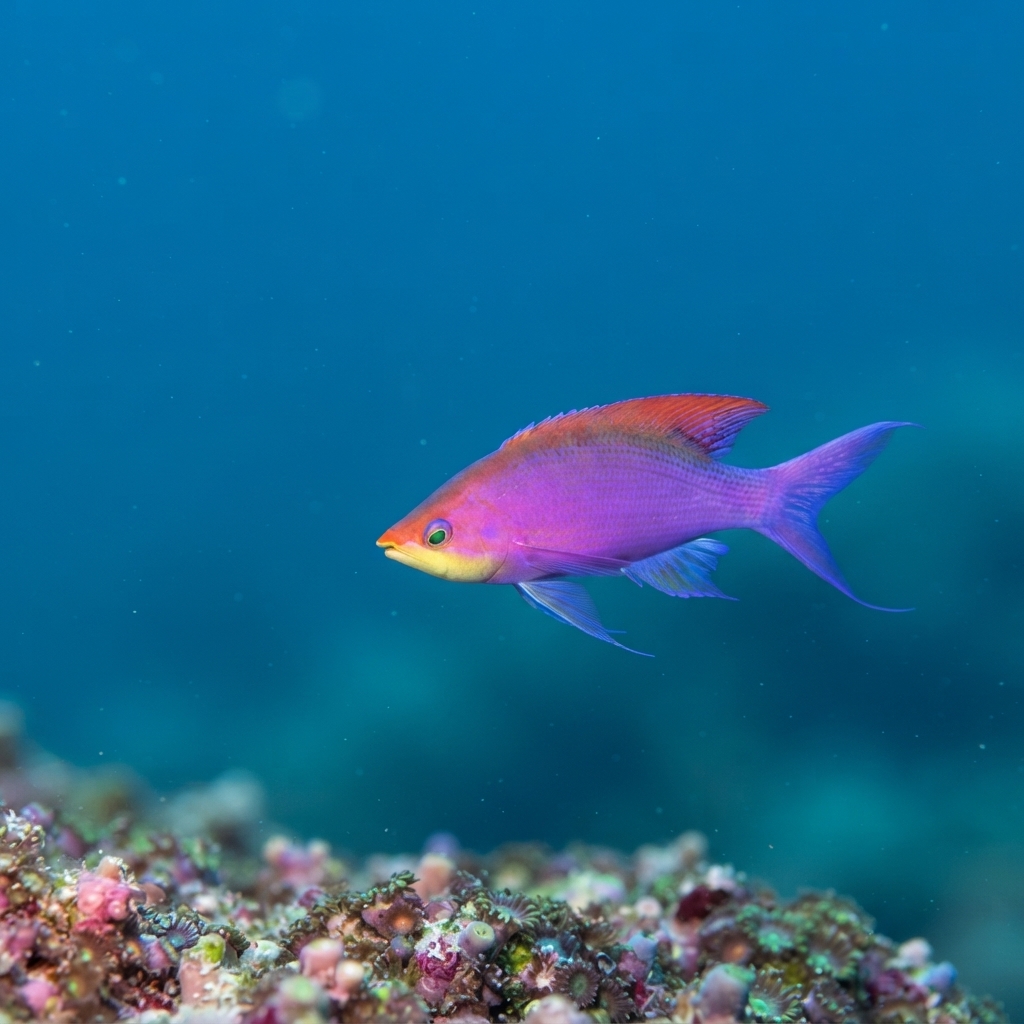
A small, slender anthias around 14 cm, washed in shades of pink-purple to violet with a paler belly, often looking almost translucent in open water. Males typically show a more intense purple flush and a longer, filamentous extension on the dorsal fin than females. Look for it hovering in loose groups just off the reef structure rather than tucked into it, catching light in a shifting haze of colour.
Found hovering in loose aggregations off steep reef walls and drop-offs, picking plankton out of the current rather than feeding on the substrate. It reacts to divers by drifting slightly back into the reef structure when approached too fast, then re-forming its feeding position once things settle. Sightings tend to cluster where current sweeps a wall or slope, and it is logged as an uncommon find even at sites where it does occur, so patience and a bit of drifting with the group pays off.
Anthias groups like this one run on a harem structure, with one dominant male overseeing several females; if that male is lost, one of the females can change sex and colour to take his place.
No clear seasonal pattern shows in the data, and with a comfortable range of roughly 25.4 to 28.8C it stays present on these reefs year-round. Dive whenever conditions suit the destination rather than chasing a season for this one.
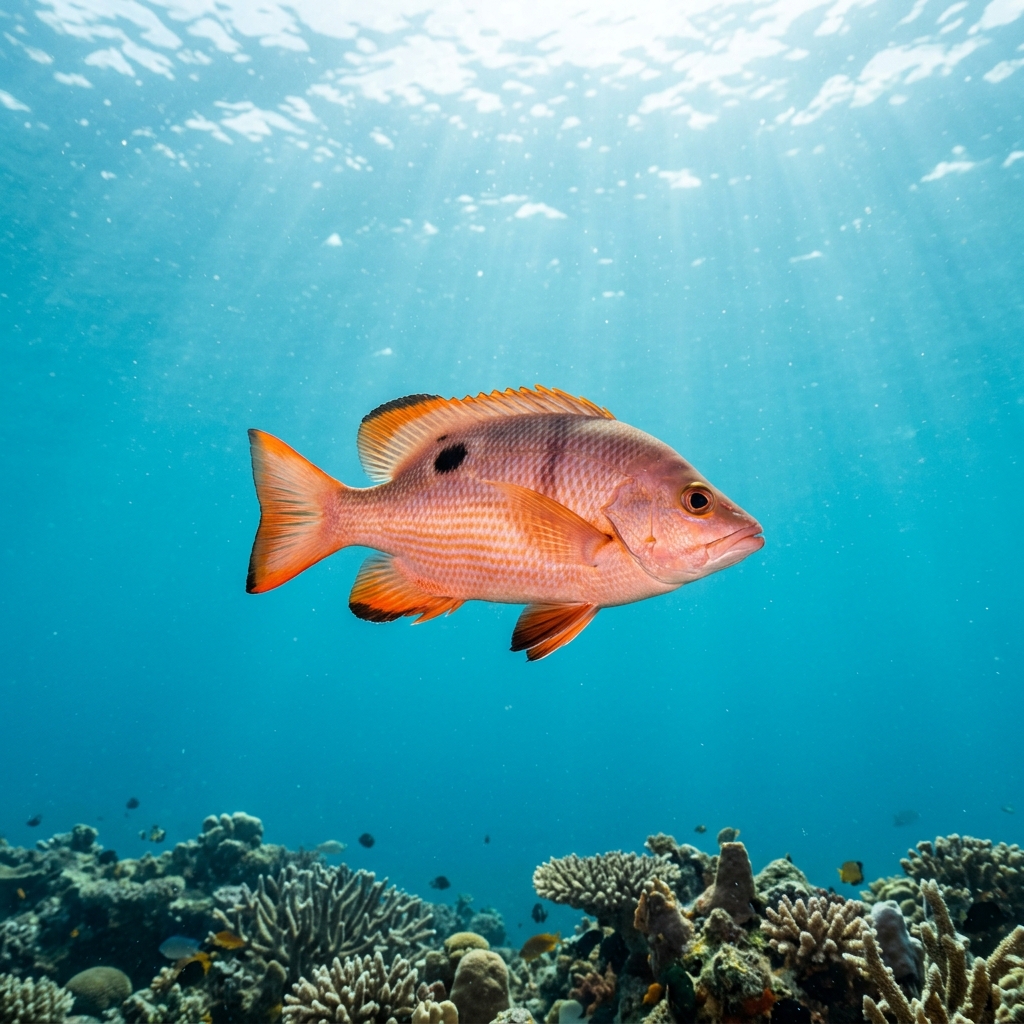
Reef neighbours a diver could mistake it for. Use the identification notes above to tell them apart.
Most reliably logged across the Tuamotu and Society Islands in French Polynesia and the Okinawa/Ryukyu Islands in Japan, with strong populations also in Sabah, Malaysia and Palau's Rock Islands and Peleliu. Smaller but consistent sightings come from Rarotonga in the Cook Islands and Alofi in Niue, making it a fish you can plan around across a wide swathe of the Pacific.
Mapping where Purple Queen Anthias is logged…
Best chances are in French Polynesia, particularly the Tuamotu and Society Islands, and in Okinawa, Japan. Sabah in Malaysia and Palau's Rock Islands and Peleliu also turn up reliable sightings, with smaller populations in the Cook Islands and Niue.
There is no strong seasonal signal for this species, so it is considered a year-round sighting on the reefs where it lives. It favours water in the 25 to 29C range, which describes these tropical Pacific reefs most of the year anyway.
Look for a small, slim fish around 14 cm washed in pink to violet, hovering in loose groups off the reef rather than hiding in it. Males show a brighter purple tone and a longer trailing dorsal filament than females.
They stay small, topping out around 14 cm, which is typical for anthias species. You will usually see them well before that size becomes a useful clue, since their colour and hovering behaviour give them away first.
No. They pose no risk to divers and simply drift off slightly if you approach too quickly, settling back once you slow down.
Like other anthias, they live in harem groups run by a single dominant male over several females. If that male disappears, one female can switch sex and colouring to take over the role, a trait shared across the anthias family.
Site and sighting data is aggregated from diver logs, iNaturalist and GBIF. For taxonomy and conservation status:
Red-cheeked Anthias
425 sites