Echidnocerus cibarius
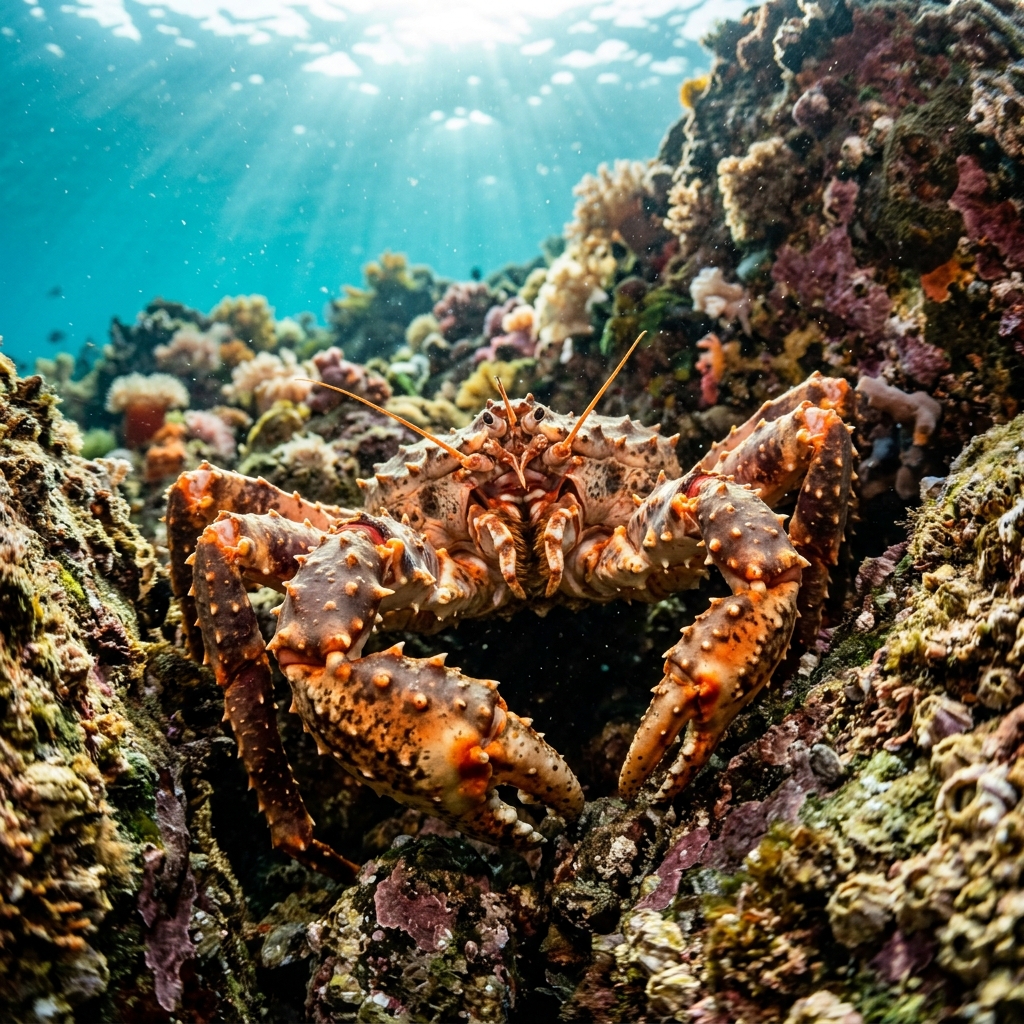
Spot this spiny, colourful king crab on cool-water dives around British Columbia, in water as chilly as 7.5 to 13.5C.
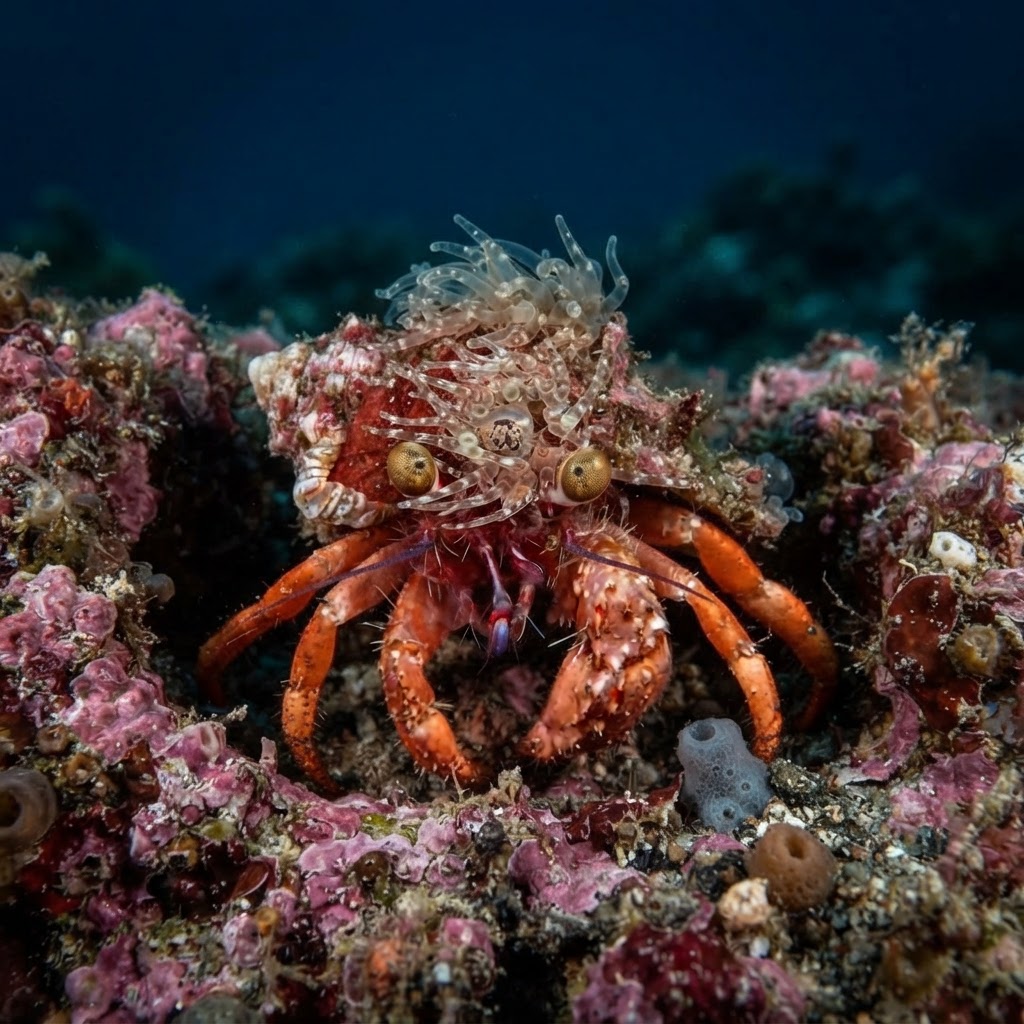
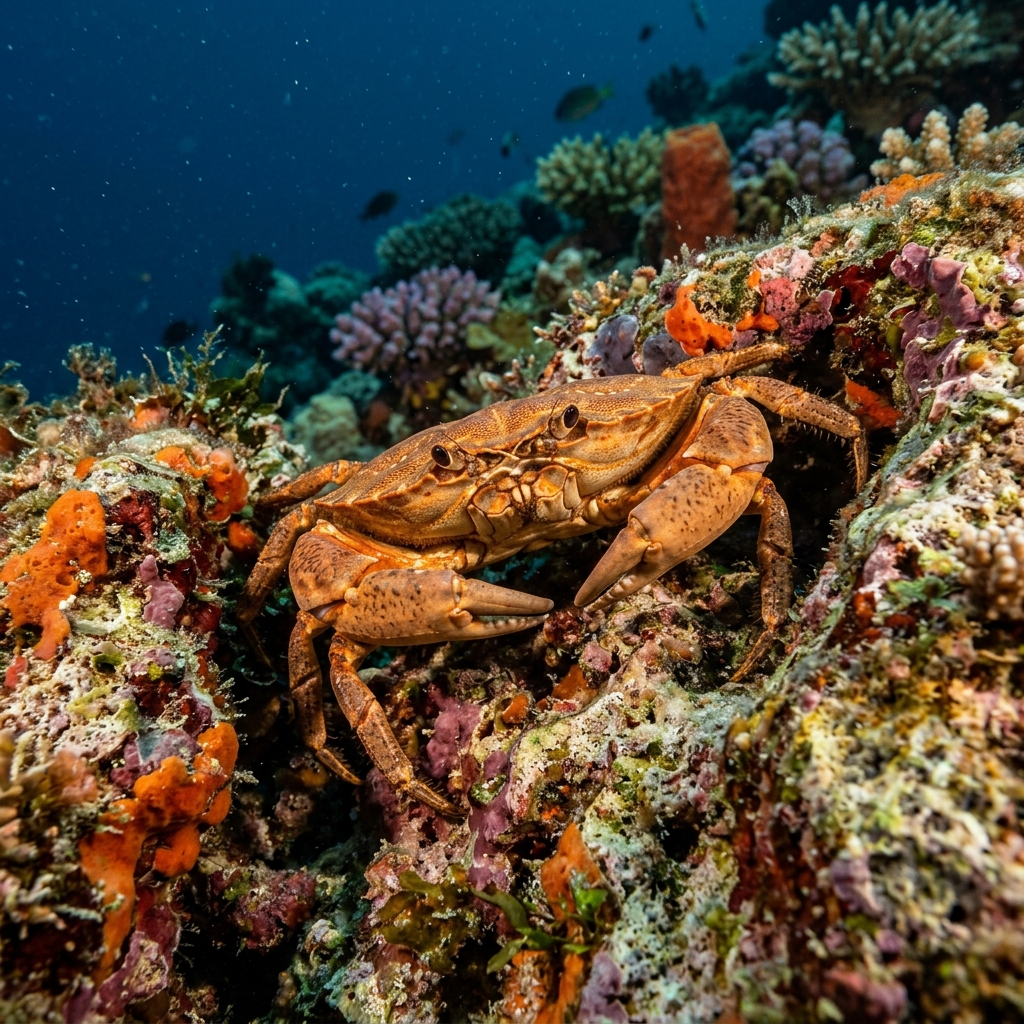
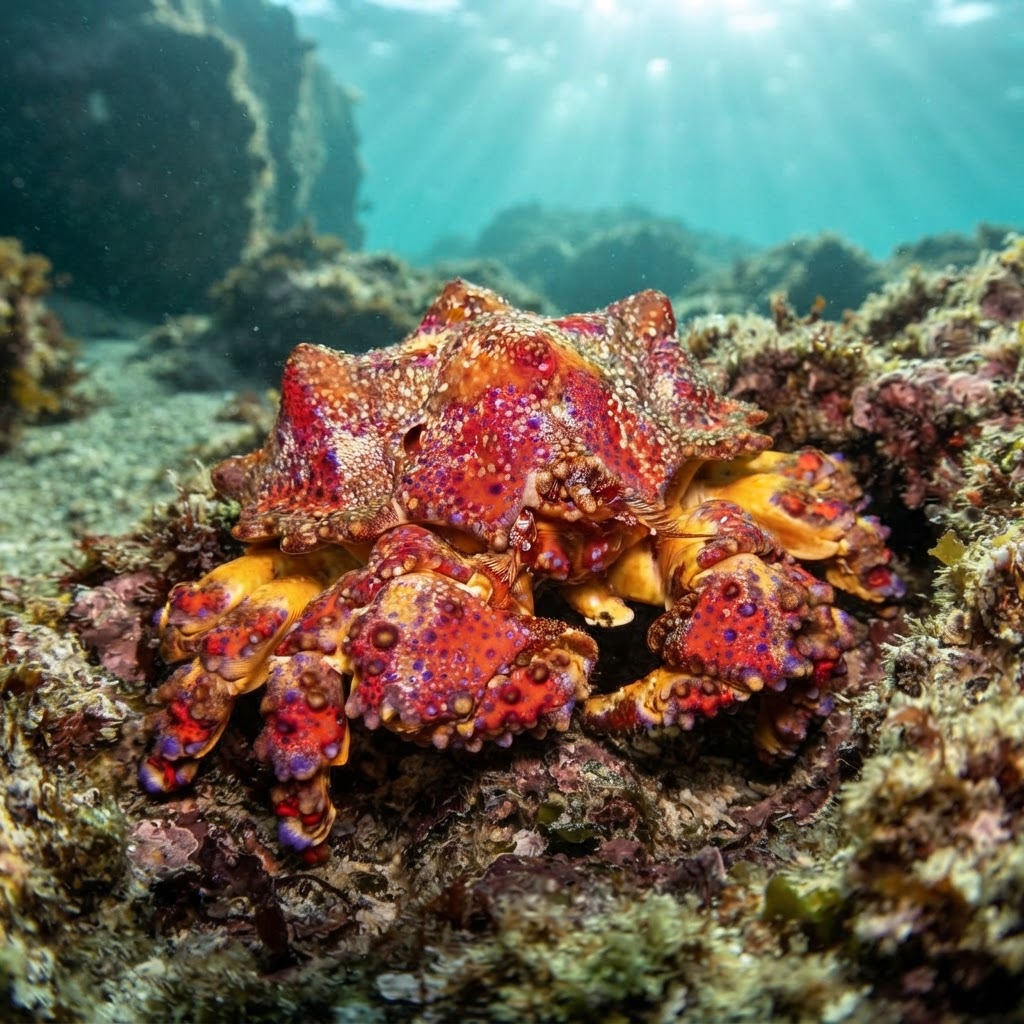
Look for a wide, spiny carapace (shell) up to about 15cm across, coloured in mottled shades of purple, red and orange that make it stand out against grey rock and sand. The body sits low and broad rather than long-legged like a spider crab, with the last pair of legs reduced and tucked under the shell, a hallmark of the king crab family. It moves slowly and deliberately across the bottom, often wedged into a crevice or half-covered by silt.
Divers typically find it parked on rocky or mixed bottoms, tucked against boulders or in low crevices rather than out in the open. It's unhurried around divers, rarely bolting or defending aggressively, so a slow approach and a bit of patience usually gets you a good look without disturbing it. Most logs describe single animals rather than groups, so treat any sighting as a bit of luck on that dive.
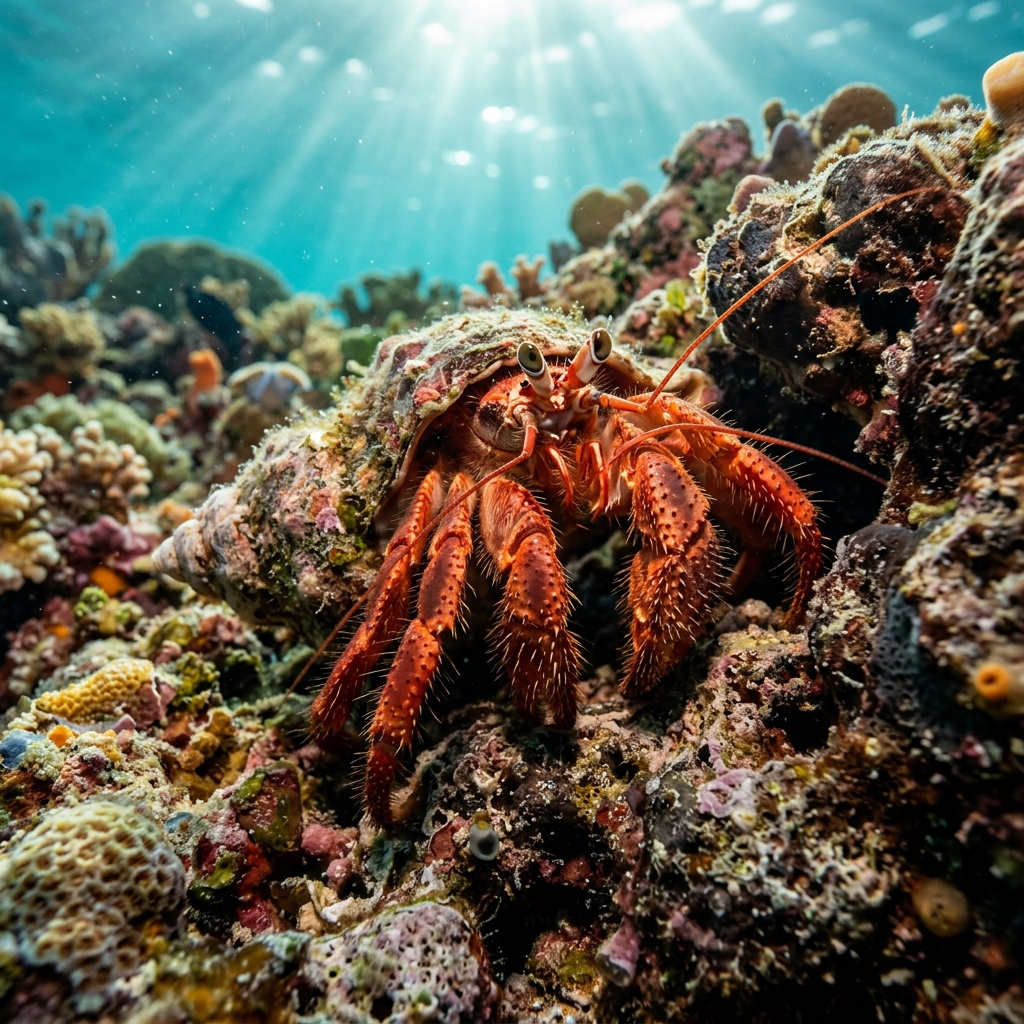
Like other lithodid crabs, it isn't a true crab at all; its body plan descends from hermit crab ancestors, which is why the last pair of legs is small and hidden rather than used for walking.
Sightings don't show a clear seasonal pattern, and with a temperature niche of 7.5 to 13.5C matching Puget Sound and British Columbia year-round, it's fair to treat this as a cold-water resident you can look for on any dive rather than a seasonal visitor.
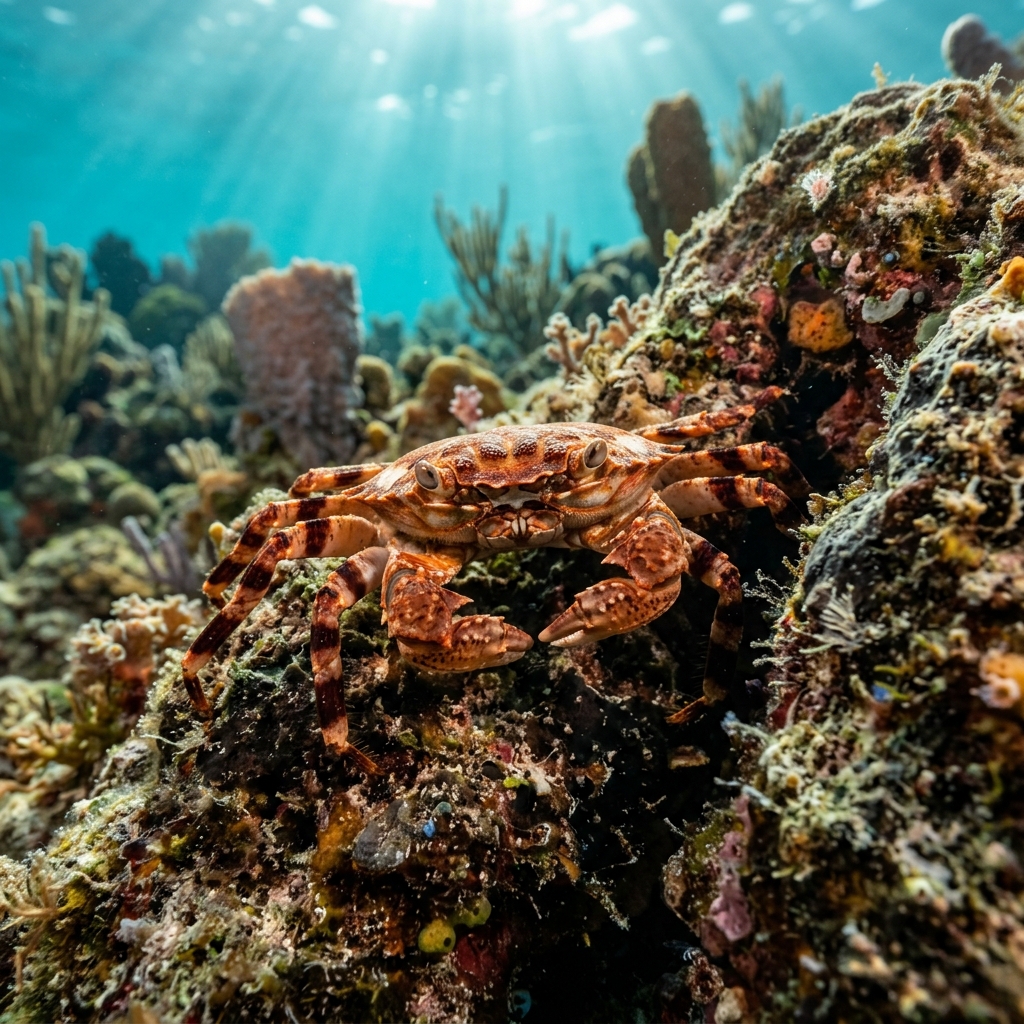
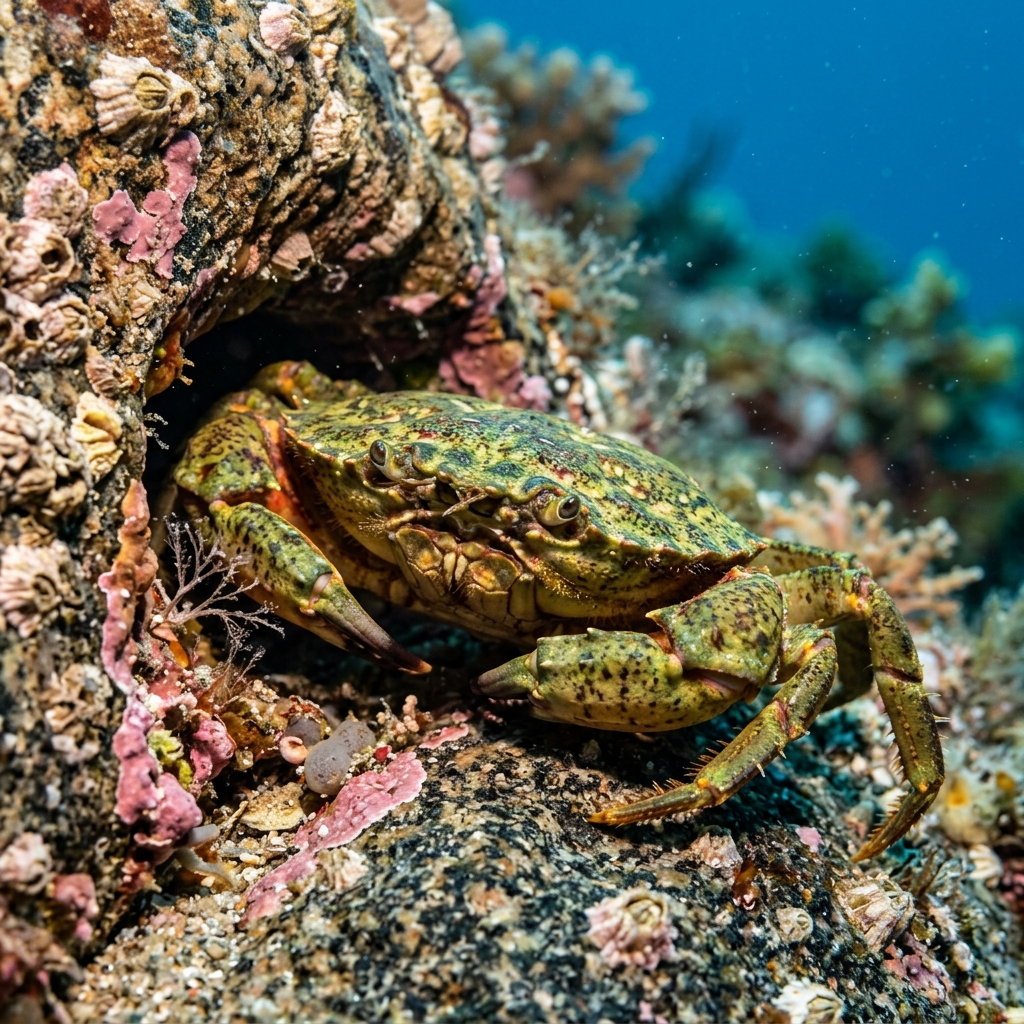
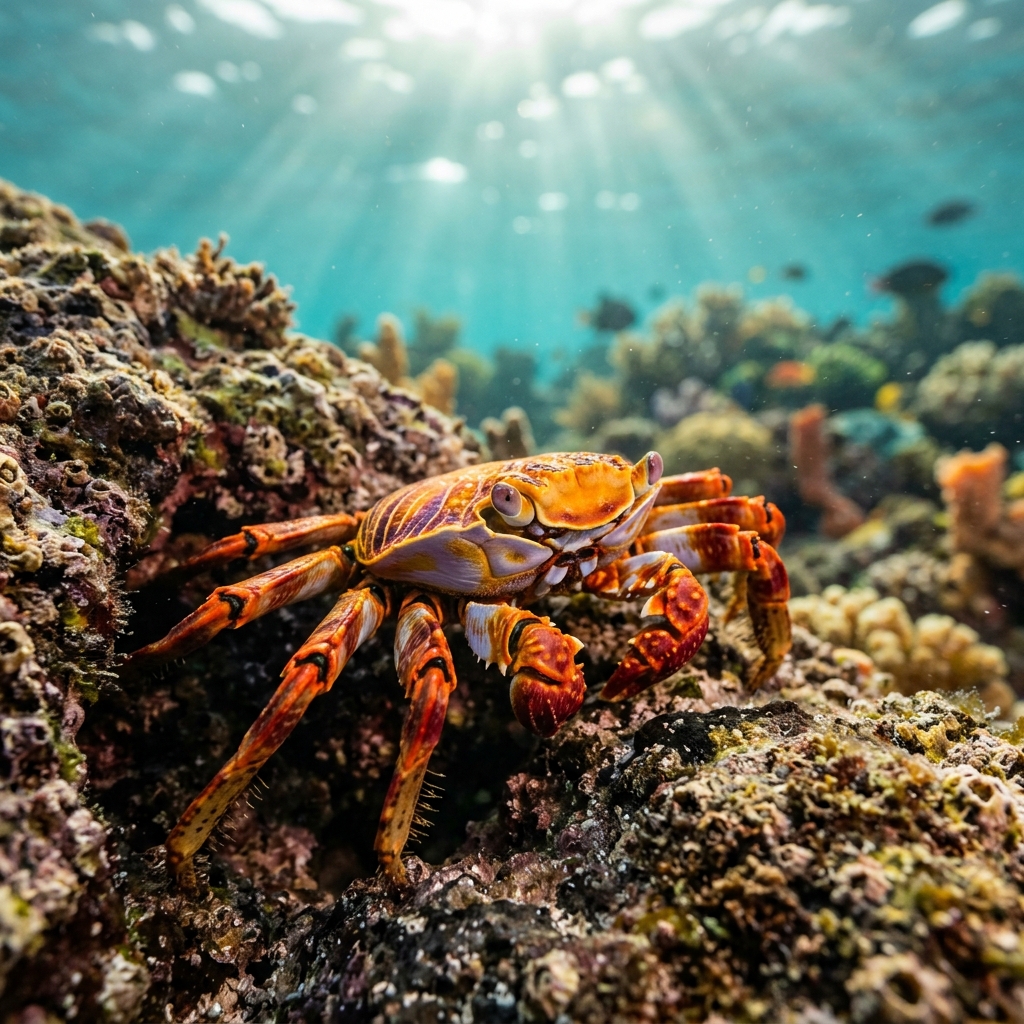
Reef neighbours a diver could mistake it for. Use the identification notes above to tell them apart.
This one is a British Columbia specialty, logged across dozens of sites along the province's coast and turning up most reliably in the cold, current-swept waters divers already visit for nudibranchs and giant Pacific octopus. All the logged sightings in the data come from Canada, so it's the region to plan around if this crab is on your list.
Mapping where Puget Sound King Crab is logged…
British Columbia, Canada is the region divers log it in, with sightings spread across dozens of cold-water sites along the coast. It's the only country with confirmed logs, so plan a Pacific Northwest trip if you're after this one.
There's no strong seasonal pattern in the sightings, and it lives in a steady 7.5 to 13.5C range, so divers report it year-round in British Columbia rather than during one particular month.
Check for a broad, spiny shell around 15cm across in mottled purple, red and orange, sitting low against the rock rather than perched on long legs. It moves slowly and often has its rearmost legs tucked out of sight under the carapace.
They reach around 15cm across the shell, making them a solid, easy-to-spot find on a rocky reef once you know where to look.
Not exactly. It belongs to the lithodid family, a group descended from hermit crab ancestors, which explains its reduced last pair of legs and broad, hermit-crab-like body plan.
No, they pose no threat to divers. They move slowly and tend to stay put or retreat gently rather than react defensively when approached.
Site and sighting data is aggregated from diver logs, iNaturalist and GBIF. For taxonomy and conservation status:
European Green Crab
2,469 sites