Pomacentrus vaiuli
A small blue-and-gold damsel logged from Taveuni to the Rock Islands of Palau, active on reefs year-round in warm 25-29C water.
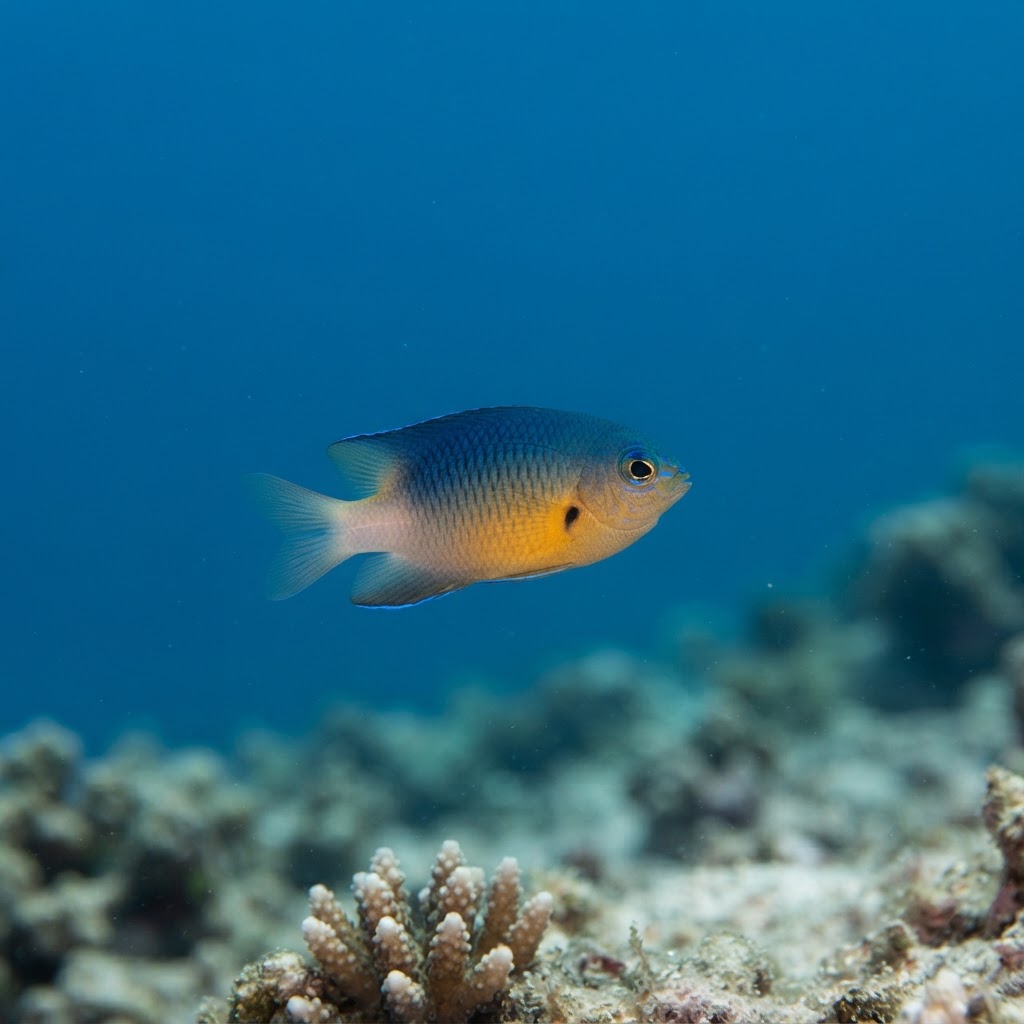
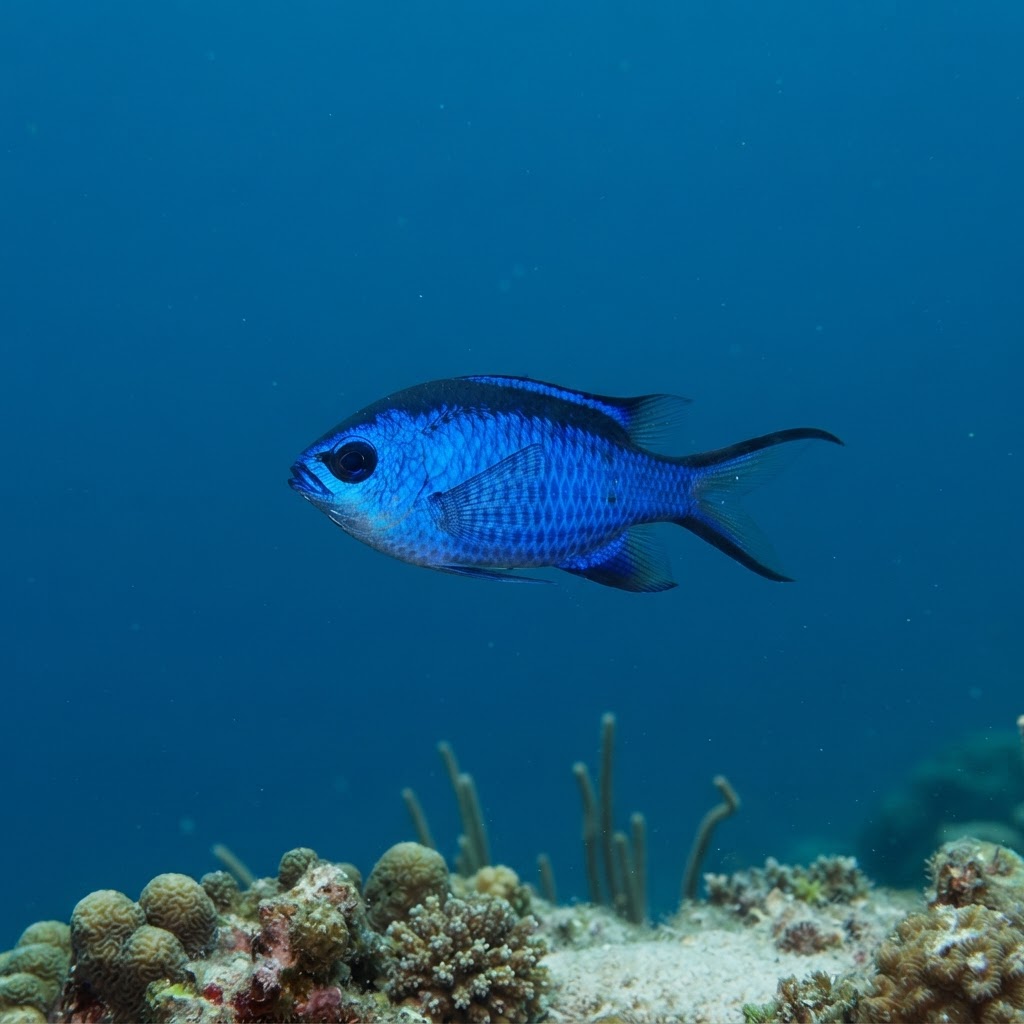
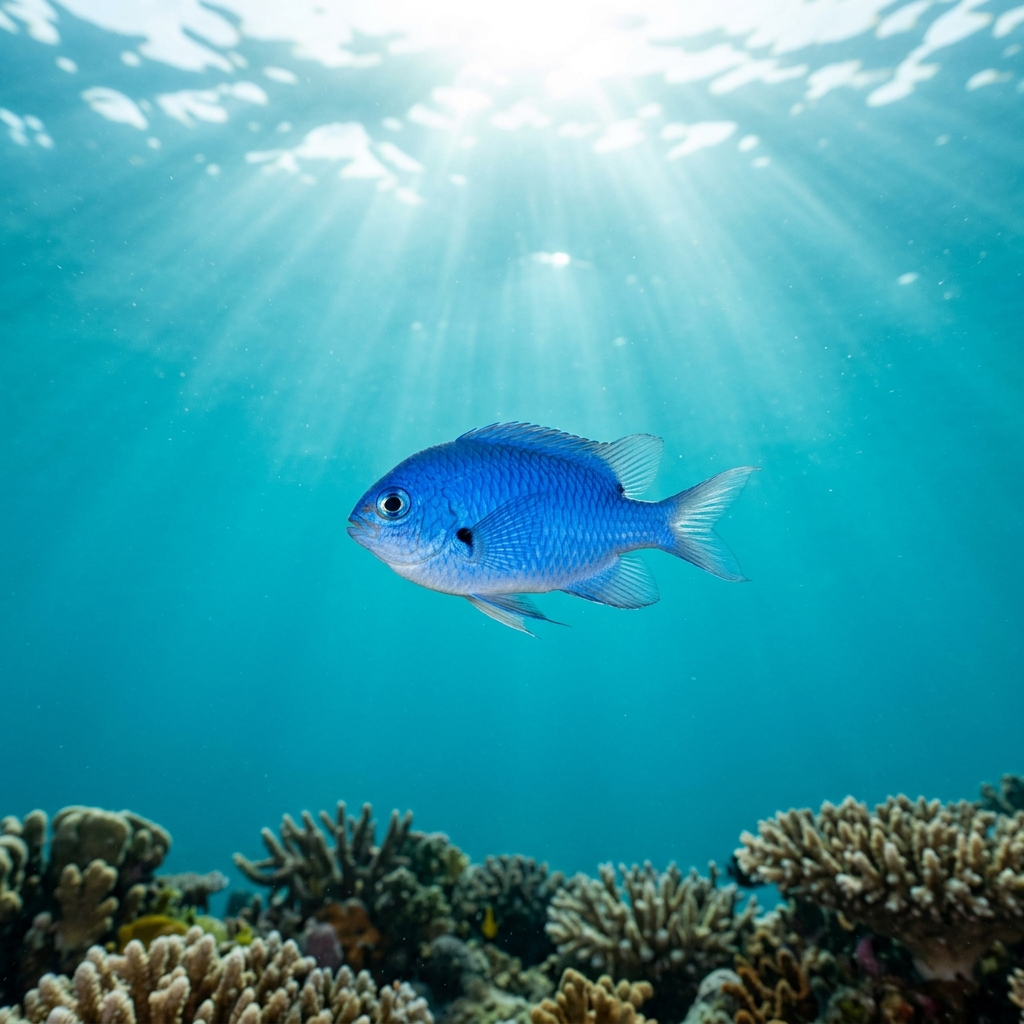
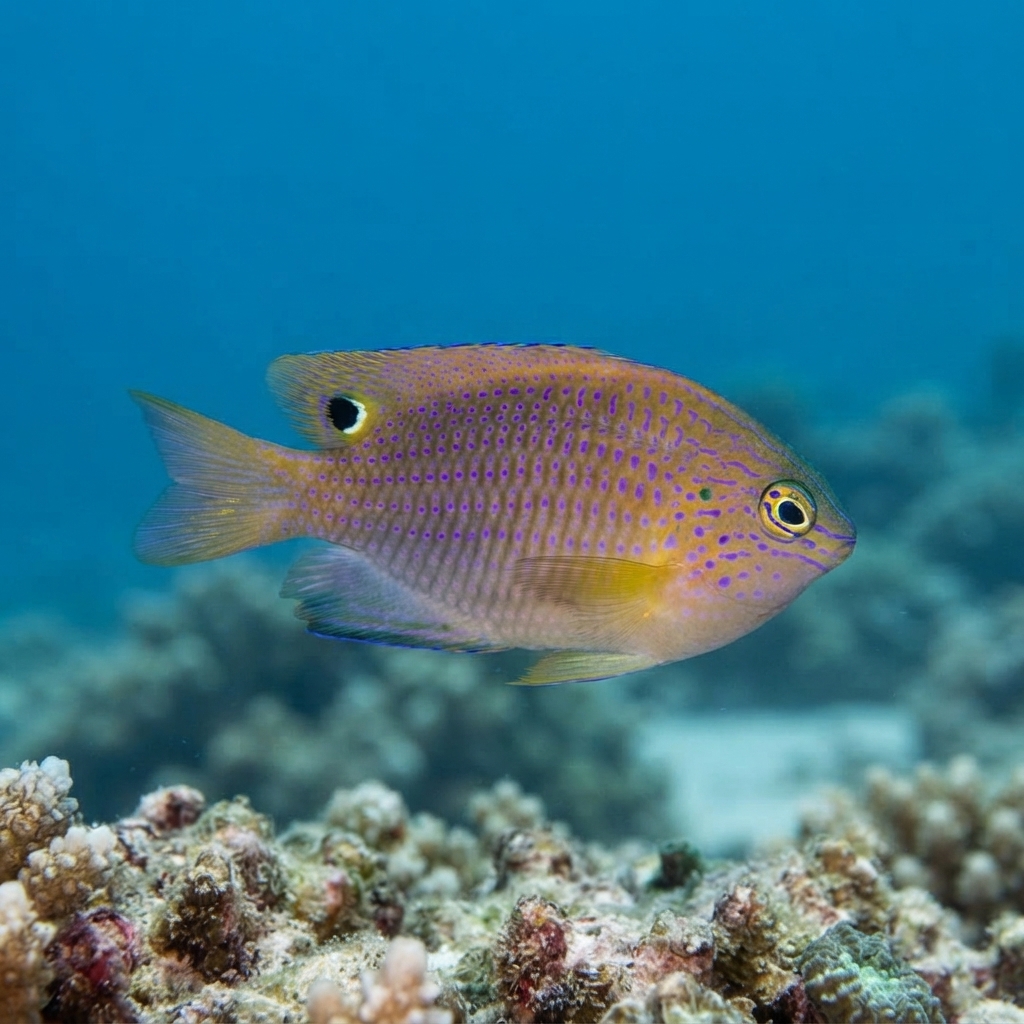
A small, deep-bodied damselfish, around 7 cm, with a blue to blue-green body that can shift toward violet depending on the light. Look for a dark spot at the base of the tail and often a scattering of fine blue speckling on the face and upper body. It holds a fairly upright, oval profile typical of Pomacentrus damsels, and moves in short, twitchy bursts rather than smooth cruising.
Expect to find it holding a small patch of reef or rubble, darting out to snap at drifting plankton before ducking back to cover. It tends to stay close to shelter rather than roam, and generally ignores divers unless approached directly, making it an easy, unhurried subject for a macro pass over the reef.
Like other Pomacentrus damsels it is territorial on a very small scale, defending a patch of rubble or a coral head against other reef fish far larger than itself.
No clear seasonal pattern shows up in the sightings, and with a comfortable range of roughly 25 to 29 C it stays active on these reefs all year, so any month works for a dive trip built around it.
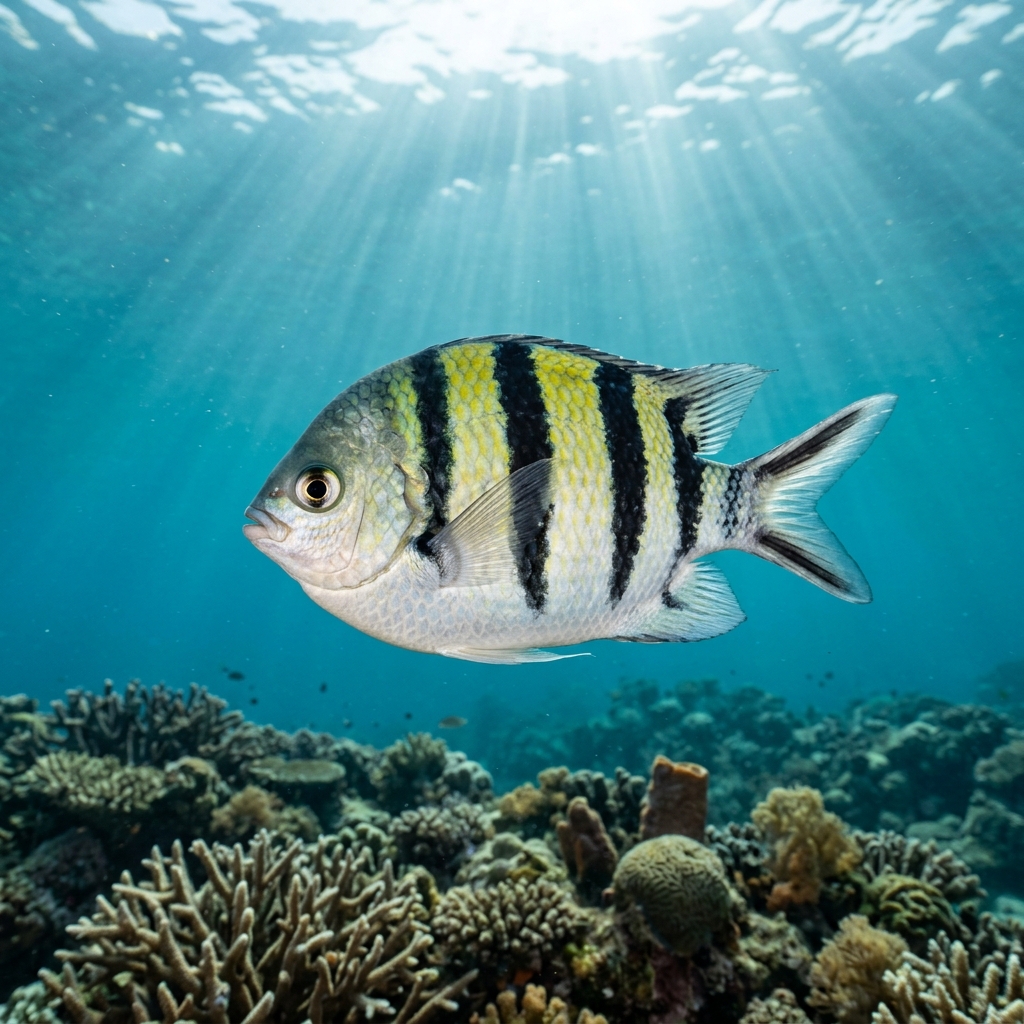
Reef neighbours a diver could mistake it for. Use the identification notes above to tell them apart.
Most reliably logged across the western and central Pacific, with strong numbers around Taveuni in Fiji, the Visayas in the Philippines, Rarotonga in the Cook Islands, and the Rock Islands of Palau. It also turns up regularly on reefs off Saipan and Guam, and less often around Dili in Timor-Leste and Nouméa in New Caledonia.
Mapping where Princess Damselfish is logged…
It shows up widely across the western Pacific, with the strongest logged numbers around Taveuni in Fiji, the Visayas in the Philippines, Rarotonga in the Cook Islands, and Palau's Rock Islands.
There's no strong season in the sightings data. It lives in reef water between about 25 and 29 C year-round, so it's a fair bet on any trip to these regions.
Look for a small blue-bodied damselfish around 7 cm long with a dark spot at the tail base and fine blue speckling on the face, hovering close to a patch of rubble or coral.
They stay small, topping out at around 7 cm, which is typical for reef damselfish in the genus Pomacentrus.
No. They pose no threat to divers and will simply retreat to their patch of reef if you get too close.
Site and sighting data is aggregated from diver logs, iNaturalist and GBIF. For taxonomy and conservation status:
Dascyllus
3,697 sites