Calcinus pulcher
Bright orange legs and blue eyes on the reef: find Pretty Hermit Crabs year-round in Sabah, Malaysia and Viti Levu, Fiji in warm 25-31C water.
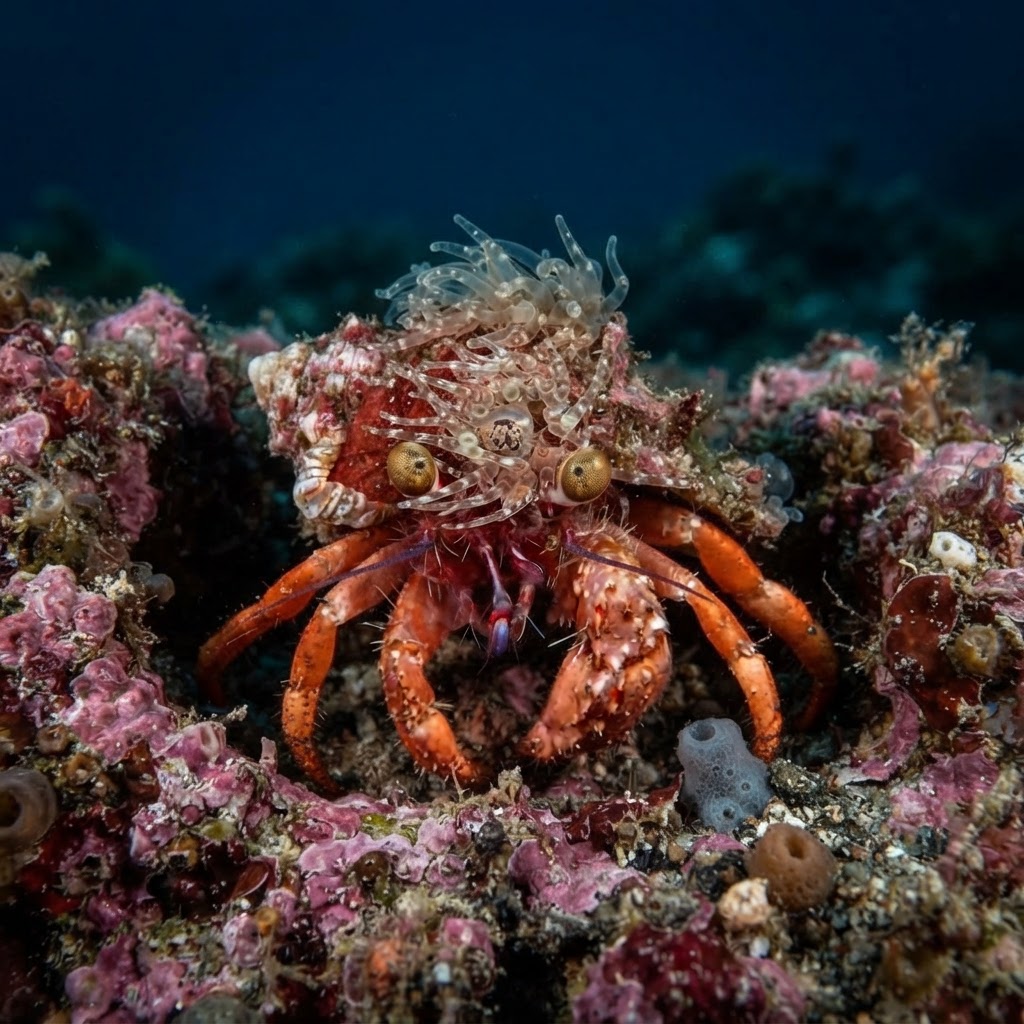
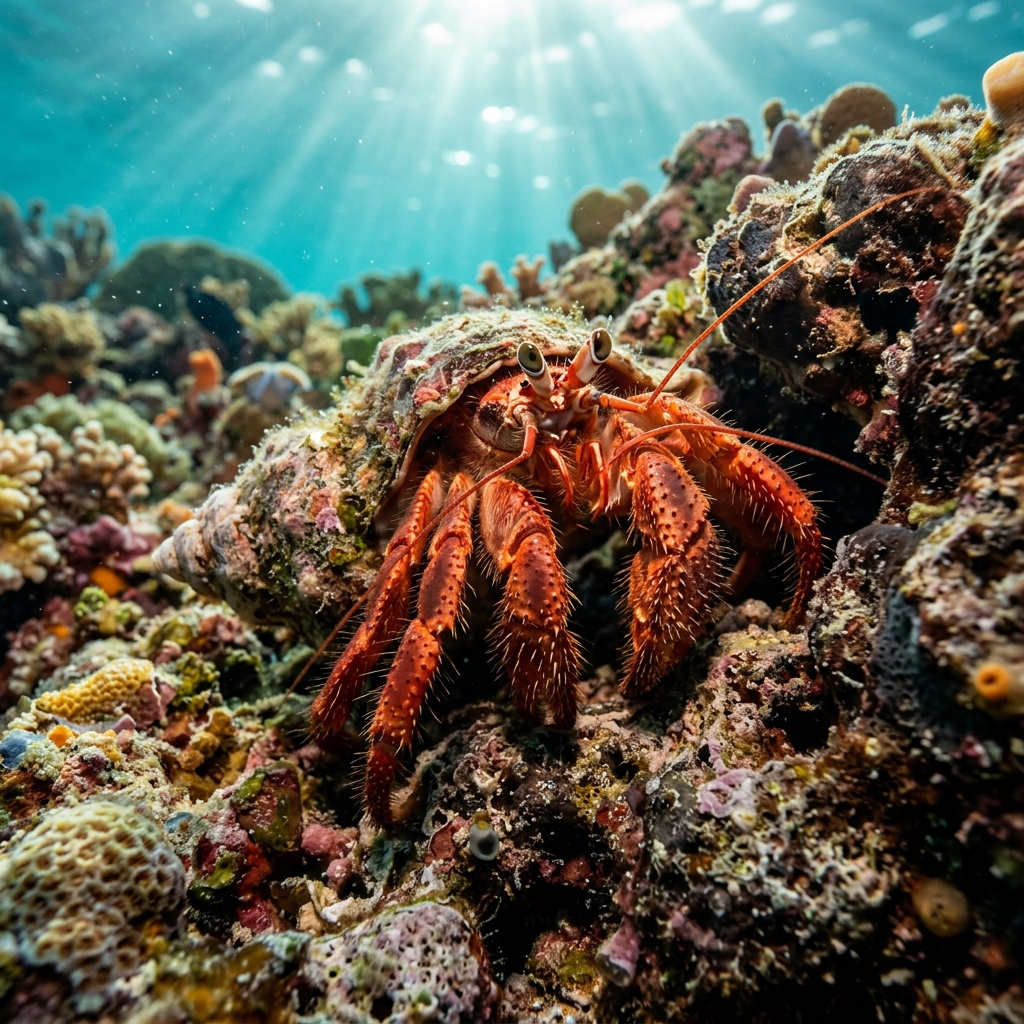
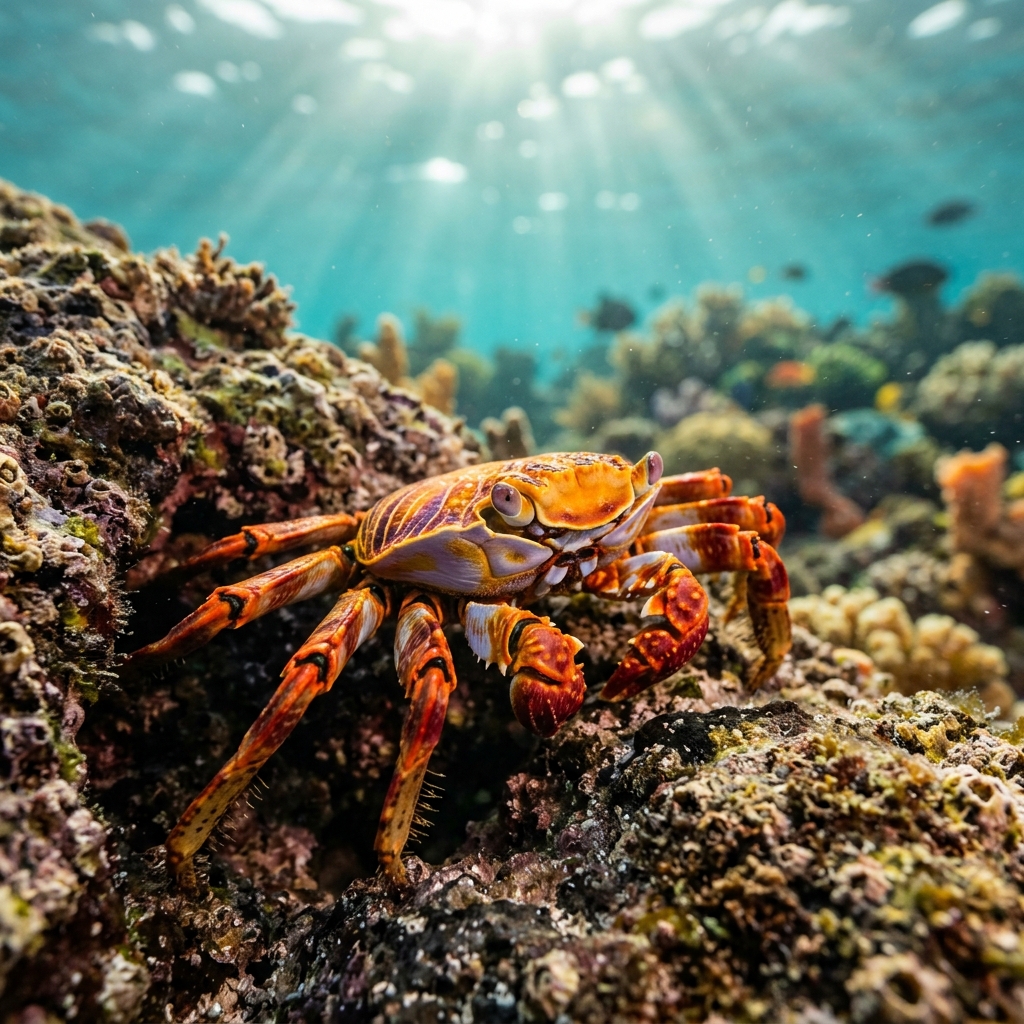
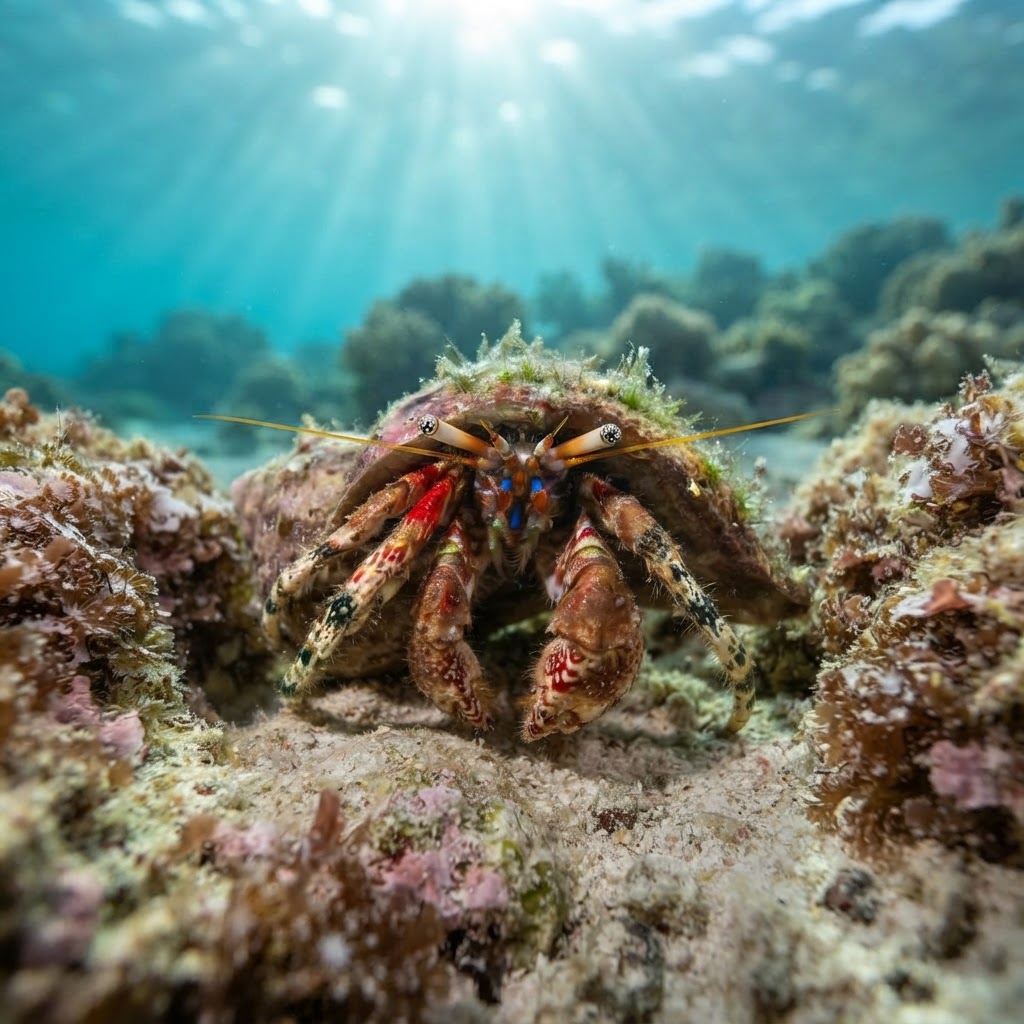
Look for a small hermit crab with bright orange-red legs banded in blue or turquoise near the joints, tucked into a borrowed shell it drags across the reef. The eye stalks are a giveaway too, often a pale blue that stands out against the darker body. It rarely sits still for long, so you'll usually spot the legs first as it shuffles over rubble or coral rock.
Divers usually find it picking its way over rubble patches, coral rock, or reef debris, foraging for scraps rather than sitting exposed on open sand. It's generally unbothered by a slow-moving diver and will keep grazing if you hold still, though it retreats into its shell fast if you get too close or cast a shadow over it. Most sightings come from a close, patient look at the substrate rather than mid-water encounters.
Like all hermit crabs it doesn't grow its own armour: as it outgrows one salvaged shell it goes shell-shopping again, and you can sometimes spot a queue of hermit crabs on a reef all waiting to trade up when a bigger shell becomes free.
No clear seasonal pattern shows up in the sightings, and with a comfortable range of 25.2 to 31.2C it's active on tropical reefs all year round. Plan around good visibility and site access rather than a particular month.
Reef neighbours a diver could mistake it for. Use the identification notes above to tell them apart.
Most reliably logged on reefs around Sabah in Malaysia, where it turns up at more sites than anywhere else in the data, and it's also a steady find around Viti Levu in Fiji. Smaller but consistent numbers come from Sumatra in Indonesia and the Visayas in the Philippines, so it's a fixture across much of the Coral Triangle and the western Pacific.
Mapping where Pretty Hermit Crab is logged…
Sabah in Malaysia is the strongest area for sightings, followed by Viti Levu in Fiji. It also shows up around Sumatra in Indonesia and the Visayas in the Philippines.
There's no strong season in the data, and its 25.2 to 31.2C comfort range means it's present on warm tropical reefs throughout the year.
Check for orange-red legs with blue banding at the joints and pale blue eye stalks, carried inside a scavenged shell. It moves in short bursts over rubble and coral rock rather than swimming.
No. They're harmless, defensive little crabs that retreat into their shell rather than confront anything as large as a diver.
Exact size data isn't confirmed, but like most reef hermit crabs in this family they're a small, easy-to-overlook animal best spotted with a slow, close look at rubble and rock.
Site and sighting data is aggregated from diver logs, iNaturalist and GBIF. For taxonomy and conservation status:
European Green Crab
2,469 sites