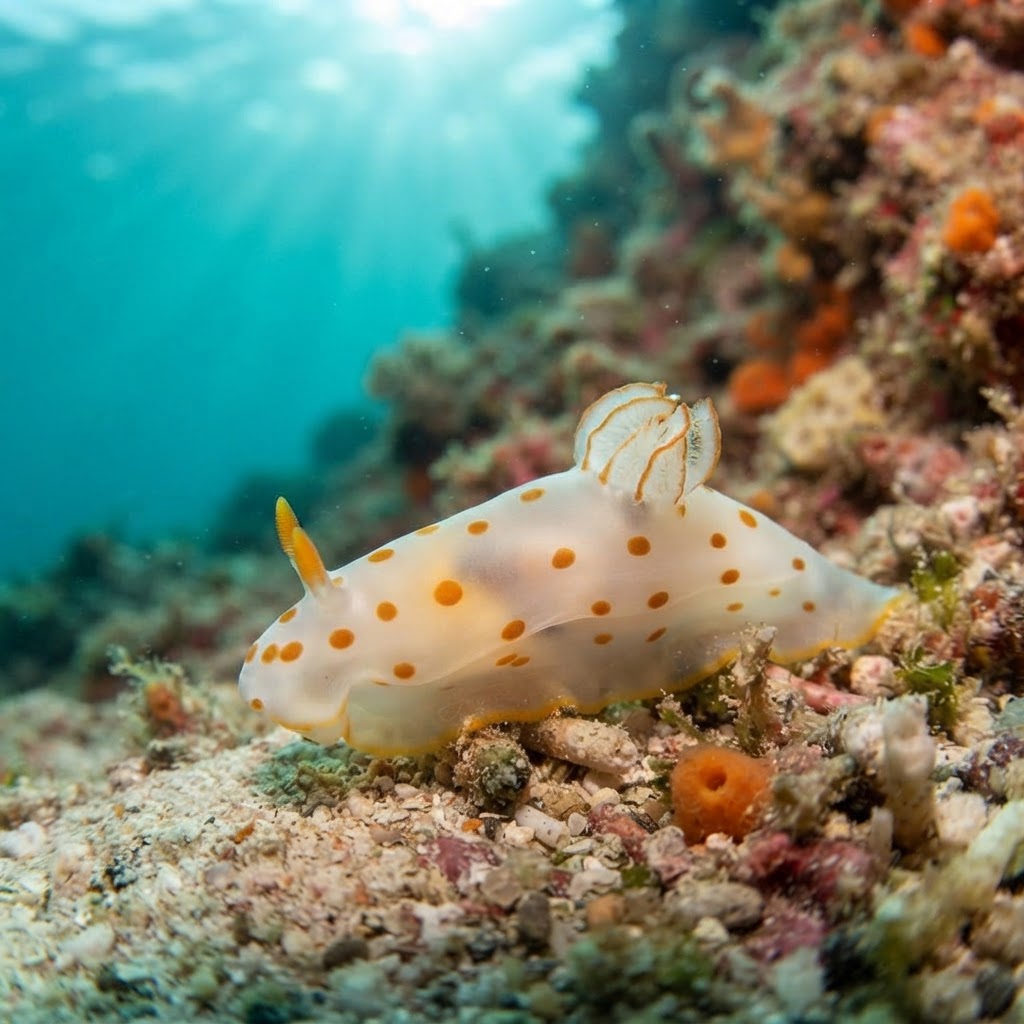
Gymnodoris ceylonica
Spot this small white-spotted nudibranch off Grand Baie, Mauritius, or the UAE's East Coast in warm 23-30C water, year-round.
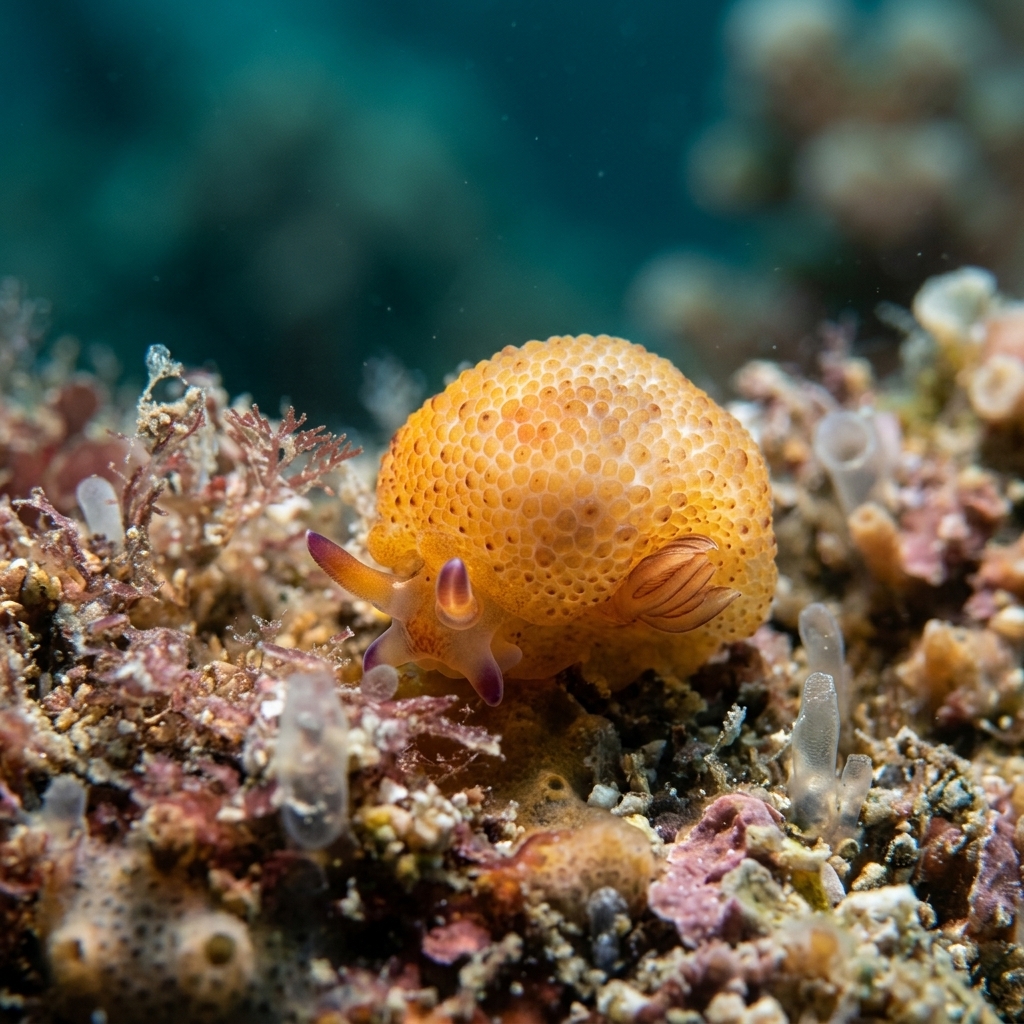
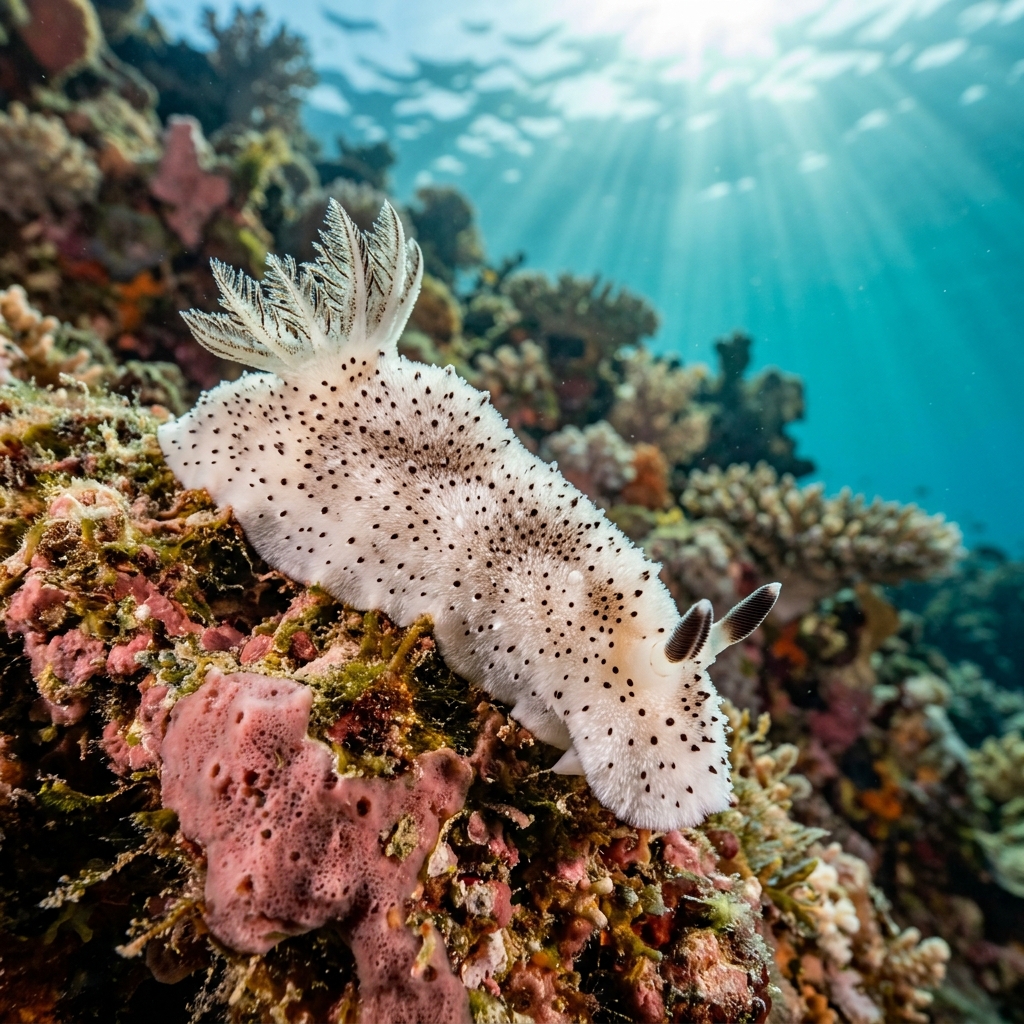
A small, slender nudibranch reaching about 4 cm, with a pale cream to white body scattered with distinct dark polka-dot spots down its back. The body is elongated and slug-like with no obvious frilly gills standing tall, and the head end tapers with two small rhinophores (sensory tentacles) held upright. Its plain, dotted pattern against a smooth pale background is the main giveaway among the reef's more flamboyant nudibranchs.
Found moving slowly over reef substrate and rubble, usually at a measured pace as it searches for prey rather than reacting to divers. Like other Gymnodoris species it hunts other sea slugs and small invertebrates rather than grazing on sponges, so it's often spotted close to the substrate rather than out in open water. It shows no defensive reaction to divers and simply carries on hunting when approached slowly.
Unlike most nudibranchs that graze sponges or hydroids, Gymnodoris species are active predators of other sea slugs, making this one of the reef's small-scale hunters rather than a grazer.
Sightings show no detectable seasonal pattern, and with a comfortable range of 23.1 to 29.5C it can turn up on tropical reefs any month of the year. Plan around good macro conditions at your chosen site rather than a specific season.
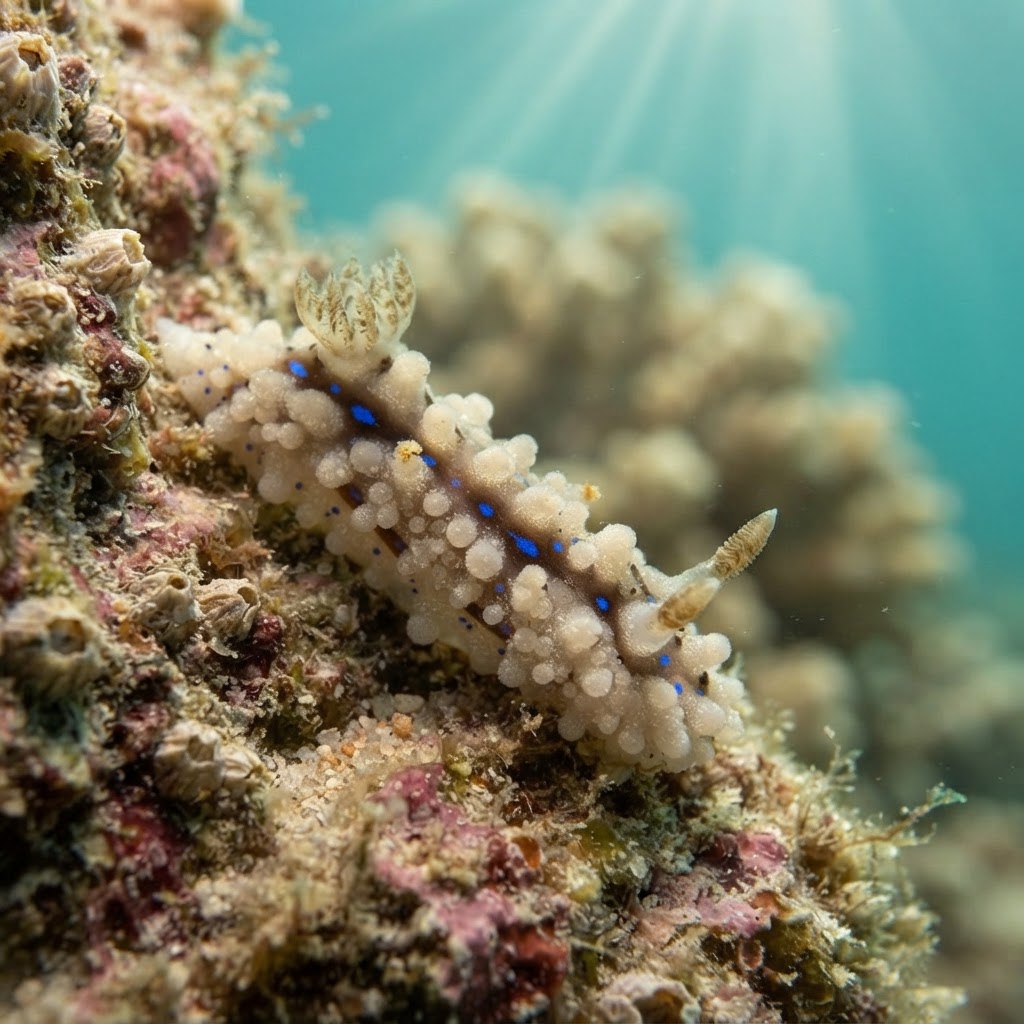
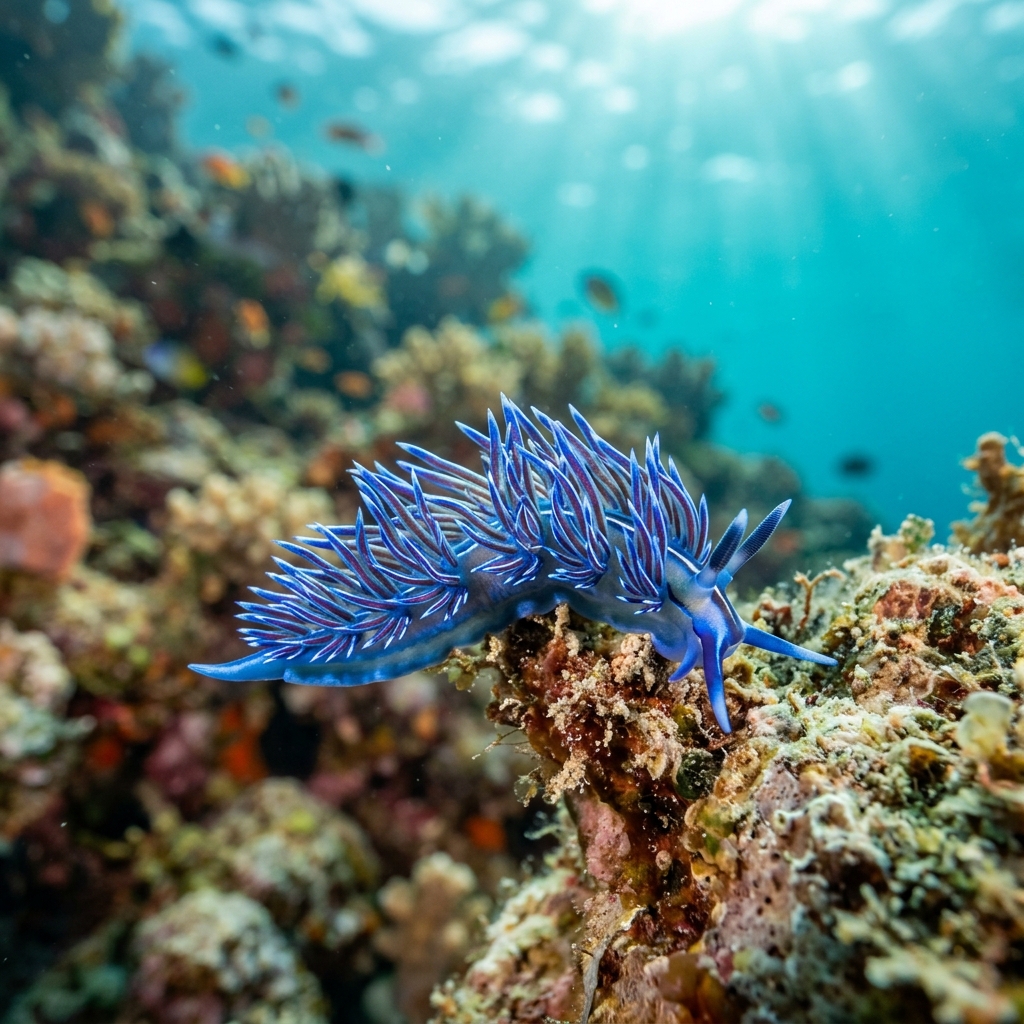
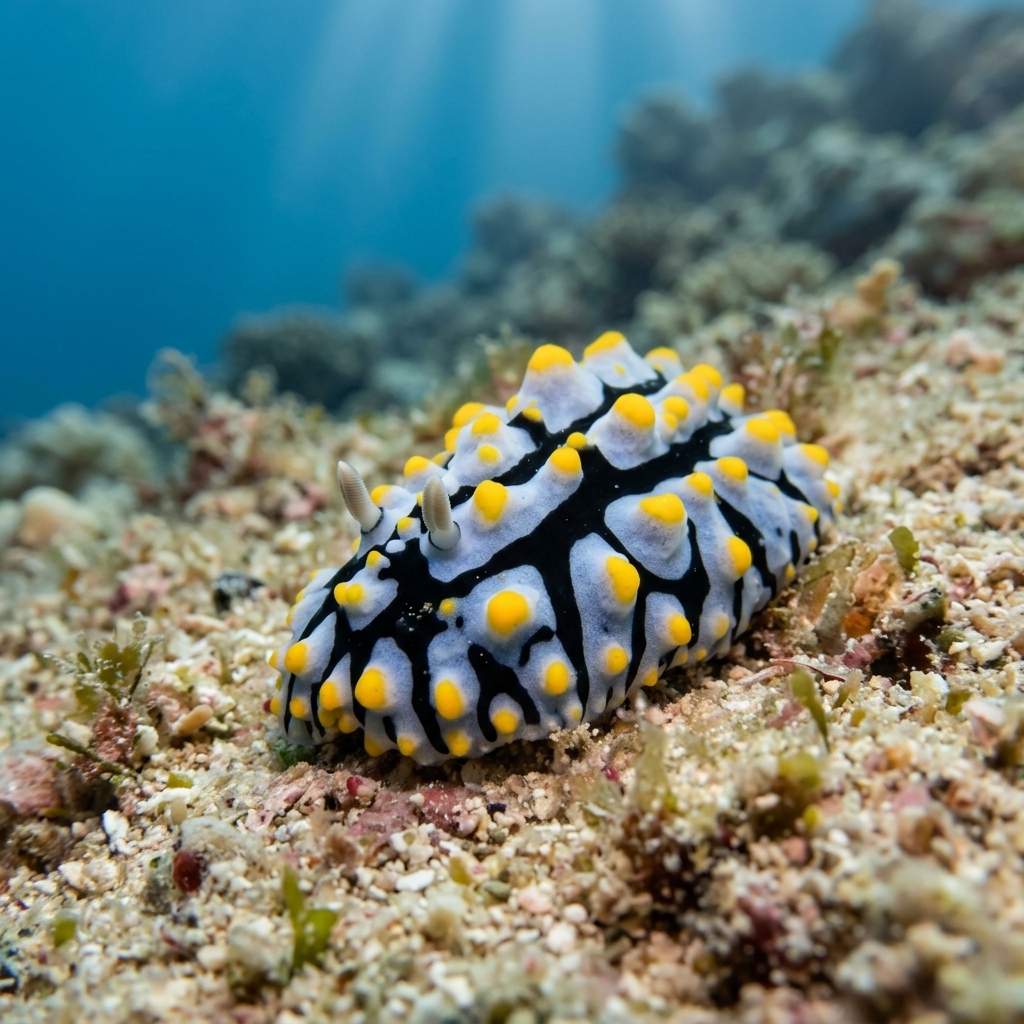
Reef neighbours a diver could mistake it for. Use the identification notes above to tell them apart.
Most reliably logged around Grand Baie and Trou aux Biches in Mauritius, which together account for the bulk of sightings, and along the East Coast of the United Arab Emirates. Smaller but consistent numbers turn up in Bali (Indonesia), Queensland and New South Wales in Australia, and at sites in Luzon, Philippines, and South Sinai, Egypt.
Mapping where Polka-dot Gobble Dorid is logged…
Best chances are around Grand Baie and Trou aux Biches in Mauritius, and along the East Coast of the United Arab Emirates. It's also been logged in Bali, coastal Australia, the Philippines, and Egypt's South Sinai.
There's no strong seasonal pattern in sightings, and it tolerates a wide warm-water range of roughly 23 to 29.5C, so it's a year-round find on the reefs where it occurs.
Look for a small, pale, slender nudibranch around 4 cm long with distinct dark polka-dot spots scattered across its back. It lacks the bright colour blocks of many reef nudibranchs, so the plain background with dots is the key clue.
They typically reach around 4 cm in length, making them a small macro subject best spotted with a careful eye or a macro lens.
Unlike most nudibranchs that feed on sponges or hydroids, this species actively hunts and eats other sea slugs, making it one of the reef's predatory nudibranchs rather than a grazer.
No, they pose no threat to divers and can be observed safely at close range without any risk of sting or bite.
Site and sighting data is aggregated from diver logs, iNaturalist and GBIF. For taxonomy and conservation status:
Light-spotted Aegires
3,168 sites