Calamus pennatula
Uncommon but reliable in Sint Eustatius and Puerto Rico, pluma cruise warm reefs at 25 to 28C year-round.
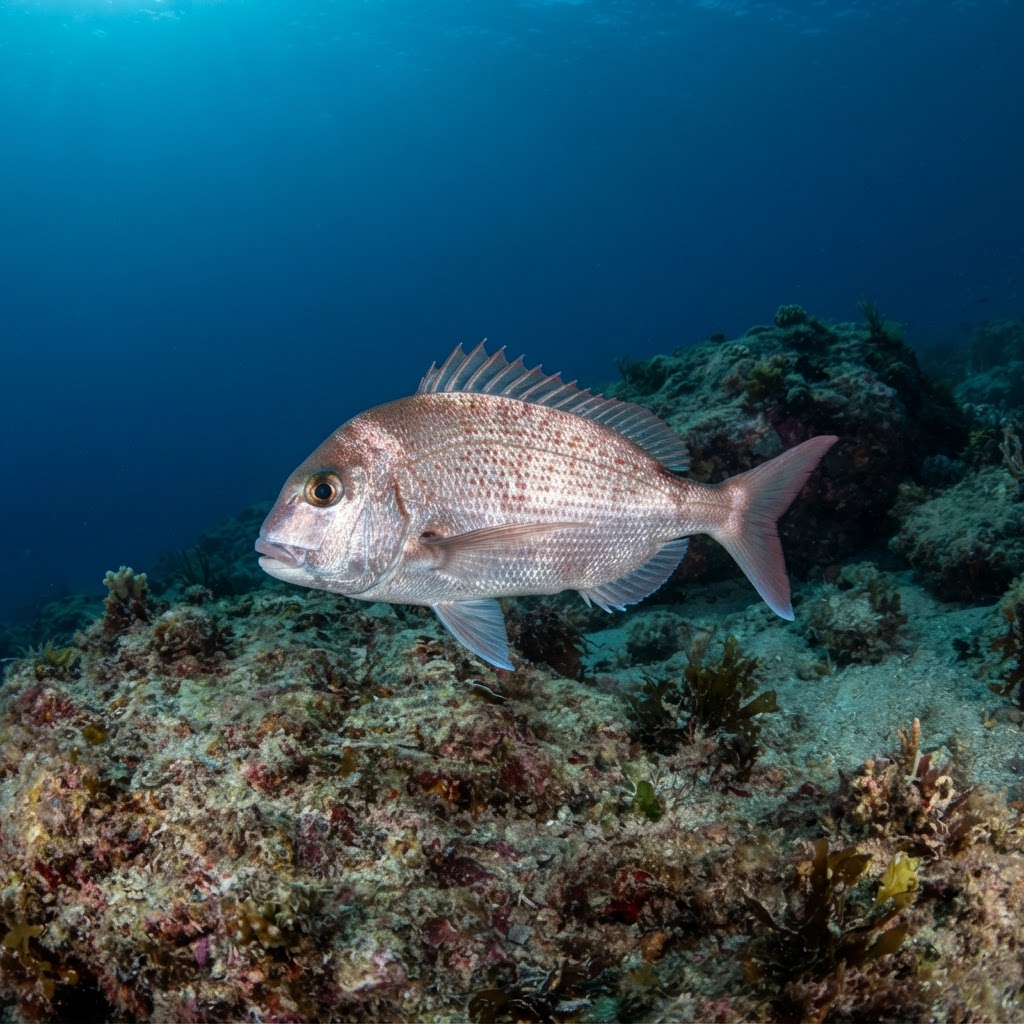
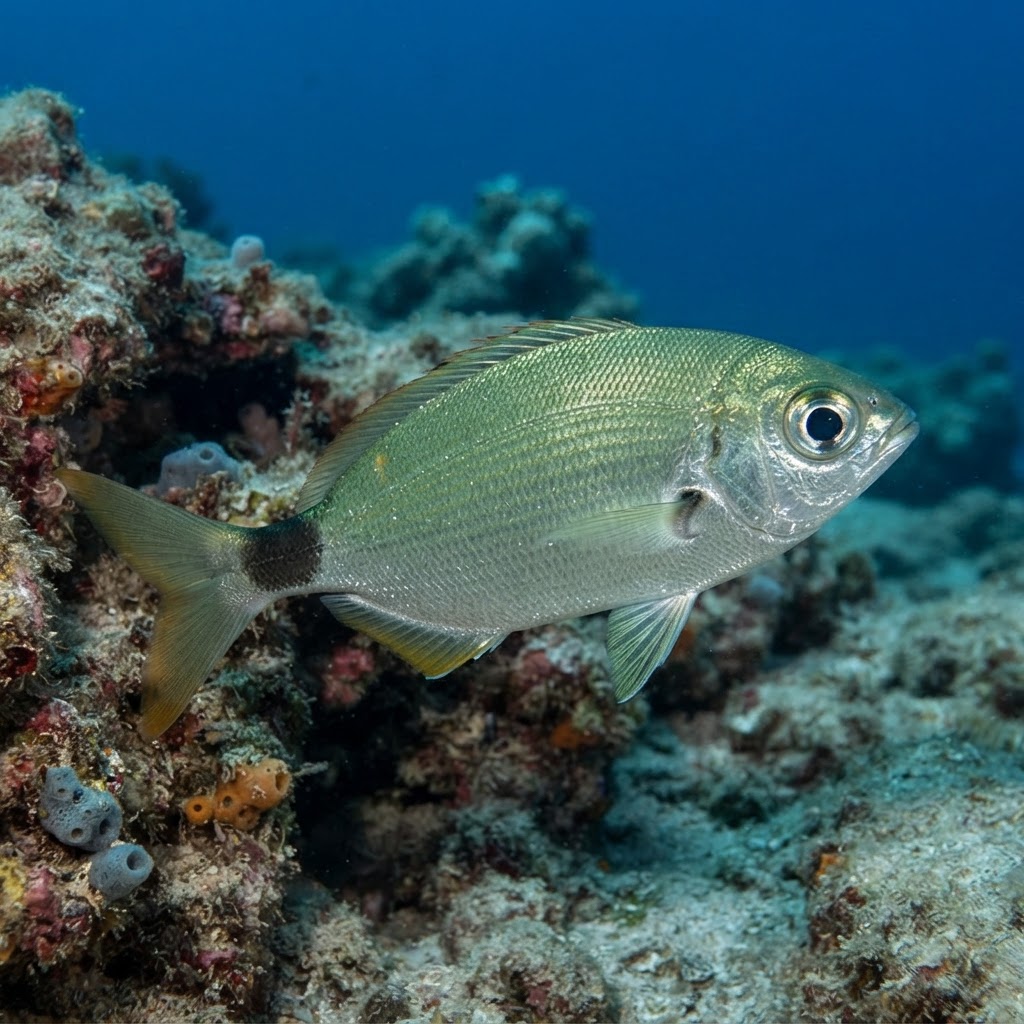
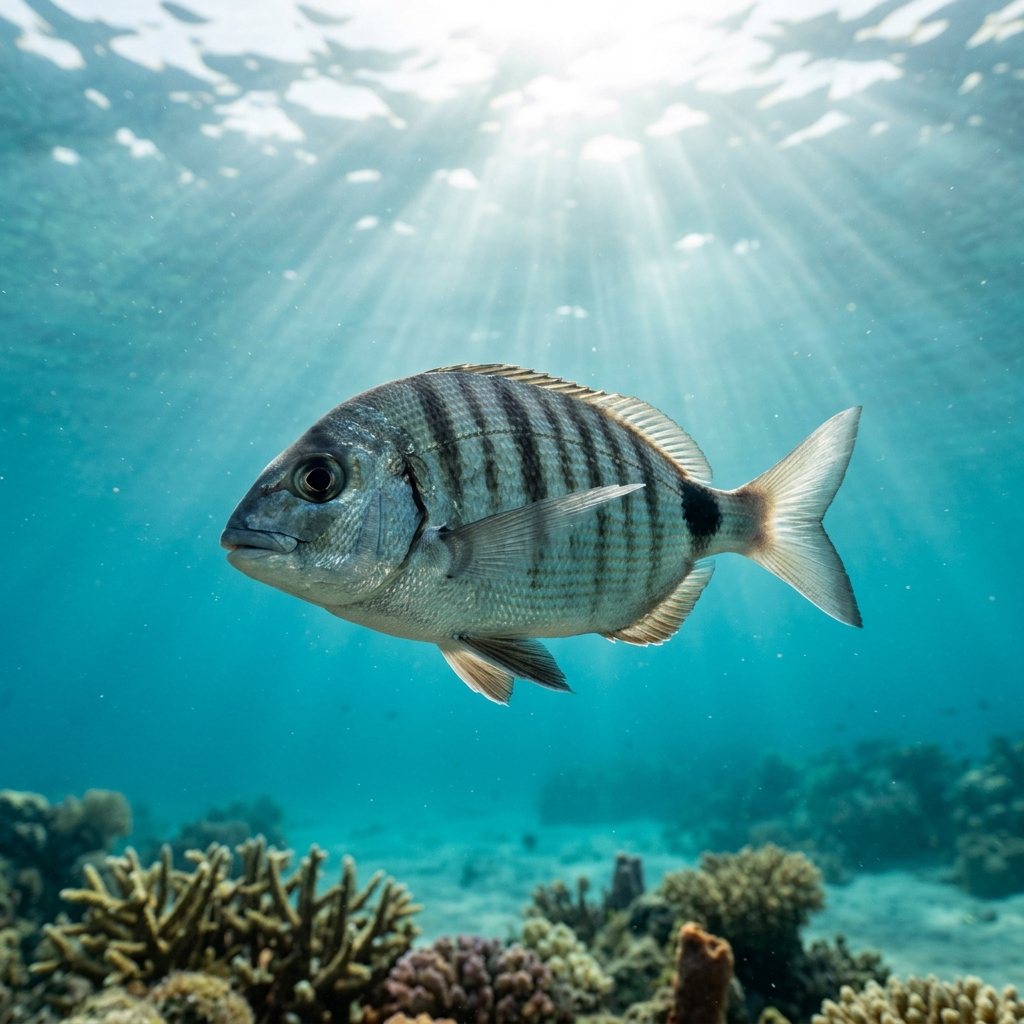
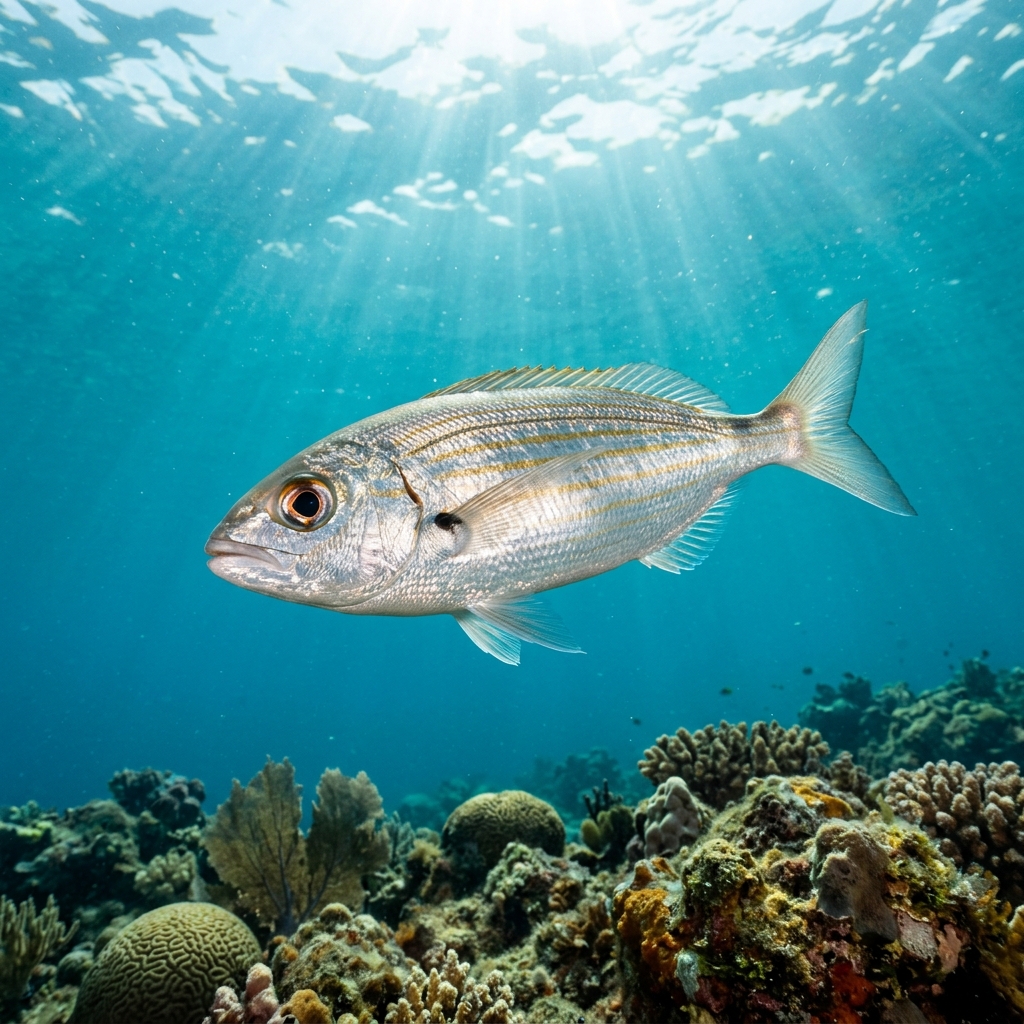
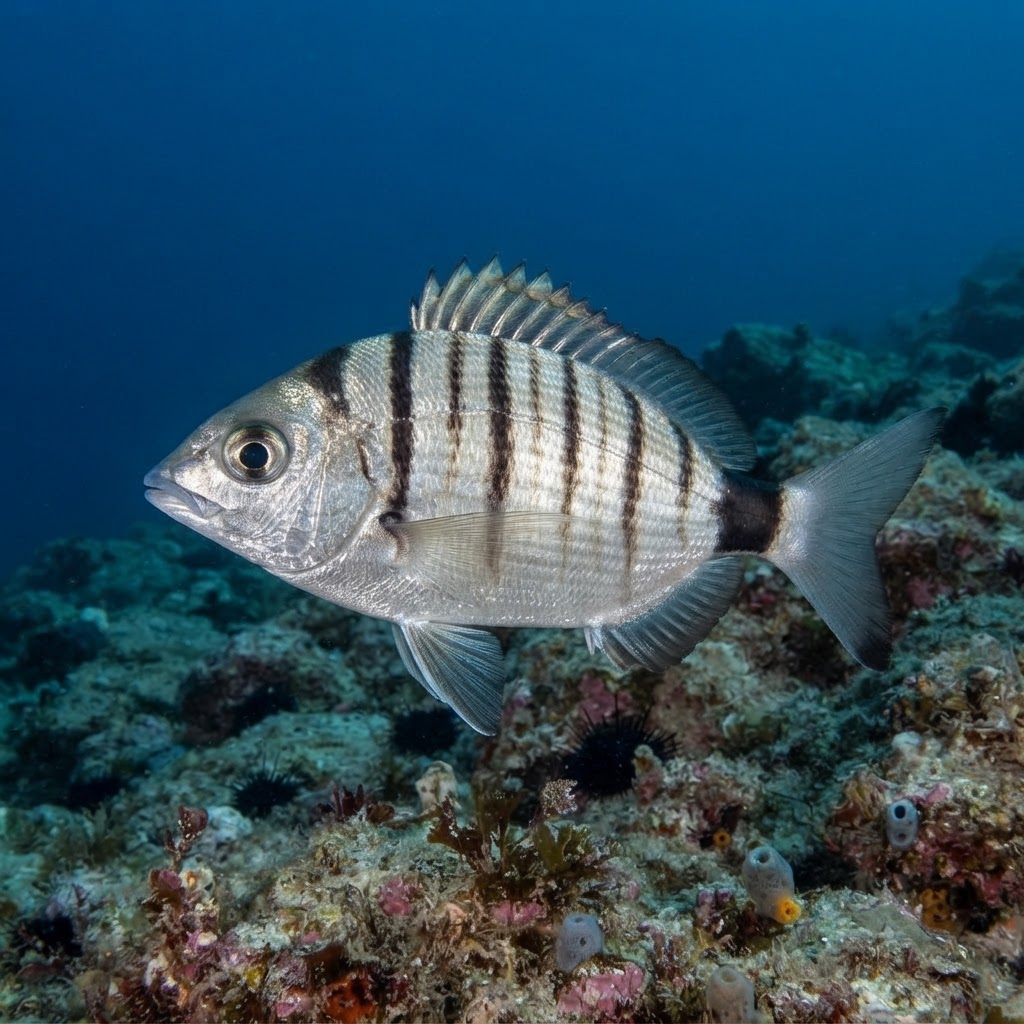
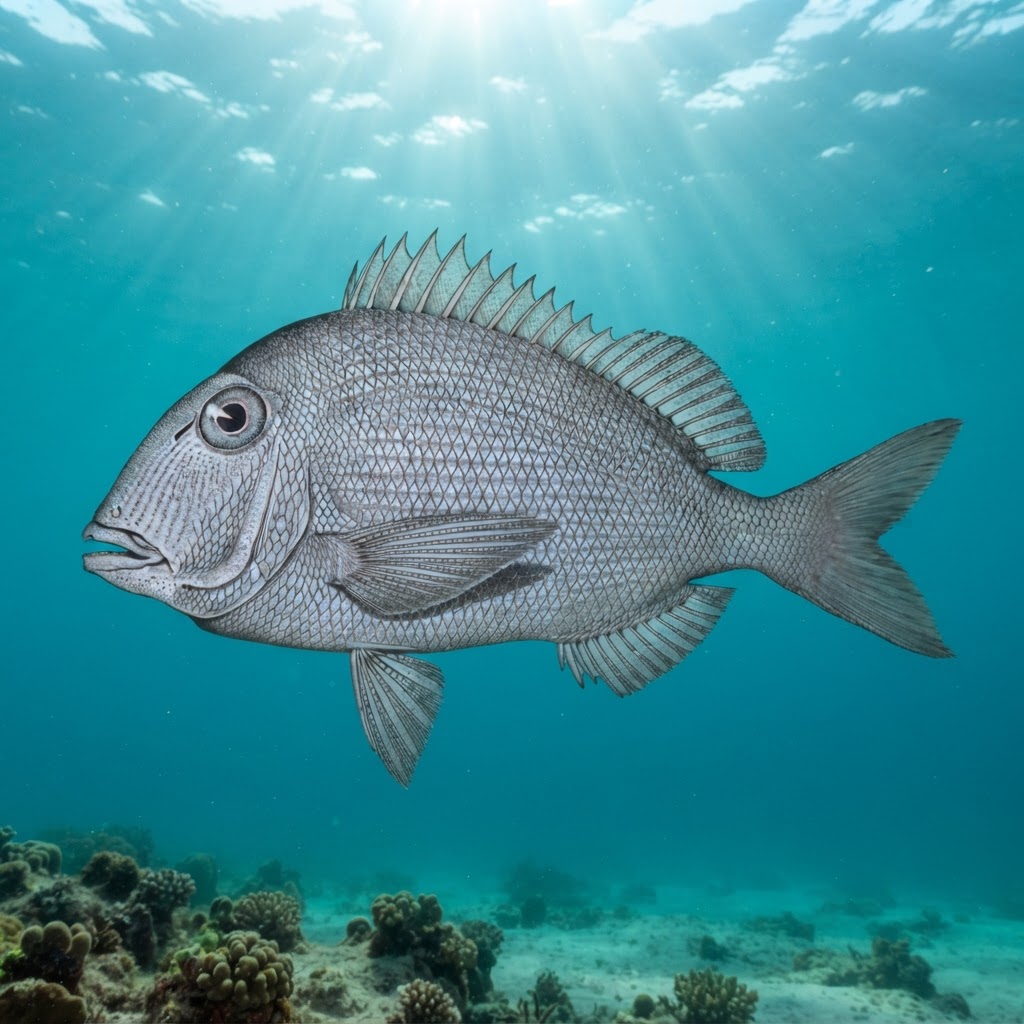
Look for a silvery, oval-bodied fish around 26cm with a steep, blunt profile and a small mouth set low for picking at the bottom. Faint blue lines and spots cross the cheeks and gill area, standing out against the pale body when light hits it. The dorsal fin runs long and low, and the overall shape reads as a fairly typical sea bream silhouette, deep-bodied rather than elongated.
Divers typically find pluma cruising low over reef and sandy patches, often alone or in loose company with other bream, working the bottom for food rather than schooling in open water. It tends to keep a bit of distance and isn't especially bold around divers, so a slow, low approach gives the best look. Most sightings are the classic mid-dive reef encounter rather than anything tied to a particular time of day.
Like other Calamus sea bream, pluma has strong, blunt teeth adapted for crushing hard-shelled invertebrates picked off the reef floor, a useful clue if you spot one working the sand with its head down.
No clear seasonal pattern shows up in the data, and with water sitting in a comfortable 25.4 to 28.0C range across its logged sites, pluma seem to be a year-round fixture rather than a seasonal visitor.
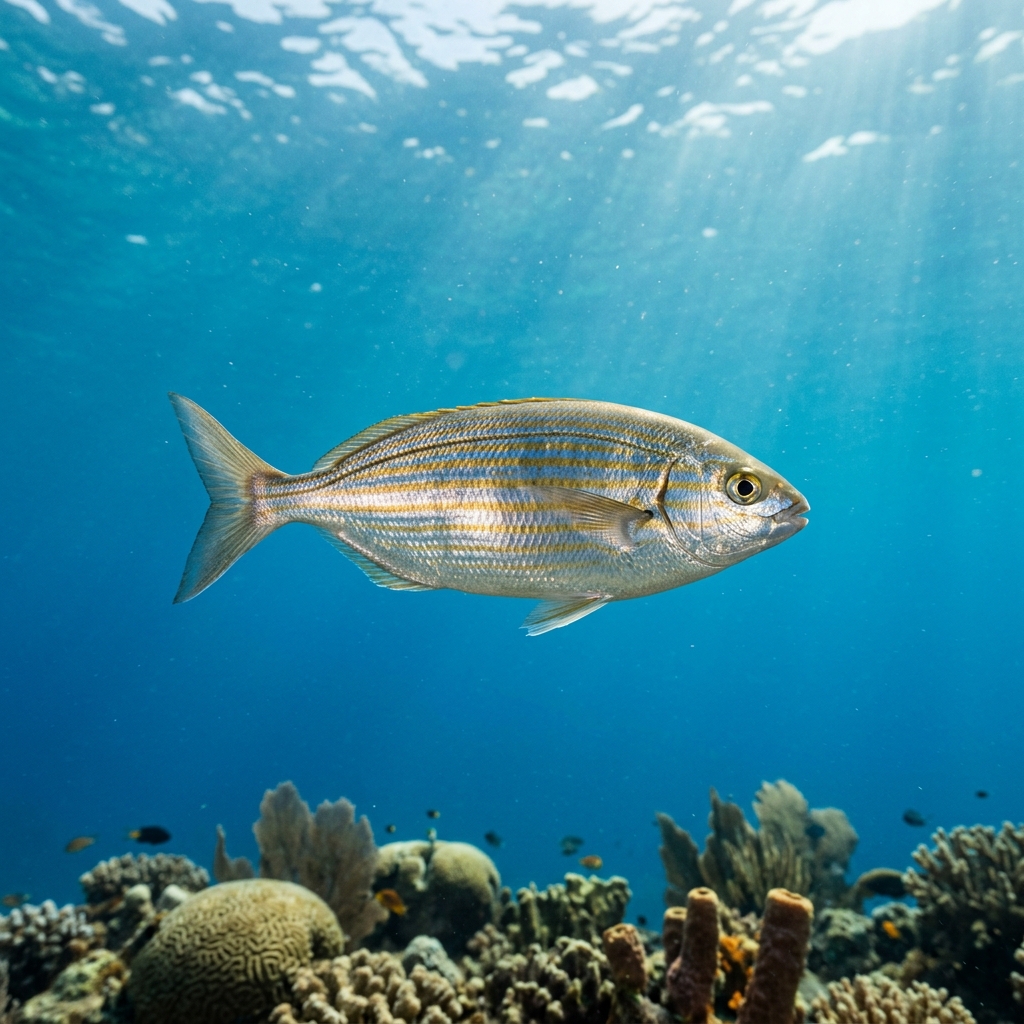
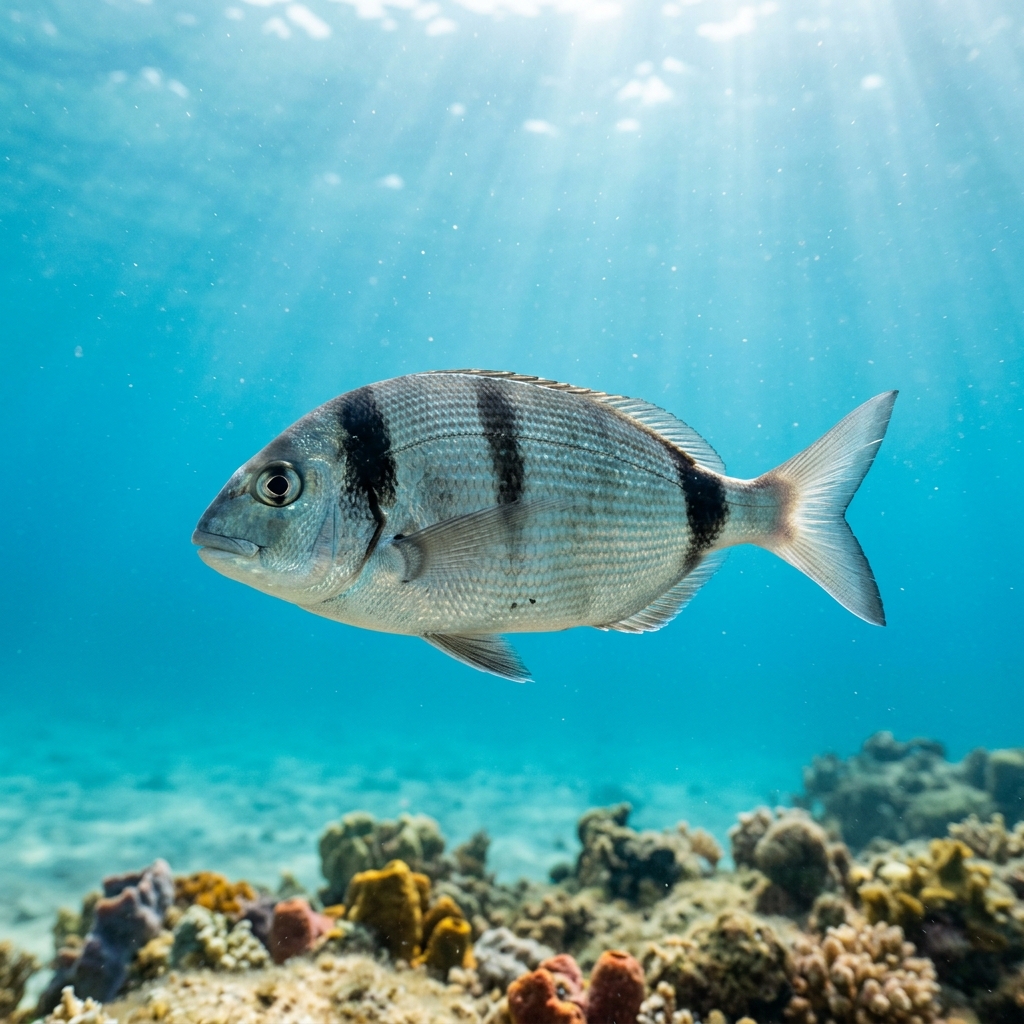
Reef neighbours a diver could mistake it for. Use the identification notes above to tell them apart.
Sint Eustatius is by far the most reliable place to find pluma, with sightings spread across more sites there than anywhere else logged. Puerto Rico, Antigua and Barbuda, and Guadeloupe (particularly around Basse-Terre) also produce steady, if less frequent, sightings on Caribbean reefs.
Mapping where Pluma is logged…
Sint Eustatius offers the most consistent sightings, with additional records from Puerto Rico, Antigua and Barbuda, and Guadeloupe's Basse-Terre region. Across all these sites it's logged as uncommon rather than a guaranteed sighting.
There's no strong seasonal signal in the sighting data, and the warm water it favours, 25.4 to 28.0C, holds steady year-round across its Caribbean range, so any month is a reasonable bet.
Check for a silvery, deep-bodied fish around 26cm with a blunt head profile and faint blue markings on the cheeks. It sits low over reef or sand, feeding with a small, downturned mouth rather than schooling in the water column.
Pluma typically reach around 26cm, a modest, mid-sized reef fish rather than anything imposing.
No, pluma pose no danger to divers. They're a calm, non-aggressive reef fish that keeps its distance rather than approaching.
Site and sighting data is aggregated from diver logs, iNaturalist and GBIF. For taxonomy and conservation status:
Saddled Bream
3,846 sites