Plakobranchus papua
A muck-diving find logged across Luzon, Koh Tao and Tufi in warm 26-32C water, this sea slug rewards divers who slow down and scan the sand.
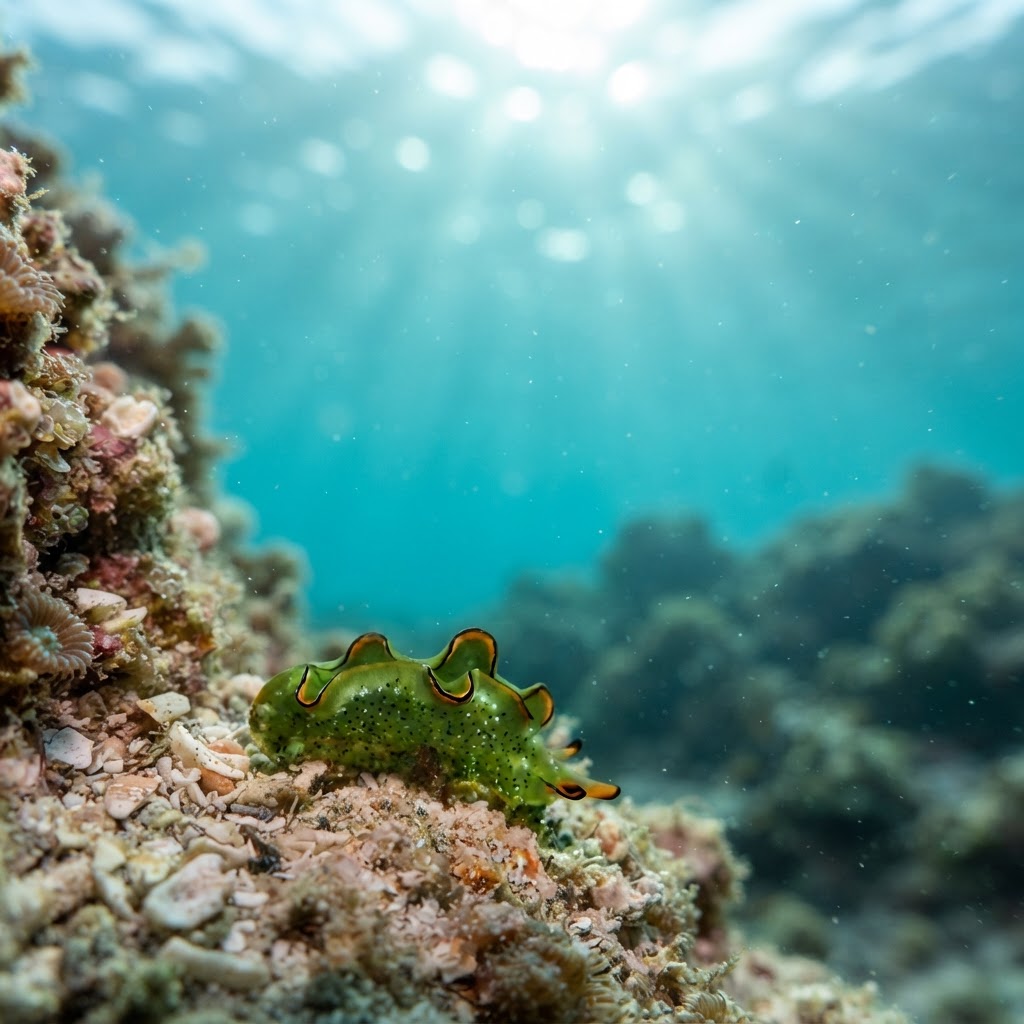
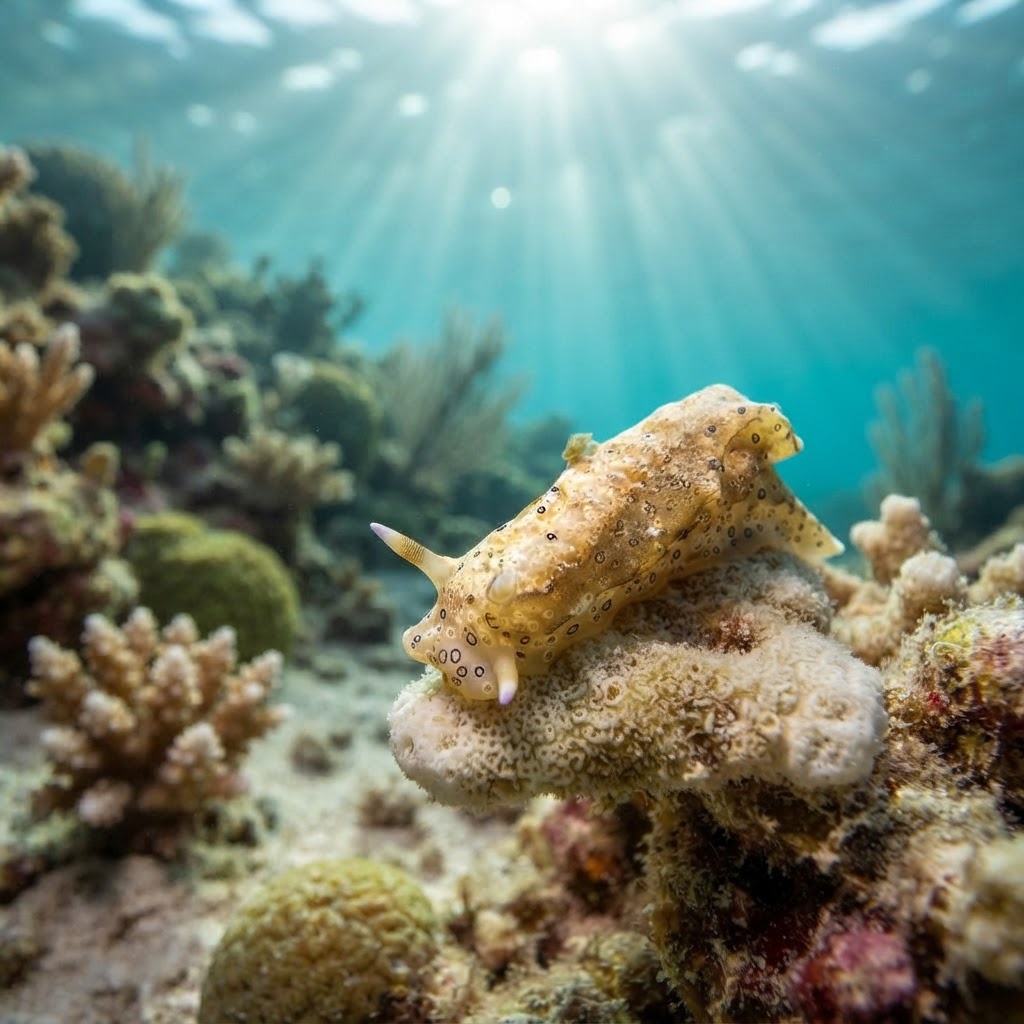
Recognisable by a flattened, leaf-shaped body with mottled brown, green and cream patterning that breaks up its outline against sand and algae. It moves slowly across the substrate and lacks the frilly external gills of many other sea slugs, giving it a smoother, almost solar-panelled look along the back. Most sightings are of a single animal a few centimetres long, easy to miss unless you are looking closely at sandy or rubble patches.
Divers typically find it parked on sand, rubble or low algae, moving at a crawl and paying no attention to a diver hovering nearby. It is the kind of animal you find by scanning slowly during a muck or reef dive rather than by chasing movement, and it shows up most often as a lone individual rather than in groups.
Like other sacoglossan slugs in its family, it is thought to feed on algae and can retain functioning chloroplasts from its food inside its own tissue, effectively running on a bit of borrowed photosynthesis between meals.
No clear seasonal pattern shows up in the data, and with a comfortable range of roughly 25.7 to 31.7C it is likely present on these reefs year-round. Plan around good visibility and calm conditions for spotting it rather than a particular month.
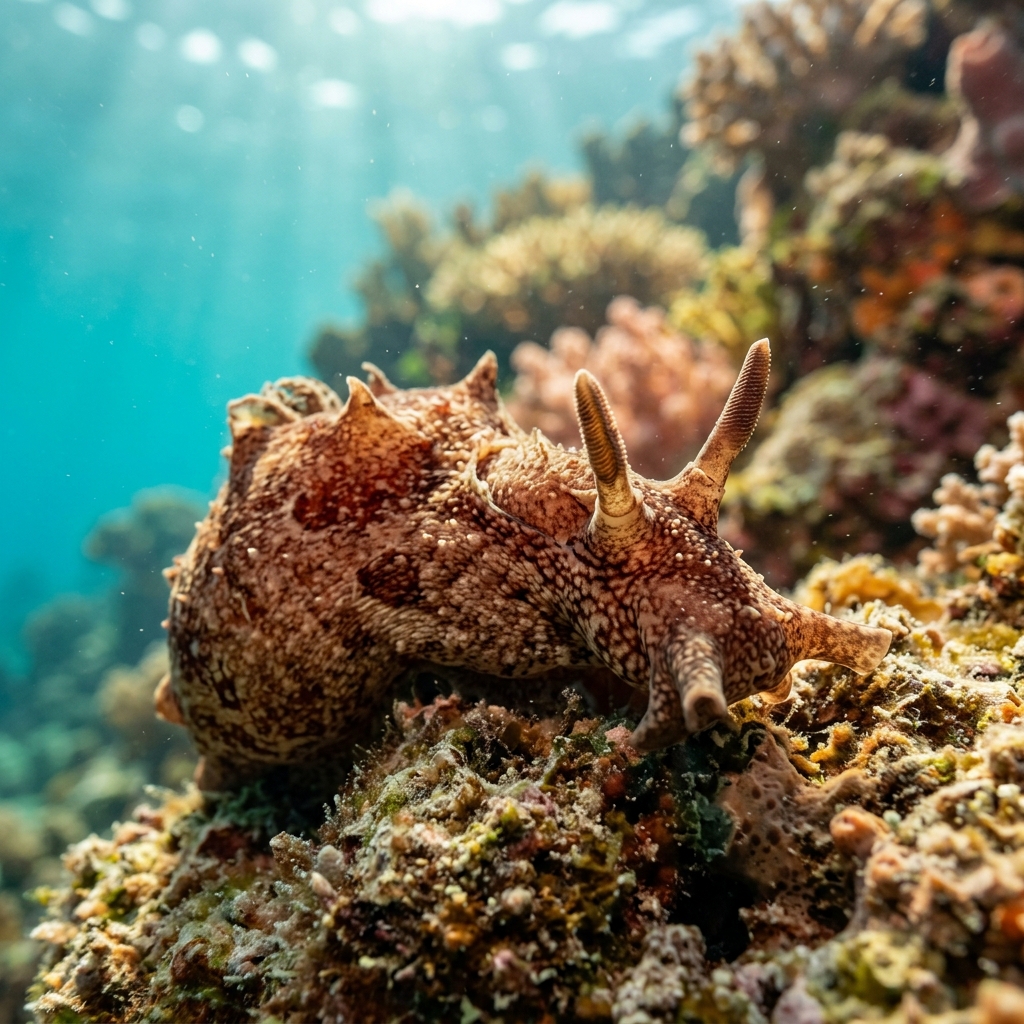
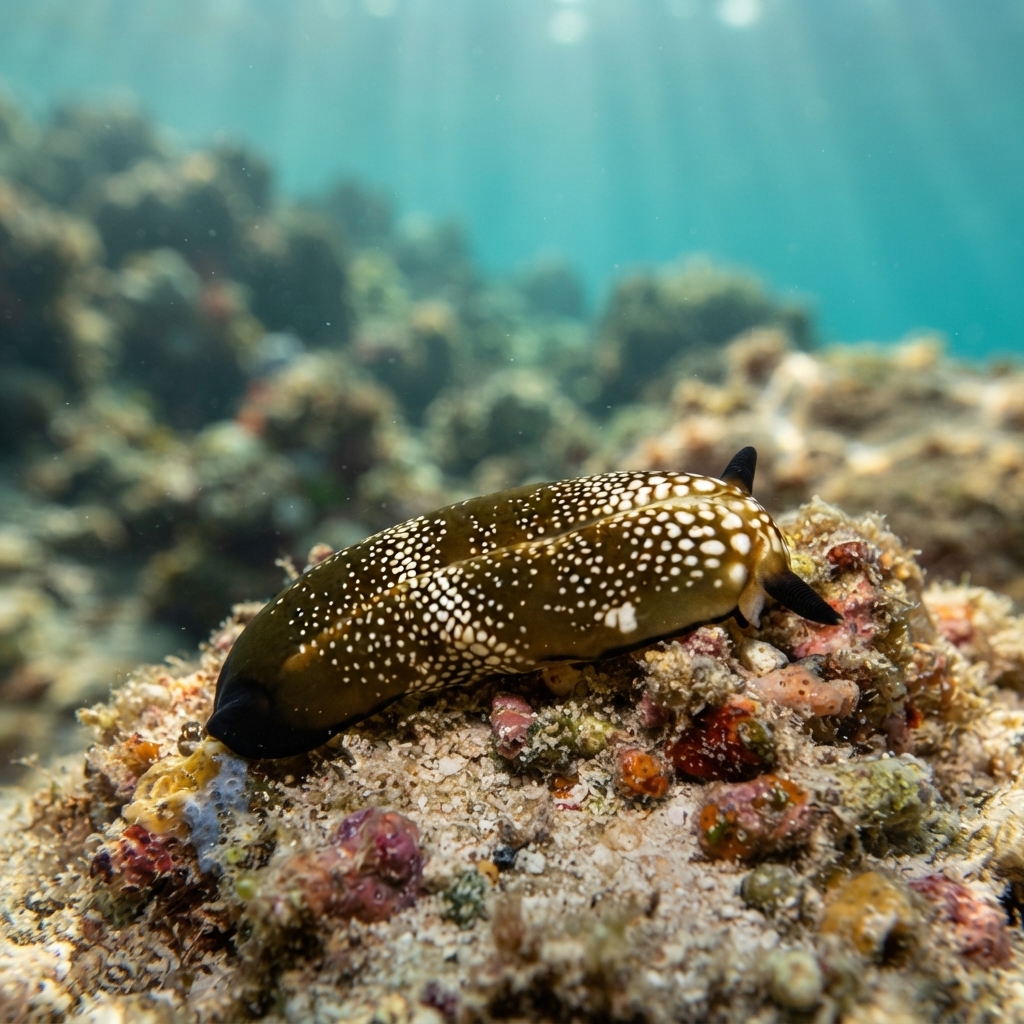
Reef neighbours a diver could mistake it for. Use the identification notes above to tell them apart.
Most reliably logged in the Philippines, especially around Luzon, with a solid secondary population at Koh Tao in Thailand. Tufi in Papua New Guinea also turns up sightings regularly, while Raja Ampat in Indonesia has produced at least one confirmed record.
Mapping where Papua Plakobranchus is logged…
It is most commonly logged in the Philippines, particularly around Luzon, with reliable sightings at Koh Tao in Thailand and Tufi in Papua New Guinea. A single record also comes from Raja Ampat, Indonesia.
There is no strong season in the sighting data, and it tolerates a wide warm-water range of about 25.7 to 31.7C, so it is likely findable year-round on the reefs where it occurs.
Look for a small, flattened, leaf-shaped slug in mottled brown, green and cream tones lying on sand or rubble. It lacks obvious external gills or bright contrasting stripes, so it blends in and needs a slow, close look to spot.
Exact size data is not confirmed, but like related sap-sucking slugs it is a small animal, typically only a few centimetres long, easy to overlook against sand or algae.
It belongs to a slug family known for stealing chloroplasts from the algae it eats and keeping them alive inside its own tissue, giving it a limited ability to photosynthesise between feeds.
No. It poses no threat to divers and simply continues crawling across the substrate when approached.
Site and sighting data is aggregated from diver logs, iNaturalist and GBIF. For taxonomy and conservation status:
Light-spotted Aegires
3,168 sites