Bothidae spp.
Spot lefteye flounders from Hawaii to the Maldives. Learn how to ID these camouflaged flatfish and when to dive with them in the Indo-Pacific and beyond.
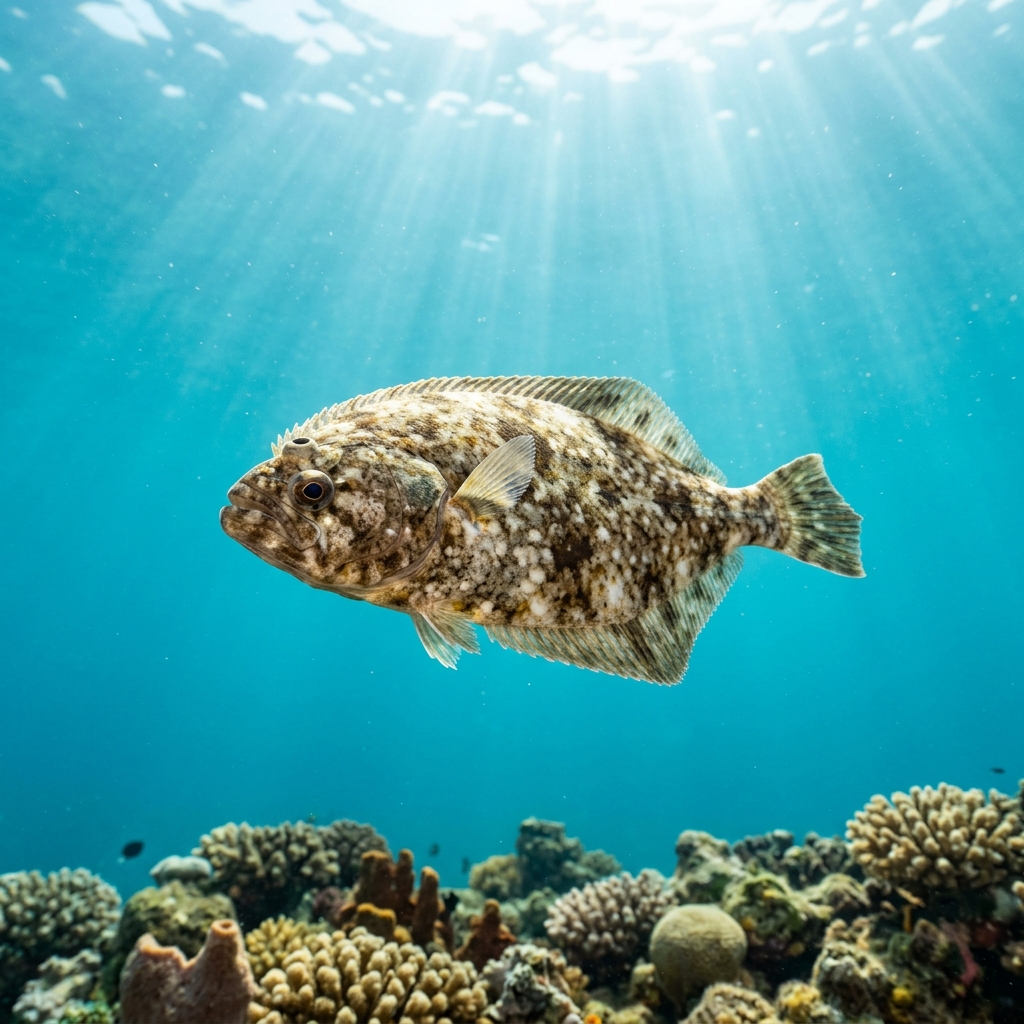
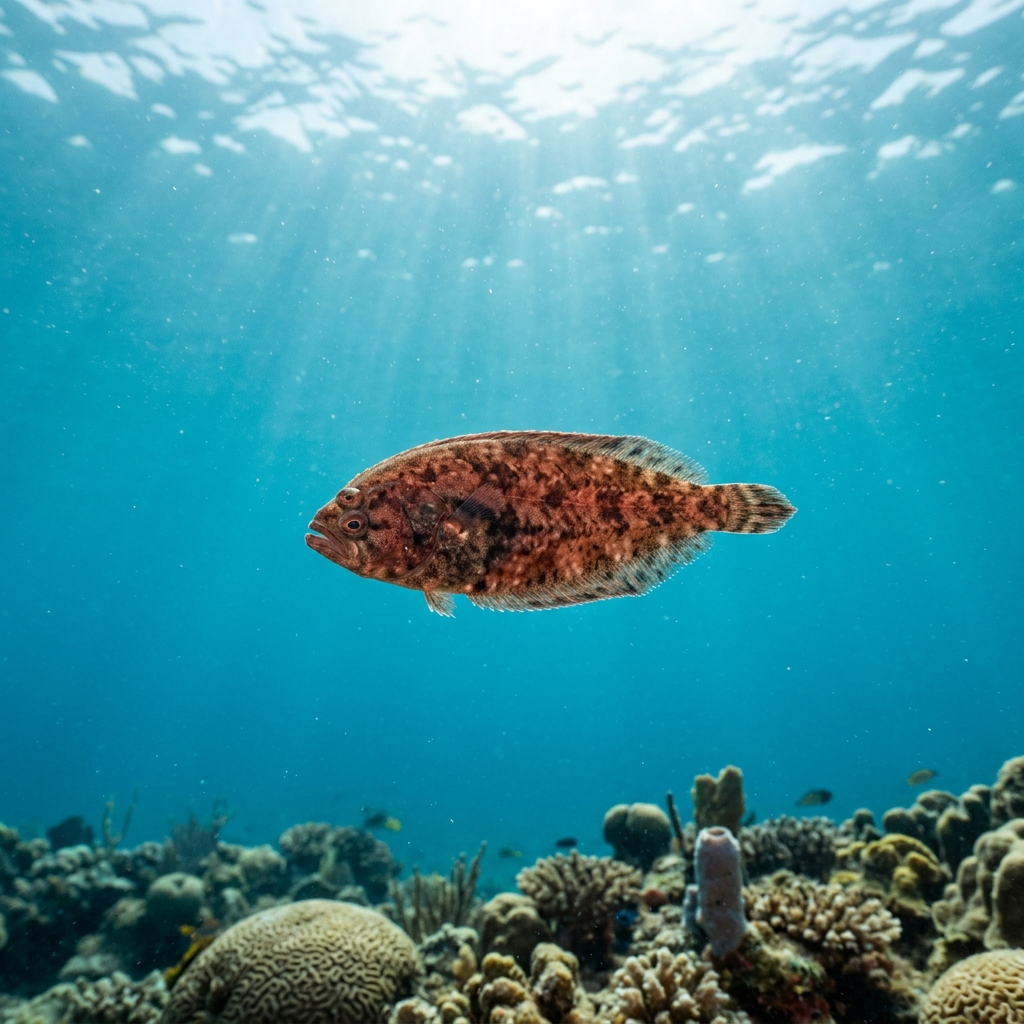
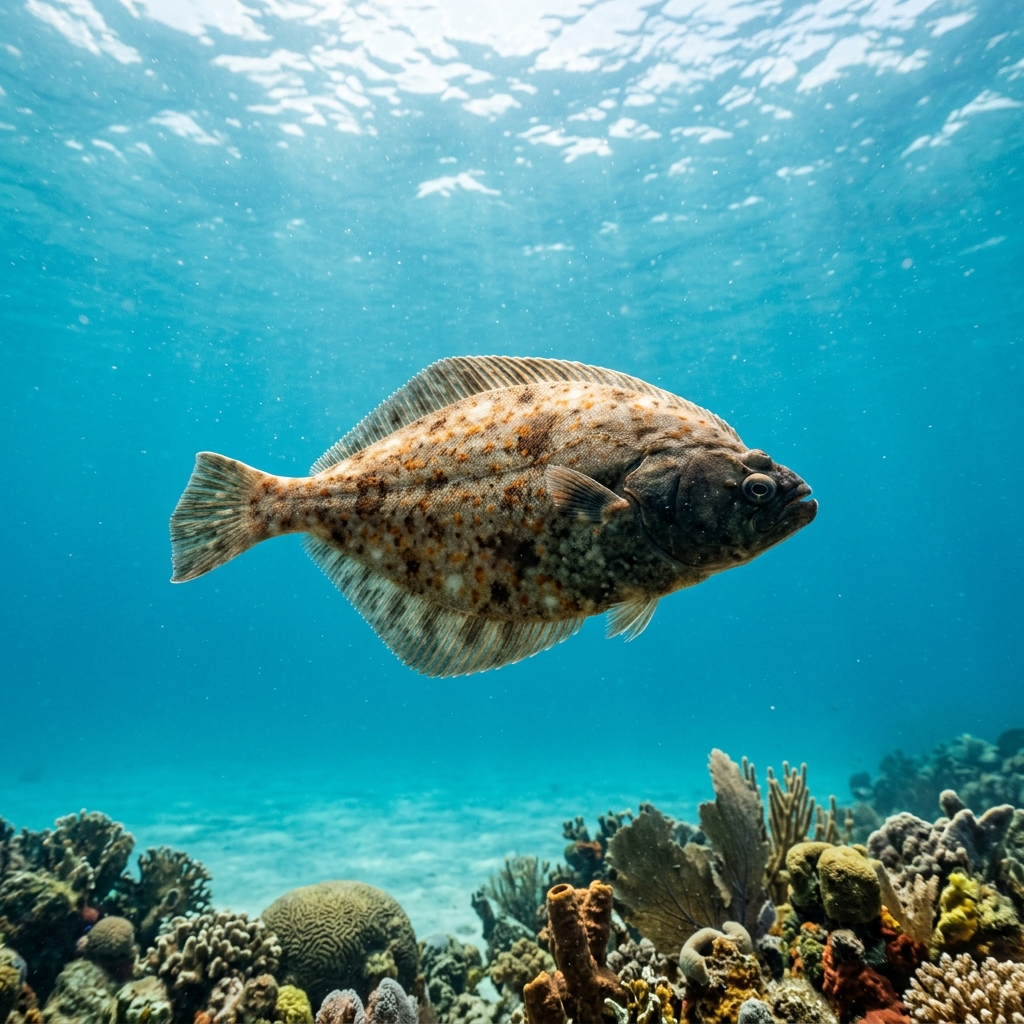
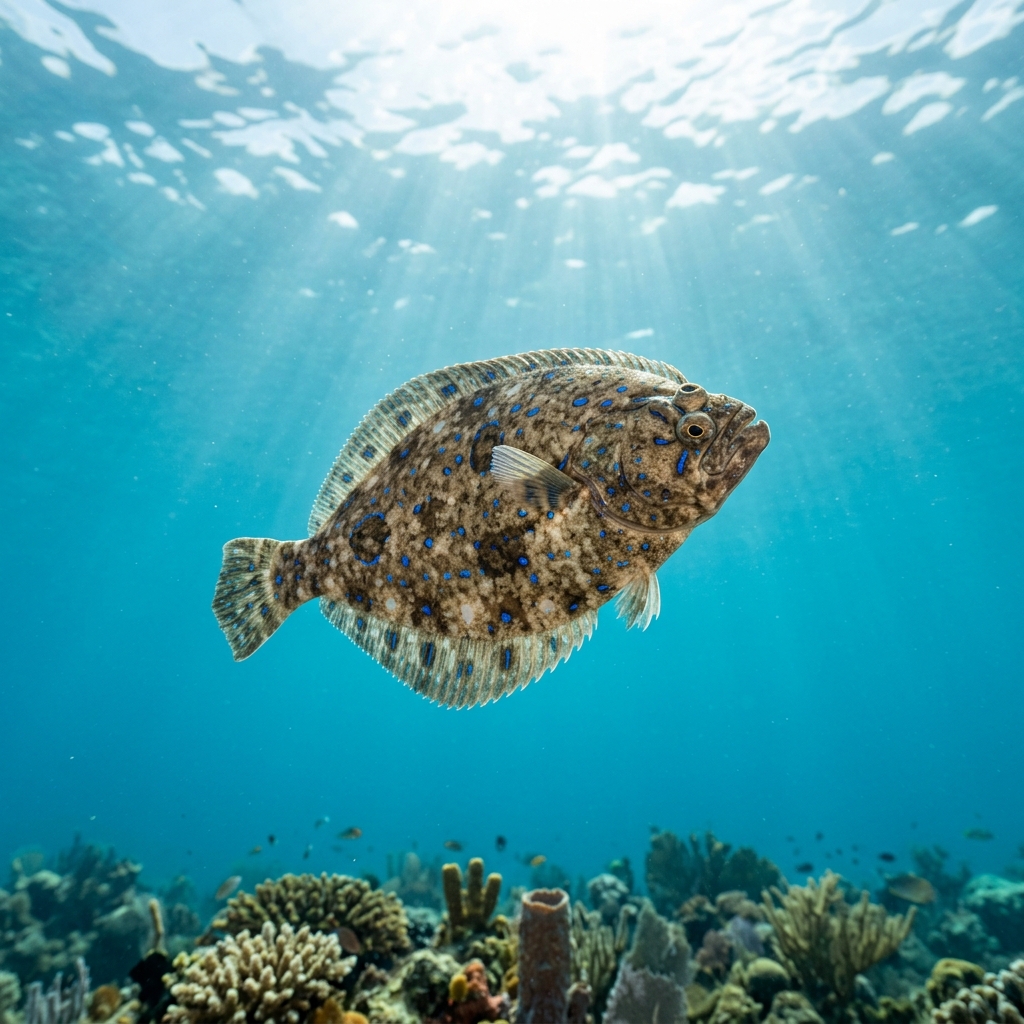
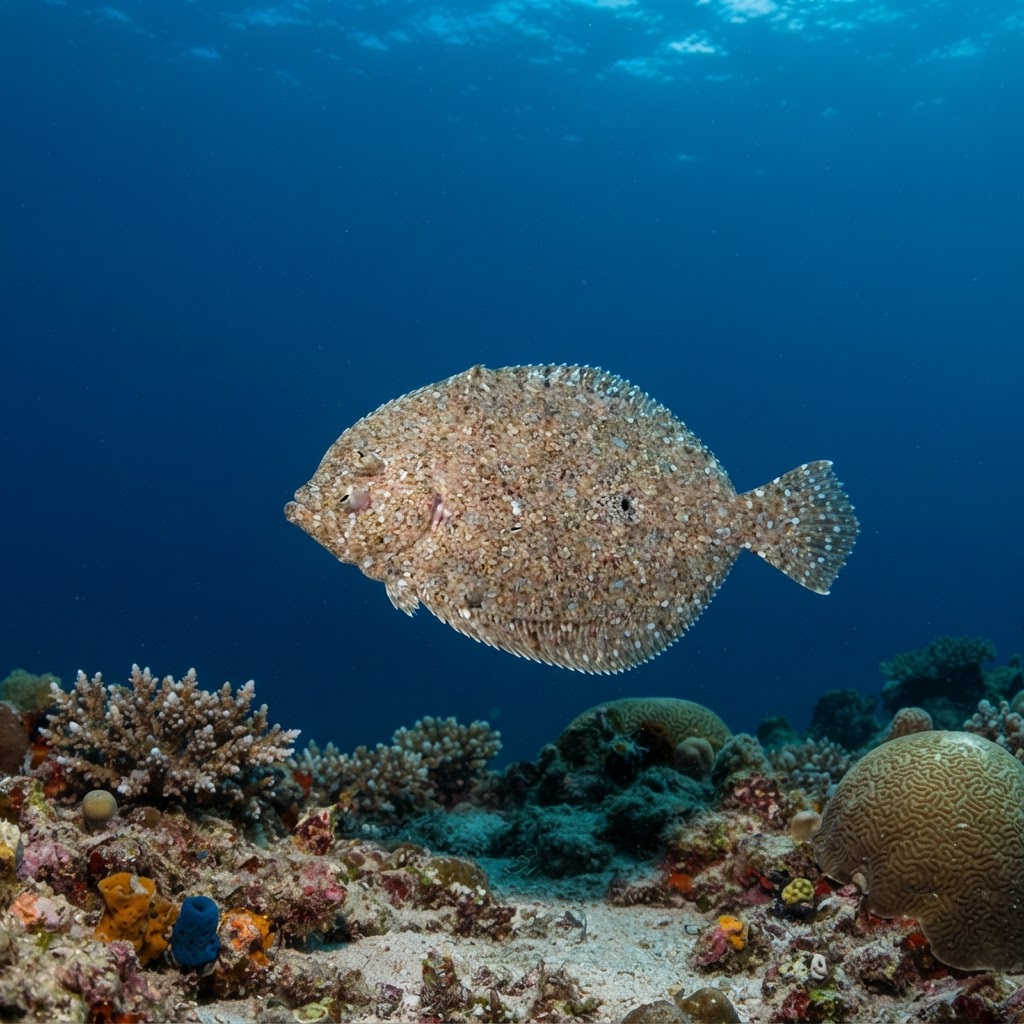
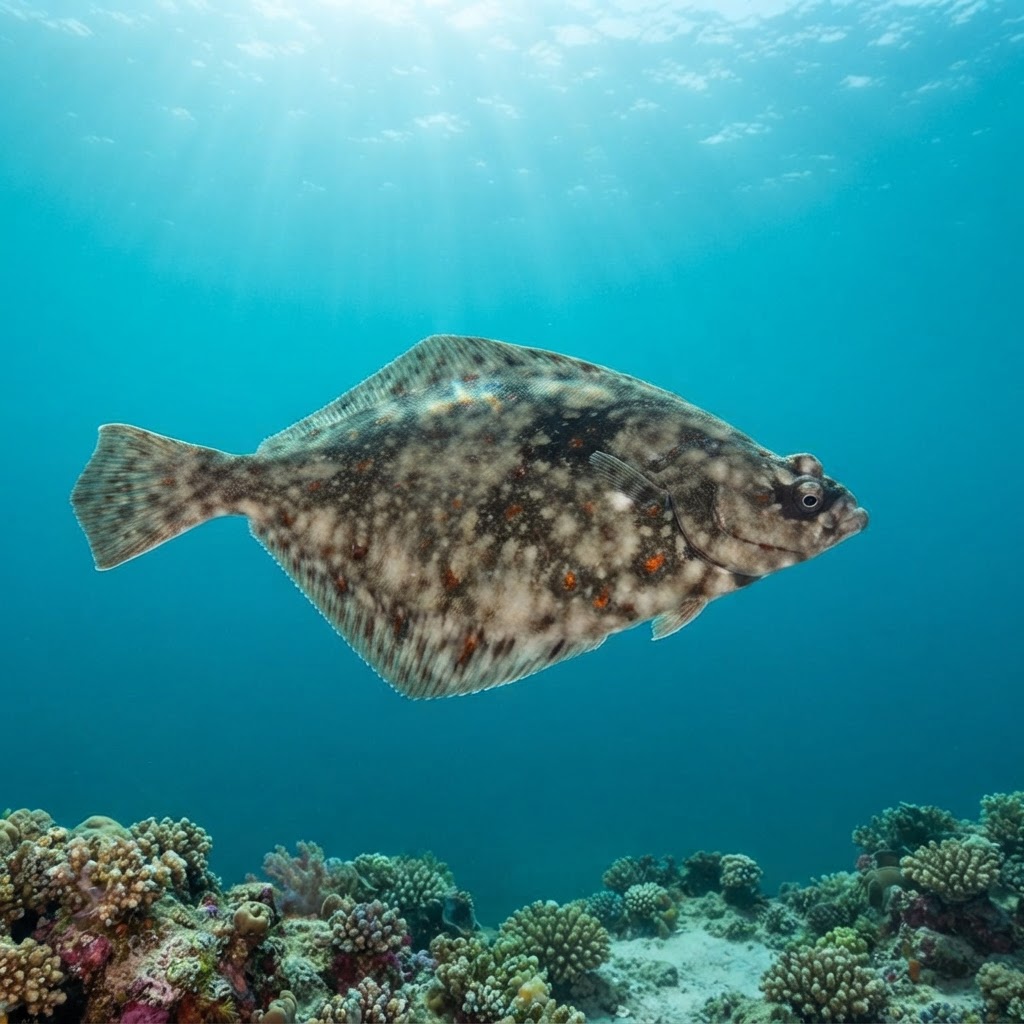
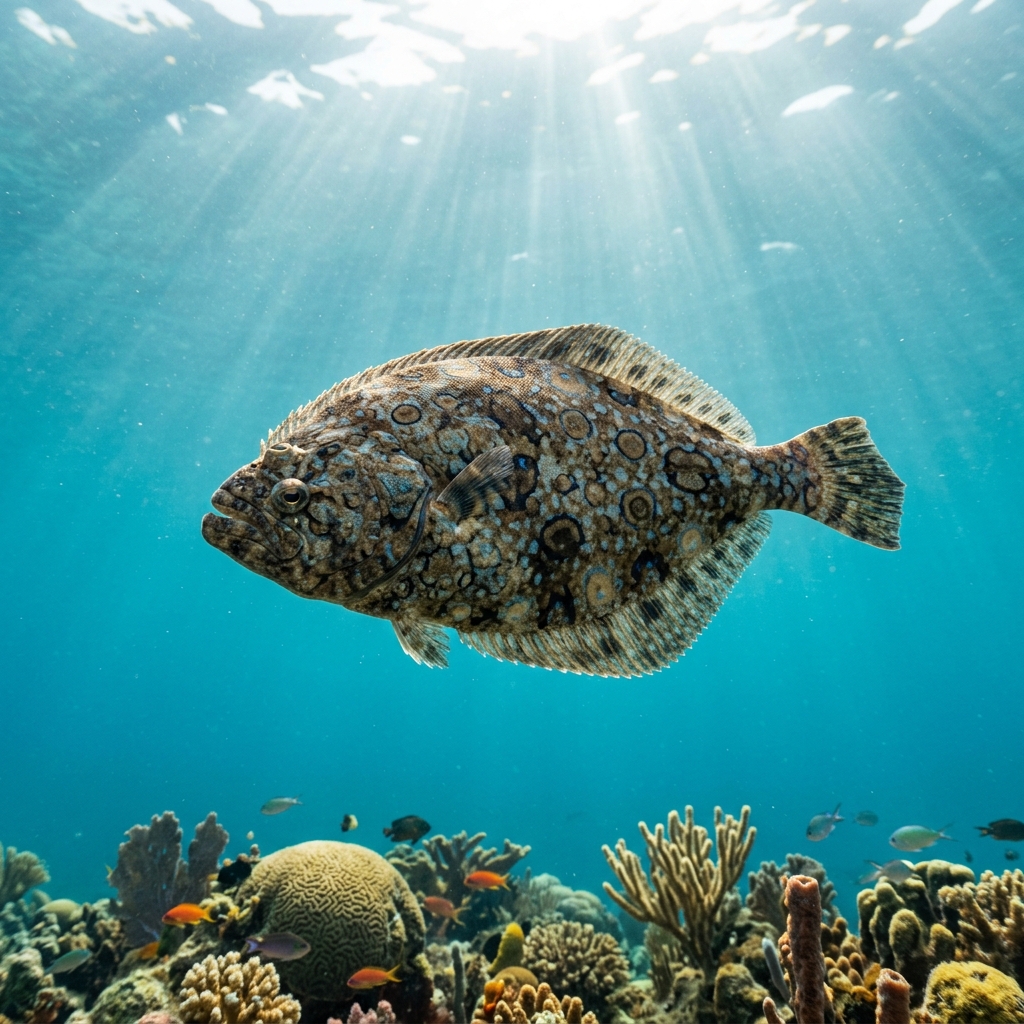
Both eyes sit on the left side of the body, the defining trait of the Bothidae family, giving resting fish a distinctly lopsided, wide-eyed look when viewed from above. They lie flat on sandy or rubble bottoms, and their mottled brown, grey, or tan patterning shifts to match the substrate closely. Body shape is oval and strongly compressed, noticeably broader relative to length than most reef fish. Many species within the family show ocellated (eye-like) spots on the upper surface, which can help separate them from right-eyed flatfish.
Most encounters happen when a flounder is lying motionless on sand, rubble, or bare reef, relying entirely on camouflage rather than flight. Approach slowly and you can often get very close before it shuffles a short distance and resettles, sometimes kicking up a small puff of sediment as it buries its edges. They are more active at dawn and dusk when hunting small invertebrates and fish, so low-light dives on sandy patches adjacent to reef structure offer the best chance of watching one in motion.
Lefteye flounders begin life as symmetrical, upright-swimming larvae; one eye migrates across the top of the skull during metamorphosis so that both end up on the left side, a transformation you can actually track in juveniles if you look closely.
In the Northern Hemisphere, sightings are spread year-round with no concentrated peak, which fits the group's broad temperature tolerance of roughly 8 to 27 °C across temperate and tropical seas. In the Southern Hemisphere, sightings concentrate between December and April, so that window is the best bet for destinations like South Africa.
Reef neighbours a diver could mistake it for. Use the identification notes above to tell them apart.
Lefteye flounders are logged across a wide spread of dive destinations, with the strongest records coming from the Maldives (particularly the Male and Ari Atolls), Hawaii, Florida, and the Egyptian Red Sea. The French Riviera, Bali and Lombok, and the Okinawa Islands also deliver consistent sightings. South Africa's Durban and North Coast rounds out the top regions with a solid run of records.
Mapping where Lefteye Flounder is logged…
They are logged across a wide range of destinations. The strongest concentrations come from the Maldives, Hawaii, Florida, and the Egyptian Red Sea, with good records also from the French Riviera, Bali and Lombok, Okinawa, and the Durban coast of South Africa.
In Northern Hemisphere destinations such as the Maldives, Hawaii, and Egypt they are present year-round with no strong seasonal peak. In Southern Hemisphere destinations like South Africa, sightings concentrate from December through April.
Look for a flat, oval fish lying on sand or rubble with both eyes on the left side of its body and mottled camouflage colouration. Many species have ocellated spots on the upper surface. The eye position alone separates Bothidae from right-eyed flatfish like soles.
During larval metamorphosis, one eye migrates across the skull so both end up on the same side, allowing the fish to lie flat on the seabed and watch for predators and prey from above. Bothidae species have this migration to the left side; related families migrate to the right.
Site and sighting data is aggregated from diver logs, iNaturalist and GBIF. For taxonomy and conservation status:
Wide Eyed Flounder
1,624 sites