Bothus mancus
Blue-ringed and flat against the sand, peacock flounder turn up on reefs from the Tuamotus to Reunion year-round in 24-29C water.
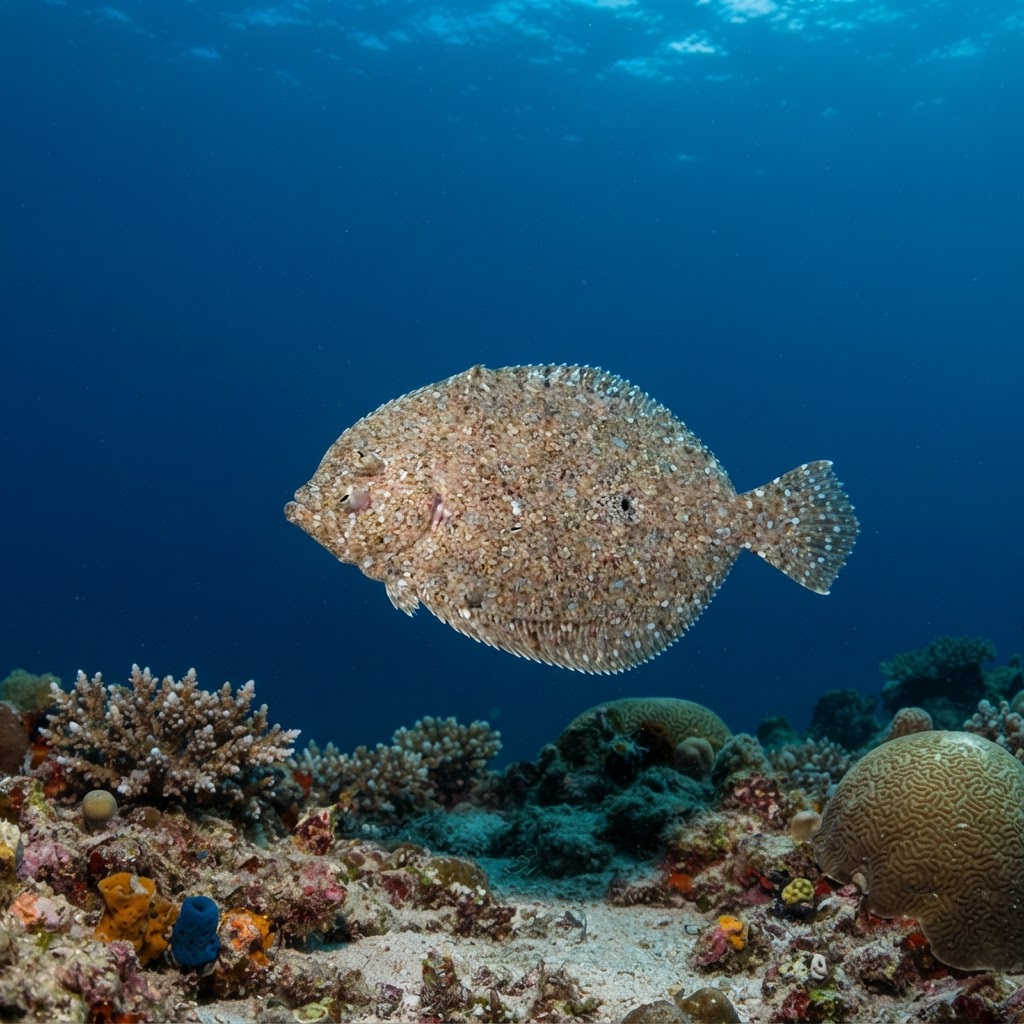
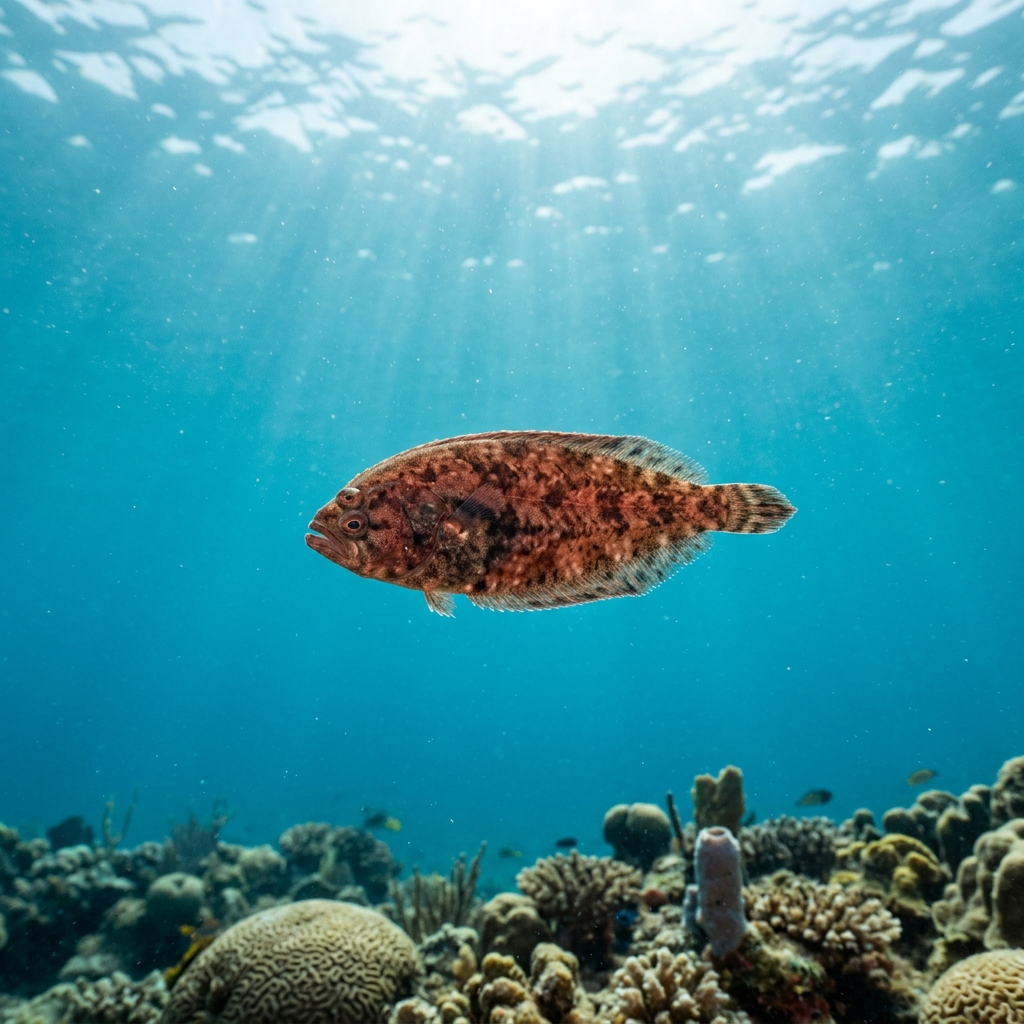
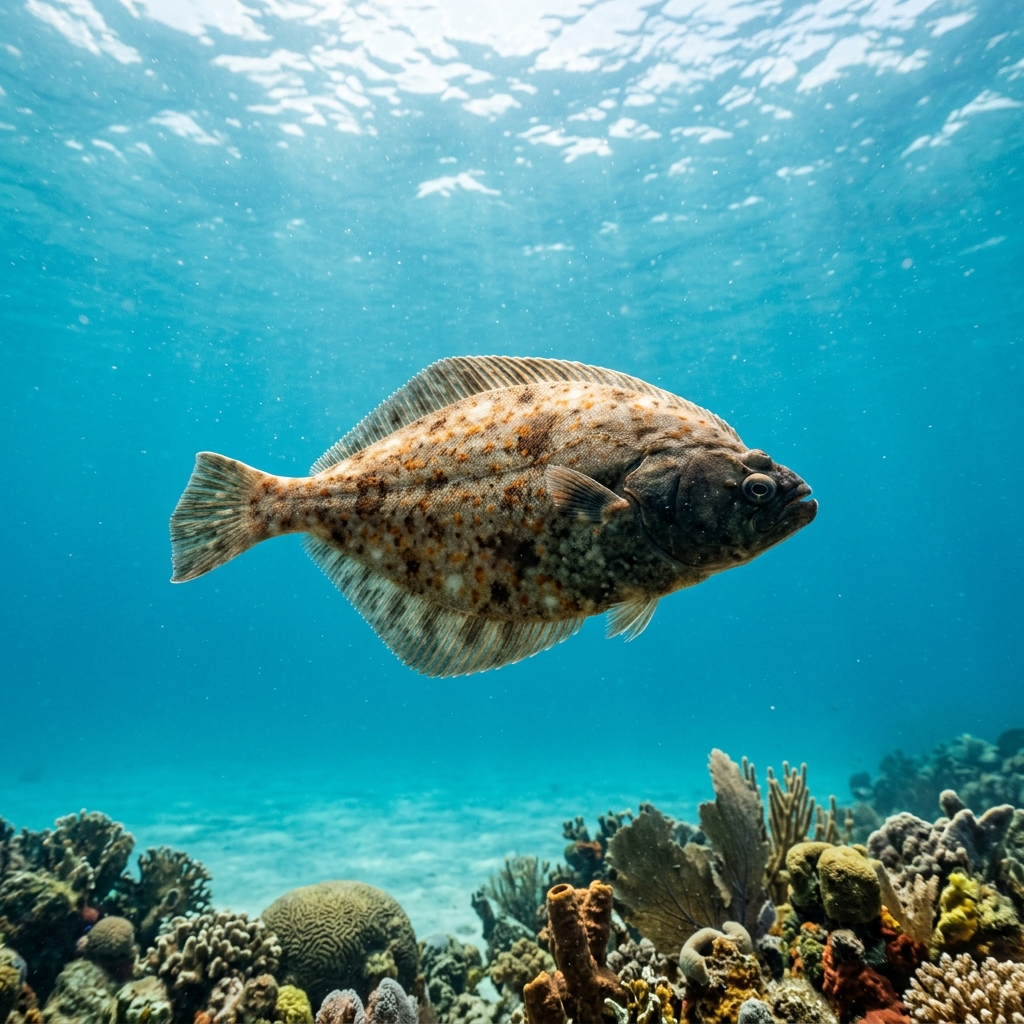
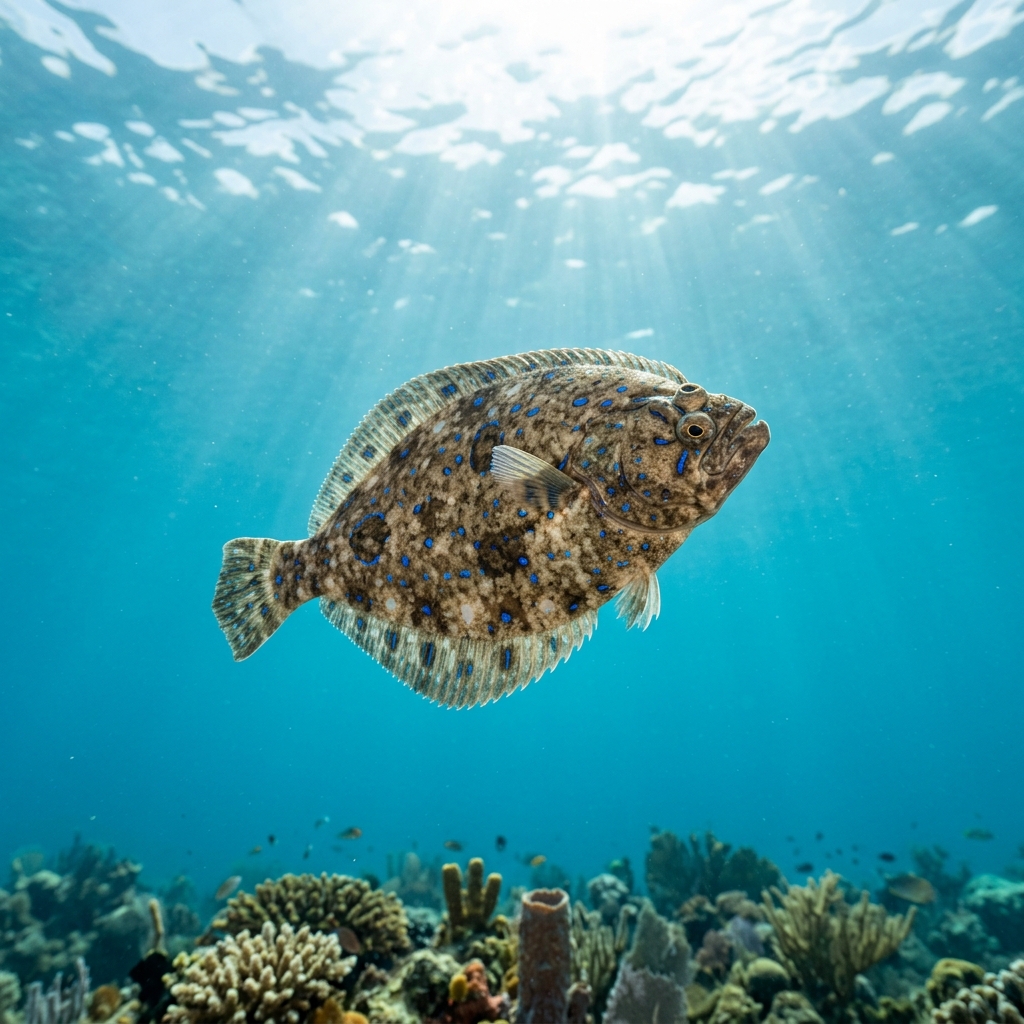
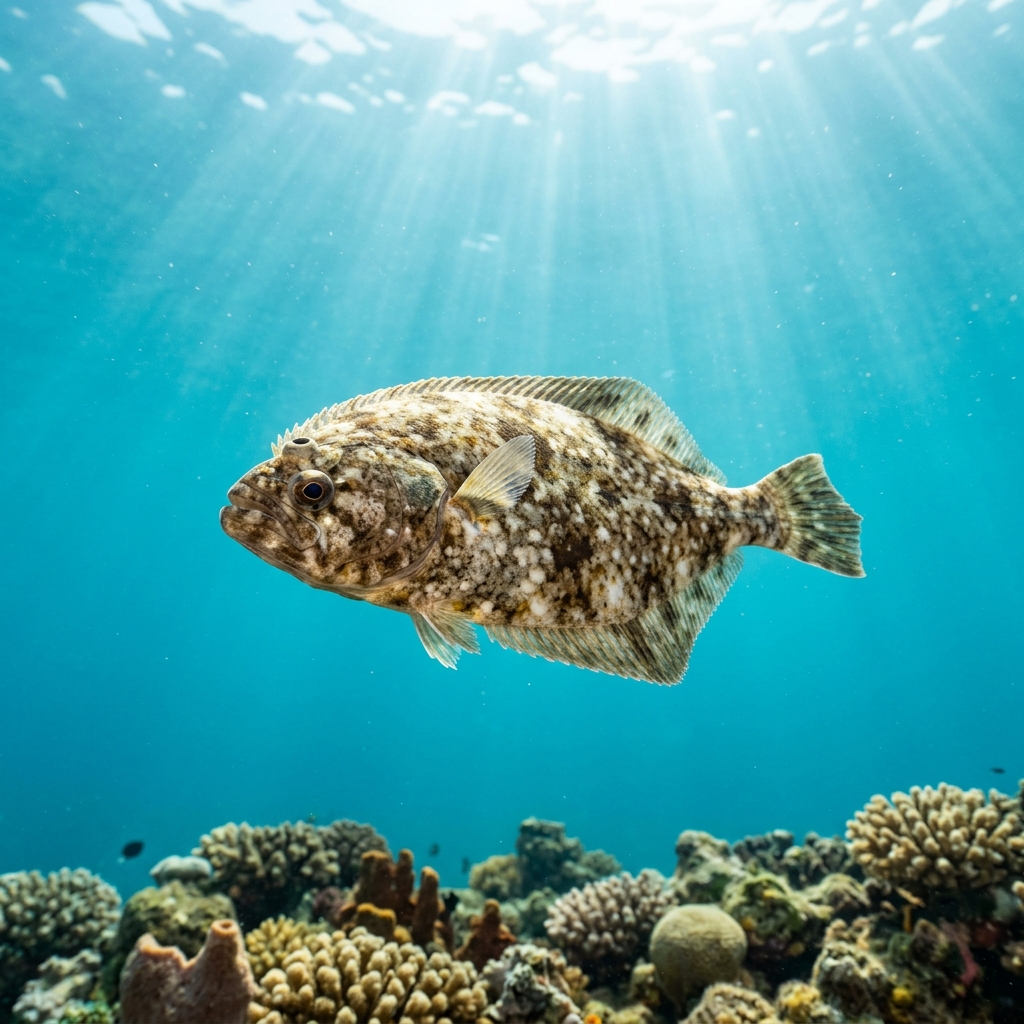
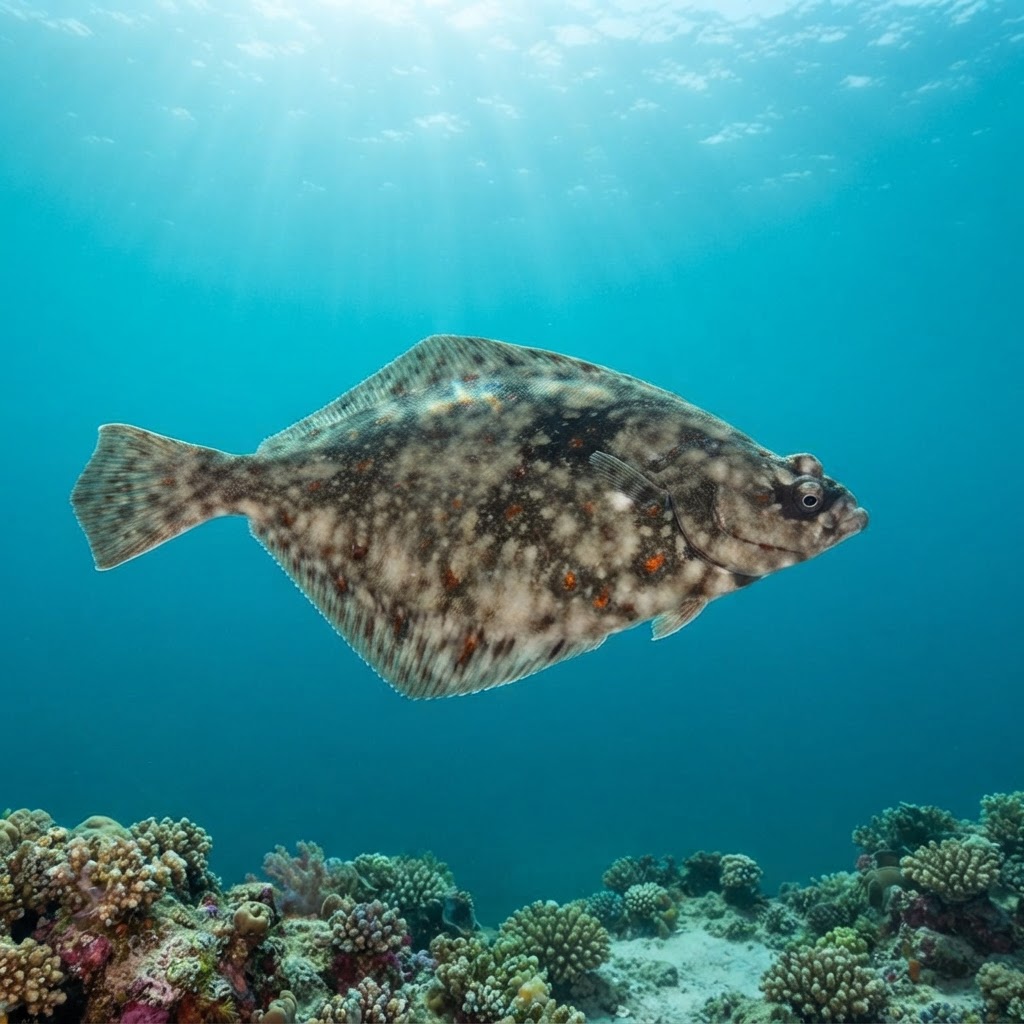
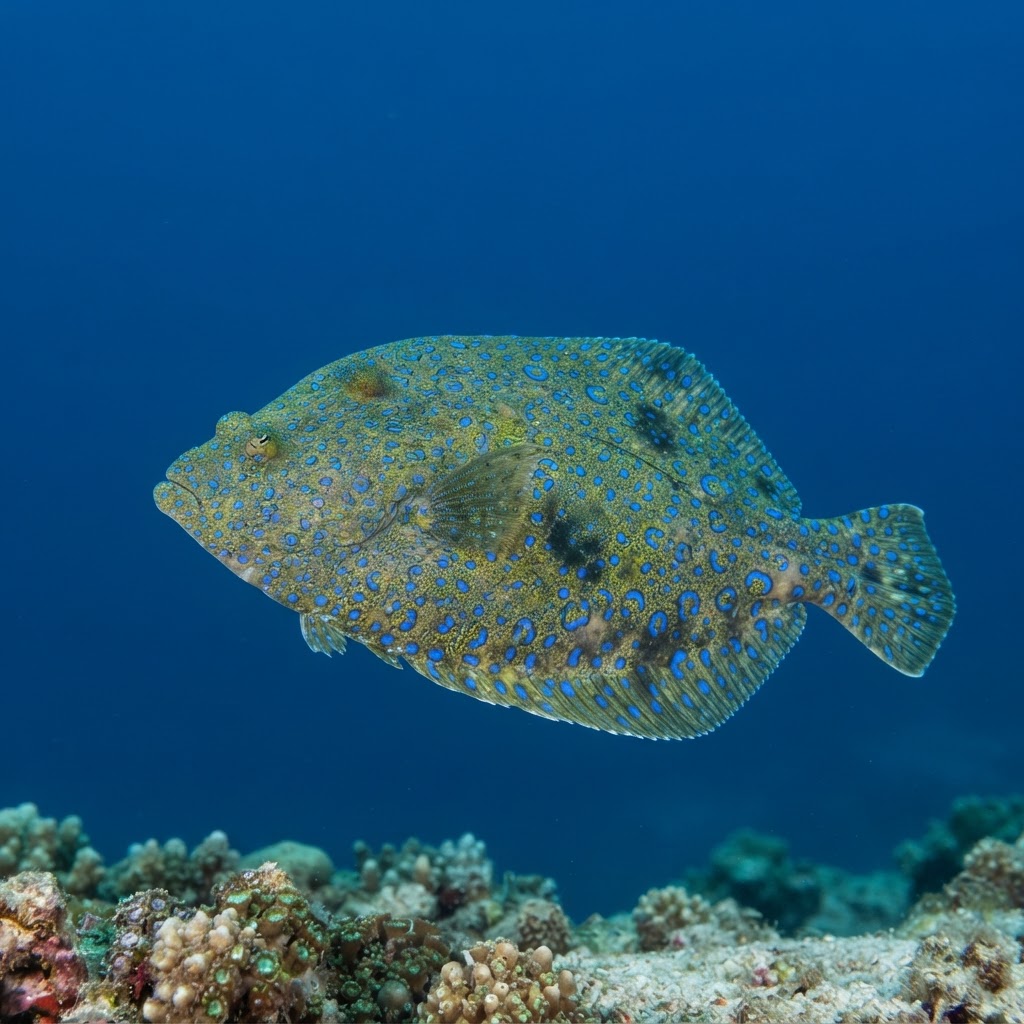
Flat, diamond-shaped body up to about 35cm long, lying directly on sand or rubble with both eyes on the left side of its head. The giveaway is the pattern of small, bright blue rings scattered over a mottled brown, grey or sandy background, which it can lighten or darken to match the substrate within seconds. Because it swims on its side, what looks like the top of the body is actually the fish's left flank, and the mouth sits at one end rather than centred like an upright fish.
Spends most of its time lying still on sand, rubble or reef flats, often nearly invisible until it flicks away in a burst of swimming and resettles a few metres off. It hunts by ambush, using its camouflage to let small fish and crustaceans wander close before striking, and divers most often notice it at fairly shallow depths in the daytime rather than at night. It rarely bolts far from a diver and will often let a slow, low approach get surprisingly close before moving.
Like all flatfish, it starts life swimming upright with one eye on each side of its head, then one eye migrates across the skull as it settles onto the seabed, so the adult you see on the sand is permanently lying on what was once its side.
Sightings hold steady all year, no strong seasonal pattern shows up in the data, which fits a fish comfortable across a 23.8-29C range on tropical and subtropical reefs year-round.
Reef neighbours a diver could mistake it for. Use the identification notes above to tell them apart.
Most reliably logged in French Polynesia, particularly the Tuamotu Islands, and in Reunion's Saint-Paul region, with strong showings in Hawaii, Niue's Alofi coast, and Costa Rica's Cocos Island. Divers also report it steadily in Mozambique's Ponta do Ouro area, Baja California in Mexico, and Palau's Rock Islands, usually as an uncommon rather than everyday find.
Mapping where Pacific Peacock Flounder is logged…
French Polynesia's Tuamotu Islands and Reunion's Saint-Paul coast are the strongest regions in diver logs, with reliable sightings also in Hawaii, Niue, Costa Rica's Cocos Island, and Mozambique's Ponta do Ouro.
There's no clear peak season, they're logged year-round wherever water sits in the 24-29C range they favour, so any month on a tropical reef trip is fair game.
Look for a flat, diamond-shaped fish resting on sand with both eyes on one side of its head and small blue rings scattered across a brown or grey body. It can shift its colouring to match the seabed, so a slight bump or shadow moving off the bottom is often the first clue.
They typically reach around 35cm in length, a flat, roughly diamond-shaped body that sits low and wide against the seabed.
They hatch as normal, upright-swimming fish with an eye on each side, then one eye migrates around the head as they mature, ending up lying flat on the seabed with both eyes on the same side.
Site and sighting data is aggregated from diver logs, iNaturalist and GBIF. For taxonomy and conservation status:
Wide Eyed Flounder
1,624 sites