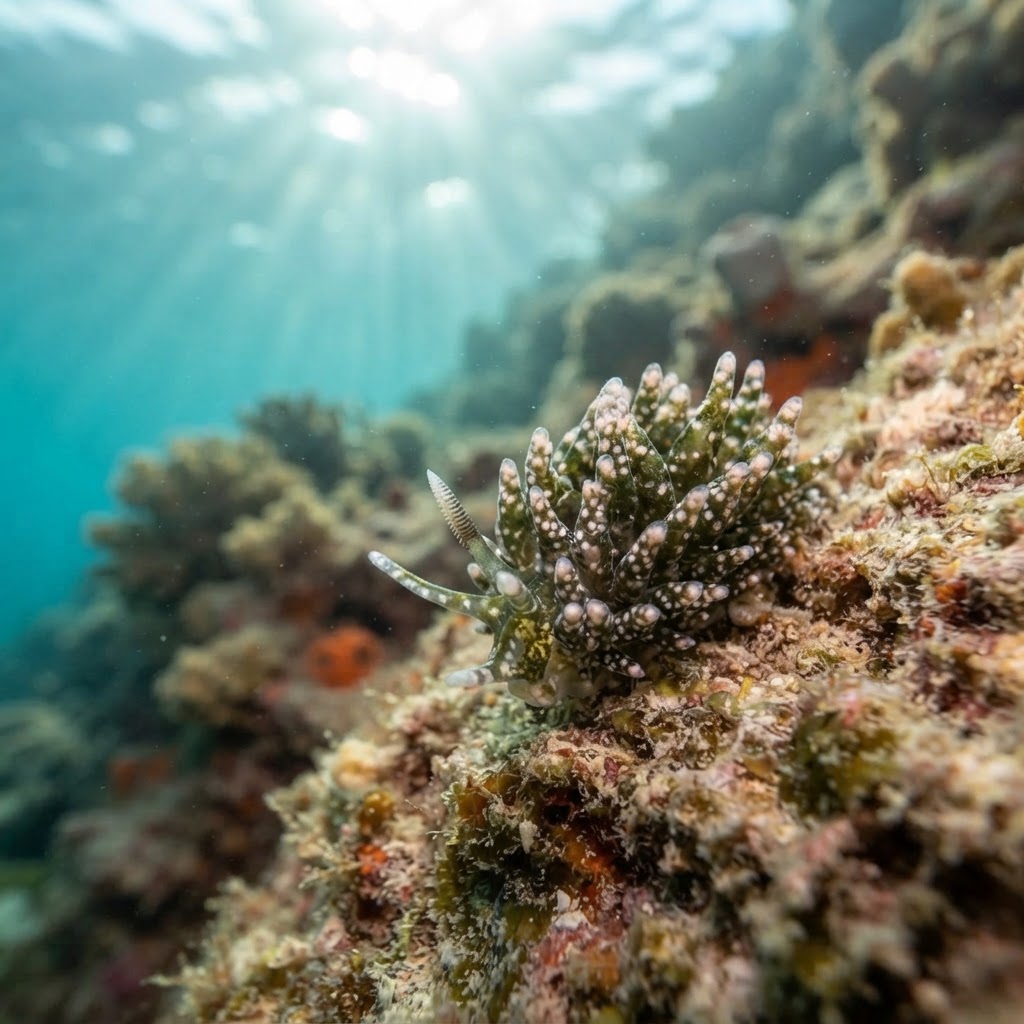
Placida verticilata
A rare sacoglossan slug logged along the French Riviera and Provence, thriving in cool 16-22C water year-round.
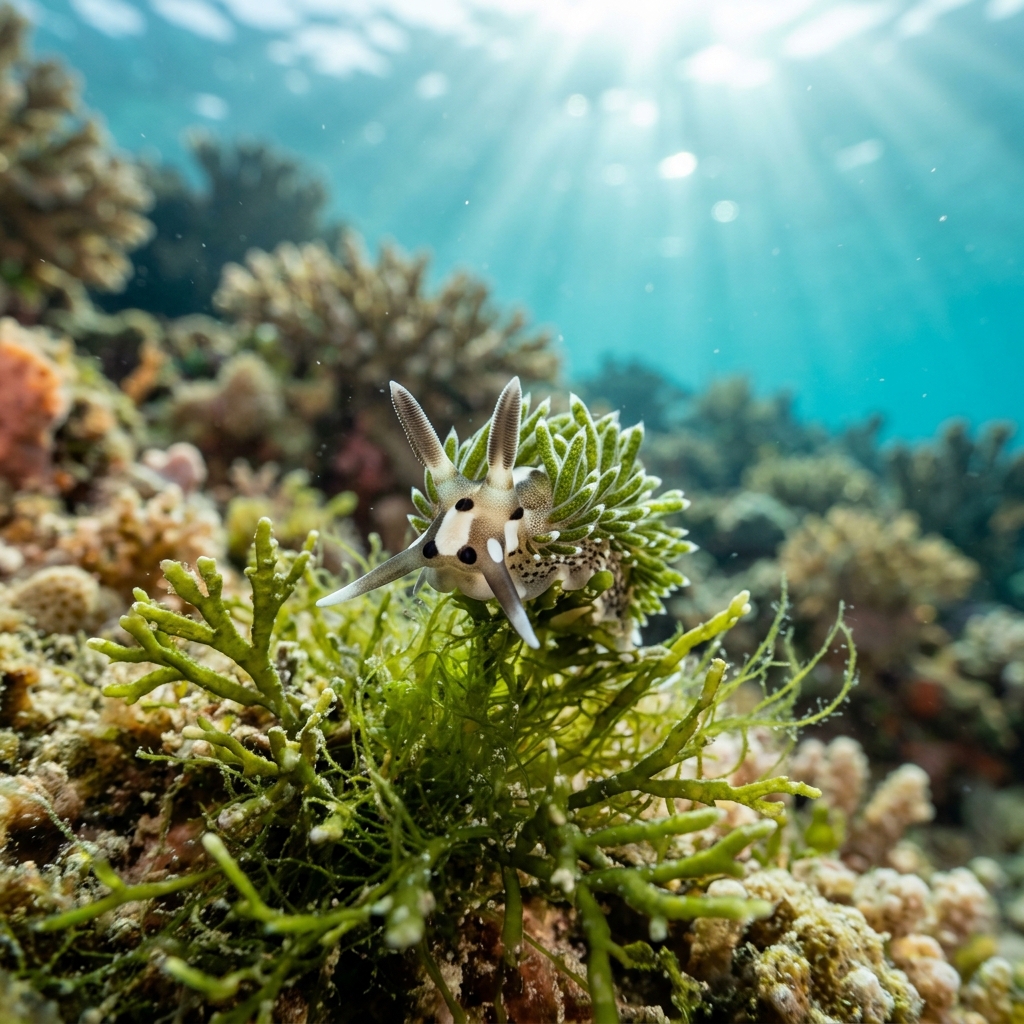
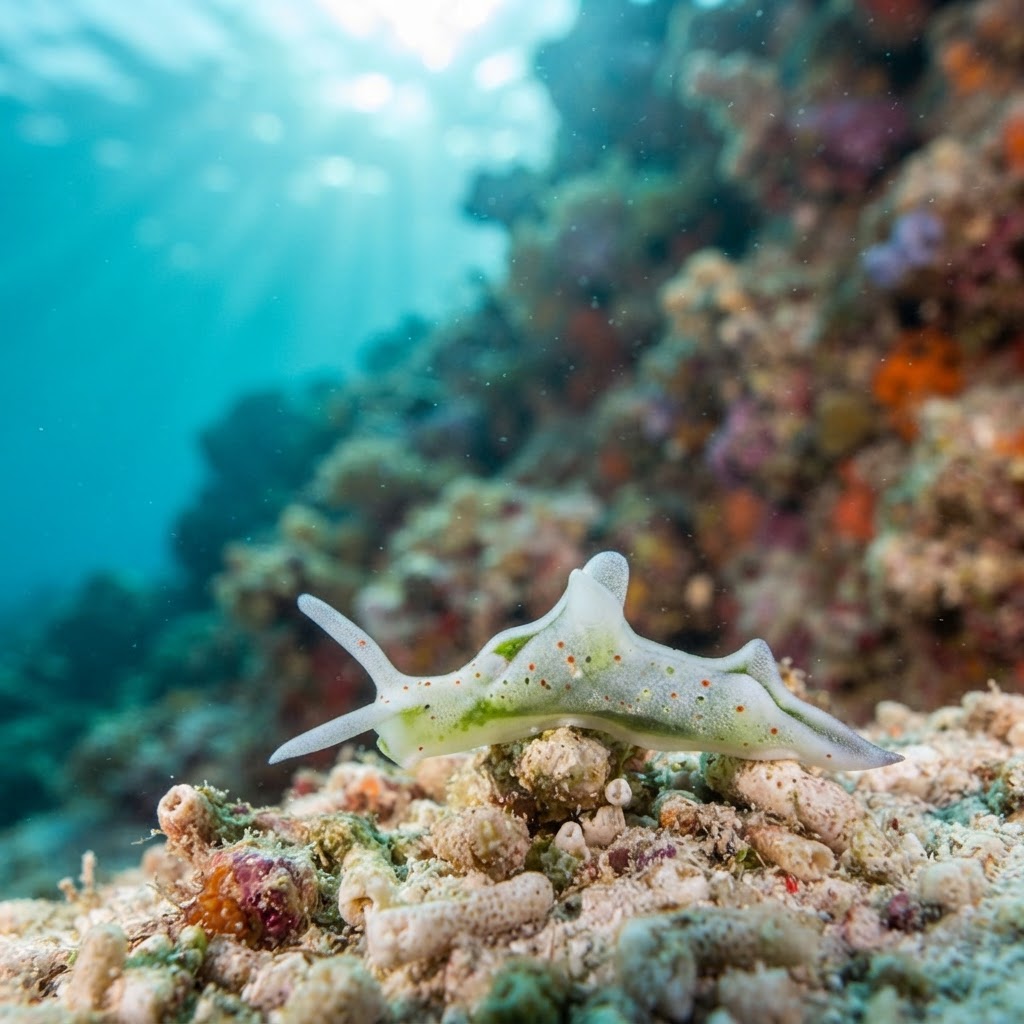
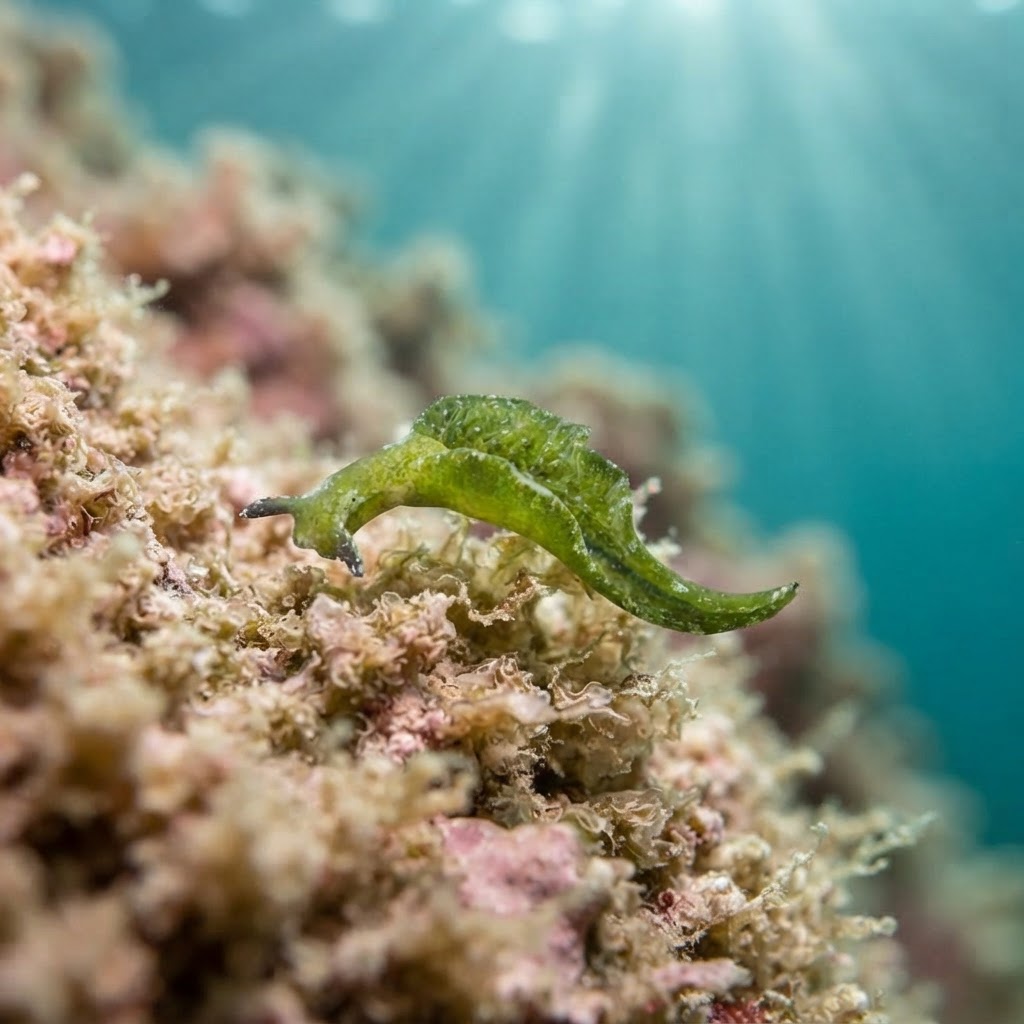
A small, slender sea slug with a translucent to pale green body carrying rows of finger-like projections (cerata) along its back, which often hold a greenish tint from the algae it feeds on. Its narrow, elongated shape and the way the cerata catch the light are the main things to look for against rock or algal turf. At this size it is easy to swim past, so slow, close-focus scanning of algae-covered surfaces is the way to actually find one.
Divers find it grazing slowly over algae-covered rock, where it feeds on the filamentous green algae that gives it its colour. It shows no reaction to divers beyond simply continuing to graze, since it has no real means of fleeing and little reason to. Most sightings happen on close, methodical looks at algal mats rather than mid-water encounters.
Like other sacoglossans, it feeds by piercing algal cells and sucking out the contents, and some species in this group can retain the algae's chloroplasts in their own tissue for a time, using them to photosynthesise.
Sightings do not show a clear seasonal pattern, and the observed water temperature range of 15.8 to 21.8C spans much of the Mediterranean diving calendar, so treat this as a year-round possibility rather than a seasonal target.
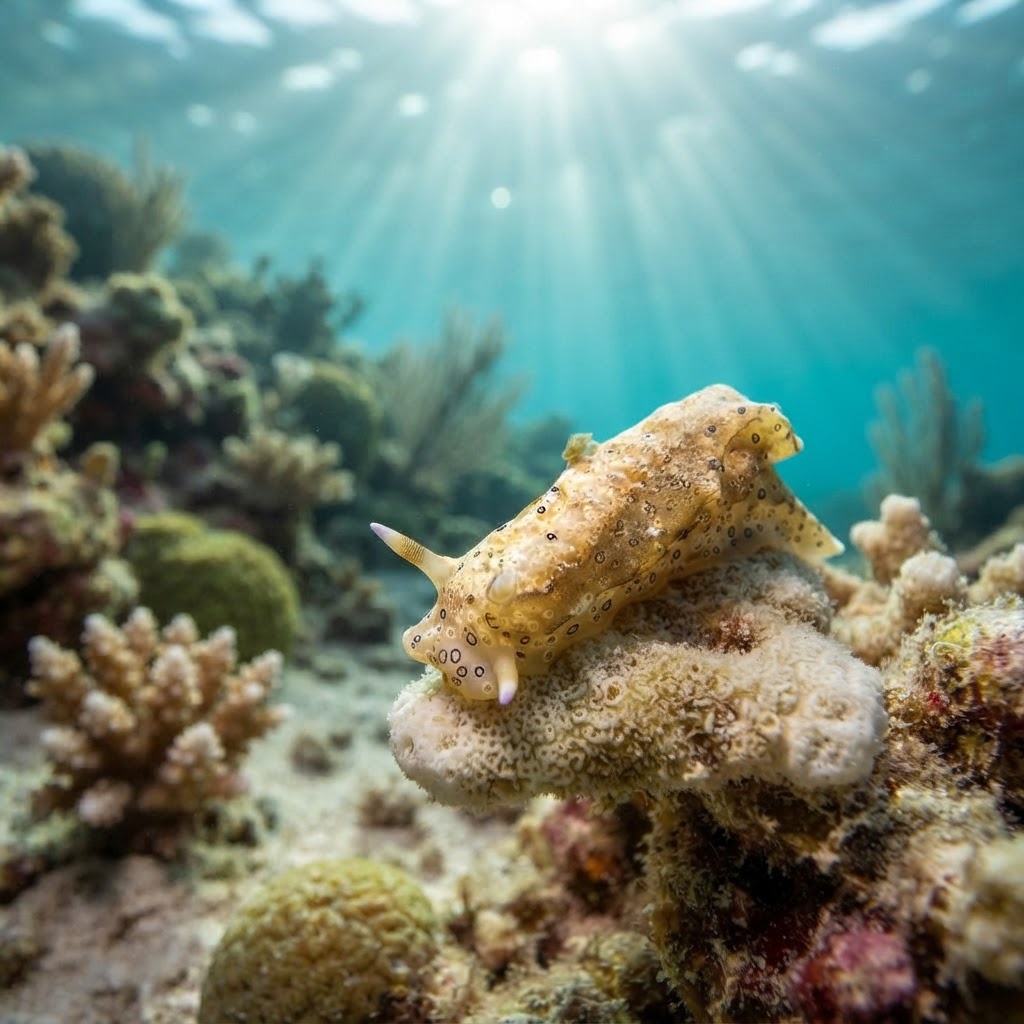
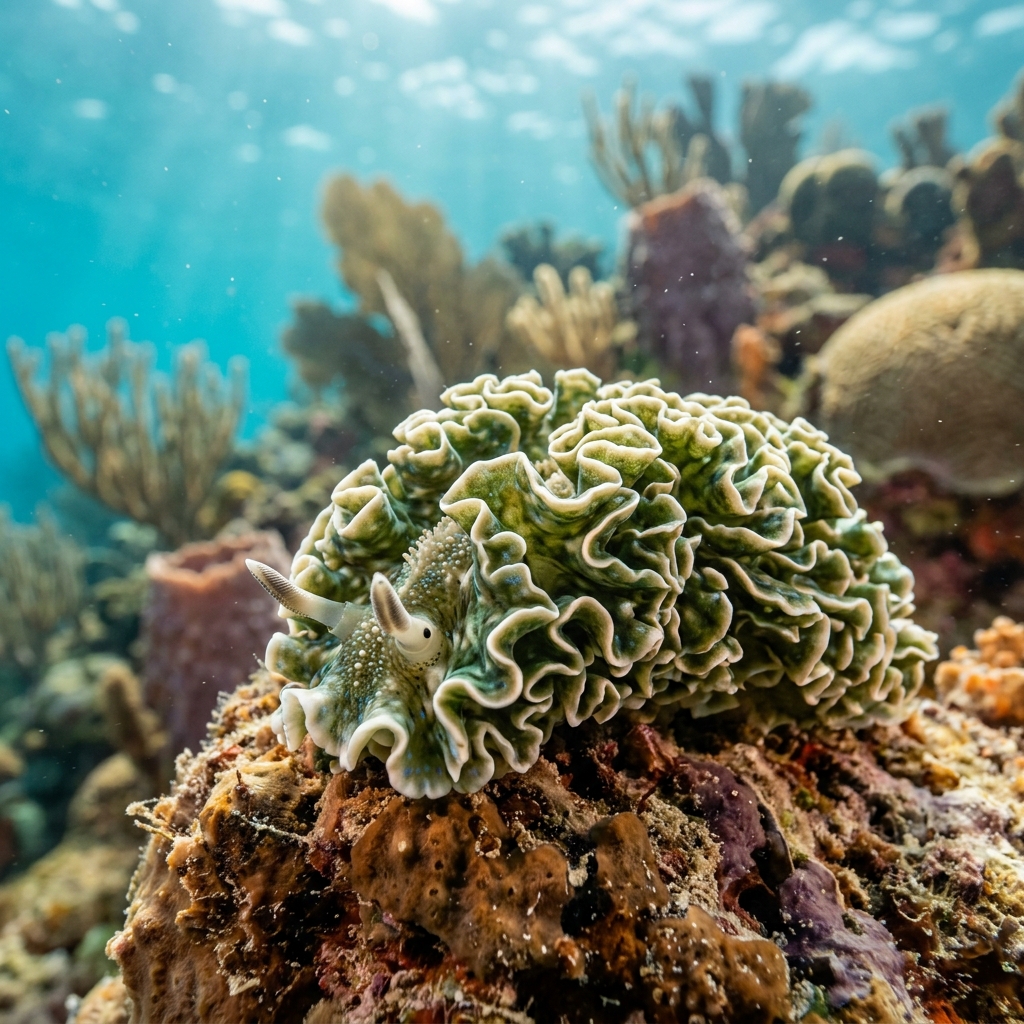
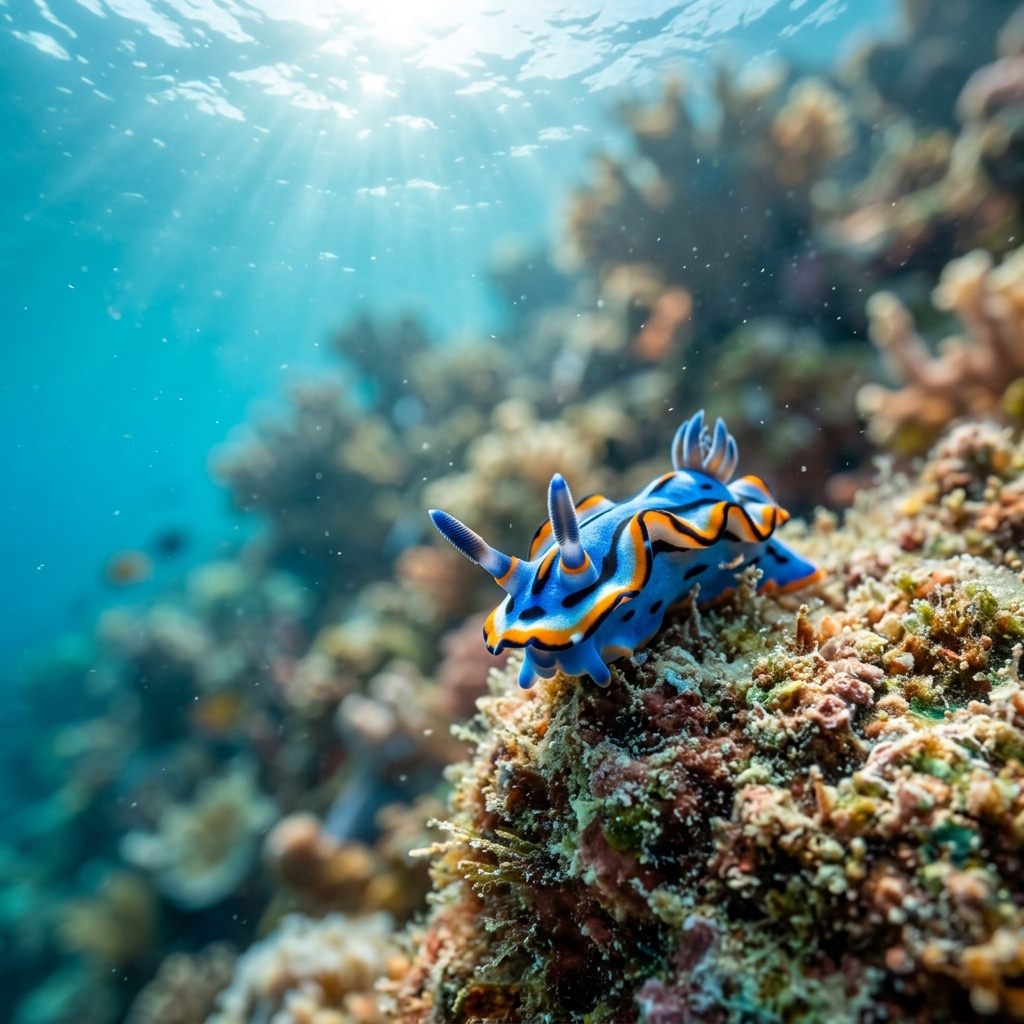
Reef neighbours a diver could mistake it for. Use the identification notes above to tell them apart.
Every logged sighting comes from France, with the French Riviera and Provence standing out as the region where divers actually find this species. Outside that stretch of Mediterranean coast, there is no established record in the data, so it is very much a southern French speciality for now.
Mapping where Placida Verticilata is logged…
Recorded sightings are concentrated in France, particularly along the French Riviera and Provence. It has not been established elsewhere in current diver records, making it a Mediterranean speciality sighting.
There is no detected seasonal pattern, and it has been observed across a temperature range of roughly 16 to 22C, so it can turn up on any dive along the French Riviera regardless of month.
Look for a small, slender slug with a pale to green translucent body and rows of elongated cerata along its back, usually grazing on algae-covered rock. Its size and colouring make it easy to overlook, so close, slow scanning of algal turf is key.
No. It poses no threat to divers and has no means of harming anyone; it simply grazes on algae and ignores passing divers.
It belongs to a group of slugs known for feeding by sucking the contents out of algal cells, and some relatives in this group can hold onto the algae's chloroplasts afterwards to use for their own photosynthesis.
Most dive sites where it has been logged report it as rare, with only a single site noting it as uncommon, so spotting one takes a deliberate, close search of algae-covered rock rather than a casual glance.
Site and sighting data is aggregated from diver logs, iNaturalist and GBIF. For taxonomy and conservation status:
Elysia Timida
573 sites