Neocirrhites armatus
Spot the vivid scarlet flame hawkfish on reefs across French Polynesia and the Cook Islands. Here's where divers log it and how to recognise it.
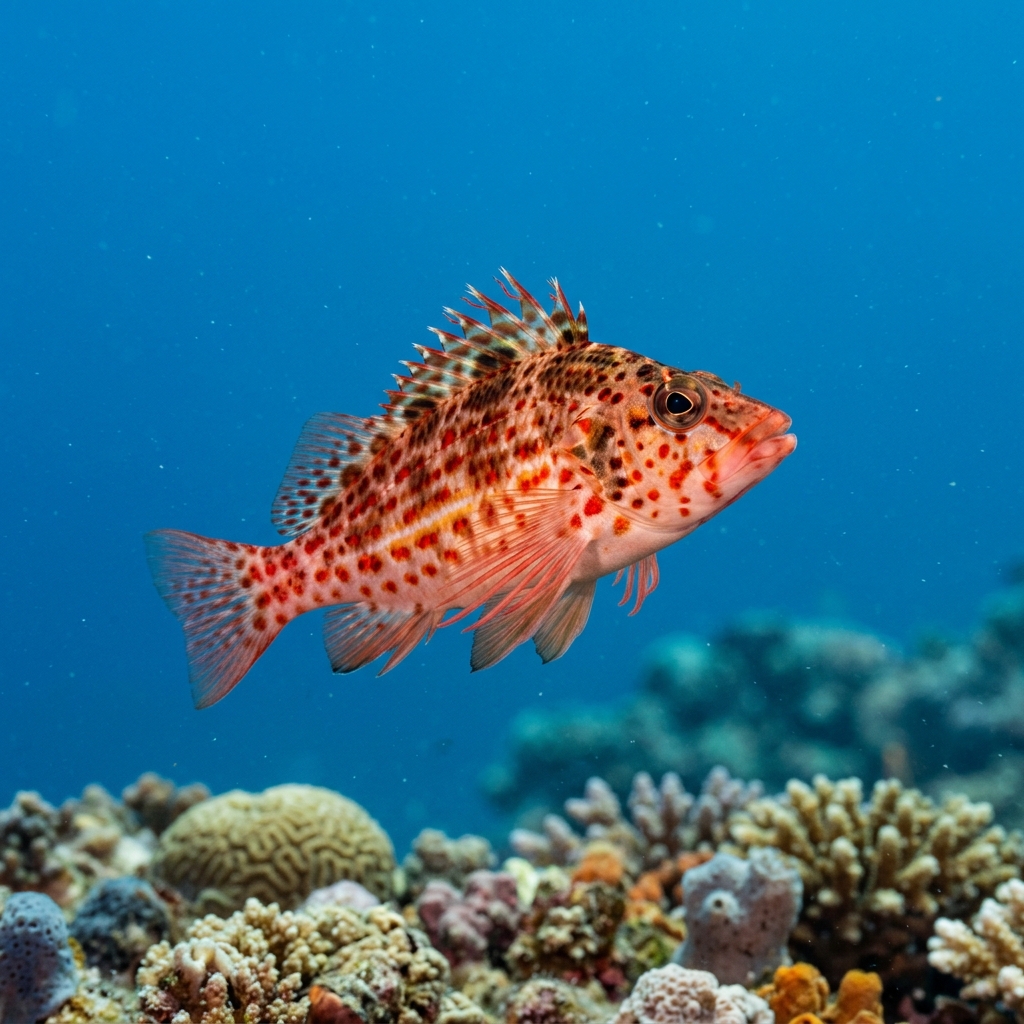
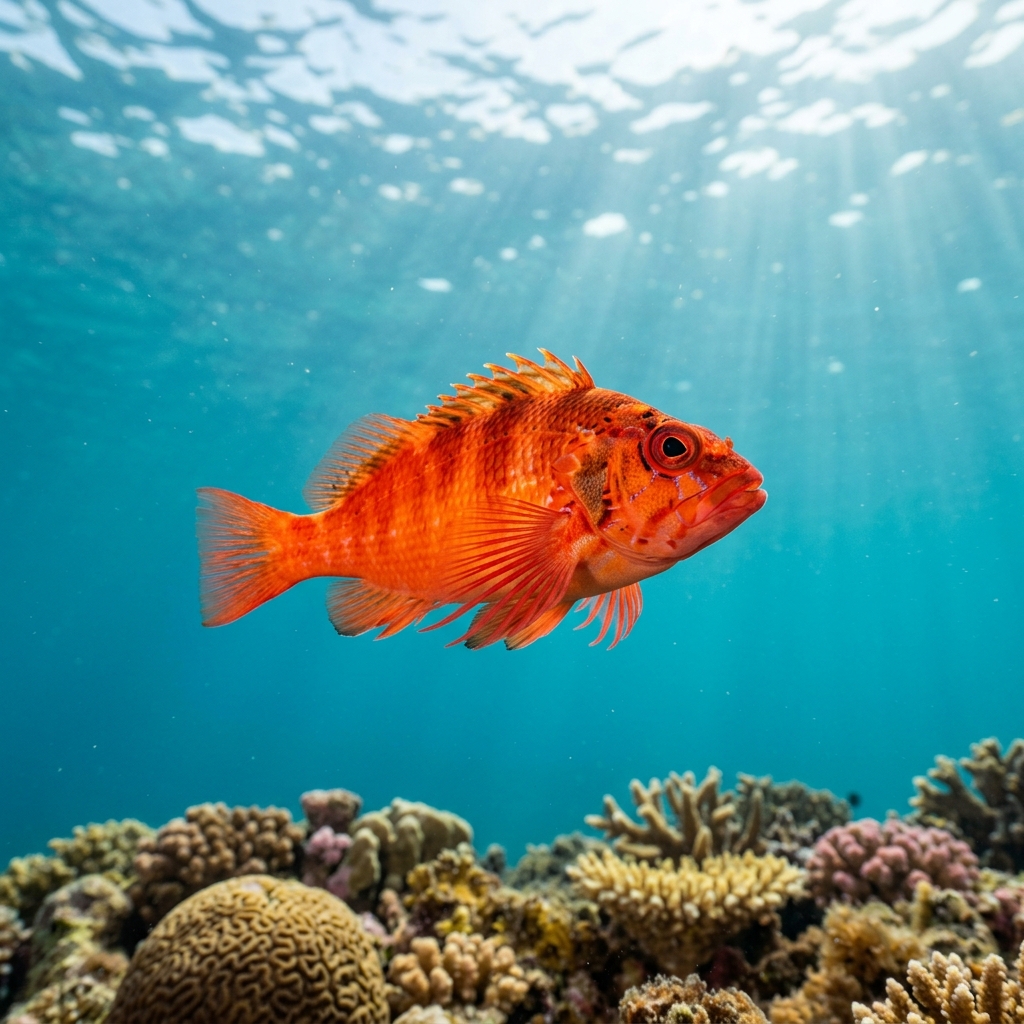
Unmistakable once you know it: a small, stocky fish blazing scarlet-red from nose to tail, with a row of dark blotches along the base of the dorsal fin and dark edging to the pectoral fins. It perches motionless on coral heads rather than swimming freely, propped up on its thickened pectoral fins in classic hawkfish style. No other reef fish in its range combines that uniform fire-red colouration with the upright perching posture.
Like all hawkfish, it hunts by sitting perfectly still on a coral head or gorgonian fan and ambushing small crustaceans and fish that venture too close. When a diver approaches, it typically holds its position and watches rather than fleeing, which makes extended observation surprisingly easy. Look for it on exposed coral tops and the upper parts of reef walls, often in well-lit, current-swept areas where the coral is healthy.
Flame hawkfish are protogynous hermaphrodites, meaning some females can transition to males as social conditions require. A dominant male typically holds a small harem of females on a patch of reef, and removing him can trigger the largest female to change sex and take over.
There is not enough seasonal data to pin down a peak period, so it can reasonably be treated as a year-round resident. Its observed water-temperature range of roughly 25 to 29 °C fits the stable warm conditions of central Pacific reefs throughout the year.
Reef neighbours a diver could mistake it for. Use the identification notes above to tell them apart.
Most sightings come from French Polynesia, with Tahiti and Rangiroa and Tikehau accounting for the bulk of logged encounters. The Cook Islands, particularly around Rarotonga, add a solid cluster of records, and there is a lone confirmed sighting in Apra Harbor, Guam. If you are chasing this species, French Polynesia is the clear starting point.
Mapping where Flame Hawkfish is logged…
French Polynesia is the best-documented location, with strong records from Tahiti and the atolls of Rangiroa and Tikehau. The Cook Islands, especially Rarotonga, also produce regular sightings. There is an additional confirmed record from Apra Harbor in Guam.
No clear seasonal peak has been detected from diver records, so they appear to be present year-round. Their preferred water temperatures of around 25 to 29 °C are consistently available on central Pacific reefs, which supports a year-round distribution.
Look for a small, uniformly bright red fish perching upright and motionless on a coral head. Dark blotches line the base of the dorsal fin and dark edging marks the pectoral fins. The combination of solid scarlet colour and that characteristic hawkfish perching posture makes it hard to mistake for anything else.
They are considered rare to uncommon at the sites where they have been recorded. Expect to work for a sighting rather than bumping into one on a routine dive. Slow, methodical searching of healthy coral heads in French Polynesia and the Cook Islands gives you the best odds.
Site and sighting data is aggregated from diver logs, iNaturalist and GBIF. For taxonomy and conservation status:
Pixy Hawkfish
762 sites