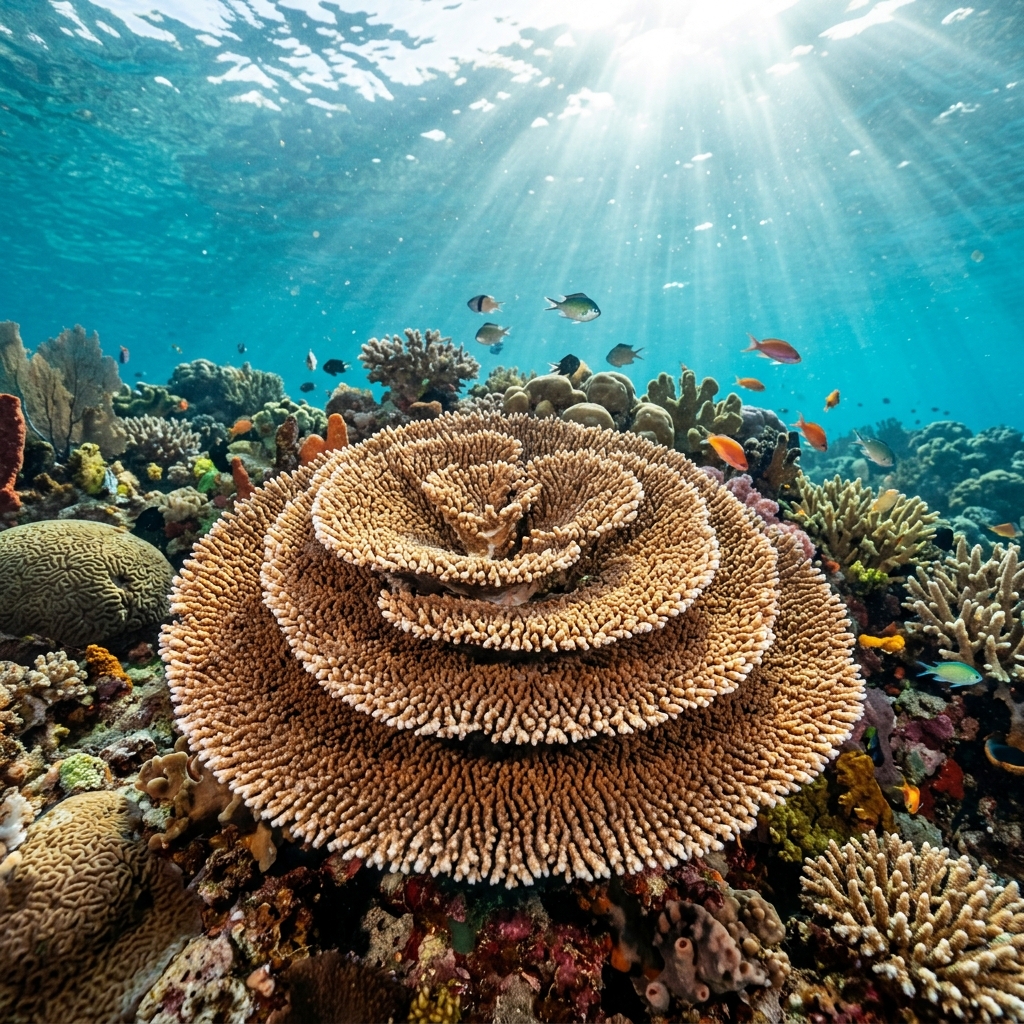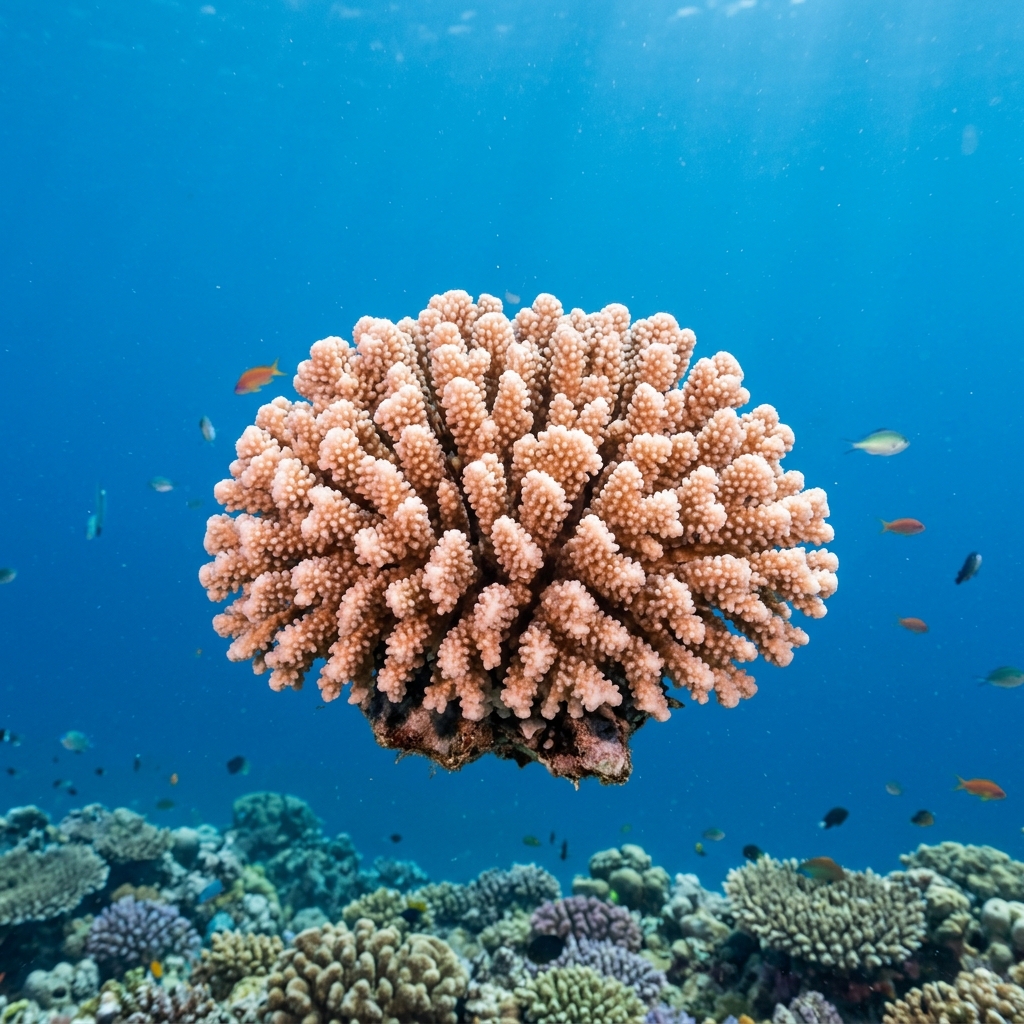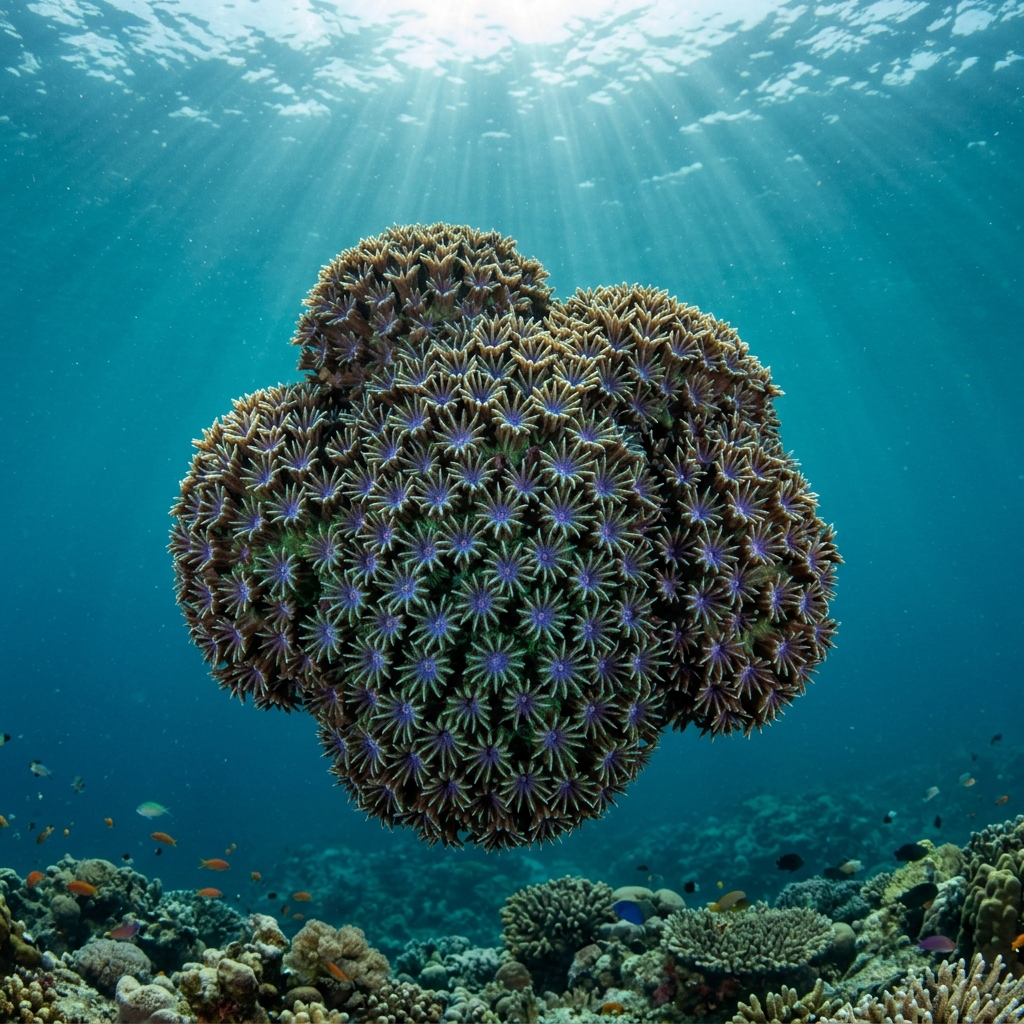
Meandrinidae spp.
Pillar Coral is uncommon but rewarding in the Cayman Islands, Bonaire, and Colombia. Here's how to spot it and where divers log it most.
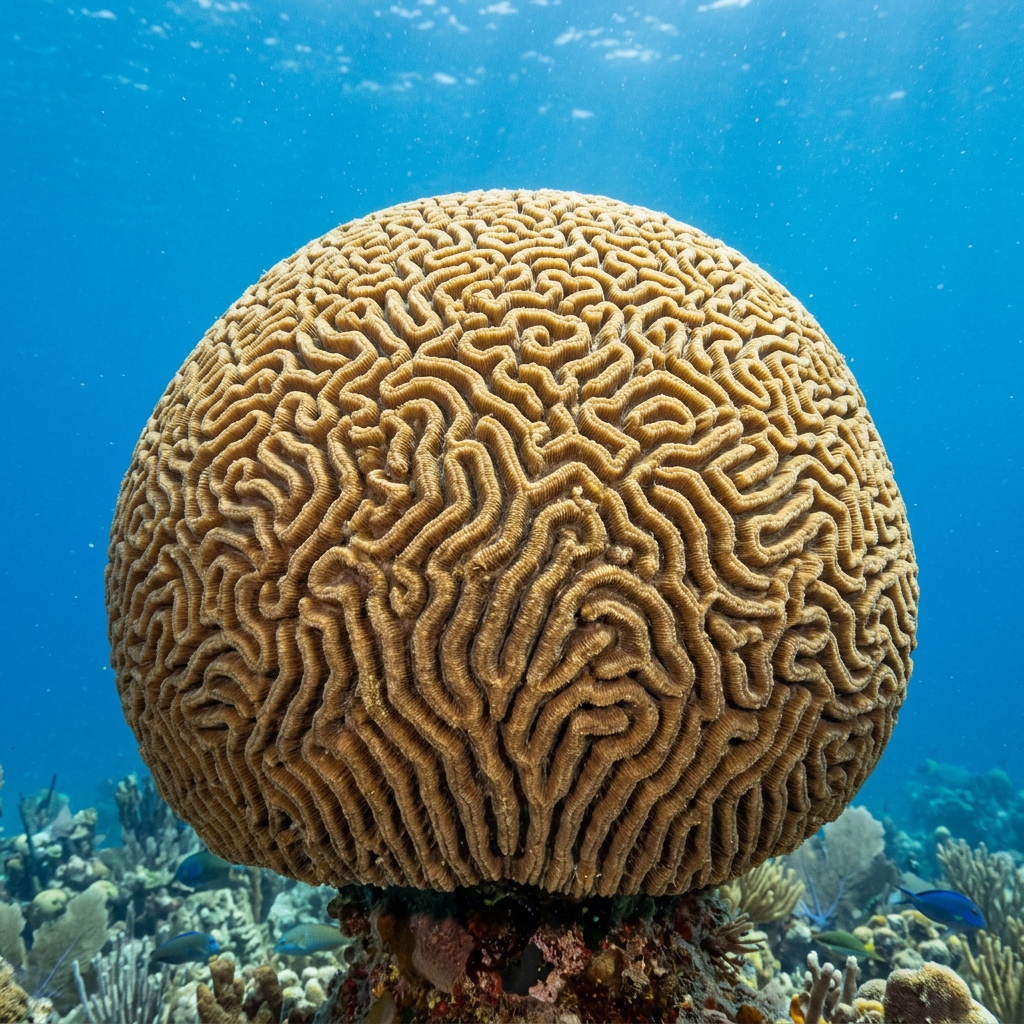
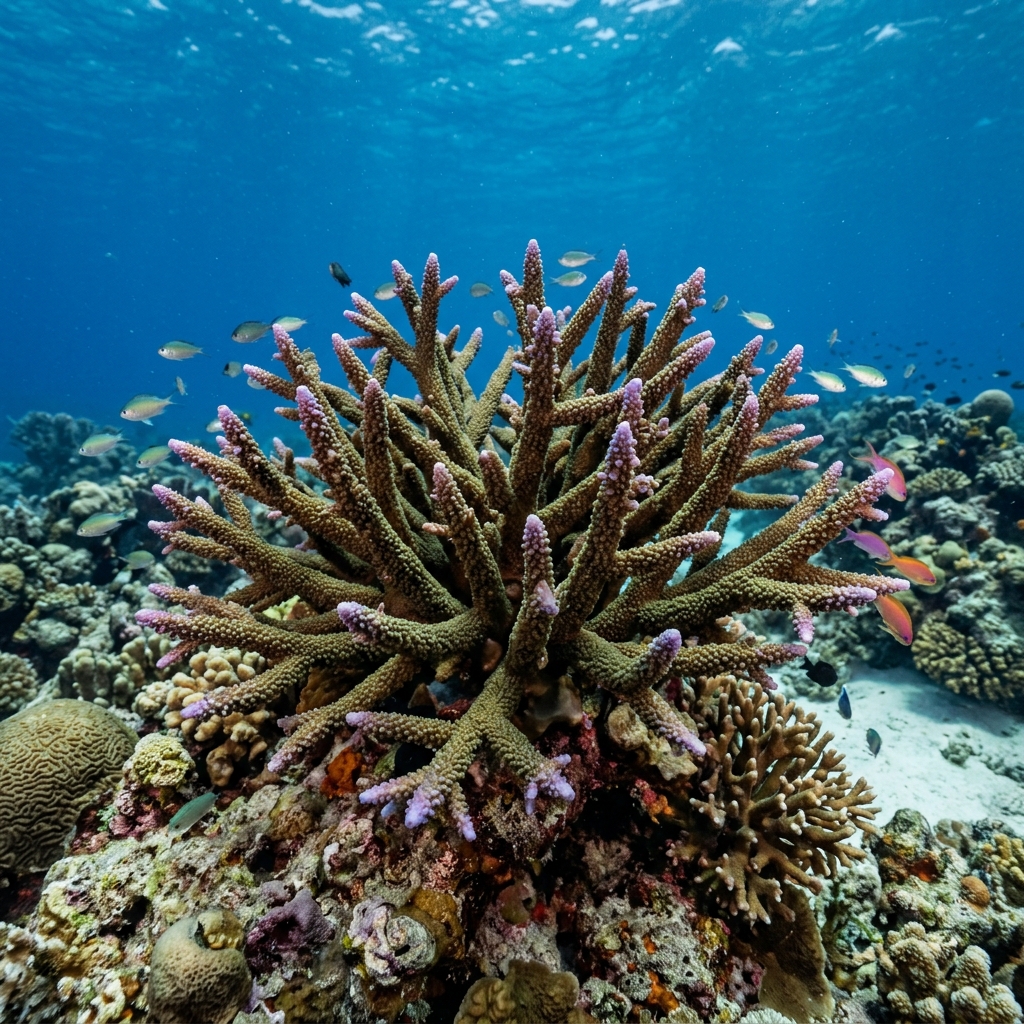
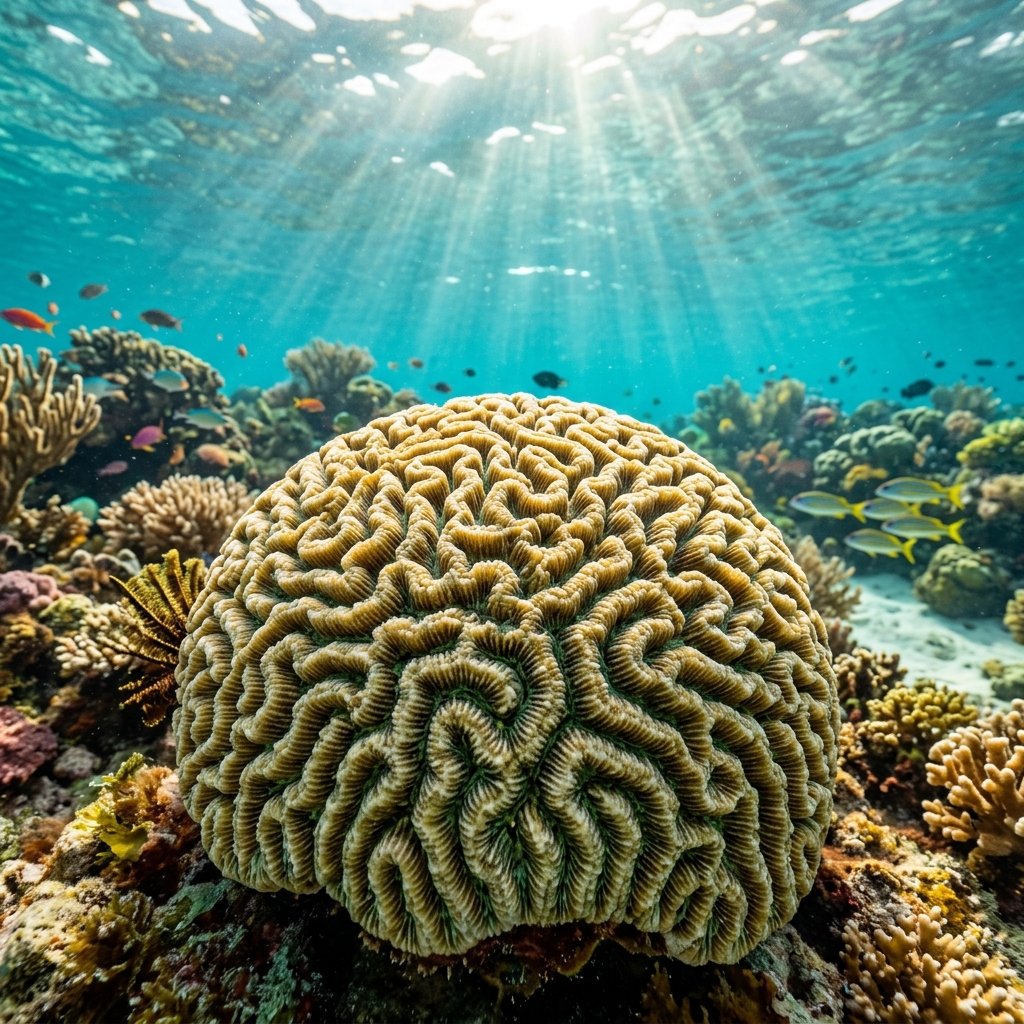
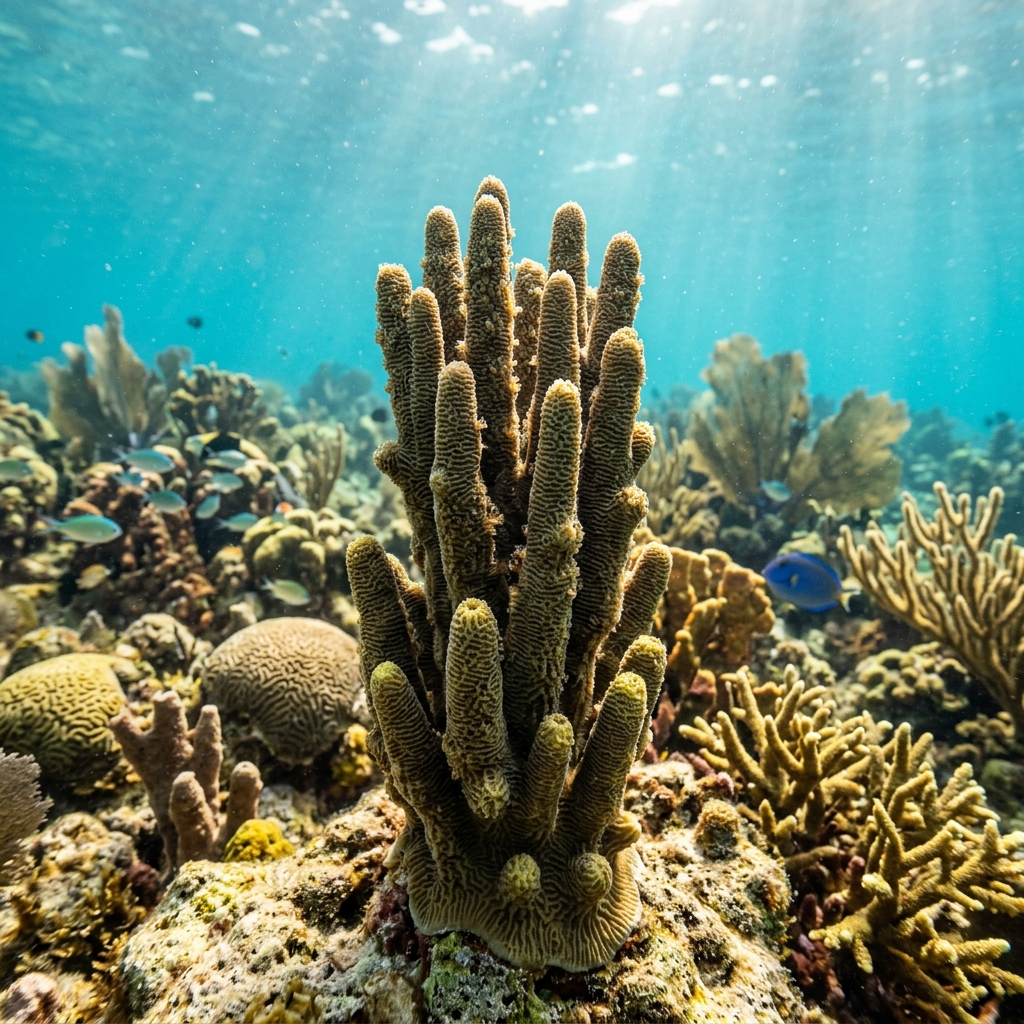
Pillar coral is one of the most distinctive coral forms on a Caribbean reef: thick, upright columns rise directly from the base like fingers or organ pipes, reaching heights that can make a colony stand out from surrounding reef structure. Colouration runs from pale tan to warm brown, often with a faintly fuzzy or hairy texture when polyps are extended during the day. Unlike brain corals whose surface is folded into ridges, or star corals that form rounded mounds, pillar coral's vertical growth habit is the key field mark. Colonies can be solitary pillars or a cluster of several columns growing side by side.
Pillar coral is a colonial, sessile (fixed-to-the-substrate) organism, so it does not move, but the colony is far from static: polyps frequently extend their tentacles during daylight hours, giving the surface that characteristic fuzzy appearance and making an extended colony look almost alive with texture. On the reef it typically occupies sandy or rubble patches and low-profile reef zones where it can grow upward without competition from encrusting forms. It poses no reaction to diver presence, but fin wash and accidental contact can damage the fragile polyp tissue.
Pillar coral is one of very few Caribbean corals whose polyps feed actively during the day rather than waiting for nightfall, which is why a healthy colony looks hairy or shaggy on a daytime dive.
No clear seasonal peak has emerged from the sighting data, so treat pillar coral as a year-round target. It is observed at water temperatures of roughly 25 to 29 °C, consistent with the warm Caribbean conditions found at all the top sites throughout the year.
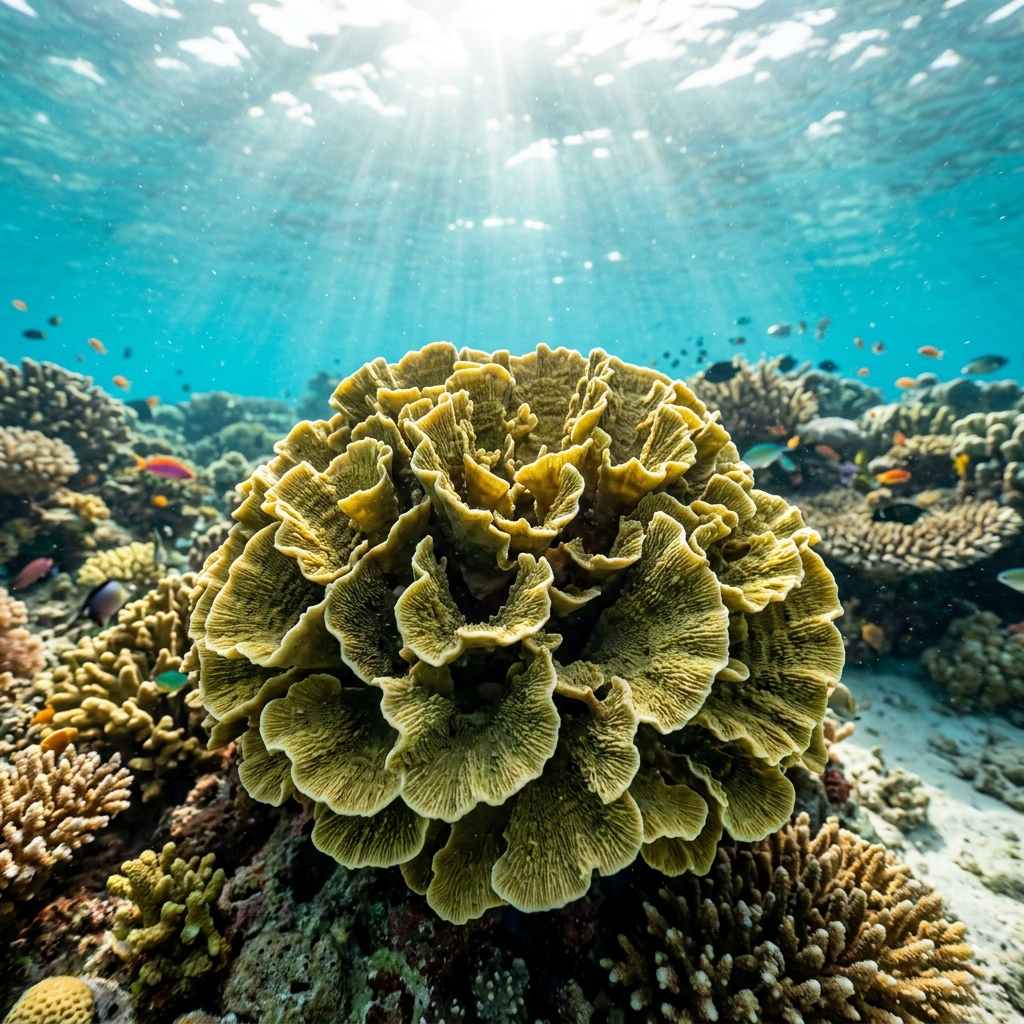
Reef neighbours a diver could mistake it for. Use the identification notes above to tell them apart.
Most commonly logged in the Cayman Islands, particularly around Little Cayman, which accounts for the greatest concentration of recorded sites. Bonaire is a strong second, with sightings spread across Klein Bonaire and the East Coast, and Colombia's Caribbean Coast adds a notable cluster of sites as well. Smaller numbers of records come from Curaçao and the US Virgin Islands.
Mapping where Pillar Coral is logged…
Pillar coral is most reliably logged in the Cayman Islands, especially around Little Cayman, and in Bonaire across Klein Bonaire and the East Coast. Colombia's Caribbean Coast also has a strong cluster of sites. Smaller records exist from Curaçao and the US Virgin Islands.
The available sighting data shows no strong seasonal pattern, so pillar coral can be encountered year-round at Caribbean sites. It favours water temperatures of around 25 to 29 °C, which are typical of these tropical destinations throughout the year.
Look for tall, upright columns of tan or brown coral rising from the reef floor, resembling organ pipes or thick fingers. During the day the polyps are often extended, giving the surface a fuzzy, almost shaggy look. No other common Caribbean coral combines that vertical pillar shape with daytime polyp extension.
Pillar coral is rated uncommon at the vast majority of sites where divers log it, and rare at a handful. You may need to look carefully, and spotting a healthy, well-extended colony is always a highlight of a Caribbean reef dive.
Site and sighting data is aggregated from diver logs, iNaturalist and GBIF. For taxonomy and conservation status:
Plate Coral
2,991 sites