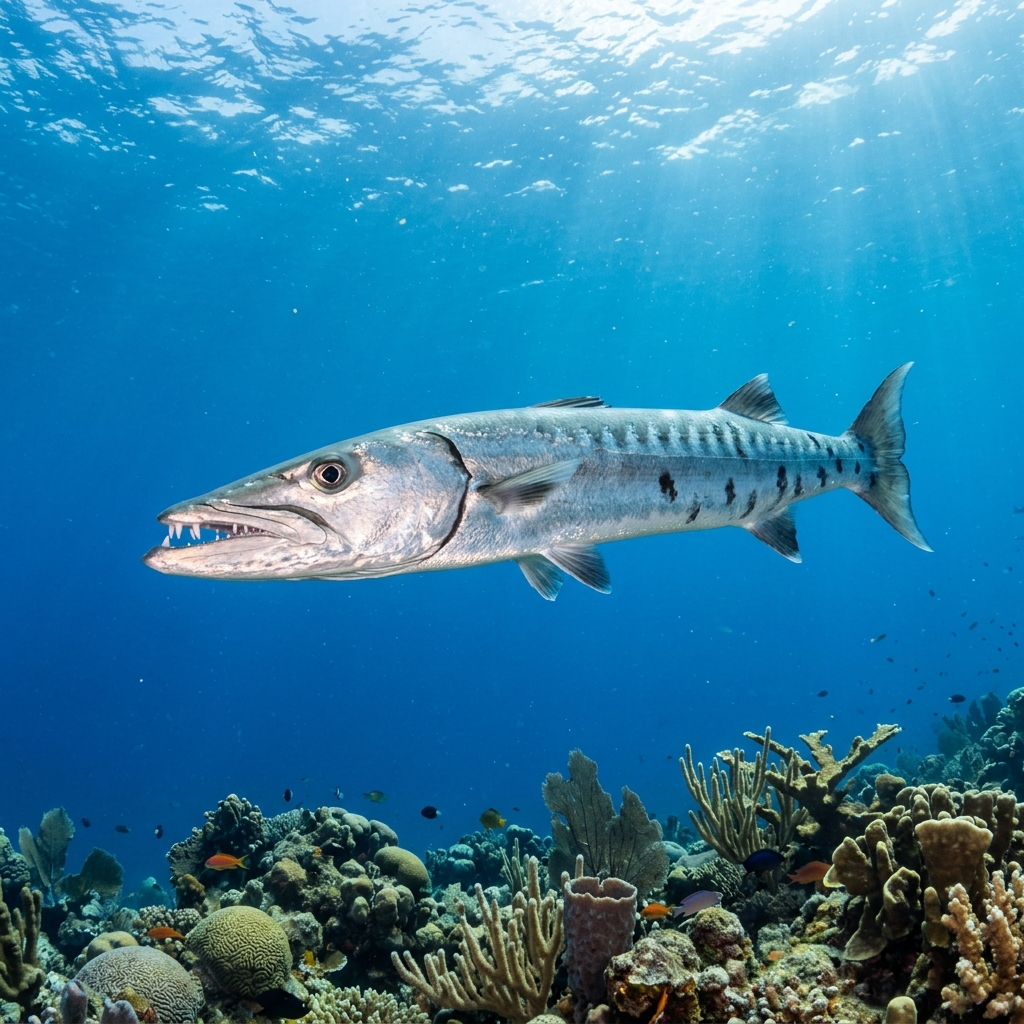
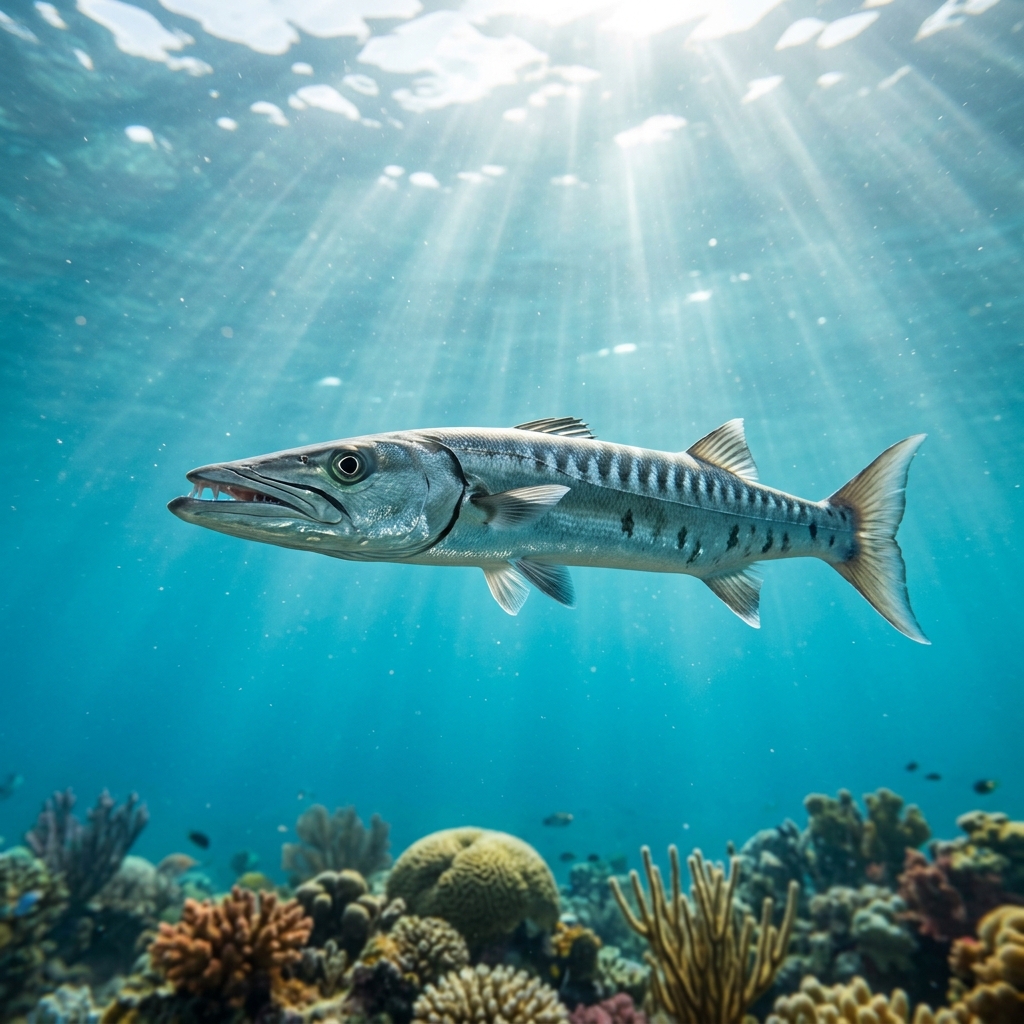
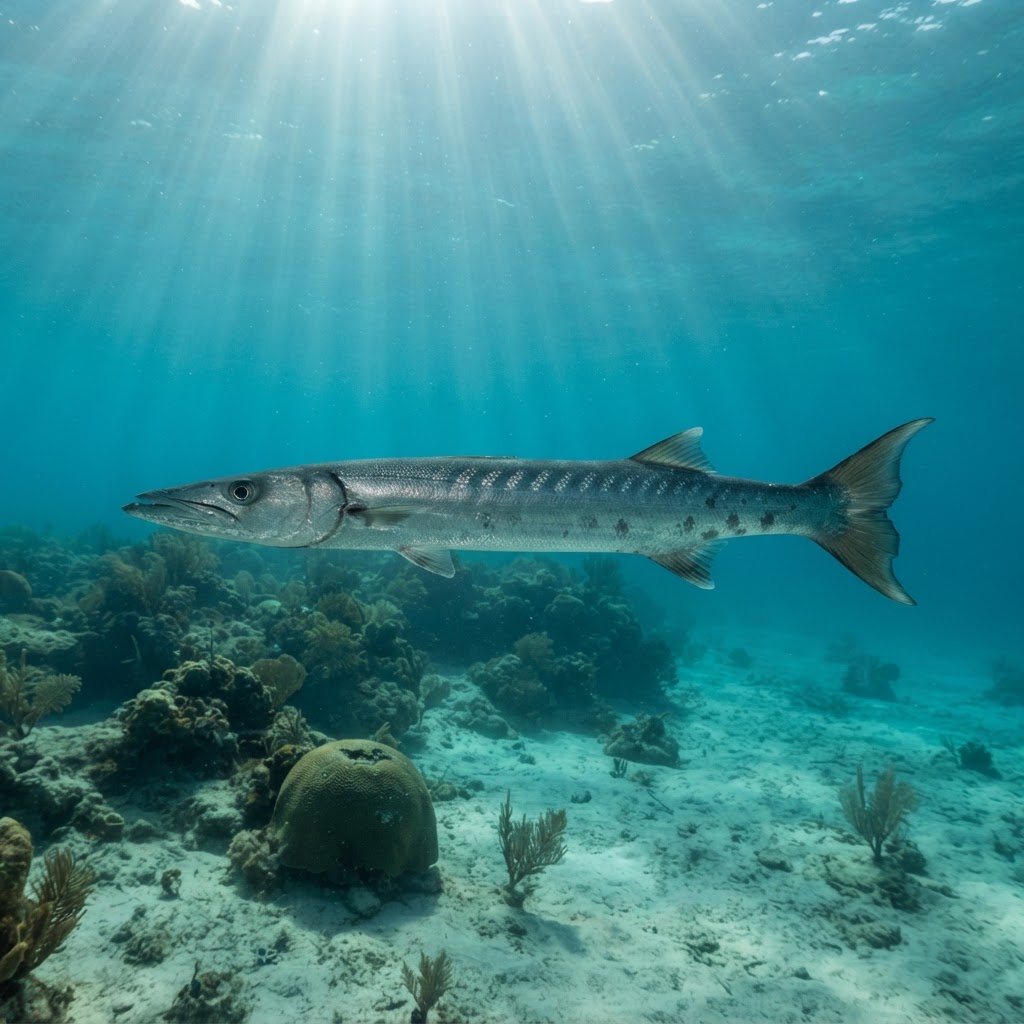
Sphyraena jello
Silvery predators over a metre long, most reliably seen around Sulawesi, Raja Ampat and Palawan on warm reefs 24-30C year-round.
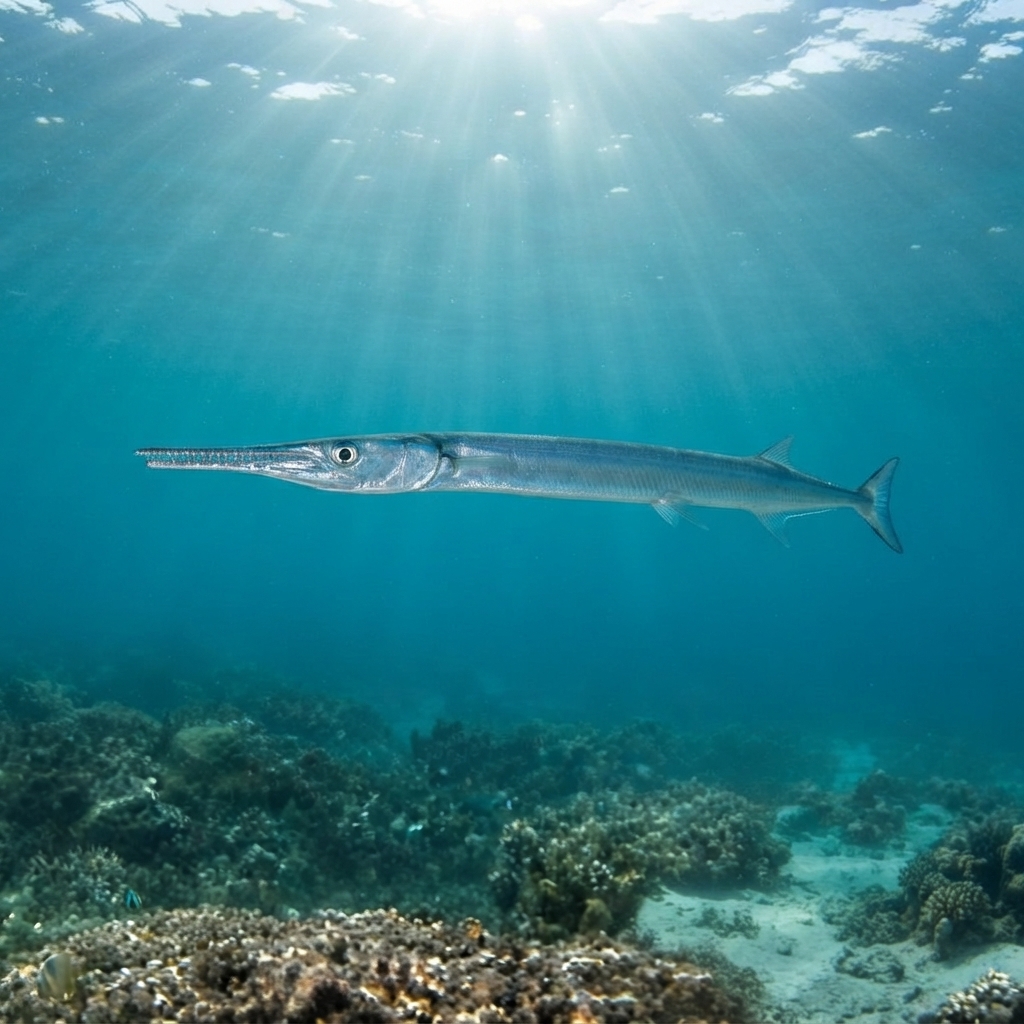
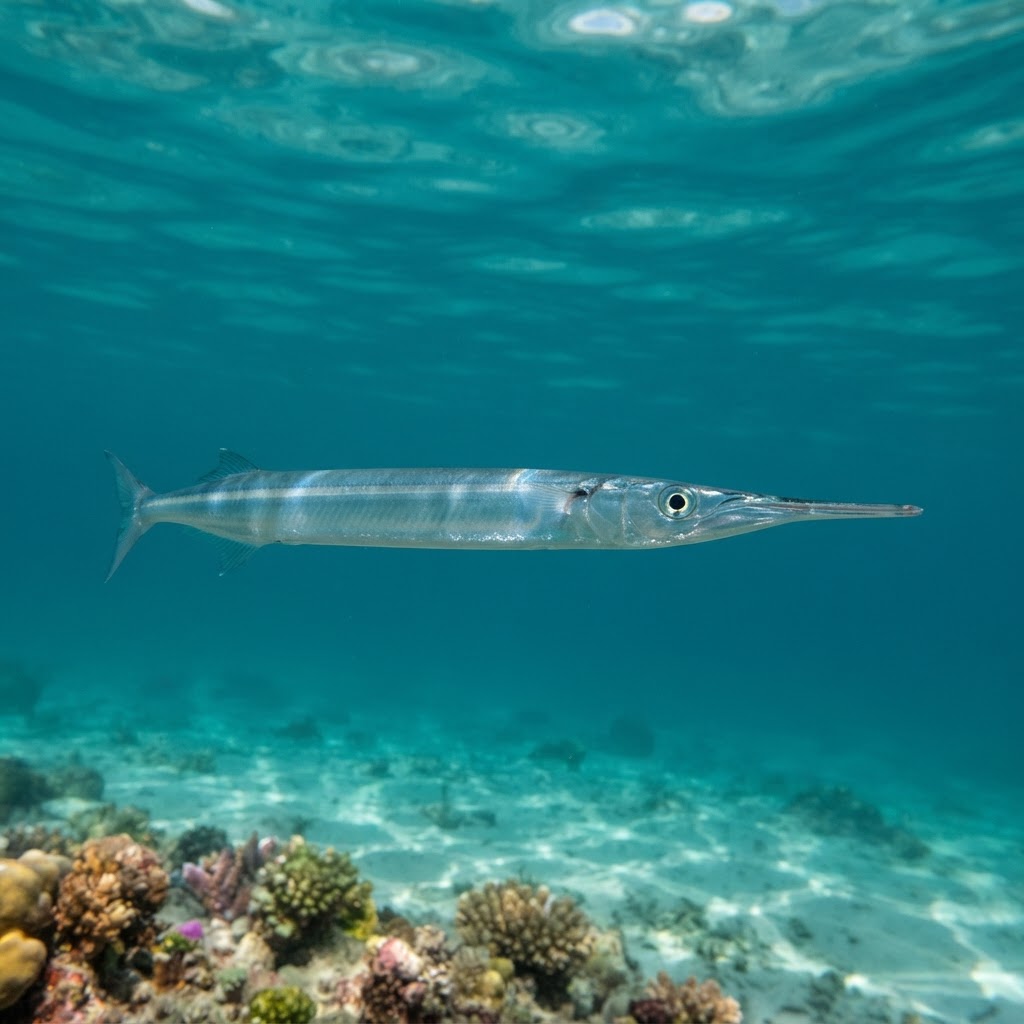
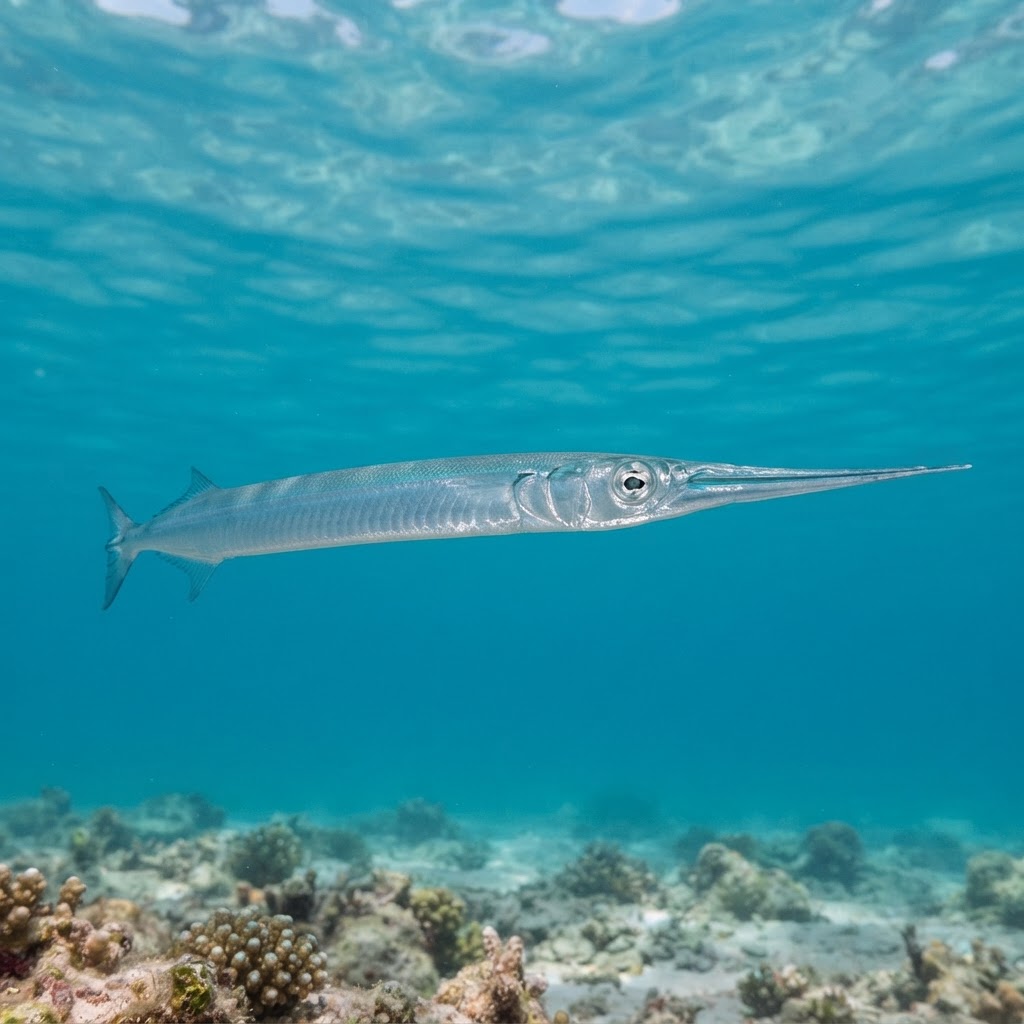
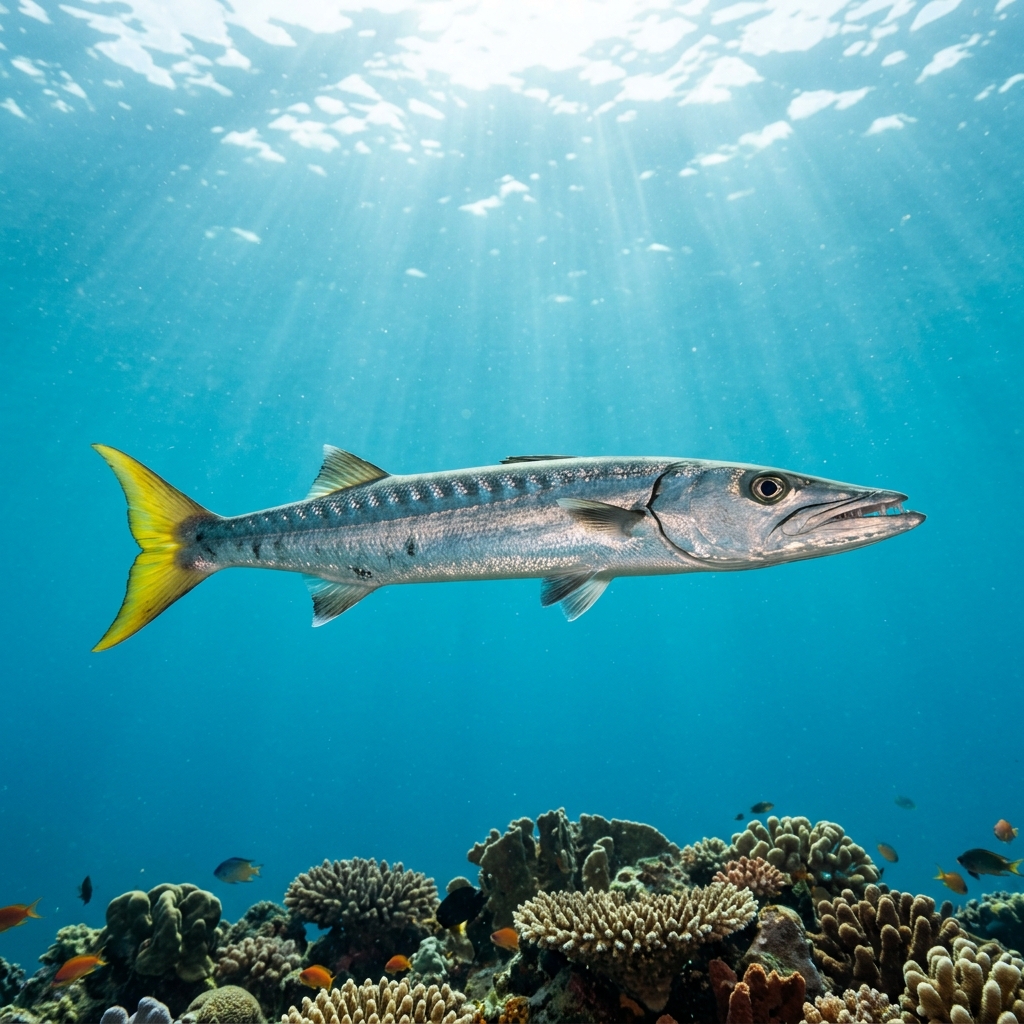
Long, torpedo-shaped body reaching around a metre, with a silvery flank and a faintly yellow-green tint along the back. Look for the row of dark, diffuse chevron-like bars or blotches running down the sides, a feature that separates it from plainer, unmarked barracuda species. The lower jaw juts out slightly and the tail is deeply forked, typical of the barracuda family, and it's often seen holding still in the water column rather than schooling tightly.
Usually spotted hanging motionless in mid-water over reef slopes and drop-offs, sometimes solo and sometimes in loose, scattered groups rather than the tight walls some barracuda species form. Divers report it as uncommon at most sites where it turns up, so a sighting tends to be a stationary, curious individual rather than a mass encounter. It tolerates divers at a distance but will usually peel off if approached directly.
As a reef-associated predator it hunts by ambush, using bursts of speed to run down smaller fish rather than chasing prey over distance.
No clear seasonal pattern shows in the data, and with a comfortable range of 24 to 30C it's a year-round sighting on tropical reefs across its range rather than a migratory or seasonal visitor.
Reef neighbours a diver could mistake it for. Use the identification notes above to tell them apart.
Most consistently logged across Indonesia and the Philippines, with strong numbers from Sulawesi, Raja Ampat, Luzon, Palawan and Mindanao. Also a reliable find in Queensland (Australia), Sabah (Malaysia), and reef sites across Thailand, Japan, Vietnam and Cambodia.
Mapping where Pickhandle Barracuda is logged…
Best chances are in Indonesia and the Philippines, particularly Sulawesi, Raja Ampat, Luzon and Palawan, with good numbers also reported from Queensland in Australia and Sabah in Malaysia.
There's no strong seasonal signal in the sighting data, and the species sits comfortably in 24 to 30C water, so it's seen year-round on tropical reefs rather than during a specific window.
Look for a silvery, torpedo-shaped body around a metre long with faint dark chevron bars along the flanks and a deeply forked tail. It's most often seen holding still in mid-water rather than schooling tightly.
They typically reach around 105cm in length, making them one of the larger reef-associated barracuda divers encounter.
No, they're not considered dangerous to divers. They tend to keep their distance and are usually seen hovering rather than displaying any aggression.
Most divers who log this species describe it as uncommon at the site where they saw it, so a sighting usually means one or a few individuals rather than a big group.
Site and sighting data is aggregated from diver logs, iNaturalist and GBIF. For taxonomy and conservation status:
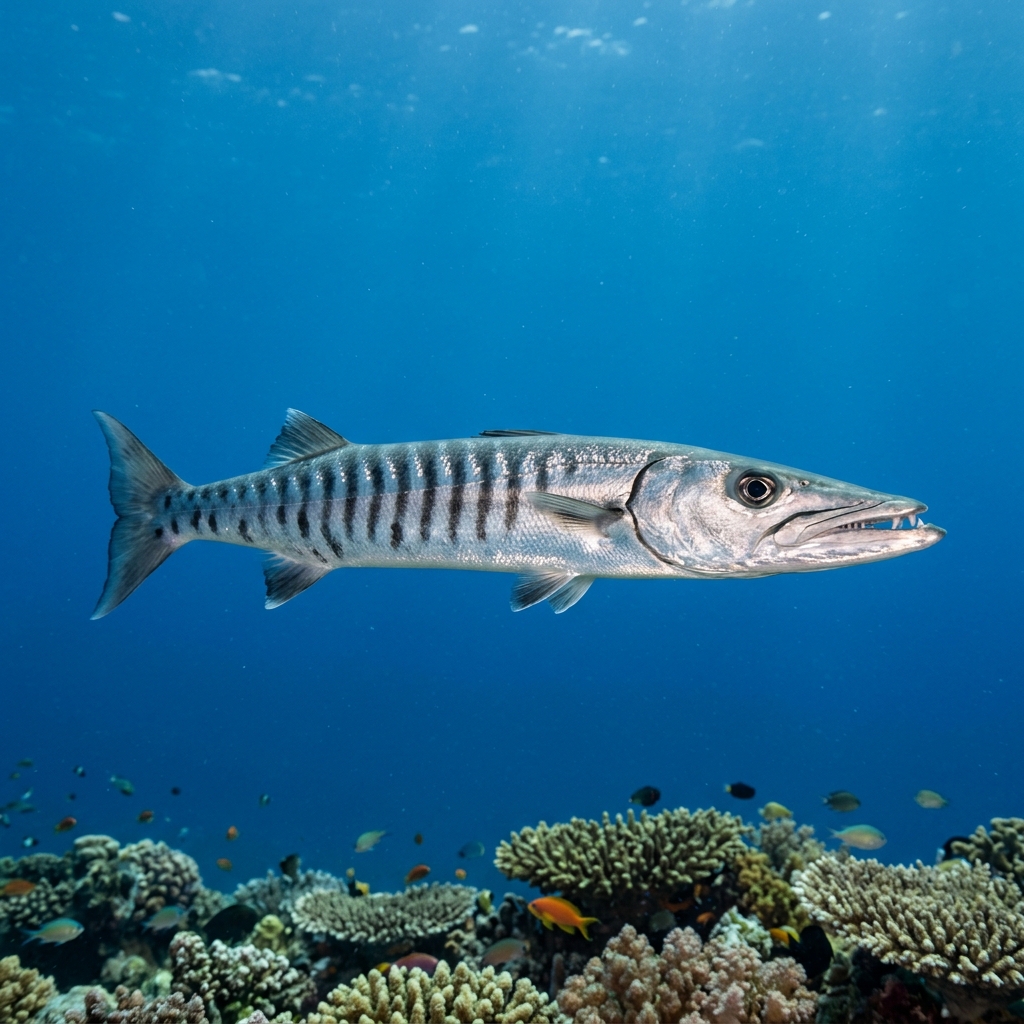
Striped Barracuda
883 sites