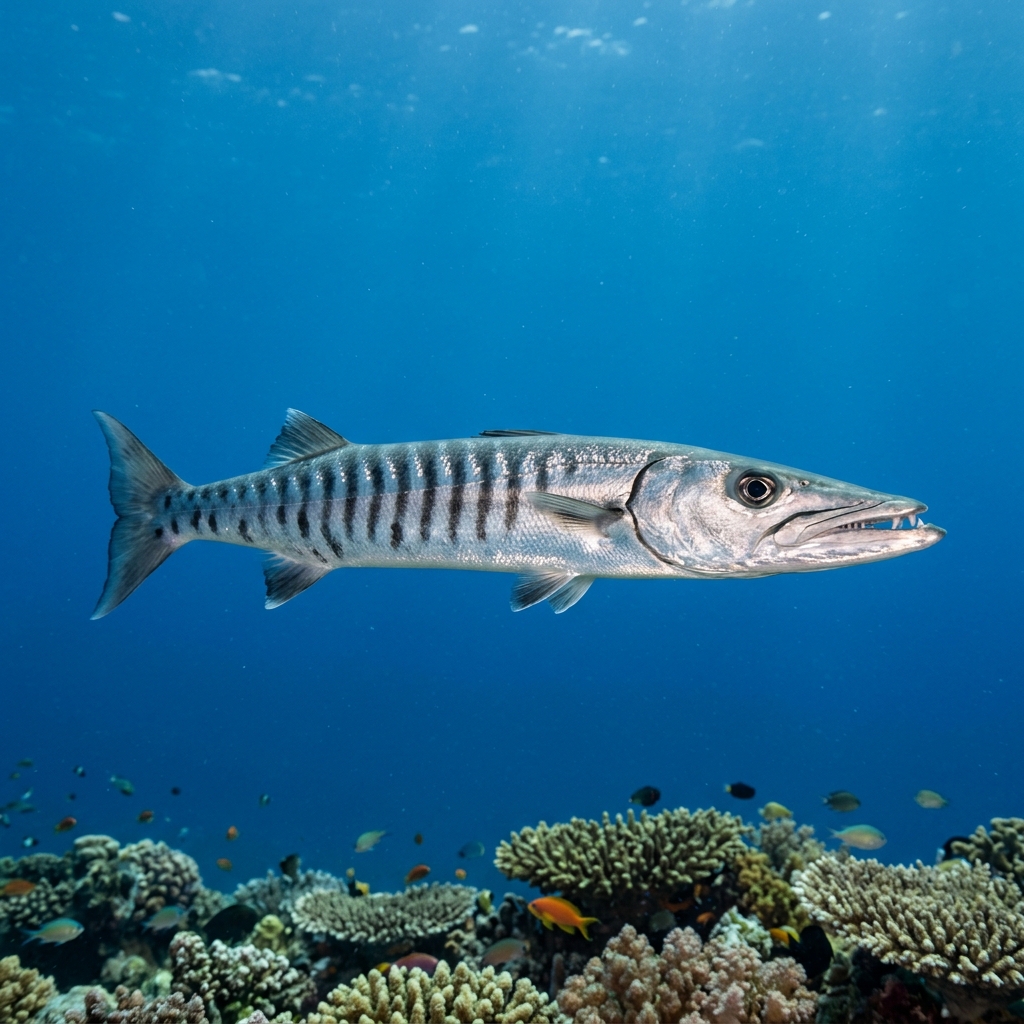
Sphyraena obtusata
Spot striped barracuda on reef dives across the Philippines, Indonesia and Queensland. Here's how to ID them and what to expect underwater.
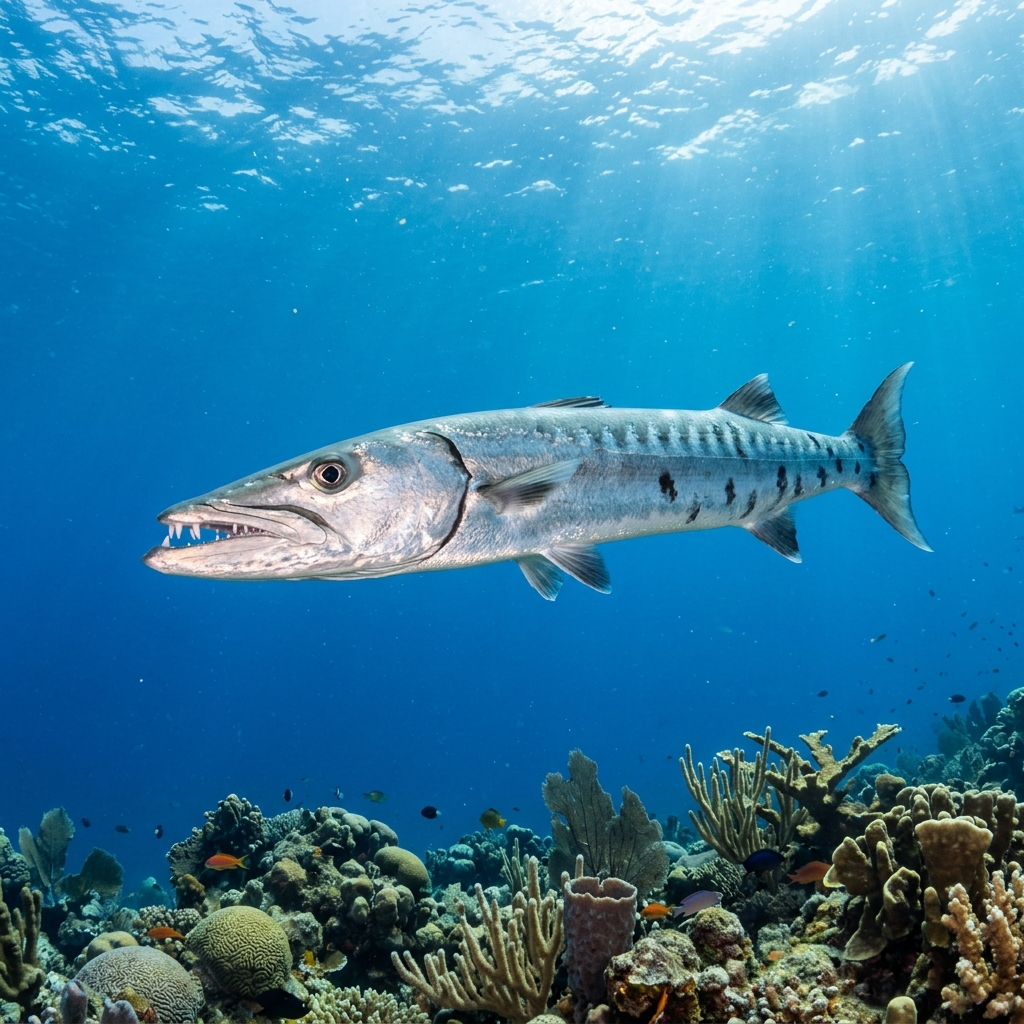
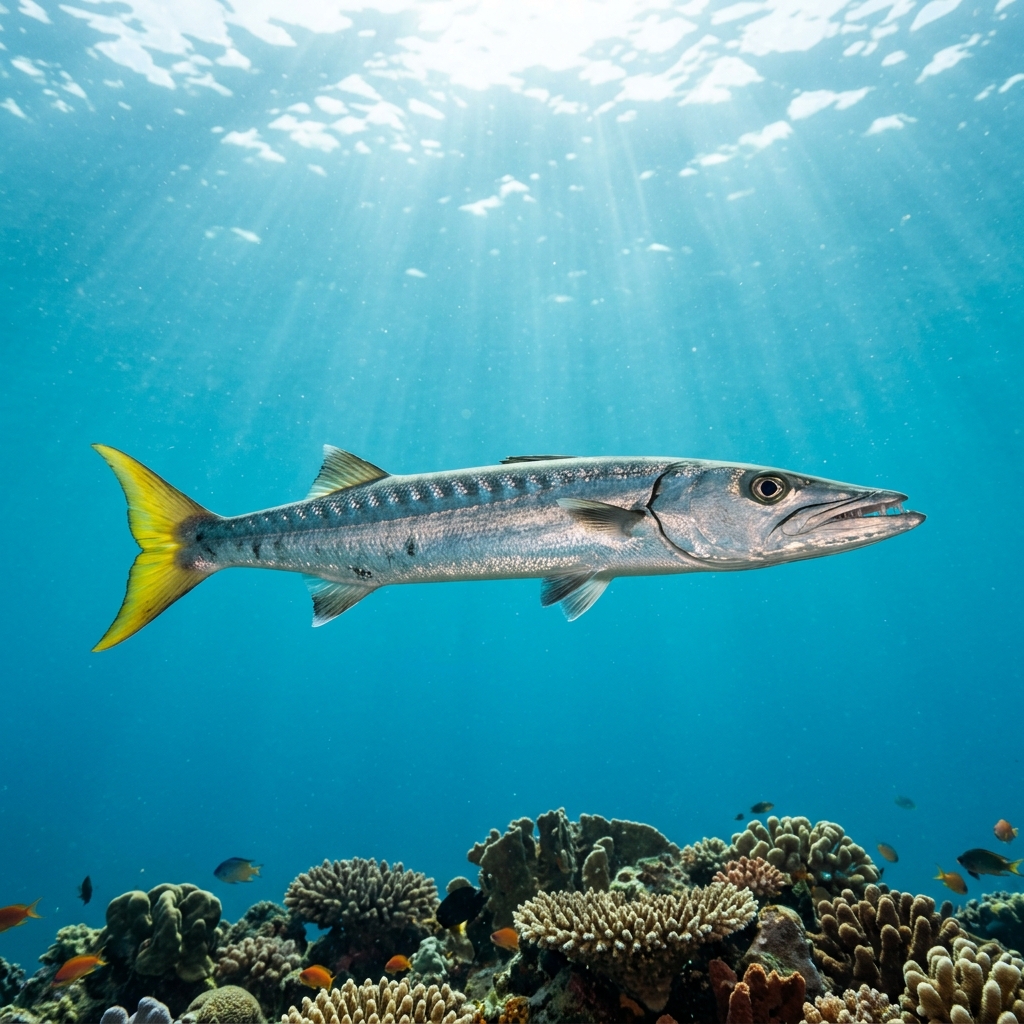
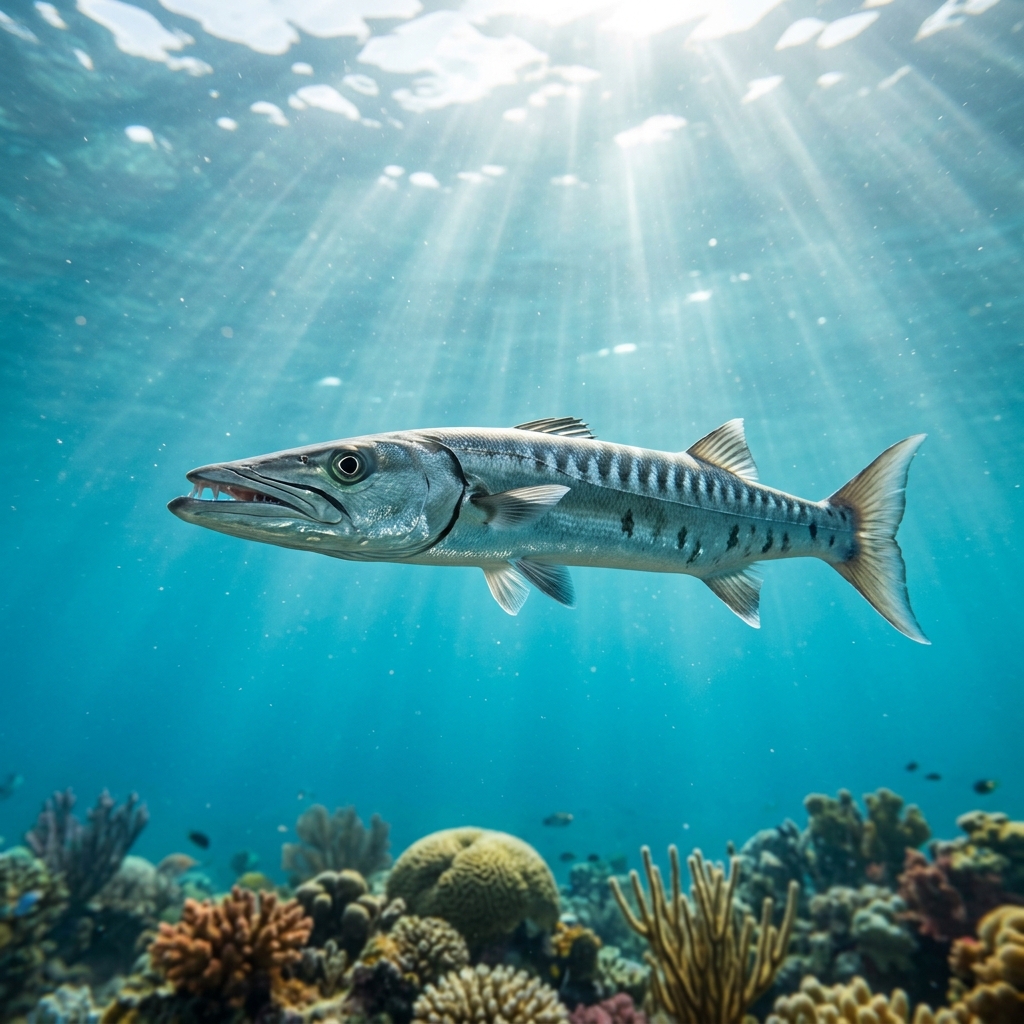
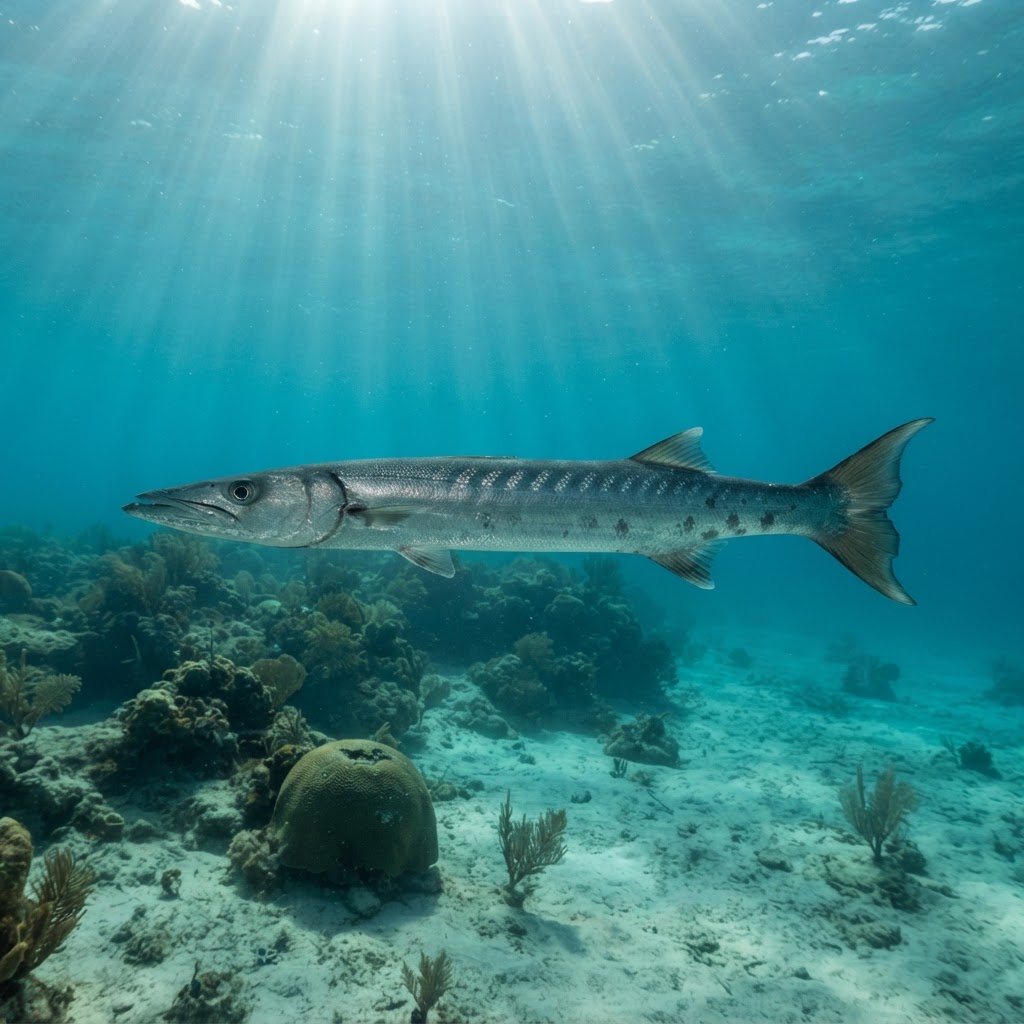
A slender, torpedo-shaped fish around 38 cm long with a silver-white body and a bold, dark lateral stripe running from head to tail, that stripe is the key field mark. The jaw is blunt compared to other barracudas, which is reflected in its scientific name. Look for it in relatively shallow reef zones, typically holding position in mid-water with the unhurried stillness common to barracudas.
Striped barracuda are curious by nature and will often pause to watch you, particularly if you slow down and avoid sudden movements. They hunt smaller reef fish during the day and have been observed working together to herd prey, with individuals coordinating to cut off escape routes, a behaviour worth watching for if you find a small group. Solo fish often hover in mid-water near the reef edge, scanning the surroundings with that characteristic barracuda stillness.
The cooperative herding behaviour seen in this species, where multiple individuals coordinate to corner prey, is relatively uncommon among reef fish of this size, and a group hunt is one of the more animated things you can witness on a reef dive.
No clear seasonal peak has emerged from the data, so this is effectively a year-round species on the tropical reefs where it lives. Its observed temperature range of 24 to 29°C matches the conditions found across Indo-Pacific and Red Sea reef systems throughout the year.
Reef neighbours a diver could mistake it for. Use the identification notes above to tell them apart.
Most commonly logged in the Philippines and Indonesia, with particularly strong sighting records around Palawan and Apo Reef and across Maluku and Papua. Australia's Queensland coast, the Gulf of Thailand, Malaysia's Perhentian and Redang islands, and the Port Sudan area in the Red Sea all feature regularly in diver reports.
Mapping where Striped Barracuda is logged…
The Philippines and Indonesia top the list, with strong records around Palawan, Apo Reef, and the Maluku and Papua regions. Queensland in Australia, Malaysia's Perhentian and Redang islands, the Gulf of Thailand, and the Red Sea around Port Sudan are all reliable areas to look.
There is no defined season, sightings are spread across the year. The species occupies warm tropical reefs in the 24 to 29°C range, which means conditions on Indo-Pacific and Red Sea reefs support encounters year-round.
Look for the dark horizontal stripe running the full length of the silver body, it is the clearest field mark. At around 38 cm it is noticeably smaller than a great barracuda, and its snout is blunter. Yellowtail barracuda can be similar in size but typically show a yellow tail rather than a full body stripe.
Striped barracuda are one of the smaller members of the family, typically reaching around 38 cm. That makes them noticeably more compact than great barracuda and easier to overlook on a busy reef.
No. Striped barracuda pose no recognised threat to divers. They may approach out of curiosity but quickly retreat if you move toward them. Like all barracuda they have sharp teeth used for hunting small fish, but unprovoked contact with divers is not recorded for this species.
Site and sighting data is aggregated from diver logs, iNaturalist and GBIF. For taxonomy and conservation status:
Pickhandle Barracuda
1,020 sites