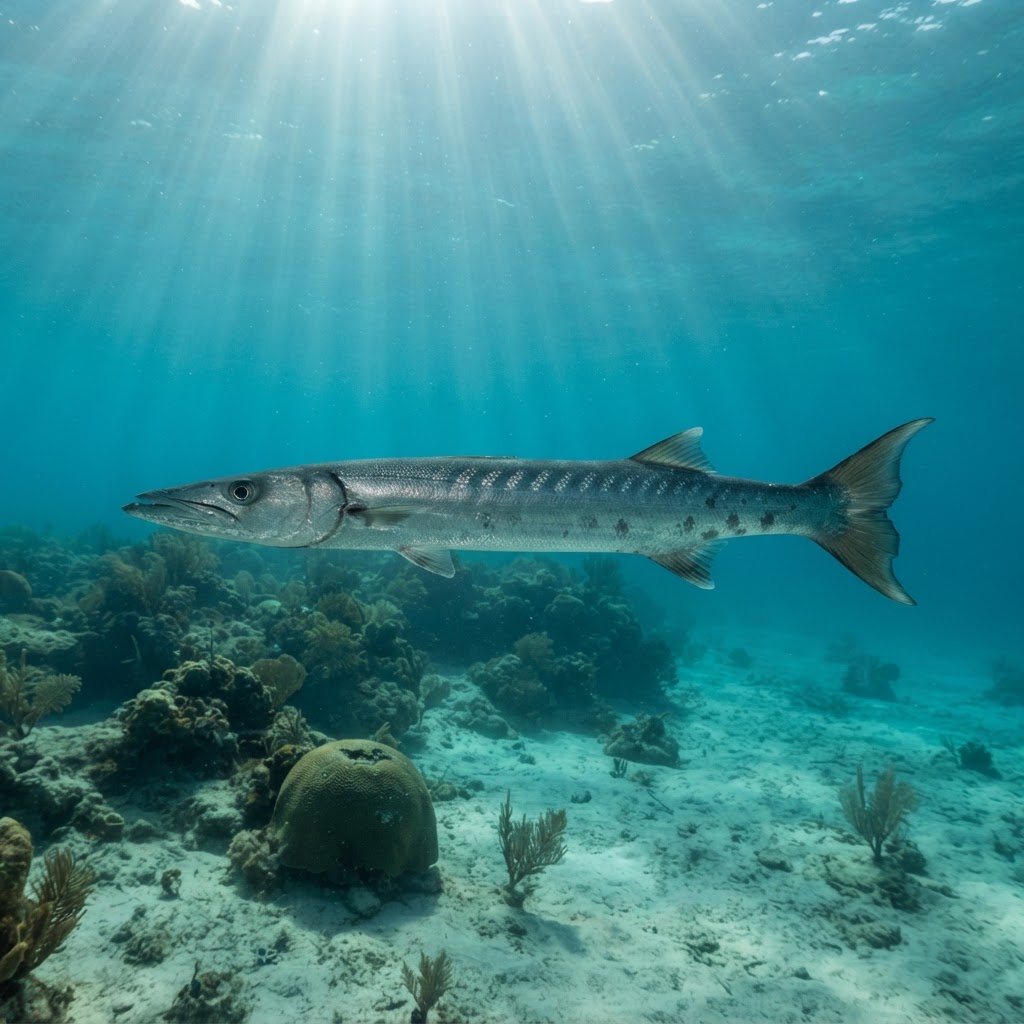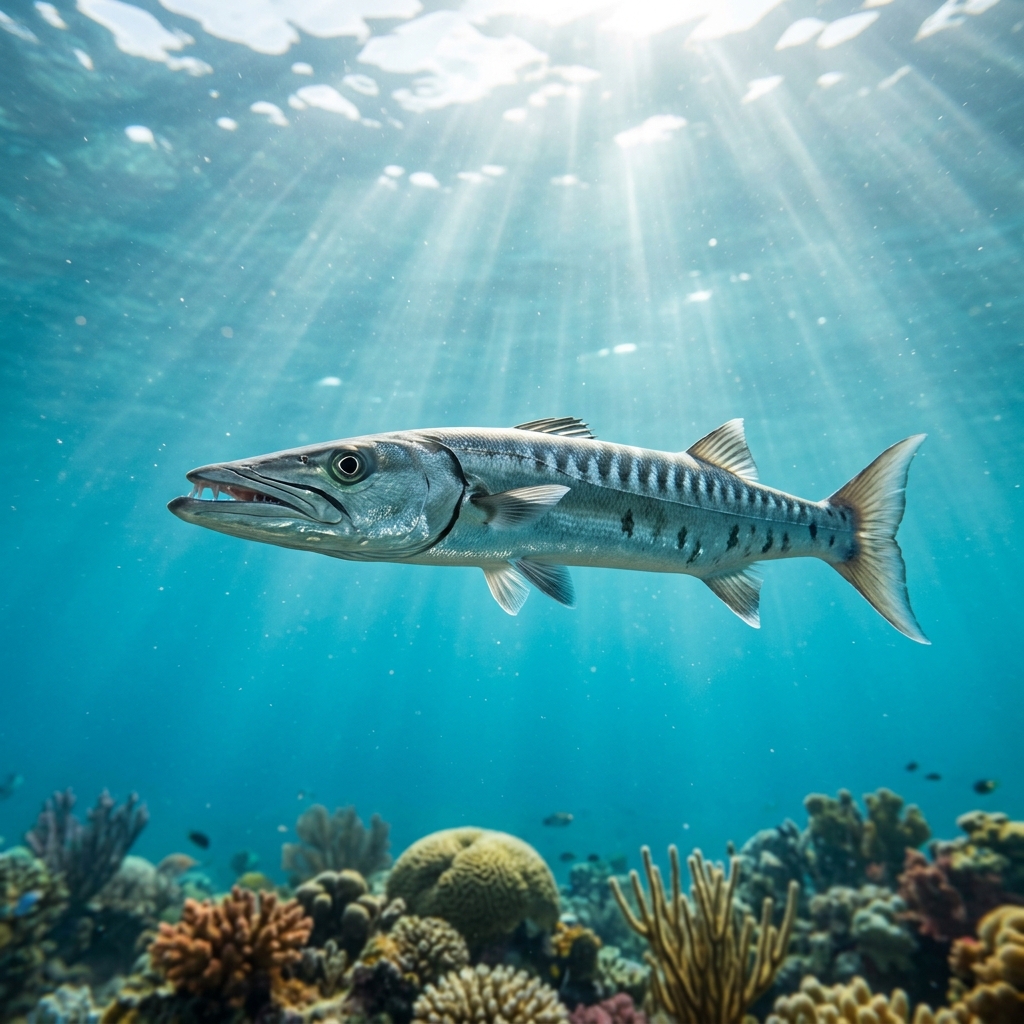
Sphyraena sphyraena
Sea pike school in the Mediterranean's cooler waters, with strong sightings across Greece, Croatia and Italy. Here's where and when to find them.
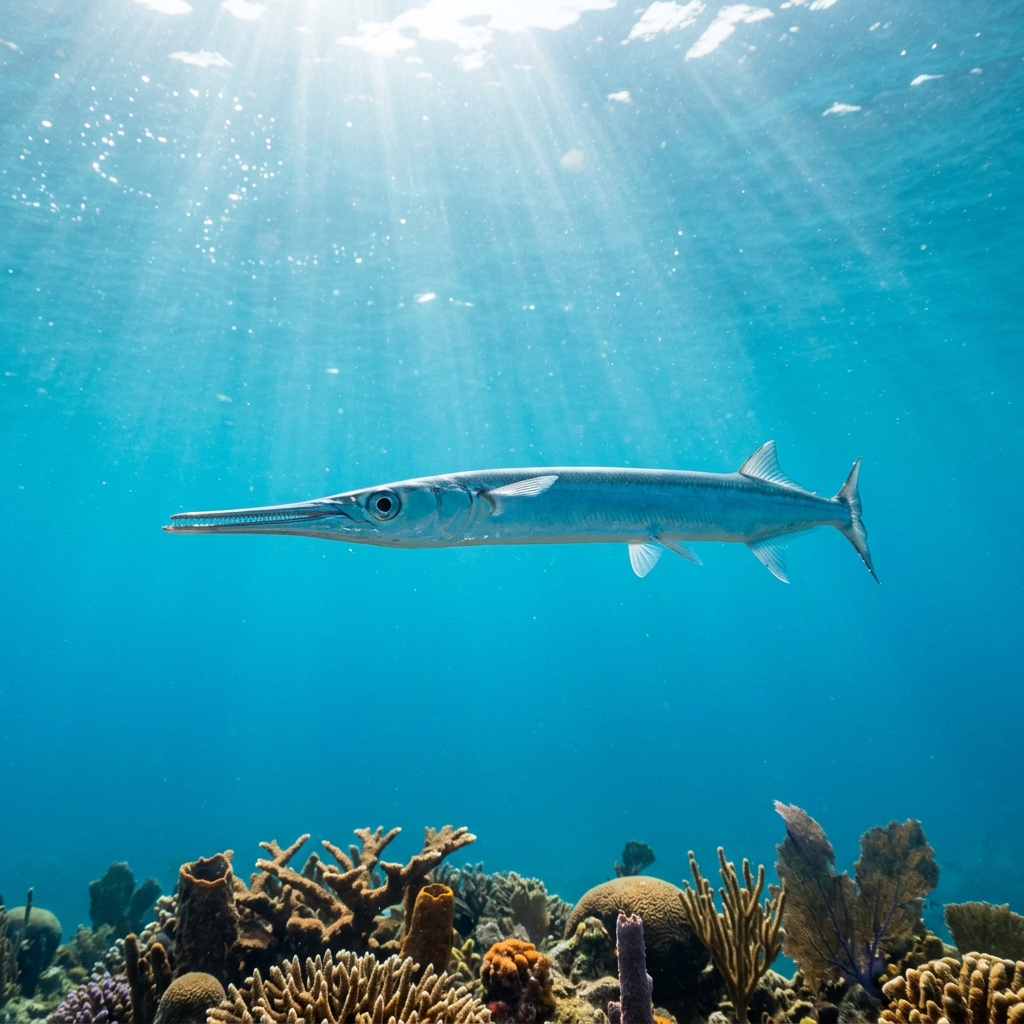
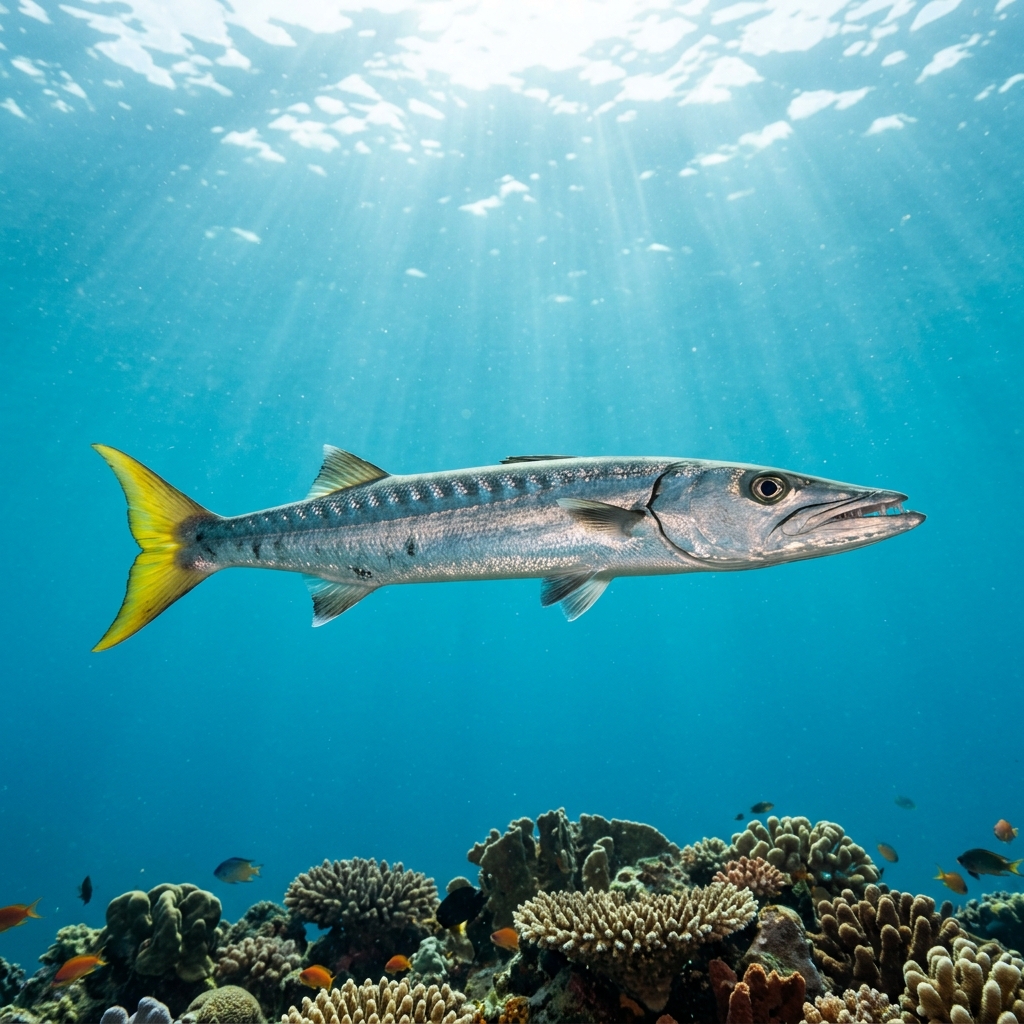
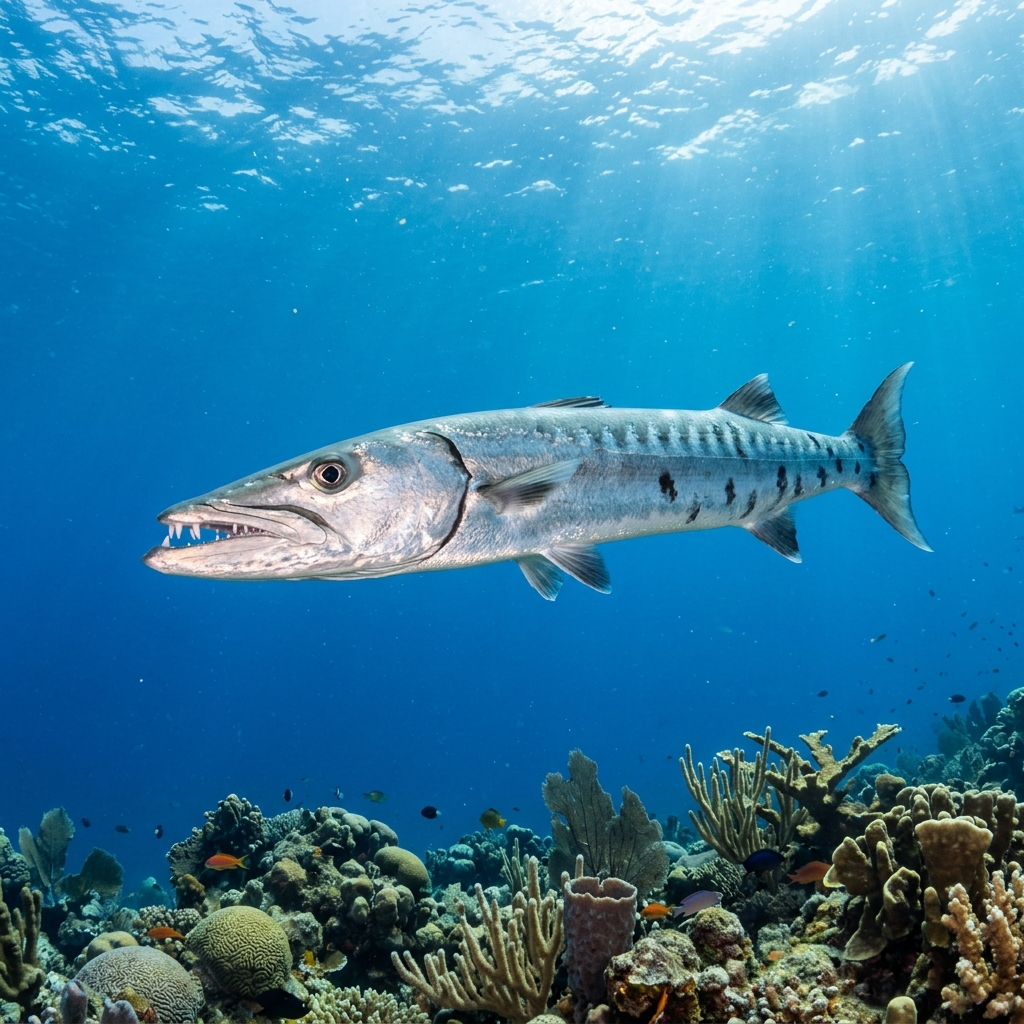
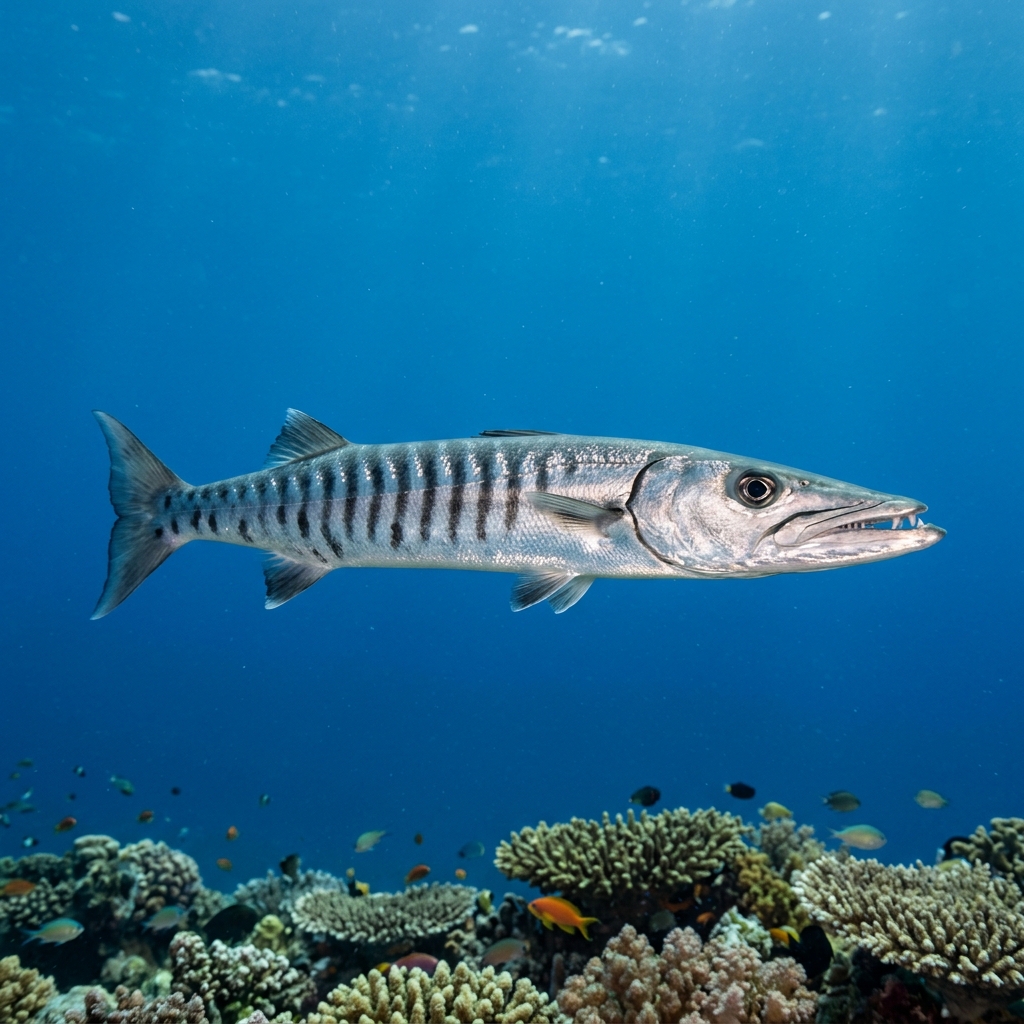
Long, torpedo-shaped body with a distinctly pointed, almost beak-like snout sets sea pike apart at a glance. They are silvery-grey along the flanks with a slightly darker, greenish-blue back, reaching up to around a metre in length. Look for the two widely spaced dorsal fins and the forked tail, which together give the fish a very lean, arrow-like silhouette in the water column.
Sea pike are typically encountered as loose schools or small groups patrolling open water just off rocky shorelines and reef edges, rarely settling near the bottom. They tend to be curious but skittish, holding their distance and circling at the edge of visibility before moving off. Early morning dives, when the fish are actively hunting baitfish close to the surface, offer the best viewing opportunity.
Sea pike are ambush predators that can accelerate explosively over short distances, using their streamlined build to burst through shoals of small fish. When you see them apparently hovering motionless in mid-water, they are often stalking prey rather than resting.
In the Northern Hemisphere Mediterranean, sea pike are present year-round in the 14 to 22 °C water they favour, though local activity often picks up during spring and early summer when cooler, nutrient-rich water draws baitfish close to shore. In Southern Hemisphere locations, sightings concentrate between December and June.
Reef neighbours a diver could mistake it for. Use the identification notes above to tell them apart.
Sea pike are most commonly logged across the Mediterranean, with the greatest concentration of sightings in Greece (particularly Attica), Italy (Sicilia and Sardegna), Croatia (Central Dalmatia and the Kvarner Gulf) and Turkey's Aegean Coast. Outside the Mediterranean, there are also records from Indonesian and Malaysian waters, including Maluku, Papua and Sipadan in East Sabah, though these likely reflect related or range-edge populations.
Mapping where Sea Pike is logged…
Sea pike are most reliably encountered across the Mediterranean. Greece's Attica region, Croatia's Central Dalmatia and Kvarner Gulf, Sicilia and Sardegna in Italy, and Turkey's Aegean Coast are the top-logged areas. There are also records from Sipadan and East Sabah in Malaysia and from Indonesian waters around Maluku and Papua.
In the Mediterranean, sea pike can be encountered across most of the year, as they are comfortable in water between roughly 14 and 22 °C. In Southern Hemisphere locations where they are observed, sightings concentrate from December through June.
Look for a long, slender, silvery fish with a sharply pointed snout, greenish-blue back and two widely spaced dorsal fins. Their elongated, almost missile-like shape and forked tail distinguish them clearly in open water. At around a metre in length, they are noticeably larger than most needlefish they might be confused with.
Sea pike typically reach around 115 cm in length, making them a noticeably large, impressive fish when encountered in open water.
At sites where they are recorded, sea pike are most often rated as uncommon, meaning you will not see them on every dive. A smaller proportion of sites rate them as common or very common, usually where schooling behaviour concentrates fish in predictable areas. Patience and early-morning dives improve your chances considerably.
Site and sighting data is aggregated from diver logs, iNaturalist and GBIF. For taxonomy and conservation status:
Pickhandle Barracuda
1,020 sites