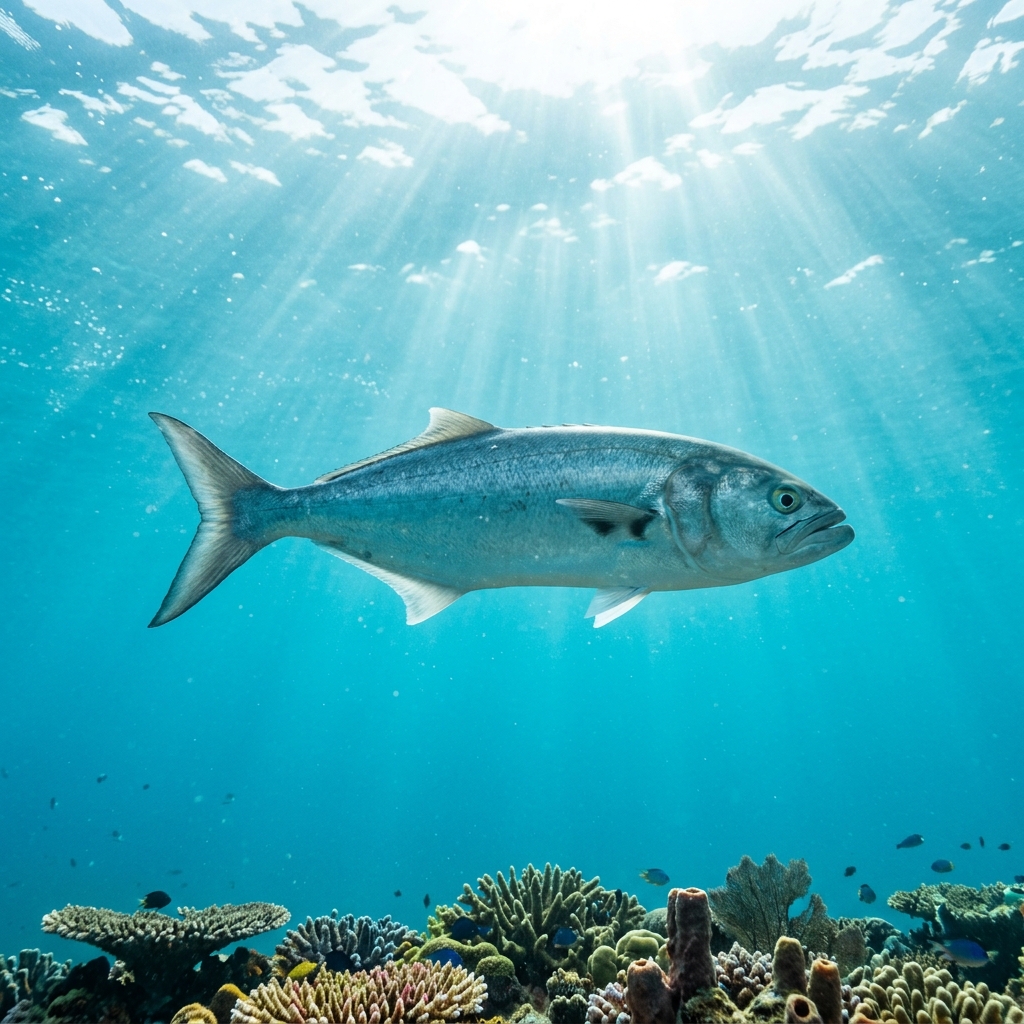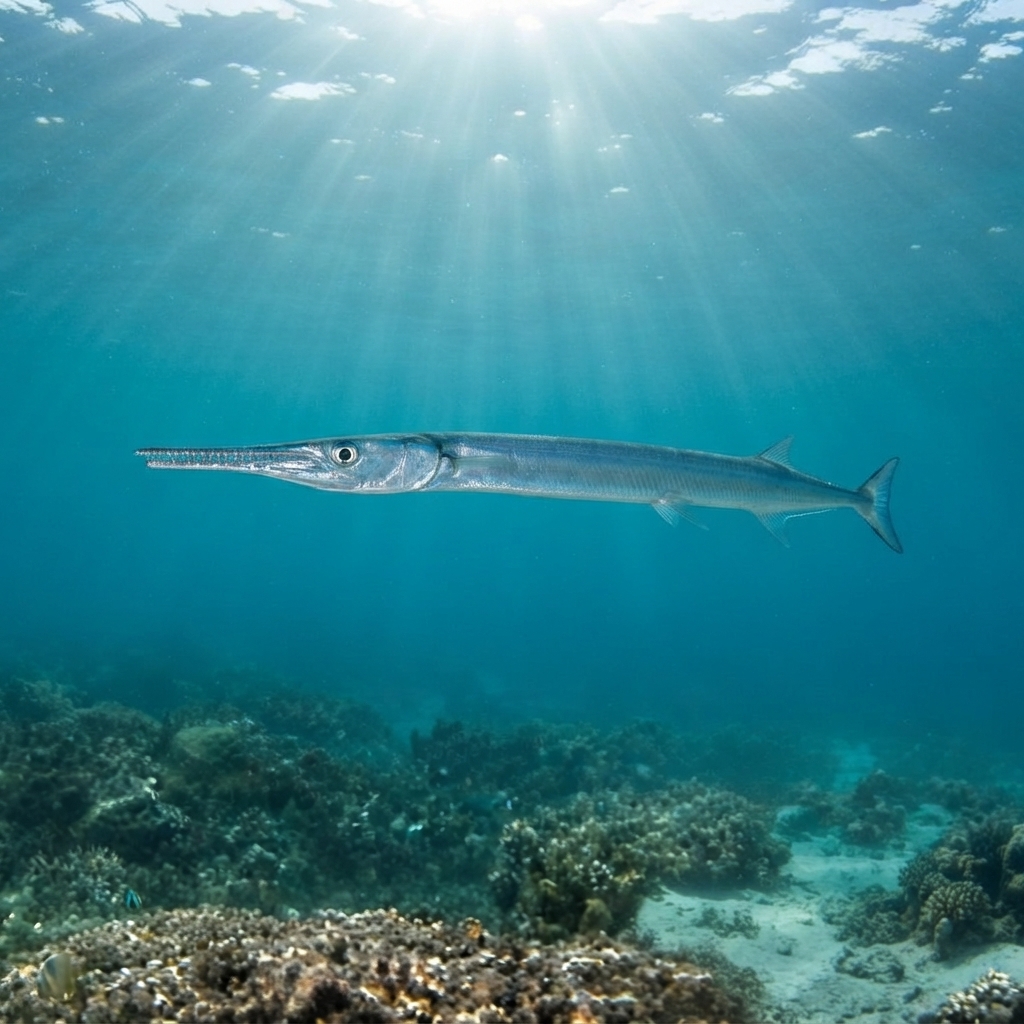
Tylosurus crocodilus
Silvery, torpedo-shaped predator often logged near the surface in Koh Tao, the Yucatán and the Bay Islands, year-round in warm reef water.
Safety warning
Risk comes mainly at night or near lit surfaces, where houndfish can be startled into fast, leaping strikes and their sharp beak can cause a real puncture wound. Keep dive lights angled down rather than out across the surface, avoid splashing at the surface at night, and give any houndfish showing agitated, fast circling plenty of space.
If you're injured
Impalement riskGeneral first-aid guidance, not a substitute for professional medical care. In an emergency, call your local emergency number.
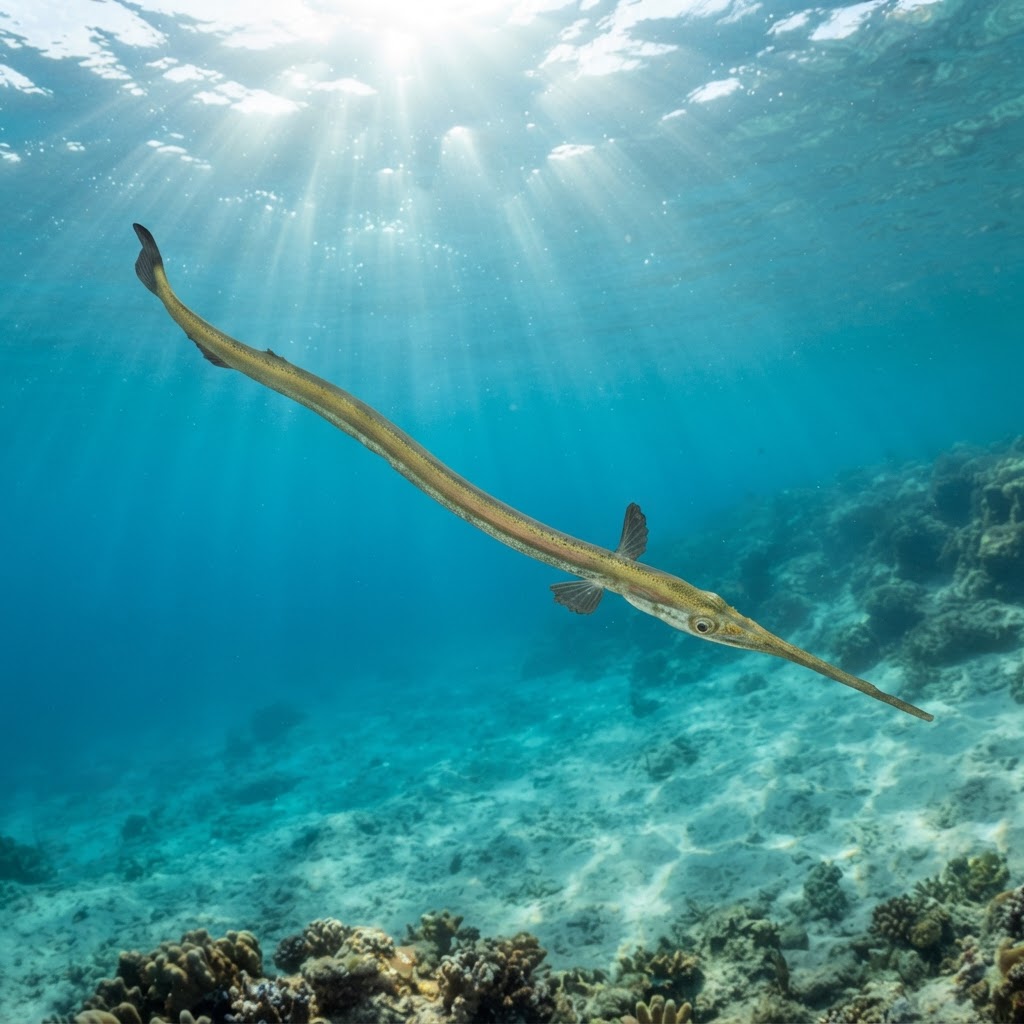
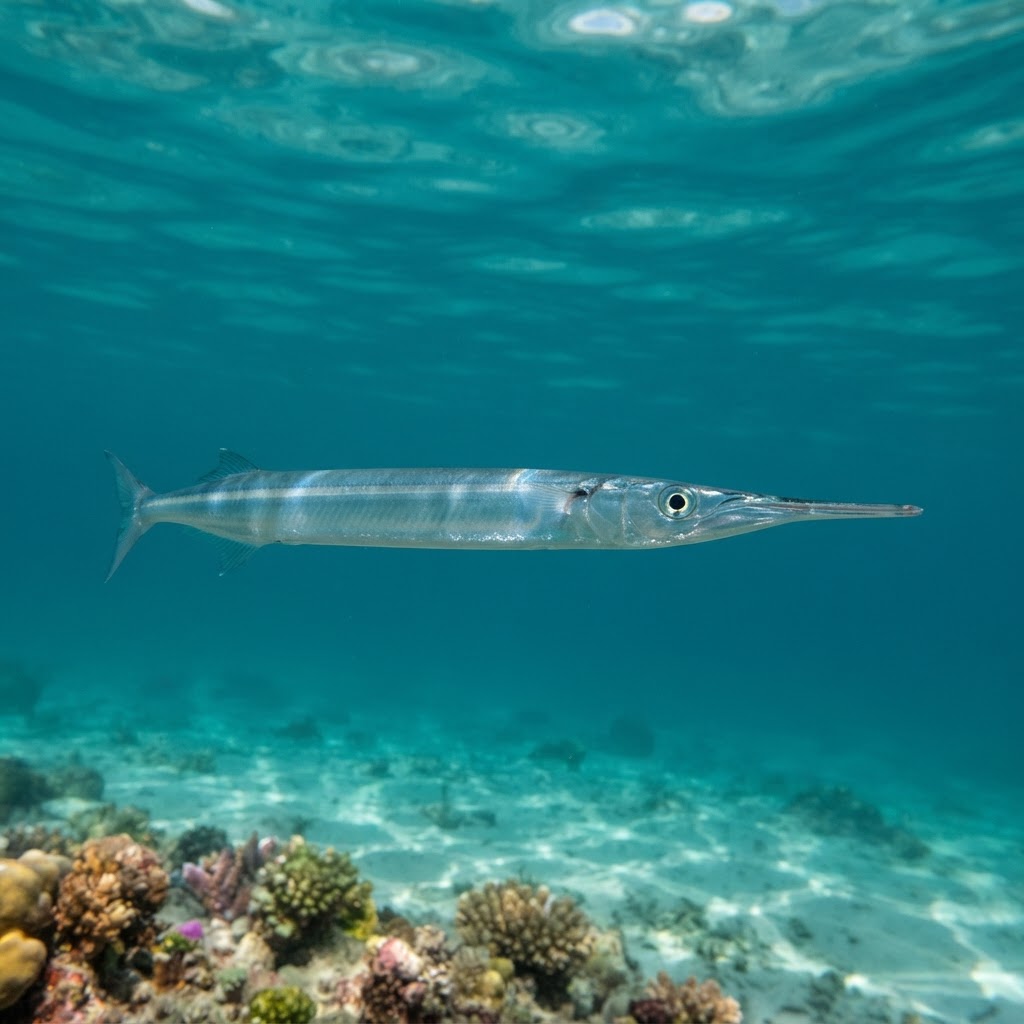
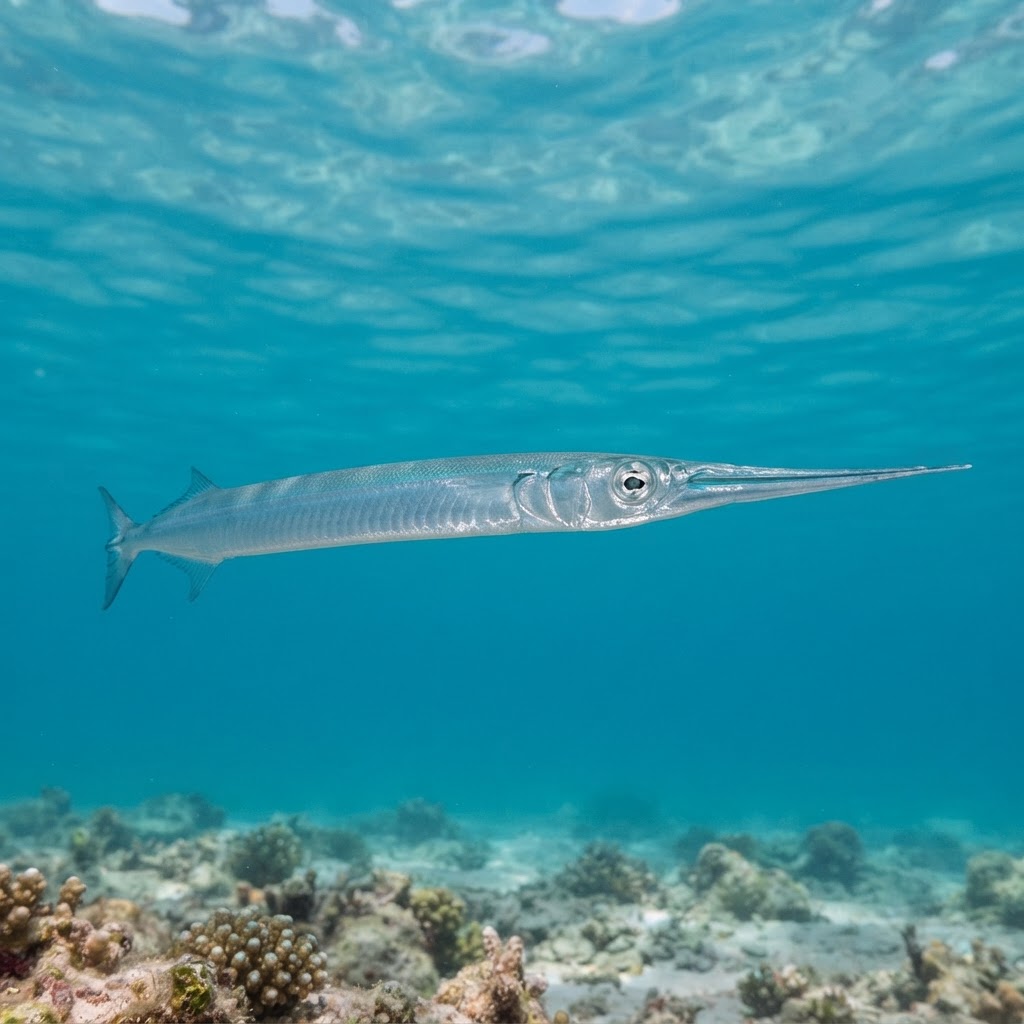
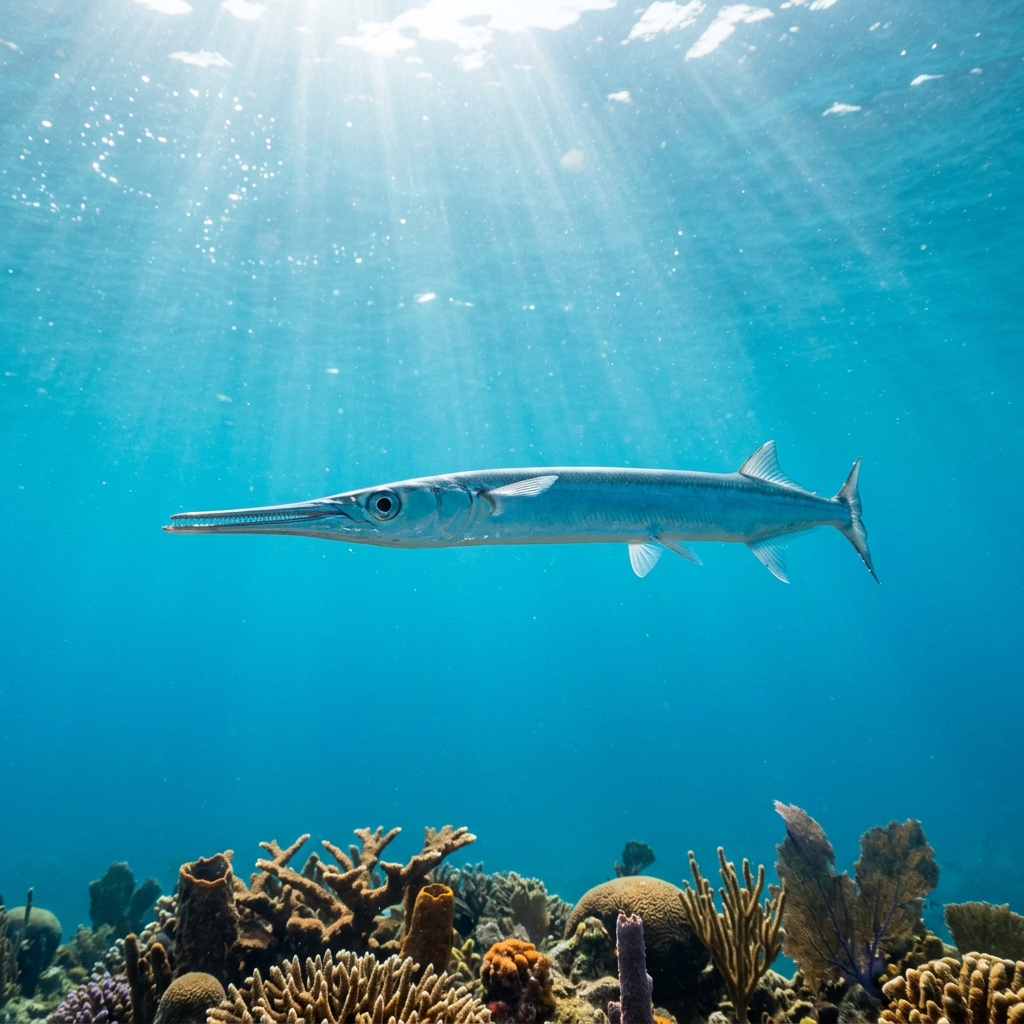
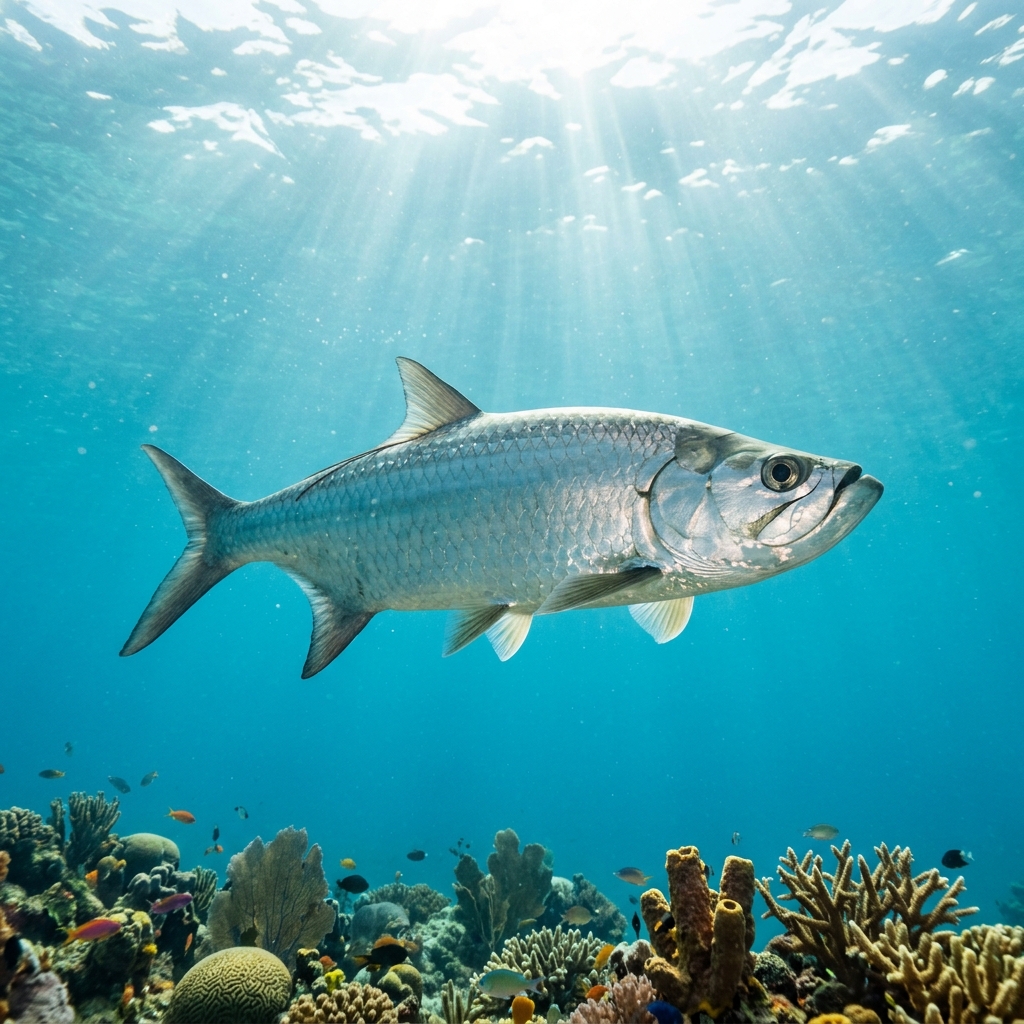
Long, cylindrical and unmistakably torpedo-shaped, houndfish stretch past a metre with a silvery-green back and a beak-like jaw lined with sharp teeth. They usually hang near the surface or mid-water in loose formation, catching light off their flanks, which is often the first thing divers notice before the shape registers. The extended jaw, roughly equal in both halves, separates them from similarly slender needlefish species.
Look for them cruising alone or in loose, shallow groups near the surface, often over reef flats or just off the drop-off in the top 10 metres. They tend to hold a steady course and keep their distance rather than approach divers, though they're drawn to light and can react fast to disturbance at the surface, especially at night. Most encounters happen as a quick pass rather than a lingering one.
Houndfish are powerful surface hunters that lunge at baitfish with rapid sideways strikes of that elongated jaw, a movement that has occasionally sent an airborne fish straight at boats or swimmers attracted to surface lights.
Sightings run year-round with no clear seasonal pattern in the data, which fits their comfort range of roughly 27 to 29°C found on tropical reefs through every month.
Reef neighbours a diver could mistake it for. Use the identification notes above to tell them apart.
Most consistently logged in Thailand, especially Koh Tao, Phuket, Koh Phi Phi and Koh Lipe, and in Mexico's Yucatán Peninsula. Strong numbers also come from Florida in the United States, the Bay Islands of Honduras, Peninsular Malaysia's east coast, Indonesia, Guadeloupe and Egypt's Red Sea coast.
Mapping where Houndfish is logged…
They turn up widely across the Indo-Pacific and Caribbean, with the strongest logs from Koh Tao, Phuket and Koh Phi Phi in Thailand, Mexico's Yucatán Peninsula, Florida, and the Bay Islands of Honduras.
There's no strong season in the data, they're seen year-round on warm reefs sitting around 27 to 29°C, so any month works in their core range.
They're generally not aggressive toward divers but their sharp beak and fast surface strikes make them a real puncture risk, particularly at night around dive lights. Avoid shining lights across the surface and keep distance from any houndfish acting agitated.
Look for a long, silvery, cylindrical body over a metre in length with an elongated beak-like jaw, usually seen cruising near the surface or mid-water alone or in small loose groups.
They typically reach around 105 cm in length, giving them a distinct torpedo profile that's easy to spot against open water near the surface.
Their signature move is a rapid sideways lunge at surface baitfish, a strike so fast and forceful that panicked prey and even the houndfish itself can briefly go airborne, a known hazard around lit boats at night.
Site and sighting data is aggregated from diver logs, iNaturalist and GBIF. For taxonomy and conservation status:
Butterfish
1,423 sites