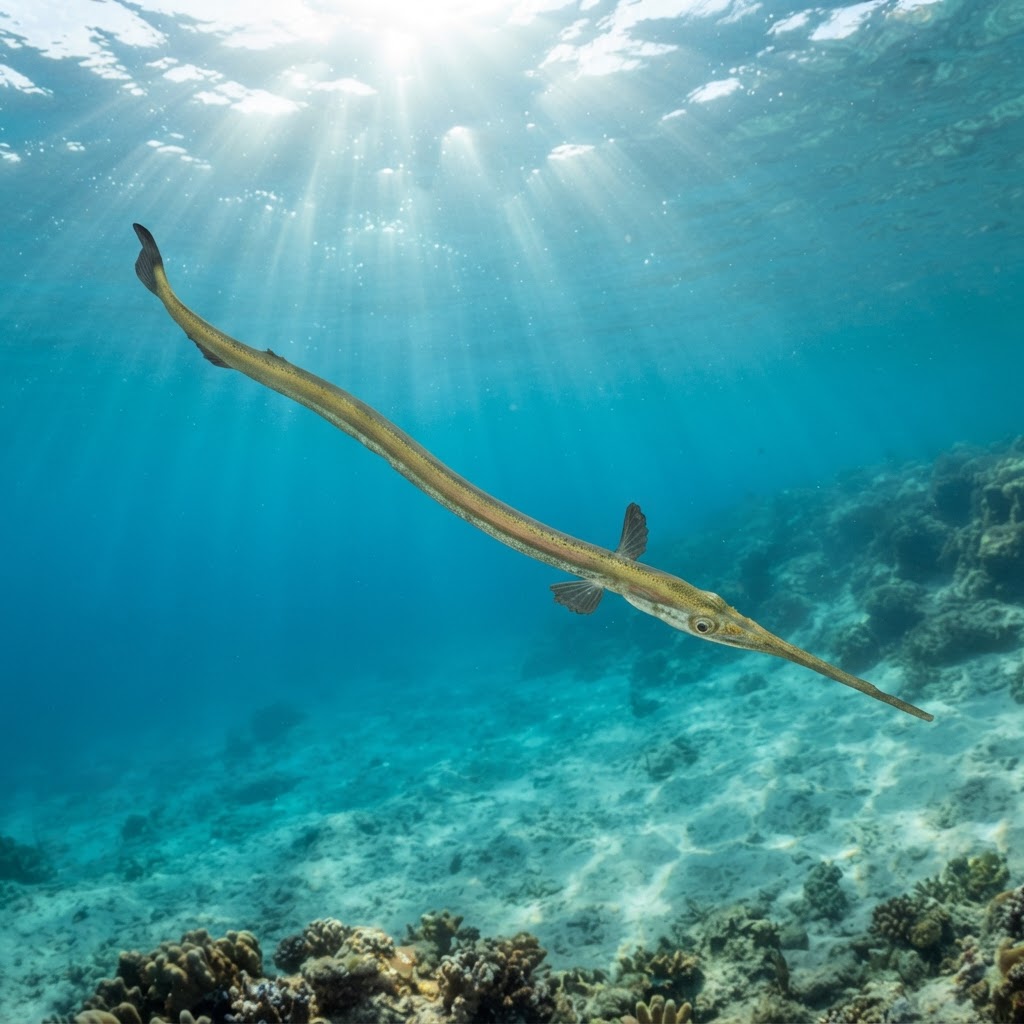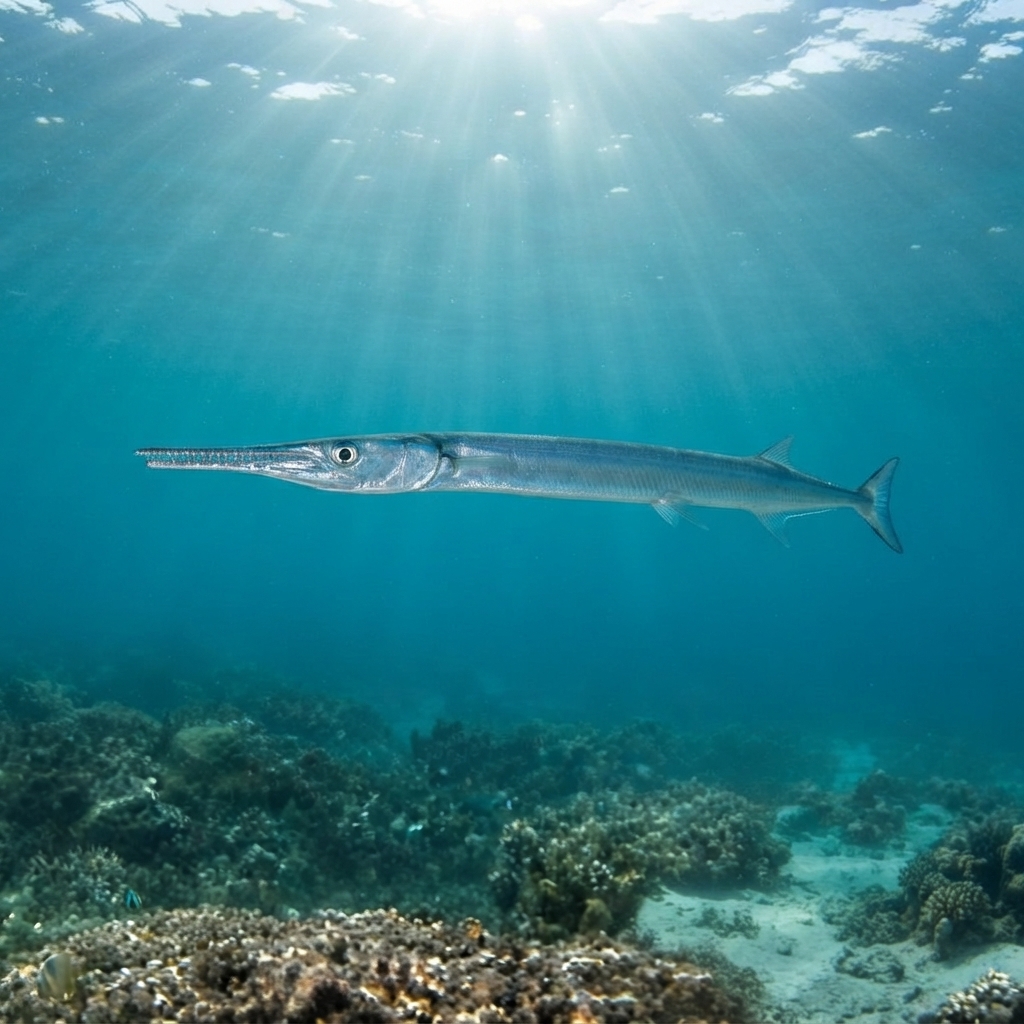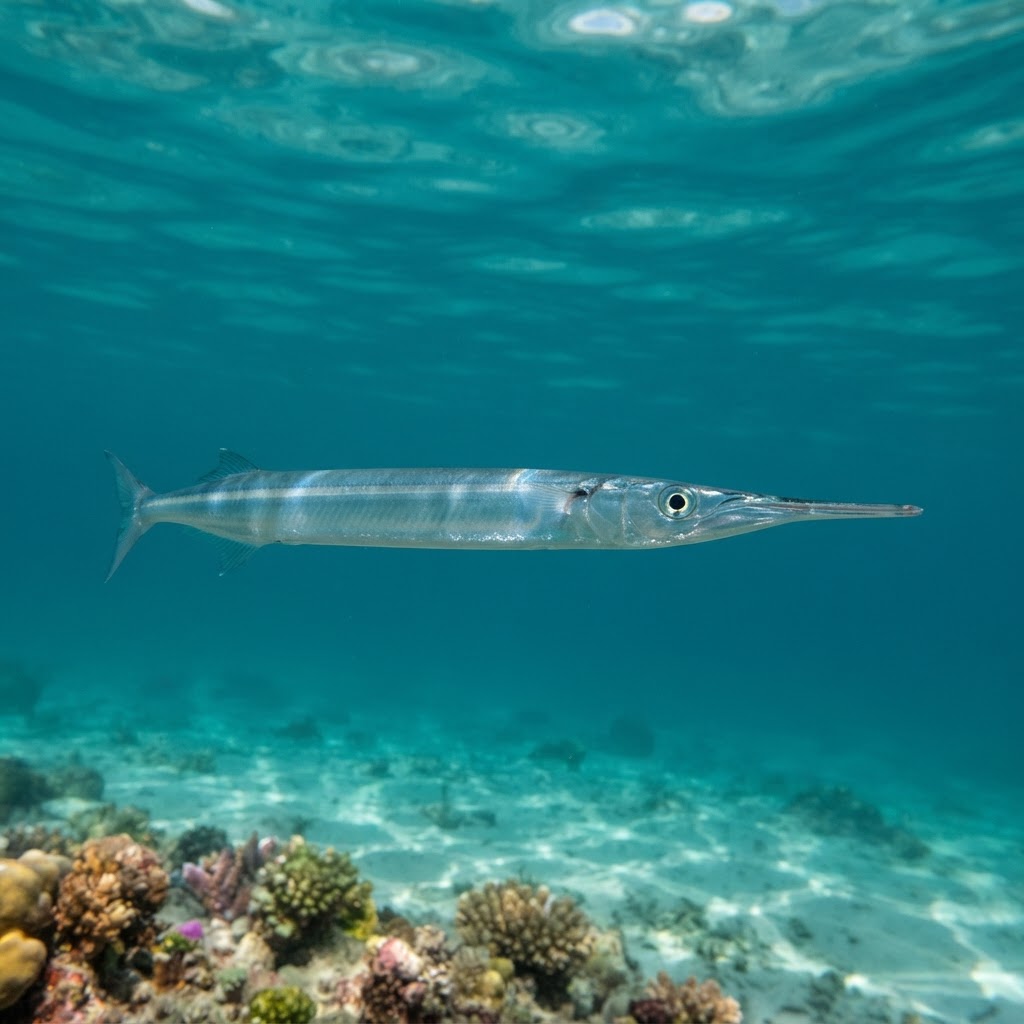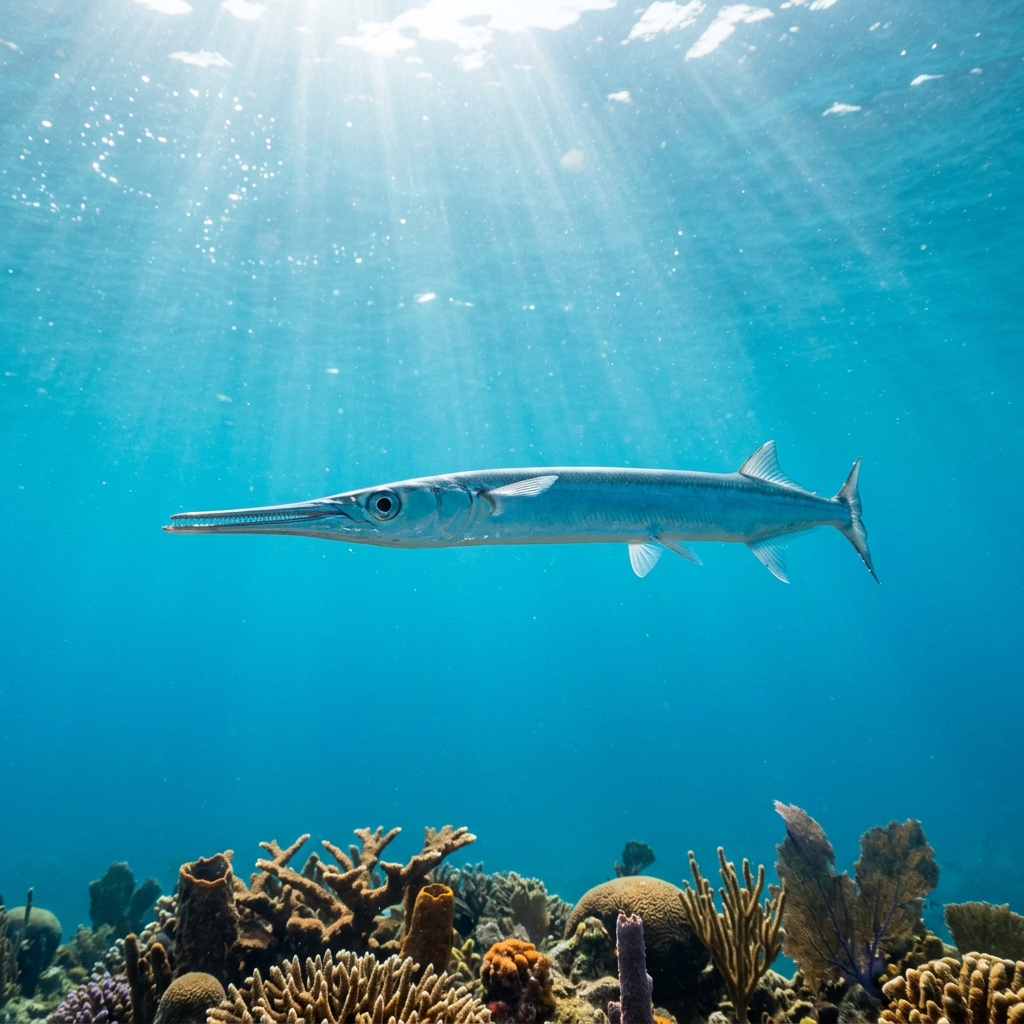
Platybelone argalus
Silver surface-dwellers around Tenerife and Carlisle Bay, Barbados, cruising warm water at 25-28C year-round if you know where to look.
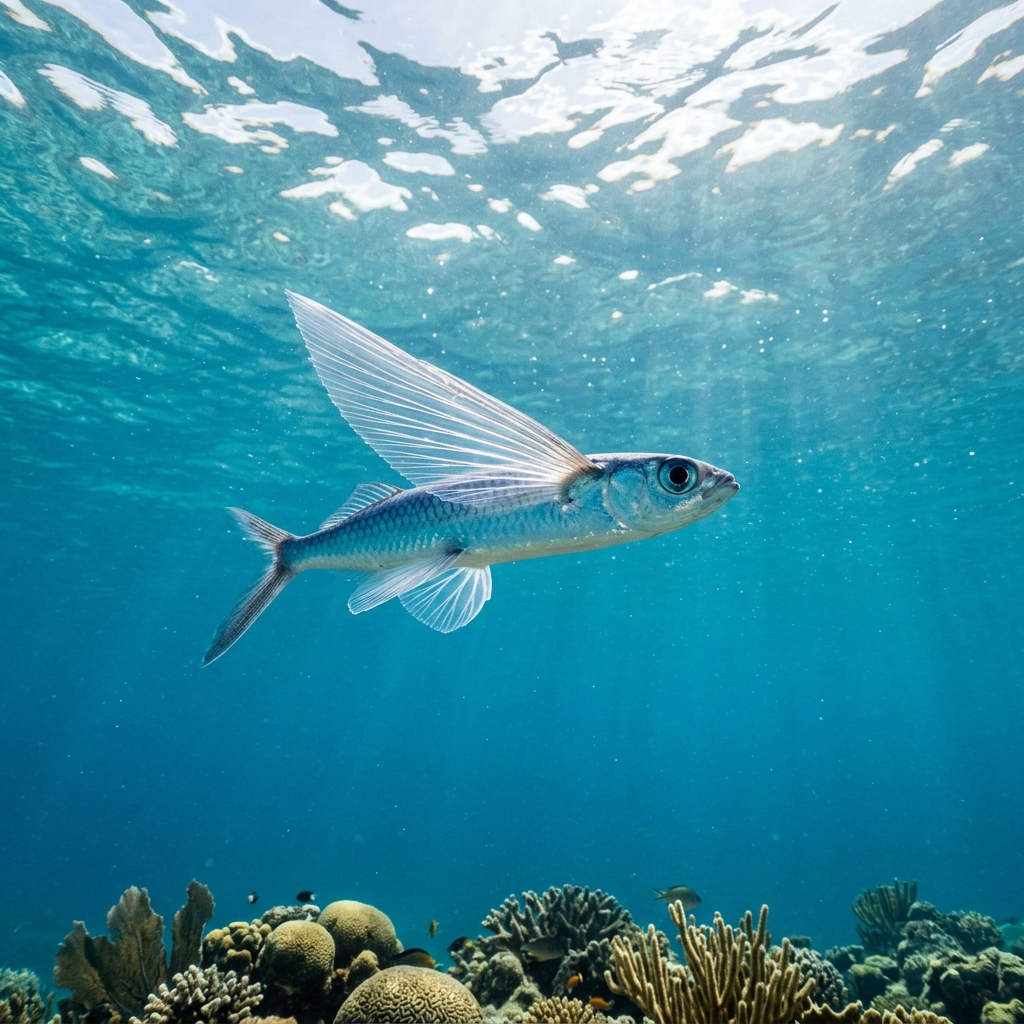
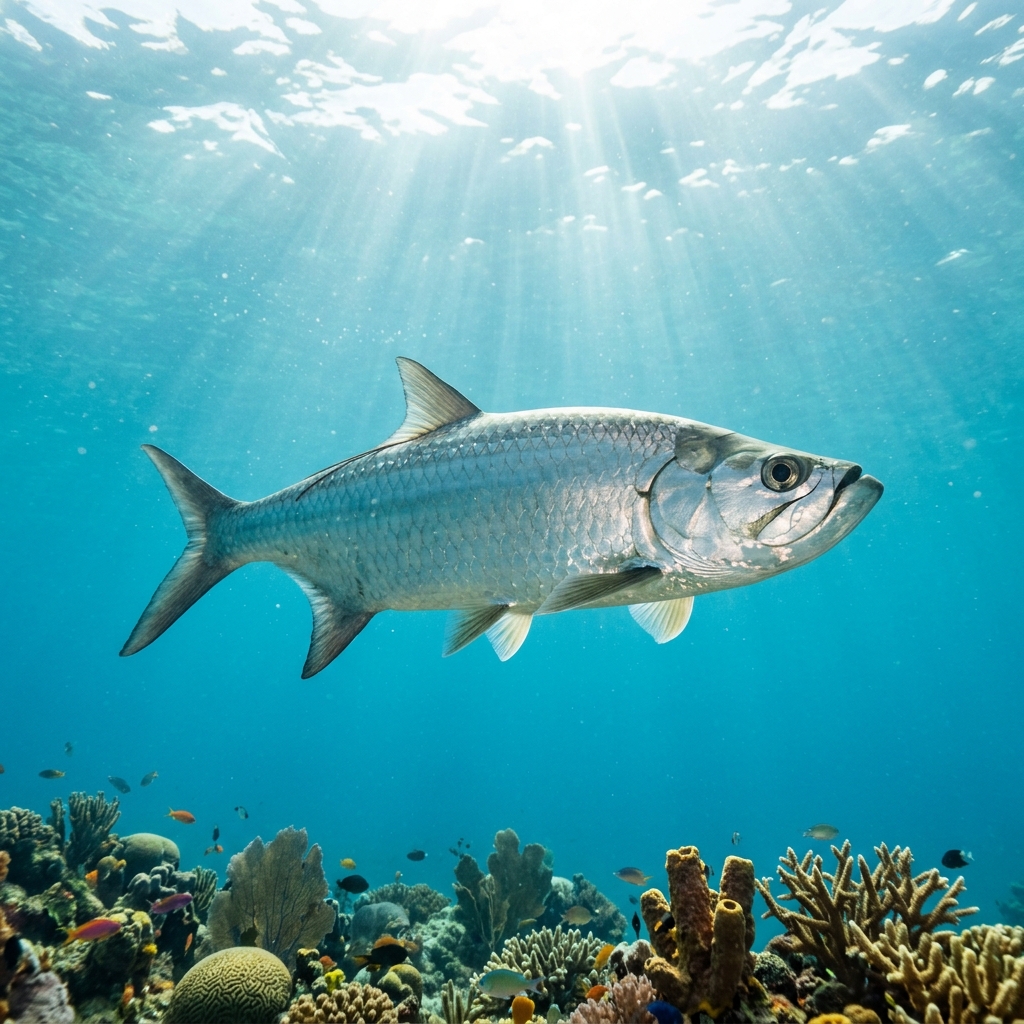
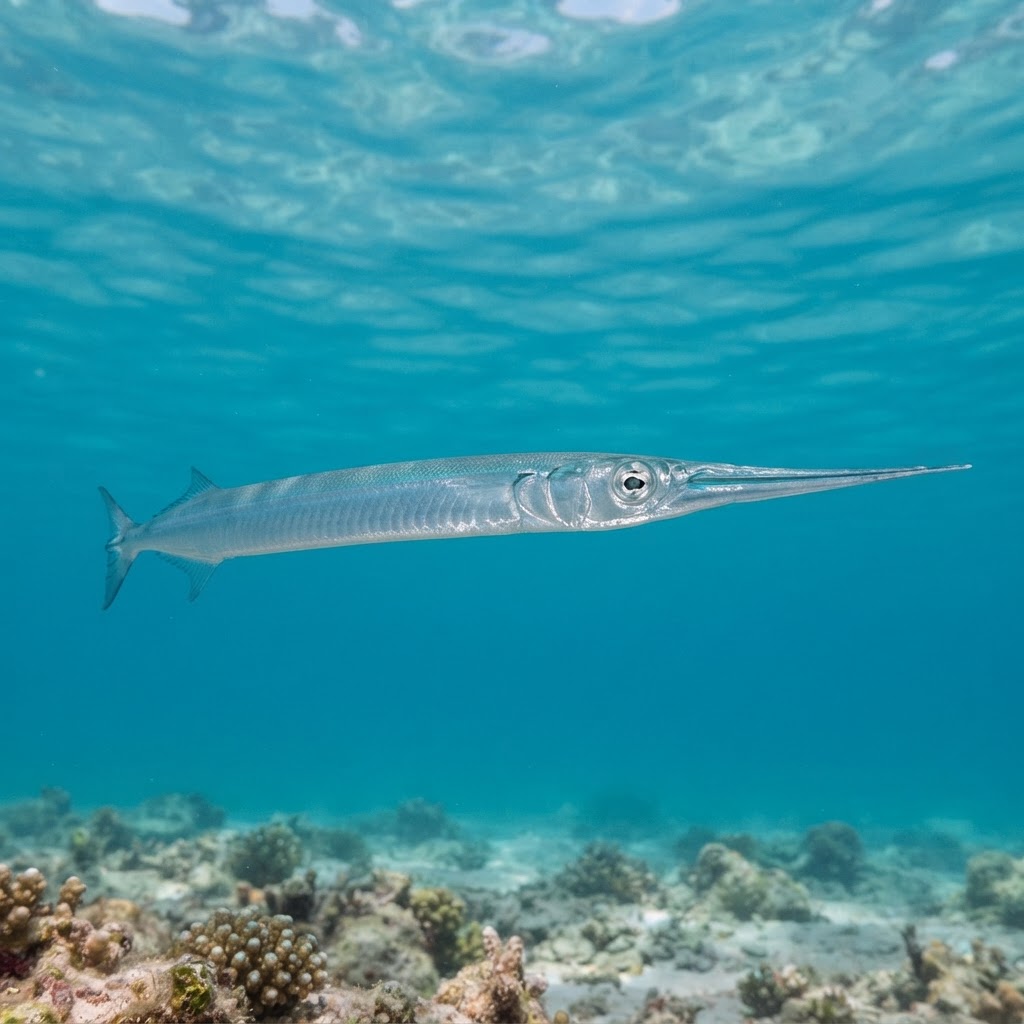
Long, pencil-thin silver body around 35 cm with a pronounced beak-like jaw lined with fine teeth. Swims just under the surface, often visible as a shadow or a quick flash before it darts off. The keeled tail (a stiffened ridge on the lower tail base) separates it from similar needlefish species if you get a close look at the caudal area.
Usually spotted hovering or darting near the surface, sometimes in loose small groups, reacting to divers with a quick burst of speed rather than curiosity. Most sightings happen on the shallow end of a dive or during ascents and safety stops rather than down on the reef itself, since it favours that top layer of water over structure.
That stiffened keel along the lower tail base gives the species its name and helps power the fast, skittering surface dashes divers usually see instead of a calm swim-by.
No clear seasonal pattern shows in the data, and water temperatures of 25.1 to 28.2C sit within its comfort range across the year, so it can turn up on any dive in the Canaries or Barbados regardless of month.
Reef neighbours a diver could mistake it for. Use the identification notes above to tell them apart.
Most reliably logged in the Canary Islands, especially around Tenerife, El Hierro, Fuerteventura and Lanzarote, with a further pocket of sightings at Carlisle Bay in Barbados. Across both areas it stays a scarce find rather than a guaranteed one, so treat it as a bonus sighting on a surface swim-through or safety stop rather than the main event.
Mapping where Keeltail Needlefish is logged…
The strongest sightings come from the Canary Islands, particularly Tenerife, El Hierro, Fuerteventura and Lanzarote, with additional records from Carlisle Bay in Barbados. It stays uncommon to rare at almost every site where it is logged.
There is no strong seasonal signal in diver logs, and it tolerates the 25 to 28C range typical of these sites year-round, so any month in the Canaries or Barbados gives a similar chance.
Look for a slender silver body around 35 cm long with a long thin beak, cruising just beneath the surface. It typically appears as a fast, darting shadow rather than a fish that holds still for a good look.
They typically reach around 35 cm in length, giving them a thin, elongated profile that is easy to mistake for a stick or a shadow at the surface.
No, they are not considered dangerous to divers. They tend to dart away quickly rather than approach, so encounters are brief and passive.
Site and sighting data is aggregated from diver logs, iNaturalist and GBIF. For taxonomy and conservation status:
Butterfish
1,423 sites