Porpita porpita
Spot blue button jellyfish in warm waters from Malaysia's Perhentian Islands to Mozambique's Tofo. Here's when, where, and how to recognise this tiny drifter.
Safety warning
This species can sting on contact with its tentacles, which may trail well beyond the body and can still sting after the animal is dead or washed up. Look but do not touch, and give it a wide berth.
If you're stung
Stinging tentaclesGeneral first-aid guidance, not a substitute for professional medical care. In an emergency, call your local emergency number.
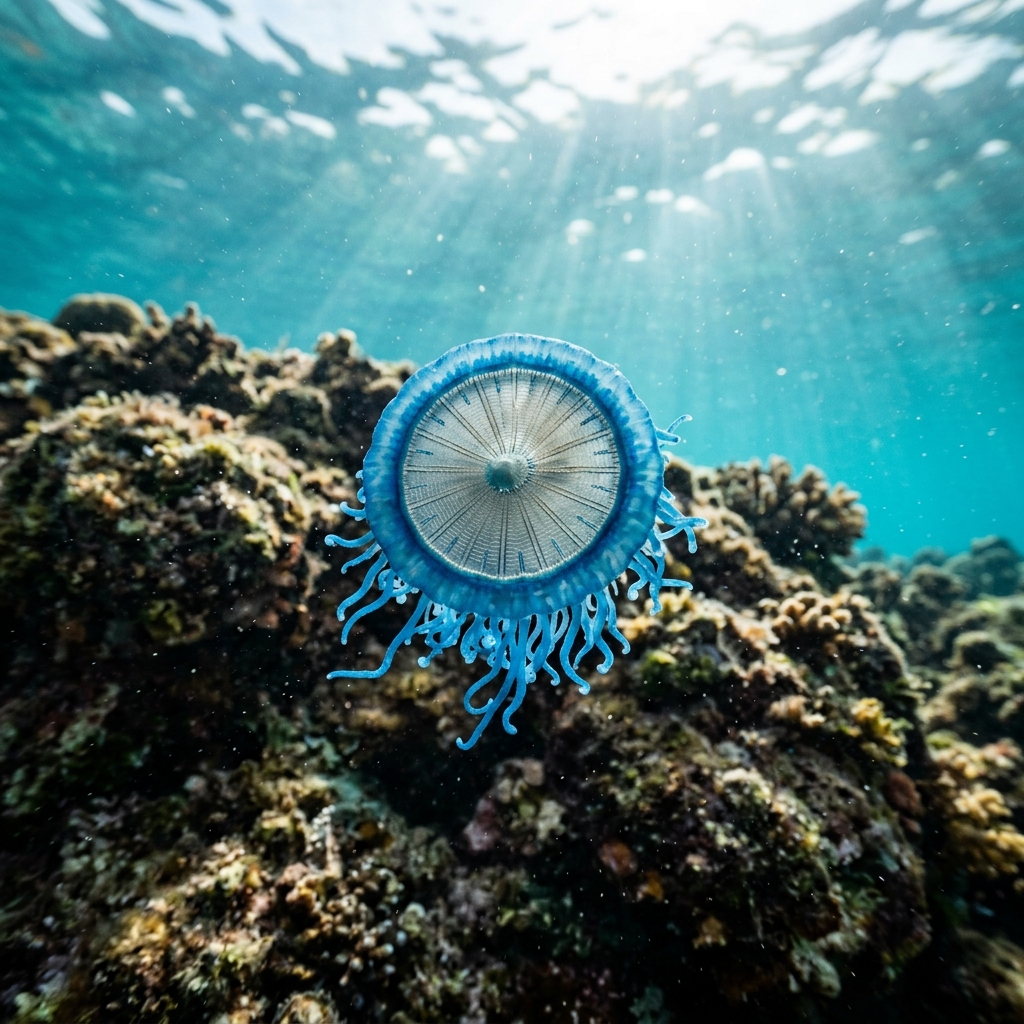
Flat, coin-sized disc of vivid electric blue or teal, rarely more than a few centimetres across, floating at or just below the surface rather than in open water above a reef. The disc (the float, technically a pneumatophore) is rimmed with a fringe of branching blue tentacles that radiate outward like spokes, giving the whole animal a flower or button appearance. Unlike a true jellyfish, there is no dome or bell; the profile is almost completely flat, which is the quickest way to confirm what you are looking at.
Blue buttons are passive drifters, carried entirely by wind and surface currents rather than swimming under their own power. You will typically spot them floating at the very surface, often in small aggregations when a current or wind has concentrated them. They do not react to divers, but picking one up is a bad idea as the tentacles can cause a mild skin irritation in sensitive individuals.
Despite its jellyfish-like look, a blue button is not actually a single animal. It is a colonial organism made up of many tiny individual polyps (zooids), each performing a different job such as feeding, reproduction, or defence, all fused together into one coordinated float.
In the Southern Hemisphere, sightings concentrate from November through February, aligning with the warmer summer months along coasts like Mozambique and New South Wales. Northern Hemisphere records are sparse but peak in March; in consistently warm tropical regions such as Malaysia and Thailand, encounters can occur whenever conditions push surface-drifting colonies toward shore.
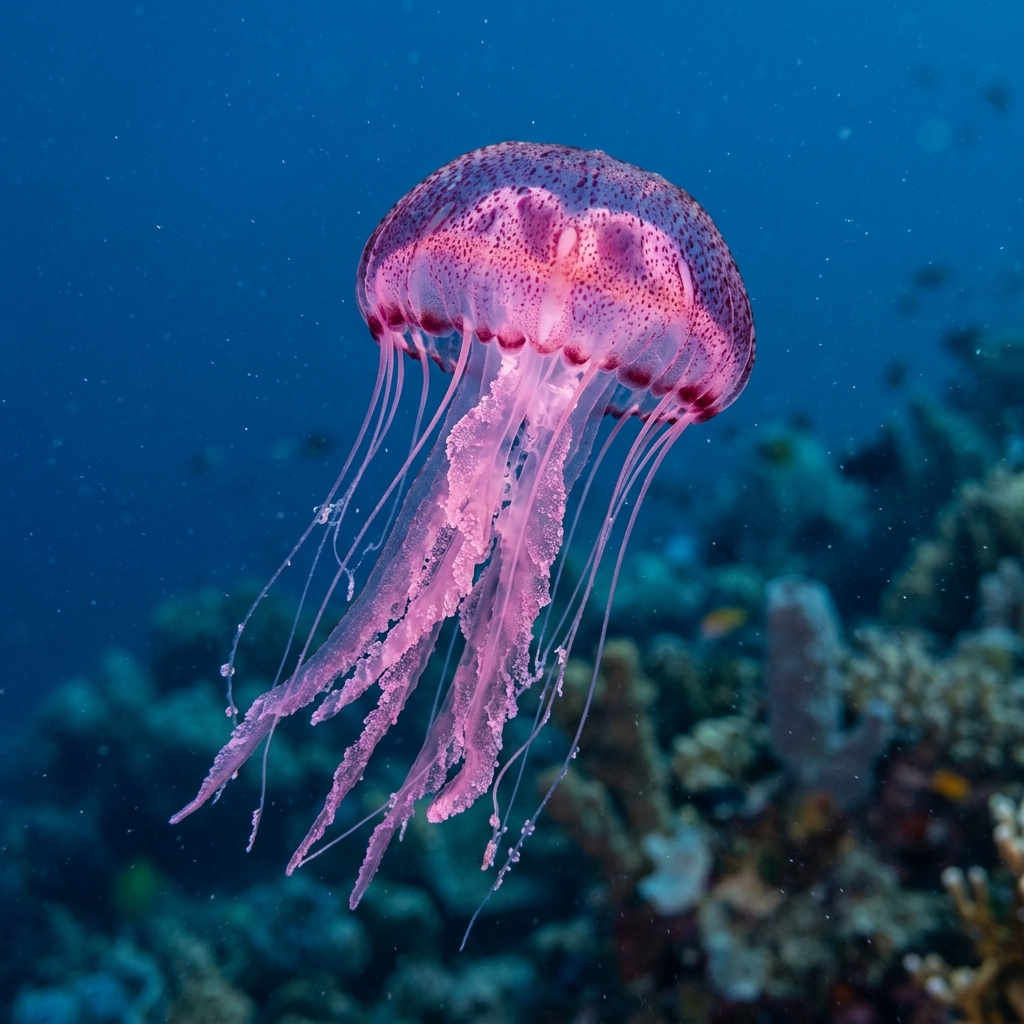
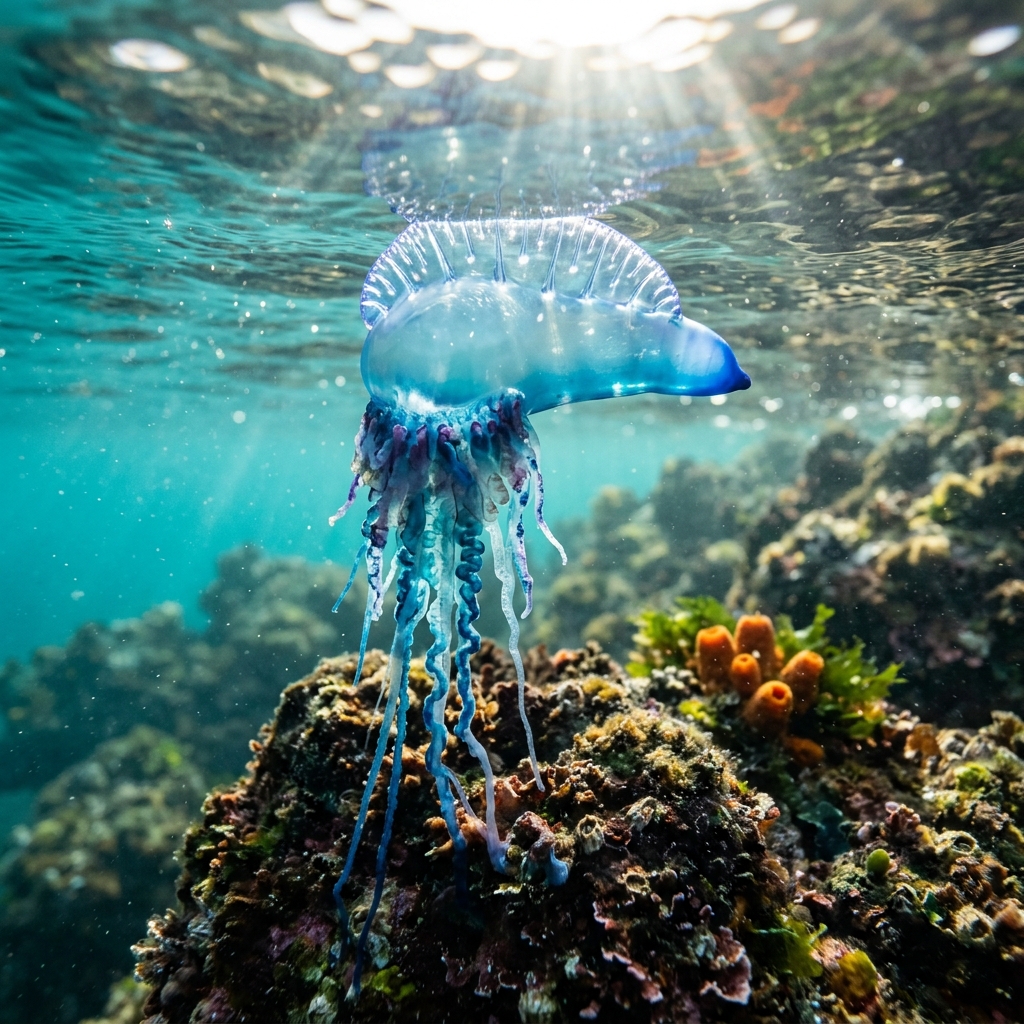
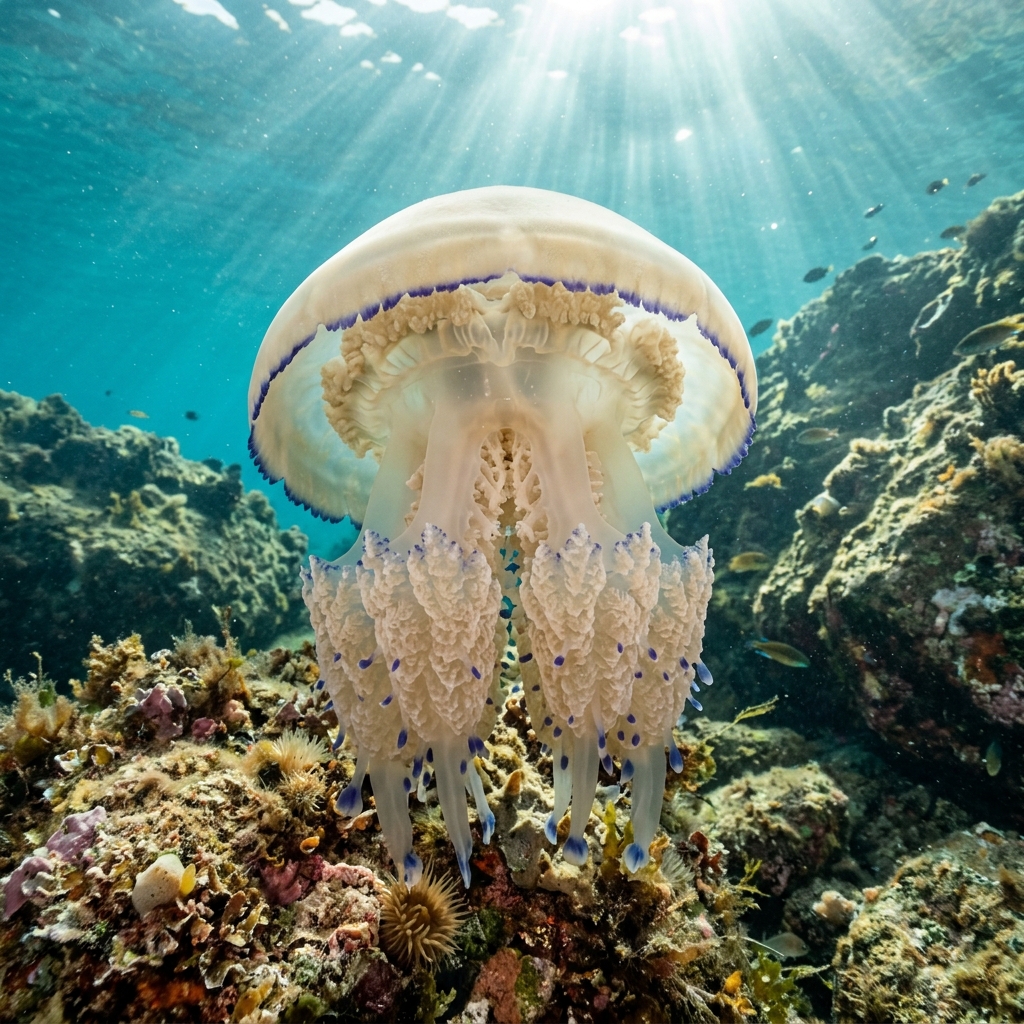
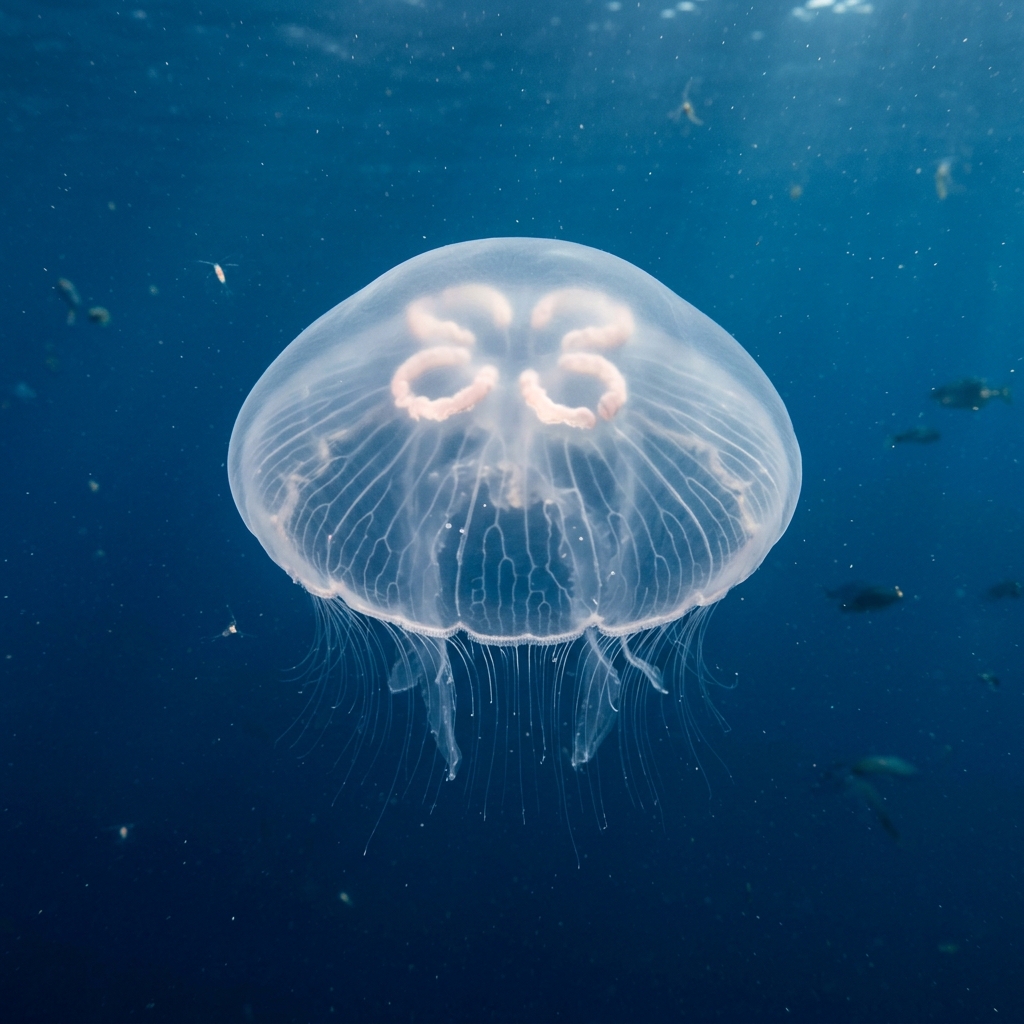
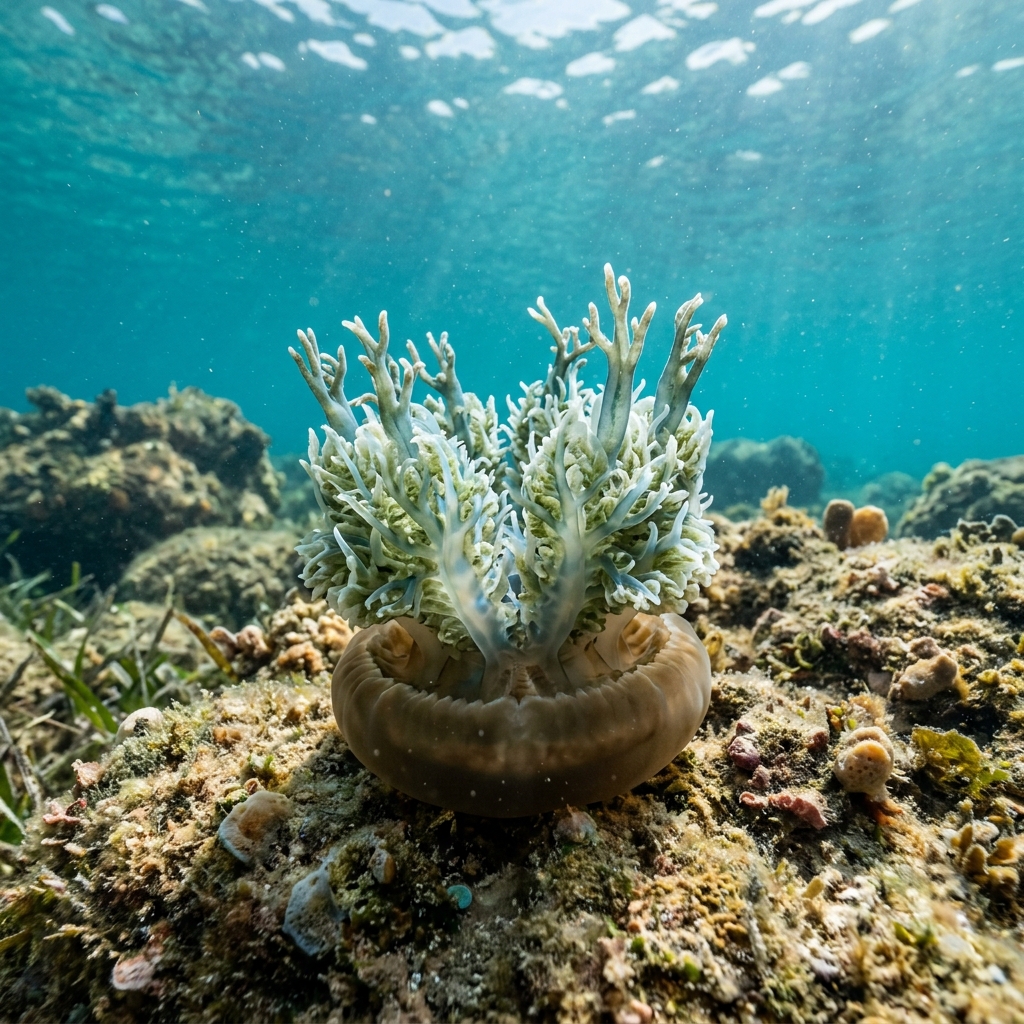
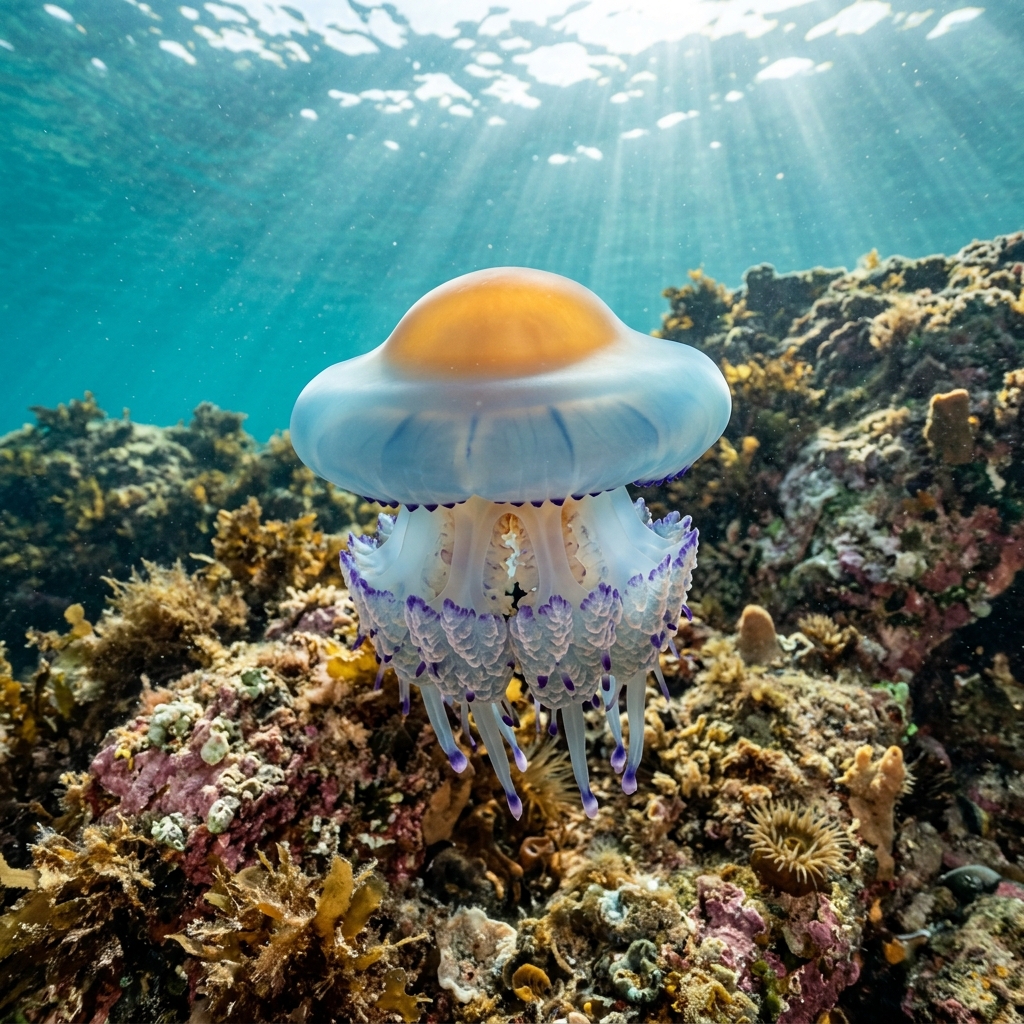
Reef neighbours a diver could mistake it for. Use the identification notes above to tell them apart.
Most commonly logged across Southeast Asia, with the Perhentian and Redang islands in Malaysia and the Phuket and Phi Phi area of Thailand accounting for a large share of records. Strong sightings also come from the Koh Rong Archipelago in Cambodia, Western Visayas in the Philippines, Tofo in Mozambique, the Yucatán Peninsula in Mexico, and coastal New South Wales in Australia.
Mapping where Blue Button is logged…
Blue buttons are most reliably logged in Southeast Asia, particularly around Malaysia's Perhentian and Redang islands, the Phuket and Phi Phi area of Thailand, and Cambodia's Koh Rong Archipelago. Records also come from Tofo in Mozambique, coastal New South Wales in Australia, the Yucatán Peninsula in Mexico, and Andalusia in Spain.
In the Southern Hemisphere, the main window is November through February. Northern Hemisphere records are centred around March. In warm tropical regions such as Malaysia and Thailand, they can appear at any time surface currents push them toward dive sites.
Look for a flat, coin-sized disc in vivid electric blue or teal floating right at the surface. It has no dome or bell like a true jellyfish; instead, branching tentacles radiate outward from the edge like spokes on a wheel. That completely flat profile is the key field mark.
No, despite the resemblance it is not a true jellyfish. A blue button is a colonial organism made up of many specialised individual polyps fused together onto a shared float. This makes it more closely related to the Portuguese man o' war than to any true jellyfish.
Blue buttons are not considered dangerous. Their tentacles can occasionally cause a mild skin irritation if you handle one or brush against a concentration of them, but encounters in the water carry very low risk. Avoid touching them and you should have no issues.
Site and sighting data is aggregated from diver logs, iNaturalist and GBIF. For taxonomy and conservation status:
Moon Jellyfish
1,766 sites