Phyllidia rueppelii
An uncommon black-and-orange nudibranch found on reefs around Muscat, Oman and South Sinai, Egypt in warm water.
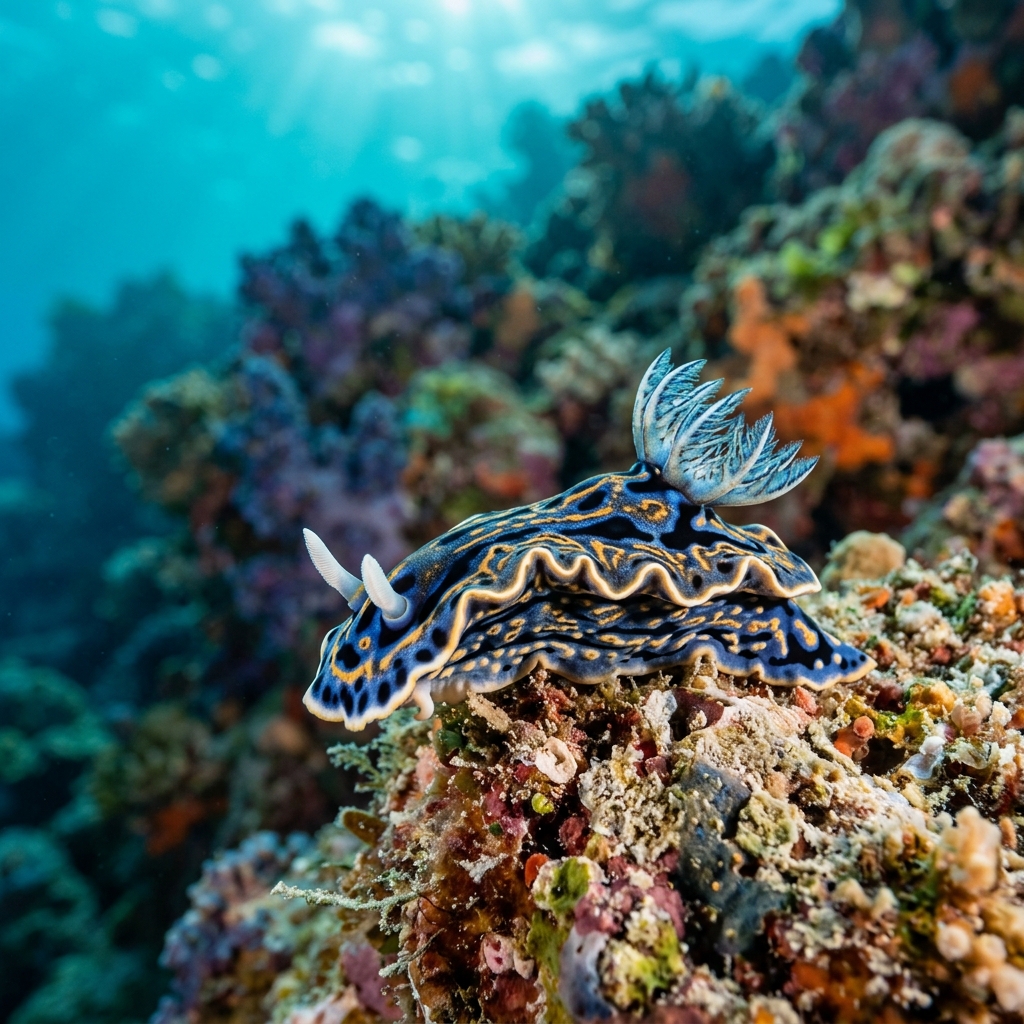
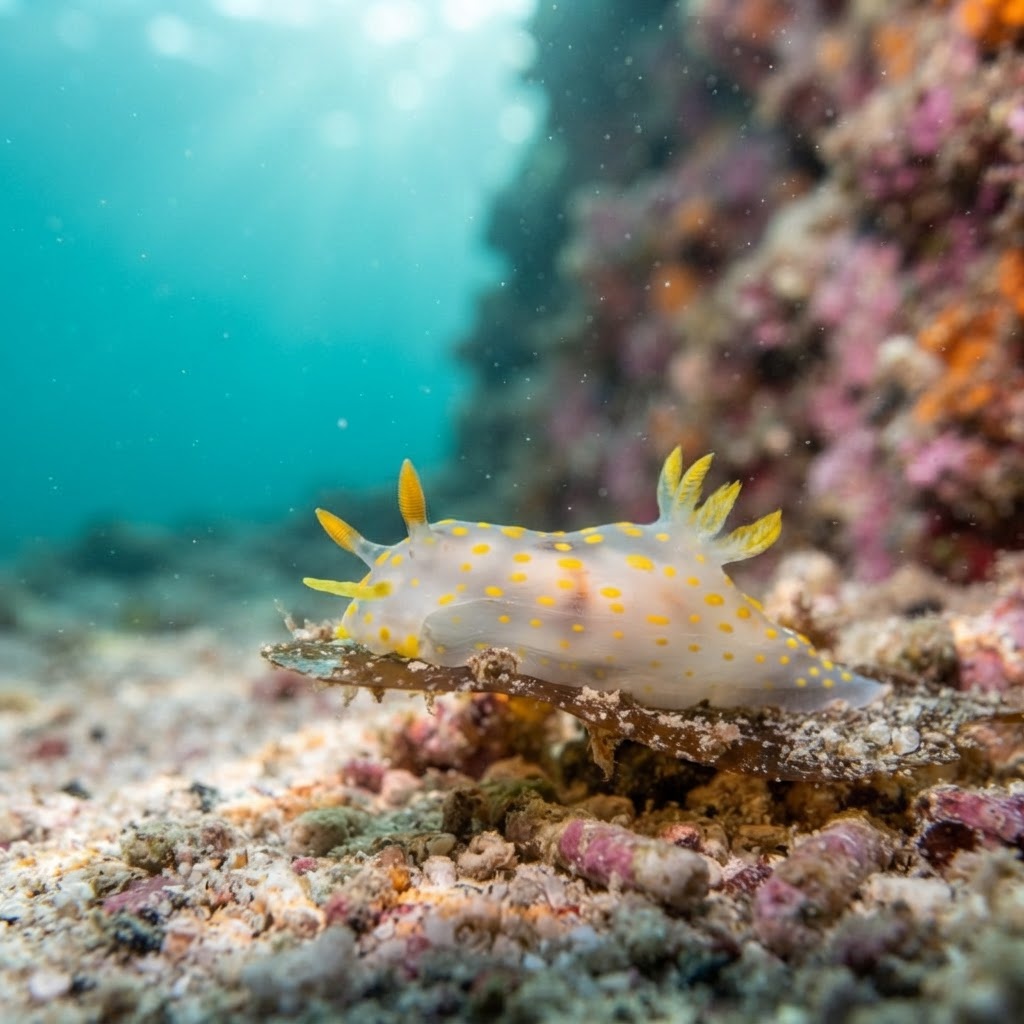
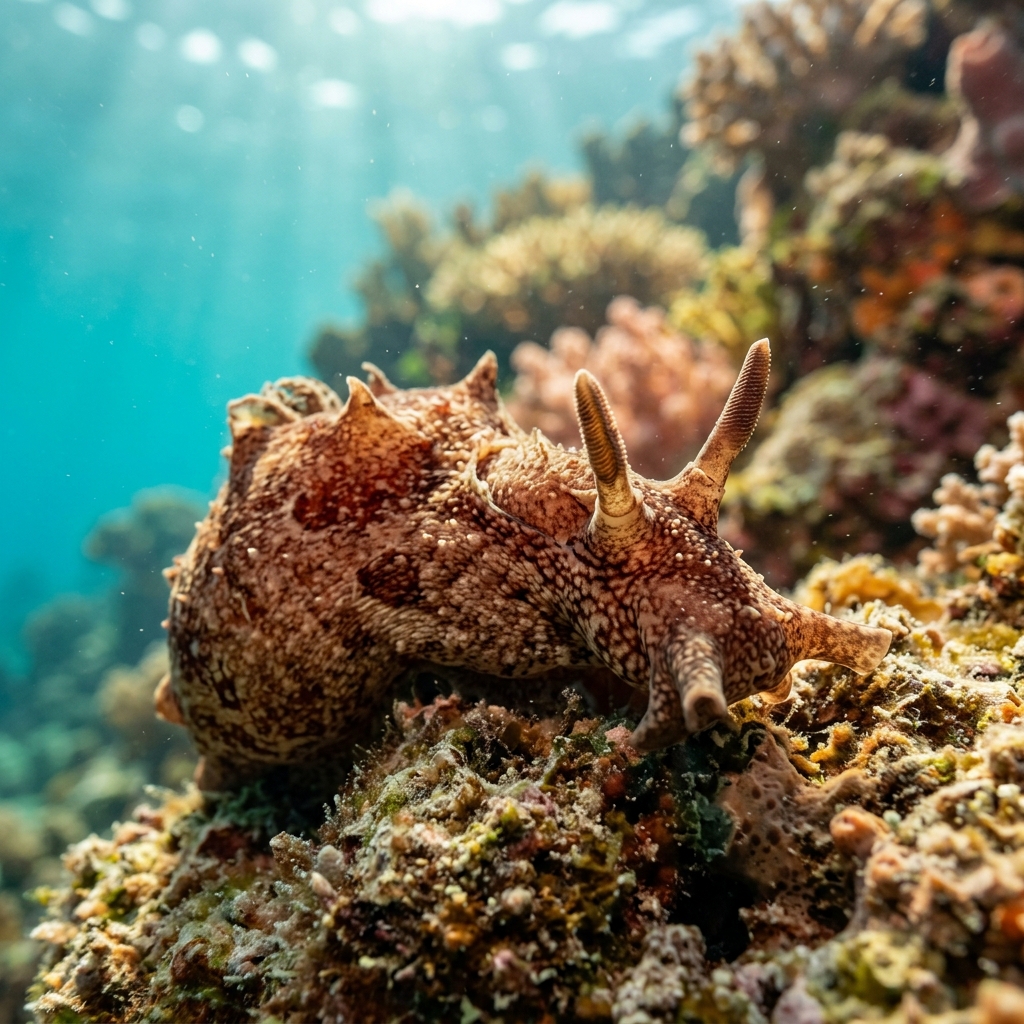
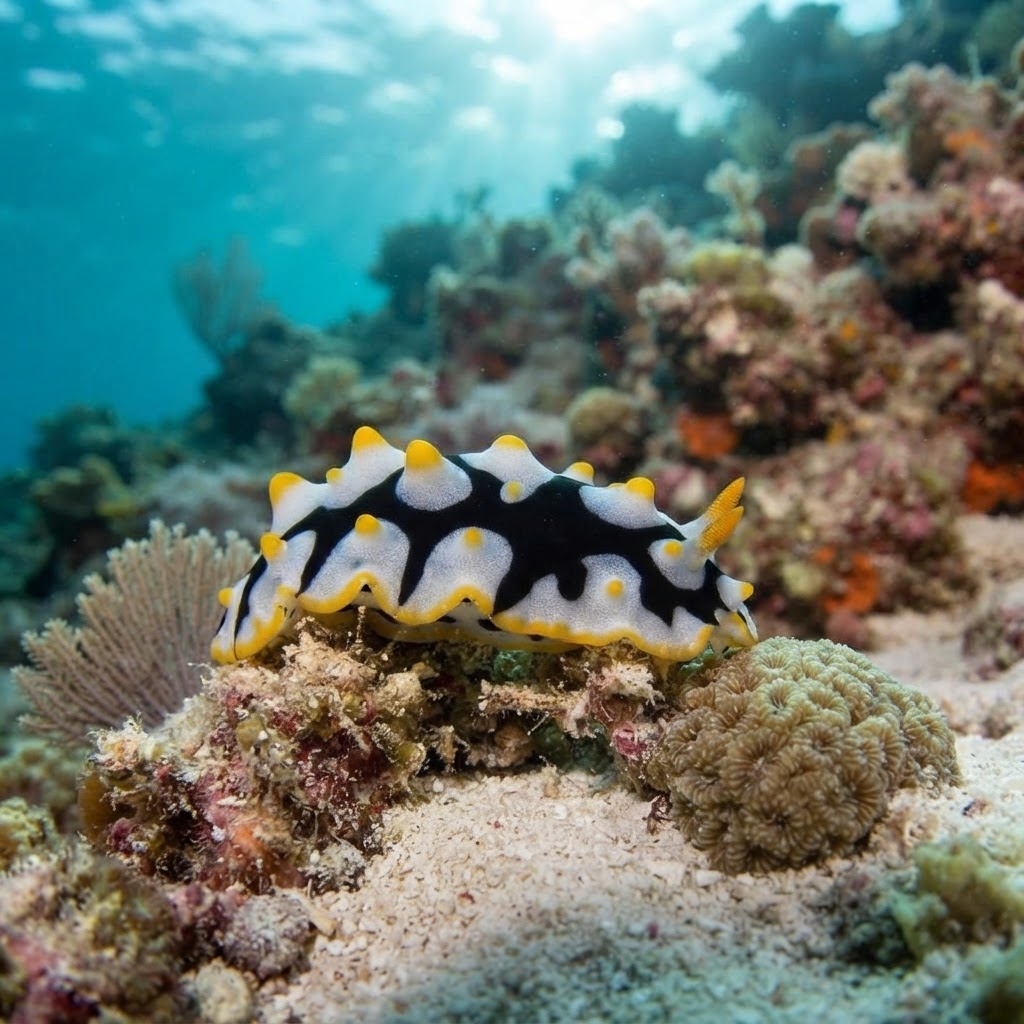
A small, elongated nudibranch with a firm, ridged body rather than a soft one, running with long raised tubercles down its back. The base colour is black with bold orange or reddish-orange lines tracing the ridges, giving a striped rather than spotted look. It moves slowly across hard substrate and rubble, staying low and easy to overlook against dark reef surfaces.
Divers find it moving slowly over rock, rubble and reef flats, usually solo, grazing rather than reacting to a torch or a diver nearby. It shows no flight response and tends to stay put long enough for a close look and a photo. Best spotted by slowing down and scanning low ledges and crevices rather than swimming past at pace.
Like other Phyllidia species it carries toxins in its skin as a defence, so its bold black-and-orange pattern likely works as a warning to potential predators rather than as camouflage.
Recorded year-round with no clear seasonal peak, consistent with its comfortable range of roughly 22 to 28 C on Omani and Red Sea reefs. Plan around good visibility and site conditions rather than a particular month.
Reef neighbours a diver could mistake it for. Use the identification notes above to tell them apart.
Most reliably logged around Muscat in Oman, with further sightings in Musandam, making Oman the strongest place to look for it. South Sinai in the Egyptian Red Sea is the other real hotspot, so divers working either coastline have a fair shot at finding one on a reef scan.
Mapping where Rüppell's Wart Slug is logged…
It is most often logged around Muscat and Musandam in Oman, with a smaller but steady presence in South Sinai, Egypt. Both coastlines offer a realistic chance if you search low reef surfaces and rubble patches.
Sightings are spread across the year with no strong season detected, matching its tolerance for water between about 22 and 28 C. Any time you are diving Oman or South Sinai reefs is worth a look.
Look for a ridged, firm-bodied nudibranch, black with orange lines running along raised tubercles on its back. It moves slowly across hard reef surfaces and rubble rather than open sand.
No, they pose no threat to divers. Their black and orange colouring is a warning to predators about skin toxins, not a hazard to people, so they are safe to photograph up close.
Exact size data isn't confirmed for this species, but like most Phyllidia nudibranchs it stays small, generally within the size range typical of the genus seen on reef surfaces.
Site and sighting data is aggregated from diver logs, iNaturalist and GBIF. For taxonomy and conservation status:
Light-spotted Aegires
3,168 sites