Canthigaster petersii
A small blue-striped puffer common on reefs from Oman's Daymaniyat Islands to the Seychelles Inner Islands, in warm 27-29 C water year-round.
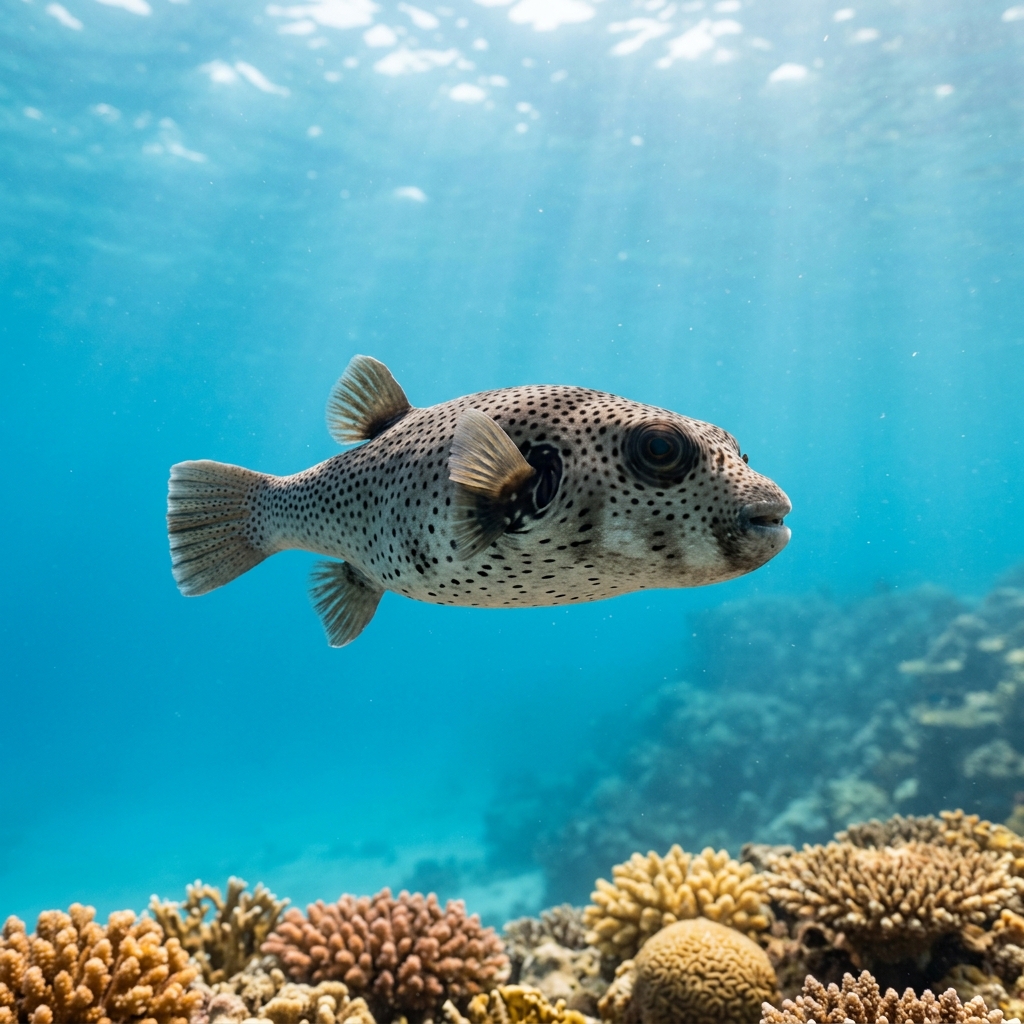
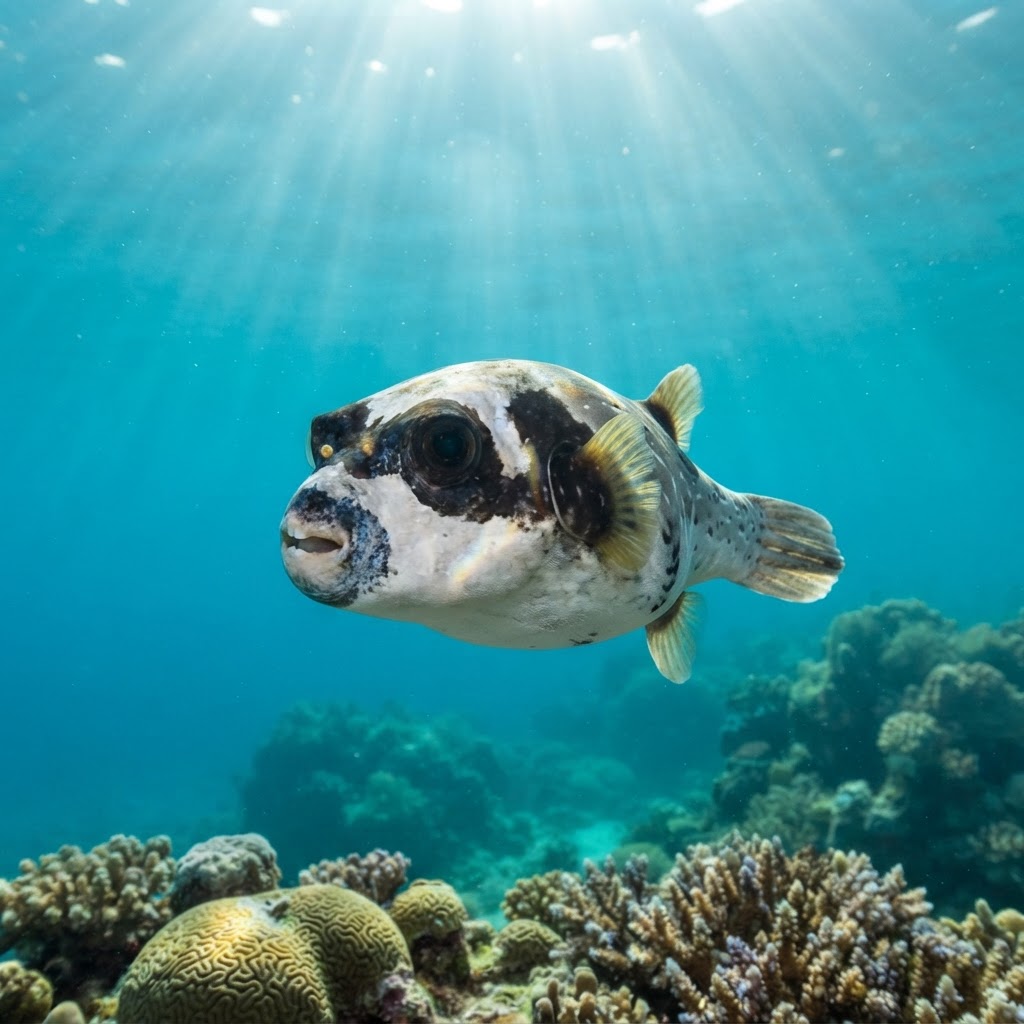
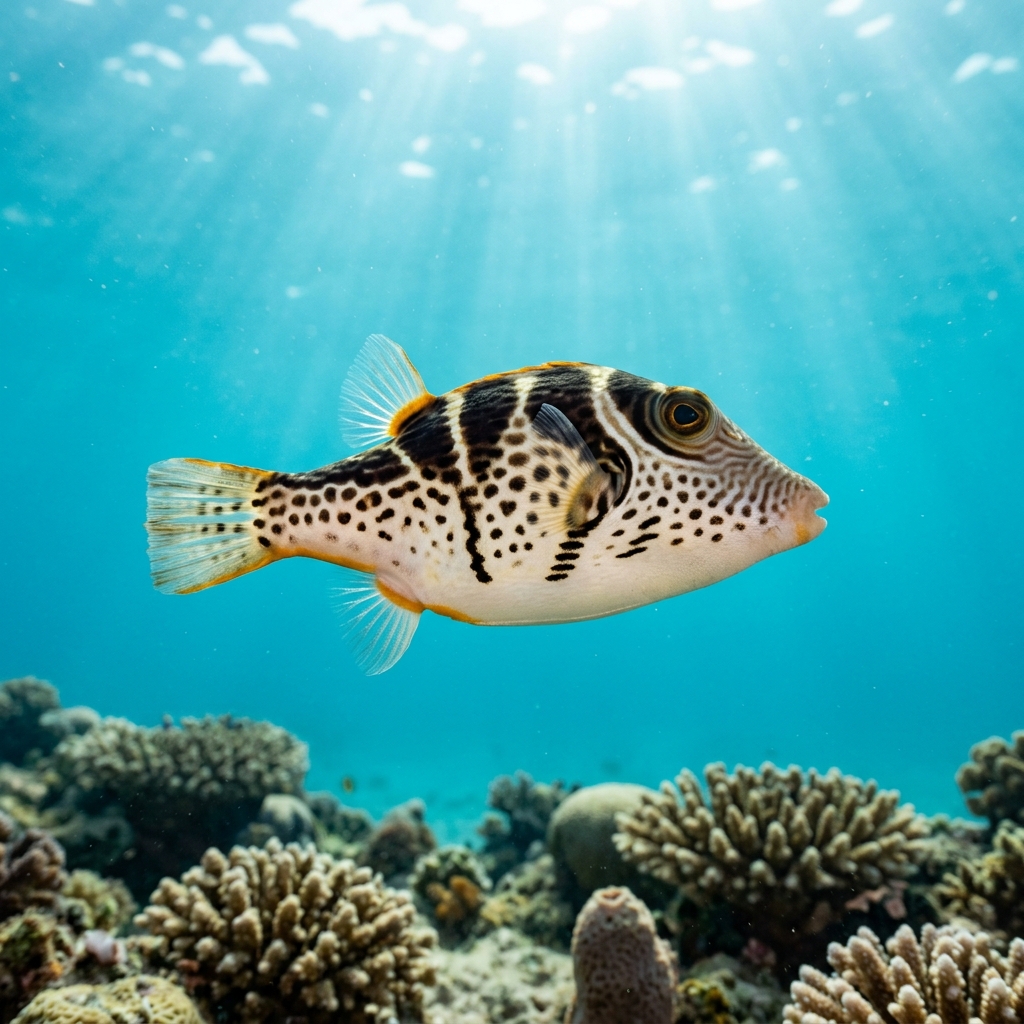
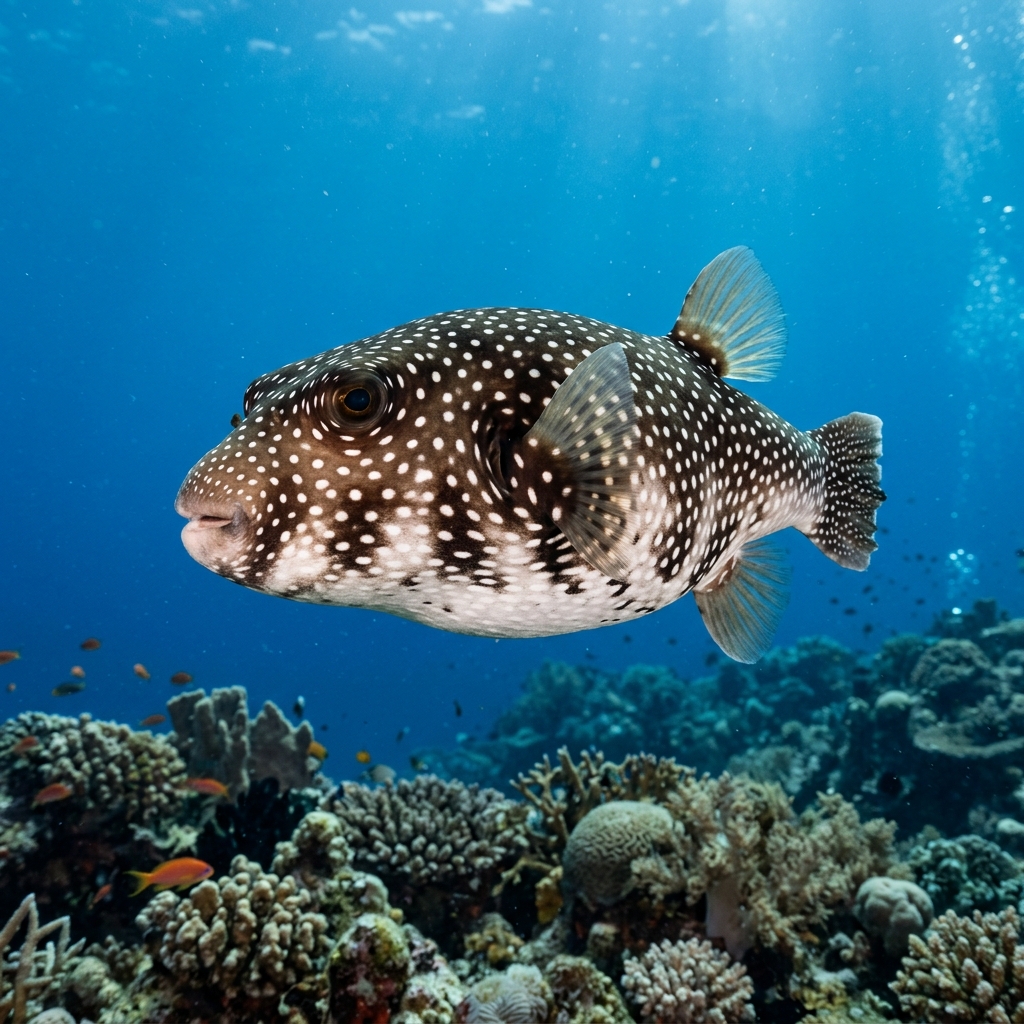
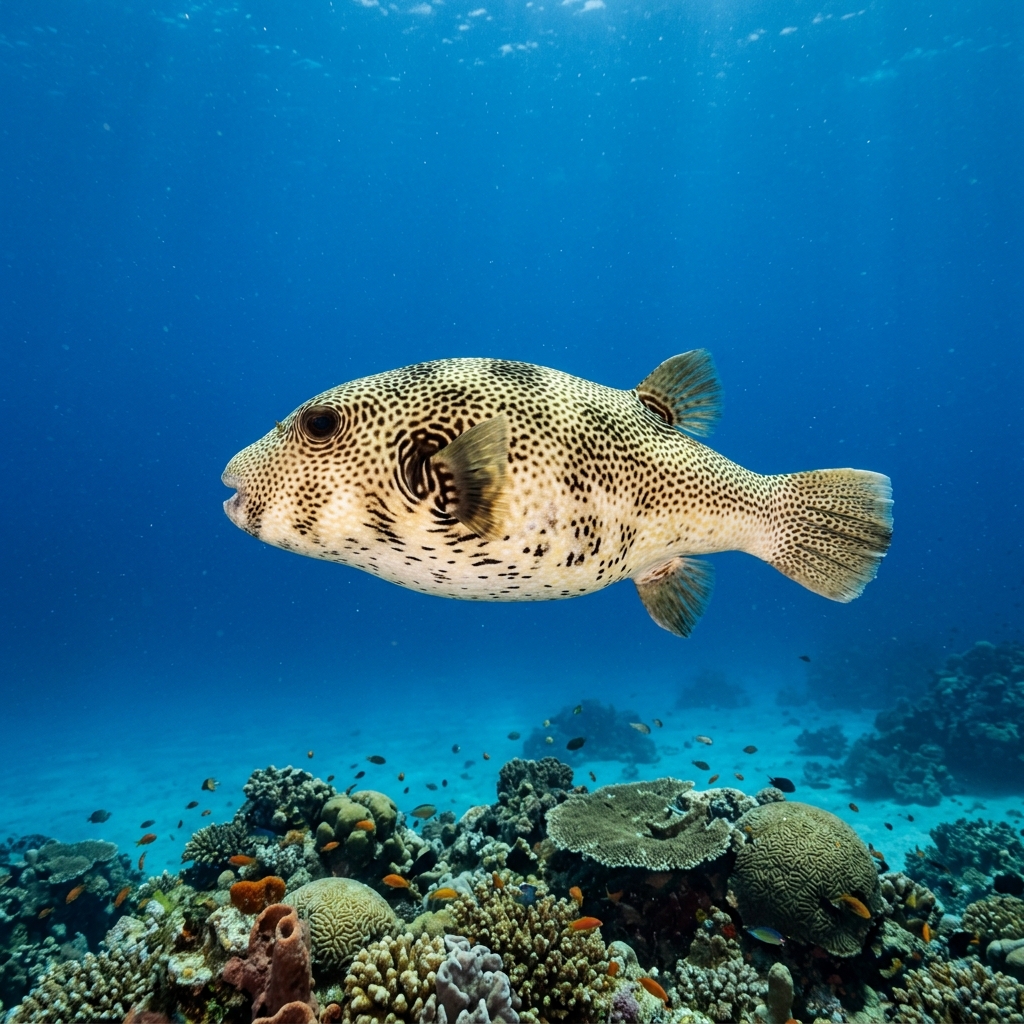
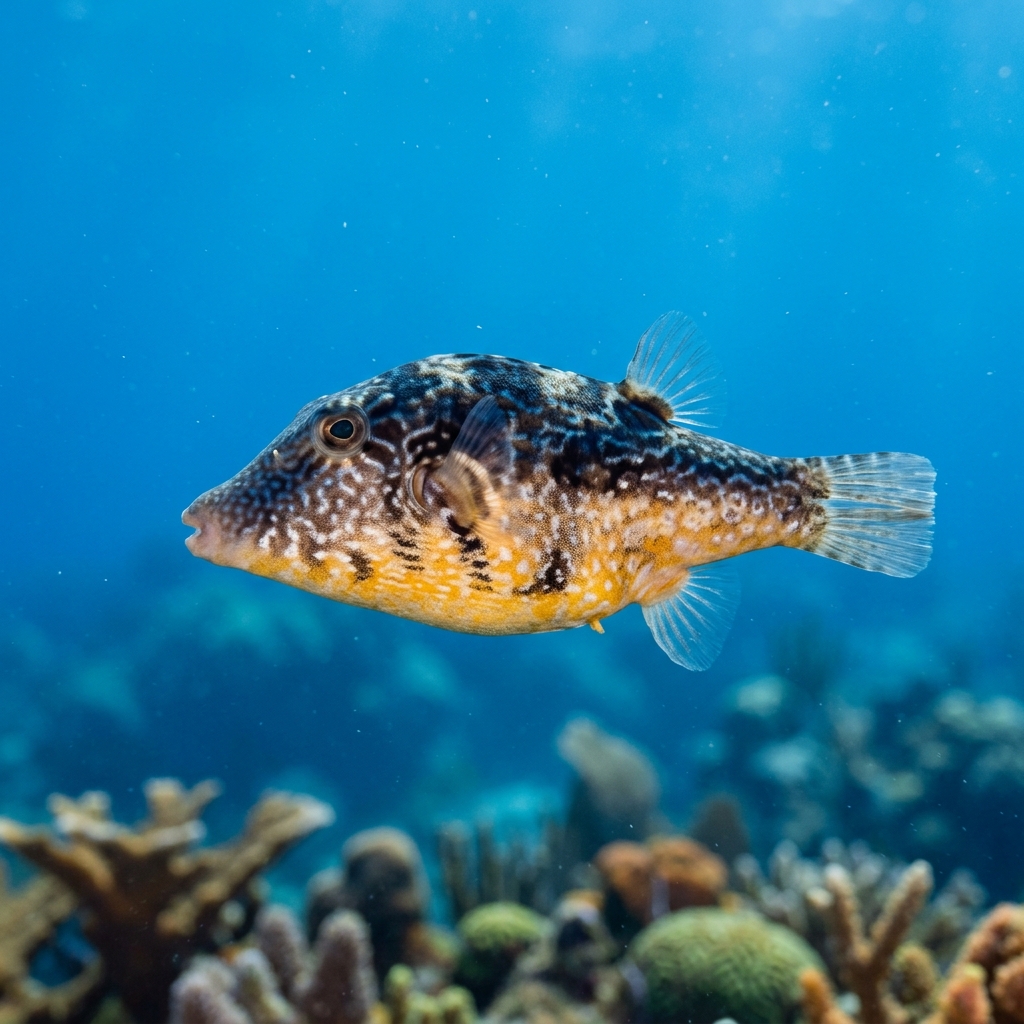
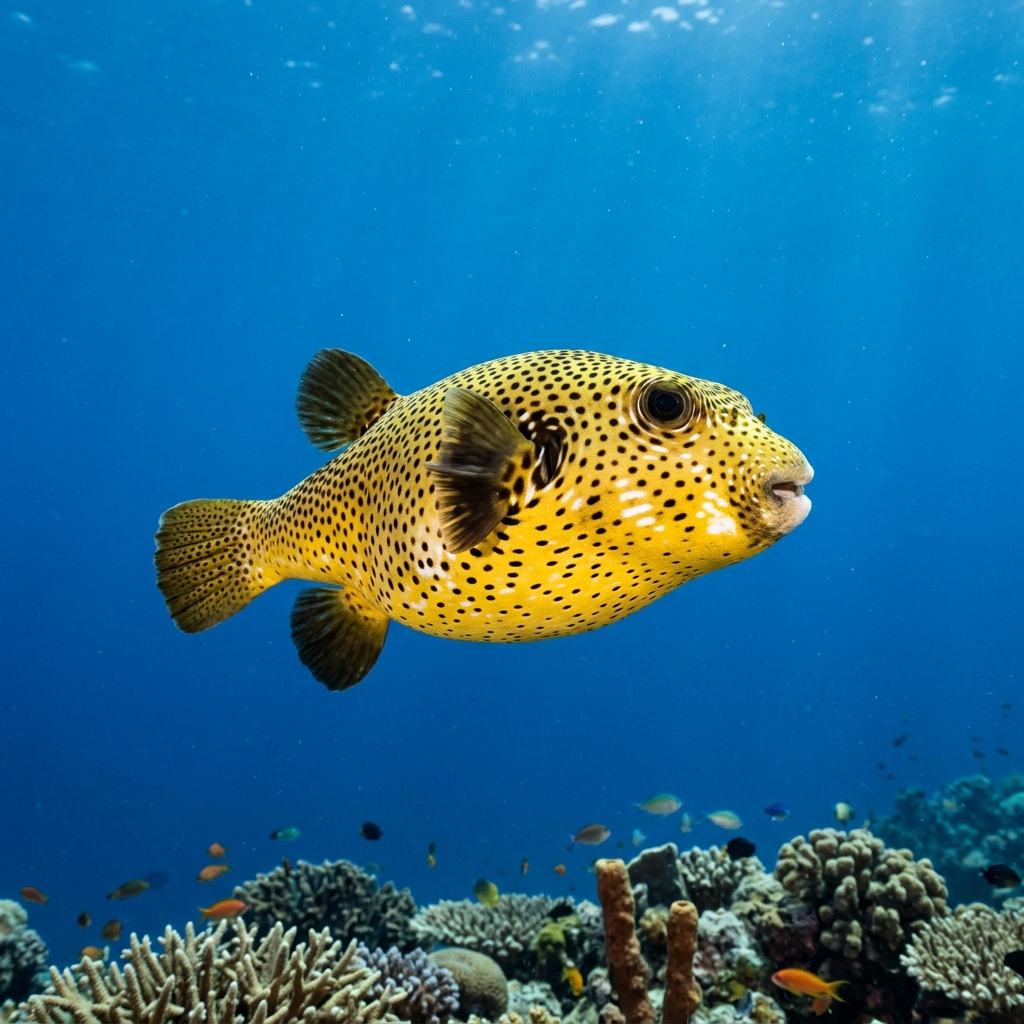
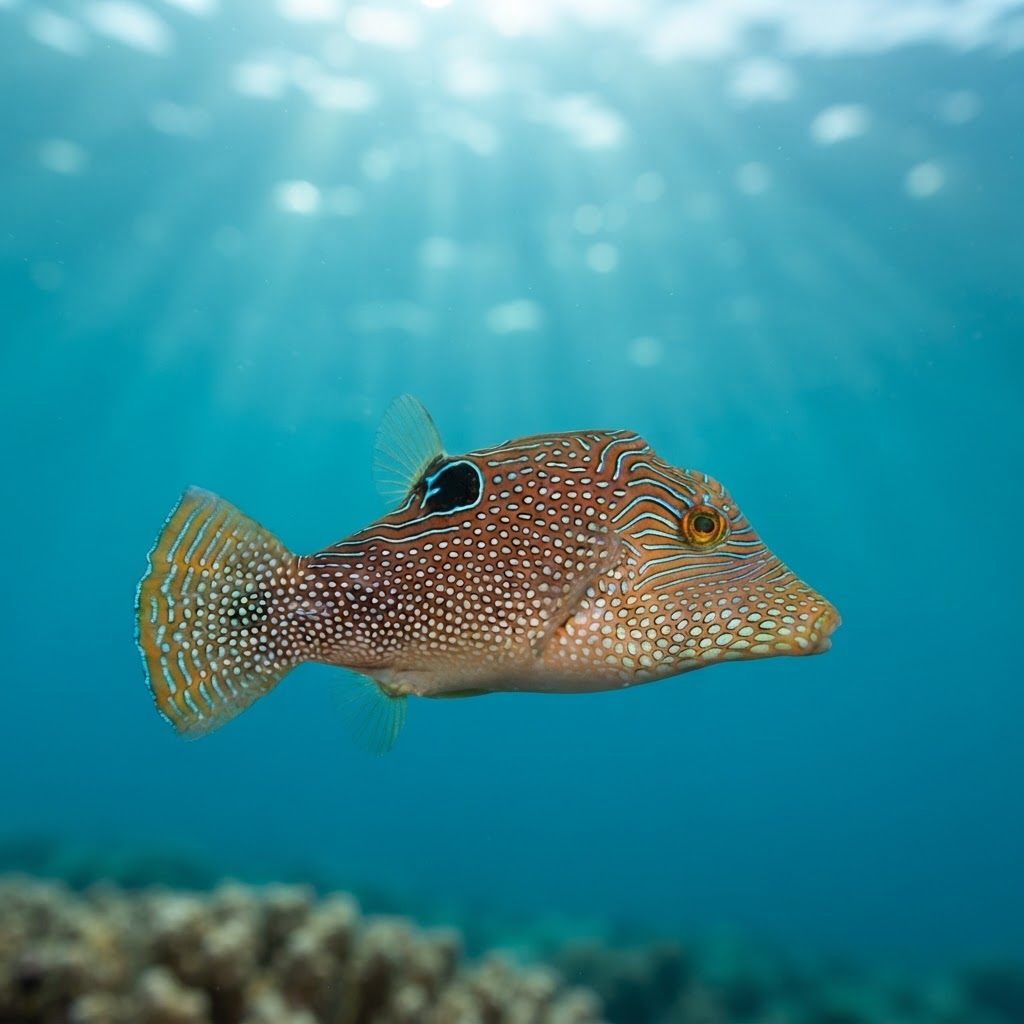
A small, stocky pufferfish topping out around 6 cm, with a brownish body covered in fine blue or pale wavy lines and speckles running along its sides. The face carries a mesh-like pattern of thin blue streaks, and like other tobies it swims with slow, almost hovering fin strokes rather than a fast tail-beat. Look for it tucked near rubble, coral heads or sponge growth rather than out in open water.
Usually seen hovering close to the reef structure, picking around rubble, coral crevices and sponges rather than cruising the open water. It tends to sit still or move away slowly when a diver approaches, relying on its small size and camouflage rather than fleeing fast, and most divers log it as an uncommon but steady find rather than a guaranteed spot on any given dive.
Like other members of the toby group, it can inflate its body by gulping water when threatened, a last-resort defence that makes it awkward for most predators to swallow.
Sightings show no clear seasonal pattern, and with a comfort range of 27 to 29.4 C it stays active on these reefs all year, so any month of diving in Oman, the Seychelles or Kenya gives a fair shot at finding one.
Reef neighbours a diver could mistake it for. Use the identification notes above to tell them apart.
Most reliably logged around the Daymaniyat Islands and Muscat in Oman, and a strong presence through the Inner Islands of Seychelles. Also a regular find at Diani in Kenya, Saint-Leu in Reunion, and on reefs around Koh Lanta in Thailand and the Andaman Islands in India.
Mapping where Peter's Toby is logged…
It shows up most consistently around Oman's Daymaniyat Islands and Muscat, and through the Seychelles Inner Islands. Diani in Kenya, Saint-Leu in Reunion, and parts of Thailand and the Andaman Islands also produce regular sightings.
There's no strong seasonal pattern in the data, and it favours warm water between roughly 27 and 29.4 C, so it's a year-round find on the reefs where it occurs rather than a seasonal specialty.
Look for a small brownish pufferfish, about 6 cm long, covered in fine blue or pale wavy lines with a mesh-patterned face. It hovers slowly near rubble and coral rather than swimming out in open water.
They stay small, typically around 6 cm long, which is one reason they're easy to overlook among rubble and coral debris on the reef.
No, they pose no threat to divers. Like all pufferfish they carry toxins internally as a defence against predators, but this has no bearing on divers who simply observe them.
It can gulp water to inflate its body when threatened, a defensive trick shared across the puffer family that makes a small, slow-moving fish much harder for predators to handle.
Site and sighting data is aggregated from diver logs, iNaturalist and GBIF. For taxonomy and conservation status:
Valentini Pufferfish
2,830 sites